Disclosure: Vital Signs Today may earn a commission if you buy through links on this page, at no extra cost to you. This does not influence our evidence-based assessments. We are not a medical provider; talk to a clinician before acting on test results.
Complete Blood Count (CBC) Explained: Your Full Panel Guide
Key Takeaways
- A complete blood count is a single blood test that measures your red blood cells, white blood cells, and platelets to give a broad snapshot of your overall health.
- Doctors order a complete blood count to screen for anemia, infection, inflammation, bleeding or clotting problems, and many chronic conditions, often before any symptoms appear.
- Each value on a complete blood count is interpreted against a lab-specific reference range, and a result slightly outside that range is common and usually not a cause for alarm on its own.
A complete blood count (CBC) is one of the most common blood tests in medicine, and it measures the three main types of cells that circulate in your blood: red blood cells, white blood cells, and platelets. Doctors order it because these cell counts reveal a great deal about your health in a single draw, from whether you are anemic or fighting an infection to early signals of inflammation, nutritional gaps, and chronic disease. It is fast, inexpensive, and often the first test run during a routine checkup or when you feel unwell.
What is a Complete Blood Count (CBC)?
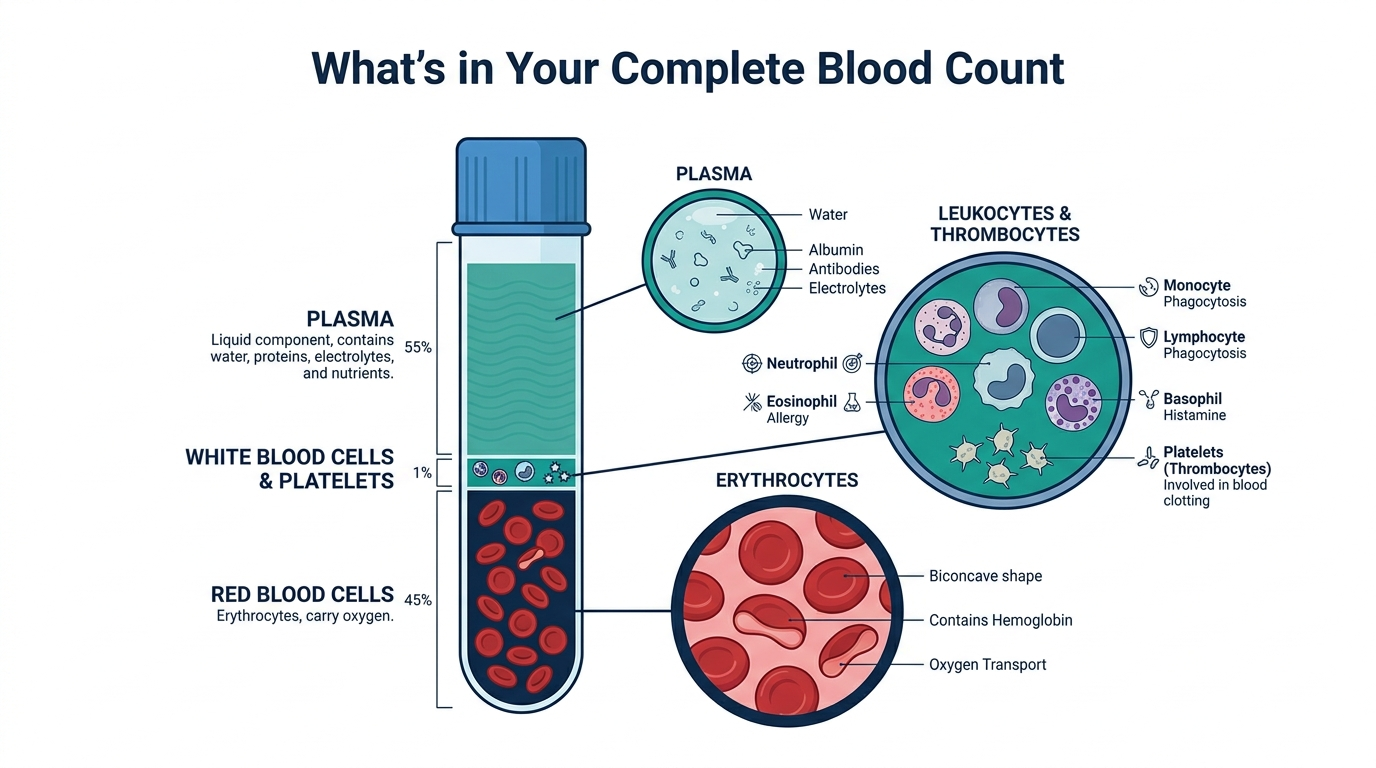
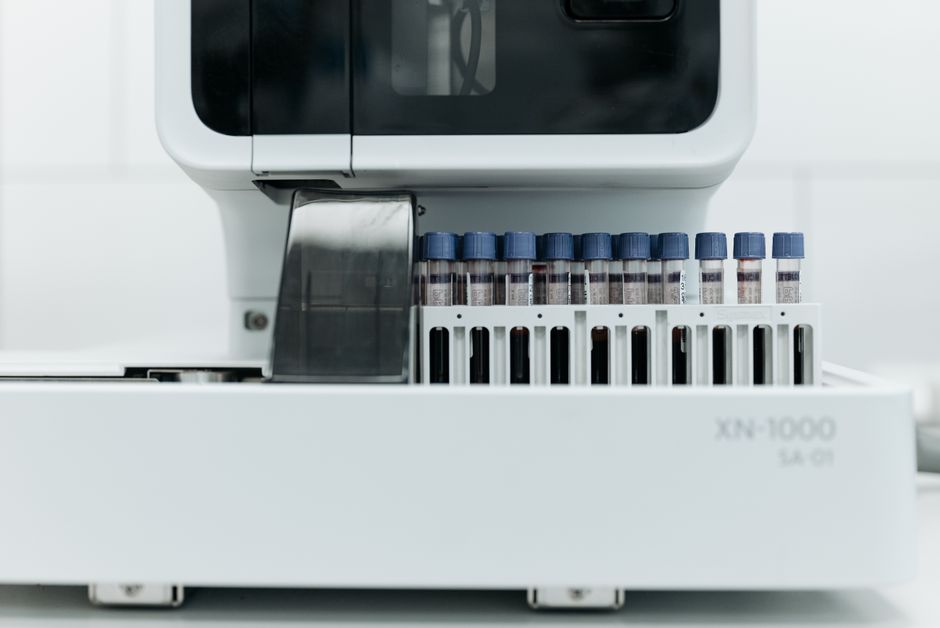
A complete blood count is a laboratory analysis of a small sample of your blood that counts and characterizes your blood cells. Blood is made of a watery fluid called plasma carrying billions of cells, and a CBC quantifies those cells and describes their size, shape, and content. The test is usually run on an automated analyzer that can process thousands of cells in seconds, which is why results are typically ready within hours.
The panel is often ordered in two forms. A standard CBC reports the core counts and red cell indices. A CBC “with differential” adds a breakdown of the five white blood cell types, which helps pinpoint the kind of immune response your body is mounting. According to the Cleveland Clinic, this combination makes the CBC a powerful general screening tool rather than a test for one specific disease.
What does a Complete Blood Count (CBC) measure?
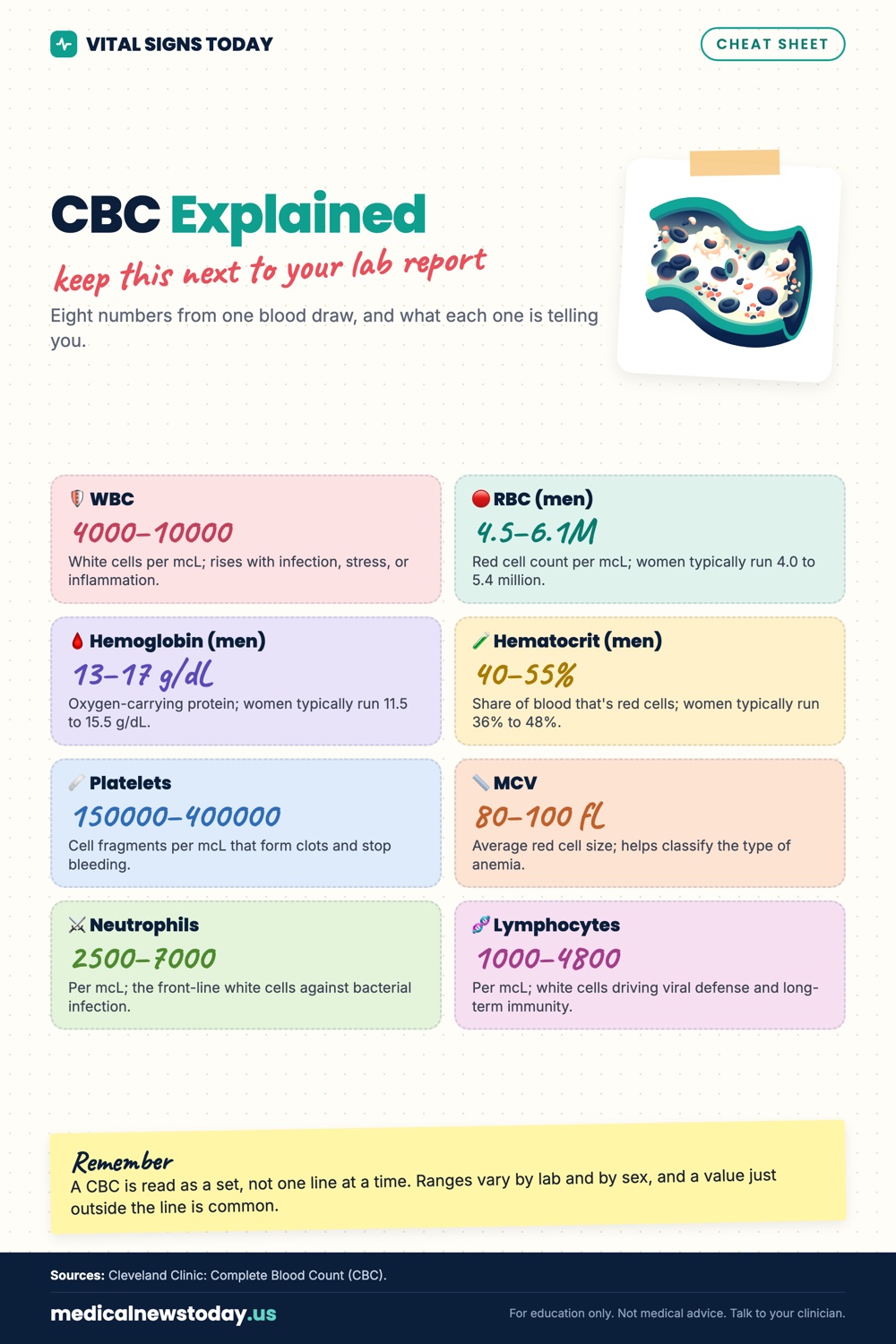
A CBC reports roughly fifteen individual values, grouped into red cell measures, white cell measures, and platelet measures. Here is what each one shows at a glance. Each marker has its own deep-dive article for the full picture.
- Hemoglobin: the oxygen-carrying protein inside red blood cells, and the single best marker for anemia.
- Hematocrit: the percentage of your blood volume made up of red blood cells, a companion to hemoglobin.
- Red blood cells (RBC): the total number of oxygen-carrying cells, which can flag anemia or overproduction.
- White blood cells (WBC): the total count of immune cells, which rises with infection and inflammation and falls with certain conditions.
- MCV (mean corpuscular volume): the average size of your red blood cells, which helps classify the type of anemia.
- MCH (mean corpuscular hemoglobin): the average amount of hemoglobin inside each red blood cell.
- MCHC (mean corpuscular hemoglobin concentration): how concentrated the hemoglobin is within each red blood cell.
- RDW (red cell distribution width): how much your red blood cells vary in size, an early clue to mixed or developing anemia.
- MPV (mean platelet volume): the average size of your platelets, which reflects how actively they are being produced.
- Platelets: the cell fragments that form clots, key to assessing bleeding and clotting risk.
- Neutrophils: the most abundant white cells, the front line against bacterial infection.
- Lymphocytes: the white cells that drive viral defense and long-term immunity.
- Monocytes: the cleanup white cells that clear debris and respond to chronic infection.
- Eosinophils: the white cells tied to allergies and parasitic infection.
- Basophils: the rarest white cells, involved in allergic and inflammatory reactions.
Why would a doctor order a Complete Blood Count (CBC)?
A doctor orders a complete blood count for several overlapping reasons. The first is routine screening. As part of an annual physical, a CBC can catch problems such as anemia or a low platelet count before you notice any symptoms. The second is to investigate symptoms. Fatigue, weakness, unexplained bruising, frequent infections, fever, or shortness of breath all point a clinician toward checking your blood cells.
The third reason is to diagnose and monitor disease. A CBC helps detect and track conditions ranging from iron deficiency and vitamin deficiencies to infections, inflammatory disorders, bleeding problems, and blood cancers such as leukemia. The fourth is to monitor treatment. Chemotherapy, certain antibiotics, and many other medications can affect blood cell production, so doctors repeat the CBC to make sure those counts stay safe. Because it touches so many systems at once, the CBC is frequently the starting point that tells a clinician which more specific test to order next.
How to read your Complete Blood Count (CBC) results
Your results come as a list of values, each printed next to a reference range and often a flag such as “H” for high or “L” for low. The most important principle is that reference ranges are lab-specific. Each laboratory sets its own ranges based on its equipment and the population it serves, which is why you should always compare a result to the range printed on your own report, not to a number you found elsewhere.
The second principle is that being slightly outside a range is common and frequently harmless. Reference ranges are built so that the central ninety-five percent of healthy people fall inside them, which means a small number of perfectly healthy people will naturally land just outside. A value that is barely off is usually far less concerning than one that is markedly off or trending in the wrong direction over repeated tests.
The third principle is that the values work together, not in isolation. Hemoglobin, hematocrit, and the red cell indices are read as a set to characterize anemia. The white cell count and its differential are read together to suggest whether an infection looks bacterial, viral, or allergic. Your clinician also weighs your symptoms, history, medications, and other lab results before drawing a conclusion. A single out-of-range number on a screen rarely means a diagnosis by itself, and a normal CBC does not rule out every condition.
When should you get this panel tested?
For most healthy adults, a complete blood count is included whenever your doctor runs routine bloodwork, often once a year as part of a general checkup. You should ask about a CBC sooner if you develop symptoms such as persistent fatigue, unusual paleness, easy bruising or bleeding, recurring infections, or unexplained fever.
You will also have it repeated more often if you live with a chronic condition that affects your blood, if you are pregnant, or if you take a medication that requires monitoring of your cell counts. People undergoing cancer treatment may have a CBC checked weekly or even more frequently. If you are tracking your health proactively, a CBC pairs well with a broader metabolic and nutrient panel so that any abnormal cell count can be interpreted in full context. Always follow the testing schedule your own clinician recommends, since the right interval depends on your individual risk.
Every marker in this panel
Tap any marker for a full plain-English explainer, including what high and low results mean.
- What Does Low Hemoglobin Mean in a Blood Test? Causes, Symptoms, and When to Worry
- What Is HGB in a Blood Test? How to Read the Most Important Number on Your CBC
- What Is High HGB in a Blood Test? What a High Hemoglobin Really Means
- What Is High MCHC on a Blood Test? What an Elevated Result Really Means
- What Is MCHC in a Blood Test? The Red Cell Number That Quietly Cracks a Diagnosis
- Low MCHC in a Blood Test: What It Means and What to Do
- What Is MCH in a Blood Test? The Red Cell Number That Reveals the Type of Anemia
- What Is a High MCH in a Blood Test? Causes, Risks, and Next Steps
- Low MCH on a Blood Test: What It Means and What to Do Next
- What Is High MCV in a Blood Test? Causes, Symptoms, and What to Do
- What Is MCV in a Blood Test? The Red Cell Size Number That Decodes Your Anemia
- What Is a Low MCV in a Blood Test? Causes and What to Do
- What Is a Low RDW Blood Test? Why Lower Is Usually Good News
- What Is RDW in a Blood Test? The Underrated Number That Predicts More Than Anemia
- What Is a High RDW in a Blood Test? Causes and When to Worry
- What Is a High MPV Blood Test? What an Elevated Result Really Means
- Low MPV Blood Test: What a Low Mean Platelet Volume Really Means
- What Is MPV in a Blood Test? The Platelet Size Clue Most People Scroll Past
- What Does a High WBC Mean in a Blood Test? Causes and Red Flags
- What Does Low WBC Mean in a Blood Test? Leukopenia Explained
- What Is WBC in a Blood Test? Your White Blood Cell Count, Decoded
- RBC Magnesium Test: What It Measures and Why It Beats a Standard Blood Test
- What Does Low RBC Mean in a Blood Test? Causes and Next Steps
- What Is a High RBC Blood Test? What an Elevated Red Blood Cell Count Means
- What Is RBC in a Blood Test? Your Red Blood Cell Count Explained in Plain English
- What Does Low HCT Mean in a Blood Test? Causes and When It Is Serious
- What Is HCT in a Blood Test? The Hematocrit Number, Decoded in Plain English
- What Is HCT in a Blood Test When It Is High? Causes and What to Do
- What Is Hematocrit in a Blood Test? The Number Dehydration Can Quietly Fake
- What Does High Platelets Mean in a Blood Test? Causes and When to Worry
- What Does a Low PLT Mean in a Blood Test? Low Platelet Count Explained
- What Is PLT in a Blood Test? The Platelet Number That Decides How You Bleed and Clot
- What Does High Neutrophils Mean in a Blood Test? Causes and When to Worry
- What Is Low Neutrophils in a Blood Test? What a Low Count Really Means
- What Is Neutrophils in a Blood Test? Your Immune Front Line, Decoded
- What Are High Lymphocytes in a Blood Test? What a High Count Really Means
- What Does Low Lymphocytes Mean in a Blood Test? Causes and When to Worry
- What Is Lymphocytes in a Blood Test? How to Read Your Immune System’s Report Card
- What Does High Monocytes in a Blood Test Mean? Causes and When to Worry
- What Does Low Monocytes in a Blood Test Mean? Causes and When to Worry
- What Is Monocytes on a Blood Test? What This Immune Cell Count Reveals About You
- What Does High Eosinophils Mean in a Blood Test? Causes, Cutoffs, and Red Flags
- What Is Eosinophils in a Blood Test? The Allergy Cell That Reveals More Than You Think
- What Does a High Basophils Mean in a Blood Test? Causes and Cutoffs
- What Is Basophils in a Blood Test? The Rarest Cell That Can Be the Loudest Warning
- What Is NRBC in a Blood Test? The CBC Number That Should Read Zero
- What Is ANC in a Blood Test? The Number That Decides Your Infection Risk
Typical CBC reference ranges and why they differ by sex and lab
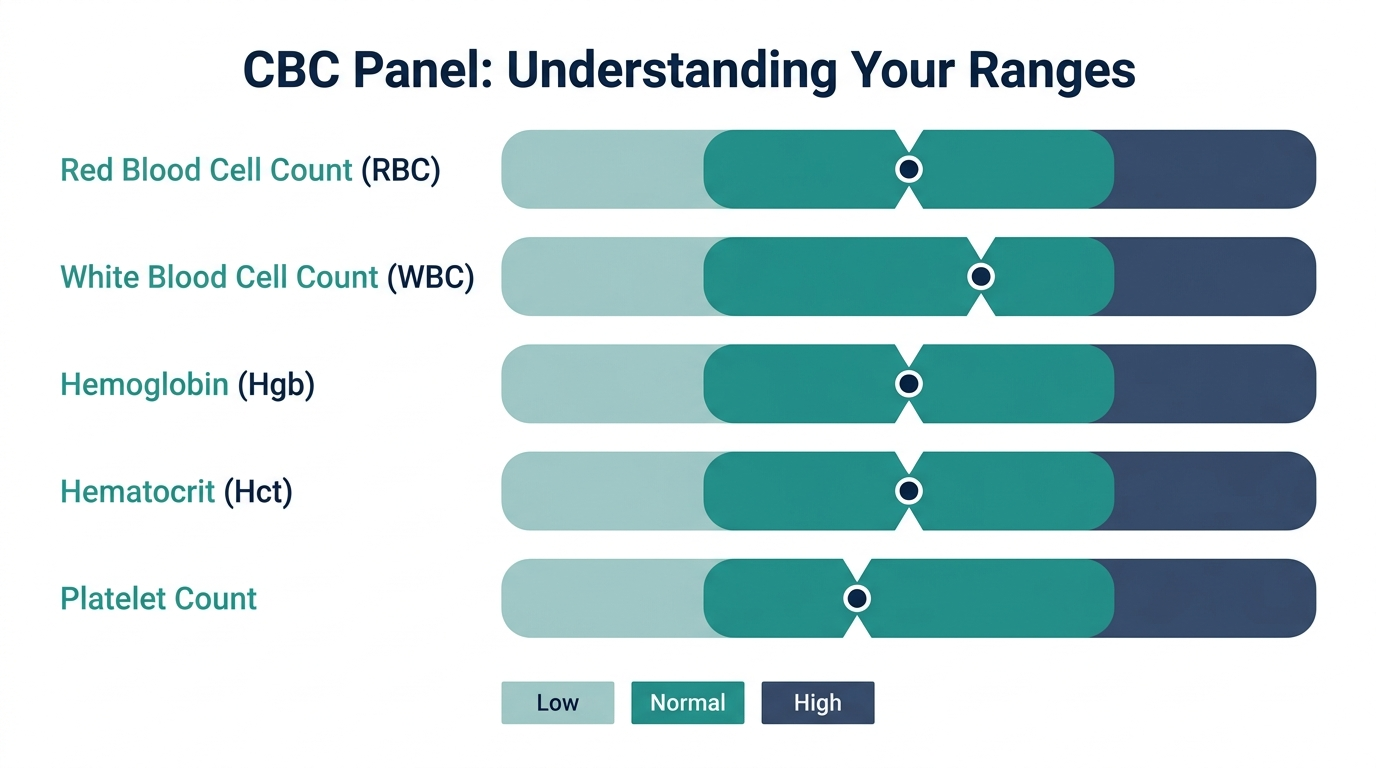
Reference ranges are set by each laboratory, so your report is always the authority. That said, the ranges below reflect commonly used adult values and give you a sense of scale. Note the sex differences, which are real and physiologic, not measurement quirks.
| Marker | Typical adult range | Notes |
|---|---|---|
| Hemoglobin | About 13 to 18 g/dL (men); about 12 to 16 g/dL (women) | Lower in women largely because of menstrual iron loss and the absence of testosterone-driven red cell production |
| Hematocrit | Roughly 41 to 50 percent (men); roughly 36 to 45 percent (women) | Tracks closely with hemoglobin; rises with dehydration |
| White blood cells | Roughly 3,700 to 10,500 per microliter | Same range for both sexes; rises with infection and stress |
| Platelets | About 150,000 to 400,000 per microliter | Very high or very low counts warrant follow-up |
Want to check your blood count?
Three ways to get it measured. Pick whichever fits you.
Affiliate links: we may earn a commission at no extra cost to you. A lab test does not replace a visit with your clinician.
Why the ranges vary between labs comes down to two things. First, different analyzers and reagent calibrations produce slightly different reference intervals. Second, a lab derives its range from the local population it serves, and populations differ. There is also a well-documented pattern where hemoglobin and hematocrit reference values differ by ancestry and by altitude, since people living at high elevation naturally carry more red blood cells to compensate for thinner air. This is why a value flagged as high in one report can read as normal in another.
The biology behind each cell line: what makes a count rise or fall
Understanding where these cells come from makes an abnormal result far less mysterious. All three cell lines are produced in your bone marrow from the same stem cells, and each responds to different signals.
Red blood cells, hemoglobin, and hematocrit
Your kidneys sense oxygen levels and release a hormone called erythropoietin, which tells the marrow to make more red blood cells when oxygen is low. This is why chronic lung disease, sleep apnea, high altitude, and smoking can push red cell counts up, and why kidney disease, which blunts erythropoietin, often causes anemia. On the low side, the most common driver worldwide is iron deficiency, because iron is the raw material for hemoglobin. Vitamin B12 and folate deficiency, chronic inflammation, blood loss, and marrow suppression are other frequent causes.
White blood cells
White cells surge when the marrow ramps up production to fight a threat. A bacterial infection classically drives up neutrophils, while many viral infections raise lymphocytes. Physical stress, corticosteroid medication, and even a hard workout or an adrenaline spike can transiently raise the total white count by shifting cells that were stuck to blood vessel walls into circulation. A low white count can come from certain viral infections, some autoimmune conditions, chemotherapy, and specific medications that suppress the marrow.
Platelets
Platelet production is governed largely by a hormone called thrombopoietin, made mostly in the liver. Counts rise, sometimes markedly, in response to inflammation, infection, iron deficiency, or after the spleen is removed. Counts fall when production drops, when platelets are consumed faster than they are made, or when an enlarged spleen sequesters them. Because platelets are also part of the inflammatory response, a high platelet count is often a reactive signal rather than a primary problem.
Common causes when values run high or low
Reading a flag is easier when you know the usual suspects behind it. These are patterns, not diagnoses, and any persistent abnormality deserves clinician follow-up.
- Low hemoglobin or hematocrit (anemia): iron deficiency, heavy menstrual bleeding, gastrointestinal blood loss, B12 or folate deficiency, chronic kidney disease, chronic inflammatory conditions, and recent significant bleeding.
- High hemoglobin or hematocrit: dehydration, which concentrates the blood, plus chronic low-oxygen states like sleep apnea and lung disease, smoking, living at altitude, testosterone therapy, and rarely a marrow disorder called polycythemia vera.
- High white blood cells: bacterial infection, inflammation, tissue injury, physical or emotional stress, corticosteroids, and, uncommonly, leukemia when the elevation is extreme or paired with abnormal cell types.
- Low white blood cells: viral infections, some autoimmune diseases, chemotherapy and radiation, certain medications, and B12 or folate deficiency.
- High platelets: iron deficiency, active inflammation or infection, recovery from bleeding, and after spleen removal.
- Low platelets: viral infections, certain medications, autoimmune destruction, liver disease, and heavy alcohol use.
Symptoms that pair with an abnormal CBC, and the red flags
Numbers gain meaning next to how you feel. Certain combinations should move you from watchful waiting to a prompt appointment.
- Anemia symptoms: fatigue, pallor, shortness of breath on exertion, dizziness, cold hands and feet, and a fast or pounding heartbeat.
- Infection or high white count symptoms: fever, chills, localized pain or swelling, and feeling generally unwell.
- Low platelet symptoms: easy bruising, pinpoint red spots on the skin, bleeding gums, nosebleeds, and blood in urine or stool.
Treat these as red flags that warrant urgent evaluation rather than a routine recheck: a very high or very low white count, especially with fever; a hemoglobin that has dropped sharply from your prior level; a platelet count well below the normal range with any active bleeding; or any abnormal CBC accompanied by unexplained weight loss, drenching night sweats, or bone pain. When in doubt, call your clinician rather than wait for the next scheduled draw.
Preparation and what can throw off your CBC
A CBC does not require fasting on its own, but several everyday factors can nudge the numbers, and knowing them helps you avoid a false alarm.
- Hydration. Being dehydrated concentrates your blood and can artificially raise hemoglobin, hematocrit, and red cell counts. Being overhydrated can dilute them slightly. Aim to be normally hydrated.
- Recent exercise. Strenuous activity in the hours before a draw can transiently raise the white cell count and shift platelet numbers.
- Time of day and stress. White cell counts fluctuate with the daily rhythm and with acute stress, since adrenaline mobilizes cells into the bloodstream.
- Recent illness or vaccination. An infection or a recent immune response can leave white cell counts elevated or altered for days.
- Sample handling. A difficult draw or a delay before the sample is processed can occasionally cause a spuriously low platelet count, called clumping. If a lone platelet result looks alarmingly low without symptoms, a repeat draw often resolves it.
For trend tracking, standardize your conditions: draw at a similar time of day, in a similar hydration state, and avoid a hard workout the day before. That way a change between two CBCs reflects your body, not the circumstances of the draw.
Which panels a CBC is best read alongside
A CBC answers some questions and raises others that only a companion panel can resolve. Ordering the right follow-up turns a flag into an explanation.
- Iron studies (ferritin, serum iron, TIBC, transferrin saturation) explain the cause behind a low hemoglobin and small red cells, distinguishing iron deficiency from other anemias. See the iron studies guide.
- Vitamin B12 and folate clarify anemia with large red cells, where the MCV is high.
- A comprehensive metabolic panel checks kidney and liver function, both of which influence blood cell production and platelet levels. See the CMP guide.
- A reticulocyte count shows whether your marrow is responding to anemia by making new red cells, which separates a production problem from a loss or destruction problem.
- Inflammatory markers such as high-sensitivity CRP help interpret a reactive high platelet or white cell count.
A worked interpretation example
Say your CBC shows low hemoglobin with a low MCV, meaning small red cells, and your platelet count is mildly high. That triad points strongly toward iron deficiency, because iron-poor marrow makes small, pale red cells and often overproduces platelets at the same time. The logical next step is iron studies, where a low ferritin would confirm it. Contrast that with low hemoglobin and a high MCV, meaning large red cells, which instead points toward B12 or folate deficiency and calls for those tests. The pattern, not any single number, tells the story.
Frequently asked questions
Do I need to fast before a complete blood count?
No. A CBC on its own does not require fasting, and you can eat and drink normally beforehand. You may be asked to fast only if the CBC is being drawn at the same time as other tests, such as a glucose or cholesterol panel, that do require an empty stomach. Follow the specific instructions your clinic gives you.
How long do CBC results take?
Results are usually fast because the test runs on an automated analyzer. Many labs return a CBC within a few hours, and you often see the numbers in your patient portal the same day or the next day. Your doctor will contact you sooner if a value needs urgent attention.
What is the difference between a CBC and a CBC with differential?
A standard CBC reports your total white blood cell count along with red cell and platelet measures. A CBC with differential adds a breakdown of the five white blood cell types, which are neutrophils, lymphocytes, monocytes, eosinophils, and basophils. The differential helps a clinician understand what kind of immune response is happening, so it is often ordered when infection or inflammation is suspected.
Can a complete blood count detect cancer?
A CBC cannot diagnose most cancers on its own, but it can raise a flag that prompts further testing. Blood cancers such as leukemia often produce striking abnormalities in white cell counts, and many other cancers can cause anemia or platelet changes. An abnormal CBC is a starting point that leads to more specific tests, not a final answer.
What does it mean if only one value is out of range?
A single out-of-range value is common and often not significant, especially if it is only slightly off. Reference ranges are set so that some healthy people fall outside them by chance. Your doctor looks at the whole pattern of results together with your symptoms and history, and may simply repeat the test to see whether the value returns to normal.
Sources
- Cleveland Clinic. Complete Blood Count (CBC): What It Is and Normal Ranges. https://my.clevelandclinic.org/health/diagnostics/4053-complete-blood-count
- StatPearls, NCBI Bookshelf. Normal and Abnormal Complete Blood Count With Differential. https://www.ncbi.nlm.nih.gov/books/NBK604207/
- MedlinePlus, U.S. National Library of Medicine. Complete Blood Count (CBC). https://medlineplus.gov/lab-tests/complete-blood-count-cbc/
- Kaiser Permanente Health Encyclopedia. Complete Blood Count (CBC). https://healthy.kaiserpermanente.org/health-wellness/health-encyclopedia/he.complete-blood-count-cbc.hw4260
This article is for general educational purposes and is not medical advice. It cannot diagnose or treat you and does not replace your clinician. Always discuss your lab results and any health decisions with a qualified healthcare professional.
Vital Signs Today may earn a commission if you buy through links on this page. It does not affect our editorial assessments.