Disclosure: Vital Signs Today may earn a commission if you buy through links on this page, at no extra cost to you. This does not influence our evidence-based assessments. We are not a medical provider; talk to a clinician before acting on test results.
Liver Function Tests Explained: The Complete Panel Guide
Key Takeaways
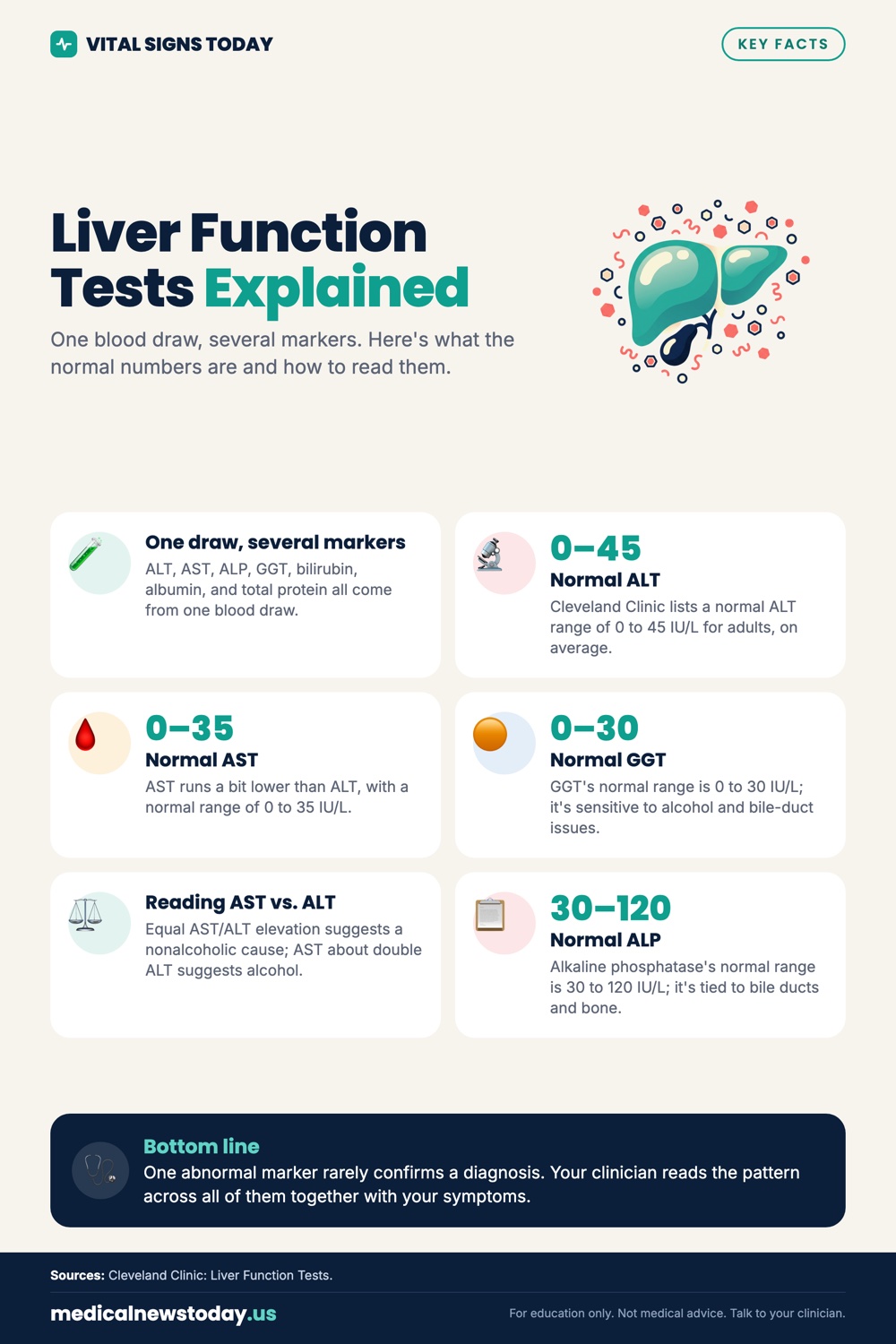
- Liver function tests are a single blood panel that measures seven markers (ALT, AST, ALP, GGT, bilirubin, albumin, and total protein) to show how well your liver is working and whether its cells are damaged.
- A doctor orders liver function tests to screen for liver disease, check symptoms like fatigue or yellowing skin, monitor medication side effects, and track conditions such as fatty liver or hepatitis over time.
- One abnormal result rarely confirms a diagnosis on its own, because the pattern across all seven markers, combined with your symptoms and history, is what tells the real story.
Liver function tests are a group of blood measurements that together reveal how your liver is performing and whether it is under stress. A clinician orders this panel to screen healthy people, to investigate symptoms such as fatigue, abdominal pain, or yellow skin, and to keep an eye on people who take liver-affecting medications or already have a liver condition. Below you will find a plain-language overview of the whole panel, with each individual marker linked to its own deep-dive article.
What is a Liver Function Tests?
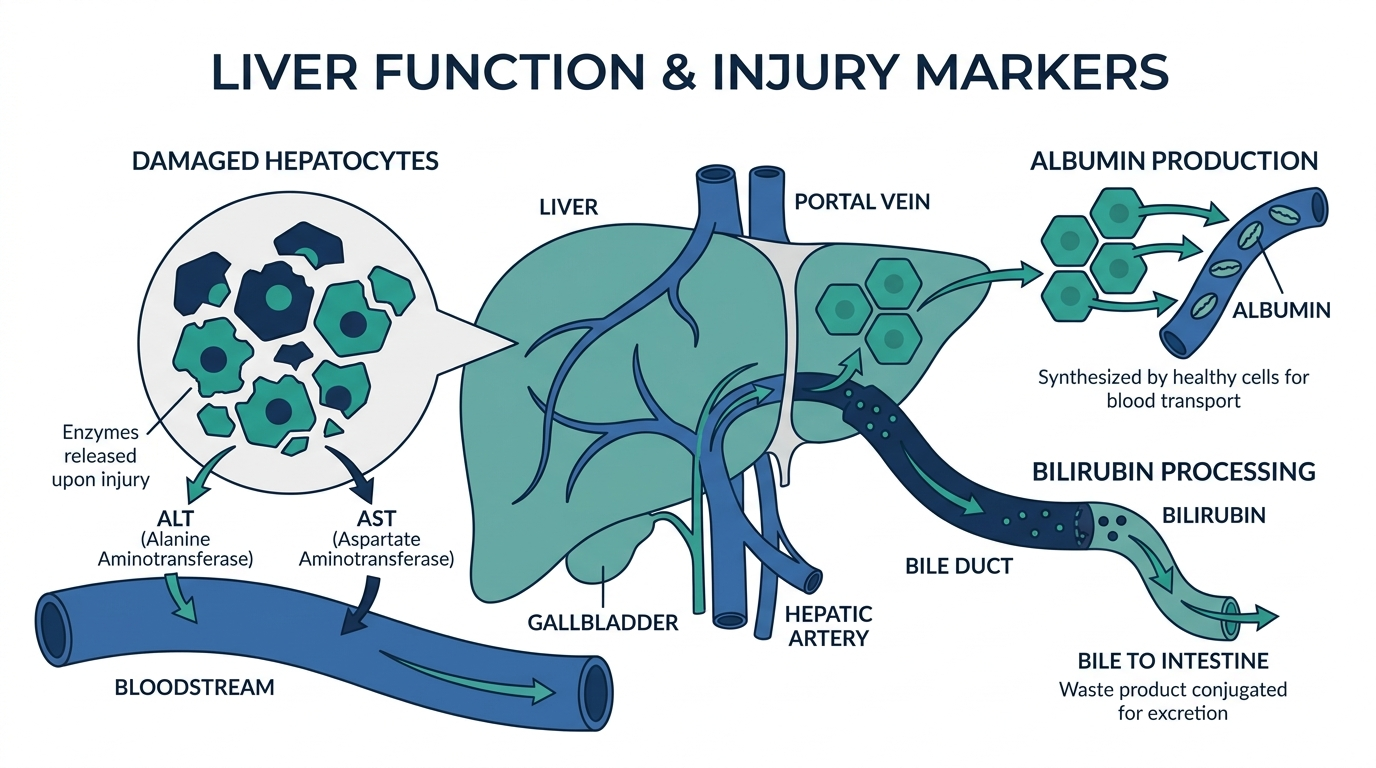
A liver function test, often called an LFT or liver panel, is a single blood draw that is split in the lab into several separate measurements. Despite the name, the panel does not only measure “function.” Some markers are enzymes that leak out of liver cells when those cells are injured, and others are proteins or waste products that show whether the liver is doing its everyday jobs. Together they give a fast, low-cost snapshot of liver health (per the [Cleveland Clinic](https://my.clevelandclinic.org/health/diagnostics/17662-liver-function-tests) and [MedlinePlus](https://medlineplus.gov/lab-tests/liver-function-tests/)).
The liver is one of the hardest-working organs in your body. It filters blood, breaks down toxins and drugs, makes proteins that clot your blood, and processes nutrients. When something interferes with these jobs, the liver panel is usually the first place the trouble shows up, often before you feel any symptoms.
What does a Liver Function Tests measure?
The panel reports seven core markers. Each one tells a slightly different part of the story, and each has its own dedicated article for the full detail.
- ALT (alanine transaminase): an enzyme found mostly inside liver cells, so a high level is one of the most specific signs of liver cell damage.
- AST (aspartate transaminase): an enzyme found in the liver but also in muscle and the heart, so it is read alongside ALT to judge how much of the rise is truly liver-related.
- ALP (alkaline phosphatase): an enzyme tied to the bile ducts and bone, so a high level can point to blocked bile flow rather than damaged liver cells.
- GGT (gamma-glutamyl transferase): an enzyme sensitive to bile-duct problems and alcohol, often used to confirm whether a high ALP is coming from the liver.
- Bilirubin: a yellow waste product from broken-down red blood cells, and a high level is what turns skin and eyes yellow (jaundice).
- Albumin: the main protein the liver makes, so a low level can suggest the liver has been struggling for a long time.
- Total protein: the combined measure of albumin and other blood proteins, giving a broad view of nutrition and liver production capacity.
Typical adult reference ranges are roughly: ALT 0 to 35 U/L, AST 0 to 35 U/L, ALP 30 to 120 U/L, GGT 0 to 30 U/L, total bilirubin 0.1 to 1.2 mg/dL, albumin 3.5 to 5.0 g/dL, and total protein 6.0 to 8.3 g/dL (per [StatPearls](https://www.ncbi.nlm.nih.gov/books/NBK482489/) and the [Cleveland Clinic](https://my.clevelandclinic.org/health/diagnostics/17662-liver-function-tests)). Ranges vary slightly between laboratories, so always read the range printed next to your own result.
Standard reference range versus optimal range
There is an important gap between “not flagged by the lab” and “ideal.” Laboratory reference ranges are built from the middle of the people who happen to get tested, and that population includes plenty of people with early fatty liver or heavy drinking habits. Because of this, many liver specialists argue the upper ALT limit printed on standard reports is set too high. A number of hepatologists consider a healthier ceiling for ALT to be closer to 30 U/L for men and around 19 to 25 U/L for women, rather than the 40 to 55 U/L some labs still print. You do not need to panic over a result of 38, but a value that sits near the top of the standard range year after year is worth a conversation, not a shrug.
The same logic runs across the panel. A GGT in the high-normal zone is one of the earliest signals of alcohol load or bile-duct stress, even when every other number looks clean. Reading your markers against a tighter optimal target, rather than only asking whether the lab drew a flag, is how you catch a problem years earlier.
Why would a doctor order a Liver Function Tests?
Doctors reach for the liver panel in several common situations. The most frequent is screening, because liver disease can advance quietly for years without symptoms, and a routine panel can catch it early. The second is investigation, when you have symptoms that could point to the liver, such as ongoing tiredness, nausea, loss of appetite, dark urine, pale stools, swelling in the abdomen or legs, or yellowing of the skin and eyes.
The third reason is monitoring. Many prescription drugs, including some cholesterol medications, painkillers, and tuberculosis treatments, can stress the liver, so clinicians repeat the panel to make sure the medication is safe to continue. Finally, if you already have a diagnosed condition such as hepatitis, fatty liver disease, or heavy alcohol use, the panel is used to track whether things are stable, improving, or getting worse.
How to read your Liver Function Tests results
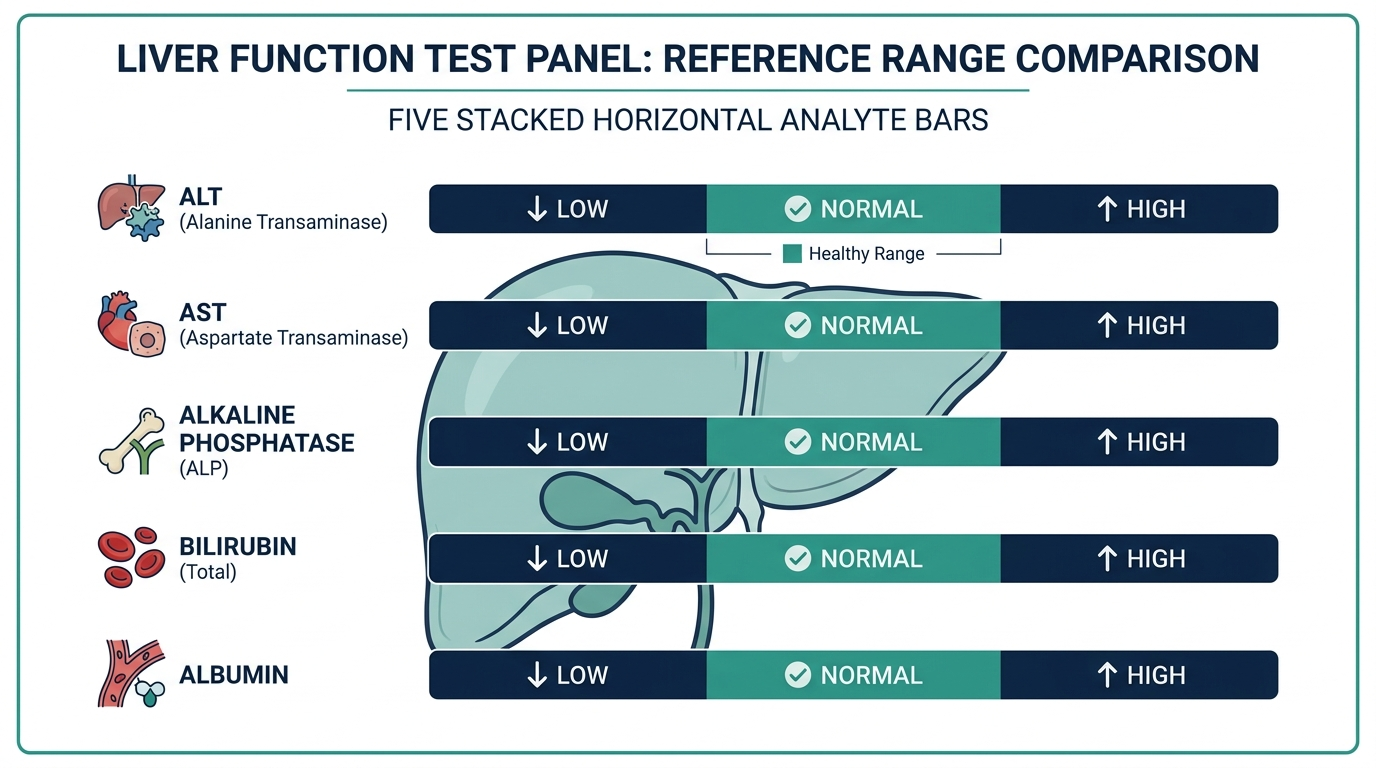
The single most important principle is to read the panel as a pattern, not as seven separate scores. Clinicians group the markers into two broad pictures. A rise dominated by ALT and AST suggests a “hepatocellular” pattern, meaning the liver cells themselves are inflamed or damaged. A rise dominated by ALP and GGT suggests a “cholestatic” pattern, meaning bile flow is partly blocked.
Next, look at how high a value is, not just whether it is flagged. A result a little above the top of the range is far less worrying than one that is several times higher. Mildly raised enzymes are common and can come from temporary causes such as recent intense exercise, alcohol, a viral illness, or certain supplements.
Bilirubin, albumin, and total protein add the “function” layer. High bilirubin can explain jaundice, while low albumin can hint that the liver has been impaired for a long time rather than for just a few days. Because so many things move these numbers, never self-diagnose from a printout. The job of the panel is to start a conversation with your clinician, who will weigh your symptoms, history, and other tests before drawing any conclusion.
Want to check your liver markers?
Three ways to get it measured. Pick whichever fits you.
Affiliate links: we may earn a commission at no extra cost to you. A lab test does not replace a visit with your clinician.
What do the common liver panel patterns mean?
Once you stop reading the numbers one at a time, a handful of recognizable patterns do most of the work. These are the same shapes a clinician looks for first.
The hepatocellular pattern (ALT and AST lead)
When ALT and AST are the markers pushed up while ALP stays relatively normal, the problem is usually inside the liver cells. Common drivers are fatty liver disease, viral hepatitis, medication or supplement injury, and alcohol. The relationship between the two enzymes adds a clue. In most liver injury ALT sits higher than AST, but when AST runs roughly twice ALT or more, alcohol-related liver disease or advanced scarring moves up the list. This AST to ALT relationship is the De Ritis ratio, covered in full in the ALT to AST ratio guide.
The cholestatic pattern (ALP and GGT lead)
When ALP and GGT are the ones climbing while ALT and AST stay closer to normal, the issue is more often with bile flow than with the liver cells themselves, for example a gallstone, a blockage, or certain drug reactions. GGT is the tiebreaker. A high ALP with a high GGT points back to the liver and bile ducts, while a high ALP with a normal GGT often means the alkaline phosphatase is coming from bone instead, which is exactly why the two are read together.
Isolated bilirubin with everything else normal
A mildly high bilirubin while every enzyme and protein is normal is one of the most common results that looks scary but is usually harmless. In many people this is Gilbert’s syndrome, a benign inherited quirk that slows bilirubin processing, especially during fasting, illness, or stress. It needs no treatment, and your clinician confirms it by the pattern rather than by any single dramatic number.
What can make a liver test result misleading?
Liver enzymes are more sensitive to ordinary daily life than most people expect, which is why a single odd result rarely means what it seems to at first glance. Knowing what moves the numbers helps you avoid both a false scare and a needless repeat draw.
- Hard exercise: a tough workout, especially heavy lifting or a long run in the day or two before the draw, can raise AST and sometimes ALT because these enzymes also live in muscle. This is one of the most common reasons a healthy person gets an unexpected flag.
- Alcohol: even a single heavy night can nudge GGT and the transaminases upward for days. If you want a clean baseline, skip alcohol for several days before testing.
- Medications and supplements: acetaminophen, some antibiotics, statins, and popular supplements such as high-dose niacin, green tea extract, and certain bodybuilding or herbal products can all raise enzymes. Bring a full list of everything you take to the appointment.
- Recent illness: a passing viral infection can inflame the liver enough to lift the enzymes temporarily, then settle on its own.
- Fasting status: the liver markers themselves do not require fasting, but bilirubin can rise with prolonged fasting, so a long overnight fast sometimes reads slightly higher.
Because of all this, the standard move for a mildly abnormal panel in someone who feels well is simple. Remove the obvious triggers, wait a few weeks, and repeat the test before anyone reaches for a scan or a specialist.
When should you get this panel tested?
There is no single universal schedule, and timing depends on your risk. Many adults will have liver markers checked as part of a routine wellness blood draw every one to a few years. You should ask sooner if you develop possible liver symptoms, such as persistent fatigue, upper-right abdominal pain, unexplained nausea, or any yellowing of the skin or eyes.
More frequent testing makes sense if you carry higher risk. That includes people who drink alcohol heavily, those with obesity, type 2 diabetes, or metabolic syndrome (all linked to fatty liver), people with a family history of liver disease, and anyone with viral hepatitis. If you start a medication known to affect the liver, your doctor will usually set a repeat-testing schedule for you. When in doubt, your clinician is the right person to decide both whether and how often you need the panel.
What should you do if your liver results come back abnormal?
The right next step depends far more on how high the numbers are and how you feel than on the flag itself.
For a mild elevation, meaning enzymes less than about three times the top of the range in someone with no symptoms, the usual plan is to address the reversible causes and retest in roughly four to eight weeks. That means pausing alcohol, reviewing supplements and medications with your clinician, and, if fatty liver is suspected, working on weight and blood sugar. Many mild elevations simply resolve on their own.
For a marked elevation, meaning enzymes many times above the range, or any abnormal result paired with symptoms such as yellowing skin or eyes, severe upper-right abdominal pain, confusion, vomiting, or very dark urine, this is not a wait-and-see situation. Seek medical care promptly, because those combinations can signal acute liver injury that needs same-day assessment.
Between those two extremes, expect your clinician to look for a cause with follow-up blood work such as hepatitis screening or iron studies, an ultrasound of the liver, and a careful review of your alcohol, weight, and medication history. The liver panel opens the investigation. It rarely closes it.
Every marker in this panel
Tap any marker for a full plain-English explainer, including what high and low results mean.
- ALT to AST Ratio Explained: What the De Ritis Ratio Reveals About Your Liver
- What Does High ALT Mean in a Blood Test? Causes and Danger Levels
- What Is ALT in a Blood Test? The Liver Number Whose Normal Range May Be Too High
- Low ALT in a Blood Test: What It Means and When to Worry
- What Is AST and ALT in a Blood Test? The Two Liver Numbers and the Gap Between Them
- What Is AST in a Blood Test? The Liver Enzyme That Only Makes Sense Next to ALT
- What Is AST in a Blood Test When It Is High? What an Elevated AST Really Means
- Low AST in a Blood Test: What It Means, Causes, and When to Worry
- GGT Liver Enzyme Meaning: What an Elevated GGT Really Tells You
- What Does a High GGT Blood Test Mean? Causes and Next Steps
- What Does Low Alkaline Phosphatase Mean in a Blood Test? Causes and Red Flags
- What Is Alkaline Phosphatase High in a Blood Test? What a High ALP Means
- What Is Alkaline Phosphatase in a Blood Test? The Liver vs Bone Clue Most People Misread
- What Does High Bilirubin in a Blood Test Mean? Causes and When to Worry
- What Does Low Bilirubin Mean in a Blood Test? Causes and Risks
- What Is Bilirubin in a Blood Test? Normal Range, High and Low Levels Explained
- What Does High Albumin Mean in a Blood Test? Causes and When to Worry
- What Does Low Albumin Mean in a Blood Test? Causes and When to Worry
- What Is Albumin in a Blood Test? The Quiet Protein That Reads Your Liver, Kidneys, and Nutrition at Once
- What Is a Protein Total Blood Test? The Number That Hides Two Stories at Once
Frequently asked questions
Do I need to fast before a liver function test?
For the liver markers themselves, fasting is usually not required. However, liver panels are often drawn at the same time as glucose or cholesterol tests, which can require fasting, so follow the specific instructions your clinic gives you for your appointment.
Can liver function tests be normal even if I have liver disease?
Yes. The panel is sensitive but not perfect, and some people with early or even significant liver disease can have results inside the normal range. This is one reason doctors combine the panel with your symptoms, imaging, and risk factors rather than relying on the blood numbers alone.
What is the difference between ALT and AST?
Both are enzymes that rise when liver cells are damaged, but ALT is found mostly in the liver while AST is also present in muscle and the heart. Because of this, ALT is generally the more liver-specific marker, and clinicians compare the two values to judge the likely source of any rise.
Will one abnormal result mean I have a serious problem?
Not usually. A single mildly abnormal value is common and often temporary, caused by things like recent alcohol, intense exercise, a passing infection, or certain supplements. Doctors typically repeat the test and look at the whole pattern before deciding whether anything needs follow-up.
How long does it take to get liver function test results?
Most labs process a liver panel quickly, and results are commonly available within one to two days, sometimes the same day. Your clinic or patient portal will tell you when to expect them and how they will be shared with you.
Can I lower my liver enzymes naturally?
Often yes, when the cause is lifestyle rather than disease. The most effective levers are cutting alcohol, losing even 5 to 10 percent of body weight if you carry extra, improving blood sugar, and stopping any supplement that is stressing the liver. In fatty liver, this kind of change can bring an elevated ALT down within a few months. It should be done alongside your clinician, not instead of a proper diagnosis.
Are liver function tests the same as a hepatitis test?
No. A standard liver panel measures enzymes and proteins and can hint that something is wrong, but it cannot name the cause. Diagnosing viral hepatitis requires specific antibody and antigen blood tests that look for the virus itself, which your doctor orders separately if the pattern or your history suggests it.
Which single marker matters most on a liver panel?
There is no single most important marker, because the panel works as a pattern. That said, ALT is often the first number a clinician glances at because it is the most liver-specific enzyme, while albumin and bilirubin carry extra weight when the question is how well the liver is still functioning rather than simply whether cells are irritated.
Sources
- Cleveland Clinic: Liver Function Tests
- MedlinePlus: Liver Function Tests
- StatPearls (NCBI Bookshelf): Liver Function Tests
This article is for general educational purposes and is not medical advice. It cannot diagnose or treat you and does not replace your clinician. Always discuss your lab results and any health decisions with a qualified healthcare professional.
Vital Signs Today may earn a commission if you buy through links on this page. It does not affect our editorial assessments.