Disclosure: Vital Signs Today may earn a commission if you buy through links on this page, at no extra cost to you. This does not influence our evidence-based assessments. We are not a medical provider; talk to a clinician before acting on test results.
Related: albumin blood test: the full guide
You scanned your blood work, hit the word “albumin,” and saw a number sitting just above the top of the reference range. No bold red flag, maybe a small “H” next to it. Here is the part most people are never told: a high albumin result is one of the least worrisome abnormal numbers on the whole panel. In the vast majority of cases it is not your liver, not your kidneys, and not a hidden disease. It is usually a plumbing problem, not a body problem.
That does not mean you should ignore it. It means you should know exactly what it is pointing at, because the real answer is often as simple as the glass of water you did not drink before your draw.
Part of our Comprehensive Metabolic Panel guide.
What does high albumin mean in a blood test?
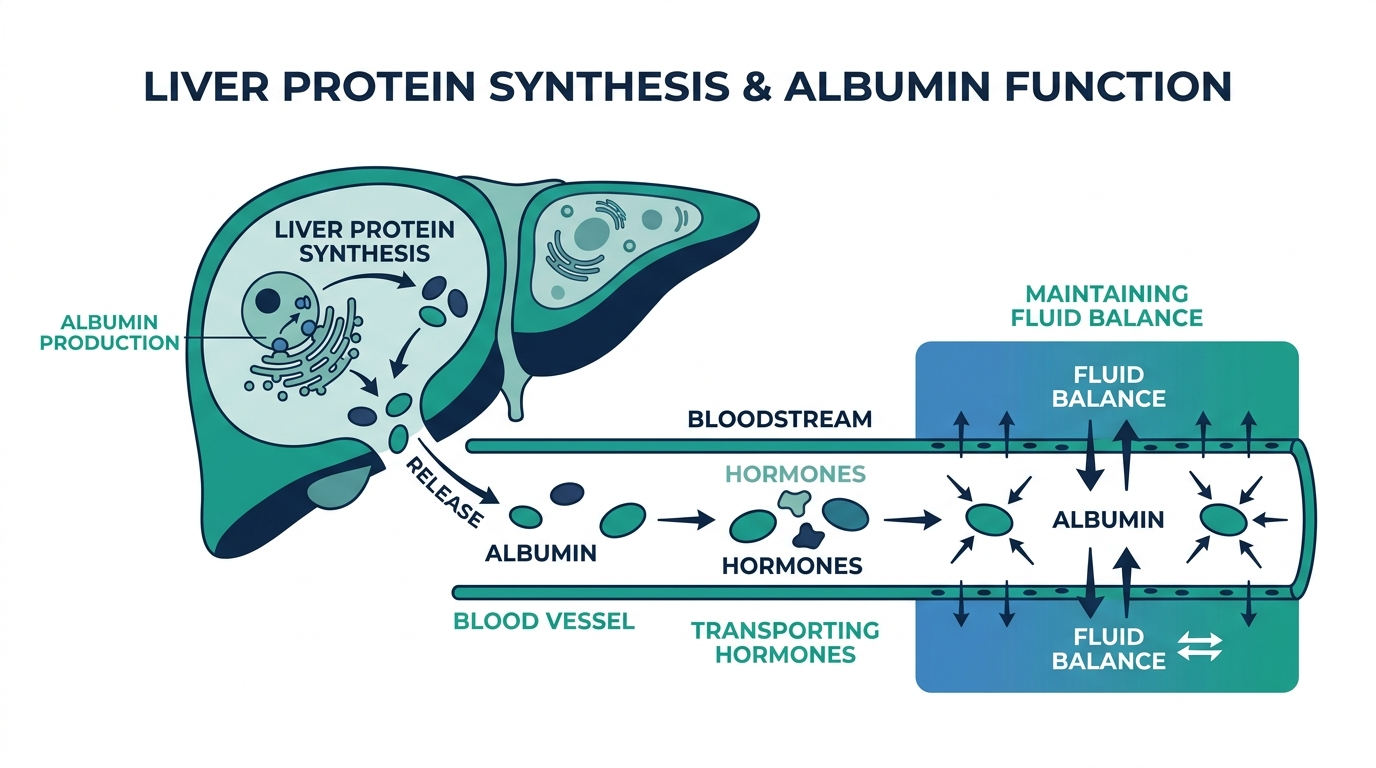
A high albumin in a blood test almost always means your blood is more concentrated than usual, most commonly from dehydration, rather than your body actually making extra albumin (MedlinePlus). Albumin is the most abundant protein in your blood plasma, made by your liver, and it does two big jobs: it holds fluid inside your blood vessels (oncotic pressure) and it ferries hormones, calcium, and many medications around your body (NCBI StatPearls).
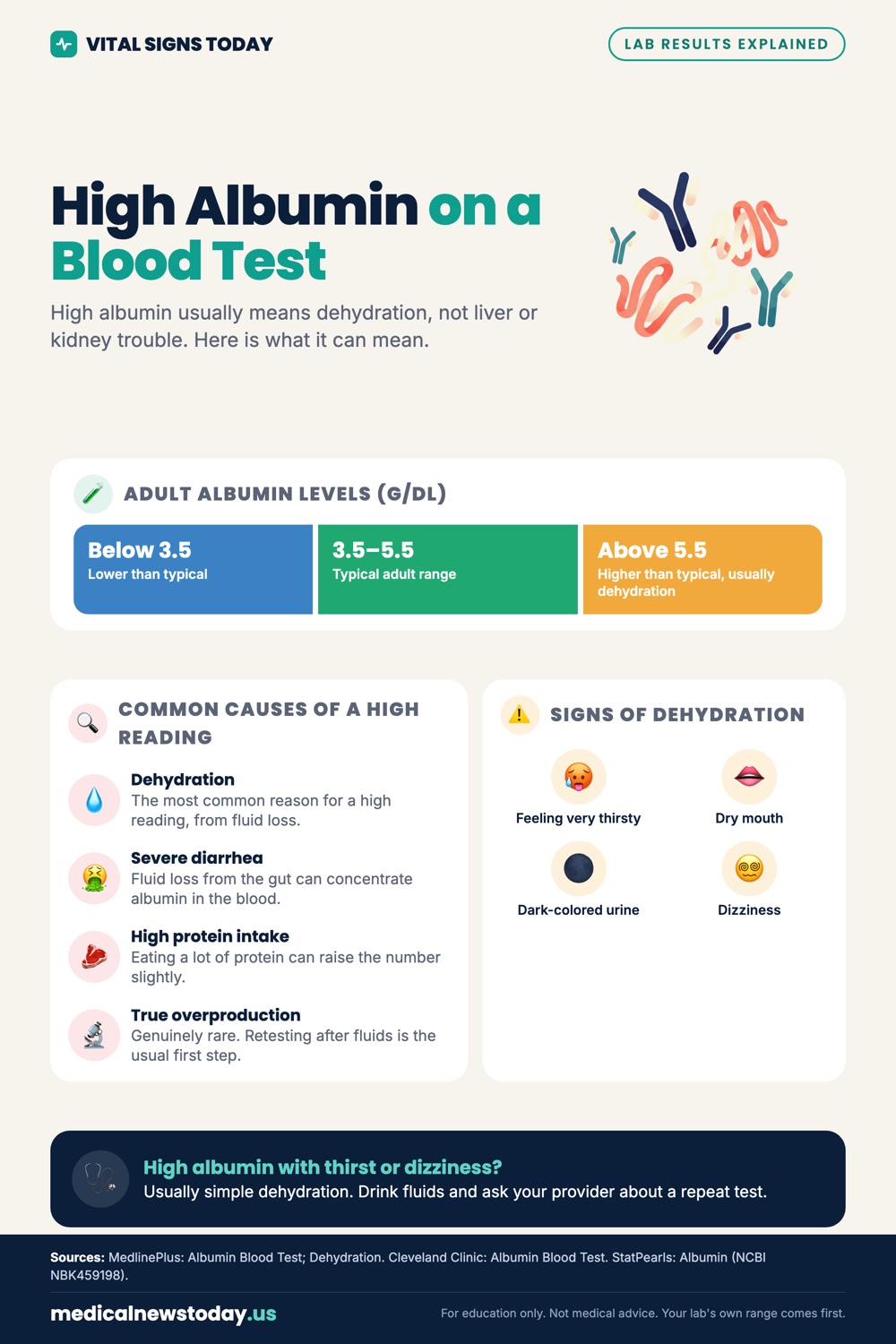
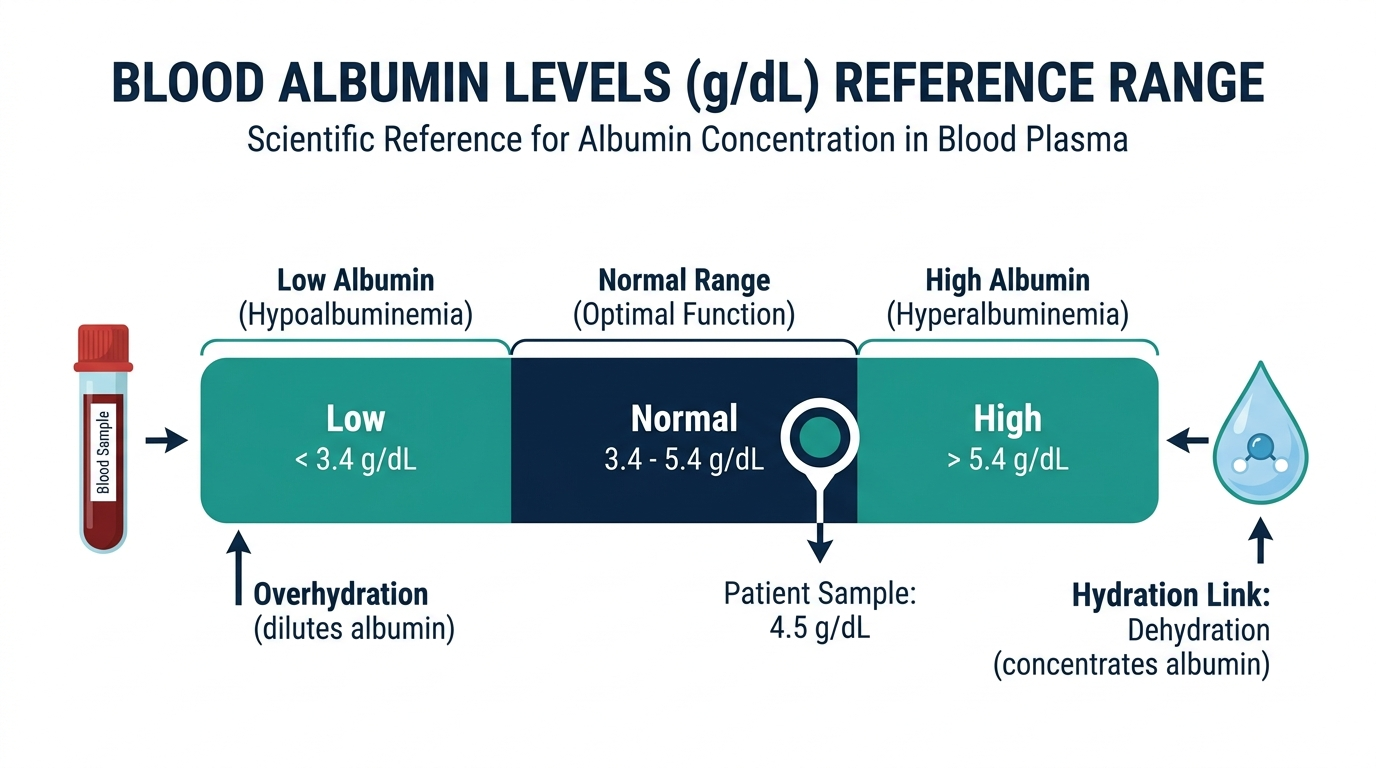
For most adults, a normal albumin level runs from about 3.5 to 5.5 grams per deciliter, though the exact cutoff varies by lab and instrument (Cleveland Clinic). A result above the top of your lab’s range, call it roughly 5.5 g/dL or higher, is what gets the “high” tag and is technically called hyperalbuminemia.
Here is the mental model that makes the whole thing click. Albumin is dissolved in the water portion of your blood. If you lose water and the amount of albumin stays the same, the concentration rises, the same way a cup of coffee tastes stronger as it sits and evaporates. Your liver did not crank up production. The fluid around the protein simply shrank. That is why a single high albumin is rarely a diagnosis on its own.

What causes a high albumin?
The differential for high albumin is short, and it is heavily weighted toward one cause. Listing the real culprits, most common first:
- Dehydration. This is the headline answer. When you are low on fluid, your plasma is concentrated and albumin reads high (MedlinePlus). Skipping water before a fasting draw, exercising hard, hot weather, or simply not drinking enough can all do it.
- Severe diarrhea or other large fluid loss. Anything that strips water out of the body quickly, such as severe diarrhea or vomiting, concentrates the blood and can push albumin up (Cleveland Clinic).
- A very high-protein diet. Eating a large amount of protein can nudge albumin toward the high end, which is why your clinician may ask about your typical diet when results come back elevated (MedlinePlus).
- Certain medications. Some drugs, including steroids, insulin, and certain hormones, can raise measured albumin (MedlinePlus).
- A draw artifact. This one is underappreciated and covered in detail below. A tourniquet left on too long can make albumin look falsely high without anything being wrong with you at all.
Notice what is not on this list: there is no common, dangerous disease that announces itself primarily through high albumin. Albumin is far more clinically useful when it is low, where it can signal liver disease, kidney loss, malnutrition, or chronic illness (Mayo Clinic). A high value almost always points back to fluid status or how the sample was handled.
What are the symptoms of a high albumin?
Here is the honest answer that a lot of articles dance around: high albumin itself causes no symptoms. It is a number on a lab report, not a condition you feel. You will not feel “high albumin.”
What you might feel are symptoms of the thing that concentrated your blood in the first place, namely dehydration. Those can include thirst, a dry mouth, dark or scant urine, lightheadedness when you stand, fatigue, and a faster heartbeat. If your high albumin came from severe diarrhea or vomiting, the symptoms you notice are from the fluid loss, not from the albumin reading.
So when you see an isolated high albumin with no other complaints, the practical move is to think about your water intake over the day or two before the draw, not to start worrying about a silent disease. The number is a mirror of your hydration, and the mirror does not hurt.
When is a high albumin dangerous or a medical emergency?
High albumin is, on its own, essentially never a medical emergency. There is no red-flag albumin number that, by itself, sends someone to the emergency room. The danger, when there is any, lives in the underlying cause, not in the protein concentration.
The scenario that actually deserves urgency is severe dehydration, and you judge that by how the person looks and feels, not by the albumin value. Warning signs of dangerous dehydration include confusion or unusual drowsiness, fainting, no urination for many hours, a racing heart with low blood pressure, and sunken eyes, especially in older adults, young children, or anyone with ongoing vomiting or diarrhea. Those signs warrant prompt care regardless of what any single lab number says.
The mirror image is more clinically loaded: a low albumin is the result that earns genuine concern, because it can reflect liver disease, protein loss through the kidneys, malnutrition, or serious chronic illness (Mayo Clinic). If you came here worried because albumin can be a marker of severe disease, that reputation belongs to the low end of the scale, not the high end.

What should you do about a high albumin?
For a mildly elevated, isolated albumin with no symptoms, the plan is usually reassuringly simple.
- Rehydrate and consider a recheck. Because dehydration is the dominant cause, drinking adequate fluids and repeating the test, often after a normal night and a glass of water, frequently brings the number back into range. Dehydration-driven elevations tend to correct quickly once fluid balance is restored.
- Read it in context, not in isolation. Albumin is interpreted alongside the rest of the panel. Your clinician will look at total protein, the albumin to globulin (A:G) ratio, and liver and kidney markers to see whether the picture is consistent with simple concentration or something that needs follow-up (Cleveland Clinic). A blood test alone does not diagnose a condition (MedlinePlus).
- Mention your diet and medications. Tell your provider if you eat a very high-protein diet or take steroids, insulin, or hormone medications, since these can lift the reading (MedlinePlus).
- Do not chase it with treatment. There is no medication and no special diet to “lower albumin.” Treating the cause, usually just better hydration, is the entire intervention for the typical case.
When should you see a doctor?
Reach out to your clinician if your high albumin persists on a repeat test after you have rehydrated, if it shows up alongside other abnormal results such as elevated total protein, an abnormal A:G ratio, or off liver or kidney numbers, or if you have symptoms that do not fit simple dehydration. Seek prompt care for signs of significant dehydration, such as confusion, fainting, a racing heart, or an inability to keep fluids down. As a rule, a one-time, slightly high albumin in an otherwise healthy person who was a little dry on the day of the draw is a conversation, not a crisis. Always review your specific results with your own provider, who can read them against the rest of your panel and your history.
The insider nuance: your high albumin may have happened at the needle, not in your body
Here is the detail that rarely makes it into the patient version, and the one most likely to explain an unexpected “H” next to your albumin. The way your blood was drawn can falsely raise the result.
If the tourniquet, that elastic band, is left wrapped around your arm too long before the needle goes in, blood pools and fluid is pushed out of the vein into the surrounding tissue. What stays behind in the vein becomes more concentrated, and large proteins like albumin get artificially inflated. This is called venous stasis, and it is a well-recognized preanalytical cause of a falsely high albumin. Pumping your fist repeatedly while the band is on can add to the effect. None of this reflects anything happening inside your body. It is a sampling artifact, and the standard fix is simply to redraw with proper technique.
This matters because it changes the first question you should ask about an isolated high albumin. Before anyone goes hunting for a cause, the two cheapest explanations are: were you dehydrated, and was the tourniquet on too long? A high total protein and high albumin appearing together on the same draw, in someone who feels fine, very often resolve on a clean repeat sample. The number that looked alarming was never a window into your liver or kidneys at all. It was a snapshot taken through a slightly fogged lens.
If your albumin keeps reading high across multiple, well-collected, well-hydrated samples, that is when it stops being an artifact and becomes worth a closer look. But that is the exception, not the rule, which is exactly why a high albumin earns far less alarm than the low albumin sitting on the other end of the same scale (Mayo Clinic).

Why albumin is one of the most quietly useful numbers on the panel
Even though a high albumin is rarely alarming, albumin itself does real work that ripples across your whole report. Understanding those jobs explains why clinicians read it so carefully in other contexts.
- It holds fluid inside your vessels. Albumin creates the oncotic pressure that keeps water in the bloodstream. When albumin is truly low, fluid leaks into tissues and causes swelling, one reason low albumin gets so much attention.
- It is a carrier truck. Albumin transports calcium, hormones, bilirubin, fatty acids, and many medications. This is why your albumin level directly affects how other results are interpreted.
- It corrects your calcium. Because roughly half of blood calcium rides on albumin, clinicians adjust a calcium result up or down based on albumin. A high albumin can make total calcium read slightly higher without any true change in the active calcium.
- It reflects liver output and nutrition over weeks. The liver makes albumin, and it has a long half-life, so albumin trends give a slow-moving readout of liver synthesis and protein status.
The panel that surrounds albumin
Albumin is never meant to be read alone. These are the companions that tell you whether a high value is simple concentration or something worth a second look.
| Companion test | What it adds to a high albumin |
|---|---|
| Total protein | If both albumin and total protein rise together and you feel fine, the pattern strongly favors dehydration or a concentrated sample. |
| Globulin and the A:G ratio | Total protein minus albumin gives globulin. A high globulin with normal albumin points in a very different direction, toward inflammation or certain blood disorders, rather than dehydration. |
| BUN and creatinine | Kidney markers that also rise with dehydration. A high BUN to creatinine ratio alongside high albumin reinforces a dry, concentrated picture. |
| Sodium and hematocrit | Both tend to climb when the blood is concentrated, another fingerprint of dehydration. |
| Liver enzymes (AST, ALT, bilirubin) | Read together to confirm the liver is healthy, since the liver makes albumin. |
Want to check your albumin?
Three ways to get it measured. Pick whichever fits you.
Affiliate links: we may earn a commission at no extra cost to you. A lab test does not replace a visit with your clinician.
Reading the pattern: worked scenarios
- High albumin, high total protein, high BUN to creatinine ratio, no symptoms. The classic dehydration signature. Rehydrate and repeat, and it usually normalizes.
- High albumin only, after a tough draw with a long tourniquet. Likely venous stasis. A clean redraw typically resolves it.
- Normal albumin but high globulin. Not a concentration issue at all. This shifts attention toward inflammation, infection, or a protein disorder and warrants its own workup.
- High albumin with symptoms of significant dehydration, such as dizziness, dark urine, and a racing heart. Here the number matters less than the clinical state, which may need prompt fluids.
- Persistently high albumin across several well-hydrated, cleanly drawn samples. The exception that earns a closer look, since it no longer fits the usual artifact explanations.
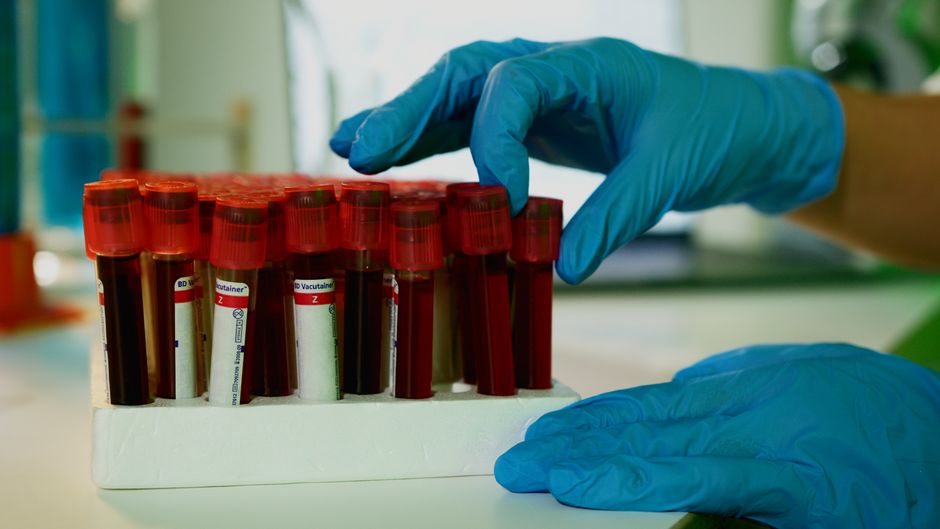
How the test is done and what can skew it
Albumin is measured as part of a comprehensive metabolic panel or a liver panel, from a routine venous draw. You do not usually need to fast specifically for albumin, though the panel it rides on may require fasting for other reasons. The factors that most often push albumin up are all about concentration and technique rather than disease:
- Hydration status. Being even mildly dehydrated on the morning of the draw is the leading reason albumin reads high.
- Tourniquet time and fist pumping. Prolonged venous stasis concentrates proteins in the vein and inflates the result.
- Body position. Standing for a while before a draw can slightly raise protein readings compared with lying down.
- A very high-protein diet in the days before testing can nudge the number toward the top of the range.
- Certain medications, including steroids and some hormones, which can lift the measured value.
Common misconceptions about high albumin
- “High albumin means my liver is overworking.” The liver does not usefully overproduce albumin in a way that shows up as a high value. A high reading is about fluid, not liver overdrive.
- “I need to eat less protein to fix it.” Diet is a minor factor. There is no protein-restriction treatment for a high albumin, and the usual fix is simply hydration.
- “A high result is as concerning as a low one.” It is not. Low albumin can signal serious disease. High albumin is usually a benign concentration effect.
- “There is a medication to lower albumin.” There is not. You treat the cause, which is nearly always dehydration or a sampling issue.
- “One high reading means something is wrong.” A single mildly high albumin in a well person who was a little dry is a conversation, not a diagnosis. The trend on repeat testing is what counts.
Who should pay attention, and how often
Albumin is included on the common metabolic and liver panels most adults get at routine visits, so it is usually measured without any special request. It deserves closer attention in specific situations.
- Anyone prone to dehydration, including older adults, athletes, and people with ongoing vomiting or diarrhea, where a high reading often simply mirrors fluid status.
- People with liver or kidney disease, where albumin is tracked over time, though the concern there is usually a falling value.
- Those with an abnormal total protein or A:G ratio, where albumin helps sort out whether the issue is albumin, globulin, or concentration.
- Anyone with a persistently high albumin across clean, well-hydrated draws, which is the rare case that warrants a look beyond hydration.
The bottom line stays the same throughout. A high albumin is one of the most reassuring abnormal numbers on a report. Read it with your hydration, your total protein, and how the sample was drawn, confirm it on a clean repeat if needed, and it almost always turns out to be a passing reflection of a dry morning or a long tourniquet rather than a hidden disease.
Frequently asked questions
Is high albumin in a blood test serious?
Usually not. A high albumin most often reflects dehydration or a concentrated sample rather than disease, and a blood test alone cannot diagnose a condition (MedlinePlus). The result that signals serious problems is typically a low albumin, not a high one (Mayo Clinic).
What is the normal albumin range, and what counts as high?
Normal albumin for adults generally runs about 3.5 to 5.5 g/dL, though it varies slightly by lab (Cleveland Clinic). A value above the top of your lab’s reference range is flagged as high, also called hyperalbuminemia. Always compare against the range printed on your own report.
Can dehydration cause a high albumin level?
Yes, and it is the most common cause. When you are low on fluid, your plasma is concentrated, so albumin reads high even though your body has not made more of it (MedlinePlus). Severe diarrhea or vomiting can do the same by stripping out water (Cleveland Clinic).
Can a blood draw give a falsely high albumin?
Yes. Leaving the tourniquet on too long causes venous stasis, which concentrates large proteins in the vein and can falsely raise albumin. This is a preanalytical artifact, not a real change in your body, and it typically resolves on a properly collected repeat sample.
How do I lower a high albumin?
There is no medication to lower albumin. Because the usual cause is dehydration, restoring normal fluid intake and rechecking the value is the standard approach, and the elevation often corrects on its own (MedlinePlus). If it persists, your clinician will read it alongside total protein, the A:G ratio, and liver and kidney tests (Cleveland Clinic).
This article is for general educational purposes and is not medical advice. It cannot diagnose or treat you and does not replace your clinician. Always discuss your lab results and any health decisions with a qualified healthcare professional.
Vital Signs Today may earn a commission if you buy through links on this page. It does not affect our editorial assessments.