Quick answer: Functional blood testing uses the same venipuncture and the same biomarkers as conventional lab work, but interprets each result against tighter “optimal” ranges derived from healthy, asymptomatic populations rather than the broad statistical ranges printed on a standard lab report. A TSH of 3.8 mIU/L clears the conventional flag of 0.4 to 4.0, but a functional medicine clinician flags it as suboptimal (target: 1.0 to 2.0) and investigates why. The practical upshot is earlier pattern recognition, more biomarkers measured per draw, and a treatment philosophy aimed at optimizing physiology rather than just ruling out named disease.
What functional blood testing actually means
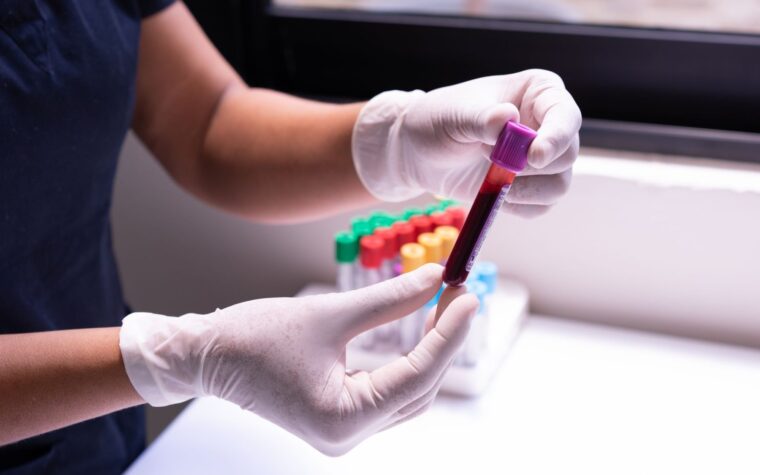
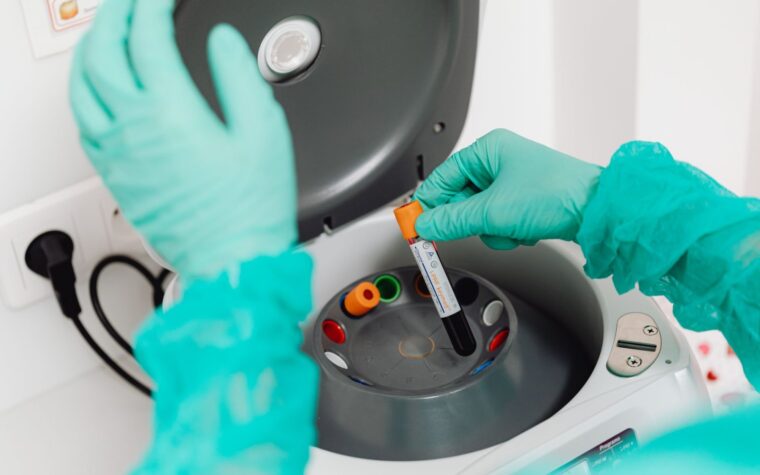
Functional blood testing is a framework for ordering and interpreting a comprehensive blood panel through the lens of physiology optimization, not just disease exclusion. The tests themselves are standard CLIA-certified assays run at the same Quest Diagnostics and Labcorp reference labs that process your annual physical bloodwork. What differs is the clinical interpretation layer on top.
In conventional medicine, reference ranges are built by taking a large population of people who showed up at a lab, running their values, and marking the middle 95 percent as “normal.” That population includes people with early metabolic dysfunction, subclinical hypothyroidism, and insulin resistance who had not yet been diagnosed with anything. Functional lab testing rejects that statistical shortcut. Optimal ranges are narrower brackets derived from cohorts studied for longevity, absence of chronic disease, and high function. The two systems are not in conflict; they use the same data read with different thresholds.
For a deeper look at how the two philosophies diverge, see our piece on functional vs conventional blood tests.
Which biomarkers does a functional medicine blood test typically include?
A thorough functional medicine blood test panel usually covers five domains that conventional annual labs leave partially or completely unaddressed: metabolic health, thyroid cascade, inflammatory burden, nutrient sufficiency, and hormonal milieu. Below is a representative list with the conventional reference range versus the tighter functional target, so you can see concretely how interpretation shifts.
| Biomarker | Conventional “normal” range | Functional optimal target | Why it matters |
|---|---|---|---|
| Fasting glucose | 70 to 99 mg/dL | 72 to 85 mg/dL | Values from 90 to 99 predict T2D progression over a decade |
| HbA1c | Below 5.7% | 4.8 to 5.3% | Glycation damage begins below the prediabetic cutoff |
| TSH | 0.4 to 4.0 mIU/L | 1.0 to 2.0 mIU/L | Symptoms common in the 2.5 to 4.0 range even when "normal" |
| Free T3 | 2.3 to 4.2 pg/mL | 3.2 to 4.0 pg/mL | Active thyroid hormone; often skipped on standard panels |
| hs-CRP | Below 10 mg/L (acute) | Below 1.0 mg/L (cardiovascular) | AHA/CDC define low CV risk as below 1.0 mg/L |
| 25-OH Vitamin D | 20 to 100 ng/mL | 50 to 80 ng/mL | Most immune and hormonal benefits observed above 40 to 50 |
| Ferritin | 12 to 300 ng/mL (men) | 50 to 150 ng/mL | Very low: iron depletion fatigue; very high: inflammation marker |
| HOMA-IR | Not reported conventionally | Below 1.5 | Calculated insulin resistance index from fasting glucose and insulin |
| Homocysteine | Below 15 micromol/L | Below 8 micromol/L | Cardiovascular and cognitive risk rises progressively above 10 |
| Omega-3 index (EPA+DHA in RBC) | Not standard | 8 to 12% | Below 4% is associated with elevated sudden cardiac death risk |
Many functional practitioners also add apolipoprotein B (ApoB) over standard LDL-C, LDL particle number or LDL-P, sex hormones and SHBG, cortisol (AM serum), and specific B vitamins. A panel ordered by a functional medicine doctor will often include 60 to 120 individual markers on a single blood draw. Platforms like Superpower run over 100 markers and layer physician review on top.
How is a functional health blood test actually ordered?
There are three practical routes to getting a functional medicine blood test in 2026, each with different gatekeeping, cost, and turnaround.
Through a functional medicine clinician or concierge practice
A functional medicine physician, naturopathic doctor, or certified functional medicine health coach who holds prescriptive authority writes the requisition. The draw happens at a local Quest or Labcorp patient service center. This is the most thorough route because the clinician selects a bespoke panel, reviews results in context of your history, and writes an interpretation report, not just flags outliers. Expect to pay $300 to $900 out of pocket for the panel itself; most functional panels are not covered by insurance because they exceed what payers define as medically necessary. Membership-style practices often bundle annual panels into a flat fee.
Direct-to-consumer (DTC) lab membership services
Services like Superpower, Function Health, and LifeExtension’s lab panel products let you bypass the clinician gatekeeper entirely. You purchase a membership online, receive a signed lab order electronically, walk into a Quest or Labcorp draw site, and receive digital results with AI-assisted or physician-assisted interpretation. This model typically costs $150 to $400 per year for one to two comprehensive draws. The tradeoff is less personalized follow-up compared to a dedicated functional medicine doctor, though some services now include asynchronous clinician chat.
At-home phlebotomy and mail-in kits
Companies partner with mobile phlebotomists who come to your home or office. The blood is drawn into standard vacutainer tubes and shipped to a certified lab. Cost adds roughly $40 to $100 on top of the panel price for the travel fee. For biomarkers that can be measured from a fingerprick dried blood spot, some kits go fully mail-in, though sensitivity for certain analytes (particularly ferritin, hormones) can be lower than venous draws. Our guide to functional medicine testing at home covers the major DTC options and their accuracy comparisons.
What is the real difference between optimal lab ranges and reference ranges?
The difference is statistical versus physiological. Reference ranges are percentile-based; optimal ranges are evidence-based thresholds tied to downstream health outcomes. This is the most important conceptual shift in functional lab testing and also the most misunderstood.
A conventional lab builds its reference range by measuring thousands of patients and calling the 2.5th to 97.5th percentile “normal.” If the American population is broadly metabolically unhealthy (and by insulin resistance and obesity metrics, about 88 percent of Americans are metabolically unhealthy), then that “normal” range reflects a sick population, not a healthy one. You can have a fasting insulin of 14 mIU/L, which falls inside the reference range of 2 to 19 mIU/L, and still have clinically meaningful insulin resistance that will drive waist circumference gains, elevated triglycerides, and rising blood pressure over the next five years.
Functional optimal ranges are derived differently. Researchers identify populations with low rates of cardiovascular disease, type 2 diabetes, and dementia, then reverse-engineer what their biomarker values look like. For glucose, those populations tend to cluster at 70 to 85 mg/dL fasting. For TSH, at 1.0 to 2.0. The ranges are tighter, and flagging a value as suboptimal does not mean disease is present. It means the trajectory is unfavorable if nothing changes.
One practical implication: a standard annual physical at your primary care doctor will very rarely flag a fasting glucose of 94 or a TSH of 3.5 or an hs-CRP of 2.8. All three are technically within reference range. A functional medicine blood test interpretation would flag all three and connect them into a pattern pointing toward early insulin resistance with a low-grade inflammatory driver and possible thyroid underactivity.
The simplest way to actually get this done
Superpower is a full-body lab membership that runs 100+ biomarkers, has each result reviewed by a doctor, and tracks your numbers year over year (about $199/year). It is what we point readers to when they would rather get one clean, complete draw than chase single tests one at a time. Here is superpower blood test reviewed in full.
What does a functional blood test cost, and is it covered by insurance?
Most functional blood testing falls outside standard insurance coverage because it exceeds the panel a payer defines as medically necessary for a healthy adult. The practical cost landscape in 2026 looks like this:
| Route | Approximate cost | What is included | HSA/FSA eligible? |
|---|---|---|---|
| DTC membership (Superpower, Function Health) | $150 to $400/year | 100+ biomarkers, physician or AI review | Generally yes (lab services) |
| Functional medicine doctor panel | $300 to $900 per draw | Bespoke 60 to 120 markers, narrative interpretation | Yes if itemized as diagnostic lab |
| Individual add-ons at Quest/Labcorp cash | $8 to $200 per test | Single biomarkers (ApoB, hs-CRP, homocysteine, free T3) | Yes |
| At-home DBS fingerprick kits (mail-in) | $50 to $200 per kit | Curated subset (10 to 30 markers) | Usually yes |
Medicare beneficiaries face the tightest coverage constraints: Medicare Part B covers specific labs only when a covered diagnosis code is attached. A 72-year-old wanting a comprehensive functional health blood test for longevity optimization will pay out of pocket for most of the panel. The silver lining is that Quest and Labcorp cash pricing for common add-ons (ApoB: around $29 cash, homocysteine: around $35, 25-OH Vitamin D: around $45) makes it possible to build a meaningful supplemental panel without paying a membership fee, if you are already getting a standard annual CBC and CMP covered by insurance.
HSA and FSA accounts can typically cover functional lab fees because they qualify as diagnostic services under IRS guidelines, though you should verify with your plan administrator before assuming coverage. If your employer offers a high-deductible health plan, running a $250 DTC functional panel through your HSA effectively lowers the after-tax cost by your marginal rate.
What Mark Hyman and other functional medicine thought leaders test for
Mark Hyman, the physician who popularized “functional medicine” with a mainstream audience, has publicly described his personal panel as spanning cardiometabolic markers, inflammatory proteins, complete hormone profiles, nutrient levels, and heavy metals. His framework, and that of other prominent functional medicine practitioners like Terry Wahls, Dale Bredesen, and Robert Lustig, shares a common core: they care most about the biomarkers that predict the four major killers and cognitive decline decades ahead of diagnosis.
The Bredesen ReCODE protocol for Alzheimer’s prevention, for instance, mandates checking homocysteine, hs-CRP, fasting insulin, vitamin D, thyroid cascade (TSH, free T3, free T4, reverse T3), sex hormones, and ApoE genotype. That is a panel no standard annual physical comes close to ordering. The point is not to replicate a celebrity physician’s personal stack; it is to understand that functional lab testing is a coherent philosophy that happens to require more tests.
Importantly, these practitioners are not inventing new assays. Every test on a Hyman-style panel is a validated CLIA-certified test you can order today through Quest or Labcorp. The innovation is in which tests are ordered together and how patterns across biomarkers are read as a system rather than as isolated numbers. For a broader introduction to this philosophy, see our overview of what is functional medicine testing.
What does “suboptimal” actually mean on a functional lab report?
When a functional medicine blood test flags a result as suboptimal, it means the value falls outside the tighter optimal range but inside the conventional reference range. It is not a disease diagnosis, and it is not an emergency. It is a signal that trajectory adjustment is available now, before a reference-range flag arrives.
A few examples of what suboptimal patterns look like in practice:
- Glucose 92 mg/dL + fasting insulin 12 mIU/L + HOMA-IR 2.7: Each individual marker could be waved through on a standard panel. Together they describe insulin resistance that is compounding silently. A functional interpretation connects them and typically recommends dietary carbohydrate distribution changes and resistance training load before any pharmaceutical is considered.
- TSH 3.1 + free T3 2.4 pg/mL + reverse T3 22 ng/dL: Technically normal. Functionally, the ratio of free T3 to reverse T3 is below 0.2, a pattern associated with cellular hypothyroidism even when standard TSH is in range. This context is invisible on a conventional panel that does not even order free T3 or reverse T3.
- Vitamin D 28 ng/mL + ferritin 11 ng/mL + zinc 63 mcg/dL: All three sit in the lower quartile of normal. Functionally, this nutrient depletion constellation explains fatigue, poor recovery from training, and immune underperformance in a way no single value does alone.
Talk to a clinician about any specific results before making supplement or medication changes, especially for thyroid markers and hormones.
How functional lab testing differs from standard physicals and annual bloodwork
A standard annual physical typically orders a comprehensive metabolic panel (CMP), complete blood count (CBC), and maybe a lipid panel. That is roughly 25 to 30 data points. A functional medicine blood test panel starts at 60 and often tops 100. The gap is not about physician laziness in conventional care; it is about what the insurance billing system incentivizes and what treatment guidelines define as necessary for a healthy adult.
The specific omissions on a typical annual physical that matter most from a functional standpoint:
- Fasting insulin (not in standard CMP; required to calculate HOMA-IR)
- ApoB (more accurate CVD risk than LDL-C, especially in insulin resistance)
- Free T3 and free T4 (most physicians order only TSH unless symptoms are severe)
- hs-CRP (not hs = less sensitive; standard CRPs miss low-grade vascular inflammation)
- Homocysteine (powerful predictor of cardiovascular and cognitive risk; never ordered routinely)
- 25-OH Vitamin D (ordered reactively, not preventively, in most primary care settings)
- Magnesium RBC (serum magnesium can be normal while intracellular deficiency exists)
- Omega-3 index (almost never in primary care)
The functional vs conventional distinction is explored in granular detail in our functional vs conventional blood tests comparison.
Who benefits most from a functional blood test, and who does not need it yet
Functional blood testing has the highest signal-to-noise ratio for adults between 30 and 65 who feel broadly healthy but have at least one of the following: family history of cardiovascular disease or dementia, a decade or more of high occupational stress, sleep that is technically adequate but unrefreshing, weight that is in range but creeping, or persistent low energy that a standard panel has not explained. These are the people whose conventional labs read clean for years before a cardiac event or type 2 diabetes diagnosis arrives as a surprise.
It is also well-suited for anyone with a named condition who wants to monitor the drivers of that condition more granularly than quarterly HbA1c and annual lipids. Someone managing Hashimoto’s thyroiditis, for instance, gets far more information from a panel that tracks free T3, free T4, reverse T3, TPO antibodies, selenium, and ferritin than from TSH alone.
It is less useful as a first step for someone with an acute symptom that needs diagnostic workup. If you have chest pain, shortness of breath, or sudden fatigue, functional optimization panels are not the right tool. Standard urgent diagnostic labs and clinical evaluation come first.
It is also worth being skeptical when the panel is sold as part of a supplement protocol, where the business model rewards finding deficiencies that their products happen to correct. A credible functional medicine blood test reads results against published optimal ranges with evidence citations, not against thresholds set by whoever is also selling the supplements.
FAQ
Is functional blood testing the same as functional medicine blood tests ordered by a doctor?
The term is used both ways. “Functional blood testing” can describe a DTC panel service that uses optimal-range interpretation, and it can describe the lab component of a formal functional medicine physician workup. The biomarkers overlap heavily; the difference is who orders, interprets, and acts on the results. A physician-ordered functional medicine blood test comes with the benefit of clinical context, medication interactions review, and the ability to write prescriptions based on findings.
How often should you repeat a functional health blood test?
Most practitioners recommend annually for comprehensive panels, with targeted re-checks at three to six months when an intervention is underway (adjusting a thyroid dose, correcting a vitamin D deficiency, trialing a dietary change). Running the same 100-marker panel every 90 days produces little additional insight and significant cost. The value of functional lab testing is in trending, so at minimum one draw per year is needed to see movement.
Can you use HSA or FSA funds for a functional medicine blood test?
In most cases, yes. Diagnostic lab services qualify as medical expenses under IRS Publication 502, which governs HSA and FSA eligible expenses. DTC lab membership fees for services that provide physician-reviewed diagnostic panels generally qualify, though a few plan administrators apply narrower interpretations. Keep receipts and the lab service documentation in case of audit.
What is the optimal range for TSH in functional medicine, and why does it differ from normal?
Most functional medicine practitioners target TSH between 1.0 and 2.0 mIU/L. The conventional reference range of 0.4 to 4.0 was built on a population that included many people with early thyroid dysfunction who had not yet been diagnosed. Studies on euthyroid populations without thyroid disease find that spontaneous TSH values cluster below 2.0 in the majority, and symptom questionnaires show increased fatigue and cognitive complaints as TSH rises above 2.5, even within the conventional normal range. It is not a diagnosis of hypothyroidism; it is a prompt for investigation and monitoring.
Are the optimal ranges in functional lab testing evidence-based or made up?
The best functional ranges are grounded in epidemiological and clinical research, though the quality of evidence varies by biomarker. The cardiovascular-risk-based hs-CRP cutoff of below 1.0 mg/L comes directly from an American Heart Association and CDC consensus statement. The glucose range of 72 to 85 mg/dL is supported by prospective studies showing continuous cardiovascular risk increase above 85 mg/dL. Some other functional targets (certain hormone ratios, the upper limits on ferritin) are based on expert consensus and observational data that is less robust. A good functional clinician distinguishes between well-validated targets and working hypotheses.
What is the difference between functional lab testing and a standard wellness panel?
A standard wellness panel is typically a marketing bundle of common tests (CBC, CMP, lipids, maybe TSH and vitamin D) assembled for convenience and priced as a package. Functional lab testing is a clinical philosophy applied to lab selection and interpretation. A wellness panel can be part of a functional approach, but the functional interpretation layer, the tighter optimal ranges, the pattern recognition across biomarkers, and the trajectory-focused follow-up, is what separates the two.
Do functional medicine blood tests require fasting?
Most comprehensive functional panels require a 10 to 12 hour fast before the draw, because fasting glucose, fasting insulin, and a clean lipid profile all depend on it. Exceptions include tests that are not affected by recent food intake, such as thyroid markers, vitamin D, CRP, CBC, and most nutrient levels. If you are adding a cortisol draw, that should be done as early in the morning as possible (between 7 and 9 AM) for a meaningful result, because cortisol follows a strong diurnal rhythm. Morning, fasted draws maximize the number of interpretable results from a single venipuncture.
Can you get a functional blood test without seeing a functional medicine doctor?
Yes. DTC membership services handle the requisition without requiring you to establish care with a functional medicine physician. Several platforms include asynchronous clinician review of your results. This is a practical option for people who do not have access to a functional medicine practitioner locally, or who are comfortable self-directing their health optimization and want data to bring to a future clinical conversation. For a side-by-side look at what is included, our superpower blood test review breaks down one of the most popular DTC options in detail.
What people get wrong about reading their own functional blood test results
The most common error is treating each biomarker independently instead of reading patterns. A ferritin of 14 is one data point; ferritin of 14 combined with a low mean corpuscular volume, a transferrin saturation below 20 percent, and an elevated TIBC is a coherent iron-depletion picture. The second most common error is over-supplementing based on a single suboptimal result without ruling out the cause. High homocysteine, for instance, responds to B12 and folate in methylation-deficient individuals, but in someone with normal methylation it might indicate kidney stress or B6 depletion instead. Pattern-reading, not reactive supplementation, is where functional lab testing earns its value.