Disclosure: Vital Signs Today may earn a commission if you buy through links on this page, at no extra cost to you. This does not influence our evidence-based assessments. We are not a medical provider; talk to a clinician before acting on test results.
Quick answer: The Superpower blood test is a $199-a-year membership that screens 100+ biomarkers in one annual draw, scores your results, and lets you chat with an AI concierge about them. It is genuinely worth it if you want a broad, trackable baseline on a budget and plan to retest year over year. It is overkill if you only need one or two markers checked. For most people building a yearly health baseline, it is the best value in the category right now.
Disclosure: Vital Signs Today may earn a commission if you buy through links on this page, at no extra cost to you. This does not influence our evidence-based assessments. We are not a medical provider; talk to a clinician before acting on test results.
| Service | Best for | Pricing | Visit |
|---|---|---|---|
| Function Health | Annual deep panel | Annual membership | View › |
| Everlywell | Single targeted tests | Per-kit | View › |
What you actually get for $199
Superpower sells a yearly membership, not a one-off kit. For $199 a year (it is $399 if you live in New York or New Jersey, where lab rules differ), you get one comprehensive blood draw covering more than 100 biomarkers, around 150 once you count calculated ratios. The results come back as 17 plain-language health scores instead of a wall of numbers, plus a personalized action plan and unlimited access to an AI concierge that answers questions about your own data.
That bundle is the whole pitch: breadth, plain-English scoring, and a place to ask “what does this mean for me?” without booking a doctor’s visit for every question. You are paying for the panel and the software wrapped around it.
The 17 health scores
The scores are Superpower’s answer to the biggest problem with a 150-row lab report: most people cannot tell which numbers matter. Rather than leaving you to interpret each marker, the platform rolls related markers into plain-language categories (metabolic health, heart, hormones, and so on) and gives each a readable score. It is the difference between handing someone a spreadsheet and handing them a dashboard. You still have the underlying numbers if you want them, but you start from a summary instead of a data dump.
The action plan and doctor review
Alongside the scores you get a personalized set of recommendations tied to whatever came back suboptimal, and results are reviewed by a doctor before they reach you. This is guidance, not a prescription, and it is worth reading as a starting point for a conversation with a clinician rather than a treatment protocol. For a healthy person whose panel is mostly fine, it tends to be a short list of nudges. For someone with a few markers drifting, it points at what to focus on first.
The AI concierge and add-ons
The concierge is the piece that keeps the membership sticky. You can ask it what a marker means, how yours compares to the optimal range, and what tends to move it, and it answers using your actual results rather than a generic article. It does not replace a doctor, but it answers the small questions that would otherwise go unasked. Superpower also sells add-on tests beyond the standard panel, so if you want something outside the core 100+, expect that to cost extra on top of the $199.
What the 100+ biomarkers actually cover
“100 plus biomarkers” is a marketing line until you know what is inside it. The panel spans the systems a thorough annual physical would want and several it usually skips. Here is what each cluster watches for and why it matters.
Metabolic and blood sugar
Expect fasting glucose, HbA1c, and often fasting insulin. Glucose is a single snapshot, HbA1c reflects your average over roughly the past three months, and insulin shows how hard your pancreas is working to hold the line. This is the most important cluster for most adults, because blood sugar drifts up quietly for years before anyone says prediabetes. Fasting insulin usually moves first, often while glucose still looks normal.
Lipids and cardiovascular
A full lipid profile gives you total cholesterol, LDL, HDL, and triglycerides. The upgrade worth having is ApoB, which counts the actual particles that drive plaque, and Lp(a), a largely genetic risk marker you generally measure once in a lifetime. Two people with the same LDL can carry very different particle counts and very different risk, which is why the extra markers matter.
Thyroid and hormones
A fuller thyroid look goes beyond TSH to free T4, free T3, and sometimes antibodies, because TSH can look normal while free T3 runs low, the exact pattern behind fatigue and stalled weight. On the hormone side, depending on your sex, expect testosterone, estradiol, and related markers. Hormones are the category where the timing of your draw matters most, since testosterone is highest in the morning.
Inflammation
The workhorse here is high-sensitivity CRP (hs-CRP), a general signal of systemic inflammation that tracks with cardiovascular and metabolic risk. It is nonspecific, so a recent cold or a hard workout can spike it. That is the single most common misread on any wide panel, and it is why a one-off high reading usually deserves a repeat draw rather than alarm.
Organ function: liver and kidney
Liver enzymes (ALT, AST, and often GGT) flag stress from excess alcohol, certain medications, or fatty liver. Kidney function shows up as creatinine, BUN, and an estimated filtration rate (eGFR), one of those calculated values rather than a separate draw. These rarely produce symptoms early, which is exactly why screening them is worthwhile.
Blood count and key nutrients
A complete blood count covers red cells, white cells, and platelets, and it is the panel most likely to catch something unexpected. Alongside it, nutrient markers like ferritin (iron stores), vitamin D, and B12 often explain the fatigue or brain fog people came in wondering about. These are cheap to measure and genuinely useful.
Who it is genuinely worth it for
Superpower makes the most sense in three situations. First, if you have never had a broad panel and want a real baseline across metabolic health, hormones, organ function, and inflammation in a single sitting. Second, if you intend to retest every year and watch markers trend, because the dashboard is built to compare draws over time. Third, if you are healthy, on a budget, and want the widest snapshot per dollar rather than a deep clinical workup.
If that sounds like you, the $199 entry price is hard to beat for the number of markers you get.
Who should skip it
It is the wrong tool if you only want one or two markers, say ferritin or a thyroid panel, checked once. A single at-home kit from a service like Everlywell will cost less and arrive faster. It is also not a replacement for medical care. Superpower screens and educates; it does not diagnose or treat. Anything outside the reference range still needs a clinician, and people managing an active condition should test through their care team.
What Superpower does well, and where it falls short
After sitting with the product, the strengths and the limits are both clear. This is not a service with hidden flaws; it is a service that made a deliberate trade, and whether that trade fits you is the whole question.
What it does well
- Breadth per dollar. Getting 100+ markers for $199 is the best coverage-to-price ratio in the category right now. Ordering this many markers à la carte would cost far more.
- Readability. The 17 scores and the AI concierge do real work turning a lab report into something a non-clinician can act on. Most services stop at the PDF.
- Built for trends. The dashboard is designed to compare draws year over year, which is where the actual insight in blood testing lives.
- Low-friction draw. At-home phlebotomy in many areas removes the single biggest reason people skip testing: never getting around to the lab visit.
Where it falls short
- One draw a year. If you are actively changing something and want to see the needle move in a few months, a single annual snapshot is not enough on its own.
- Not a clinic. It screens and educates; it does not diagnose or treat. Anything off-range still sends you to a real clinician.
- Add-ons cost extra. The $199 is the standard panel. Niche markers outside the core set are billed on top.
- State pricing. New York and New Jersey pay $399 because of stricter lab rules, so the headline price is not universal.
Superpower vs your annual physical
The comparison that actually matters for most people is not another testing startup, it is the standard physical they already get. A typical annual visit orders a basic metabolic panel, a lipid panel, and a complete blood count, which lands somewhere around 15 to 25 markers depending on the doctor and your insurance. That is fine for catching overt problems, but it is a narrow net.
What a standard physical routinely leaves out is the interesting middle ground: fasting insulin, ApoB, a full thyroid panel with free T3, hs-CRP, and the nutrient markers like ferritin and vitamin D that quietly explain fatigue. Those are exactly the markers that flag a problem years before it becomes a diagnosis. Superpower’s pitch is that breadth, ordered without you having to argue with anyone about why you want it, plus software that explains the result. It does not replace the physical, where a clinician examines you and can order follow-up. It fills the gap the physical leaves in what gets measured.
Optimal ranges vs standard lab ranges
One thing worth understanding before you read any wide panel: the “normal” range on a lab report and the range you might actually want are not always the same thing. Standard reference ranges are built from the general population, which is not a especially healthy reference group. A marker can sit inside the normal range and still be drifting in a direction you would rather it did not.
HbA1c is the clearest example. A lab flags it as high only above roughly 5.7 percent, but plenty of people aiming to stay metabolically sharp prefer to keep it comfortably lower, and would want to act while it is still technically normal. This is where Superpower’s scoring can help, because it tends to frame markers against optimal targets rather than just the pass-fail lab cutoff. The caveat is that optimal targets vary by source and by person, so treat them as a nudge to pay attention, not a verdict, and confirm anything meaningful with a clinician.
Superpower vs the obvious alternative
The comparison people ask about most is Function Health. Function costs $365 a year, tests 160+ biomarkers, and includes two draws plus a urinalysis and a six-month retest, which makes it the more clinically thorough choice. Superpower counters with a lower price, a faster results experience, and a more mature AI chat that pulls answers from your specific results.
The honest split: choose Function if you want the test-intervene-retest rigor and do not mind paying for two draws. Choose Superpower if you are younger, broadly healthy, watching your budget, and want the widest single snapshot with software that explains it well. For a first baseline, Superpower wins on value.
The experience: draw, results, dashboard
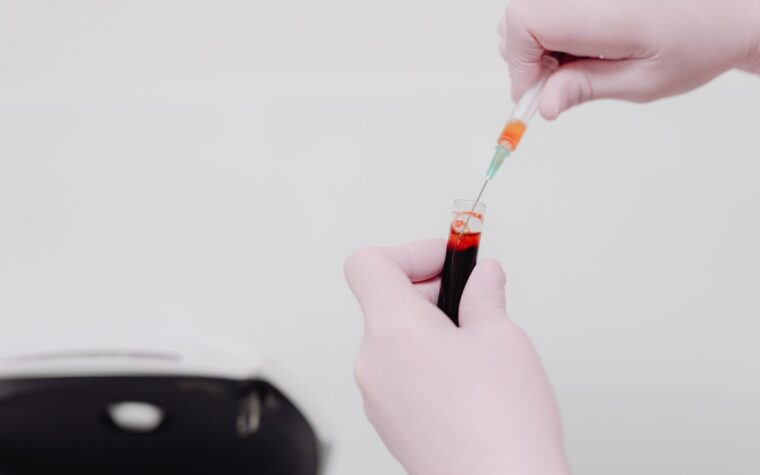
You sign up online, complete the blood draw (at a partner location or, in many areas, at home), and results populate your dashboard within a typical lab turnaround window. Instead of a static PDF, your markers land as scores you can sort by system, and the AI concierge answers follow-up questions in context. The tracking view is the part that earns the membership, because a single number means little until you have two or three years of the same draw to compare it against.
How to prep so your draw is worth it
A wide panel is only as good as the morning you show up for it, and this is the part Superpower cannot do for you. A few specifics genuinely move your numbers:
- Fast for 10 to 12 hours with only water. Glucose, insulin, and triglycerides read cleanest fasted. Eating first can make a healthy person look borderline.
- Book a morning slot. Hormones like testosterone and cortisol are highest early, and a consistent morning time keeps your year-over-year trend honest.
- Hydrate. Mild dehydration concentrates your blood and can nudge sodium, hematocrit, and creatinine. Water during the fast is encouraged.
- Skip the hard workout the day before. Intense exercise can transiently raise CRP and muscle enzymes, a classic false alarm.
- Pause biotin if advised. High-dose biotin from hair and nail supplements can skew some assays, including thyroid. Never stop a prescription without asking the prescriber.
- Ease off alcohol for a few days. A heavy weekend before the draw can lift liver enzymes and triglycerides for no real reason.
How to read your results without spiraling
The first rule is do not panic on a single value. Lab reference ranges come from a broad population, and being slightly outside one is common and often meaningless on its own. The markers most prone to a scary one-off reading are CRP, liver enzymes, and anything sensitive to hydration or timing. When one of those is mildly off and everything around it looks fine, the sane move is a repeat draw in a few weeks, not a diagnosis.
The results worth attention are patterns, not points: HbA1c and fasting insulin both creeping up, ApoB high alongside a poor lipid picture, or a thyroid cluster that tells a consistent story. Superpower’s scores and concierge help you spot that pattern, but neither replaces a licensed clinician for anything genuinely out of range. Bring the actual numbers to that visit. On retesting, fast-moving metabolic markers can show real change in 6 to 12 weeks, while a general baseline is fine to revisit once a year, which is exactly the rhythm the membership is built around.
Is $199 actually a good deal?
The honest way to judge the price is cost-per-decision, not cost-per-marker. Ordering a comparable set of markers one at a time, especially the useful extras like ApoB, a full thyroid panel, fasting insulin, and vitamin D, adds up quickly at retail lab prices, and you would still be left with a stack of PDFs and no interpretation layer. Superpower bundles the panel, the doctor review, the scoring, and the concierge into one annual fee. For a healthy adult building a trackable baseline, that bundle usually delivers more decisions per dollar than piecing it together yourself. Where it stops being a deal is if you only need one or two markers, in which case a single kit is cheaper, or if you want twice-yearly clinical depth, in which case a heavier service is the better spend.
Two quick scenarios
The 35-year-old who has never had a real panel. Feels fine, family history of diabetes, tired of getting a handful of markers at a checkup. For this person Superpower is close to ideal: one broad, readable baseline, a doctor-reviewed result, and a plan, then a repeat next year to watch the trend. The $199 buys clarity they have never actually had.
The 50-year-old managing high cholesterol with a doctor. Already on a treatment plan and testing through their care team every few months. Superpower can add a broader once-a-year snapshot around that care, but it is not the primary tool, and it should not replace the clinician-ordered testing that guides the treatment. Here the membership is a complement, not the main event.
Getting the most out of the membership
If you do sign up, a few habits separate people who get real value from people who pay $199 for a screenshot they never open again.
- Standardize your draw. Same fasting state, same morning window, ideally the same lab network each year. A trend only means something when the conditions are held steady, so a marker that moves reflects you and not the circumstances of the test.
- Read the scores first, then the raw markers. Start with the 17 categories to see where to focus, then drill into the underlying numbers for anything flagged. Trying to read 150 rows cold is how people get overwhelmed and give up.
- Use the concierge for the small questions. “What moves my ApoB?” or “why is my ferritin low?” are exactly what it is for. Save the big, out-of-range findings for a clinician, but do not let the small questions go unasked.
- Act on two or three things, not twenty. A broad panel surfaces a lot. The people who improve pick the highest-leverage items, usually something metabolic, and work on those until the next draw, rather than chasing every marginal number at once.
- Actually retest. The membership only compounds if you draw again next year. A single baseline is useful; three years of the same panel is where the picture gets genuinely valuable.
The bottom line
Superpower is the value pick in full-body lab memberships for 2026. It is not the most clinically exhaustive option, and it is not meant to replace your doctor, but for a broad, affordable, trackable yearly baseline with software that actually explains your results, it delivers more than its price suggests. If you have been meaning to get a real read on your health, this is the easiest place to start.
Related reading on Vital Signs Today
- What Reddit Really Thinks of Superpower (Honest Breakdown)
- Superpower.com Reviews: Real Value or Hype? (2026 Verdict)
- Is Superpower Legit? A Straight Look at the Blood Test Company (2026)
- How Much Does Superpower Cost? Full 2026 Pricing Breakdown
Frequently asked questions
How much does the Superpower blood test cost?
The membership is $199 a year for one comprehensive draw covering 100+ biomarkers. In New York and New Jersey it is $399 due to state lab rules. Add-on tests are extra.
How many biomarkers does Superpower test?
More than 100 biomarkers in the standard panel, or roughly 150 once calculated ratios are included, spanning metabolic, hormonal, organ, and inflammation markers.
Is Superpower legit?
Yes. Samples are processed through accredited labs and results are reviewed before they reach you. It is a screening and tracking service, not a diagnostic clinic, so treat off-range results as a prompt to see a clinician.
Is Superpower worth it compared to Function Health?
For a first baseline on a budget, Superpower offers better value at $199. Function Health is more thorough at $365 with two draws and a urinalysis. Your choice depends on whether you want the lowest cost or the deepest clinical workup.
Do I need to fast before the Superpower blood draw?
For accurate metabolic and lipid numbers, yes. Fast for 10 to 12 hours with only water, and draw in the morning when you can. Follow the specific instructions Superpower sends, since a badly prepped draw can make a healthy person look borderline.
How often should I retest with Superpower?
The membership is built around one comprehensive draw a year, which suits a general baseline. If you are actively changing your diet or training and want to see fast-moving metabolic markers respond, a shorter 6 to 12 week window is more useful, though that may mean an add-on or a heavier service.
Can I use Superpower to manage a diagnosed condition?
No. Superpower is a screening and tracking tool, not a treatment provider. If you have an active condition, test and follow up through your care team. Superpower can complement that with a broad annual snapshot, but it does not replace clinical management.