Lipid Panel Explained: What Each Number on Your Cholesterol Test Means
Key Takeaways
- A lipid panel is a single blood test that measures the fats in your blood, including total cholesterol, LDL, HDL, triglycerides, and VLDL, to estimate your risk of heart attack and stroke.
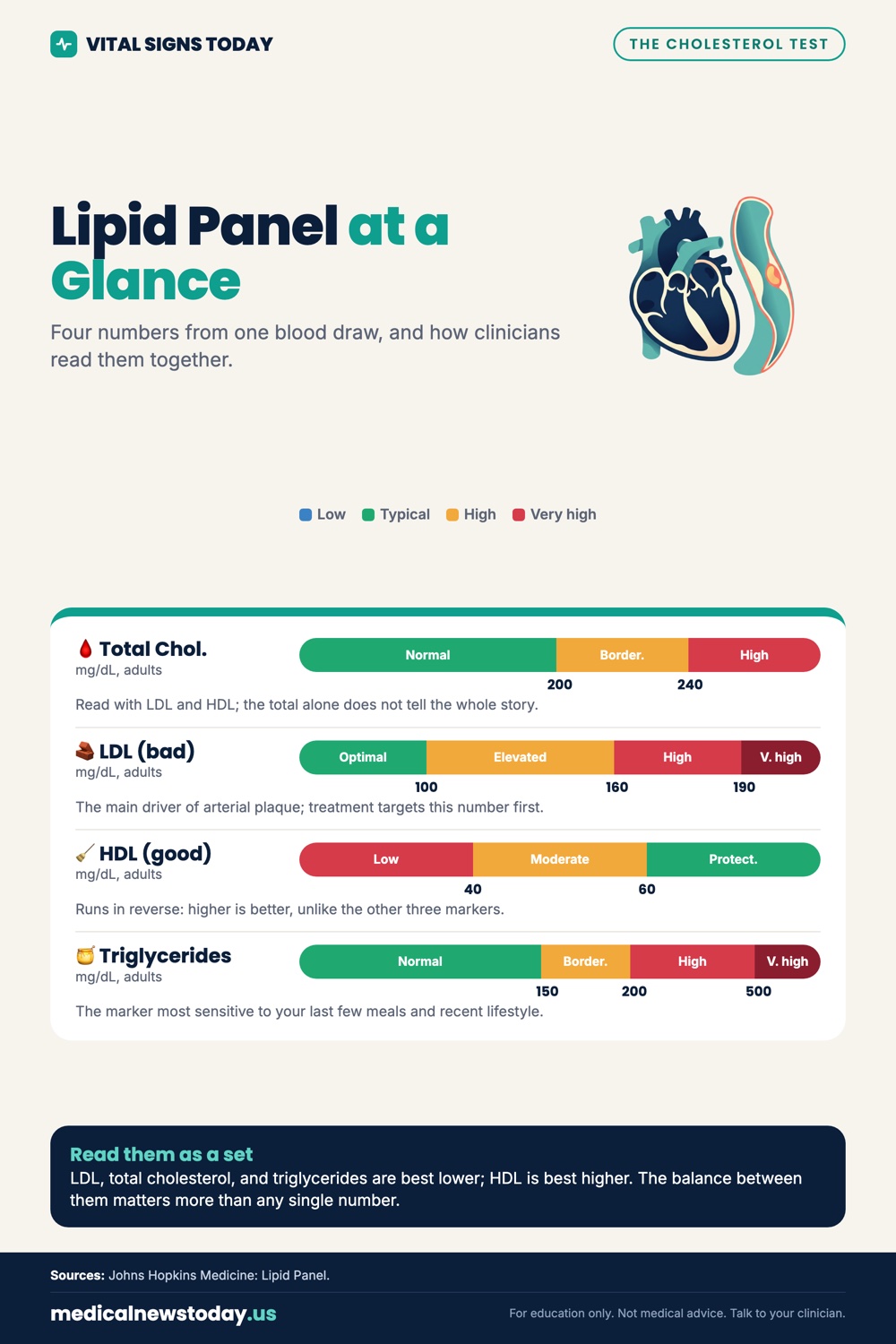
- In general, you want LDL under 100 mg/dL, HDL at 60 mg/dL or higher, and triglycerides under 150 mg/dL, though your personal targets depend on your overall cardiovascular risk.
- Most adults do not need to fast before a lipid panel, but your clinician may ask you to fast for 9 to 12 hours if your triglycerides are very high or need precise tracking.
A lipid panel, also called a lipid profile or cholesterol test, is one of the most common blood tests in primary care. It measures the levels of cholesterol and fats in your bloodstream and gives your clinician an early warning system for heart and blood vessel disease, often years before any symptoms appear. Doctors order it to screen healthy adults, to track people who already have high cholesterol, and to check whether treatment is working.
What is a Lipid Panel?
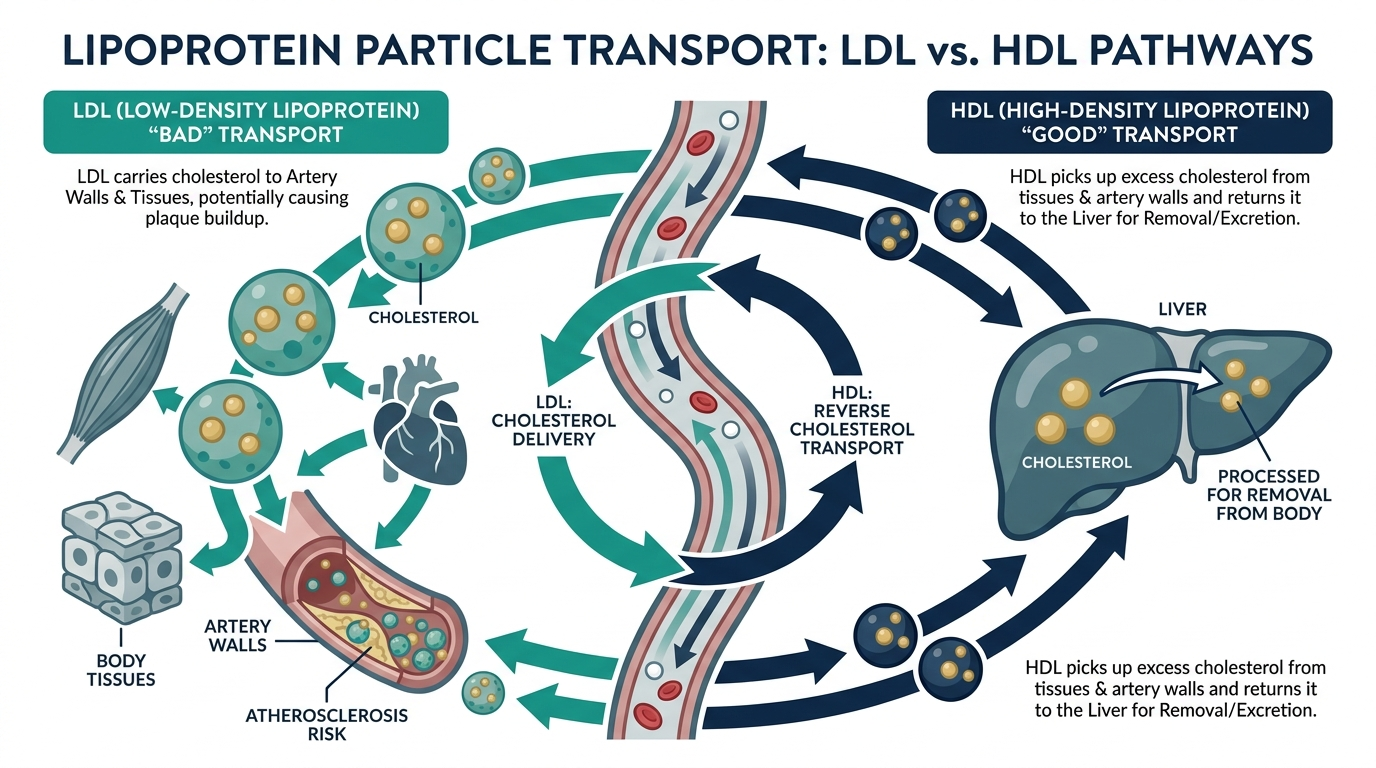
A lipid panel is a group of blood tests that measure lipids, the fatty substances that circulate in your blood. Cholesterol and triglycerides are essential for building cells and storing energy, but when they sit in the blood at the wrong levels, they can build up inside artery walls and narrow the vessels that feed your heart and brain. This buildup, called atherosclerosis, is the root cause of most heart attacks and strokes.
The test itself is a simple blood draw, usually from a vein in your arm. From that one sample, the lab reports several related numbers rather than a single score. Looking at all of them together gives a far more useful picture than any one value on its own, because the balance between the “good” and “bad” fractions matters as much as the totals (Cleveland Clinic).
What does a Lipid Panel measure?
A standard lipid panel reports five values. Each one tells a different part of the story, and each has its own deep-dive article in this cluster.
- Total cholesterol: the sum of all the cholesterol carried in your blood, giving a quick big-picture number that is usually desirable under 200 mg/dL.
- LDL cholesterol: the “bad” cholesterol that deposits in artery walls and drives plaque buildup, with an optimal level under 100 mg/dL for most people.
- HDL cholesterol: the “good” cholesterol that carries excess cholesterol back to the liver for disposal, where higher is protective and 60 mg/dL or above is considered ideal.
- Triglycerides: a type of fat your body uses for energy that rises with excess calories, sugar, and alcohol, with a normal level under 150 mg/dL.
- VLDL cholesterol: very low density lipoprotein, a triglyceride-carrying particle that is usually estimated rather than measured directly and adds to your overall plaque-forming risk.
Why would a doctor order a Lipid Panel?
The most common reason is routine screening. High cholesterol causes no symptoms, so the only way to catch it is to test. Major guidelines recommend that most adults have their cholesterol checked starting in early adulthood and then periodically through life, with more frequent testing as you age or if you carry extra risk.
Your doctor may also order a lipid panel if you have risk factors such as a family history of early heart disease, high blood pressure, diabetes, obesity, or a history of smoking. If you have already been diagnosed with high cholesterol or you are taking a medication like a statin, repeat panels track whether your numbers are moving in the right direction and whether you are sticking with treatment. The lipid panel is rarely used alone to diagnose a single disease. Instead, it feeds into an overall cardiovascular risk estimate that guides decisions about diet, lifestyle, and medication (ACC/AHA 2026 guideline).
How to read your Lipid Panel results
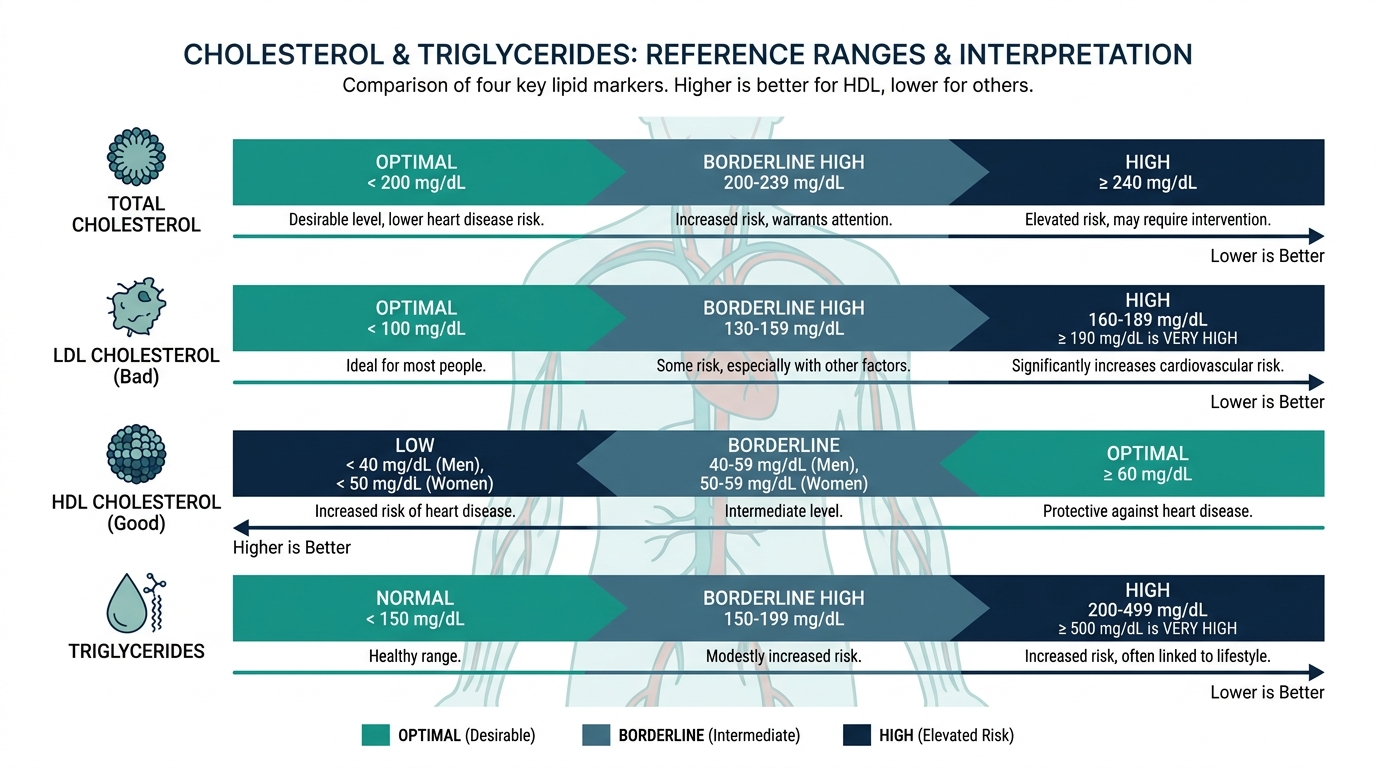
Lab reports flag each value against a reference range, but reading a lipid panel well means understanding what those numbers mean together. Here are the general principles in the United States, where results are reported in mg/dL.
For total cholesterol, under 200 mg/dL is desirable, 200 to 239 mg/dL is borderline high, and 240 mg/dL or above is high. For LDL, under 100 mg/dL is optimal, 100 to 129 mg/dL is near optimal, 130 to 159 mg/dL is borderline high, 160 to 189 mg/dL is high, and 190 mg/dL or above is very high. For HDL, the logic flips: under 40 mg/dL is low and a risk factor, while 60 mg/dL or above is protective. For triglycerides, under 150 mg/dL is normal, 150 to 199 mg/dL is borderline high, 200 to 499 mg/dL is high, and 500 mg/dL or above is very high (Cleveland Clinic).
The most important idea is that these are population reference ranges, not personal targets. The 2026 ACC/AHA dyslipidemia guideline sets stricter LDL goals for people at higher risk: under 100 mg/dL for borderline or intermediate risk, under 70 mg/dL for high risk, and under 55 mg/dL for people with established cardiovascular disease who are at very high risk. So an LDL of 110 mg/dL might be acceptable for one person and a clear target for treatment in another. Always read your numbers in the context of your full risk profile, and let your clinician interpret them with you (Circulation, 2026).
One technical note: VLDL and often LDL are calculated, not measured directly. The classic Friedewald formula estimates LDL as total cholesterol minus HDL minus triglycerides divided by 5, and the triglyceride-divided-by-5 term is the VLDL estimate. This is why very high triglycerides can make a calculated LDL unreliable, and your lab may then measure LDL directly instead.
What do high and low results mean?
The reference ranges tell you where a number lands, but the more useful question is what a high or low value actually signals and what pushes it there. Here is how clinicians read each marker in the panel.
LDL cholesterol: high vs low
LDL is the number treatment aims at, because it is the main driver of plaque in artery walls. A high LDL raises long-term risk of heart attack and stroke, and the causes range from diet high in saturated fat, to excess weight, to an underactive thyroid, to genetics. A very high LDL, especially at a young age or with a family history of early heart disease, can flag familial hypercholesterolemia, an inherited condition worth identifying because it needs earlier, firmer treatment. A low LDL is generally good for cardiovascular risk. On its own it rarely causes problems, though a very low LDL is occasionally investigated alongside other findings.
HDL cholesterol: high vs low
HDL runs on reverse logic, so a low HDL, under 40 mg/dL, is itself a risk factor and often travels with high triglycerides, excess weight, smoking, and insulin resistance. Raising it usually comes from the same habits that help the rest of the panel, exercise, weight loss, and quitting smoking. Higher HDL is generally protective, but the idea that more is always better has limits, and a very high HDL does not cancel out a high LDL. This is exactly the nuance our high HDL guide unpacks.
Triglycerides: high vs low
Triglycerides are the marker most sensitive to recent lifestyle, which is why they respond fast to change. A high level is driven by excess calories, refined carbohydrate and sugar, alcohol, and untreated diabetes, and a very high level, above 500 mg/dL, also raises the risk of pancreatitis, not just heart disease. Because they swing with your last few meals, triglycerides are the one value where fasting can matter for an exact reading. A low triglyceride level is normal and not a concern for most people.
Beyond the standard five: markers worth knowing
The classic panel is a strong first look, but a few extra measures refine risk when the basic numbers are borderline or misleading.
- Non-HDL cholesterol. This is simply total cholesterol minus HDL, and it captures all the plaque-forming particles in one number, which makes it more reliable than LDL alone when triglycerides are high. Many clinicians now read it routinely.
- ApoB. Apolipoprotein B counts the actual number of atherogenic particles rather than the cholesterol inside them, so it can reveal hidden risk in someone whose LDL looks acceptable, and it is increasingly used to guide decisions.
- Lp(a). Lipoprotein(a) is largely inherited and does not move much with diet, so it is usually checked once to see whether genetics are adding risk that lifestyle cannot fix. Our LDL particle guide covers why particle count can matter more than the cholesterol number.
When should you get this panel tested?
For healthy adults, most guidance supports a first cholesterol check in early adulthood, followed by repeat testing roughly every 4 to 6 years if your numbers and risk stay low. People with diabetes, a strong family history of heart disease, existing cardiovascular disease, or who are on cholesterol medication usually need testing more often, sometimes once or twice a year.
You no longer have to fast for most lipid panels. Current evidence shows that a nonfasting sample is accurate enough for routine screening and risk assessment in the majority of people, and the difference between fasting and nonfasting values is small for total cholesterol, LDL, and HDL. Your clinician may still ask you to fast for 9 to 12 hours if you have known high triglycerides, if a precise triglyceride number is needed, or if a previous nonfasting result was abnormal and needs confirmation (EAS/EFLM consensus). When you do fast, water is fine, but skip food, sugary drinks, and alcohol beforehand.
How to prepare for a lipid panel
For routine screening you can usually walk in and get tested without fasting, since total cholesterol, LDL, and HDL barely move with a meal. If your clinician wants an exact triglyceride value, or your triglycerides are known to be high, plan to fast for 9 to 12 hours, drinking only water. Either way, a few steps make the result more representative: avoid alcohol for a day or two beforehand, since it spikes triglycerides, and do not test in the middle of an acute illness or right after major surgery, because both temporarily distort lipids. Try not to change your usual diet in the days before the draw, as a sudden clean-up week gives a flattering number that does not reflect your baseline. Bring a list of your medications, since statins, steroids, some blood pressure drugs, and estrogen can all shift the panel.
How your lipid panel connects to the rest of your blood work
A lipid panel is a piece of a bigger cardiovascular and metabolic picture, and reading it next to the rest of your bloodwork is what turns numbers into a real risk estimate.
- Blood sugar and A1c. Insulin resistance and diabetes push triglycerides up and HDL down, so glucose and A1c often explain a lipid pattern. The triglyceride to HDL ratio is a quick clue to insulin resistance, which our ratio guide explains.
- Thyroid panel. An underactive thyroid raises LDL and total cholesterol, so an unexplained jump in cholesterol is a reason to check TSH. See the thyroid panel guide.
- Liver markers. The liver makes and clears cholesterol, and fatty liver commonly travels with high triglycerides, so liver enzymes add context. See the liver function guide.
- Blood pressure and lifestyle risk. Guidelines do not treat a lipid number in isolation, they fold it into an overall risk estimate that includes blood pressure, smoking, age, and diabetes to decide whether medication is warranted.
This is the practical case for a broad draw rather than a lone cholesterol test. When lipids, blood sugar, thyroid, and liver numbers sit side by side, the reason your cholesterol is off, and what to do about it, usually becomes clear in one visit.
A real-world example of reading the pattern
Take a 48-year-old man whose total cholesterol looks only borderline. Read as a panel, the picture is worse than the headline: his triglycerides are high, his HDL is low, and his triglyceride to HDL ratio is elevated, a classic insulin-resistant pattern that his A1c confirms sits in the prediabetic range. His LDL is not dramatic, but his non-HDL and overall risk are, and that changes the plan from watchful waiting to real intervention.
Now consider a lean, active 35-year-old woman with a strikingly high LDL and a father who had a heart attack at 45. Nothing in her lifestyle explains it. That combination, high LDL out of proportion to her habits plus early family heart disease, is the signature that prompts a check for familial hypercholesterolemia and, often, a Lp(a) measurement, because the driver here is genetic rather than dietary.
Every marker in this panel
Tap any marker for a full plain-English explainer, including what high and low results mean.
- What Is Cholesterol in a Blood Test? How to Read Your Lipid Panel Like a Doctor
- What Shows High Cholesterol on a Blood Test? The Numbers That Count
- LDL Particle Number (LDL-P) vs LDL-C: Which Matters More?
- What Does High LDL Mean in a Blood Test? Levels, Causes, and What to Do
- Triglyceride to HDL Ratio Meaning: What This Number Reveals
- What Does High HDL Mean in a Blood Test? Why Higher Isn’t Always Better
- What Does Low HDL Mean in a Blood Test? Levels, Causes, and What to Do
- What Does High Triglycerides Mean in a Blood Test? Levels and Risks
- What Is a Good Triglyceride Level? Normal Ranges and What They Mean
- What Is VLDL in a Blood Test? The Calculated Cholesterol Number Worth a Second Look
Frequently asked questions
Do I need to fast before a lipid panel?
Usually no. For routine screening, a nonfasting lipid panel is accurate enough for most adults, because total cholesterol, LDL, and HDL change very little with eating. Your doctor may still ask you to fast for 9 to 12 hours if your triglycerides are very high or if an exact triglyceride value is important.
What is the difference between LDL and HDL?
LDL is the “bad” cholesterol that deposits in artery walls and builds plaque, so you want it low. HDL is the “good” cholesterol that carries excess cholesterol back to the liver for removal, so you want it high. A healthy lipid panel shows low LDL together with high HDL.
What is a normal lipid panel result?
In general, a desirable panel shows total cholesterol under 200 mg/dL, LDL under 100 mg/dL, HDL at 60 mg/dL or above, and triglycerides under 150 mg/dL. These are population reference ranges, and your personal LDL target may be lower if you are at higher cardiovascular risk.
How often should I get a lipid panel?
Most low-risk adults can repeat a lipid panel about every 4 to 6 years after their first check in early adulthood. People with diabetes, heart disease, high cholesterol, or a strong family history often need testing once or twice a year, especially while adjusting treatment.
Can lifestyle changes improve my lipid panel?
Yes. Eating more fiber and unsaturated fats, cutting back on refined sugar and alcohol, losing excess weight, and exercising regularly can lower LDL and triglycerides and raise HDL. Lifestyle is the foundation of treatment, and some people improve enough to avoid or reduce medication, though many still need a statin to reach their target.
Why is my cholesterol high even though I eat well and exercise?
Diet and activity are powerful, but they are not the only levers. Genetics set a large part of your cholesterol, and conditions like an underactive thyroid, kidney disease, and certain medications can raise it regardless of lifestyle. A high LDL that does not match your habits, especially with a family history of early heart disease, is a reason to look at inherited causes rather than assume you are doing something wrong.
Should I be worried about one high reading?
Not necessarily. A single lipid result can be nudged by a recent illness, a heavy meal or drinking before a triglyceride test, or normal day-to-day variation. Clinicians usually confirm an abnormal panel with a repeat before starting treatment, and they read it inside your overall risk rather than reacting to one number. A trend across a couple of tests tells you far more than a single snapshot.
Sources
- 2026 ACC/AHA/Multisociety Guideline on the Management of Dyslipidemia, Circulation
- American College of Cardiology: Updated Guideline for Managing Lipids and Cholesterol
- Cleveland Clinic: Cholesterol Numbers and What They Mean
- Johns Hopkins Medicine: Lipid Panel
- EAS/EFLM Joint Consensus: Fasting is Not Routinely Required for a Lipid Profile
This article is for general educational purposes and is not medical advice. It cannot diagnose or treat you and does not replace your clinician. Always discuss your lab results and any health decisions with a qualified healthcare professional.
Vital Signs Today may earn a commission if you buy through links on this page. It does not affect our editorial assessments.