Disclosure: Vital Signs Today may earn a commission if you buy through links on this page, at no extra cost to you. This does not influence our evidence-based assessments. We are not a medical provider; talk to a clinician before acting on test results.
Related: HDL normal range by age (full chart)
Your lipid panel came back, and most of the numbers looked fine. Then you noticed HDL sitting lower than the reference range, maybe with a small flag next to it. That stings a little, because HDL is the one cholesterol number you are supposed to want high. A low HDL is not a verdict, but it is also not nothing. It is a signal worth reading carefully, and most explainers gloss over the part that actually matters.
Here is the honest version, including the threshold that counts as low, the real reasons it drops, and the one situation where a low HDL on paper is not even a true low HDL.
Part of our Lipid Panel guide.
What does low HDL mean in a blood test?
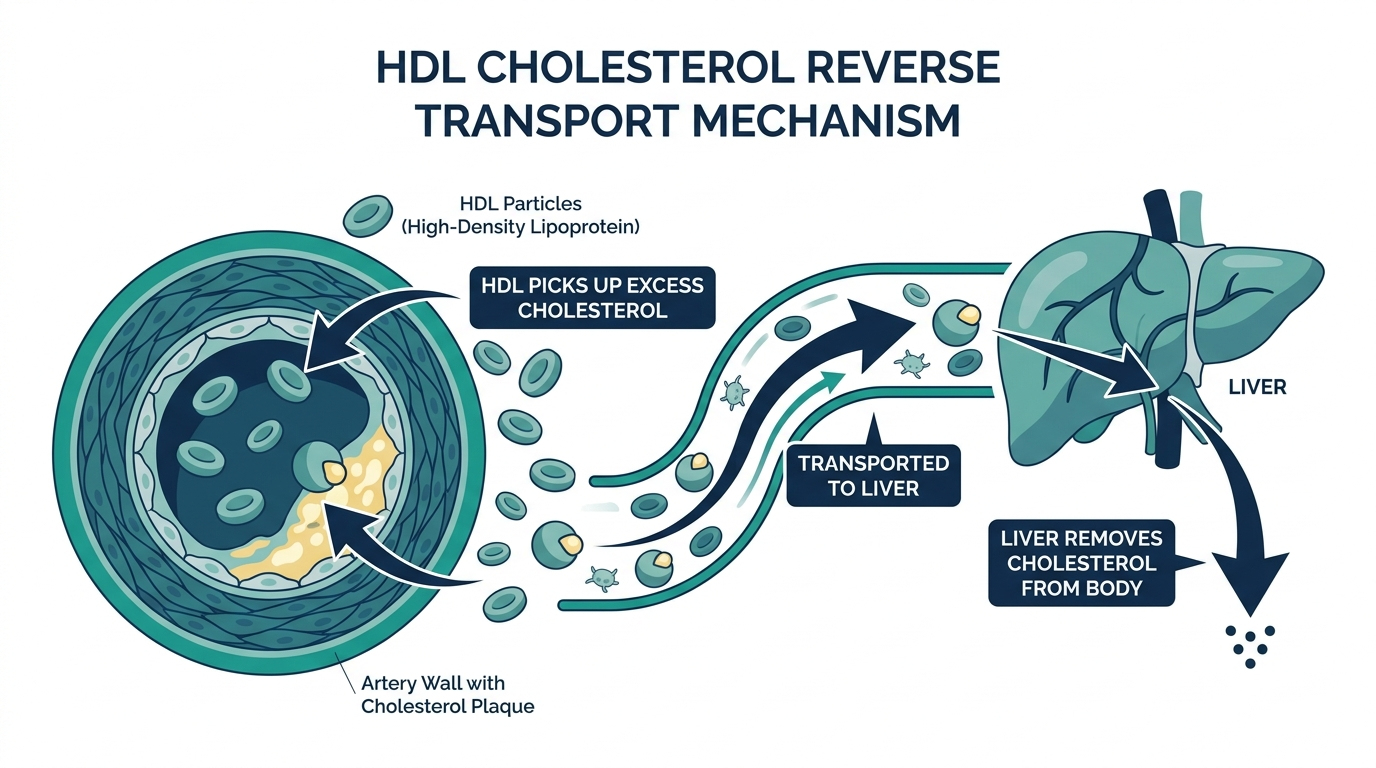
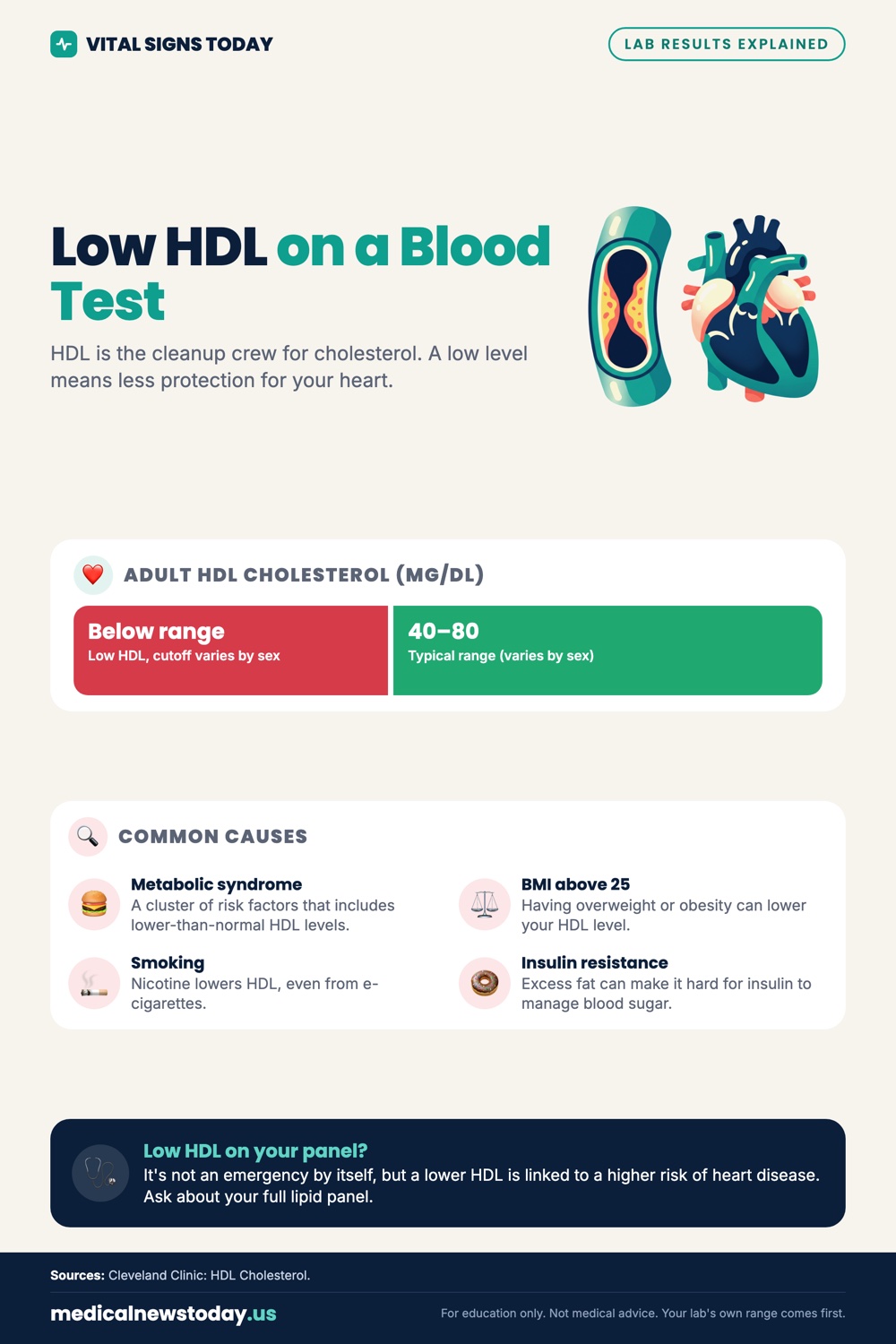
A low HDL in a blood test means your level of high-density lipoprotein, the “good” cholesterol, is below the protective range, which on its own is linked to a higher risk of heart disease and stroke (Cleveland Clinic). HDL is the cleanup crew of your bloodstream. It picks up extra cholesterol from your artery walls and carries it back to the liver to be removed, and it also helps fight inflammation and discourage clotting (Cleveland Clinic). When HDL runs low, that cleanup capacity drops.
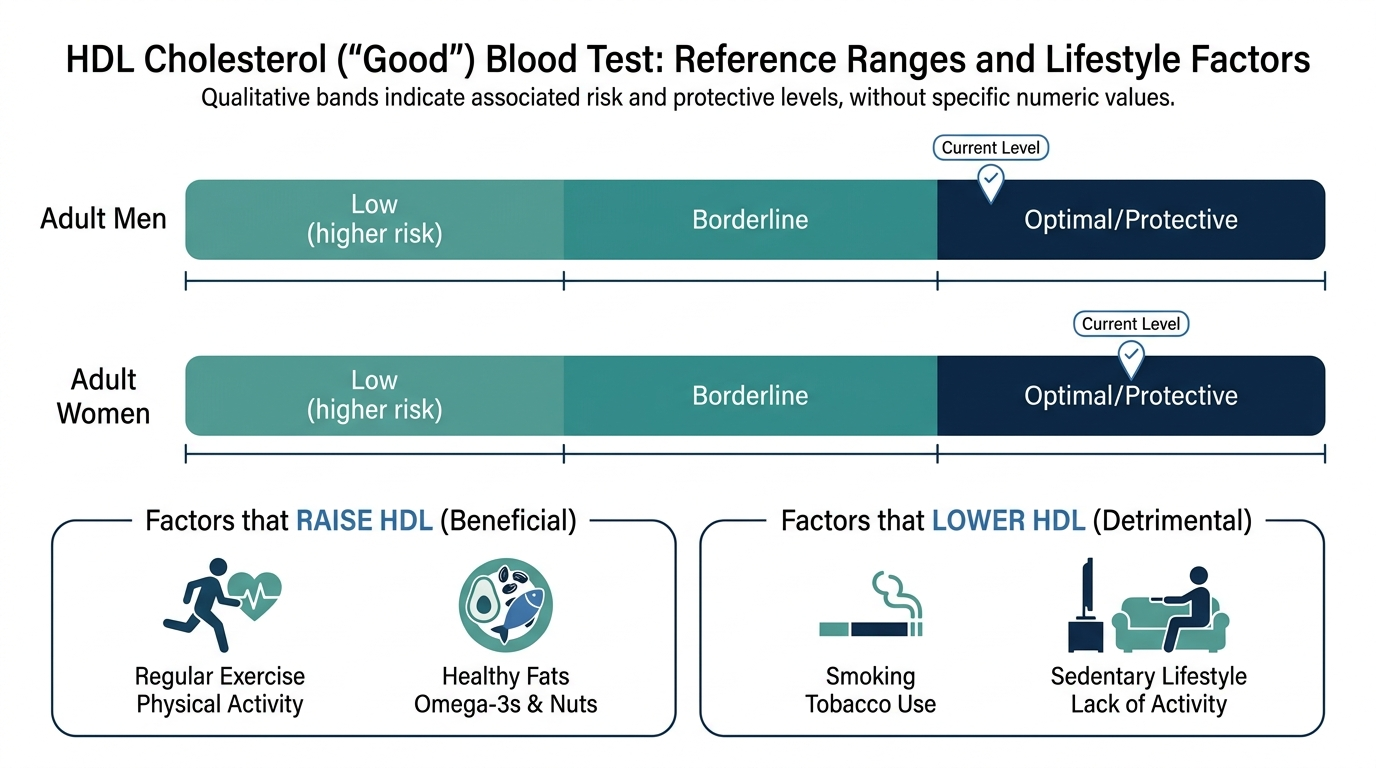
The thresholds are sex-specific, and this trips people up. HDL is considered low when it falls below 40 mg/dL for men and below 50 mg/dL for women (Cleveland Clinic). MedlinePlus frames the same idea from the healthy side: a desirable HDL is above 40 mg/dL for men age 20 and up, and above 50 mg/dL for women, with above 60 mg/dL being protective (MedlinePlus). So a 48 mg/dL result is reassuring for a man and a red flag for a woman. Always read your number against the sex-specific cutoff, not a single line.

What causes a low HDL?
Low HDL almost always comes from the metabolic and lifestyle side of the ledger, with genetics filling in the rare extremes. In rough order of how often they show up:
- Metabolic syndrome and insulin resistance. This is the big one. HDL tends to run low in people who have the cluster of excess belly weight, higher blood pressure, and higher blood sugar (Cleveland Clinic). Low HDL and high triglycerides usually travel together, and that pairing drives heart risk as much as high LDL does.
- Excess weight. A body mass index above 25 is associated with lower HDL (Cleveland Clinic). Abdominal fat in particular drags it down.
- Smoking. Nicotine lowers HDL, and even secondhand smoke counts (Cleveland Clinic). This is one of the fastest things to reverse.
- A sedentary lifestyle and poor diet. Too little aerobic movement, too many refined carbohydrates, and excess alcohol all push HDL down (MedlinePlus).
- Type 2 diabetes. Diabetes commonly lowers HDL as part of the same insulin-resistance picture (MedlinePlus).
- Certain medications. Beta-blockers, diuretics, anabolic steroids, some progestins in birth control, and benzodiazepines can lower HDL (MedlinePlus).
- Genetics. Inherited conditions such as familial combined hyperlipidemia, ApoA1 deficiency, and Tangier disease produce low HDL even in lean, fit people (Cleveland Clinic).
That order matters when you are trying to figure out your own result. If you carry extra weight, do not exercise much, or smoke, the cause is probably staring back at you. If you are slim, active, and your HDL is rock bottom anyway, that is when genetics moves up the list.
What are the symptoms of a low HDL?
There are none. A low HDL produces no symptoms you can feel. You do not get tired, dizzy, or short of breath from it directly. This is exactly why a lipid panel exists, because cholesterol problems are silent until they are not.
The symptoms that eventually show up belong to the disease low HDL helps create, not the number itself. Years of low HDL alongside other risk factors can let plaque build in your arteries, and the first noticeable sign of that can be chest pain on exertion, a heart attack, or a stroke (Cleveland Clinic). The whole point of catching a low HDL on a routine test is to act long before any of that arrives.
When is a low HDL dangerous or a medical emergency?
A low HDL is never an emergency by itself. You will not be rushed to a hospital for an HDL of 32. But there are tiers of concern worth knowing.
A mildly low HDL, just under the cutoff, raises your long-term cardiovascular risk gradually, especially when it travels with high triglycerides, high LDL, high blood pressure, or diabetes. The danger is cumulative, measured in years.
An extremely low HDL is a different conversation. When HDL drops below roughly 30 to 35 mg/dL in someone with no obvious secondary cause, that points toward a rare genetic syndrome and warrants specialist attention (PMC, very low HDL review). The genetic extremes are striking. Tangier disease can produce HDL below 5 mg/dL, and LCAT deficiency can push it under 10 mg/dL (PMC, very low HDL review). These are uncommon, but a single-digit HDL is a number that should never be shrugged off.
The real emergencies are the events low HDL helps set up. Crushing chest pain, pain spreading to the arm or jaw, sudden weakness or trouble speaking, those are heart attack and stroke warning signs and need 911, not a lab follow-up. The HDL number is a long-range risk gauge, not an acute alarm.

What should you do about a low HDL?
Start by reading the whole lipid panel, not just the HDL line. HDL rarely travels alone. Your clinician will weigh it against your LDL, your triglycerides, your total cholesterol, and your overall cardiovascular risk before deciding anything. A low HDL with everything else pristine is treated very differently from a low HDL stacked on high triglycerides and high blood sugar.
Lifestyle is the first and most powerful lever, because the same habits that raise HDL also lower the risk it is warning about (MedlinePlus):
- Move. Aim for about 30 minutes of moderate to vigorous aerobic exercise on most days. Regular aerobic activity is one of the more reliable ways to nudge HDL up (MedlinePlus).
- Quit smoking. Stopping can raise HDL, and the cardiovascular payoff is immediate and large (Cleveland Clinic).
- Lose excess weight, especially around the middle (MedlinePlus).
- Eat for it. Favor unsaturated fats like olive oil, avocado, and nuts, cut refined carbohydrates, and limit alcohol (MedlinePlus).
Here is the part worth internalizing: there is no good drug whose job is simply to raise HDL. Treatment does not chase the HDL number directly. When medication is warranted, it targets your total cardiovascular risk, usually by lowering LDL with a statin, which also tends to nudge HDL up modestly as a side benefit (MedlinePlus). If a medication you already take, like a beta-blocker or diuretic, is suppressing your HDL, that is a conversation with your prescriber, never a reason to stop on your own.
When should you see a doctor?
Any low HDL deserves a conversation at your next visit, but a few situations should move it up the list. See a doctor sooner if your HDL is paired with high triglycerides or high LDL, if you also have diabetes, high blood pressure, or a strong family history of early heart disease, or if your HDL is strikingly low (in the 20s or below) despite a healthy weight and active lifestyle, which raises the question of a genetic cause (PMC, very low HDL review).
And to be clear, any chest pain, shortness of breath, or stroke symptoms are not a lipid-panel follow-up. They are an emergency, and you call 911.
The insider read: a low HDL on paper may not be a true low HDL
Here is the nuance that gets missed constantly. HDL drops during acute illness. When you are fighting an infection or any significant inflammatory event, your HDL falls as a negative acute-phase response, and it can read deceptively low on a panel drawn at the wrong moment (PMC, very low HDL review). A panel run while you have the flu, a bad infection, or are recovering from surgery can show an HDL that does not reflect your true baseline.
The practical consequence: do not anchor your whole heart-risk picture on a single HDL value pulled during a sick visit. If your HDL came back surprisingly low and you were unwell when blood was drawn, the right move is often a recheck a few weeks later once you are fully recovered. A genuinely low HDL stays low across repeat tests. A transient dip from inflammation tends to bounce back. This is also why clinicians do not panic over one isolated number, and why you should not either.
There is a second underappreciated point. Chasing a high HDL with supplements or fads is mostly wasted effort, because what protects you is the underlying metabolic health that produces a healthy HDL, not the digit itself. A low HDL is best understood as a dashboard light for insulin resistance and inactivity. Fix what the light is pointing at, and the number tends to follow.
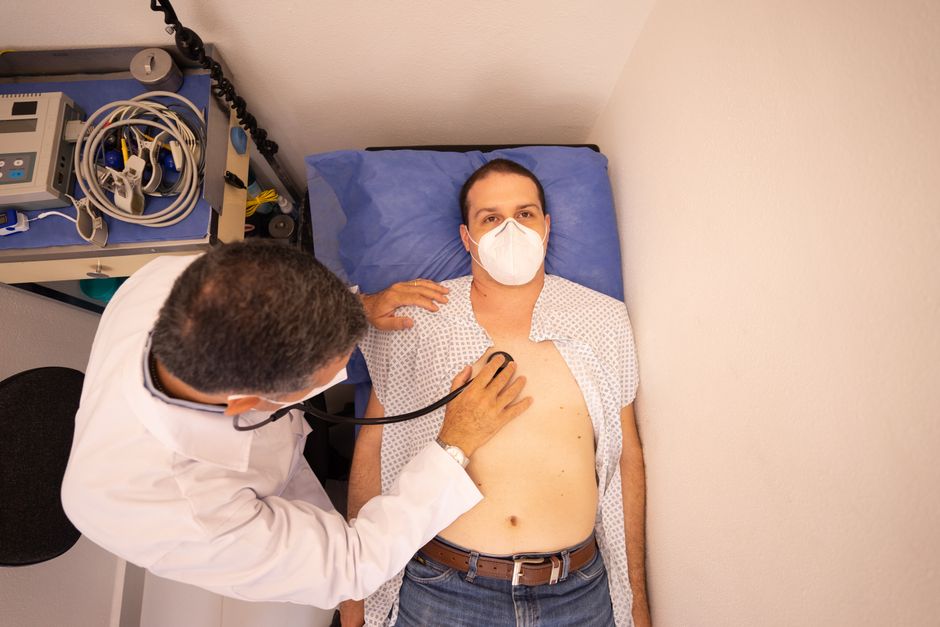
What HDL actually does inside your arteries
Calling HDL the “good cholesterol” is a useful shorthand that hides the real story. HDL is not a single fixed thing but a family of particles, and its job is best described as reverse cholesterol transport. It scavenges surplus cholesterol from cells and from the walls of your arteries, then ferries that cargo back to the liver for disposal or recycling (Cleveland Clinic). Beyond the hauling, HDL particles carry antioxidant and anti-inflammatory activity and help keep the inner lining of the vessel calm and less sticky.
This is why the number is only a proxy. The HDL cholesterol value on your panel measures the amount of cholesterol riding inside those particles, not how well the particles do their job. Two people with the same HDL of 45 can have very different particle function. It also explains a puzzle that catches people off guard: a very high HDL is not automatically better, because dysfunctional HDL particles can lose their protective quality. What you want is a healthy HDL produced by a healthy metabolism, not a big number chased for its own sake.
The numbers a low HDL should be read beside
HDL almost never travels alone on a lipid panel, and the companions often tell you more than HDL does by itself.
| Marker | What it adds when HDL is low |
|---|---|
| Triglycerides | Usually the mirror image of HDL. High triglycerides plus low HDL is the classic insulin resistance pattern. |
| Triglyceride to HDL ratio | A simple surrogate for insulin resistance. Ratios above about 3.5 flag significant insulin resistance and a shift toward small dense LDL (NIH PMC). |
| LDL cholesterol | The primary driver of plaque. A low HDL matters more when LDL is also high. |
| Non-HDL cholesterol | Total cholesterol minus HDL, capturing every atherogenic particle in one number. |
| ApoB | Counts the actual number of artery-damaging particles, often clearer than LDL alone. |
Want to check your HDL?
Three ways to get it measured. Pick whichever fits you.
Affiliate links: we may earn a commission at no extra cost to you. A lab test does not replace a visit with your clinician.
The single most useful move with a low HDL is to look immediately at the triglycerides sitting next to it. When both are unfavorable, the panel is describing metabolic health, not just cholesterol, and that reframes the whole plan around insulin sensitivity rather than a lipid tweak (NIH PMC, TG to HDL ratio).
Reading your low HDL: three real scenarios
- Low HDL, high triglycerides, normal or borderline LDL, larger waist. This is the metabolic syndrome signature. The low HDL here is a symptom of insulin resistance, and the highest yield fix is aerobic exercise, weight loss around the middle, and cutting refined carbohydrates, all of which raise HDL and lower triglycerides together.
- Low HDL, normal triglycerides, lean and active person. When the usual metabolic culprits are absent, an inherited pattern moves up the list. A strikingly low value in a fit person is worth a specific conversation about genetics rather than another round of lifestyle advice (Cleveland Clinic).
- Low HDL on a panel drawn during illness. HDL dips during infection and inflammation, so this may not be your true baseline. The right response is a recheck a few weeks after full recovery rather than a treatment decision made on a sick day.
What can distort an HDL reading
Before you act on a surprising HDL, rule out the everyday factors that shift it.
- Recent acute illness or inflammation. HDL falls as a negative acute phase reactant, so a value drawn during or soon after infection or surgery reads low.
- Fasting state. HDL itself is fairly stable with fasting, but triglycerides, its constant companion, swing widely after meals, which changes the interpretation of the pair. Many labs still prefer a fasting draw for the full panel.
- Alcohol. Moderate alcohol can transiently raise HDL, which can mask a lower baseline, while heavy use drives triglycerides up and complicates the picture.
- Medications. Beta blockers, thiazide diuretics, anabolic steroids, and some progestins lower HDL. If you started one recently, that timing matters (MedlinePlus).
- Recent significant weight change. Active weight loss can temporarily shift lipids, so a value taken mid change may not represent your settled state.
The specific habits that move HDL, and by roughly how much
Not all lifestyle advice is equal for HDL. Some levers move it meaningfully, others barely at all, and it helps to know the difference so you spend effort where it pays.
- Aerobic exercise is the most dependable lever. Sustained moderate to vigorous cardio done most days is one of the more reliable ways to raise HDL, and it improves the insulin resistance underneath a low HDL at the same time (MedlinePlus).
- Quitting smoking gives a real bump. HDL tends to rise after stopping, and the broader cardiovascular payoff is immediate (Cleveland Clinic).
- Losing abdominal fat helps more than losing weight anywhere. Central fat is what drags HDL down, so waist reduction is the target that matters.
- Swapping refined carbs for unsaturated fats. Trading sugar and white flour for olive oil, nuts, and fatty fish raises HDL and lowers triglycerides in tandem (MedlinePlus).
- What to skip. There is no supplement or over the counter product with a convincing track record for raising HDL in a way that lowers heart events. Effort spent on HDL boosting pills is better spent on the four levers above.
Common misconceptions about a low HDL
- “I just need to get the HDL number up.” The number is a proxy for particle function and metabolic health. Raising the digit with a drug that does not lower cardiovascular events has not proven to help. Fix the metabolism and the number follows.
- “Higher HDL is always safer.” Not so. Very high HDL is not automatically protective and can even accompany dysfunctional particles. There is a healthy middle, not an infinite ceiling.
- “A low HDL by itself means I will have a heart attack.” HDL is one input into overall risk, not a standalone verdict. Its weight depends on your LDL, triglycerides, blood pressure, blood sugar, and family history taken together.
- “My one low reading is my real level.” A single value, especially one drawn during illness or after a big meal, may not be your baseline. Repeat testing separates a true low from a temporary dip.
Frequently asked questions
What HDL level is considered low?
HDL is considered low below 40 mg/dL for men and below 50 mg/dL for women. A level above 60 mg/dL is considered protective against heart disease (Cleveland Clinic). Read your result against the sex-specific cutoff, since the same number can be fine for a man and low for a woman.
Is a low HDL dangerous?
Not acutely. A low HDL raises long-term cardiovascular risk gradually, especially alongside high triglycerides, high LDL, or diabetes, but it causes no symptoms and is not an emergency on its own (Cleveland Clinic). An extremely low HDL, below about 30 to 35 mg/dL without an obvious cause, deserves specialist evaluation for a possible genetic condition (PMC).
Can I raise my HDL?
Yes, mainly through lifestyle. Regular aerobic exercise, quitting smoking, losing excess weight, eating unsaturated fats, and limiting refined carbs and alcohol can all raise HDL (MedlinePlus). There is no medication whose main purpose is to raise HDL; treatment focuses on overall heart risk.
Why is my HDL low if I am healthy and thin?
Some people have genetically lower HDL from inherited conditions such as ApoA1 deficiency or familial combined hyperlipidemia, which lower HDL even in lean, active people (Cleveland Clinic). A strikingly low HDL despite a healthy lifestyle is worth discussing with your doctor.
Can illness make my HDL look falsely low?
Yes. HDL falls during acute infection and inflammation, so a panel drawn while you are sick can read deceptively low (PMC). If your result was surprising and you were unwell, a recheck after you recover gives a truer picture.
This article is for general educational purposes and is not medical advice. It cannot diagnose or treat you and does not replace your clinician. Always discuss your lab results and any health decisions with a qualified healthcare professional.
Vital Signs Today may earn a commission if you buy through links on this page. It does not affect our editorial assessments.