
Disclosure: Vital Signs Today may earn a commission if you buy through links on this page, at no extra cost to you. This does not influence our evidence-based assessments. We are not a medical provider; talk to a clinician before acting on test results.
Related: Cholesterol levels by age: chart
You fasted overnight, gave a tube of blood, and a few days later a result came back with a number that was higher than you wanted. Maybe a clinic told you your cholesterol is high. Maybe you are staring at a printout right now trying to figure out which line is the one that matters. The frustrating part is that high cholesterol gives you nothing to feel. No ache, no warning, no symptom. The only place it shows up is on paper.
So let us read that paper properly. There is one specific test that reveals high cholesterol, a handful of numbers on it that count, and a few thresholds that separate a borderline result from one your clinician will actually act on.
Part of our Lipid Panel guide.
What shows high cholesterol on a blood test?
The test that shows high cholesterol is a lipid panel, also called a lipid profile or cholesterol test. It is a single blood draw that measures four things: total cholesterol, LDL cholesterol, HDL cholesterol, and triglycerides (MedlinePlus). That is the entire menu. There is no separate or specialized test most people need. When someone says you have high cholesterol, they are reading one or more of those four lines.
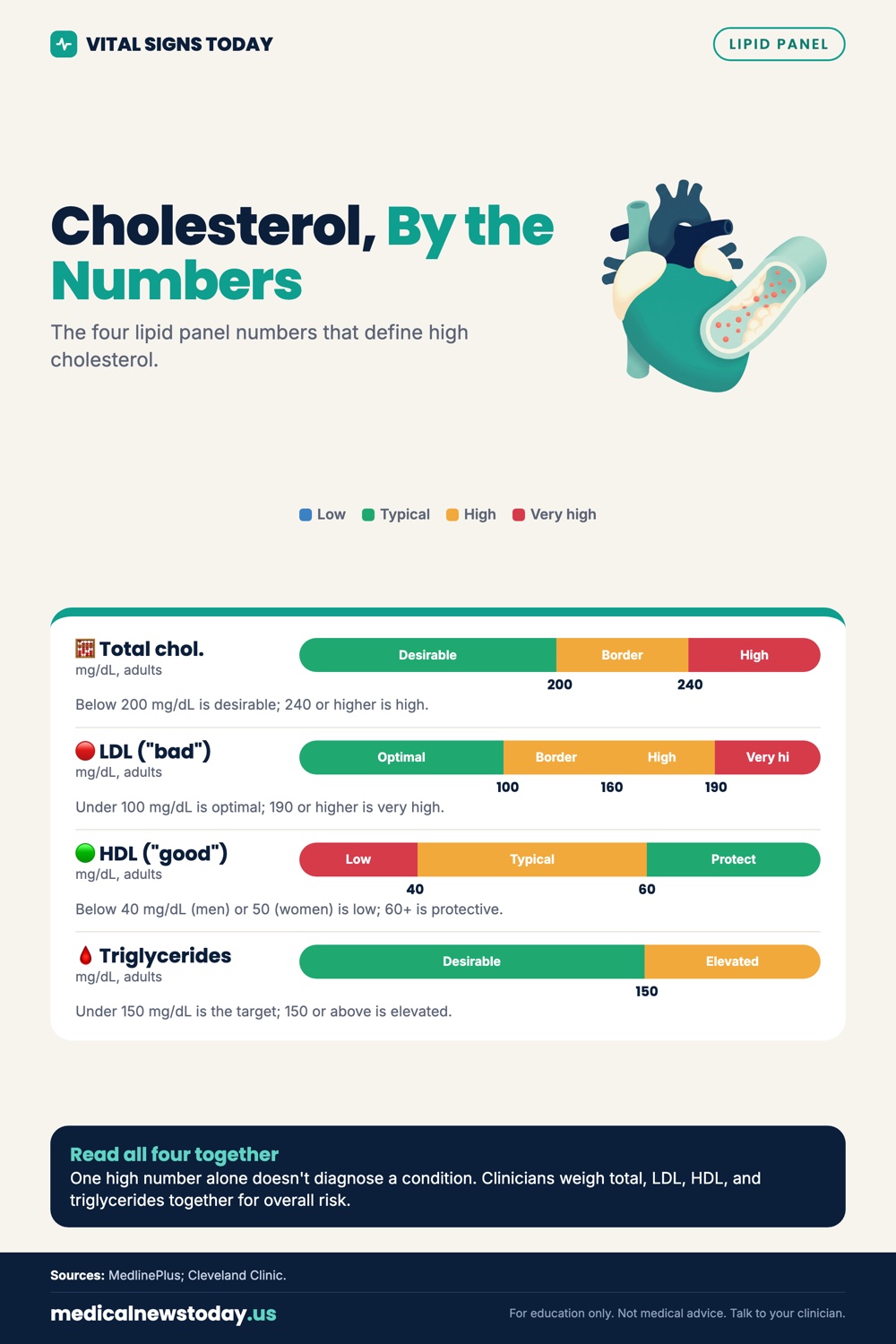
The two numbers that define high cholesterol are total cholesterol and LDL. In milligrams per deciliter (mg/dL), the standard cutoffs are (Cleveland Clinic):
- Total cholesterol: below 200 is desirable, 200 to 239 is borderline high, and 240 or above is high.
- LDL (“bad”) cholesterol: below 100 is optimal, 130 to 159 is borderline high, 160 to 189 is high, and 190 or above is very high.
Two other lines matter for the full picture. HDL (“good”) cholesterol works backward, where higher is better, and a level below 40 in men or below 50 in women is considered low and unfavorable (Cleveland Clinic). Triglycerides above 150 are elevated. In plain terms: if your total cholesterol is 200 or higher, or your LDL is above 100, that is what is showing up as high on your blood test.

What does a high cholesterol mean on a blood test?
A high cholesterol result means there is more cholesterol circulating in your blood than your arteries can comfortably handle, and the number that drives risk is your LDL. The clinical name for the overall condition is hyperlipidemia, which simply means high levels of lipids (fats) in the blood (Cleveland Clinic).
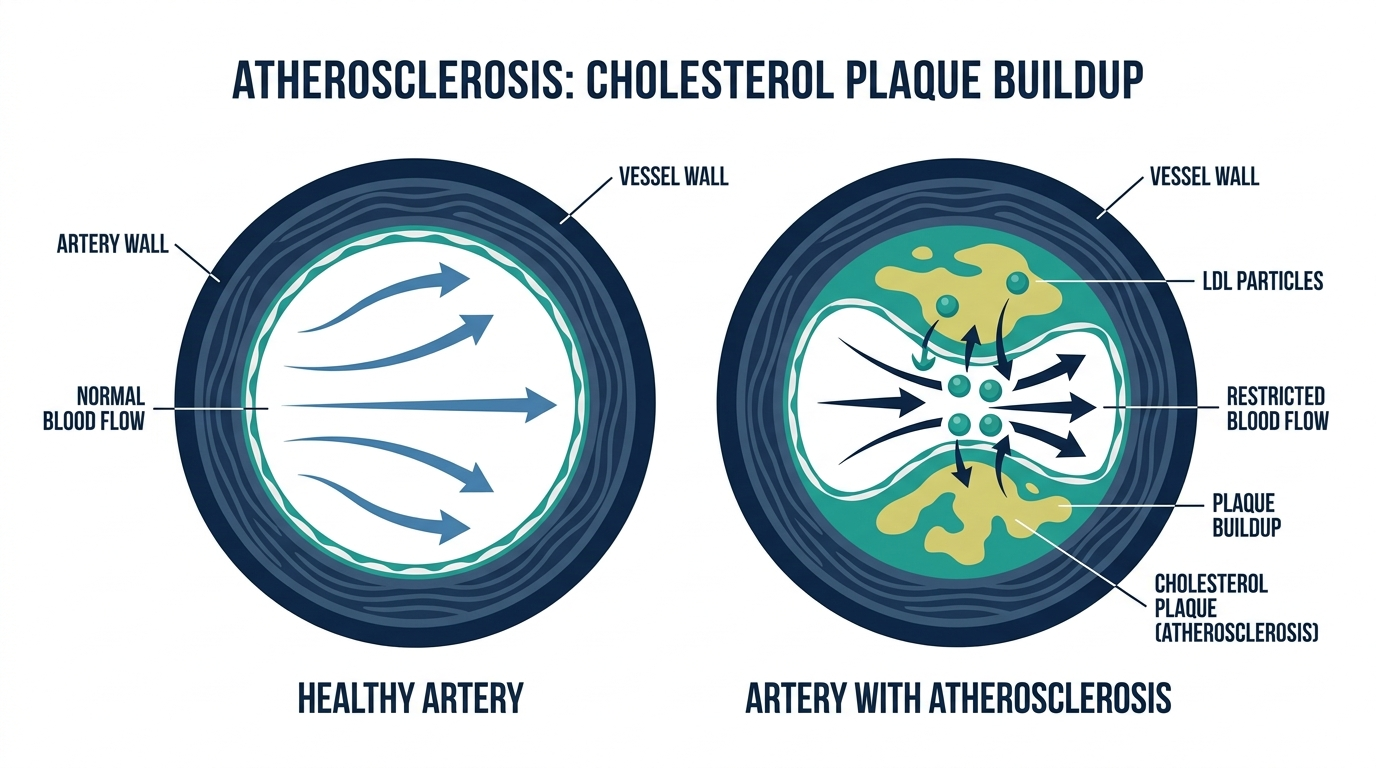
Here is why LDL gets the attention. Excess LDL deposits cholesterol into the walls of your arteries, where it builds up as a sticky substance called plaque. Over years, that plaque narrows the arteries and stiffens them, a process called atherosclerosis (MedlinePlus). A high result is not a disease you feel today. It is a forecast of risk you are accumulating for the future, which is exactly why it gets treated even when you feel perfectly fine.
One result on its own is also not a verdict. Cholesterol can swing with a recent illness, a non-fasting sample, or even pregnancy, so a single high reading is usually confirmed with a repeat test before anyone labels you (Mayo Clinic).
What causes a high cholesterol?
Most high cholesterol comes from a mix of how you live and the genes you inherited. Ranked roughly from most to least common, the real drivers are (Cleveland Clinic):
- Diet and lifestyle. A pattern heavy in saturated and trans fats, low physical activity, smoking, excess weight, and chronic stress all push LDL up. This is the largest bucket by far.
- Other medical conditions. Type 2 diabetes, obesity, an underactive thyroid (hypothyroidism), chronic kidney disease, PCOS, and sleep apnea can all raise cholesterol as a downstream effect.
- Genetics. Familial hypercholesterolemia is an inherited condition that makes LDL extremely high from a young age, regardless of diet (Mayo Clinic).
- Medications. Certain drugs, including some HIV treatments, antipsychotics, antiepileptics, and anabolic steroids, can elevate cholesterol as a side effect.
The honest takeaway is that a high number does not automatically mean you ate badly. Plenty of careful eaters have high LDL because their liver overproduces cholesterol or because of an inherited tendency. The cause shapes the fix, which is why it is worth identifying rather than assuming.
What are the symptoms of a high cholesterol?
This is the part that catches people off guard. High cholesterol has no symptoms. None. You cannot feel it, and there is no ache or sign that tells you it is high. A blood test is the only way to know (Mayo Clinic). That is precisely why it is so dangerous. Cholesterol can sit elevated for decades, quietly furring up your arteries, while you feel completely healthy.
The symptoms people associate with cholesterol are actually symptoms of the damage it eventually causes. Chest pain (angina), jaw pain, or shortness of breath can appear once plaque has narrowed the arteries feeding your heart, and the first noticeable “symptom” of high cholesterol is sometimes a heart attack or stroke (Cleveland Clinic).
There is one exception worth knowing. People with the inherited form, familial hypercholesterolemia, can develop visible signs from cholesterol deposits: waxy yellow bumps on the skin or tendons called xanthomas, and a pale ring around the colored part of the eye called corneal arcus (Mayo Clinic). If you see those, especially before age 45, it is a strong prompt to get tested.

When is a high cholesterol dangerous or a medical emergency?
High cholesterol itself is never an emergency, because the number on the page does no harm in the moment. What is dangerous is the cardiovascular event it can trigger after years of silent plaque buildup. The result becomes genuinely high risk when it crosses into the upper ranges or stacks on top of other risk factors.
On the lab itself, an LDL of 190 mg/dL or higher is the “very high” tier and a red flag, often signaling familial hypercholesterolemia and warranting aggressive treatment (Cleveland Clinic). The danger climbs further when high LDL combines with diabetes, high blood pressure, smoking, or a family history of early heart disease.
The actual emergency is what the cholesterol leads to. Call 911 if you have signs of a heart attack such as severe chest pain or pressure, pain spreading to the arm or jaw, nausea, and shortness of breath, or signs of a stroke such as sudden face drooping, arm weakness, or slurred speech (Cleveland Clinic). Those are the moments years of high cholesterol have been quietly building toward, and they need help immediately, not a lab appointment.
What should you do about a high cholesterol?
First, confirm it. A single elevated reading is usually rechecked with a fasting lipid panel before any decisions are made, because cholesterol genuinely fluctuates (Mayo Clinic). If your sample was not fasting, that alone can throw off the triglyceride and LDL numbers.
Once it is confirmed, the response runs on two tracks. Lifestyle change is the foundation for everyone: eat fewer saturated and trans fats, move more, reach a healthy weight, stop smoking, and get adequate sleep (Cleveland Clinic). These steps can meaningfully lower LDL on their own for many people.
Medication is the second track, and whether you need it depends less on your cholesterol number alone and more on your overall heart risk. Statins are the first-line drugs and work by reducing how much LDL your liver puts into circulation (Mayo Clinic). Your clinician weighs your LDL alongside your age, blood pressure, diabetes status, smoking, and family history to estimate your 10-year risk, then decides whether lifestyle alone is enough or whether a statin earns its place.
When should you see a doctor?
If your blood test shows high cholesterol, book a visit to discuss it rather than waiting for symptoms that may never come until it is too late. See a clinician promptly if your LDL is in the very high range (190 or above), if you have a family history of heart attack or stroke before age 55 in men or 65 in women, or if you have diabetes or high blood pressure on top of a high reading (Cleveland Clinic).
Even with no risk factors, most adults should have cholesterol checked on a schedule. General guidance suggests testing roughly every five years for younger low-risk adults, and more often, every one to two years, for men 45 to 65 and women 55 to 65 (MedlinePlus). Because the condition is silent, that schedule is your only early-warning system.

The insider point most people miss: total cholesterol can lie
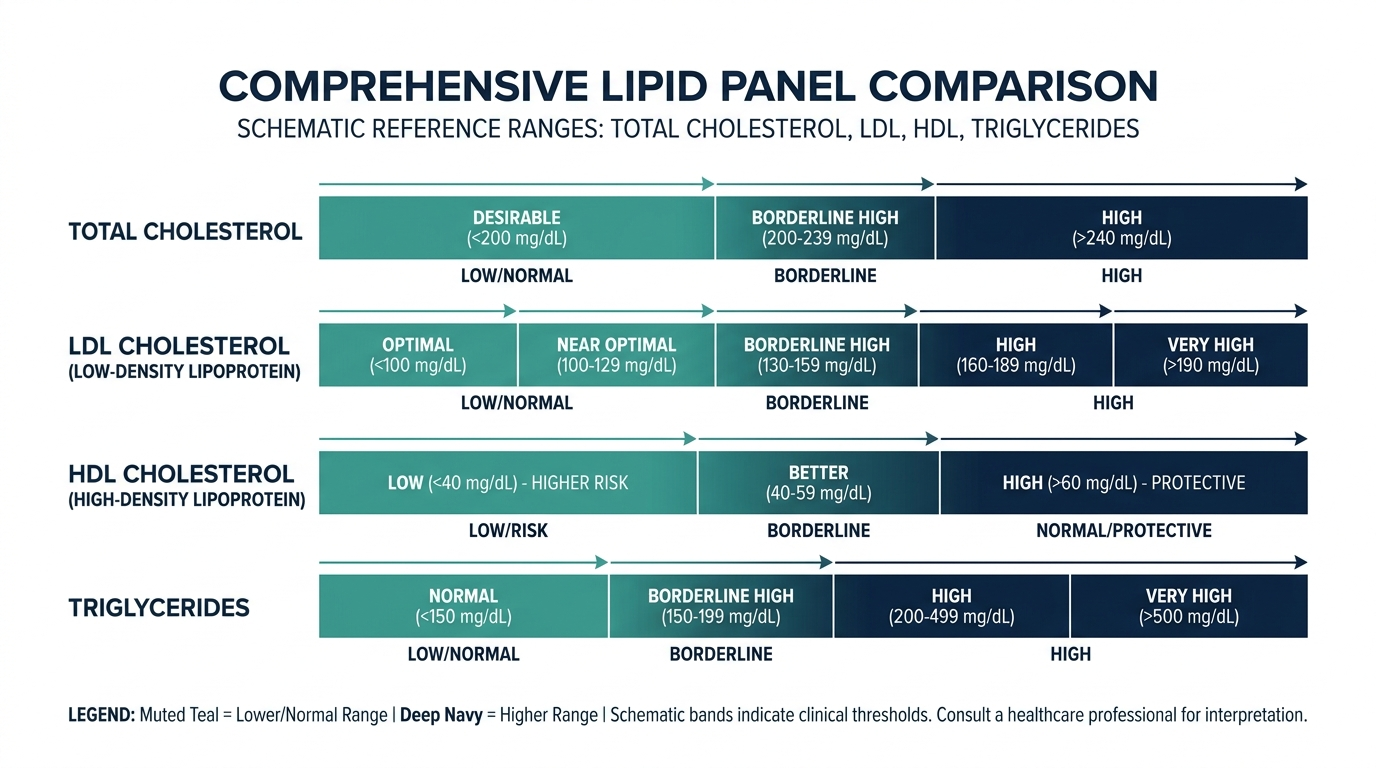
Here is the nuance that gets lost when a result is reduced to a single “high or normal” verdict. Total cholesterol is the number people fixate on, but it is the least informative line on the panel, and it can mislead in both directions.
It can read falsely reassuring. Total cholesterol is roughly LDL plus HDL plus a fraction of triglycerides, so a person with dangerously high LDL but also high protective HDL can land at a “normal” total while still carrying real risk. Conversely, total cholesterol can read falsely alarming, because a very high HDL, the good kind, inflates the total even though that person may be in good shape. This is why clinicians look past total cholesterol to the components, especially LDL and the non-HDL value.
A second commonly missed detail is fasting. Triglycerides in particular spike after a meal, and a non-fasting sample can push your calculated LDL off and make the whole panel look worse than it is (MedlinePlus). If your numbers jumped and you ate beforehand, that is the first thing to question. The lesson: do not let one total cholesterol number, or one non-fasting draw, decide how worried you should be. The story is in the breakdown.
Beyond LDL: the numbers that sharpen your real risk
The standard four-line lipid panel is a good screen, but two derived numbers and two advanced tests give a truer picture of risk, and they are where modern lipid care is heading.
- Non-HDL cholesterol. This is simply total cholesterol minus HDL. It captures every cholesterol-carrying particle that can drive plaque, not just LDL, and it does not require fasting to be reliable. Many clinicians now watch non-HDL closely, especially in people with high triglycerides where the calculated LDL becomes less accurate.
- Total cholesterol to HDL ratio. Dividing total by HDL gives a quick sense of the balance between harmful and protective cholesterol. A lower ratio is better, and it can flag risk that a single number hides.
- Apolipoprotein B (ApoB). Each atherogenic particle carries exactly one ApoB molecule, so ApoB is essentially a direct count of the particles that cause plaque. It can predict cardiovascular risk more accurately than LDL or non-HDL, and it is especially useful when LDL disagrees with the clinical picture, as in diabetes, obesity, or high triglycerides (Cleveland Clinic).
- Lipoprotein(a), or Lp(a). This is an inherited, independent risk factor for heart disease. Its level is largely set by your genes and is not predictable from LDL, so it has to be measured separately. It is usually checked once in a lifetime, and it barely moves with diet or exercise.
If you have a strong family history of early heart disease or an unexpectedly high LDL, asking about ApoB and Lp(a) is one of the highest-value conversations you can have, because they can uncover risk the basic panel misses.
How much lifestyle change actually lowers cholesterol
Advice to eat better and move more is easy to tune out because it feels vague. Here is what each lever tends to move, so you can prioritize.
- Cutting saturated fat (fatty meats, butter, full-fat dairy, tropical oils) is the single most effective dietary change for lowering LDL, because saturated fat is the main dietary driver that raises it.
- Adding soluble fiber from oats, beans, lentils, apples, and psyllium binds cholesterol in the gut and modestly lowers LDL.
- Losing excess weight improves LDL, triglycerides, and HDL together, and often has the biggest effect on triglycerides.
- Regular aerobic exercise mainly raises HDL and lowers triglycerides, with a smaller effect on LDL.
- Quitting smoking raises HDL and, more importantly, sharply cuts overall cardiovascular risk beyond the cholesterol numbers.
- Reducing refined carbohydrates and alcohol is the fastest way to bring down high triglycerides specifically.
For many people with borderline or moderately high LDL and no other major risk factors, several months of consistent change is enough to avoid or delay medication. Genetic causes are the exception, where lifestyle helps but rarely fixes the number alone.

Reading the pattern: worked scenarios
- Total 250, LDL 175, HDL 45, triglycerides 140. A clear high-LDL picture. Lifestyle change is the foundation, and a statin is considered based on overall risk.
- Total 210, LDL 120, HDL 75, triglycerides 90. The total looks borderline, but the high protective HDL is inflating it. The non-HDL is reassuring, and this person may be lower risk than the total suggests.
- Total 200, LDL 110, HDL 35, triglycerides 300. The total looks fine, but low HDL plus high triglycerides signals metabolic risk. ApoB or non-HDL often reveals more particles than the LDL implies.
- LDL 210 at age 30 with tendon bumps and a parent who had an early heart attack. Strongly suggests familial hypercholesterolemia and warrants prompt, aggressive treatment and family screening.
- Numbers jumped since last year, and the sample was non-fasting after lunch. Triglycerides and calculated LDL can be distorted. Repeat fasting before drawing conclusions.
How the test is done and what can skew it
A lipid panel is a simple blood draw. Traditionally it asks for a 9 to 12 hour fast, mainly because triglycerides rise after eating and the LDL on most panels is calculated from them. Non-fasting panels are increasingly accepted for screening, but if triglycerides or a calculated LDL look off, a fasting repeat settles it. Things that can move the numbers include:
- A recent meal, which raises triglycerides and can distort calculated LDL.
- Acute illness, infection, or recent surgery, which can temporarily lower cholesterol, so testing is usually delayed several weeks after these.
- Pregnancy, which naturally raises cholesterol, so it is not the time to judge baseline levels.
- Recent heavy alcohol intake, which spikes triglycerides.
- Certain medications, including steroids and some others, which can raise levels.
Common misconceptions about high cholesterol
- “If I feel fine, my cholesterol is fine.” High cholesterol is completely silent. The only way to know is a blood test.
- “High cholesterol just means I eat badly.” Diet is the biggest bucket, but genetics, thyroid disease, and other conditions raise cholesterol in careful eaters too.
- “Total cholesterol is the number that matters.” It is the least informative line. LDL, non-HDL, and ApoB tell the real story, and a high HDL can inflate the total harmlessly.
- “Dietary cholesterol is the main driver of blood cholesterol.” For most people, saturated and trans fat raise LDL more than dietary cholesterol itself.
- “Statins let me eat whatever I want.” Medication and lifestyle work together. Diet, weight, and activity still shape your risk on treatment.
Want to check your cholesterol?
Three ways to get it measured. Pick whichever fits you.
Affiliate links: we may earn a commission at no extra cost to you. A lab test does not replace a visit with your clinician.
Who should get tested, and how often
Because high cholesterol has no symptoms, scheduled screening is the only early warning. General guidance suggests checking cholesterol roughly every five years in younger low-risk adults, and more often, every one to two years, for men 45 to 65 and women 55 to 65 (MedlinePlus). Test sooner or more often if you have:
- A family history of early heart attack or stroke, before 55 in men or 65 in women.
- Diabetes, high blood pressure, obesity, or you smoke, which stack risk on top of any high reading.
- A previously high result, to track whether lifestyle change or medication is working.
- Physical signs of familial hypercholesterolemia, such as tendon or skin cholesterol deposits or an early corneal ring.
The recurring theme is that a cholesterol result is a long-range forecast, not a same-day emergency. Read the full breakdown rather than the total, confirm surprising numbers with a fasting repeat, and treat the trend over time, and you turn a scary line on a printout into one of the most actionable numbers in preventive medicine.
Frequently asked questions
What blood test shows high cholesterol?
A lipid panel, also called a lipid profile or cholesterol test. It is one blood draw that measures total cholesterol, LDL, HDL, and triglycerides, and it is the only standard test used to find high cholesterol (MedlinePlus).
What number counts as high cholesterol on a blood test?
Total cholesterol of 240 mg/dL or higher is high, and 200 to 239 is borderline high. For LDL, 160 to 189 is high and 190 or above is very high (Cleveland Clinic). LDL above 100 already starts raising cardiovascular risk.
Can a blood test show high cholesterol with no symptoms?
Yes, and that is the norm. High cholesterol has no symptoms at all, so a blood test is the only way to detect it (Mayo Clinic). Many people feel completely healthy while their LDL is high.
What should I do if my cholesterol is high in a blood test?
Confirm it with a fasting repeat test, then work on diet, exercise, weight, smoking, and sleep. Depending on your overall heart risk, your clinician may add a statin (Mayo Clinic).
Do I need to fast for a cholesterol blood test?
Often yes. Many cholesterol tests ask you to fast for 9 to 12 hours beforehand, which is why they are usually done in the morning. A non-fasting sample can distort triglycerides and LDL (MedlinePlus). Your provider will confirm what you need.
This article is for general educational purposes and is not medical advice. It cannot diagnose or treat you and does not replace your clinician. Always discuss your lab results and any health decisions with a qualified healthcare professional.
Vital Signs Today may earn a commission if you buy through links on this page. It does not affect our editorial assessments.