Disclosure: Vital Signs Today may earn a commission if you buy through links on this page, at no extra cost to you. This does not influence our evidence-based assessments. We are not a medical provider; talk to a clinician before acting on test results.
Related: See the ALT reference chart by age and sex
You scanned your lab report, everything looked fine, and then one line had a little flag next to it: ALT, with a number sitting above the reference range. Maybe your doctor mentioned it in passing. Maybe you found it yourself in a patient portal at 11pm and your stomach dropped. Either way, you are now reading the word “elevated” and quietly wondering if your liver is in trouble.
Here is the honest version that most quick explainers skip. A high ALT is one of the most common abnormal results in all of routine blood work, and most of the time it is not the emergency it feels like. But the number is not noise either. It is a signal worth understanding, because what you do next genuinely matters.
Part of our Liver Function Tests guide.
What does high ALT mean in a blood test?
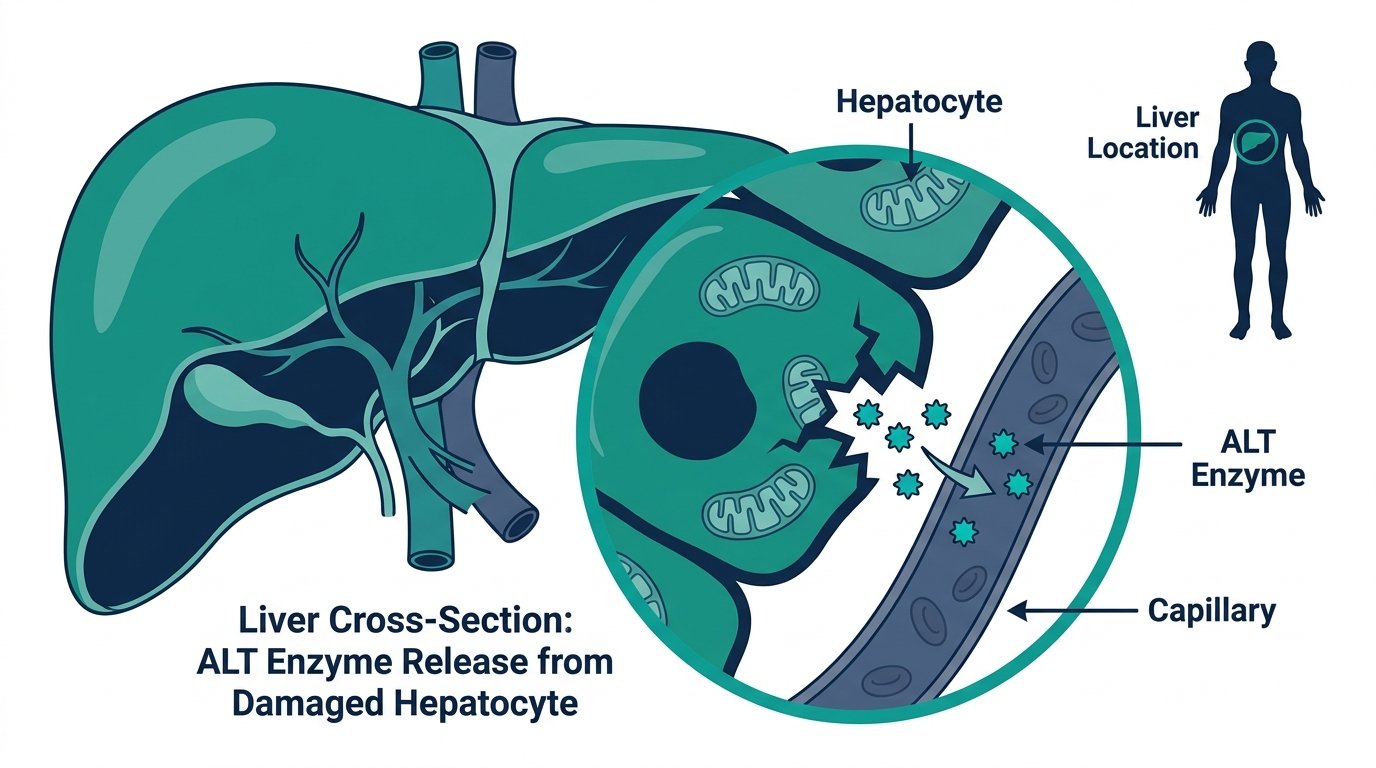
ALT stands for alanine transaminase, an enzyme found mainly inside your liver cells (MedlinePlus). When liver cells are stressed or damaged, they leak ALT into the bloodstream, so a high ALT is essentially your liver telling you that some of its cells have been irritated or injured. In plain terms, ALT is a liver leakage marker, and a high reading means more leakage than normal.
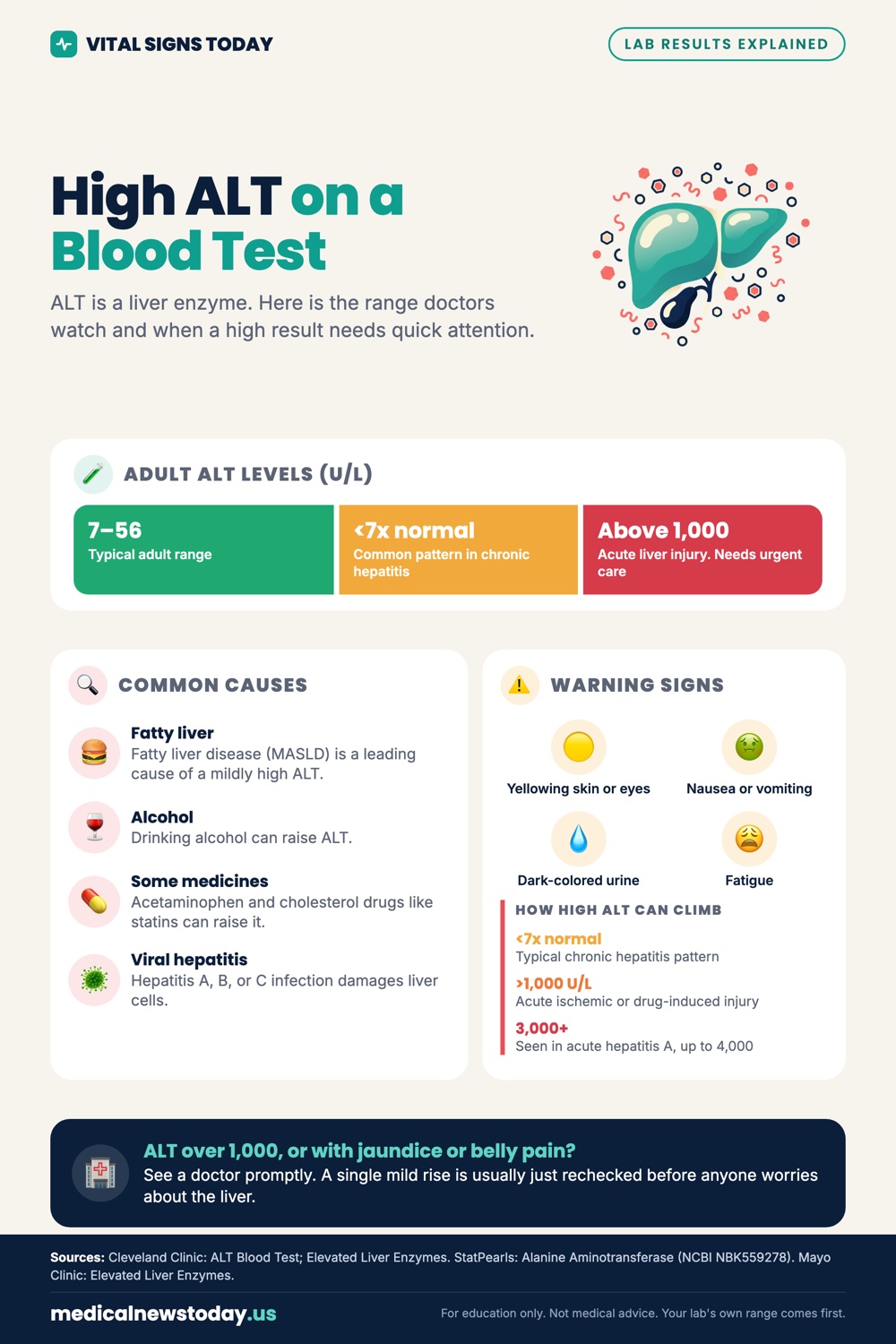
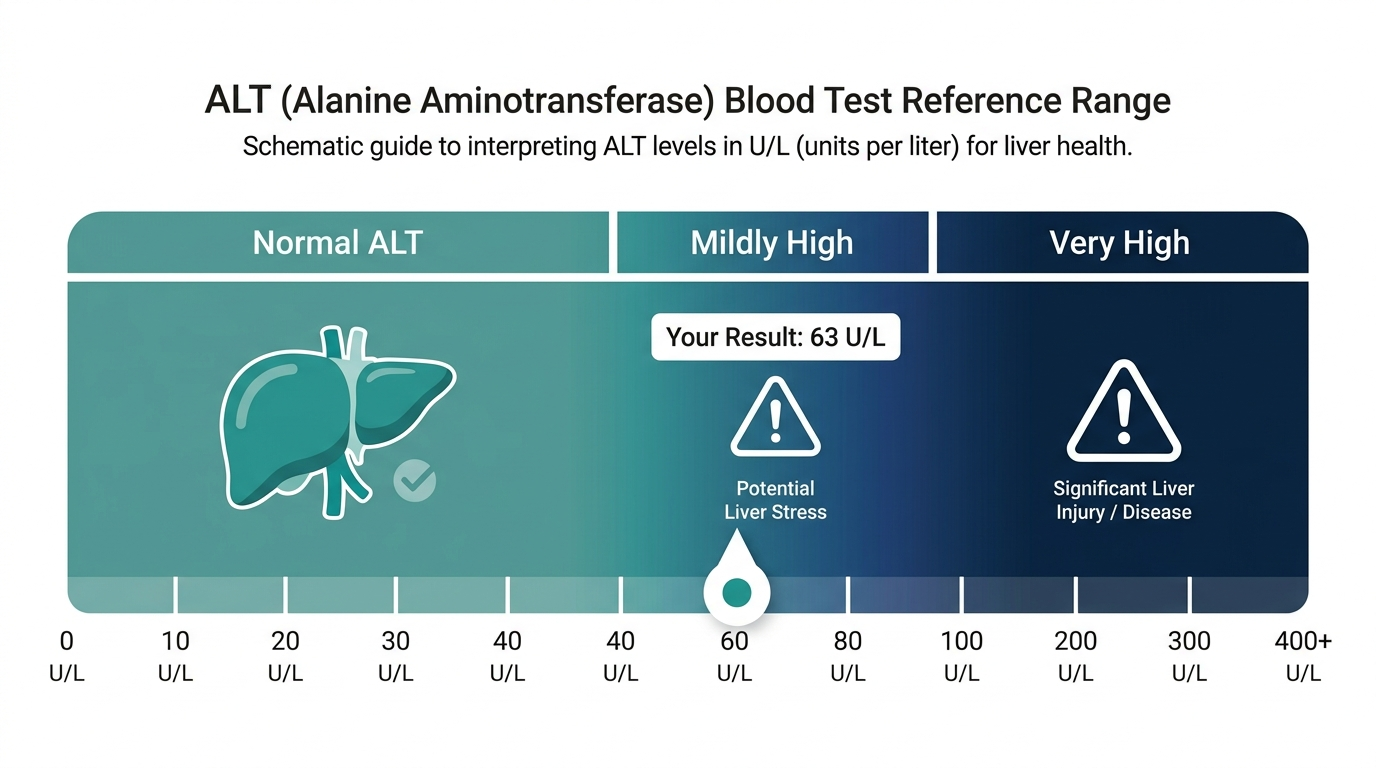
So what counts as high? Normal ALT runs roughly 7 to 40 units per liter (U/L), and the usual upper limit is around 33 to 40 U/L for men and 25 to 30 U/L for women, though every lab calibrates its own range (American Family Physician). Anything above the top of your lab’s printed range is flagged as elevated. The single most useful framing clinicians use: an ALT under five times the upper limit of normal is considered mild and is rarely urgent, while anything above five times the upper limit deserves prompt evaluation (American Family Physician).
One thing your report will not tell you, and it is important: the height of the ALT number does not reliably tell you how badly the liver is damaged (MedlinePlus). A modest elevation from years of fatty liver can be more consequential long term than a dramatic, temporary spike that resolves in a week. ALT measures leakage, not scarring.

What causes a high ALT?
The differential is long, but it is heavily front-loaded. A handful of causes account for the large majority of elevated ALT results, so it helps to think in order of likelihood rather than worst-case first.
- Fatty liver disease. Non-alcoholic fatty liver disease (now often called metabolic-associated fatty liver) is the single most common cause of an unexplained elevated ALT, responsible for roughly 25 to 51 percent of cases depending on the population (American Family Physician). It is tied to excess weight, insulin resistance, and metabolic syndrome, and it affects an estimated 10 to 30 percent of US adults (American Family Physician).
- Alcohol. Alcohol-related liver injury is one of the leading causes of liver disease in Western countries and a frequent driver of elevated enzymes (American Family Physician).
- Medications and supplements. Acetaminophen, statins, some antibiotics, oral contraceptives, methotrexate, and a long list of others can raise ALT (MedlinePlus). Herbal and “liver detox” supplements are an underappreciated culprit.
- Viral hepatitis. Hepatitis B and C, and sometimes A, are classic causes and the reason your doctor may order viral serology (Cleveland Clinic).
- Other conditions. Hereditary hemochromatosis (iron overload), autoimmune hepatitis, cirrhosis, and reduced blood flow to the liver are less common but important (Cleveland Clinic).
There is also a category that trips people up constantly: things that raise ALT without any liver disease at all. Intense exercise in the days before your blood draw, your point in the menstrual cycle, and certain muscle conditions can all nudge ALT up (MedlinePlus). More on that below, because it is one of the most common reasons people panic over a number that simply needed a recheck.
What are the symptoms of a high ALT?
This is the part that surprises people most: a high ALT usually has no symptoms at all. The most common cause, fatty liver disease, is typically silent and is found by accident on blood work ordered for something unrelated (American Family Physician). You can have an elevated ALT for years and feel completely normal, which is exactly why it shows up as a surprise on routine labs.
When the underlying liver problem is more active or advanced, symptoms can appear. Watch for fatigue, abdominal pain (especially upper right side), nausea or vomiting, loss of appetite, itching, dark urine, pale stools, and yellowing of the skin or eyes (jaundice) (Cleveland Clinic). The key insight is the asymmetry: feeling fine does not mean the ALT is meaningless, and feeling unwell with a high ALT is a reason to be seen sooner rather than later.

When is a high ALT dangerous or a medical emergency?
Most elevated ALT results are mild and not urgent. The picture changes at the extremes. A mild elevation, under five times the upper limit of normal, can usually be worked up at an unhurried pace, while anything above five times the upper limit should prompt prompt medical evaluation rather than a wait-and-see approach (American Family Physician).
The genuinely concerning territory is a markedly elevated ALT, the kind that climbs into the hundreds or even past 1,000 U/L. That magnitude points toward acute, serious liver injury: acetaminophen overdose or other drug toxicity, acute viral hepatitis, or sudden loss of blood flow to the liver. Combine a high ALT with red-flag symptoms, jaundice, confusion or drowsiness, severe abdominal pain, vomiting, or signs of bleeding, and that is an emergency, not a recheck. Seek care immediately. Untreated liver injury can progress to serious damage (Cleveland Clinic), so the symptoms accompanying the number matter as much as the number itself.
What should you do about a high ALT?
For a mild, symptom-free elevation, the path is usually methodical rather than dramatic. A reasonable sequence:
- Repeat the test. A single elevated ALT is often rechecked first, ideally after avoiding alcohol and strenuous exercise for several days, because a transient bump is common.
- Review the obvious inputs. Your clinician will ask about alcohol, every medication and supplement you take, and metabolic risk factors like weight, waist size, blood pressure, blood sugar, and cholesterol (American Family Physician).
- Run targeted follow-up labs. Typical next steps include a full liver panel, viral hepatitis testing, iron studies and ferritin, and a complete blood count (American Family Physician).
- Imaging if indicated. An abdominal ultrasound is common when fatty liver is suspected.
- Treat the cause. For fatty liver, the most effective treatment is not a pill. Weight loss, reducing or stopping alcohol, controlling blood sugar, and exercise can normalize ALT, and even modest weight reduction often improves it.
Treatment depends entirely on what is driving the number. There is no medication for “high ALT” itself; you treat the liver condition behind it.

When should you see a doctor?
If your ALT was flagged on routine labs and you feel well, this is a conversation for your next appointment, not the emergency room, but do not let it slide indefinitely. Early detection is the best protection against quiet, progressive liver damage (Cleveland Clinic). Book a visit promptly if your ALT is more than five times the upper limit of normal, if it stays elevated on a repeat test, or if you have risk factors like heavy alcohol use, diabetes, obesity, a family history of liver disease, or hepatitis exposure.
Go in urgently, or to the emergency department, if a high ALT comes with jaundice, severe abdominal pain, persistent vomiting, confusion, or any suspicion of an acetaminophen overdose.
The insider read: what gets missed with a high ALT
Here is the nuance that separates a panicked patient from an informed one. A surprising number of “abnormal” ALT results are not really abnormal in the way people assume, and three things get missed constantly.
First, transient elevations are everywhere. Hard exercise in the days before a blood draw can push ALT up on its own, and where you are in your menstrual cycle can shift it too (MedlinePlus). This is why a single high value is often rechecked rather than acted on. If you ran a half marathon the weekend before your labs, mention it.
Second, ALT is not exclusively a liver enzyme. It also lives in muscle, so a muscle injury, a recent intense workout, or a muscle disorder can raise it without your liver being involved at all (Mayo Clinic). This is part of why clinicians read ALT alongside AST and the rest of the panel rather than in isolation. A high ALT with a normal GGT and alkaline phosphatase, for instance, paints a different picture than a high ALT with everything else climbing too.
Third, and most overlooked: the danger of a mildly high ALT is often the slow story, not the scary one. People fixate on whether the number means immediate harm, when the real risk with the most common cause, fatty liver, is years of silent inflammation in someone who feels perfectly fine (American Family Physician). A persistently mild elevation is not a reason to relax. It is a reason to address the metabolic factors driving it now, while the fix is still mostly lifestyle.

The AST-to-ALT ratio: a clue hiding in two numbers
ALT almost never travels alone. It is usually reported next to AST (aspartate transaminase), and the relationship between the two is one of the most useful shortcuts clinicians use to narrow the cause of elevated liver enzymes. The ratio of AST to ALT is sometimes called the De Ritis ratio.
- ALT higher than AST (ratio below 1). This pattern is typical of metabolic fatty liver and many viral and drug-related causes, where ALT tends to lead. It is the most common picture behind a mild, incidental elevation.
- AST clearly higher than ALT (ratio around 2 or above). This classically points toward alcohol-related liver injury, and in advanced disease it can also reflect cirrhosis. When someone has a high AST-to-ALT ratio, alcohol moves up the list of suspects.
- Both very high together. A large simultaneous jump in both enzymes suggests acute, significant liver cell injury, such as a drug toxicity or acute viral hepatitis, and warrants prompt attention.
The ratio is a hint, not a verdict, and it is always read alongside history and the rest of the panel. But it explains why your clinician looks at AST and ALT as a pair rather than reacting to a single flagged line.
Reading ALT within the full liver panel
A liver panel bundles several markers, and the pattern across them tells you far more than ALT alone. The key split is between a hepatocellular pattern (liver cell injury) and a cholestatic pattern (bile flow problem):
| Pattern | What tends to be up | Points toward |
|---|---|---|
| Hepatocellular | ALT and AST lead, ALP relatively normal | Fatty liver, hepatitis, drug injury, alcohol |
| Cholestatic | ALP and GGT lead, ALT and AST relatively lower | Bile duct blockage or cholestasis |
| Mixed | Both groups elevated | Overlapping processes needing a closer look |
Want to check your ALT?
Three ways to get it measured. Pick whichever fits you.
Affiliate links: we may earn a commission at no extra cost to you. A lab test does not replace a visit with your clinician.
Bilirubin adds another layer: a rising bilirubin alongside high ALT signals that the liver’s processing capacity, not just its cell membranes, may be affected, which raises the stakes. Albumin and the prothrombin time (INR) reflect the liver’s synthetic function, and if those are abnormal the concern shifts from simple irritation toward the liver’s ability to do its job. This is why a high ALT with a normal bilirubin, albumin, and INR is usually far less worrying than the same ALT with those markers off.
Is the “normal” ALT range set too high?
Here is a debate worth knowing about, because it affects how you read a result that sits just inside the reference range. Traditional ALT upper limits were derived decades ago from populations that, in hindsight, included many people with undiagnosed fatty liver. Some hepatology researchers argue the true healthy upper limit is lower than many labs still use, closer to the low 30s U/L for men and the mid-20s for women.
The practical implication is subtle but real. An ALT that reads as technically normal on your lab’s older range could still be mildly elevated by these stricter thresholds, especially if you also carry metabolic risk factors like extra weight, high triglycerides, or elevated blood sugar. This does not mean you should panic over a borderline-normal value. It means that if your ALT sits near the top of the range and you have metabolic risk factors, it is reasonable to treat that as a nudge toward the same lifestyle levers that help fatty liver, rather than assuming everything is fine because there was no red flag.
How to prepare and what can distort an ALT result
Because a chunk of surprise elevations are transient, controlling a few variables before the draw makes your result more trustworthy:
- Skip intense exercise for a few days beforehand. Hard or unaccustomed exertion can raise ALT on its own, partly because ALT also exists in muscle. If you cannot avoid it, tell whoever interprets the result.
- Pause alcohol before a baseline test. Recent drinking can lift enzymes, so a few alcohol-free days give a cleaner picture.
- Bring a complete medication and supplement list. Many drugs and herbal or “liver detox” products raise ALT, and the result is only interpretable if that context is known.
- Note where you are in your menstrual cycle if relevant, since ALT can shift across it.
These are exactly the factors a repeat test under cleaner conditions is designed to sort out, which is why a lone high ALT is so often rechecked rather than acted on immediately.
Worked example and monitoring cadence
Suppose your ALT comes back mildly elevated, AST is a bit lower than ALT, ALP and bilirubin are normal, and you feel well. This hepatocellular pattern with ALT leading, in someone with some extra weight and borderline blood sugar, is the archetype of metabolic fatty liver. The sensible path is to recheck after a few clean days, review alcohol and medications, and address the metabolic drivers, because even modest weight loss and regular exercise can pull ALT back toward normal.
Now change the surroundings. If AST clearly outpaces ALT, alcohol rises up the list. If ALP and GGT lead instead, the story tilts toward bile flow. And if bilirubin, albumin, or INR are abnormal alongside the high ALT, the concern escalates and the workup broadens. Same ALT line, very different next steps.
For a confirmed mild elevation from fatty liver, a reasonable monitoring rhythm is to recheck the liver panel every few months while you work on the underlying factors, watching the trend rather than any single value. A falling ALT over successive tests is the reassuring signal that your changes are working, and a stubbornly rising one is the cue to escalate.
Questions people ask most about a high ALT
The question that comes up first is whether a high ALT means liver damage. Not necessarily. ALT is an enzyme that leaks from liver cells when they are stressed or injured, so a raised level signals that something is irritating the liver, but it does not say how serious that something is or whether lasting harm has occurred. A mild elevation from a fatty liver, a recent hard workout, or a new medication is a very different situation from a level many times the upper limit. The number is a flag to look closer, not a diagnosis on its own.
People also ask whether a high ALT can come down. In many of the most common cases it can. When the driver is fatty liver, excess alcohol, or a particular medication, addressing that cause often lets ALT drift back toward normal over weeks to months, because the liver has real capacity to recover once the source of stress is removed. This is part of why clinicians focus on finding and treating the cause rather than fixating on the enzyme itself.
Another frequent question is how high is too high. There is no single cutoff that separates safe from dangerous, but the general pattern is that a mild elevation, up to a few times the upper limit, is usually worked up in an unhurried way, while a level more than five times the upper limit, or any elevation paired with jaundice, confusion, or severe abdominal pain, prompts urgent evaluation. What matters is not just the height of the number but the company it keeps in the rest of the panel and how you feel.
How a high ALT is investigated when the cause is not obvious
When a raised ALT does not have an obvious explanation, clinicians tend to work through it in a logical order rather than jumping to the rarest possibilities first. The initial step is usually to repeat the test after a few days of avoiding alcohol and strenuous exercise, since a transient bump is common and a normal recheck can end the investigation right there. If the elevation persists, the next move is a careful review of every medication, supplement, and herbal product you take, because these are among the most frequent and most easily reversible causes.
From there the search widens in a stepwise way. A provider will typically look at metabolic risk factors like weight, waist size, blood sugar, and cholesterol, since fatty liver linked to these is the single most common reason for an unexplained high ALT. An abdominal ultrasound is often ordered when fatty liver or a structural problem is suspected, because it can show fat, scarring, or obstruction that blood work alone cannot. Blood tests for viral hepatitis are standard, and less common causes such as autoimmune hepatitis, iron overload, or inherited conditions are checked when the more likely explanations have been ruled out.
The point of this sequence is to move from common and reversible toward rare and serious, using each result to decide the next step rather than testing for everything at once. It also explains why a single high ALT rarely leads straight to a scary diagnosis. Most people who start this pathway end up with a common, manageable cause identified early, and the ordered approach is what keeps the investigation both thorough and proportionate to the actual level of concern.
Frequently asked questions
What does a high ALT mean on a blood test?
It means your liver cells are leaking more of the enzyme alanine transaminase than normal, usually because they are irritated or injured (MedlinePlus). It is a signal, not a diagnosis. Most often it points to fatty liver, alcohol, a medication, or a viral cause, and the height of the number does not directly tell you how damaged the liver is.
What ALT level is considered dangerous?
A mild elevation under five times the upper limit of normal is rarely urgent, while a level above five times the upper limit deserves prompt evaluation (American Family Physician). Markedly high values in the hundreds or above 1,000 U/L suggest acute serious injury and are an emergency, especially with jaundice or confusion.
What is the most common cause of high ALT?
Non-alcoholic fatty liver disease is the most common cause of an unexplained elevated ALT, accounting for roughly 25 to 51 percent of cases, followed by alcohol, medications, and viral hepatitis (American Family Physician).
Can a high ALT be temporary or a false result?
Yes. Intense exercise, your point in the menstrual cycle, muscle injury, and certain supplements can raise ALT without liver disease, which is why a single high result is often rechecked after a few days (MedlinePlus).
Can you lower a high ALT naturally?
Often yes, when fatty liver is the cause. Weight loss, cutting back or stopping alcohol, controlling blood sugar, and regular exercise can bring ALT back toward normal, since treatment targets the underlying condition rather than the enzyme itself (Cleveland Clinic).
This article is for general educational purposes and is not medical advice. It cannot diagnose or treat you and does not replace your clinician. Always discuss your lab results and any health decisions with a qualified healthcare professional.
Vital Signs Today may earn a commission if you buy through links on this page. It does not affect our editorial assessments.