Disclosure: Vital Signs Today may earn a commission if you buy through links on this page, at no extra cost to you. This does not influence our evidence-based assessments. We are not a medical provider; talk to a clinician before acting on test results.
Your doctor said “let’s check your liver,” you rolled up your sleeve, and a week later a result landed in your portal with a row of cryptic abbreviations: ALT, AST, ALP, bilirubin, albumin. Most people stare at those letters, see a few values flagged in red, and feel a small jolt of panic without knowing what any of it actually means.
Here is what almost no one explains up front. There is no single “liver test.” Liver function is read from a small panel of markers working together, and once you know what each one is doing, the report stops being intimidating and starts telling you a clear story.
What blood test shows liver function?
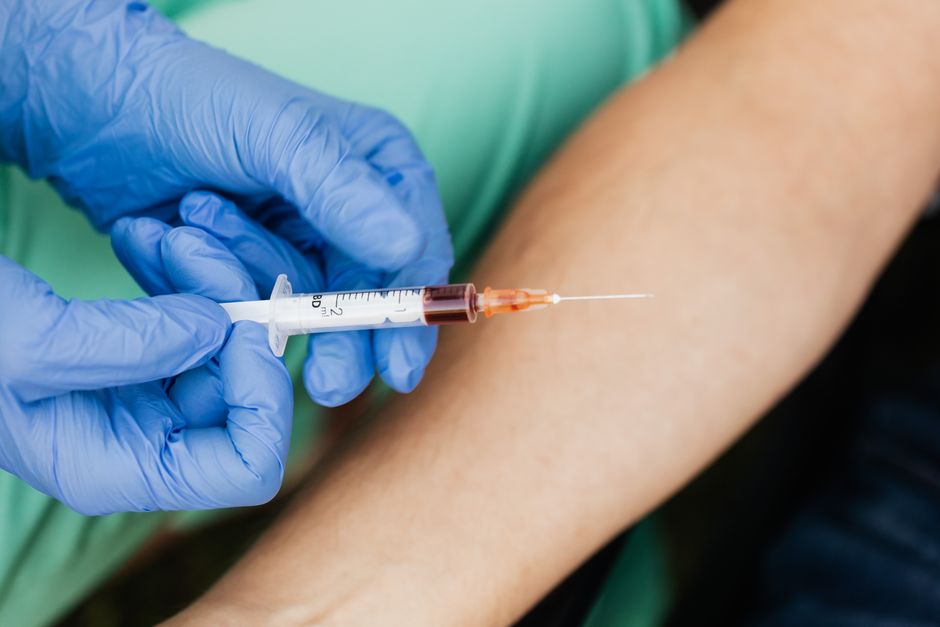
The blood test that shows liver function is a panel called liver function tests (LFTs), also known as a liver panel or hepatic function panel. It is a single blood draw that measures a group of enzymes and proteins to assess how healthy your liver is and whether it has been injured (MedlinePlus). It is not one number but a set, typically run together so the pattern can be interpreted as a whole.
A standard liver panel usually measures alanine transaminase (ALT), aspartate transaminase (AST), alkaline phosphatase (ALP), gamma-glutamyl transferase (GGT), bilirubin, albumin, and total protein, and often prothrombin time (PT) as well (Cleveland Clinic). You will also see these same liver markers bundled inside a comprehensive metabolic panel (CMP), which is one of the most common blood tests ordered at a routine checkup.

What blood test for liver function does a doctor actually order?
When someone asks what blood test for liver function their doctor will run, the answer is almost always the liver panel or a CMP that contains it. Both arrive at the same place: the cluster of liver markers listed above, drawn from a single vial of blood.
The reason it is grouped this way matters. No single enzyme can tell you everything, so the panel exists to capture different angles at once. Some markers spike when liver cells are damaged. Others rise when bile flow is blocked. A couple quietly report on whether the liver is still doing its manufacturing job. Read in isolation, each is noise. Read together, they form a pattern a clinician can actually act on.
What does each marker in a liver function blood test mean?
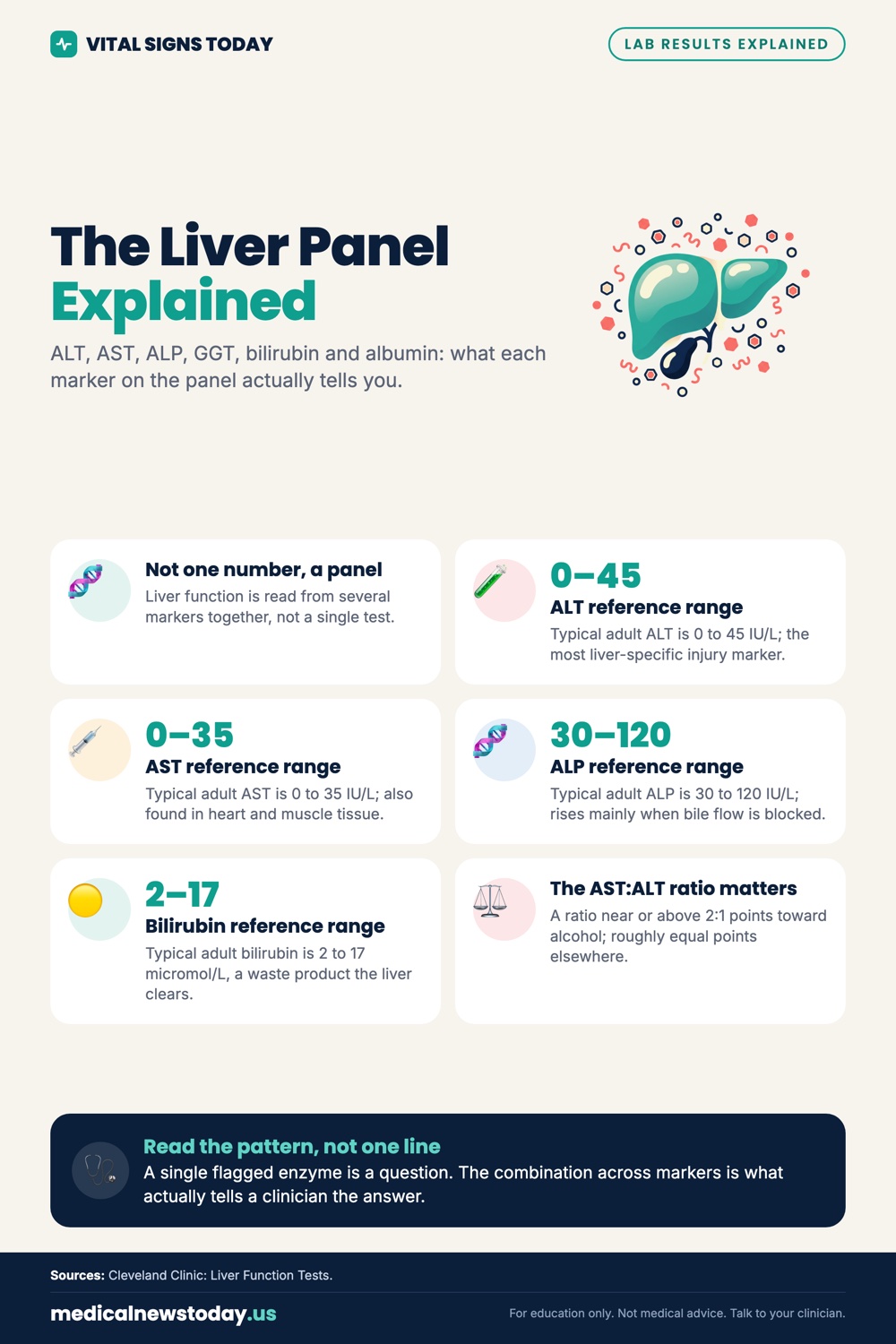
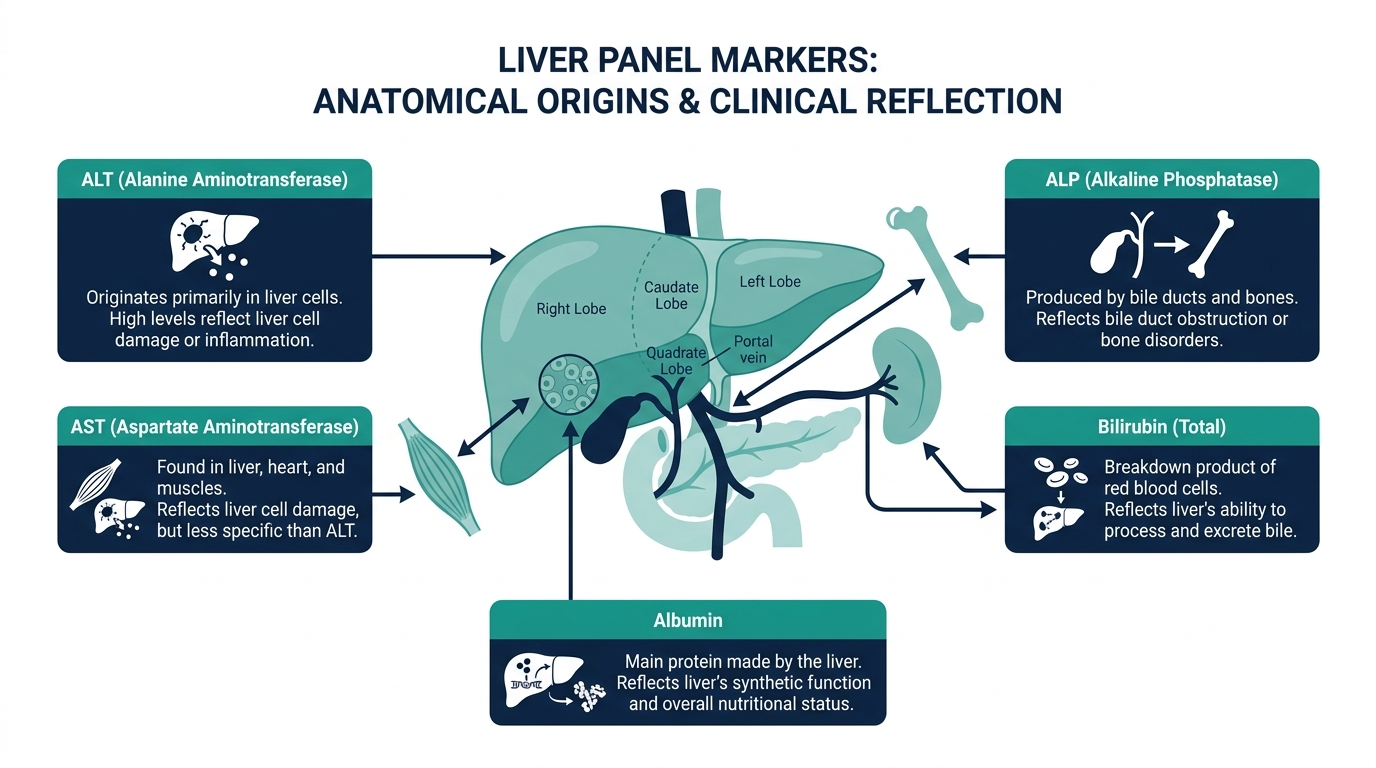
Each marker in a liver function blood test answers a different question about the organ. Here is what they are tracking, in plain terms (Cleveland Clinic):
- ALT (alanine transaminase). An enzyme concentrated inside liver cells. When those cells are injured, ALT leaks into the blood, so it is the most liver-specific injury marker on the panel (NCBI StatPearls).
- AST (aspartate transaminase). Another enzyme released by damaged liver cells, but it also lives in heart and muscle, so it is less specific to the liver than ALT (NCBI StatPearls).
- ALP (alkaline phosphatase). Rises mainly when bile flow is obstructed, pointing toward the bile ducts rather than the liver cells themselves.
- GGT (gamma-glutamyl transferase). Backs up ALP for bile duct and cholestatic problems, and is sensitive to alcohol.
- Bilirubin. A waste product the liver clears into bile. When it backs up, you get jaundice, and it reflects the liver’s processing capacity.
- Albumin and total protein. Albumin is a protein the liver manufactures, so a low level can signal the liver is not keeping up with its production work.
What is a normal liver function blood test level?
A normal liver function blood test means each marker sits within its reference range, though exact cutoffs vary by laboratory and instrument. As a general guide, Cleveland Clinic lists these typical adult ranges (Cleveland Clinic):
- ALT: 0 to 45 IU/L
- AST: 0 to 35 IU/L
- ALP: 30 to 120 IU/L
- GGT: 0 to 30 IU/L
- Bilirubin: 2 to 17 micromoles per liter
- Albumin: 40 to 60 g/L
- Prothrombin time: 10.9 to 12.5 seconds
Always read your result against the reference range printed on your own report, because that is the range your specific lab calibrated. Worth knowing too: the upper limit for ALT and AST runs higher in men and tends to climb with higher body mass index, which is why a “normal” range is not identical for everyone (NCBI StatPearls).

What does a high liver function test result mean?
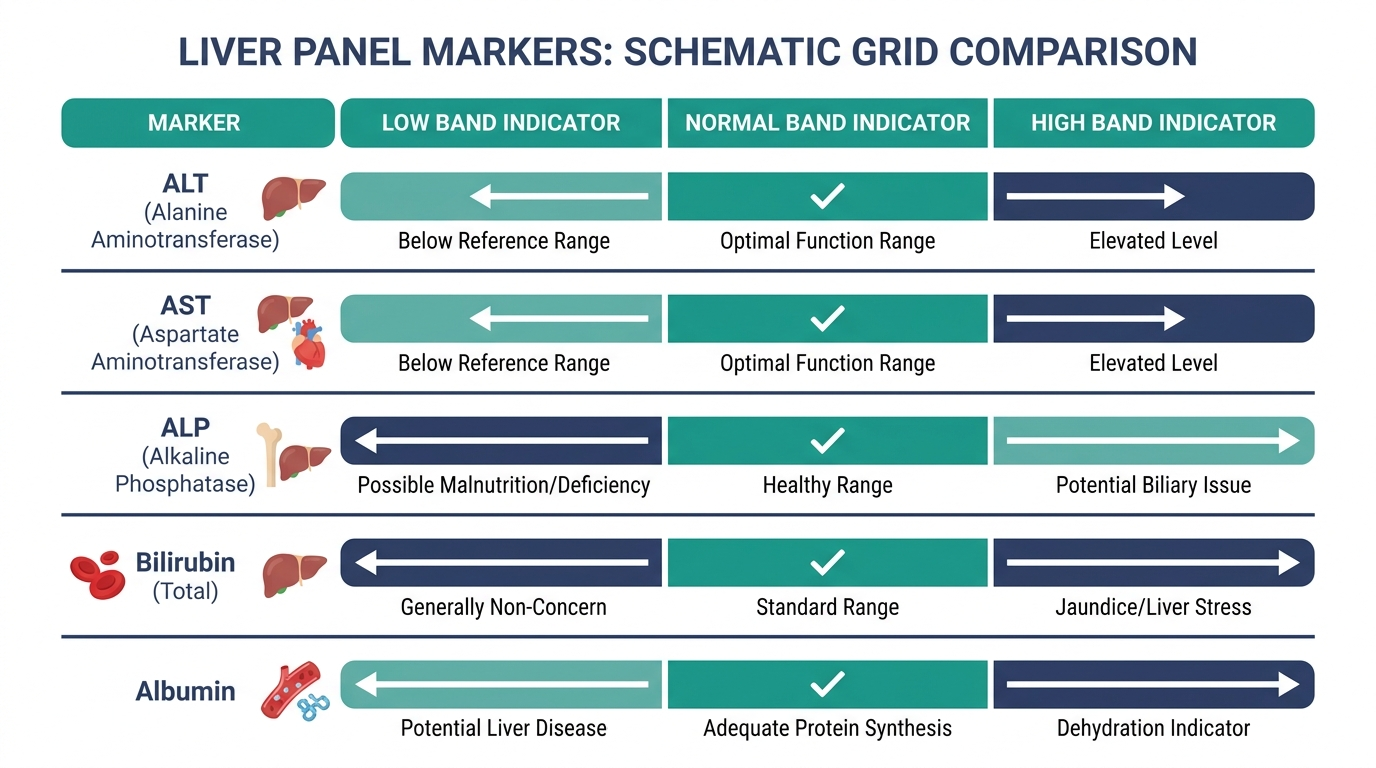
A high liver function test result usually means liver cells have been injured or bile flow has been disrupted, but it is a clue, not a diagnosis. Elevated ALT and AST are the most common signal that the liver is under stress, because these enzymes spill into the blood when liver cells are damaged (Cleveland Clinic).
The pattern points toward the cause. When ALT and AST dominate, the picture is hepatocellular, meaning the liver cells themselves are taking the hit, from causes like fatty liver disease, viral hepatitis, certain medications, or alcohol. In severe acute injury, from a toxin, ischemia, or acute viral hepatitis, those enzymes can shoot into the hundreds or even thousands of IU/L (NCBI StatPearls). When ALP, GGT, and bilirubin rise out of proportion to ALT and AST, the problem usually sits in the bile ducts rather than the liver tissue.
A mildly elevated result, the kind that turns up by surprise on a routine CMP, is extremely common and most often traces back to nonalcoholic fatty liver disease. It is a reason to look closer, not to panic.
The part most people miss: “function” tests barely measure function
Here is the insider point that reframes the entire panel. Despite the name, most of what gets called a “liver function test” does not actually measure how well your liver is working. ALT, AST, ALP, and GGT are markers of injury and bile obstruction. They tell you cells are leaking or ducts are blocked. They say almost nothing about whether the liver can still do its job (PMC, What is the Real Function of the Liver ‘Function’ Tests?).
The markers that genuinely report on liver function are the quiet ones: albumin, bilirubin, and prothrombin time. Albumin and clotting factors are proteins the liver manufactures, so they reflect its synthetic capacity, its ability to build (NCBI StatPearls). Bilirubin reflects its ability to process and clear waste. This is why a person can have wildly elevated enzymes from a passing injury yet completely normal liver function, while someone with advanced cirrhosis can have nearly normal enzymes but a falling albumin and a rising prothrombin time. The enzymes scream; the true function markers whisper. Knowing which is which is the difference between reading a liver panel like a patient and reading it like a hepatologist.
Why is the AST to ALT ratio so useful?
The AST to ALT ratio is useful because it helps separate causes of liver injury that otherwise look similar. Both enzymes rise when liver cells are damaged, but the ratio between them points toward the likely culprit (Cleveland Clinic).
The classic example involves alcohol. In alcohol-related liver disease, AST tends to run at least twice as high as ALT, giving an AST to ALT ratio of roughly 2:1 or higher (NCBI StatPearls). When ALT and AST are elevated roughly equally, the injury is more likely nonalcoholic, such as fatty liver or viral hepatitis (Cleveland Clinic). This is one cheap calculation that can steer the entire follow-up workup, and it is why doctors look at the relationship between markers, not just whether each one is flagged.

What actually raises liver enzymes, from common to serious
An abnormal liver panel sends most people straight to the worst-case scenario, but the real-world list of causes is dominated by the ordinary. Understanding the distribution helps you hold a flagged result in proportion.
The most common cause by a wide margin is metabolic-associated fatty liver, in which fat accumulates in liver cells and produces a mild, chronic elevation of ALT and AST. It travels with higher body weight, insulin resistance, high triglycerides, and elevated blood sugar, so a fatty liver reading is often the liver’s version of a metabolic warning light rather than an isolated organ problem.
Alcohol is the second heavyweight. It tends to raise AST more than ALT and to lift GGT sharply, producing the classic pattern where AST runs roughly twice ALT. Even a few heavy nights before a draw can nudge the enzymes.
Medications and supplements account for a large slice of unexplained elevations. Common culprits include high-dose acetaminophen, some statins, certain antibiotics, and a surprising number of over-the-counter herbal and bodybuilding supplements. Because this is so frequent, one of the first questions a clinician asks about high enzymes is simply “what are you taking?”
Viral hepatitis (types A, B, and C) can raise enzymes into the hundreds or thousands during acute infection, and chronic hepatitis B or C can smolder with mild elevations for years.
Muscle, not liver. Because AST also lives in skeletal muscle, intense exercise, a recent muscle injury, or a muscle-related condition can raise AST with a normal or near-normal ALT, mimicking a liver problem that is not there.
Bile duct obstruction, such as a gallstone lodged in a duct, tends to raise ALP, GGT, and bilirubin more than the transaminases, pointing the workup toward imaging of the ducts rather than the liver tissue.
The takeaway: a mildly high liver panel found by surprise on a routine draw is far more likely to be fatty liver, a medication, or a recent workout than a dangerous disease. It earns a closer look, not alarm.
Symptoms that turn a liver result into a red flag
Liver disease is famously quiet in its early stages, which is exactly why the panel is a screening tool. But certain symptoms alongside an abnormal panel raise the urgency and should prompt prompt medical attention rather than watchful waiting.
- Yellowing of the skin or the whites of the eyes (jaundice), which signals bilirubin is backing up and the liver’s clearing capacity is overwhelmed.
- Dark, tea-colored urine or pale, clay-colored stools, which often accompany a bile-flow problem.
- Pain or fullness in the upper right abdomen, where the liver and gallbladder sit.
- Swelling in the legs or a distended abdomen, which can reflect low albumin and advanced disease affecting the liver’s protein production.
- Easy bruising or unusual bleeding, since the liver makes clotting factors and a struggling liver can prolong prothrombin time.
- Persistent nausea, loss of appetite, or unexplained fatigue and confusion, especially when they appear together.
A mildly high enzyme with none of these features is a routine follow-up. The same number alongside jaundice or confusion is a reason to be seen quickly.
Want to check your liver markers?
Three ways to get it measured. Pick whichever fits you.
Affiliate links: we may earn a commission at no extra cost to you. A lab test does not replace a visit with your clinician.
How to prepare and what can distort a liver panel
Liver markers are sensitive to what you did in the days before the draw, and a little preparation prevents a false alarm.
- Alcohol. Drinking in the day or two before a draw can lift AST and GGT, so a recent binge can make an otherwise healthy liver look stressed. If the goal is a true baseline, it helps to avoid alcohol beforehand.
- Strenuous exercise. A hard gym session or a long run can raise AST from muscle, so scheduling the draw away from heavy training gives a cleaner read.
- Fasting requirements depend on the order. A standalone liver panel often does not require fasting, but when the liver markers ride inside a comprehensive metabolic panel that includes glucose, fasting may be requested. Follow the exact instruction you are given.
- Medications and supplements. Some drugs and herbal products raise enzymes directly. Do not stop a prescribed medication to “clean up” a result, but do tell your clinician everything you take so the numbers are read in context.
- Biotin supplements can interfere with certain lab assays, another reason to disclose supplements before testing.
The follow-up path after an abnormal liver panel
An abnormal panel is the start of a process, not the end. Clinicians tend to follow a logical staircase rather than jumping to the most invasive test.
- Repeat and confirm. A borderline elevation is frequently rechecked in a few weeks, after the person avoids alcohol and heavy exercise, to see whether it was transient.
- Read the pattern. The team decides whether the picture is hepatocellular (ALT and AST dominant) or cholestatic (ALP, GGT, bilirubin dominant), which steers everything that follows.
- Targeted blood tests. Depending on the pattern, this can include viral hepatitis screening, metabolic markers for fatty liver, and occasionally tests for less common causes.
- Imaging. An ultrasound of the liver and bile ducts is a common, non-invasive next step to look for fat, blockage, or structural change.
- Specialist referral. Persistently high or unexplained results may lead to a hepatologist, and only in select cases to more advanced imaging or a biopsy.
The point of this staircase is that most abnormal panels are resolved with a repeat test and a simple explanation, and only a minority travel all the way to specialized evaluation.
Why GGT is the quiet tiebreaker
Gamma-glutamyl transferase (GGT) rarely gets attention on its own, but it plays a decisive supporting role. Its main job on the panel is to help interpret a high ALP. Because ALP comes from both liver and bone, a high ALP alone is ambiguous. If GGT is high alongside it, the source is almost certainly the liver or bile ducts; if GGT is normal, the ALP is more likely coming from bone, growth, or pregnancy. GGT is also sensitive to alcohol, so a high GGT can reinforce an alcohol-related pattern suggested by the AST to ALT ratio. Reading GGT as a tiebreaker, rather than a standalone alarm, is one of the small habits that separates a confident interpretation from a confused one.
Reading three sample liver panels the way a clinician does
Reference ranges are static, but interpretation is a story built from which markers move together. Here is how the same panel yields different conclusions depending on the pattern.
- ALT 70, AST 55, ALP normal, bilirubin normal, albumin normal, in someone overweight. This is the everyday fatty liver pattern: mildly elevated transaminases with intact manufacturing (albumin) and clearance (bilirubin), and no cholestatic rise. The sensible response is metabolic evaluation and lifestyle change, not fear, and often a repeat panel after a few months of improved diet and activity.
- AST 180, ALT 80, GGT high, albumin low-normal. Here AST runs more than twice ALT and GGT is elevated, the classic alcohol-related signature. The low-normal albumin hints the liver’s synthetic capacity may be feeling the strain, which raises the priority of an honest conversation about alcohol and further workup.
- ALP high, GGT high, bilirubin high, ALT and AST only mildly up, with upper-right abdominal pain. This cholestatic pattern, especially with pain, points toward a bile-duct problem such as a gallstone rather than a disease of the liver tissue, and it typically leads to imaging of the ducts rather than a hepatitis screen.
In every case the meaning lives in the combination. A single flagged enzyme is a question; the pattern across the panel is what starts to answer it.
Common misunderstandings about liver blood tests
- “High enzymes mean permanent liver damage.” Usually not. Most mild elevations are reversible and trace to fatty liver, a medication, alcohol, or a recent workout, and they often improve when the cause is addressed.
- “A normal liver panel guarantees a healthy liver.” Not always. Enzymes can look normal even in advanced cirrhosis because they measure injury, not function. The true function markers, albumin, bilirubin, and prothrombin time, are more revealing of capacity.
- “ALP is always a liver problem.” No. ALP also comes from bone, so it rises in growing teenagers, healing fractures, and pregnancy. GGT is the tiebreaker that tells you whether a high ALP is truly liver-related.
- “I should stop my medications before the test.” Never do this on your own. Report what you take so results are read in context, but stopping a prescribed drug can be more dangerous than the flagged number.
Frequently asked questions
What blood test shows liver function?
A liver function test panel, also called a liver panel or hepatic function panel, shows liver function. It measures enzymes and proteins including ALT, AST, ALP, GGT, bilirubin, and albumin in a single blood draw, and these same markers also appear in a comprehensive metabolic panel (MedlinePlus).
Do I need to fast before a liver function blood test?
It depends on the order. A standalone liver panel often does not require fasting, but liver markers are frequently drawn as part of a comprehensive metabolic panel that includes glucose, which may call for fasting. Follow the specific instructions your provider gives you.
Can a liver function test be normal if I have liver disease?
Yes. The enzyme markers can look normal even in advanced liver disease such as cirrhosis, because they signal injury rather than function. The true function markers, albumin, bilirubin, and prothrombin time, are more telling of the liver’s actual capacity (PMC, What is the Real Function of the Liver ‘Function’ Tests?).
What does it mean if my ALT and AST are high?
High ALT and AST usually mean liver cells have been injured, from causes such as fatty liver, viral hepatitis, medications, or alcohol. The pattern between them matters, since an AST to ALT ratio of about 2:1 or higher points toward alcohol-related injury (NCBI StatPearls).
What is a normal ALT and AST level?
As a general guide, Cleveland Clinic lists ALT at 0 to 45 IU/L and AST at 0 to 35 IU/L, though ranges vary by lab and tend to run higher in men. Always compare your result to the reference range printed on your own report (Cleveland Clinic).
This article is for general educational purposes and is not medical advice. It cannot diagnose or treat you and does not replace your clinician. Always discuss your lab results and any health decisions with a qualified healthcare professional.
Related reading
Vital Signs Today may earn a commission if you buy through links on this page. It does not affect our editorial assessments.