
Disclosure: Vital Signs Today may earn a commission if you buy through links on this page, at no extra cost to you. This does not influence our evidence-based assessments. We are not a medical provider; talk to a clinician before acting on test results.
Related: ALT levels by age: chart
You got your blood work back, scanned past the cholesterol and the blood sugar, and ran into two short codes sitting next to each other: AST and ALT. Maybe one had a little flag. Maybe both looked fine and you moved on. Either way, almost nobody explains what those two letters actually tell you, and that is a shame, because they are the closest thing your routine panel has to a smoke detector for your liver.
Here is what most explainers get wrong. They treat AST and ALT as one combined liver number. They are not. The whole point of measuring both is the gap between them, and once you understand that gap, you read your own results very differently.
Part of our Liver Function Tests guide.

What is AST and ALT in a blood test?
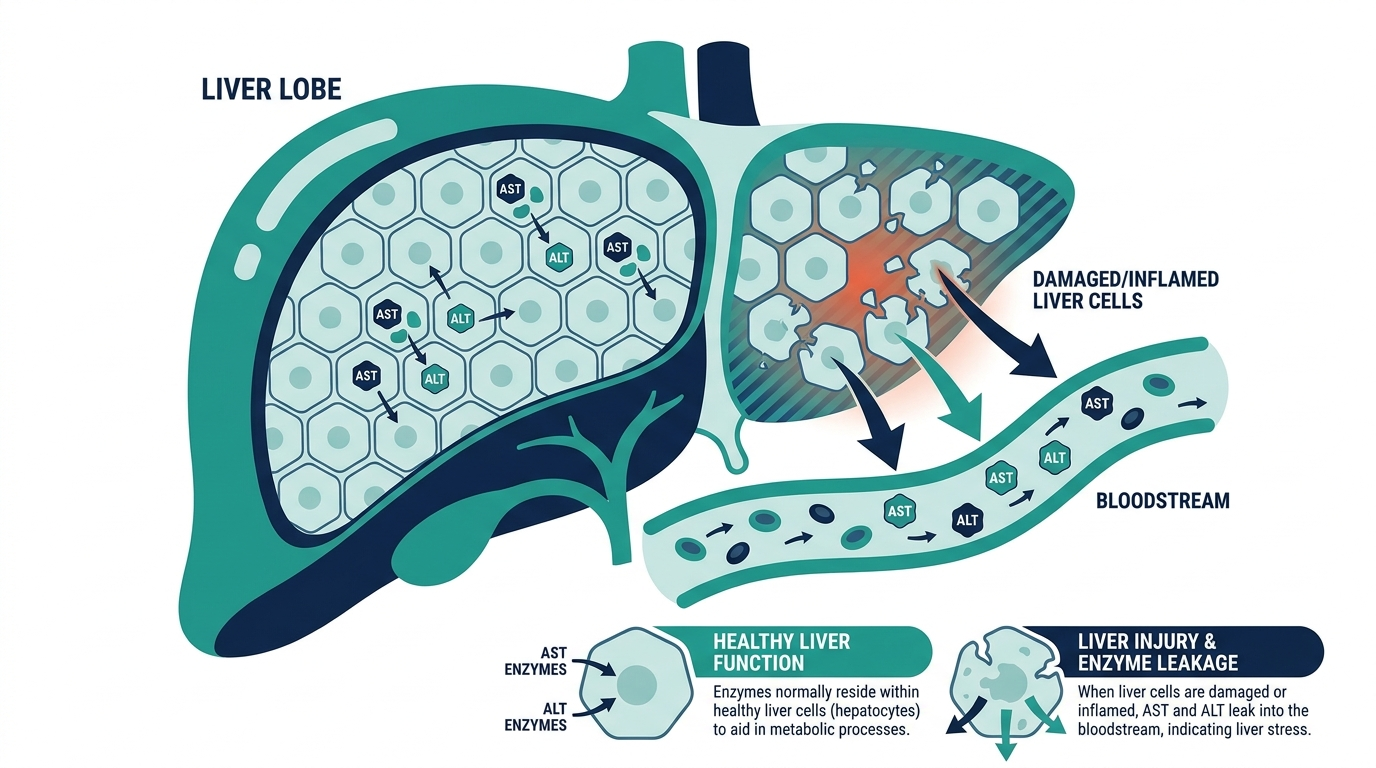
AST and ALT are two enzymes that mostly live inside your liver cells, and a blood test measures how much of them has leaked into your bloodstream. ALT stands for alanine transaminase, and AST stands for aspartate aminotransferase. Both are proteins that help your cells run normal chemical reactions, and under healthy conditions only small amounts circulate in the blood (MedlinePlus). When liver cells are injured, they spill these enzymes out, and the levels climb. So in plain terms: AST and ALT are leak detectors. The number on your report is mostly a measure of how much your liver cells have been leaking.
That single idea, leakage from damaged cells, is the key to everything below. The two enzymes are almost always ordered together as part of a liver panel, and the reason they travel as a pair is that each one tells you something the other cannot.

What is the difference between AST and ALT?
The core difference is location. ALT lives almost entirely inside the liver, so a high ALT points fairly specifically at liver damage. AST is found in the liver too, but also in your heart, your skeletal muscles, your kidneys, and your red blood cells, so a high AST can come from outside the liver entirely (MedlinePlus).
Because ALT is so liver specific, clinicians often treat it as the more trustworthy single marker of liver injury, while AST adds context (MedlinePlus). This is exactly why a hard workout, a muscle injury, or even a recent heart event can nudge your AST up while your ALT stays calm. If you lifted heavy the day before your draw and your AST looks high but your ALT is normal, your muscles, not your liver, may be doing the talking.
What is a normal AST and ALT level?
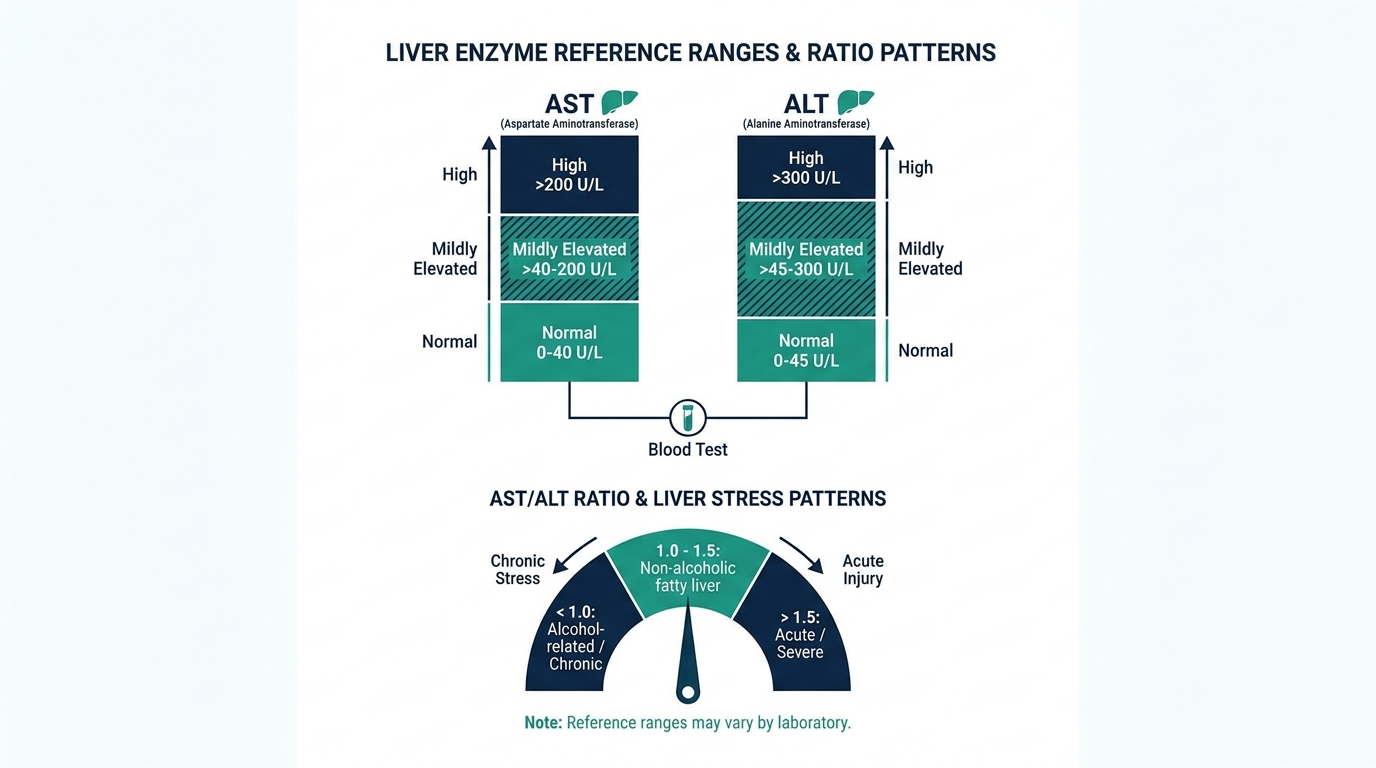
A commonly cited normal range is roughly 4 to 36 U/L for ALT and 8 to 33 U/L for AST, although the exact cutoffs vary by laboratory and by the instrument used (MedlinePlus ALT, MedlinePlus AST). Normal ranges can also shift slightly based on your age, your sex, pregnancy, and how the lab calibrates its assay, which is why you should always read your result against the reference range printed on your own report.
The practical takeaway is that these enzymes are normally low. Seeing a small number here is the goal, not a worry. The questions worth asking start when the values rise, and especially when they rise out of proportion to each other.
What does a high AST and ALT mean?
High AST and ALT usually mean your liver cells are being injured and leaking their contents into your blood. It is a signal, not a diagnosis, and the size of the rise is a rough guide to what is going on (MedlinePlus). A modest elevation often comes from common, manageable causes, while a dramatic spike points toward acute, intense injury.
Common reasons both enzymes climb include:
- Fatty liver disease. The metabolic form, tied to weight, insulin resistance, and diet, is now one of the most frequent causes of mildly elevated ALT in the general population.
- Viral hepatitis. Hepatitis B and C can push transaminases up, sometimes for years before symptoms appear (MedlinePlus).
- Alcohol. Heavy or sustained drinking injures liver cells and raises both enzymes (Mayo Clinic).
- Medications and supplements. Acetaminophen in high doses, certain statins, and some herbal products can all irritate the liver.
- Very high spikes into the hundreds or thousands, which suggest acute injury such as a drug overdose, a sudden viral hit, or a loss of blood flow to the liver.
Here is the insider point that rarely makes it into the patient version. The amount your enzymes rise does not reliably tell you how badly your liver is damaged. A liver enzyme level is not related to how much actual liver damage you have (MedlinePlus). Someone with quietly progressing cirrhosis can have nearly normal AST and ALT, because so few working liver cells are left to leak. So a perfectly normal result is reassuring, but it is not a guarantee of a perfectly healthy liver. This is the detail that gets lost when a report just says everything is normal.

Why is AST measured together with ALT?
AST and ALT are measured together because the ratio between them, not either number alone, often points toward the cause of liver injury. Since ALT is liver specific and AST is spread across multiple organs, comparing the two helps separate liver problems from muscle or heart problems, and even helps distinguish different kinds of liver damage (MedlinePlus).
The clinical shorthand for this comparison is the AST to ALT ratio, sometimes called the De Ritis ratio. According to Cleveland Clinic‘s liver test interpretation guide, the ratio is of little benefit in most causes of liver injury, with one important exception: in alcoholic liver disease the AST tends to run higher than the ALT, and the ratio is greater than 2 to 1 in about 70 percent of patients, with a ratio above 3 being strongly indicative of alcoholic hepatitis (Cleveland Clinic).
A simplified way clinicians read the pairing:
- ALT higher than AST, both mildly up: common in fatty liver disease and chronic viral hepatitis.
- AST more than twice ALT: raises suspicion for alcohol-related liver injury (Cleveland Clinic).
- AST high, ALT normal: may point away from the liver entirely, toward muscle or heart.
- Both in the hundreds or thousands: suggests acute, severe injury that needs urgent attention.
There is a useful caveat buried in that same guide. An AST above 500 or an ALT above 200 is unlikely to be explained by acute alcoholic hepatitis, even in someone who drinks (Cleveland Clinic). Very high numbers argue against the alcohol story and push clinicians to hunt for something else, such as a toxin or a sudden viral hit. One cheap pair of numbers, read against each other, narrows a wide field of possibilities.
What does a low AST and ALT mean?
Low AST and ALT are generally good news, or at least neutral. Because these enzymes are supposed to stay low in the blood, a low result simply means little to no leakage from your liver cells, and on its own it is not considered a sign of disease (MedlinePlus). There is no recognized condition defined by abnormally low transaminases that a routine reader needs to worry about. If your AST and ALT are on the low side and the rest of your panel is unremarkable, it is usually nothing to chase.
The part most people never hear: normal enzymes do not equal a healthy liver
This is where AST and ALT go from a simple pass or fail to something more nuanced. People assume that normal liver enzymes mean a healthy liver. The relationship is much looser than that. These tests detect active cell injury happening right now, so they are excellent at catching an acute insult and surprisingly poor at ruling out slow, chronic disease.
Two scenarios make the gap concrete. In advanced cirrhosis, scarring has already replaced much of the functioning tissue, so there are fewer healthy cells left to leak, and AST and ALT can drift back into the normal range even as the liver fails. In early metabolic fatty liver, fat can accumulate quietly with only intermittent enzyme bumps, so a single normal draw can miss it. This is why hepatologists pair transaminases with markers of how the liver is actually functioning, such as bilirubin, albumin, and clotting time, rather than judging the organ on AST and ALT alone (Mayo Clinic).
The honest framing is this. A high AST or ALT is a reason to look closer, not a verdict. A normal AST and ALT is reassuring about acute injury, but it is not a clean bill of health for the organ. If you have real risk factors, weight gain, regular drinking, a known viral exposure, do not let two normal enzyme numbers talk you out of a fuller workup. The smartest move is to track the trend across several draws rather than reading any single snapshot as the final word.

Want to check your ALT?
Three ways to get it measured. Pick whichever fits you.
Affiliate links: we may earn a commission at no extra cost to you. A lab test does not replace a visit with your clinician.
How to prepare for the test and what can skew AST and ALT
AST and ALT come as part of a liver panel or comprehensive metabolic panel, and whether you need to fast depends on what else is being tested. The enzymes themselves are not dramatically food dependent, but several everyday factors genuinely move them, and knowing them helps you avoid mistaking a temporary bump for real liver injury.
- Vigorous exercise. This is the classic trap. Strenuous activity, heavy lifting, or a long run in the days before a draw can raise AST from muscle, and sometimes ALT too. An athlete’s mildly high transaminases can reflect training, not the liver. Resting for a couple of days before a repeat draw often clarifies it.
- Alcohol. Recent drinking can nudge the numbers, and sustained heavy use raises them more persistently.
- Medications and supplements. High dose acetaminophen, some statins, certain antibiotics, and a range of herbal and bodybuilding supplements can irritate the liver. Bring a full list to your clinician, including things you consider natural.
- Muscle injury or a recent heart event. Because AST lives in muscle and heart tissue, a recent injury, an intramuscular injection, or a cardiac event can lift AST independent of the liver.
- Body weight and metabolic health. Extra weight and insulin resistance are tied to fatty liver, which is now a leading reason for a mildly high ALT in the general population.
The practical rule is to interpret a mildly high result in the context of the days before the draw, and to confirm a surprising value with a repeat test after avoiding heavy exercise and alcohol.
Symptoms and red flags that give the numbers context
Mildly elevated transaminases often cause no symptoms at all, which is exactly why they are usually found on a routine panel rather than because someone feels unwell. When symptoms do appear, they help point toward how significant the liver injury is.
Signs that deserve prompt attention alongside high AST and ALT include:
- Yellowing of the skin or eyes, known as jaundice.
- Dark urine or pale stools.
- Pain or fullness in the upper right abdomen.
- Nausea, vomiting, or loss of appetite.
- Unusual fatigue, easy bruising, or swelling of the legs or abdomen, which can signal more advanced liver trouble.
The combination that calls for urgent care rather than watchful waiting is very high enzymes with jaundice, confusion, or severe abdominal pain. Those point toward acute, significant injury that needs to be evaluated quickly rather than at the next routine visit.
Reading AST and ALT within the full liver panel
Transaminases tell you about cell injury, but they do not tell you how well the liver is working. That is why they are read alongside the rest of the panel, which fills in the picture.
- ALP and GGT. These rise mainly when bile flow is blocked. A pattern where ALP and GGT dominate over AST and ALT is called cholestatic and points toward a bile duct problem, while AST and ALT leading points toward liver cell injury.
- Bilirubin. A rising bilirubin with high transaminases raises the concern that the liver is not clearing waste properly and strengthens the case for significant injury.
- Albumin. The liver makes this protein, so a low albumin suggests the organ’s synthetic function is impaired, a sign of more chronic or advanced disease.
- Prothrombin time or INR. The liver makes clotting factors, so a prolonged clotting time is one of the better real time readouts of how well the liver is actually functioning.
This is precisely why a single comprehensive draw beats an isolated AST or ALT. One panel that captures the injury enzymes, the bile markers, bilirubin, albumin, and clotting time lets a clinician tell active injury apart from failing function, which two transaminases alone cannot do.

Does the size of the elevation matter?
Yes, and clinicians lean on the magnitude to narrow the field, even though the level does not track the amount of damage precisely.
- Mild elevation, under a few times the upper limit. Extremely common and often driven by fatty liver, alcohol, medications, or recent exercise. It usually prompts a history, a repeat test, and a look at metabolic risk factors rather than an emergency workup.
- Moderate elevation. Raises the priority of finding a cause, with chronic viral hepatitis and ongoing injury higher on the list.
- Very high elevation, into the hundreds or thousands. Signals acute, intense injury such as a drug overdose, a sudden viral hit, or a loss of blood flow to the liver. These numbers earn urgent evaluation.
The caveat threaded through this article still holds. A near normal result does not rule out advanced disease, because a scarred liver has fewer cells left to leak. Magnitude helps sort acute injury, but it is not a damage meter.
Who should test, monitoring, and next steps after an abnormal result
AST and ALT appear on most routine metabolic and liver panels, so many people have them checked without asking. Specific reasons to test include risk factors like regular alcohol use, excess weight or diabetes, a family or personal history of liver disease, known hepatitis exposure, or starting a medication that can affect the liver. People with a chronic liver condition are monitored on a schedule set by their clinician.
If the result comes back high, the next step is rarely dramatic. A clinician typically repeats the test after a short interval, especially if recent exercise or alcohol could explain a mild bump, and reviews medications and history. Persistent elevation leads to targeted follow ups, which can include viral hepatitis testing, an ultrasound of the liver to look for fat or other changes, and metabolic labs. The transaminases open the question. The follow up tests answer it. Tracking the trend across several draws is far more informative than reacting to any single snapshot.
Common misconceptions about AST and ALT
- “Higher enzymes mean worse liver damage.” Not reliably. The level reflects active leakage, not the amount of damage. Advanced cirrhosis can show nearly normal enzymes because so few working cells remain.
- “Normal AST and ALT mean a healthy liver.” Reassuring about acute injury, but not a clean bill of health. Slow, chronic disease can hide behind normal transaminases.
- “AST and ALT are one combined liver number.” They are two distinct enzymes, and the gap between them carries information. ALT is liver specific, AST is spread across muscle and heart too.
- “A high AST always means my liver.” Not so. Because AST also lives in muscle, a hard workout or a muscle injury can raise it while ALT stays normal.
- “I should chase these numbers with a detox or supplement.” The enzymes follow their cause. Managing weight, cutting alcohol, and treating an underlying condition is what moves them. Be skeptical of anything sold as a liver detox.
Frequently asked questions
What is AST and ALT in a blood test?
AST and ALT are liver enzymes measured to check for liver damage. They normally sit at low levels in the blood, and when liver cells are injured they leak these enzymes out, raising the numbers (MedlinePlus). ALT is more specific to the liver, while AST is also found in the heart and muscles.
What is a normal AST and ALT level?
A commonly cited range is about 4 to 36 U/L for ALT and 8 to 33 U/L for AST, though ranges vary by lab and by your age and sex (MedlinePlus). Always compare your result to the reference range printed on your own report.
What does it mean if my AST and ALT are high?
High AST and ALT usually signal that liver cells are being injured, from causes such as fatty liver, viral hepatitis, alcohol, or certain medications (MedlinePlus). The level does not reliably reflect how much damage exists, so your clinician will interpret it alongside other tests.
What does a high AST to ALT ratio mean?
An AST that runs more than twice the ALT raises suspicion for alcohol-related liver injury, and a ratio above 3 is strongly indicative of alcoholic hepatitis (Cleveland Clinic). In most other liver conditions the ratio is less useful.
Can my liver be unhealthy if AST and ALT are normal?
Yes. These tests detect active cell injury and can miss slow, chronic disease, and in advanced cirrhosis enzymes can even return to normal as functioning cells are lost (Mayo Clinic). Normal results are reassuring but are not a guarantee of a healthy liver.
This article is for general educational purposes and is not medical advice. It cannot diagnose or treat you and does not replace your clinician. Always discuss your lab results and any health decisions with a qualified healthcare professional.
Vital Signs Today may earn a commission if you buy through links on this page. It does not affect our editorial assessments.