You scanned your complete blood count, and there it was, flagged in red or sitting just under the reference range: MCH, low. The good news is that a low MCH is one of the more decodable abnormal results on the whole report. It points, more often than not, to a single common and fixable cause. The trick is knowing what it is telling you and, just as important, what it is not.
Most explainers stop at “low MCH means iron deficiency” and move on. That is the headline, but it skips the nuance that matters when you are staring at your own numbers, so let us go deeper.
Part of our Complete Blood Count guide.
What is MCH in a blood test is low, and what does it mean?
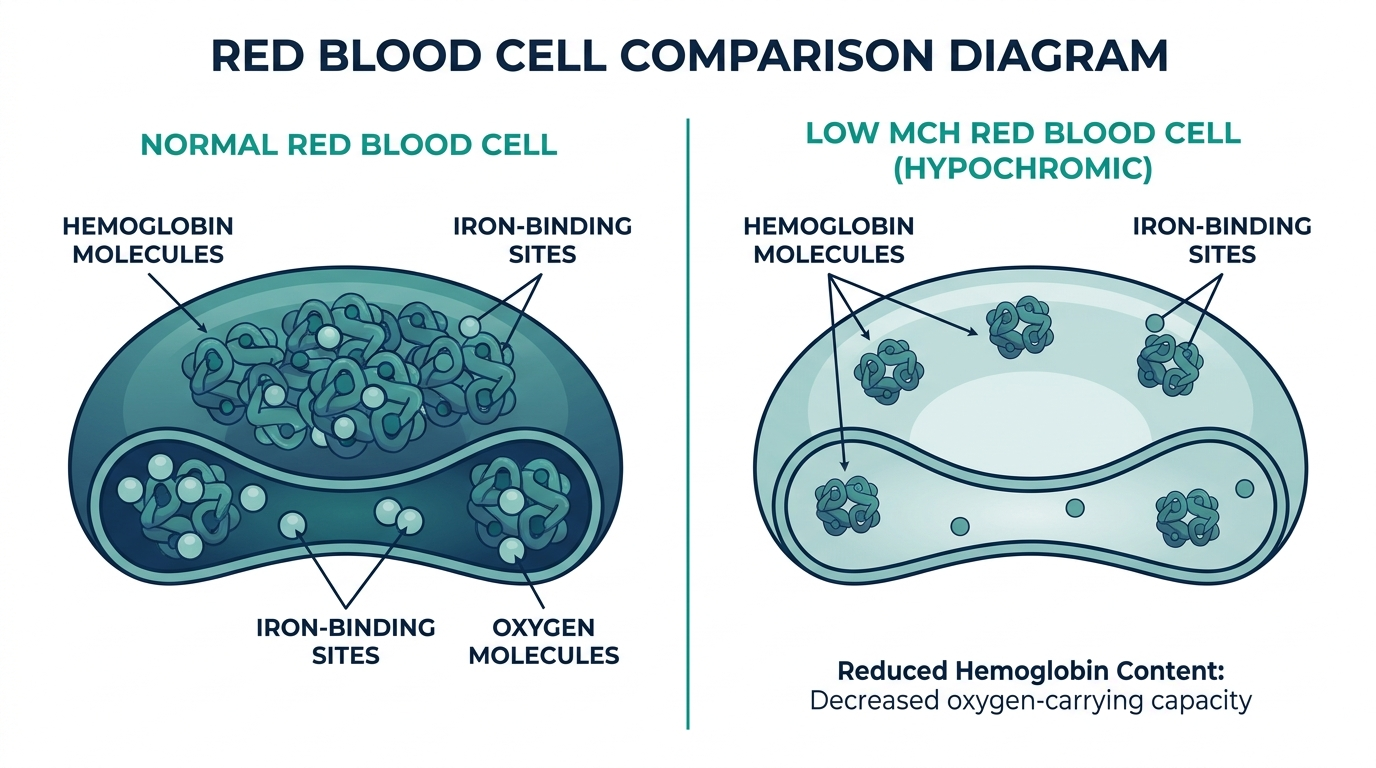
MCH stands for mean corpuscular hemoglobin, and it measures the average amount of hemoglobin packed inside a single red blood cell. It is reported automatically as part of the red blood cell indices on a complete blood count (CBC) (MedlinePlus). When the phrase “what is MCH in blood test is low” is what brought you here, the short answer is this: a low MCH means your red blood cells carry less hemoglobin than they should, so each cell delivers less oxygen than a fully loaded one would.
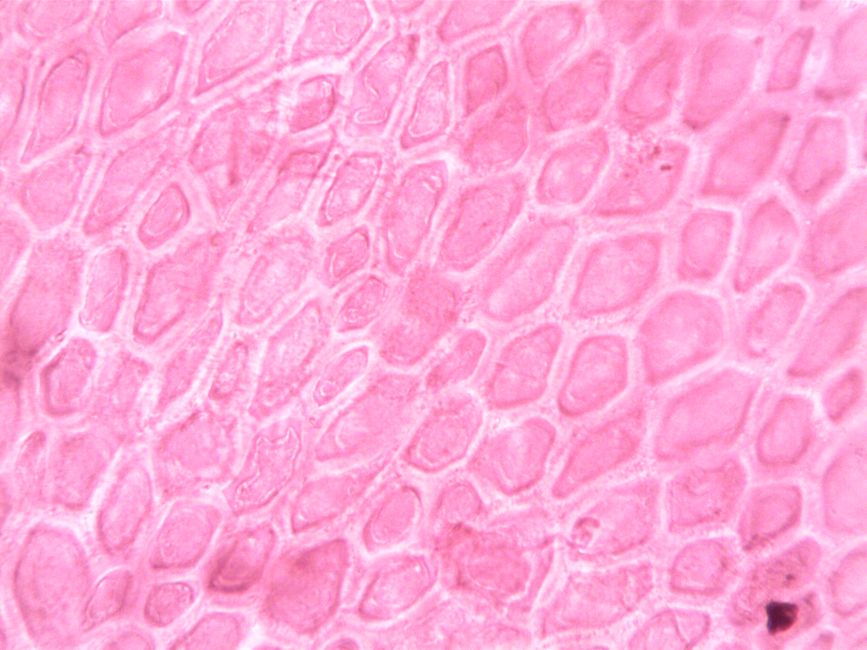
Hemoglobin is the iron-rich protein that ferries oxygen from your lungs to the rest of your body. When cells come out underfilled, doctors call them hypochromic, which literally means under-colored. A low MCH is the lab’s way of saying your red cells look pale on the inside.
What does a low MCH mean on a blood test?
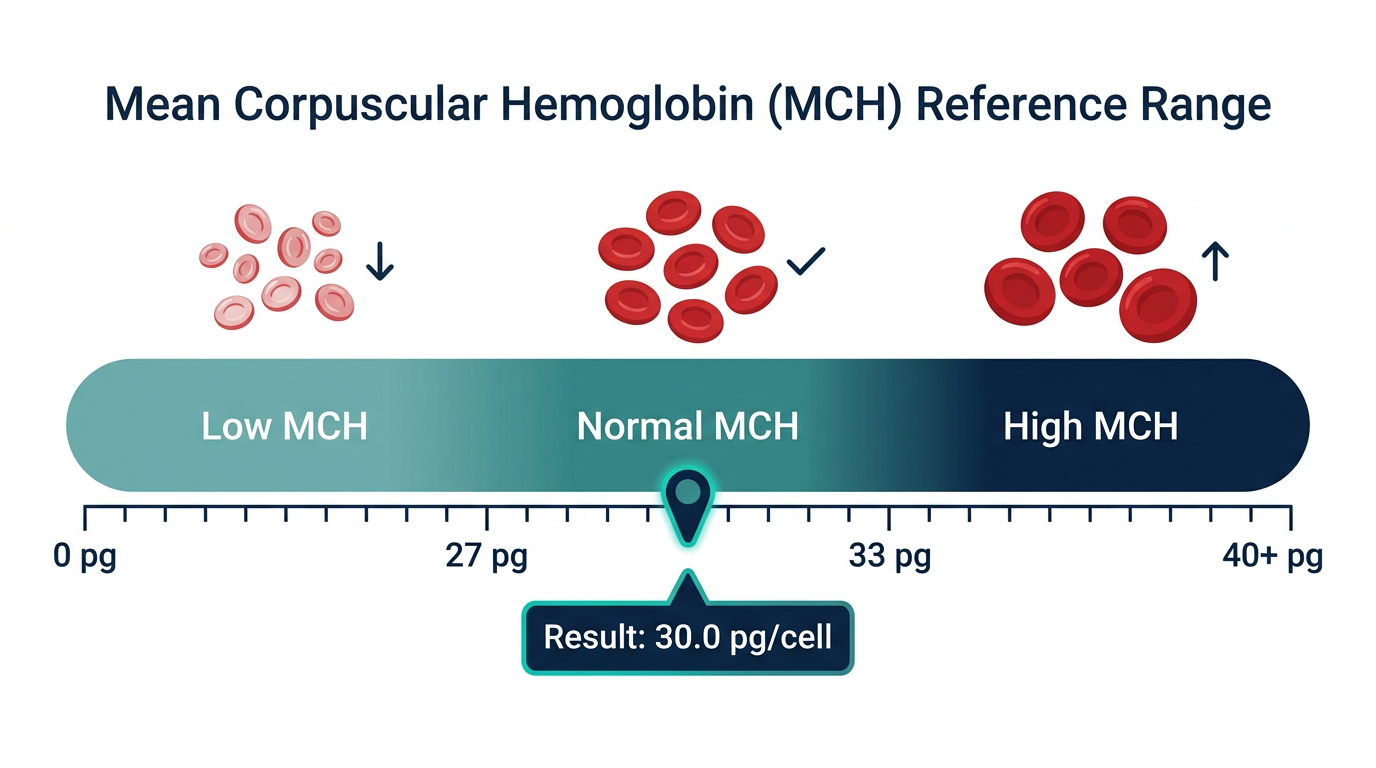
A low MCH means the average red blood cell in your sample holds too little hemoglobin. The standard reference range for adults is roughly 27 to 33 picograms (pg) of hemoglobin per cell, so a value below about 27 pg is generally read as low (StatPearls, Microcytic Hypochromic Anemia). The exact cutoff shifts slightly between laboratories and instruments, which is why you should always compare your number against the reference range printed on your own report rather than a figure from the internet.
Here is the part worth internalizing. MCH almost never moves alone. It tends to travel with MCV, the average size of your red cells, because small cells have less room for hemoglobin. When both MCH and MCV are low together, the picture is a microcytic, hypochromic anemia, the classic fingerprint of the most common cause on the list (MedlinePlus). A low MCH by itself is a clue, not a diagnosis. What it points at is what matters.
What causes a low MCH?
The differential for a low MCH is short, and one cause dominates. Here they are, most common first.
- Iron deficiency anemia. This is the overwhelming favorite. Without enough iron, your body cannot build enough hemoglobin, so cells come out small and underfilled, and MCH drops (MedlinePlus). In adults the iron itself usually goes missing for a reason: slow blood loss from the gut, such as ulcers or inflammatory bowel disease, or heavy menstrual periods. In fact, bleeding from the GI tract or menstruation is the most common driver of iron deficiency in developed countries (StatPearls, Iron Deficiency Anemia).
- Not enough iron in the diet. Worldwide, simply not eating enough iron-rich food is the leading cause, and it hits vegetarians, vegans, and people with limited food access hardest (StatPearls, Iron Deficiency Anemia).
- Malabsorption. Even with iron on the plate, conditions like celiac disease, H. pylori infection, or a history of bariatric surgery can stop your gut from absorbing it. Up to 46 percent of people with celiac disease develop iron deficiency anemia (StatPearls, Iron Deficiency Anemia).
- Thalassemia trait. This is an inherited difference in how the body builds hemoglobin, common in people of Mediterranean, Middle Eastern, South Asian, and Southeast Asian ancestry. It also produces small, pale cells and a low MCH, but the mechanism is genetic, not a lack of iron (PMC, Differential diagnosis of IDA and thalassemia trait). Distinguishing it from iron deficiency is the single most important fork in this road, and we will come back to it.
- Anemia of chronic disease. Long-running inflammation, infection, or kidney disease can blunt hemoglobin production and nudge MCH down, often more mildly (StatPearls, Microcytic Hypochromic Anemia).
For most adults who land here, the story is iron, and the real question becomes why the iron is low in the first place.
What are the symptoms of a low MCH?
A low MCH on paper does not cause symptoms by itself. What you feel comes from the anemia behind it, and how much you notice depends on how low your hemoglobin has dropped and how fast. Mild iron deficiency can be completely silent for months. As it deepens, the body is quietly running short on oxygen, and that shows up as:
- Fatigue and a tiredness that sleep does not fix
- Shortness of breath, especially on exertion, and sometimes chest discomfort
- A fast or pounding heartbeat (tachycardia)
- Pale skin, cold hands and feet, dizziness, and headaches
- A sore or smooth tongue and spoon-shaped fingernails in longer-standing cases
- Unusual cravings for non-food items like ice, a clue called pica that is fairly specific to iron deficiency (Cleveland Clinic)
Because iron deficiency develops slowly, many people adapt and assume they are just busy, stressed, or getting older. The CBC often catches it before the person does. That craving-to-chew-ice detail is the one I would flag to any reader: oddly common, easy to dismiss, and a genuine sign of low iron (StatPearls, Iron Deficiency Anemia).

When is a low MCH dangerous or a medical emergency?
The MCH number itself is never an emergency. The anemia underneath it occasionally is. Watch for the situations below and treat them as reasons to seek care promptly rather than wait for a routine appointment:
- Severe or worsening breathlessness, chest pain, fainting, or a racing heart at rest. These suggest your hemoglobin has fallen far enough that your heart is straining to compensate, and untreated severe iron deficiency anemia can progress to heart failure or an enlarged heart (Cleveland Clinic).
- Visible blood loss. Black, tarry, or bloody stools, vomiting blood, or very heavy menstrual bleeding alongside a low MCH point to active bleeding that needs evaluation, since GI bleeding is a leading cause of iron deficiency and can signal something serious upstream (StatPearls, Iron Deficiency Anemia).
- Pregnancy. Iron deficiency in pregnancy is not a wait-and-see issue. Untreated, it carries risks of fetal harm and low birth weight, so a low MCH during pregnancy deserves prompt attention (StatPearls, Iron Deficiency Anemia).
For everyone else, a low MCH is a same-week conversation with your clinician, not an emergency room visit.
What should you do about a low MCH?
A low MCH is the beginning of an investigation, not the end. The goal is to confirm the cause and, crucially, to find the reason behind it.
- Get iron studies. The single most useful next test is a ferritin level, which reflects your iron stores, usually alongside serum iron and transferrin saturation. Low ferritin confirms iron deficiency and separates it cleanly from thalassemia, where iron stores are normal (PMC, Differential diagnosis of IDA and thalassemia trait).
- Hunt for the source. If iron is low, the next question is where it is going. Depending on your age, sex, and symptoms, that may mean evaluating for GI bleeding or reviewing menstrual blood loss. Finding the leak matters more than topping up the tank.
- Replace the iron, the right way. Treatment is usually oral iron supplements, with intravenous infusions for people who cannot absorb or tolerate pills. Many people start feeling better within two to three weeks, though refilling stores takes longer (Cleveland Clinic).
- Support it with diet. Iron-rich foods like red meat, beans, lentils, and leafy greens help, and pairing plant iron with vitamin C improves absorption. Diet alone rarely corrects an established deficiency, so it complements treatment, it does not replace it.
- Recheck. Expect follow-up CBCs over the coming months, sometimes every three months for a year or more, to confirm the numbers are climbing back (Cleveland Clinic).
If iron studies come back normal, do not start swallowing iron supplements anyway. A normal ferritin with a low MCH steers the workup toward thalassemia trait or another cause, and taking iron you do not need is unhelpful at best.
The insider read: the trap of treating a low MCH as iron deficiency by default
Here is the nuance that gets missed in real clinics, not just in articles. Both iron deficiency and thalassemia trait produce a low MCH and small cells, so they look almost identical at a glance. The expensive mistake is assuming iron deficiency, prescribing iron, and never rechecking, because in thalassemia trait the iron will not fix the numbers and unnecessary iron can accumulate.
Clinicians who do this well read the rest of the CBC before reaching for supplements. A few tells: in thalassemia trait the red blood cell count is usually high, often above 5 million per microliter, while in iron deficiency it tends to run below 4 million, because thalassemia marrow churns out many tiny cells to compensate (PMC, Differential diagnosis of IDA and thalassemia trait). The Mentzer index, MCV divided by RBC count, sharpens this further: above 16 leans toward iron deficiency, below 13 toward thalassemia trait (PMC, Differential diagnosis of IDA and thalassemia trait). The deciding vote is ferritin: low confirms iron deficiency, normal points to thalassemia. If you have been on iron for months with no improvement in your MCH, that is the cue to ask whether thalassemia trait was ever ruled out.

When should you see a doctor?
Bring a low MCH to your clinician whenever it is newly flagged, especially if it comes with fatigue, breathlessness, a fast heartbeat, pale skin, or a craving to chew ice. See someone promptly if you notice signs of bleeding, such as dark or bloody stools or unusually heavy periods, and treat severe breathlessness, chest pain, or fainting as urgent. If you are pregnant, or if you have already been taking iron and your follow-up numbers are not improving, those are clear reasons to check back in. A low MCH is very often a straightforward, treatable iron problem, but it deserves a proper look rather than a guess.
How to read a low MCH alongside the rest of your CBC
A single index rarely tells the whole story. MCH is most informative when you read it next to the other red cell numbers on the same report, because together they turn a vague “something is off” into a specific pattern a clinician can act on. Here is how the neighboring values change the interpretation of a low MCH.
- MCV (mean corpuscular volume). This is cell size. When MCV is low with a low MCH, you have a classic microcytic hypochromic picture, which strongly favors iron deficiency or thalassemia trait. When MCV sits in the normal range but MCH is low, the drop is milder and often early, and the reference range difference between labs matters more.
- RDW (red cell distribution width). This measures how much your red cells vary in size. A high RDW with a low MCH tilts toward iron deficiency, because the marrow is producing a mix of older normal cells and newer undersized ones. A normal RDW with a low MCH tilts toward thalassemia trait, where the cells are uniformly small (PMC, Differential diagnosis of IDA and thalassemia trait). RDW is one of the most underused numbers on the whole CBC for this exact reason.
- Hemoglobin and hematocrit. These tell you whether the low MCH has already produced anemia. You can have a low MCH with a normal hemoglobin, which means your cells are underfilled but you are compensating. Once hemoglobin falls below the reference range, symptoms become more likely.
- RBC count. As covered above, a high red cell count with a low MCH leans toward thalassemia trait, while a low or low-normal count leans toward iron deficiency.
The practical takeaway: do not photograph one flagged number and panic. Read the full red cell panel as a set, because the combination is what points to the answer.
What can make a low MCH result misleading
Automated analyzers are accurate, but a handful of situations can skew red cell indices or make a low MCH look worse or better than the underlying biology. Knowing these helps you and your clinician avoid over-reacting to a single value.
- Recent blood loss or a recent iron start. If you began iron supplements only days before the test, your MCH will not have recovered yet, because it takes weeks for the marrow to produce a fresh generation of properly filled cells. A single value cannot show a trend.
- Coexisting deficiencies. If you have both iron deficiency (which shrinks cells) and a B12 or folate deficiency (which enlarges them), the two can partially cancel out and push MCV and MCH toward the middle, masking either problem. This is one reason a normal-looking index does not always rule out a deficiency.
- Very high white cell counts or lipemia. Extremely elevated white blood cells or very fatty (lipemic) samples can interfere with the analyzer’s hemoglobin reading and distort calculated indices. Labs flag these, but it is worth knowing that the number is a measurement, not gospel.
- Sample handling. Clotting, prolonged storage, or a difficult draw can occasionally affect results. If a value looks wildly out of step with how you feel and your prior labs, a repeat test is reasonable before major decisions.
Unlike some blood tests, a CBC does not require fasting, and MCH is not meaningfully changed by whether you ate breakfast. What it is sensitive to is the timeline of any treatment you have already started, so tell your clinician if you have been taking iron, B12, or folate.

Sample interpretation scenarios
Reading indices in combination becomes intuitive with a few worked examples. These are illustrative patterns, not a substitute for your clinician’s read of your actual numbers.
- Low MCH, low MCV, high RDW, low ferritin. This is the textbook fingerprint of iron deficiency anemia. The next step is finding why iron is low, not just replacing it.
- Low MCH, low MCV, normal RDW, high RBC count, normal ferritin. This pattern points away from iron and toward thalassemia trait. Taking iron here would not help and could be counterproductive; a hemoglobin electrophoresis is the usual confirming test.
- Low MCH, borderline MCV, normal hemoglobin. This is often early or mild iron depletion caught before anemia sets in. A ferritin test clarifies whether stores are already running down.
- Low MCH with chronic kidney disease or a known inflammatory condition. Here anemia of chronic disease may be contributing, and the workup weighs inflammation markers alongside iron studies rather than assuming simple iron deficiency.
Who should test, how often to recheck, and next steps
Because a low MCH so often traces back to iron, the people most worth checking are those at higher risk of iron deficiency or those with symptoms. That includes menstruating people with heavy periods, pregnant people, frequent blood donors, endurance athletes, people on plant-based diets, older adults, and anyone with a gastrointestinal condition or unexplained fatigue (StatPearls, Iron Deficiency Anemia).
On follow-up timing, if you are being treated for iron deficiency, a common approach is to recheck a CBC and iron studies after roughly two to three months to confirm the numbers are climbing, then periodically until stores are fully replenished (Cleveland Clinic). If your MCH is only mildly low and everything else is normal, your clinician may simply repeat the test later to see whether it is stable, drifting down, or recovering on its own.
The single most useful next step after a newly flagged low MCH is almost always the same: get a ferritin level. It is inexpensive, widely available, and it settles the biggest fork in the road by separating true iron deficiency from inherited causes. From there, the investigation follows the cause rather than the number.
Common misconceptions about a low MCH
- “Low MCH always means I am anemic.” Not necessarily. MCH describes the hemoglobin content of individual cells. You can have a low MCH with a normal hemoglobin, meaning your cells are underfilled but your overall oxygen-carrying capacity is still adequate for now.
- “I should just take iron and it will fix itself.” Only if iron deficiency is actually the cause, and only if you also address why iron went low. In thalassemia trait, iron will not correct the numbers, and unnecessary iron can build up.
- “A low MCH is dangerous by itself.” The number is a clue, not a disease. The importance lies entirely in the cause behind it, which ranges from a simple dietary shortfall to, occasionally, a bleeding source that needs attention.
- “Diet alone will correct an established deficiency.” Food helps and prevents relapse, but once iron stores are genuinely depleted, most people need supplementation to refill them at a reasonable pace.
Frequently asked questions
What does a low MCH mean in a blood test?
A low MCH means your red blood cells carry less hemoglobin than normal, so each one delivers less oxygen. The most common cause is iron deficiency anemia, and the typical adult reference range is about 27 to 33 picograms per cell, with values below roughly 27 read as low (MedlinePlus).
Is a low MCH always iron deficiency?
No. Iron deficiency is the most common cause, but a low MCH can also come from thalassemia trait, malabsorption conditions like celiac disease, or anemia of chronic disease (StatPearls). A ferritin test helps tell iron deficiency apart from inherited causes.
What are the symptoms of a low MCH?
The MCH value causes no symptoms itself. The anemia behind it can cause fatigue, shortness of breath, a fast heartbeat, pale skin, dizziness, and sometimes a craving to chew ice (Cleveland Clinic). Mild cases are often silent and only show up on a blood test.
How do you fix a low MCH?
If the cause is iron deficiency, treatment is iron replacement through oral supplements or, when needed, intravenous infusion, plus finding and addressing the source of iron loss. Many people improve within two to three weeks, with follow-up blood counts to confirm recovery (Cleveland Clinic).
Should I worry about a slightly low MCH?
A mildly low MCH is common and usually reflects early or mild iron deficiency rather than an emergency, but it should still be evaluated to find the cause. Seek prompt care if it comes with significant breathlessness, chest pain, fainting, signs of bleeding, or if you are pregnant (StatPearls).
This article is for general educational purposes and is not medical advice. It cannot diagnose or treat you and does not replace your clinician. Always discuss your lab results and any health decisions with a qualified healthcare professional.
Vital Signs Today may earn a commission if you buy through links on this page. It does not affect our editorial assessments.