Disclosure: Vital Signs Today may earn a commission if you buy through links on this page, at no extra cost to you. This does not influence our evidence-based assessments. We are not a medical provider; talk to a clinician before acting on test results.
You scanned your complete blood count, and there it was: HCT, with a number sitting just above the reference range, or maybe with a little H flagged next to it. Your stomach dropped a little. Three letters, one percentage, and suddenly you are wondering whether your blood is somehow too thick. Here is what almost no one tells you up front. A high HCT is far more often a plumbing problem than a cancer problem, and the single most common reason for it is something as boring as not drinking enough water before your draw.
That does not mean you should ignore it. A genuinely high hematocrit can quietly raise your risk of a clot. But the difference between a fluke and a real finding comes down to a few details most people never learn to read. Let us walk through them.
Part of our Complete Blood Count guide.
What is HCT in a blood test, and what does it mean when it is high?
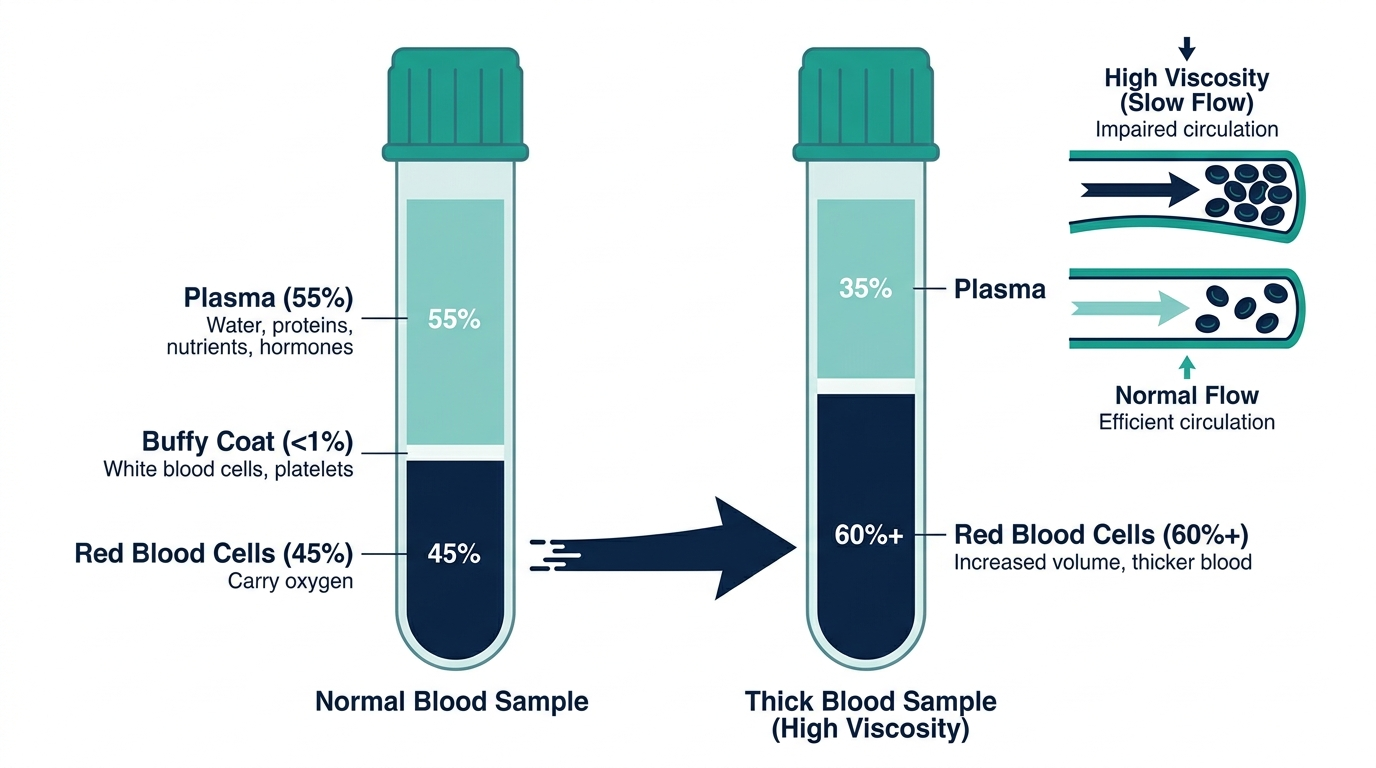
HCT stands for hematocrit, and it measures the percentage of your blood that is made up of red blood cells (Cleveland Clinic). If your hematocrit is 45 percent, then 45 percent of your blood volume is red cells and the rest is mostly plasma, the watery part. So the question what is HCT in blood test is high really comes down to this: a high HCT means red cells are taking up an unusually large slice of your blood.
There are only two ways that can happen. Either you genuinely have too many red blood cells, a state doctors call erythrocytosis or polycythemia, or your plasma volume has shrunk so the red cells you already have look more concentrated (MedlinePlus). The second version, driven mostly by dehydration, is the most common cause of a high reading and the easiest to fix. Hold on to that distinction. It is the whole game.
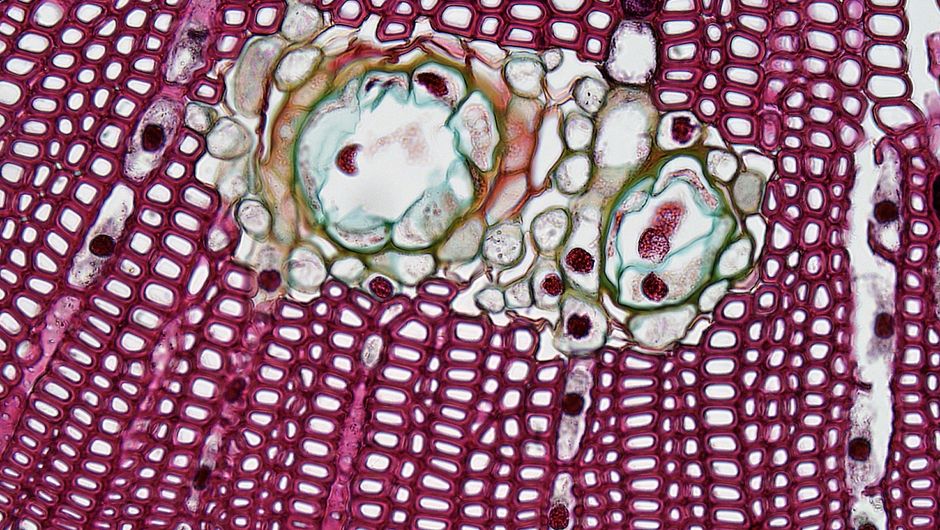
What counts as a high HCT? The actual thresholds
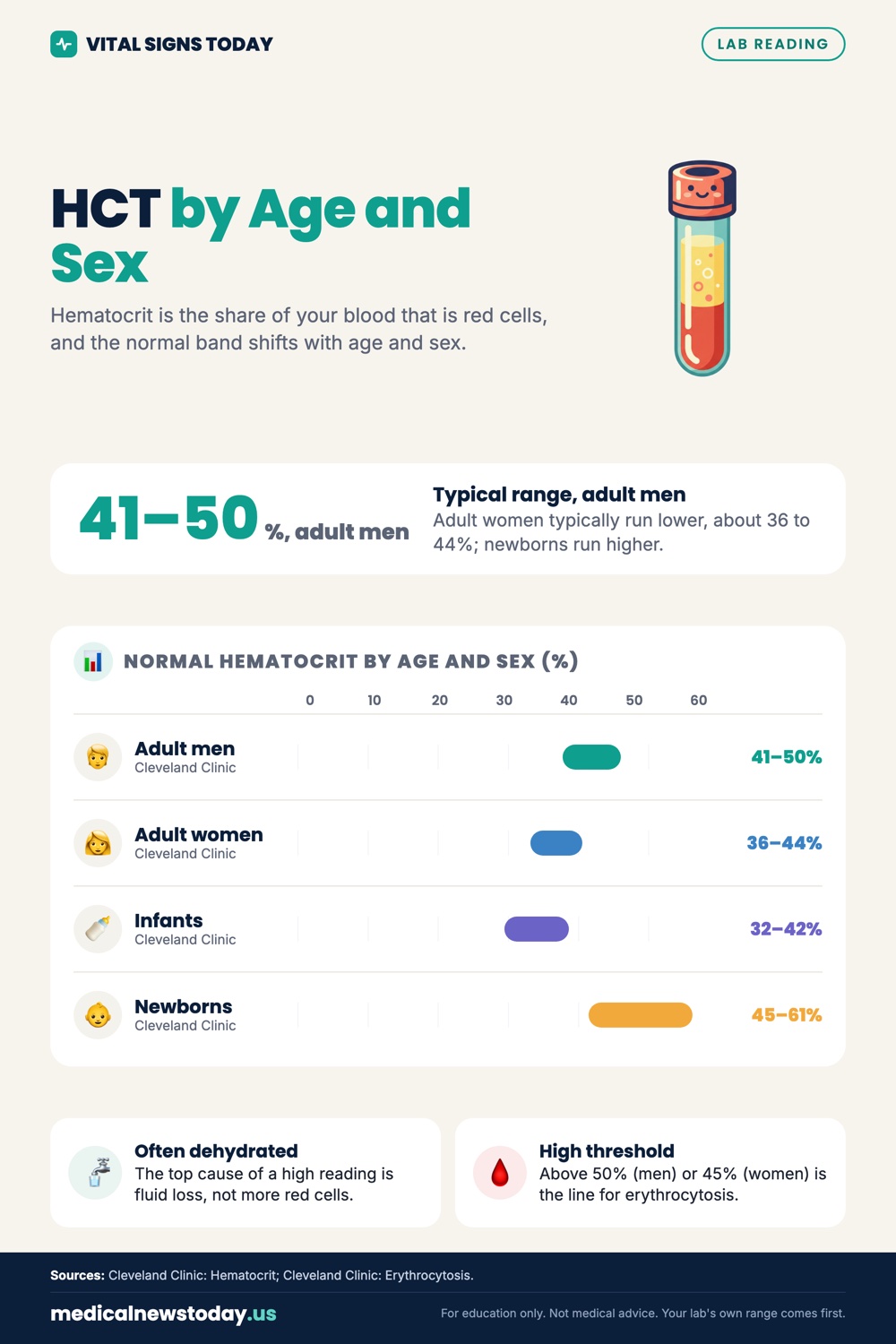
Normal hematocrit is sex specific because men carry more red cell mass than women. Cleveland Clinic lists a typical range of about 41 to 50 percent for adult males and 36 to 44 percent for adult females, with higher values in newborns (Cleveland Clinic).
The point where clinicians start calling it true erythrocytosis is sharper. A hematocrit above 50 percent in men, or above 45 percent in non-pregnant women, meets the working definition of erythrocytosis, often paired with a hemoglobin above 17.5 g/dL in men or 15.3 g/dL in women (Cleveland Clinic). Below those cutoffs, a mildly high HCT is common and frequently harmless. Above them, your clinician will want to know why.
One caveat worth stating plainly: always read your number against the reference range printed on your own report. Labs calibrate to their own instruments, and altitude, smoking, and even pregnancy shift the goalposts (MedlinePlus).
What causes a high HCT?
The differential runs from trivial to serious, so it helps to take it in order of how often each one shows up.
- Dehydration. This is the most common cause of an elevated reading and is not a red cell problem at all. When plasma volume drops, the same number of red cells crowd into a smaller volume and the percentage climbs (MedlinePlus). Skipped water, a morning coffee, a diuretic, a stomach bug, all of it can nudge HCT up.
- Living at high altitude. Thinner air means less oxygen, so your body makes more red cells to compensate. A higher hematocrit is normal and expected if you live in the mountains (MedlinePlus).
- Smoking and obstructive sleep apnea. Both lower the oxygen your blood is carrying, which signals the body to crank out more red cells (Cleveland Clinic).
- Testosterone and anabolic steroids. Testosterone therapy reliably raises red cell production, and it is one of the more common reasons a middle aged man on TRT sees his HCT creep up (Cleveland Clinic).
- Lung and heart disease, carbon monoxide exposure. Chronic lung disease, certain congenital heart conditions, and carbon monoxide poisoning all reduce oxygen delivery and drive secondary erythrocytosis (Cleveland Clinic).
- Polycythemia vera. The one most people fear. This is a bone marrow disorder, a type of slow growing blood cancer, where the marrow overproduces red cells on its own without any external trigger (Cleveland Clinic). It is real, but it is far down the list by frequency.
Clinicians sort these into two buckets. Primary erythrocytosis comes from a defect in the bone marrow itself, with polycythemia vera as the headline example. Secondary erythrocytosis comes from anything outside the marrow that pushes erythropoietin, the hormone that tells your body to make red cells, including lung disease, heart disease, kidney issues, and testosterone (Cleveland Clinic). Telling primary from secondary is exactly what the follow up workup is for.
What are the symptoms of a high HCT?
A mildly high hematocrit usually causes nothing at all. Plenty of people find out only because a routine CBC flagged it. That silence is part of why the number matters, because it can climb without you feeling a thing.
When symptoms do appear, they tend to come from blood that is thicker and moving less freely. With erythrocytosis, mild cases can bring headaches, fatigue, and disturbed sleep, while more pronounced cases add high blood pressure, night sweats, gout, and itchy skin (Cleveland Clinic). In polycythemia vera specifically, the classic complaints are headaches, fatigue, blurred vision, dizziness, nosebleeds, ringing in the ears, and a very telling one, itchy skin especially after a warm bath or shower (Cleveland Clinic).
That post shower itch is worth remembering. It is caused by histamine release tied to the disease, and it is one of the few symptoms that points a finger straight at polycythemia vera rather than the garden variety causes.

When is a high HCT dangerous or a medical emergency?
The real danger of a truly high hematocrit is thickness. The more red cells packed into a fixed volume, the more viscous your blood becomes, and viscous blood clots more easily. Serious erythrocytosis can put you at risk of blood clots, heart attacks, and strokes (Cleveland Clinic). In polycythemia vera the same mechanism can lead to clots, stroke, and heart attack, which is why it is treated rather than watched (Cleveland Clinic).
Treat the following as reasons to seek urgent care, because they can signal a clot in progress: sudden weakness or numbness on one side, trouble speaking, sudden severe headache, chest pain, shortness of breath, or sudden vision loss. These are stroke and heart attack warning signs, and a high HCT raises the odds they are connected.
For context on how seriously clinicians take the thickness, the treatment target in polycythemia vera is to keep hematocrit below 45 percent, because that threshold measurably lowers the risk of clotting complications (Mayo Clinic). That single number tells you the whole strategy: get the red cell percentage down, keep the blood flowing.
What should you do about a high HCT?
Step one is almost always to repeat the test, ideally well hydrated. Because dehydration is such a common driver, a borderline high HCT that normalizes after you drink properly was never a red cell problem in the first place (MedlinePlus).
If it stays high, your clinician will look at the rest of the picture. That usually means checking hemoglobin and the full CBC, asking about smoking, sleep apnea, altitude, and testosterone use, and in true erythrocytosis, measuring serum erythropoietin and often testing for the JAK2 mutation that underlies most polycythemia vera (Cleveland Clinic). A low EPO points toward primary disease, a high EPO toward a secondary cause your body is responding to.
Lifestyle moves are not nothing here. Staying hydrated, stopping smoking, and getting sleep apnea evaluated and treated all directly address common causes (Cleveland Clinic). When the cause is a true overproduction of red cells, the cornerstone treatment is therapeutic phlebotomy, simply removing blood to drop the red cell count, sometimes paired with medications like hydroxyurea (Cleveland Clinic).
The insider read most people miss: relative versus absolute
Here is the nuance that separates a panic from a measured response. A high HCT comes in two flavors that look identical on paper but mean completely different things. Relative, or apparent, erythrocytosis is when your red cell mass is actually normal but your plasma volume has dropped, so the percentage just looks high. Absolute erythrocytosis is when you genuinely have more red cells. The lab cannot tell you which one you have. It only reports the percentage.
This is why a single high reading is weak evidence on its own, and why an experienced clinician rarely reacts to one number. Dehydration is the most common cause of a high hematocrit, and it produces a purely relative elevation that vanishes once fluid is restored (MedlinePlus). The common misread is treating any high HCT as if it means too many red cells. It often does not.
The flip side is the trap on the low end. Because hematocrit is a concentration, anything that dilutes the blood can mask a real problem. Pregnancy, with its expanded fluid volume, lowers hematocrit even when red cell production is fine (MedlinePlus). The lesson cuts both ways: hematocrit measures a ratio, not a count, so the plasma side of the equation can fool you in either direction. The smart move is to interpret HCT alongside hemoglobin and your hydration status, not in isolation.

When should you see a doctor?
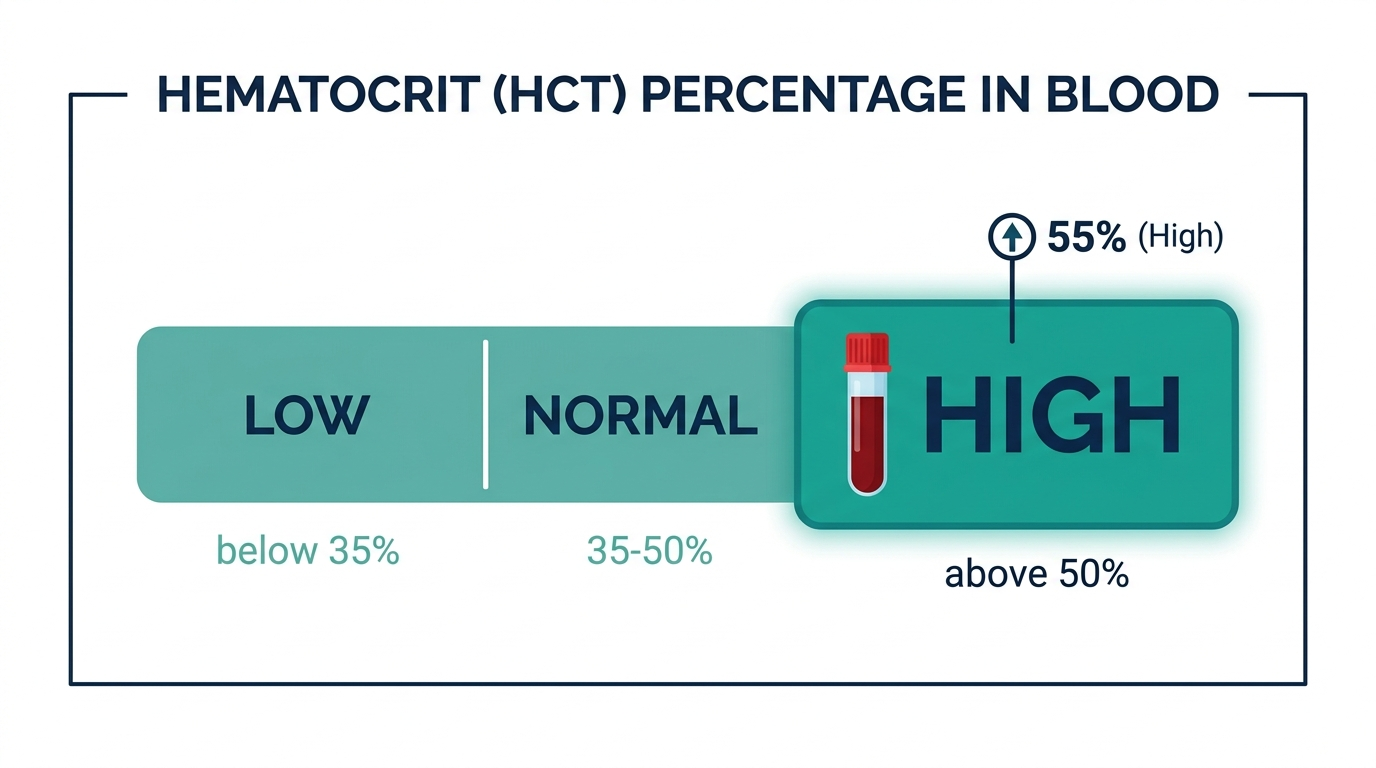
See your clinician if a high HCT shows up on more than one test, if it clears the erythrocytosis thresholds of roughly 50 percent in men or 45 percent in women (Cleveland Clinic), or if you have symptoms like persistent headaches, dizziness, blurred vision, unexplained itching after a warm shower, or night sweats. Any high reading paired with chest pain, one sided weakness, trouble speaking, or sudden vision loss is an emergency, not a clinic appointment. When in doubt, the right move is to bring the actual report to a professional who can read the whole panel together.
How a high HCT is read alongside the rest of your red cell numbers
Hematocrit is one of several red cell measurements on a CBC, and it is almost never interpreted alone. The neighboring values are what let a clinician tell dehydration from a true increase in red cells, and a benign response from a marrow disorder.
| Companion value | What it adds to a high HCT |
|---|---|
| Hemoglobin (Hgb) | Moves in step with hematocrit. A high HCT with a correspondingly high hemoglobin supports a real increase in red cell content rather than a lab quirk. |
| Red blood cell count (RBC) | The actual number of red cells. A high RBC alongside a high HCT points toward true erythrocytosis rather than concentration. |
| MCV (mean cell volume) | Average red cell size. Very small cells (low MCV) with a high count can hint at specific conditions worth exploring. |
| RDW | Variation in red cell size, sometimes offering clues to the underlying process. |
| White cells and platelets | In polycythemia vera, red cells, white cells, and platelets are often all elevated together, a clue that separates it from secondary causes. |
Want to check your hematocrit?
Three ways to get it measured. Pick whichever fits you.
Affiliate links: we may earn a commission at no extra cost to you. A lab test does not replace a visit with your clinician.
The most useful glance: is only the HCT high, or are hemoglobin and RBC high too, and are white cells and platelets also up? An isolated high HCT with normal hemoglobin often points to concentration (dehydration). A high HCT with high hemoglobin, high white cells, and high platelets is the pattern that raises concern for a primary marrow disorder.
How to prepare for the test and what can skew HCT
Because hematocrit is a concentration, ordinary factors that change your fluid balance can move it without any change in your actual red cell mass. Controlling these gives a truer reading:
- Hydration. The biggest one. Being even mildly dehydrated at the draw, from skipped water, a morning coffee, or a diuretic, concentrates the blood and inflates HCT. Drinking normally before the test helps.
- Recent heavy sweating or illness. A stomach bug, fever, or a hard workout with fluid loss can transiently raise the reading.
- Altitude. Living at high elevation genuinely raises HCT as a normal adaptation, so mention it if you have recently moved or traveled.
- Smoking. Tobacco lowers oxygen delivery and drives higher red cell production, so it can push HCT up chronically.
- Testosterone or anabolic steroids. These reliably raise red cell production. Report them so the result is read correctly.
- Posture and tourniquet time. Prolonged tourniquet application during the draw can slightly concentrate the sample. This is a lab technique factor, not something you control, but it is one reason a single borderline value is repeated.
Interpreting your result: worked scenarios
Context turns the percentage into a plan. A few common patterns:
- HCT 51 percent in a man who came in dehydrated, normal on a well-hydrated recheck. This was relative (apparent) erythrocytosis from concentration, not a red cell problem. No further workup needed.
- HCT 47 percent in a woman living at high altitude, otherwise well. Often a normal adaptation to thinner air, interpreted in context.
- HCT creeping up in a man on testosterone therapy. A well-recognized effect of TRT. Clinicians monitor it and may adjust the dose or check hematocrit more often.
- HCT above 50 percent in a man with loud snoring and daytime sleepiness. Points toward obstructive sleep apnea reducing oxygen at night, which drives red cell production. Evaluating and treating the apnea addresses the cause.
- Persistently high HCT with high platelets, high white cells, and itching after a warm shower. The pattern that prompts testing serum erythropoietin and the JAK2 mutation to evaluate for polycythemia vera.
A closer look at testosterone therapy and hematocrit
Because TRT has become common, this deserves its own note. Testosterone stimulates the bone marrow to produce more red cells, so a rising hematocrit is one of the most predictable lab changes on therapy. This is exactly why clinicians check a baseline HCT before starting and monitor it periodically afterward.
The practical implications for anyone on testosterone:
- Expect monitoring. Hematocrit is typically checked before starting, a few months in, and then at regular intervals.
- Delivery method matters. Injectable testosterone, especially at higher doses or longer intervals, tends to raise HCT more than gels for some people.
- Options if it climbs too high include lowering the dose, changing the delivery method, or, in some cases, therapeutic phlebotomy, all decided by your prescribing clinician.
- Do not stop a prescribed therapy on your own to change a number. Bring the result to the clinician who manages your treatment.
How a genuinely high HCT is managed
When the elevation is real and not just concentration, management targets the underlying cause and the blood’s thickness. The general approaches:
- Fix the driver where possible. Stopping smoking, treating sleep apnea, and adjusting testosterone therapy directly address common secondary causes.
- Therapeutic phlebotomy. For true overproduction, removing a controlled amount of blood lowers the red cell percentage and reduces clotting risk. This is a cornerstone treatment in polycythemia vera.
- Medications in select cases. When phlebotomy alone is not enough, drugs that reduce blood cell production may be added under specialist care.
- Hydration and follow-up. Staying well hydrated and rechecking the trend over time is part of ongoing care, since the direction the number is heading matters as much as any single value.
Common misconceptions about a high HCT
- “A high HCT means I have too many red cells.” Often not. The most common cause is dehydration, which concentrates a normal number of red cells.
- “High HCT means polycythemia vera.” That marrow disorder is far down the list by frequency. Dehydration, altitude, smoking, sleep apnea, and testosterone are all more common.
- “One high reading needs a big workup.” Step one is usually a rehydrated repeat. Many borderline highs normalize.
- “A high HCT always makes me feel unwell.” Mild elevations usually cause no symptoms at all.
- “Drinking water is a treatment for true erythrocytosis.” Hydration only fixes the concentration type. A genuine overproduction of red cells needs a real workup and cause-directed treatment.
Frequently asked questions
Is a high HCT something to worry about?
Not always. The most common cause of a high hematocrit is dehydration, which is harmless and reversible (MedlinePlus). A persistently high HCT, especially above about 50 percent in men or 45 percent in women, deserves a workup because true erythrocytosis can raise clotting risk (Cleveland Clinic).
What is a normal hematocrit level?
Cleveland Clinic lists roughly 41 to 50 percent for adult men and 36 to 44 percent for adult women, with values varying by lab, age, smoking, and altitude (Cleveland Clinic). Always compare your result to the reference range on your own report.
Can dehydration cause a high HCT?
Yes, and it is the most common reason. When plasma volume drops, the same number of red cells become more concentrated and the percentage rises, even though your actual red cell count is normal (MedlinePlus). Rehydrating and retesting often resolves it.
When is a high hematocrit dangerous?
A truly elevated HCT thickens the blood and can raise the risk of blood clots, heart attack, and stroke (Cleveland Clinic). In polycythemia vera, treatment aims to keep hematocrit below 45 percent to cut that risk (Mayo Clinic).
Does testosterone therapy raise hematocrit?
Yes. Testosterone and anabolic steroids are recognized causes of secondary erythrocytosis and are a common reason men on testosterone therapy see their HCT climb (Cleveland Clinic). Clinicians monitor hematocrit during therapy for this reason.
This article is for general educational purposes and is not medical advice. It cannot diagnose or treat you and does not replace your clinician. Always discuss your lab results and any health decisions with a qualified healthcare professional.
Vital Signs Today may earn a commission if you buy through links on this page. It does not affect our editorial assessments.