Disclosure: Vital Signs Today may earn a commission if you buy through links on this page, at no extra cost to you. This does not influence our evidence-based assessments. We are not a medical provider; talk to a clinician before acting on test results.
Related: WBC blood test: the full guide · WBC normal range by age (full chart)
You scanned your complete blood count, and there it was, sitting next to a little flag the lab printed in red: WBC, low. Maybe nobody called you. Maybe the portal just dumped the numbers on you with no explanation. Either way, your brain went straight to the worst place, because “low white blood cell count” sounds like your immune system has quietly walked off the job.
Here is what almost nobody explains in the moment. A low WBC is common, it is often mild, and a surprising number of people who get flagged for it are completely healthy. But there is a narrow band where it genuinely matters, and the whole game is knowing which side of that line you are on. Let me walk you through it the way a clinician actually thinks about it.
Part of our Complete Blood Count guide.
What does low WBC mean in a blood test?
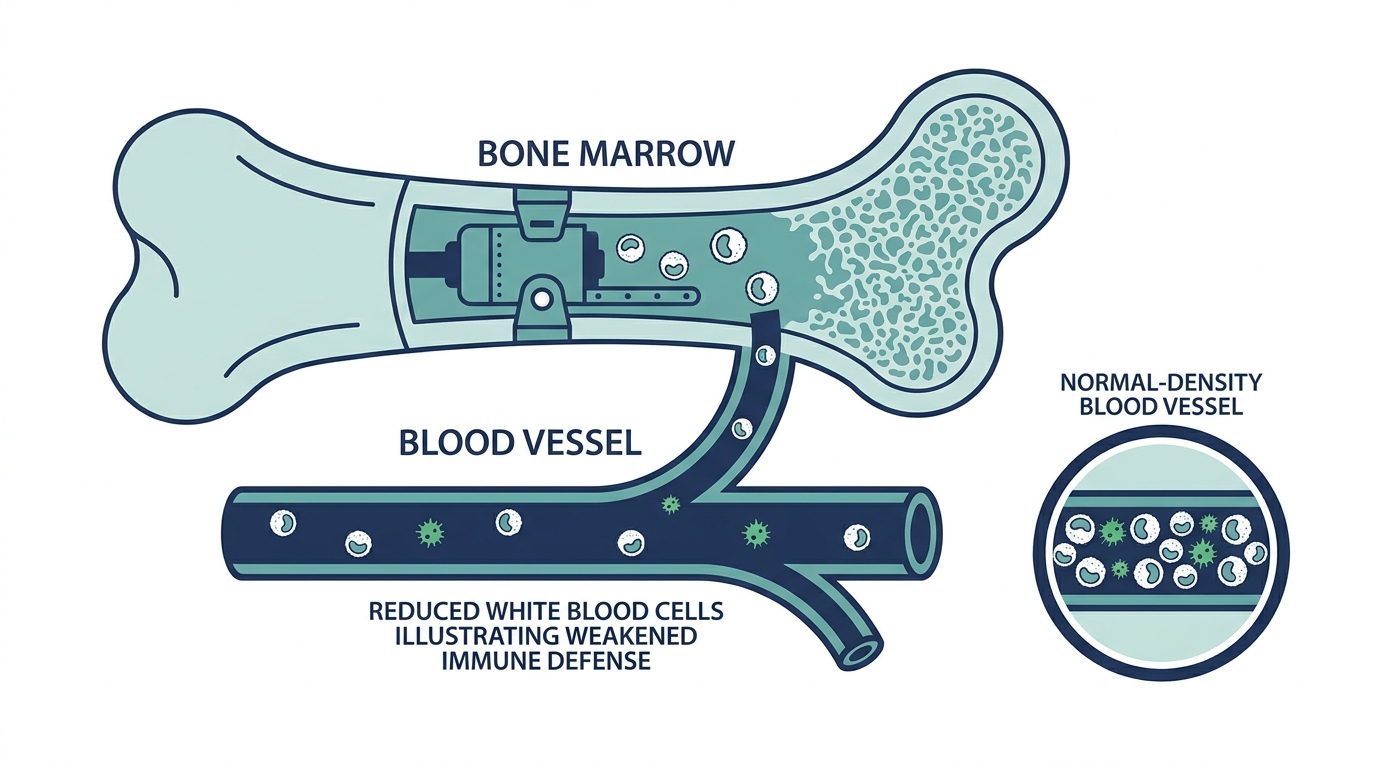
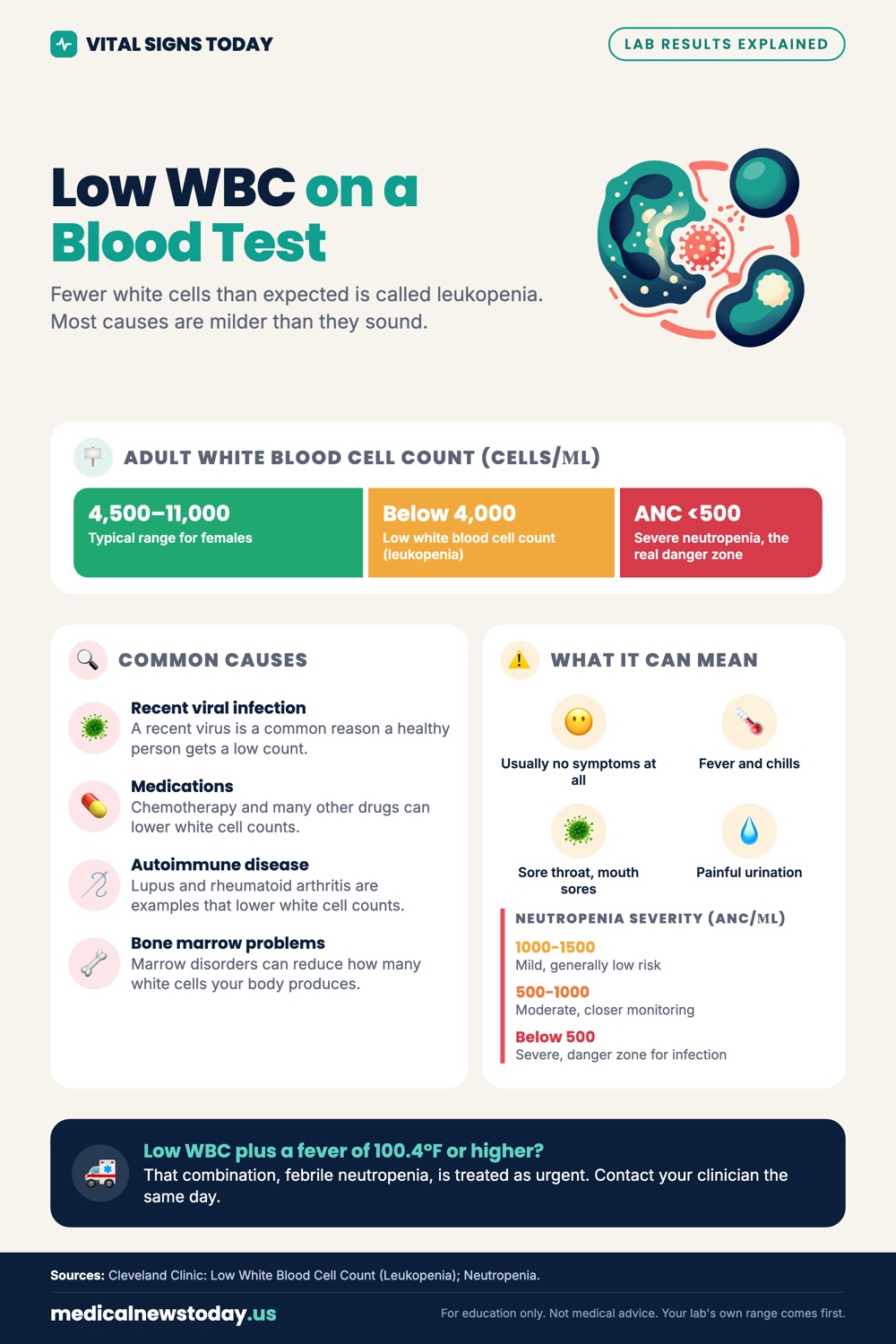
A low WBC in a blood test means you have fewer white blood cells circulating than expected, and the medical term for it is leukopenia. White blood cells are your immune army, so the worry is straightforward: fewer of them can mean a harder time fighting off infection (MedlinePlus).
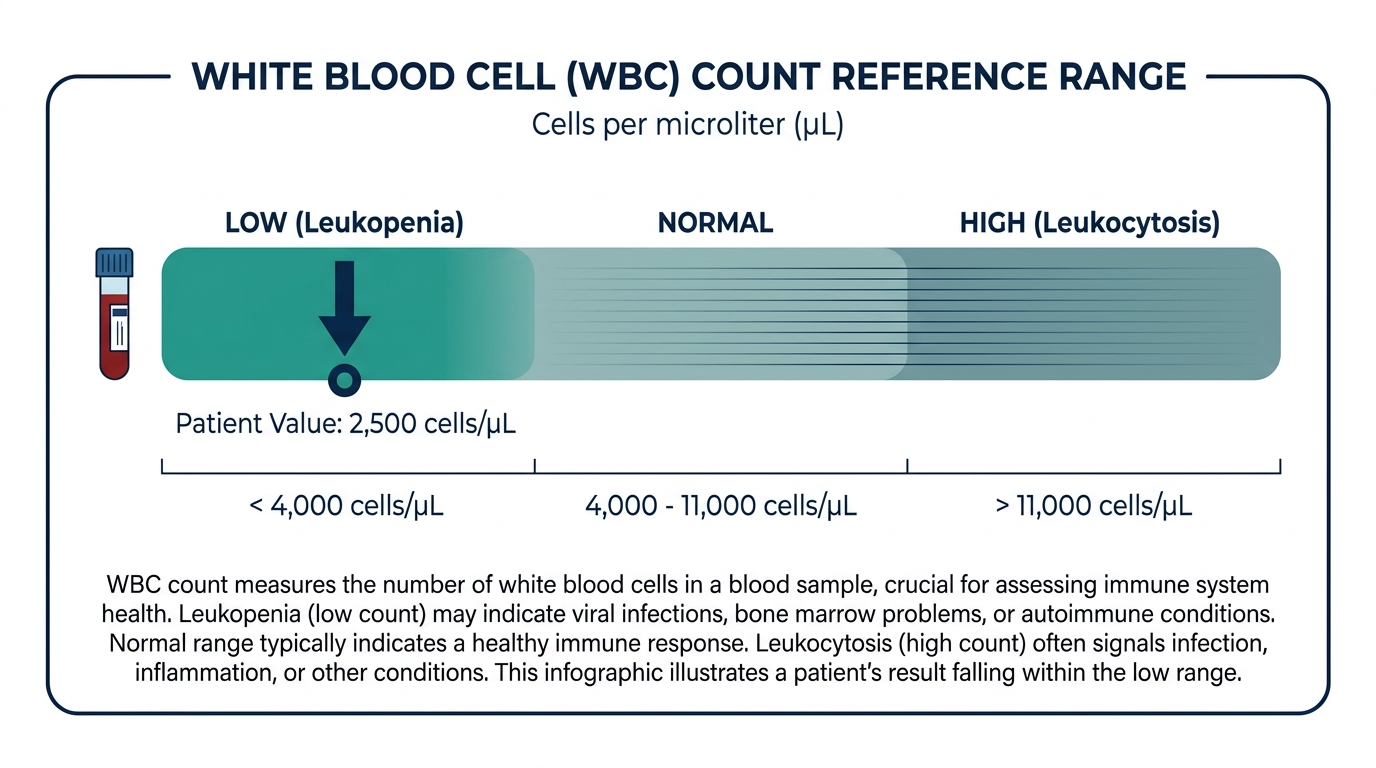
The number that counts as low is generally a total WBC below 4,000 cells per microliter of blood (Cleveland Clinic). For context, a normal count usually runs from about 4,500 to 11,000 cells per microliter, though the exact range shifts with age and sex, and your lab prints its own reference range on your report. That last detail matters more than people realize, so always read your result against the range on your own page, not against a number you found online.
Here is the part that defuses a lot of panic. The total WBC is made of five different cell types, and the one that actually protects you from most everyday bacterial infections is the neutrophil. When clinicians worry about a low white count, what they are really watching is the neutrophil number, called the absolute neutrophil count or ANC. A slightly low total WBC with a healthy neutrophil count is a very different situation from a low neutrophil count, even though both can trigger the same red flag in the portal.
What causes a low WBC?
A low WBC is a finding, not a diagnosis, and the list of causes runs from completely benign to serious. Ordered roughly from most to least common in everyday practice:
- A recent or current viral infection. This is the single most common reason a healthy person shows up with a low count. Common viruses, including the flu and many others, temporarily suppress white cell numbers, and the count rebounds on its own once you recover.
- Medications. A long list of drugs can lower white cells, including chemotherapy, some antibiotics, certain antipsychotics, antithyroid drugs, and some seizure and autoimmune medications (MedlinePlus). This is one of the first things a good clinician asks about.
- Autoimmune disease. Conditions like lupus and rheumatoid arthritis can lower white cell counts as part of the disease itself (Cleveland Clinic).
- Nutrient deficiencies. Low vitamin B12, folate, or copper can each blunt white cell production (Cleveland Clinic).
- Bone marrow problems. The marrow is the factory for blood cells, so disorders such as aplastic anemia, myelodysplastic syndromes, and some cancers can reduce output (MedlinePlus).
- Cancer treatment. Chemotherapy and radiation predictably knock down white cells, which is why oncology patients are monitored so closely (Cleveland Clinic).
- An enlarged spleen or chronic infections like HIV, which can either trap or destroy white cells (MedlinePlus).
Notice the shape of that list. The most common causes are also the most reassuring, and the serious ones usually do not show up as an isolated, mild dip. They tend to drag other numbers down with them or come with symptoms.
What are the symptoms of a low WBC?
Here is the honest answer that often surprises people: leukopenia itself usually has no symptoms at all (Cleveland Clinic). You do not feel a low white cell count. There is no ache, no fatigue, no telltale sensation that announces it. That is exactly why it is almost always discovered by accident on routine blood work rather than because someone felt unwell.
What you do notice are the consequences when the count is low enough to weaken your defenses, and those show up as infections. Watch for fever and chills, mouth sores, a sore throat, a worsening cough or shortness of breath, painful urination with foul-smelling urine, persistent diarrhea, draining cuts or sores that will not heal, or unusual vaginal discharge (Cleveland Clinic). If your count is low and any of these appear, the count just stopped being a number on a screen and became something to act on.
When is a low WBC dangerous or a medical emergency?
This is the line that matters, and it is drawn at the neutrophil count, not the total WBC. The threshold for neutropenia is an absolute neutrophil count below 1,500 cells per microliter, and the risk climbs steeply as the number falls (Cleveland Clinic):
- Mild neutropenia: ANC of 1,000 to 1,500. Generally low risk.
- Moderate neutropenia: ANC of 500 to 1,000. Higher risk, closer monitoring.
- Severe neutropenia: ANC below 500. This is the danger zone, where even the bacteria normally living on your skin and in your gut can cause serious infections.
The genuine emergency is the combination of a low neutrophil count and a fever, called febrile neutropenia. A single temperature reading of 100.4 degrees Fahrenheit, or 38 degrees Celsius, in someone with significant neutropenia is treated as urgent (Cleveland Clinic). The reason is brutal arithmetic: with too few neutrophils, an infection can race ahead before your body mounts any visible response, and prompt antibiotics can be lifesaving. If you are on chemotherapy or have a known severe low count and you spike a fever, that is not a wait-and-see situation. It is a same-day, call-your-team-now situation.
For everyone else, an isolated mildly low total WBC with a normal neutrophil count and no symptoms is rarely an emergency. The danger is real, but it lives at the bottom of the scale, not at the top.

What should you do about a low WBC?
The first move is almost always to confirm and contextualize, not to panic. A single low reading is exactly that, a single reading, and counts naturally fluctuate, especially around an infection.
What typically happens next:
- Repeat the test. A clinician will often recheck the CBC in a few weeks to see whether the dip was a passing blip, for example from a recent virus, or a stable pattern that needs explaining.
- Look at the differential. The lab can break the total WBC into its parts and report the absolute neutrophil count. This single step reclassifies many “scary” results into harmless ones, because it separates a low total from a genuinely low neutrophil count.
- Review your medications. Because so many drugs lower white cells, your clinician will comb through your list, including over-the-counter and recently started medicines.
- Check the obvious deficiencies. Vitamin B12, folate, and sometimes copper are simple to test and simple to correct (Cleveland Clinic).
- Treat the cause, not the number. There is no general supplement or lifestyle hack that reliably raises white cells. Treatment, when needed, targets the underlying reason: stopping a culprit drug, correcting a deficiency, treating an autoimmune flare, or in specific medical settings using growth-factor medications that prompt the marrow to make more cells (Cleveland Clinic).
If your count is low enough to raise infection risk, the practical advice is sensible hygiene, careful food handling, and a low threshold to report fevers, rather than living in a bubble.
When should you see a doctor?
Talk to your clinician promptly if you have a known low WBC and you develop any sign of infection, especially fever, since that combination is the one that can turn serious quickly (Cleveland Clinic). Reach out sooner rather than later if the low count is showing up alongside low red cells or low platelets, if it keeps dropping on repeat tests, if you are losing weight, drenching the sheets with night sweats, bruising easily, or feeling persistently unwell. Those patterns push the picture away from “harmless blip” and toward “needs a real workup.”
And if you have a single, mildly low total WBC, feel fine, and the rest of your blood count is clean, the right move is usually a calm conversation and a recheck, not an emergency. Bring the question to your next visit and ask specifically what your neutrophil count was.
The insider point: a “low” count that is perfectly normal for millions of people
Here is the nuance that gets missed constantly, even by clinicians who should know better. The standard reference ranges for white cells and neutrophils were largely built on populations of European descent, and they do not fit everyone. A large share of people of African, Middle Eastern, and West Indian ancestry naturally run lower neutrophil counts their whole lives, with no increased risk of infection and nothing wrong with them at all.
This is driven by a common, harmless genetic variant. People who are “Duffy null” do not express a particular receptor on their red blood cells, and one effect is a lower baseline neutrophil count. The variant is found in roughly 80 to 100 percent of people of sub-Saharan African ancestry and in under 1 percent of people of European descent (PMC, Duffy variant and neutrophil count). It was long called benign ethnic neutropenia, and researchers now favor the term Duffy null-associated neutrophil count, because it names the actual biology rather than a person’s race (Blood Advances, American Society of Hematology).
Why does this matter to you? Because using a one-size-fits-all range means a healthy person can get repeatedly flagged, sent for unnecessary bone marrow biopsies, or even denied a needed medication over a count that is simply their normal. To date there is no good evidence that Duffy null status raises the risk of any disease (Blood Advances, American Society of Hematology). If your neutrophils have always sat a little under the printed range, you feel well, and the count is stable over time, this is a conversation worth having with your clinician before you accept the label of a problem. A lifelong stable low is a very different animal from a new drop.
The five white cell types, and which low value actually matters
The total WBC is a sum, and a sum can hide as much as it reveals. When your lab runs a differential, it breaks the total into five populations, each with a different job. Knowing which one is low reshapes the whole interpretation.
- Neutrophils. The largest fraction and the front line against bacteria and fungi. This is the number clinicians care about most, and a low value here (neutropenia, below 1,500 cells per microliter) is what drives real infection risk.
- Lymphocytes. These handle viral defense and long-term immune memory. A low lymphocyte count (lymphopenia) can follow viral infections, steroid use, or certain chronic conditions, and it carries a different risk profile than neutropenia.
- Monocytes. The cleanup and long-lived immune cells. Isolated low monocytes are less commonly the point of concern in a mildly low WBC.
- Eosinophils. Involved in allergy and parasite defense. They are often low or near zero in healthy people and during acute stress, so a low eosinophil count is usually not alarming.
- Basophils. The rarest type, present in tiny numbers, so a low basophil count is rarely meaningful on its own.
The practical point: when you see a low total WBC, the single most useful follow-up question is which subtype is driving it. A low count from low eosinophils is a shrug. A low count from neutropenia is the one to track.
Want to check your white blood cells?
Three ways to get it measured. Pick whichever fits you.
Affiliate links: we may earn a commission at no extra cost to you. A lab test does not replace a visit with your clinician.
Reading a low WBC alongside the rest of your CBC
A low WBC is far more informative when you read it next to the red cell and platelet lines on the same report, because the pattern across all three cell lines tells you whether the problem is isolated or involves the marrow as a whole.
- Low WBC alone, red cells and platelets normal. This is the most reassuring pattern. An isolated low white count, especially a mild one, usually points to a passing cause like a recent virus or a medication, rather than a marrow-wide problem.
- Low WBC with low red cells and low platelets. When all three lines drop together, called pancytopenia, the concern shifts toward the bone marrow itself or a process consuming or trapping cells. This combination deserves a prompt and thorough workup.
- Low WBC with abnormal red cell indices. If you also see clues of B12 or folate deficiency, such as enlarged red cells, that supports a nutrient cause that can lower white cells too.
The takeaway: never read the WBC line in a vacuum. Whether the other two cell lines are involved is the fork that separates a benign dip from something that needs investigation.
What can skew a WBC result, and how to prepare
A CBC does not require fasting, and there is little you need to do to prepare for it. But several ordinary factors can move the white count enough to matter, and knowing them prevents overreaction to a single number.
- Timing around an infection. A recent viral illness can suppress white cells for days to weeks. A count drawn during or just after a cold may read low simply because of that, which is why clinicians so often repeat the test once you have recovered.
- Time of day and stress. White cell counts, particularly neutrophils, can shift modestly through the day and rise with acute physical stress or intense exercise. A relaxed morning draw and a draw right after a hard workout are not perfectly comparable.
- Medications started recently. Because so many drugs lower white cells, a count can drop after starting a new medication. Tell your clinician about anything new, including over-the-counter products and supplements.
- Sample handling and lab differences. Different analyzers and reference ranges can produce slightly different numbers, so comparing results across labs is less reliable than tracking the trend within one lab.
Consistency is the theme: to know whether your WBC is truly changing, compare results drawn under similar conditions at the same lab over time.

Living with a genuinely low count: practical precautions
If your neutrophil count is low enough to raise infection risk, the goal is sensible protection, not isolation. Clinicians generally recommend a set of everyday habits that meaningfully lower exposure without shrinking your life.
- Hand hygiene. Frequent, thorough handwashing is the single highest-yield habit, especially before eating and after being in public spaces.
- Careful food handling. Cook foods thoroughly, wash produce well, avoid unpasteurized dairy and undercooked meat or eggs, and be attentive to expiration dates.
- Dental and skin care. Keep the mouth and skin healthy, since sores and breaks are entry points for infection when defenses are low.
- Know your fever rule. If you have significant neutropenia, treat a temperature of 100.4 degrees Fahrenheit (38 degrees Celsius) as a reason to contact your care team the same day rather than waiting (Cleveland Clinic).
Sample interpretation scenarios
These illustrative patterns show how the same flagged low WBC can mean very different things. They are examples, not a substitute for your clinician’s read of your actual numbers.
- Total WBC 3,800, neutrophils normal, you just had a cold. Most likely a transient post-viral dip. A recheck in a few weeks usually shows recovery.
- Total WBC 3,600, stable for years, of African ancestry, feeling well. This pattern fits the harmless Duffy null-associated low neutrophil count, and a lifelong stable low is very different from a new drop.
- Total WBC 2,000 with low red cells and low platelets. Pancytopenia, which points toward the marrow and warrants a prompt, structured workup.
- Total WBC dropping on serial tests after starting a new medication. A drug cause is high on the list, and reviewing the medication is the immediate next step.
Common misconceptions about a low WBC
- “A low WBC means I have cancer.” Cancer is far down the list of causes for an isolated mild dip. The common reasons are viral infections and medications, and serious marrow problems usually drag other blood lines down too.
- “I need to take a supplement to boost my white cells.” There is no general supplement or lifestyle hack that reliably raises white cells. Treatment targets the specific cause, such as correcting a B12 or folate deficiency or stopping a culprit drug.
- “The total WBC is what matters.” The neutrophil count is what actually drives infection risk. A low total with a healthy neutrophil count is a very different situation from true neutropenia.
- “A low count means I am sick right now.” Leukopenia itself usually causes no symptoms. Many people are flagged while feeling perfectly well, which is exactly why context and a recheck matter so much.
Frequently asked questions
What WBC count is considered low?
A total white blood cell count below 4,000 cells per microliter is generally considered low, a condition called leukopenia, though normal ranges vary by age, sex, and lab (Cleveland Clinic). Clinicians pay closest attention to the neutrophil count, where a value below 1,500 cells per microliter is defined as neutropenia.
Is a low WBC always serious?
No. The most common cause of a mildly low WBC in an otherwise healthy person is a recent or current viral infection, which resolves on its own. A low count becomes serious mainly when the neutrophil count is significantly reduced or when it appears alongside other abnormal results or symptoms (Cleveland Clinic).
What are the symptoms of a low white blood cell count?
Leukopenia itself usually causes no symptoms and is found on routine blood work (Cleveland Clinic). What you may notice are signs of infection that the low count allows, such as fever, chills, mouth sores, sore throat, cough, or painful urination.
When is a low white blood cell count a medical emergency?
The emergency is febrile neutropenia, a fever in someone with a low neutrophil count. A temperature of 100.4 degrees Fahrenheit, or 38 degrees Celsius, with significant neutropenia, especially severe neutropenia under 500 cells per microliter, needs urgent medical care because infections can progress rapidly (Cleveland Clinic).
Can a low WBC be normal for me?
Yes. Many people, especially those of African, Middle Eastern, or West Indian ancestry, have a naturally lower neutrophil count tied to the harmless Duffy null genetic variant, with no increased infection risk (Blood Advances, American Society of Hematology). A stable, lifelong low count in someone who feels well is very different from a new drop.
This article is for general educational purposes and is not medical advice. It cannot diagnose or treat you and does not replace your clinician. Always discuss your lab results and any health decisions with a qualified healthcare professional.
Vital Signs Today may earn a commission if you buy through links on this page. It does not affect our editorial assessments.