- You can raise iron by eating heme iron from meat, poultry, fish, and eggs, pairing plant (non-heme) iron with vitamin C, and avoiding tea, coffee, and calcium at the same meal, since vitamin C can roughly triple non-heme iron absorption.
- Most adults who need oral iron take 30 to 65 mg of elemental iron, and research shows taking it every other day instead of daily can increase total absorption and cause fewer stomach side effects.
- Correcting low iron with diet and supplements usually takes about 3 to 6 months, and you should see a doctor before starting iron because the underlying cause, such as bleeding, must be found.
Low iron is one of the most common nutritional problems worldwide, and the good news is that it is usually fixable. Whether your goal is to lift a low ferritin number, treat iron deficiency anemia, or just feel less exhausted, the path is the same: get more iron in, help your body absorb it, and remove the things that block it. This guide walks through what counts as low, why it matters, and the evidence-based ways to bring your levels back up safely.
Part of our Iron Studies guide.
Before you change your diet to raise iron, do you actually know where your iron and ferritin stand? One at-home Superpower draw checks 100+ biomarkers, physician-reviewed.
What counts as low iron?
Iron status is usually judged by ferritin, the protein that stores iron. A ferritin level below 30 mcg/L is widely used to indicate iron deficiency, and a level under 10 mcg/L points to iron deficiency anemia (Mayo Clinic). Ferritin can be falsely high during infection or inflammation, so doctors read it alongside hemoglobin and other iron studies.
It helps to separate two stages. Iron deficiency: your stores (ferritin) are low but your red blood cells may still look normal. Iron deficiency anemia: stores are depleted and hemoglobin has dropped, so the blood carries less oxygen. Both deserve attention. Your daily need also sets the context. The Recommended Dietary Allowance is 8 mg/day for adult men and postmenopausal women, and 18 mg/day for premenopausal women, who lose iron through menstruation (NIH Office of Dietary Supplements).
Who runs low, and why it matters before you supplement
Iron does not usually drop for no reason, and knowing your reason changes the plan. The body has no active way to excrete iron, so a falling level almost always means either you are taking in and absorbing too little, or you are losing blood somewhere. The most common groups who run low are menstruating women, especially with heavy periods, pregnant women, whose iron needs climb sharply, people following vegetarian or vegan diets that rely on the less-absorbable plant iron, frequent blood donors, and endurance athletes, who lose small amounts through foot-strike red-cell breakdown and sweat.
Absorption problems make up a second group that diet alone will not fix. Celiac disease, chronic infection with H. pylori, inflammatory bowel disease, and past bariatric surgery all reduce how much iron the gut can pull from food. Long-term use of acid-blocking medications, the proton pump inhibitors many people take for reflux, lowers stomach acid and with it iron absorption. This is why the same low ferritin calls for a different response in a 25-year-old with heavy periods than in a 60-year-old man, where an unexplained low iron is treated as possible gastrointestinal bleeding until proven otherwise. Raising the number is step two. Step one is finding out why it fell.
Why raise it?
The simplest way to actually get this done
Superpower is a full-body lab membership that runs 100+ biomarkers, has each result reviewed by a doctor, and tracks your numbers year over year (about $199/year). It is what we point readers to when they would rather get one clean, complete draw than chase single tests one at a time. Here is superpower reviewed in full.
Iron is the core of hemoglobin, the molecule that carries oxygen from your lungs to every tissue. When iron runs low, oxygen delivery falls, which is why even mild deficiency can cause fatigue, weakness, and trouble concentrating before anemia ever shows up on a count (NCBI StatPearls, Dietary Iron).
Common symptoms of low iron include the following. Fatigue and weakness: the most frequent complaint, driven by reduced oxygen transport. Pale skin and shortness of breath: signs the blood is carrying less oxygen. Cold hands and feet, headaches, or dizziness: circulation-related effects. Brittle nails, hair shedding, or unusual cravings for ice or starch, known as pica. Left untreated, severe iron deficiency anemia can strain the heart and, in pregnancy, raise risks for mother and baby. That is why raising iron is about more than energy. It protects oxygen supply to the whole body.
Evidence-based ways to raise iron
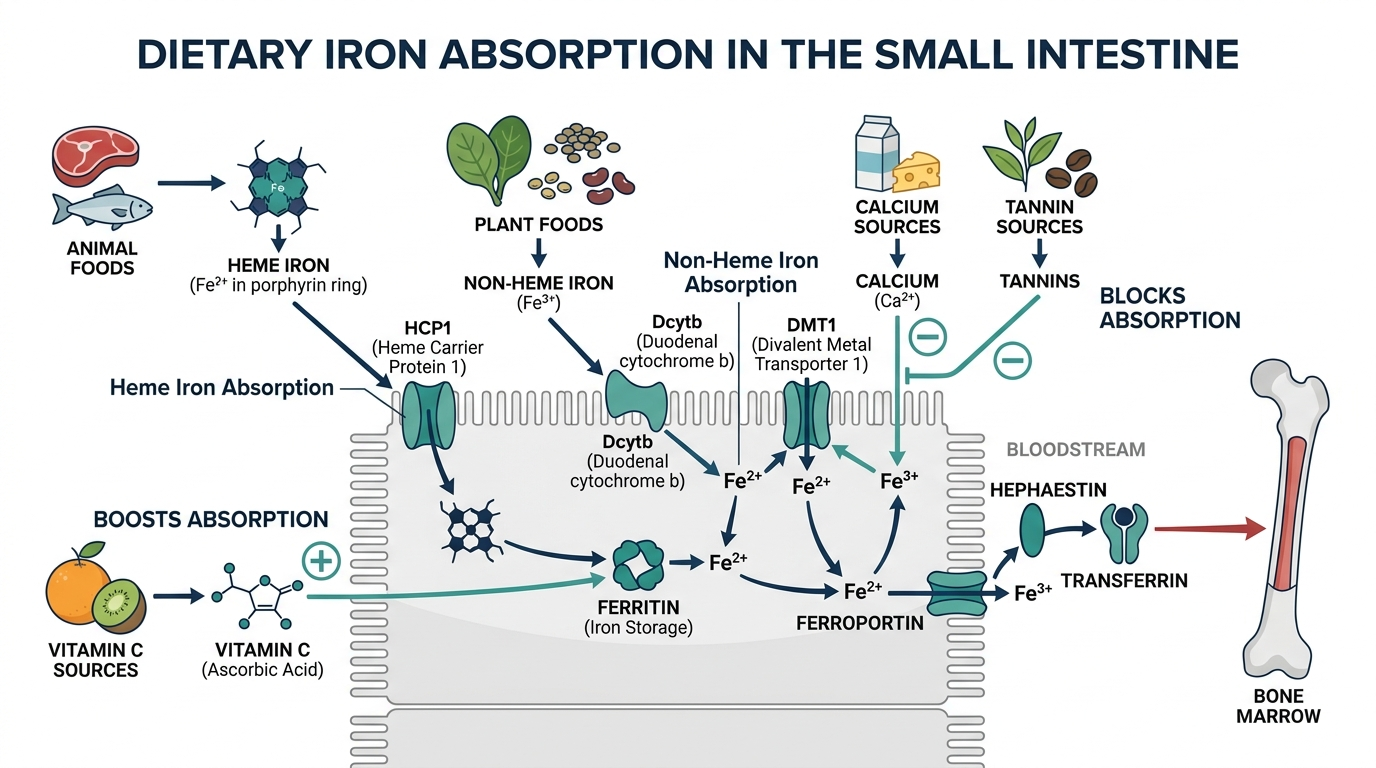
The most reliable approach combines diet, smart absorption habits, and, when needed, supplements, with medical care for the root cause. Heme iron from animal foods is absorbed at rates up to 40%, far better than non-heme iron from plants, and vitamin C can roughly triple absorption of non-heme iron (Harvard T.H. Chan School of Public Health).
Diet
Build meals around iron-rich foods and the helpers that unlock them. Heme iron sources: red meat, poultry, fish, and shellfish, which are absorbed most efficiently. Non-heme iron sources: lentils, beans, tofu, spinach, fortified cereals, and pumpkin seeds. Vitamin C pairing: add citrus, bell peppers, strawberries, tomatoes, or broccoli to plant-iron meals to boost absorption. Combining strategy: eating a small amount of meat alongside plant iron also raises the uptake of the plant iron (NCBI StatPearls, Biochemistry of Iron Absorption).
It helps to know roughly how much iron real portions deliver. The figures below are approximate values from the NIH Office of Dietary Supplements, useful for building meals rather than counting to the milligram.
| Food (typical serving) | Approx. iron (mg) | Type |
|---|---|---|
| Fortified breakfast cereal (1 serving, 100% DV) | ~18 | Non-heme |
| Cooked oysters (3 oz) | ~8 | Heme |
| Cooked lentils (1/2 cup) | ~3 | Non-heme |
| Firm tofu (1/2 cup) | ~3 | Non-heme |
| Cooked spinach (1/2 cup) | ~3 | Non-heme |
| Beef, lean (3 oz) | ~2 | Heme |
| Canned chickpeas (1/2 cup) | ~2 | Non-heme |
| Pumpkin seeds (1 oz) | ~2.5 | Non-heme |
Two practical lessons fall out of this table. First, fortified cereals and shellfish are quiet heavyweights, so they are easy wins if you tolerate them. Second, the milligrams on the label are not the milligrams you keep. A plate of spinach lists a respectable iron number, but you absorb only a small fraction of that non-heme iron unless you pair it with vitamin C or a little meat. That gap between what you eat and what you absorb is the whole reason absorption habits matter as much as the food itself.
Absorption blockers to time around
Some foods and drinks reduce non-heme iron uptake when consumed with the meal. Tea and coffee: polyphenols and tannins bind iron, so keep them at least an hour away from iron-rich meals. Calcium: milk, dairy, and calcium supplements compete with iron, so separate them. Whole grains and legumes contain phytates that lower absorption, though soaking, sprouting, and fermenting reduce this effect. None of these foods are off limits. The point is timing, not elimination.
Supplements
When diet is not enough, oral iron is the standard fix. Most regimens deliver 30 to 65 mg of elemental iron, often as ferrous sulfate, ferrous gluconate, or ferrous fumarate (NCBI StatPearls, Dietary Iron). A notable shift in practice: a randomized study found alternate-day dosing produced higher fractional and total absorption than consecutive daily dosing, because a single dose raises the hormone hepcidin and blunts absorption for the next day (PMC, Stoffel et al.). Every-other-day dosing also tends to cause fewer stomach side effects. Take iron with water or vitamin C, not with milk, antacids, or coffee, and expect dark stools, which are harmless.
Read the elemental iron number, not the tablet size. The label figure that matters is the elemental iron, which differs by salt. A 325 mg ferrous sulfate tablet provides about 65 mg of elemental iron, ferrous fumarate is more concentrated, and ferrous gluconate is less, closer to 35 to 38 mg per 325 mg tablet. Two products can look identical on the front of the bottle and deliver very different doses, so compare the elemental iron in the supplement facts. Gentler forms such as ferrous bisglycinate exist for people who cannot tolerate the traditional salts, though they tend to cost more.
Managing side effects. Constipation, nausea, and stomach cramps are the usual reasons people quit iron before it works. Alternate-day dosing helps, as does starting low and building up, taking the dose with a small amount of food if an empty stomach is too harsh (accepting slightly lower absorption), and adding fiber and fluids for the constipation. If one salt is intolerable, switching forms often solves it. The best supplement is simply the one you will keep taking for the full course, because iron corrects slowly and consistency beats intensity.
Lifestyle and medical care
Lifestyle alone rarely cures true deficiency, but supporting habits help: cook in a cast iron pan, treat sources of bleeding such as heavy periods, and avoid unnecessary use of acid-blocking medications that can hamper absorption. For deficiency that does not respond to oral iron, that causes severe symptoms, or that involves malabsorption, doctors may use intravenous (IV) iron to refill stores quickly. Surgery or other treatment may be needed if a bleeding lesion is found. The cause always matters as much as the level.
How long does it take?
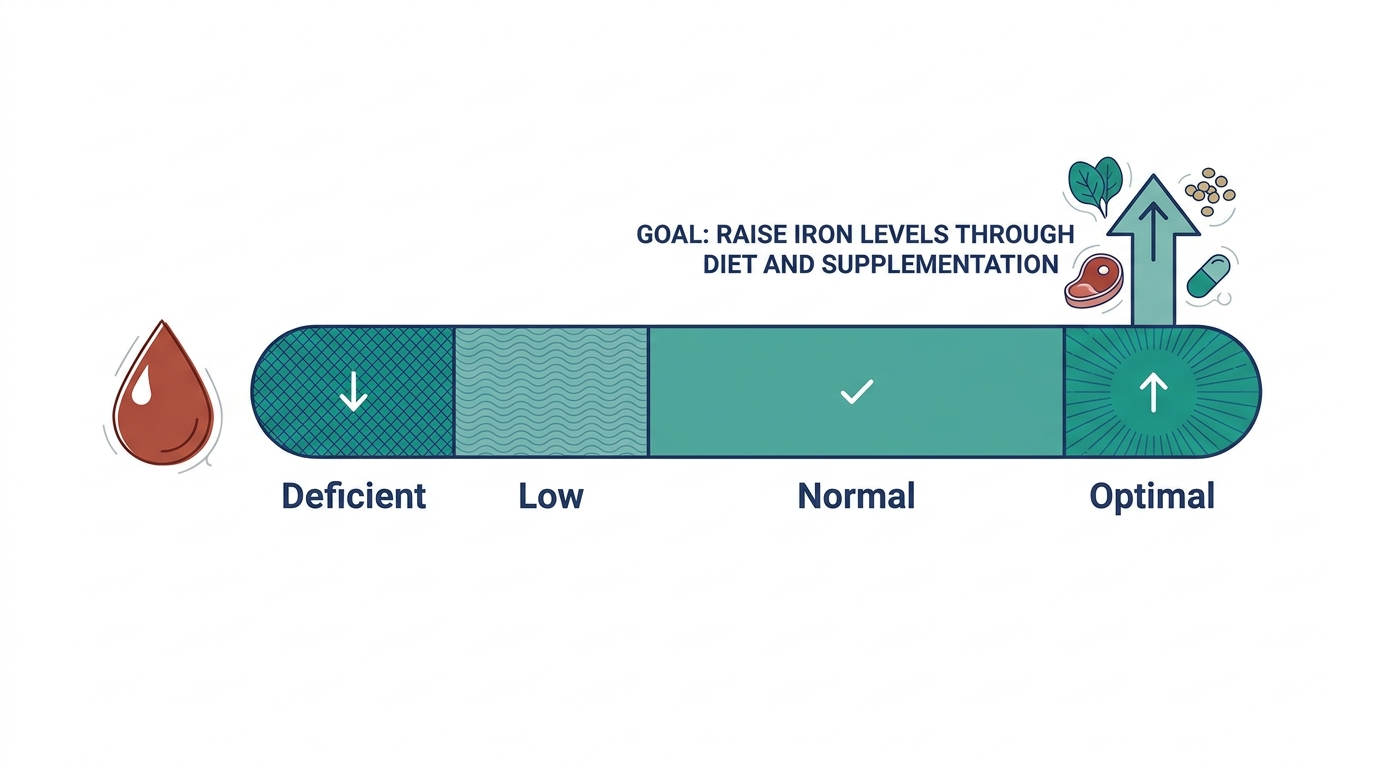
Plan on patience. Correcting low iron with oral supplements and diet typically takes about 3 to 6 months to fully replenish the body’s stores, even though symptoms often improve sooner (Mayo Clinic).
Here is a rough timeline. Days to weeks: energy and concentration may start to lift as red cell production picks up. About 2 to 4 weeks: hemoglobin usually begins to rise measurably, which doctors often recheck. 3 to 6 months: ferritin and total stores climb back to a healthy range. Stopping too early is a common reason iron deficiency returns, so continue treatment for the full course your clinician sets, then confirm with a repeat blood test. IV iron works faster but is reserved for specific situations.
A realistic example. A 29-year-old woman with heavy periods and constant afternoon fatigue has a ferritin of 11 mcg/L and mild anemia. Her clinician starts ferrous sulfate every other day, taken with orange juice and kept away from her morning coffee. Within about two weeks her energy noticeably improves, which is encouraging but not the finish line. A repeat count at a month shows hemoglobin climbing, and she keeps going. At three months her ferritin has moved up but is not yet comfortable, so she continues, and by around five months her stores are solidly refilled. In parallel, her heavy periods are addressed so the reserve does not simply drain again. That combination, treat the deficiency and fix the cause, is what makes the correction stick rather than turning into an annual cycle of running low.
When to see a doctor
See a doctor before treating low iron on your own, because finding the cause is as important as raising the number. Iron deficiency in adults, especially men and postmenopausal women, can signal gastrointestinal bleeding or another condition that needs evaluation (Mayo Clinic).
Seek medical care if you notice any of the following. Persistent fatigue, shortness of breath, or a racing heart: signs that anemia may be significant. Black or bloody stools, vomiting blood, or very heavy periods: possible sources of blood loss. No improvement after several weeks of supplements, which may mean poor absorption or ongoing loss. Pregnancy: iron needs rise and should be managed by a clinician. Do not take high-dose iron without testing, because too much iron is harmful and dangerous in conditions like hemochromatosis. A simple blood test guides safe, effective treatment.
Don’t just read about your health, track it.
A single result is a snapshot. Superpower re-tests 100+ markers over time so you can watch them move as you change sleep, food, and training.
Frequently asked questions
What is the fastest way to raise iron levels?
The fastest dietary route is heme iron from red meat, poultry, or fish, paired with vitamin C. For diagnosed deficiency, oral iron supplements are standard, and IV iron, given under medical care, refills stores fastest when oral iron is not enough or not tolerated.
Should I take iron every day or every other day?
Research suggests alternate-day dosing can increase total iron absorption and reduce stomach side effects compared with daily dosing, because a dose temporarily raises hepcidin and lowers absorption the next day. Ask your clinician which schedule fits your situation.
What drinks raise iron levels?
No drink contains a large amount of iron, but vitamin C-rich juices like orange juice help your body absorb non-heme iron from food. Avoid tea and coffee with iron-rich meals, since they bind iron and reduce absorption.
Can I raise iron without supplements?
Mild deficiency can often improve through diet alone by eating heme iron, pairing plant iron with vitamin C, and avoiding tea, coffee, and calcium at meals. Established deficiency or anemia usually needs supplements, so confirm with a blood test first.
How do I know if my iron is back to normal?
Only a blood test confirms it. Doctors recheck hemoglobin within a few weeks and ferritin later to verify stores have refilled, which typically takes 3 to 6 months. Continue treatment until your clinician confirms levels are normal.
What foods are highest in iron?
Among everyday foods, fortified breakfast cereals and shellfish like oysters top the list, followed by organ meats, red meat, lentils, beans, tofu, spinach, and pumpkin seeds. Heme iron from animal foods is absorbed far more efficiently than the non-heme iron in plants, so a smaller portion of meat can do more for your stores than a larger portion of greens.
Does coffee really block iron absorption?
Yes. The polyphenols in coffee and the tannins in tea bind non-heme iron in the gut and can cut its absorption substantially when consumed with a meal. You do not have to give them up, just move them at least an hour away from iron-rich meals and from any iron supplement.
I eat plenty of meat, so why is my iron still low?
When diet looks adequate but iron keeps falling, the problem is usually loss or absorption, not intake. Heavy menstrual bleeding, slow gastrointestinal bleeding, or a condition like celiac disease that impairs absorption can outpace even a good diet. This is exactly the situation that needs a doctor to find the cause rather than just more iron on the plate.
Can too much iron be harmful?
Yes. The body cannot easily get rid of excess iron, so high-dose supplements taken without a confirmed need can cause harm, and in people with hereditary hemochromatosis iron can build up dangerously in the organs. Iron supplements are also a leading cause of poisoning in young children. Test first, then supplement to a target, rather than taking iron on a hunch.
Sources
- Mayo Clinic, Iron deficiency anemia: Diagnosis and treatment
- NIH Office of Dietary Supplements, Iron Health Professional Fact Sheet
- NCBI StatPearls, Dietary Iron
- NCBI StatPearls, Biochemistry, Iron Absorption
- Harvard T.H. Chan School of Public Health, Iron
- PMC, Iron absorption from supplements is greater with alternate day than with consecutive day dosing
This article is for general educational purposes and is not medical advice. It cannot diagnose or treat you and does not replace your clinician. Always discuss your lab results and any health decisions with a qualified healthcare professional.
Related: best GLP-1 telehealth providers for 2026.
Vital Signs Today may earn a commission if you buy through links on this page. It does not affect our editorial assessments.