Part of our Iron Studies guide.
Your blood work came back, and tucked somewhere between your cholesterol and your white cell count is a single line that just says “Iron” with a number and a reference range next to it. Maybe it was flagged low. Maybe it looked fine and you scrolled on. Either way, that one number is easy to misread, because the word “iron” on a lab report does not mean what most people think it means.
Here is the part that trips people up. The iron line on a standard panel is a snapshot of the iron floating in your blood at the exact minute you got stuck with the needle. It is not a measure of how much iron your body has in reserve. Understanding that distinction is the difference between panicking over a normal result and missing a real deficiency.
What is iron on a blood test?
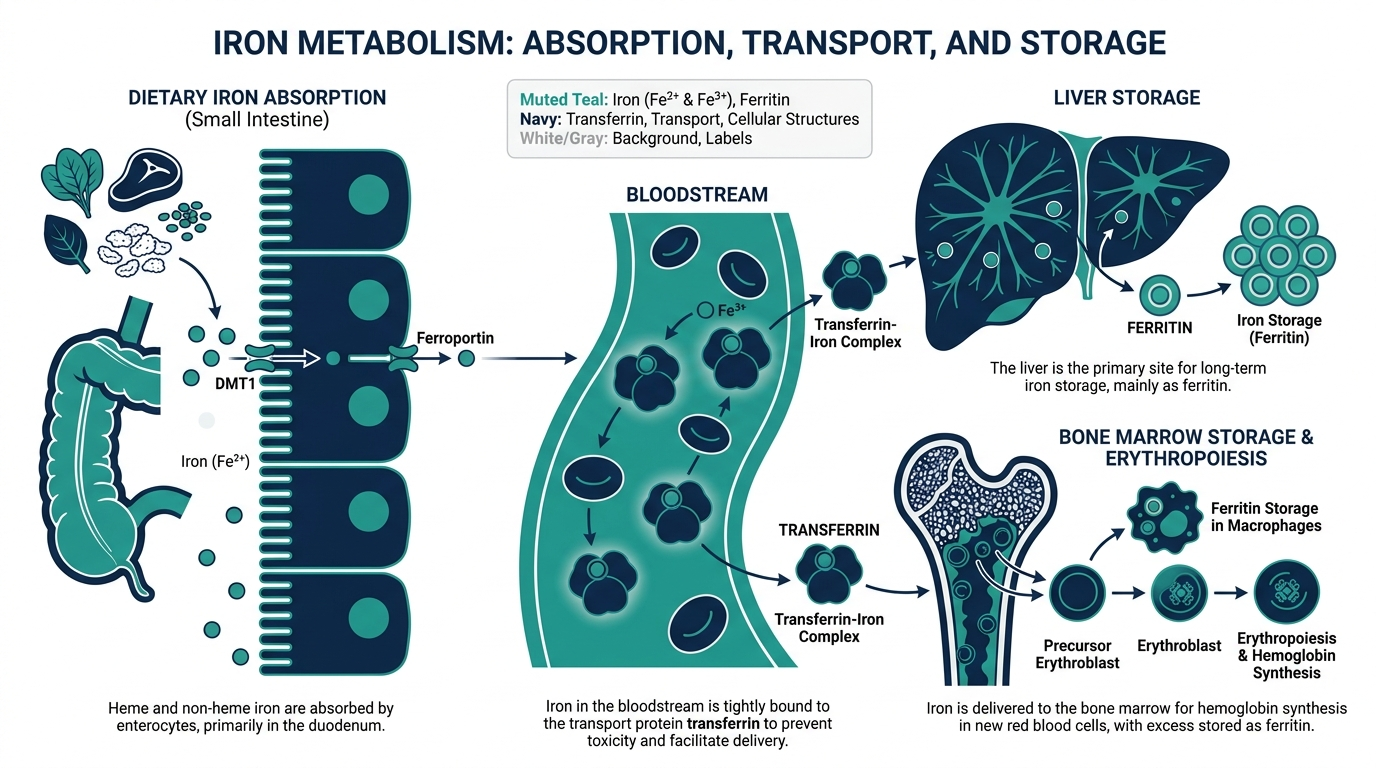
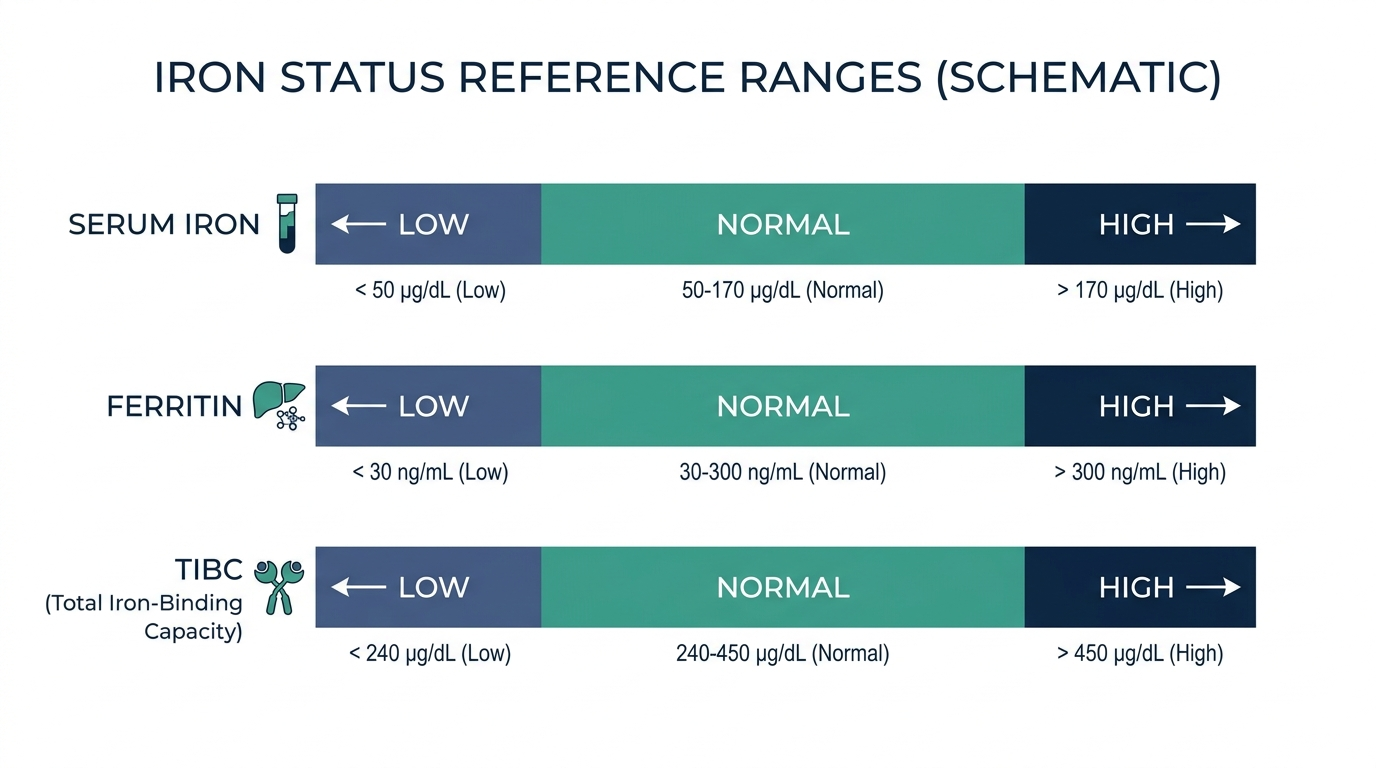
Iron on a blood test, more precisely called serum iron, measures the amount of iron circulating in the liquid part of your blood at that moment, nearly all of it bound to a transport protein called transferrin (MedlinePlus). It does not measure the iron stored in your tissues. A normal serum iron is roughly 59 to 158 mcg/dL for men and 37 to 145 mcg/dL for women (MedlinePlus).
Think of serum iron as the cash in your wallet right now, not the balance in your savings account. It rises and falls through the day and after meals, which is exactly why a lone serum iron value can be misleading and why clinicians almost never read it by itself.
What blood test shows iron levels?
No single test shows your full iron picture. A proper iron workup is usually a panel of tests read together, and knowing what is a blood test for iron versus a complete iron panel matters when you are trying to interpret your own results. The standard components are (MedlinePlus):
- Serum iron. The iron circulating in your blood right now.
- Ferritin. A protein that stores iron inside your cells, so it reflects your iron reserves (Cleveland Clinic).
- Total iron-binding capacity (TIBC). How much iron your blood could carry if every transport site were filled (Cleveland Clinic).
- Transferrin. The actual protein that ferries iron around the body (MedlinePlus).
- Transferrin saturation. The percentage of your transport capacity actually loaded with iron, calculated from serum iron and TIBC.
So when someone asks what blood test for iron levels they should request, the honest answer is rarely just one. If you want a real read on your iron status, ferritin plus serum iron, TIBC, and transferrin saturation together tell the story that any of them alone cannot.
What is a normal iron level on a blood test?
A normal serum iron is about 59 to 158 mcg/dL in men and 37 to 145 mcg/dL in women, though the exact cutoffs vary by lab and instrument (MedlinePlus). The other members of the panel have their own normal ranges, and they are worth knowing because they often shift in opposite directions:
- Ferritin: roughly 15 to 205 ng/mL for women and 30 to 566 ng/mL for men (Cleveland Clinic).
- TIBC: about 240 to 450 mcg/dL (Cleveland Clinic).
- Transferrin saturation: generally around 20 to 50 percent in men and 15 to 45 percent in women (MedlinePlus).
The practical takeaway: always compare your result to the reference range printed on your own report, because that is the range your specific lab calibrated. A number that looks alarming on a generic chart may be perfectly normal for the assay your blood actually ran on.
What are the symptoms of low and high iron?
Numbers on a page are easier to act on when you connect them to how you feel, and iron problems have fairly recognizable fingerprints at both ends.
Low iron, as it slides toward deficiency and then anemia, tends to announce itself gradually. The common signs include persistent fatigue and weakness, unusual paleness, cold hands and feet, shortness of breath on exertion, headaches, and a fast or pounding heartbeat as the body works harder to move oxygen. Iron deficiency has some oddly specific tells too: brittle or spoon-shaped nails, hair that sheds more than usual, a sore or smooth tongue, restless legs at night, and pica, a craving to chew ice or non-food items. Many people write these off as stress or poor sleep for months before a ferritin test connects the dots.
Iron overload works slowly and quietly, which is part of what makes hemochromatosis dangerous. Early symptoms are vague, often just fatigue and joint aches, classically in the knuckles of the first two fingers. As iron accumulates it can bring abdominal pain, low sex drive, and over years a bronze or gray tint to the skin, along with damage to the liver, heart, and pancreas that can surface as diabetes. Because both extremes can start with plain tiredness, the iron panel exists precisely to tell which direction, if any, your body is drifting.
What does a low iron level mean?
A low serum iron usually signals that your body is short on iron, most often from blood loss, low dietary intake, poor absorption, or pregnancy (MedlinePlus). The classic culprits include long-term bleeding in the digestive tract, heavy menstrual periods, and a gut that is not absorbing iron well.
But low serum iron on its own does not equal iron deficiency anemia. The pattern that confirms it is low serum iron paired with low ferritin and a high TIBC, because as iron drops, the body manufactures more transport protein to grab whatever iron it can find. That high-TIBC, low-ferritin combination is the textbook fingerprint of iron deficiency anemia, the most common form of anemia worldwide (Cleveland Clinic). Low iron can also point toward thalassemia or other anemias, which is why the panel is read as a set (MedlinePlus).
What does a high iron level mean?
A high serum iron suggests your body is carrying too much iron, and the standout cause is hemochromatosis, an inherited condition where the body absorbs and hoards more iron than it can safely use (MedlinePlus). Other causes of an elevated reading include repeated blood transfusions, hemolytic anemia, liver disease and hepatitis, lead poisoning, and acute iron poisoning from supplements (MedlinePlus).
With iron overload, the panel tilts the opposite way from deficiency. Serum iron is high, TIBC is low because the body stops making extra transport protein it does not need, and transferrin saturation climbs well above the normal ceiling. A transferrin saturation above 45 percent is a recognized trigger to investigate hemochromatosis further (StatPearls, NCBI). Excess iron is not harmless; left unchecked it deposits in the liver, heart, and pancreas, which is why a high result deserves follow-up rather than a shrug.
How do you actually raise low iron, and how fast?
If your panel shows genuine deficiency, treatment has two parts that matter equally: refill the tank, and find out why it drained. Refilling usually starts with diet and oral supplements. Iron comes in two dietary forms, and they are not equal. Heme iron, from meat, poultry, and fish, is absorbed far more readily than the non-heme iron in beans, lentils, spinach, and fortified grains. You can improve non-heme absorption by pairing those foods with a source of vitamin C, and blunt it by drinking coffee, tea, or a big dose of calcium at the same meal.
Oral iron supplements work, but they are famously hard on the gut, causing constipation, nausea, or stomach upset that leads many people to quit early. An approach a growing number of clinicians now favor is taking the supplement every other day rather than daily, which research suggests can improve how much iron the body actually absorbs and often eases the side effects. Whatever the schedule, refilling depleted stores takes months, not days, so patience is part of the plan.
The half that people skip is the cause. Iron deficiency in an adult, particularly a man or a postmenopausal woman, is not a diagnosis on its own, it is a symptom that warrants asking where the iron went, since slow bleeding in the digestive tract is a frequent and important culprit. When oral iron fails, is not tolerated, or cannot keep up with ongoing loss, intravenous iron is the next step. Chasing the number without chasing the source is the classic mistake.
Why is iron read together with ferritin and TIBC?
Iron is read alongside ferritin and TIBC because serum iron alone is too jumpy to trust, and the combination is what reveals whether you are deficient, overloaded, or just inflamed. Serum iron tells you what is circulating, ferritin tells you what is stored, and TIBC tells you how hungry your blood is for more iron (MedlinePlus). Read together they form a pattern that no single number can fake.
A simplified map of how the pieces line up:
- Low iron, low ferritin, high TIBC: classic iron deficiency anemia.
- High iron, high ferritin, low TIBC: points toward iron overload such as hemochromatosis.
- Low iron, normal or high ferritin, low TIBC: often anemia of chronic disease, where inflammation locks iron away rather than depleting it.
That third row is the one that catches people out. In chronic inflammation the serum iron can read low, which looks like deficiency, but ferritin is normal or even high because ferritin doubles as an inflammation marker. Treating that picture with iron supplements would be the wrong move, and it is exactly why a clinician will not act on a serum iron number in isolation.
The insider catch: why your iron number swings, and why fasting morning blood matters
Here is the detail that rarely makes it into the patient handout. Serum iron is one of the most volatile numbers on your entire panel. It can swing significantly within a single day, rising after an iron-rich meal or an iron tablet and drifting through normal circadian cycles, which is why providers often want the draw done in the morning after fasting (MedlinePlus).
This volatility is not trivial. A study of biological variability found that even transferrin saturation, which is derived from serum iron, fluctuates so much visit to visit that a single measurement is a shaky basis for screening, and fasting did not reliably tame the noise (PMC). The practical lesson for you is twofold. First, do not over-interpret one borderline serum iron, especially if you took a supplement or ate a steak the night before. Second, this jumpiness is the very reason ferritin earns its place as the workhorse of iron testing. Ferritin reflects your stored reserves and is far steadier, so a low ferritin is usually a more reliable early sign that your iron tank is running down than serum iron is. If you only get one iron test, ferritin is often the more informative one.
When should you retest, and what does a moving iron panel tell you?
Iron is a marker you follow over time, not a one-and-done reading, and knowing when to recheck keeps you from stopping treatment too early or too late. After starting iron for deficiency, a reasonable rhythm is to look at the response over a couple of months rather than a couple of weeks, because stored iron rebuilds slowly. The blood count often improves before the stores do, which is the trap: your energy and hemoglobin can recover while ferritin, the reserve, is still low.
Ferritin is the number to track, precisely because it reflects those reserves and moves more steadily than serum iron. A ferritin that is climbing over successive tests tells you the tank is refilling, and most clinicians aim to keep treating until ferritin is comfortably restored, not merely back across the low-end line, then continue a while longer to bank a reserve. Stopping the moment the anemia resolves is why deficiency so often comes back.
At the other end, if the concern is overload, transferrin saturation and ferritin are the pair used to monitor, and a saturation that stays above the mid-forties percent keeps hemochromatosis on the table for further workup (StatPearls, NCBI). Either way, the value of the iron panel is in the trend. One draw sets the scene, but it is the direction across several draws, read against how you feel, that tells you whether the plan is working.
Frequently asked questions
What blood test is for iron levels?
There is no single iron test. A full iron workup usually combines serum iron, ferritin, total iron-binding capacity (TIBC), transferrin, and transferrin saturation, read together to tell whether you are deficient or overloaded (MedlinePlus). Ferritin is often the most useful single marker because it reflects your stored iron.
What is the difference between serum iron and ferritin?
Serum iron is the iron circulating in your blood right now, while ferritin is a protein that stores iron inside your cells and reflects your reserves (Cleveland Clinic). Serum iron fluctuates through the day, but ferritin is steadier, so a low ferritin is usually a more reliable sign of early iron deficiency.
What is a normal iron level on a blood test?
Normal serum iron is generally about 59 to 158 mcg/dL in men and 37 to 145 mcg/dL in women, though ranges vary slightly by lab (MedlinePlus). Always compare your result to the reference range printed on your own report.
Why do I need to fast for an iron blood test?
Serum iron rises after meals and iron supplements and shifts through the day, so providers often draw the test in the morning after fasting to get a more comparable result (MedlinePlus). Follow the specific instructions your clinician or lab gives you.
What does it mean if my iron is high?
A high serum iron can point to iron overload, most notably hemochromatosis, but also to liver disease, repeated transfusions, hemolytic anemia, or iron poisoning (MedlinePlus). It is interpreted alongside ferritin and transferrin saturation, and a high result usually warrants follow-up.
Should I take an iron supplement before my iron test?
Ideally not right before the draw. Serum iron rises for hours after an iron tablet or an iron-rich meal, so taking a supplement the morning of the test can push the number up and give a falsely reassuring or confusing result (MedlinePlus). Many providers ask you to hold the supplement and draw the blood fasting in the morning. Follow the specific instructions your lab gives you.
Can I have normal iron but still be iron deficient?
Yes, and this is one of the most common misreads. Serum iron can sit in the normal range while your ferritin, the stored reserve, is already low, meaning your tank is running down even though the cash in your wallet looks fine (Cleveland Clinic). That is exactly why ferritin, not serum iron, is usually the better single test for catching early deficiency.
Does inflammation affect my iron results?
It does, and it can be misleading. Ferritin doubles as an inflammation marker, so infection, injury, or chronic inflammatory disease can raise ferritin even when iron stores are low, masking a real deficiency. In that setting a low serum iron with a normal or high ferritin often reflects anemia of chronic disease rather than simple deficiency, which is why the panel is always read as a set rather than one line at a time (MedlinePlus).
This article is for general educational purposes and is not medical advice. It cannot diagnose or treat you and does not replace your clinician. Always discuss your lab results and any health decisions with a qualified healthcare professional.
Vital Signs Today may earn a commission if you buy through links on this page. It does not affect our editorial assessments.