Medically reviewed by the Vital Signs Today Medical Review Board. Last updated 18 June 2026. Every range and figure below is drawn from the peer-reviewed and clinical sources listed at the end of this article.
Your blood work comes back, the doctor says your hemoglobin is fine, and you exhale. Then you spot a line you did not order on purpose: ferritin. Maybe it has a little flag next to it, maybe it does not. Here is what almost nobody explains at the visit. Ferritin is not a measure of how much iron is in your blood today. It is a measure of how much iron you have in the bank, and that distinction changes how you should read the whole report.
Ferritin is one of the most useful numbers on a panel and also one of the most misread. Get it right and you can catch an iron problem months before it turns into anemia, or spot a hidden inflammatory process you did not know you had.
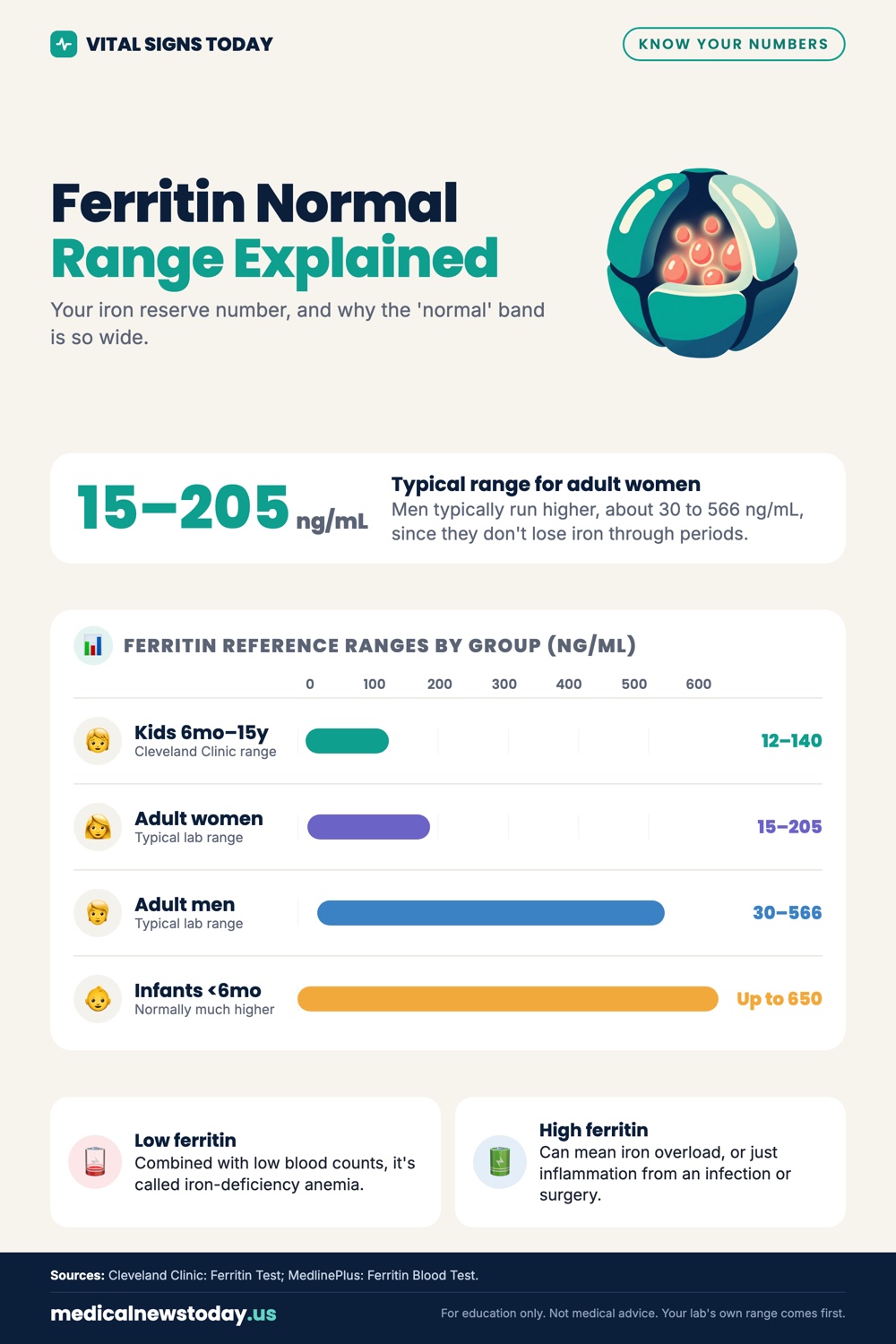
Infographic: Ferritin Normal Range Explained. Save it or share it.
What is ferritin in a blood test?
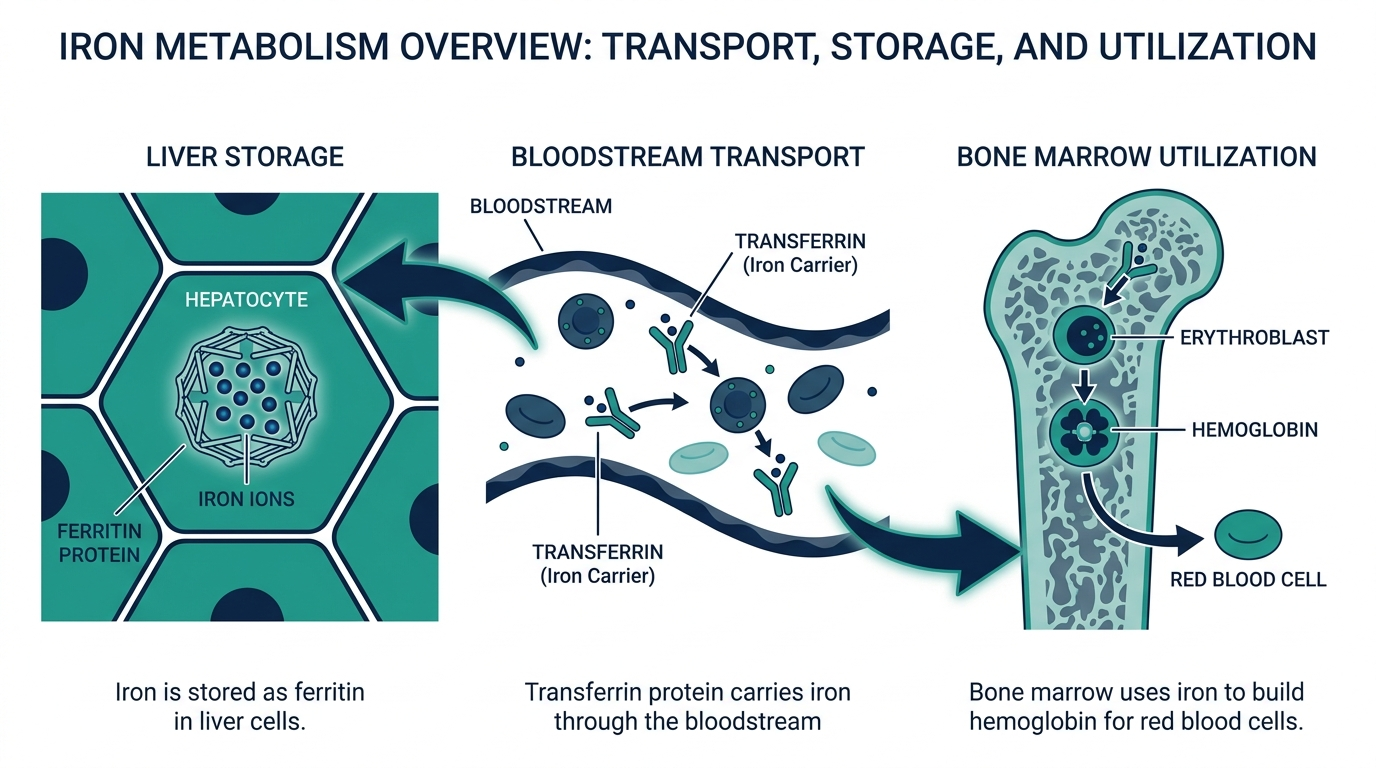
How iron is stored as ferritin in the liver, transported by transferrin, and used by bone marrow to build hemoglobin. Illustration: Vital Signs Today.
Ferritin is a protein that stores iron inside your cells, and a ferritin blood test measures how much of that stored iron you are carrying. Because the amount of ferritin in your blood tracks closely with the amount of iron held in your body, the test is the standard way to estimate your iron reserves (MedlinePlus). In plain terms, a ferritin blood test is a fuel-gauge reading for your body’s iron tank.
That is the core idea behind the question of what is ferritin in a blood test. Iron in your bloodstream right now is a small, fast-moving pool. Ferritin is the warehouse. A low ferritin means the warehouse is nearly empty even if today’s circulating iron looks acceptable, and a high ferritin usually means the warehouse is overstuffed, or that something else is inflating the number.
What does ferritin mean in a blood test, and what does it actually measure?
When people ask what does ferritin mean in a blood test, the honest answer is that it measures iron storage, not iron in transit. Ferritin is the protein your body uses to lock iron away in a safe, non-toxic form and release it on demand, mostly in the liver, spleen, and bone marrow (MedlinePlus). A small amount of that ferritin leaks into your blood in proportion to your total stores, and that is what the lab measures in nanograms per milliliter (ng/mL).
This is why ferritin is so valuable. Other iron tests, like serum iron, bounce around with what you ate that morning. Ferritin reflects the slow-moving reserve. You need iron to build healthy red blood cells that carry oxygen, so when the reserve runs low, you are running on the last of your supply before symptoms ever show up (MedlinePlus).
What is the ferritin blood test used for?
The ferritin blood test is ordered to find out whether you have too little or too much stored iron, and to monitor conditions that affect iron over time. Doctors reach for it most often to diagnose or rule out iron deficiency and iron-deficiency anemia, and to investigate iron overload conditions such as hemochromatosis (Cleveland Clinic).
You might be sent for a ferritin test if you are tired, pale, short of breath, getting frequent headaches, or losing hair, all classic low-iron signs. On the other end, it gets checked when joint pain, abdominal pain, or abnormal liver tests raise the possibility that iron is building up where it should not (Cleveland Clinic). It is also a routine monitoring tool for people on iron supplements, frequent blood donors, and patients with chronic kidney disease.
What is a normal ferritin level?
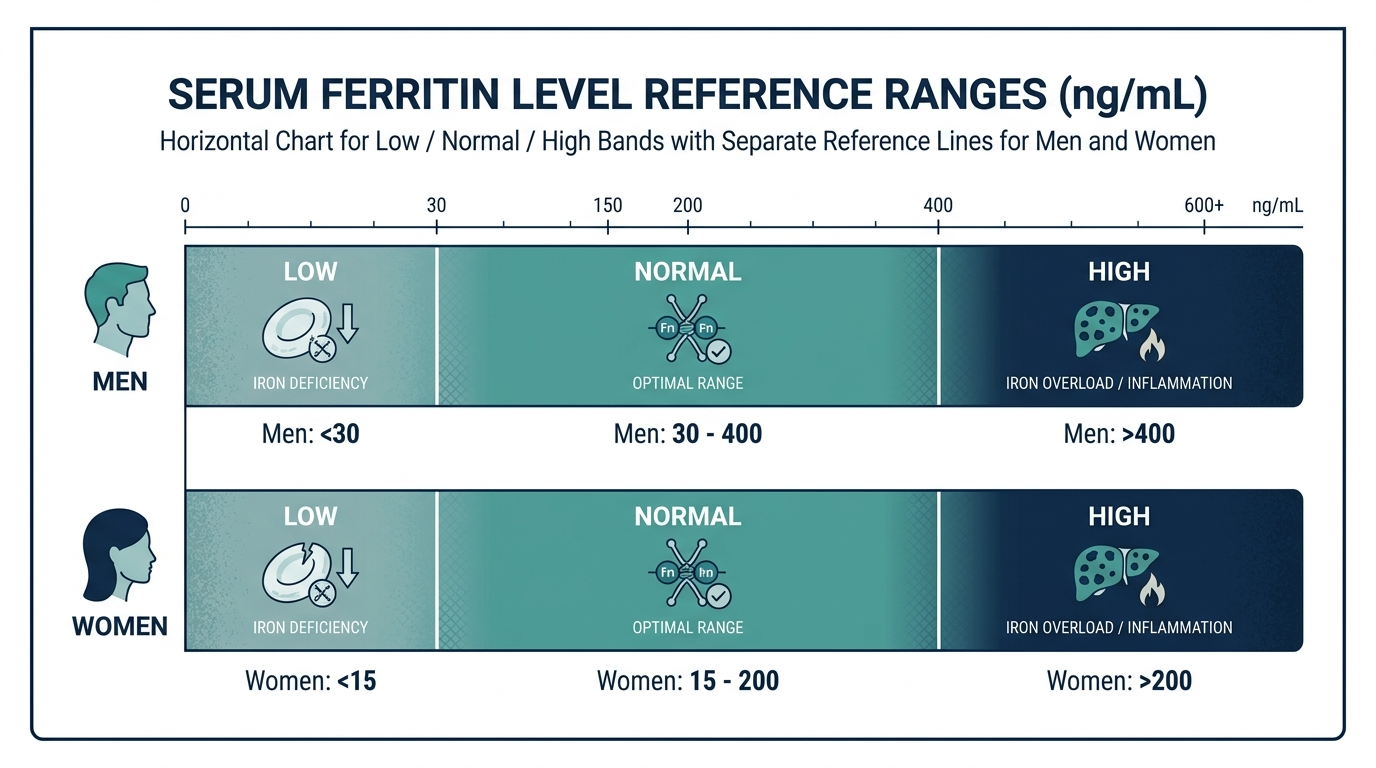
A normal ferritin level depends heavily on your sex, and the ranges are wider than most people expect. Cleveland Clinic lists a typical adult reference range of 15 to 205 ng/mL for women and 30 to 566 ng/mL for men (Cleveland Clinic). The exact cutoffs vary by laboratory and the instrument used, so the number that matters most is the reference range printed on your own report.
Here is the practical filter. A ferritin below roughly 30 ng/mL is a strong signal of low iron stores in most adults, and some labs and clinicians flag deficiency even higher than that when symptoms are present. A markedly high ferritin, well into the hundreds or thousands, is the point where clinicians start asking whether it is true iron overload or a sign of inflammation. The wide normal range is exactly why people get falsely reassured: a result can sit inside the reference band and still be wrong for you.
Optimal ferritin versus the standard reference range
The reference range on your report tells you where most of the tested population falls. It does not tell you where you feel your best. This gap matters most at the low end. The World Health Organization treats a ferritin under 15 ng/mL as outright iron deficiency in adults, and under 30 ng/mL when inflammation is present, yet plenty of people with a ferritin in the 15 to 40 ng/mL band already feel the classic low-iron symptoms of fatigue, brain fog, breathlessness on stairs, and hair shedding. Several clinical situations use higher working targets. Iron researchers often want ferritin comfortably above 30 ng/mL before they call stores adequate, and neurology guidelines for restless legs syndrome push for a ferritin above roughly 50 to 75 ng/mL because low iron in the brain drives the symptoms.
The practical read: treat the bottom quarter of the normal band as a yellow light rather than an all-clear, especially if you have symptoms. Labs vary in both their assays and their printed cutoffs, so the reference band on your own paperwork is the one to argue from, not a number you read online.
How is a ferritin test done, and what can skew the result?
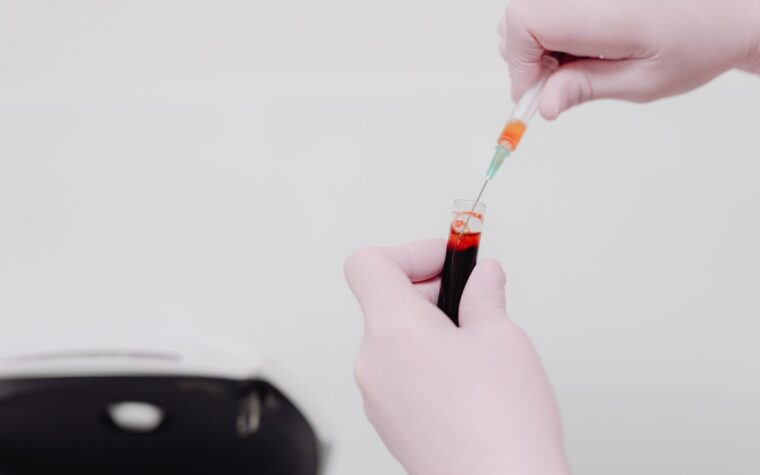
A ferritin test is an ordinary blood draw from a vein in your arm, often bundled into a wider iron panel or a routine metabolic workup. There is no special preparation for ferritin itself, and you do not strictly need to fast for it, although the lab may ask you to fast if serum iron or a glucose panel is being drawn at the same time. Results usually come back within a day or two at a hospital lab, or about a week with an at-home mail-in kit.
The number can be nudged in ways that have nothing to do with your true stores, and knowing them saves you from a false alarm:
Recent infection or illness. Because ferritin climbs with inflammation, a cold, a flare of an autoimmune condition, or any acute infection in the days before the draw can inflate the reading. If ferritin comes back high and you were recently unwell, the fix is simple: retest once you have fully recovered.
Hard exercise. A long run or an intense session in the day or two before the test can transiently raise ferritin as part of the body’s stress response.
Alcohol and liver stress. Heavy drinking and fatty liver both push ferritin up, sometimes markedly, without any true iron overload.
Iron supplements and infusions. Oral iron has a modest effect on ferritin, but a recent intravenous iron infusion can send it very high for weeks, so timing matters when you interpret the result.
Time of day makes little practical difference to ferritin, unlike serum iron, which swings noticeably from morning to evening. That stability is exactly why ferritin is the more reliable storage marker of the two.
What does a low ferritin mean?
A schematic view of low, normal, and high ferritin ranges and what they can signal. Illustration: Vital Signs Today.
A low ferritin means your iron stores are running down, and it is the earliest reliable sign of iron deficiency. When ferritin falls and your red blood cell counts drop alongside it, that is iron-deficiency anemia (Cleveland Clinic). The common causes are straightforward:
Blood loss, especially heavy menstrual periods or slow gastrointestinal bleeding, which is the leading cause of iron deficiency in adults (Cleveland Clinic).
Not enough iron in the diet, or trouble absorbing it, as in celiac disease or after some weight-loss surgeries.
Pregnancy, when iron demand climbs sharply to support the growing baby.
Frequent blood donation, which steadily drains the reserve.
The crucial insider point: ferritin drops before hemoglobin does. By the time you are formally anemic, your iron tank has often been near empty for a while. A ferritin that has quietly slid toward the bottom of the range, even with normal hemoglobin, is the first tripwire that you are heading for trouble. That is the version of iron deficiency that gets missed when a report just says everything is normal.
What to do if your ferritin is low
A low ferritin is not a diagnosis on its own, it is a prompt to find the leak and refill the tank. The first job is cause. In menstruating women, heavy periods and pregnancy are the usual explanation. In men and in women past menopause, an unexplained low ferritin should trigger a look at the gastrointestinal tract, because slow bleeding from an ulcer, polyp, or something more serious is a common and treatable source. Diet and absorption matter too, particularly in celiac disease, after weight-loss surgery, and in people who eat little heme iron.
On the refill side, the specifics beat generic advice:
Favor heme iron. The iron in red meat, poultry, and fish absorbs far better than the non-heme iron in beans, spinach, and fortified cereals.
Pair non-heme iron with vitamin C. A squeeze of citrus or a bell pepper alongside a plant source meaningfully improves absorption.
Separate iron from coffee, tea, and calcium. Tannins and calcium blunt absorption, so do not wash an iron-rich meal or a supplement down with tea or a large dairy serving.
If you supplement, consider alternate-day dosing. Recent absorption research suggests taking oral iron every other day, rather than several times a day, can raise total absorption and cut side effects, because a daily dose transiently blocks the next one.
Then retest. Ferritin responds slowly, so most clinicians recheck about 8 to 12 weeks after starting treatment rather than after a few days. If oral iron fails or is not tolerated, or if losses outpace what pills can replace, intravenous iron is the next step.
What does a high ferritin mean?
A high ferritin usually means you have excess stored iron, but it is not always that simple. The classic cause of a genuinely elevated ferritin is hemochromatosis, an inherited condition in which the body absorbs and stores too much iron over years (Cleveland Clinic). Left unchecked, that excess iron can damage the liver, heart, pancreas, and joints. Other causes of high ferritin include liver disease, heavy alcohol use, certain cancers, and chronic conditions like kidney disease and diabetes (Cleveland Clinic).
But here is the catch that trips up even experienced readers. Ferritin is an acute-phase reactant, which means it rises with inflammation regardless of how much iron you actually have. Infection, autoimmune disease, obesity, and tissue damage can all push ferritin up (MedlinePlus). So a high ferritin is not automatically an iron problem. To sort it out, clinicians pair it with transferrin saturation and sometimes genetic testing for hemochromatosis, rather than treating the ferritin number in isolation.
What to do if your ferritin is high
The first move with a high ferritin is almost always to repeat it when you are well and not exercising hard, because a single elevated reading during or just after an illness is often just inflammation. If it stays high, the key partner test is transferrin saturation. A high ferritin with a high transferrin saturation points toward true iron overload and warrants genetic testing for hereditary hemochromatosis, the most common inherited cause. A high ferritin with a normal or low transferrin saturation points instead toward inflammation, liver disease, or another chronic process, and the workup follows that trail rather than the iron one.
When iron overload is confirmed, the treatment is refreshingly low-tech: therapeutic phlebotomy, which is scheduled blood removal that forces the body to draw down its iron stores, often carried on for months until ferritin falls into a safe range. Cutting back on alcohol and treating any underlying liver problem help as well. The point worth repeating is that a high ferritin is a question, not an answer, and the answer comes from the tests you run alongside it.
How does ferritin fit with the rest of the iron panel?
Ferritin is the headline, but it reads best as part of a small cast. A full iron study usually pairs it with serum iron, total iron-binding capacity (TIBC), and transferrin saturation, and each answers a different question. Serum iron is the iron moving through your blood right now, a jumpy number that rises and falls with your last meal. TIBC and its cousin UIBC measure how much spare capacity your transport protein transferrin has, which tends to rise when iron is scarce, as if the body is putting out more empty trucks to catch whatever iron it can. Transferrin saturation ties them together as a percentage.
The patterns are what make the panel powerful. Classic iron deficiency shows low ferritin, low serum iron, high TIBC, and low transferrin saturation, the body clearly hunting for iron it does not have. Iron overload shows high ferritin with a high transferrin saturation. Anemia of chronic disease is the tricky middle: normal or high ferritin, low serum iron, and a low-to-normal TIBC, because inflammation is hoarding iron out of reach. Reading ferritin next to these three is how a clinician tells a genuine shortage from an inflammatory mirage.
The part most people never hear: a “normal” ferritin can hide real iron deficiency
This is the most important nuance in the whole topic, and it follows directly from ferritin being an acute-phase reactant. Because inflammation drives ferritin up, a person with both iron deficiency and an inflammatory condition can show a perfectly normal-looking ferritin while their iron stores are actually depleted. The inflammation masks the deficiency. This is the central trap in anemia of chronic disease, where ferritin reads normal or high even as the body cannot get iron where it needs it.
This matters because it cuts both ways for survival, not just for anemia. Large studies have linked high ferritin to higher death rates, but the signal often turns out to be inflammation wearing an iron costume. In community-dwelling older adults, men with high ferritin (194 to 598 ng/mL) and no major chronic disease had a 49 percent higher risk of all-cause death over about 7.7 years (PLOS ONE, English Longitudinal Study of Ageing). In people with prediabetes, elevated iron markers raised mortality risk further (PMC, prediabetes, iron and mortality). And in a large dialysis study across the USA, Japan, and Europe, the link between high ferritin and death weakened sharply once researchers accounted for inflammation and malnutrition, suggesting the ferritin was largely a mirror of those problems rather than the cause (PMC, ferritin and mortality in dialysis).
The takeaway for an ordinary reader: do not interpret a ferritin number alone. A low ferritin is a clean, trustworthy signal of low iron. A normal or high ferritin needs context, because inflammation can both fake adequacy and inflate the number. One cheap test, read with a little skepticism, tells you far more than one read at face value.
Two quick scenarios that show why context wins
Picture a 34-year-old woman with heavy periods who feels wiped out climbing a single flight of stairs. Her hemoglobin comes back normal, so the visit ends with a shrug. Her ferritin, had anyone flagged it, is 16 ng/mL. That is technically in range on her report and clearly low enough to explain months of exhaustion. Iron replacement and a look at the heavy bleeding, not reassurance, is what she needed.
Now picture a 52-year-old man with vague joint aches and a ferritin of 780 ng/mL. Rather than assume inflammation, his clinician checks transferrin saturation, finds it high, and orders genetic testing that confirms hereditary hemochromatosis. Caught here, regular phlebotomy protects his liver, heart, and joints for decades. Same test, opposite directions, and in both cases the number only made sense in context.
A ferritin blood test measures the level of ferritin, an iron-storage protein, in your blood, which reflects how much iron your body has in reserve (MedlinePlus). It is the standard way to check for iron deficiency or iron overload.
What is a normal ferritin level?
Normal ferritin is generally about 15 to 205 ng/mL for women and 30 to 566 ng/mL for men, though ranges vary by lab and instrument (Cleveland Clinic). Always compare your result to the reference range on your own report.
Can ferritin be normal but I still have iron deficiency?
Yes. Ferritin rises with inflammation because it is an acute-phase reactant, so an inflammatory condition can push your ferritin into the normal range even when your iron stores are actually low (MedlinePlus). Clinicians use additional tests like transferrin saturation to clarify.
What does a high ferritin level mean?
A high ferritin can mean excess stored iron, as in hemochromatosis, but it is also commonly raised by inflammation, infection, liver disease, alcohol use, and some cancers (Cleveland Clinic). It is interpreted alongside other iron tests rather than on its own.
Should I worry about a low ferritin?
A low ferritin is the earliest reliable sign of iron deficiency and is worth addressing, since it often appears before anemia and before symptoms (Cleveland Clinic). Your clinician will look for the cause, often blood loss or low dietary iron, and may recommend iron supplementation.
Do I need to fast for a ferritin test?
Not for ferritin itself. Ferritin is stable enough that you can have it drawn without fasting. You may still be asked to fast if the same draw includes serum iron, glucose, or a lipid panel, so follow the specific instructions on your lab order.
How can I raise my ferritin quickly?
There is no overnight fix, because ferritin reflects a slow-moving reserve. Consistent oral iron, ideally taken with vitamin C and away from tea, coffee, and calcium, usually moves the number over 8 to 12 weeks. Intravenous iron works faster and is used when oral iron fails, is not tolerated, or cannot keep up with ongoing losses. Any plan should be guided by a clinician who has found the cause of the low iron.
What ferritin level is considered dangerously high?
There is no single cutoff, but ferritin running into the many hundreds or thousands of ng/mL prompts a serious look for iron overload or a strong inflammatory process. Very high ferritin, especially with a high transferrin saturation, raises concern for organ damage from excess iron and needs prompt evaluation rather than watchful waiting.
This article is for general educational purposes and is not medical advice. It cannot diagnose or treat you and does not replace your clinician. Always discuss your lab results and any health decisions with a qualified healthcare professional.
Vital Signs Today may earn a commission if you buy through links on this page. It does not affect our editorial assessments.
Share
VST
VST Editorial Board
The Vital Signs Today Editorial Board is our team of health journalists, science writers, and editors covering metabolic health, biomarkers, GLP-1 medications, and longevity. Every article is reviewed against peer-reviewed research and authoritative sources such as the NIH, FDA, and CDC. We are reporters, not your physician; our content is for information only and is not medical advice.