Ferritin is the protein that stores iron in your body, and a blood ferritin test is the single best snapshot of how much iron you have in reserve. The catch is that “normal” depends heavily on your age and your sex. A level that is perfectly healthy for a 40 year old man can signal a problem in a young woman. This guide gives you real, cited reference ranges by age and sex, then explains how to read your own result.
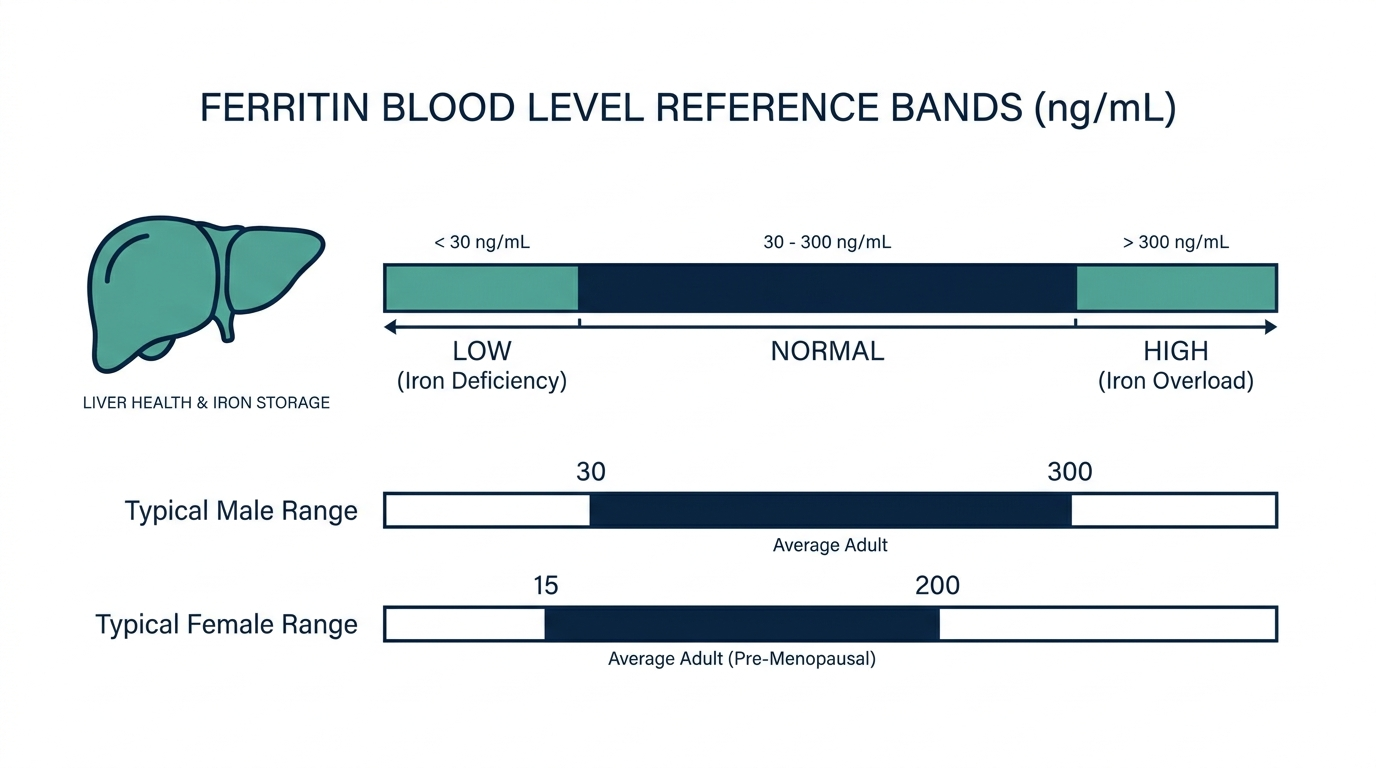
- In most US labs, a normal ferritin level is roughly 30 to 566 ng/mL for adult men and 15 to 205 ng/mL for adult women, with children aged 6 months to 15 years sitting at 12 to 140 ng/mL (Cleveland Clinic).
- Ferritin reference ranges shift with age and sex because menstruation, pregnancy, and growth all change how much iron the body stores, which is why men typically run far higher than premenopausal women.
- The World Health Organization defines iron deficiency as a ferritin below 15 ng/mL in healthy adults, raised to below 30 ng/mL when inflammation is present, since infection or illness can falsely inflate the number.
Part of our Iron Studies guide.
Ferritin is the best snapshot of your iron reserves, so what does yours actually look like right now? One at-home Superpower draw checks 100+ biomarkers, physician-reviewed.
What is a normal ferritin level?
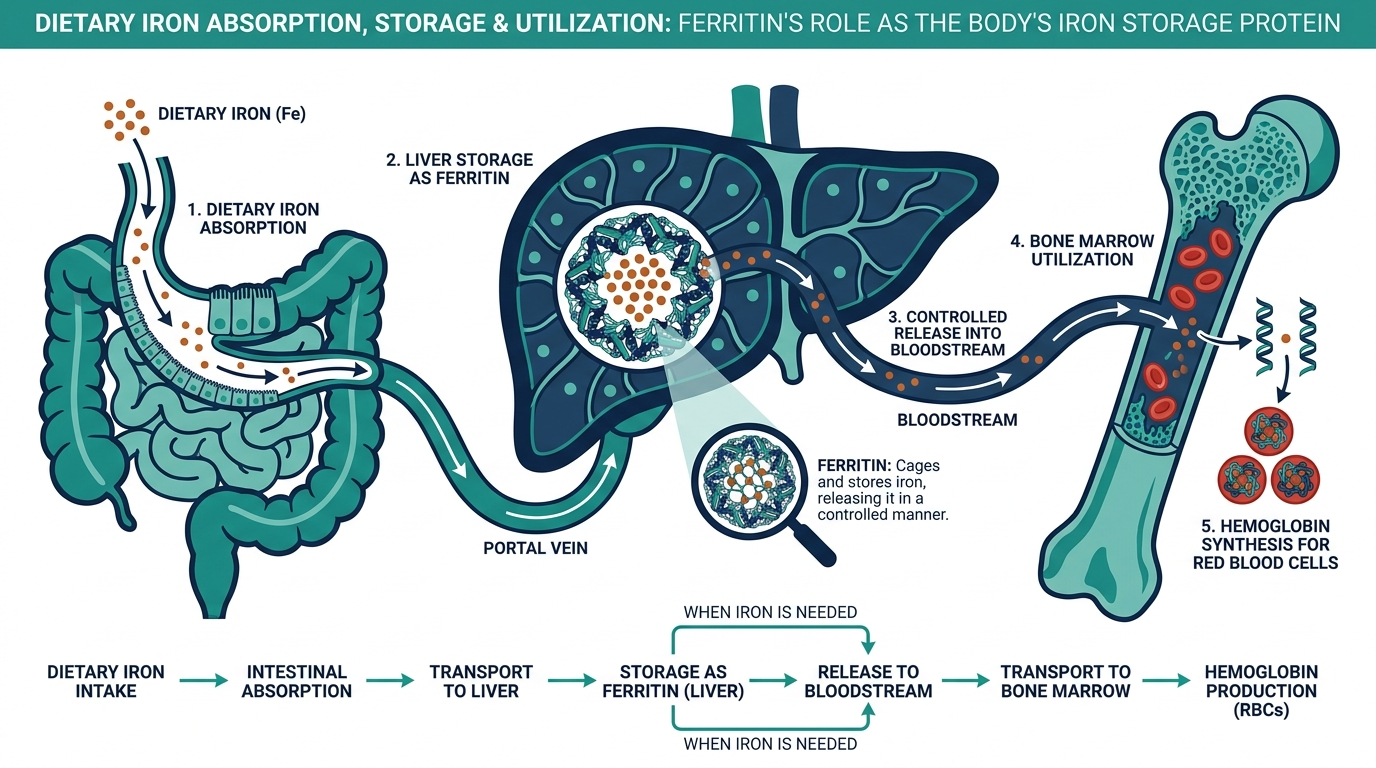
For most healthy adults, a normal serum ferritin is about 30 to 566 ng/mL in men and 15 to 205 ng/mL in women, according to the Cleveland Clinic. The single most useful threshold is on the low end: the World Health Organization defines iron deficiency as ferritin below 15 ng/mL in healthy adults. Below that, your iron stores are essentially empty even if a full blood count still looks normal.
Ferritin is measured in nanograms per milliliter (ng/mL), which is identical to micrograms per liter (mcg/L), so the two units are interchangeable on a lab report. The “normal” window is wide because ferritin doubles as an acute phase reactant, meaning it climbs during infection, inflammation, or liver stress regardless of true iron stores. That is why a single number is interpreted alongside your symptoms and other iron tests, never in isolation.
Standard reference range versus optimal range
Here is the nuance most charts leave out. The lab reference range and the range where people actually feel well are not the same thing. The reference floor of 15 ng/mL is a statistical cutoff for frank deficiency, not a target for feeling good. Plenty of people sit at a ferritin of 18 or 22, get told they are “normal,” and still battle fatigue, brain fog, and hair shedding. That is because the reference range is built to flag disease, not to define wellness.
Clinicians who chase symptoms rather than lab flags tend to aim higher. For hair regrowth, many dermatologists want ferritin comfortably above 30 to 50 ng/mL before they will call iron a non-issue. For restless legs syndrome, sleep specialists commonly treat until ferritin clears roughly 75 to 100 ng/mL, because low brain iron drives the symptom even when blood counts look fine. Endurance athletes are often kept above 40 to 50 ng/mL to protect training capacity. None of these are official disease cutoffs, and labs will not flag a “low-normal” number, so you have to read the raw value yourself rather than trust the green checkmark on the report.
The caveat cuts both ways. There is no evidence that pushing ferritin ever higher makes a healthy person healthier, and chasing a big number with supplements you do not need can tip you toward iron overload. Optimal for you depends on your symptoms, your sex, and the rest of your iron panel, not on a single aspirational figure.
Ferritin normal range by age and sex
The simplest way to actually get this done
Superpower is a full-body lab membership that runs 100+ biomarkers, has each result reviewed by a doctor, and tracks your numbers year over year (about $199/year). It is what we point readers to when they would rather get one clean, complete draw than chase single tests one at a time. Here is superpower reviewed in full.
Ferritin reference ranges by age and sex span from a high of up to 650 ng/mL in young infants down to a floor of about 12 ng/mL in older children, with adult men running roughly twice as high as women (Cleveland Clinic, MedlinePlus). The table below uses values published by the Cleveland Clinic, the most widely cited US patient reference for this test.
| Age and sex group | Normal ferritin (ng/mL) |
|---|---|
| Newborns | 25 to 200 |
| Infants 1 to 5 months | 50 to 200 |
| Infants up to 6 months (upper limit) | up to 650 |
| Children 6 months to 15 years | 12 to 140 |
| Adult women (15 years and older) | 15 to 205 |
| Adult men (15 years and older) | 30 to 566 |
Why the infant numbers look so high: babies are born with a large iron reserve from the mother, so ferritin peaks in the first months of life and then falls sharply as the child grows and uses that iron for an expanding blood volume (Cleveland Clinic). By the school years the level settles into the 12 to 140 ng/mL band and stays in a similar zone through adolescence. Always compare your own result against the reference range printed on your specific lab report, because cutoffs differ slightly by laboratory and analyzer.
How do you prepare for a ferritin test, and what can skew it?
A ferritin test is a simple blood draw, and unlike a glucose or lipid panel it does not require fasting. You can eat normally. The bigger issue is timing, because several everyday things move ferritin enough to change how your result reads.
Recent illness or injury. This is the single most common way a ferritin comes back misleadingly high. Because ferritin rises with any inflammation, a cold, a flare of a chronic condition, a recent surgery, or even a hard viral week can lift the number by tens or hundreds of points. If you are actively sick, it is usually worth waiting a couple of weeks and retesting when you are well, or pairing the draw with a C-reactive protein so your clinician can see whether inflammation is inflating the reading.
Iron supplements and infusions. A daily oral iron pill has a modest effect on serum ferritin, but an intravenous iron infusion can send it into the hundreds for weeks, which does not reflect your long-term stores. If you have had IV iron recently, tell whoever ordered the test. Many clinicians ask you to hold oral iron supplements for 24 to 48 hours before a draw so a single dose does not nudge the result.
Recent blood donation. Giving blood removes a meaningful chunk of iron, and regular donors often run low ferritin even with a perfectly good diet. A result taken a week after donating will read lower than your true baseline.
Time of day and other factors. Ferritin has only a mild daily rhythm, so the exact hour matters far less than it does for cortisol or testosterone. Heavy exercise in the day or two before the draw can transiently shift iron markers, and alcohol use, which raises ferritin, is worth mentioning if it is regular. None of this means the test is unreliable, only that context is everything when you read the number.
How does sex change the range?
Sex is the biggest single driver of ferritin after infancy: adult men have a normal ceiling of about 566 ng/mL versus roughly 205 ng/mL for women, and men’s typical floor (30 ng/mL) sits twice as high as women’s (15 ng/mL), per Cleveland Clinic. The reason is monthly blood loss. Menstruation removes iron every cycle, so premenopausal women keep smaller iron reserves and naturally run lower.
Three practical consequences follow:
- Premenopausal women: a ferritin in the teens or low 20s may still be borderline low even though it is technically “in range,” especially with fatigue or heavy periods.
- Postmenopausal women: once periods stop, iron stores rise and the healthy range starts to look more like men’s, so a previously normal low-ish number is less expected.
- Men: because men do not have a routine route of iron loss, a low ferritin in a man is treated as a red flag for hidden bleeding until proven otherwise.
What makes ferritin rise or fall with age?
Ferritin generally falls from its infant peak through childhood, then trends upward across adult life, with iron stores rising notably in women after menopause when monthly losses stop (Cleveland Clinic). Two forces explain almost all of the age pattern: how much iron the body is losing, and how much inflammation is present.
What pushes ferritin down with age:
- Growth spurts: rapid growth in infancy and adolescence drains stored iron into new red blood cells.
- Menstruation and pregnancy: reproductive years are the lowest-ferritin stretch of life for women.
- Slow gut bleeding: ulcers, polyps, and colon cancer become more common with age and quietly lower iron.
What pushes ferritin up with age:
- End of menstruation: postmenopausal women accumulate iron.
- Chronic inflammation: arthritis, fatty liver, diabetes, and kidney disease raise ferritin independent of true iron, which is why the WHO lifts the deficiency cutoff to 30 ng/mL when inflammation is present.
- Iron overload conditions: hereditary hemochromatosis can drive ferritin into the thousands over decades (Cleveland Clinic).
When is an out-of-range result a concern?
A ferritin below 15 ng/mL almost always means depleted iron stores and is the most actionable result, while a markedly high ferritin (well above the lab ceiling, sometimes into the hundreds or thousands) points to inflammation, liver disease, or iron overload that needs follow-up (WHO, Cleveland Clinic). The direction tells you which way to look.
Low ferritin (below the reference floor) usually reflects iron deficiency from inadequate diet, poor absorption, heavy periods, pregnancy, frequent blood donation, or chronic blood loss from the gut. Combined with a low blood count it confirms iron-deficiency anemia (MedlinePlus). In men and postmenopausal women, a low result warrants a search for a bleeding source.
High ferritin (above the reference ceiling) has more possible causes, which is why context matters. It can come from inflammation or infection, liver disease, alcohol use disorder, obesity, certain cancers, or hereditary hemochromatosis (Cleveland Clinic, MedlinePlus). Because inflammation alone can elevate it, doctors often repeat the test or add a C-reactive protein and transferrin saturation to separate true iron overload from a temporary spike. An out-of-range number is a signal to investigate, not a diagnosis on its own.
How does ferritin fit with the rest of your iron panel?
Ferritin is the storage number, but it is only one of four or five markers on a full iron workup, and reading them together is what separates a confident answer from a guess. A ferritin that looks fine can still hide a problem if the other markers disagree.
The companions you will usually see are serum iron (how much iron is circulating right now, which swings by the hour and even by the meal), total iron-binding capacity or TIBC (how many empty seats are available on the transport protein), UIBC (the unused portion of that capacity), and transferrin saturation (the percentage of transport seats actually filled). Transferrin saturation is the one to watch alongside ferritin: below roughly 20 percent points toward iron deficiency, while above about 45 percent raises the question of iron overload. When ferritin is low and transferrin saturation is also low, the story is simple and consistent with deficiency.
The tricky pattern is a normal or high ferritin paired with a low transferrin saturation. That combination is the fingerprint of inflammation masking true iron deficiency, where the acute phase reactant effect has propped ferritin up while the body actually cannot get iron where it needs to go. In that case a C-reactive protein helps confirm the inflammation, and some clinicians add a soluble transferrin receptor test, which is not fooled by inflammation. This is exactly why “my ferritin was normal” is not the end of the conversation if you still have symptoms.
What should you do about an abnormal result?
The next move depends entirely on which direction the number went, and on your sex and symptoms.
If ferritin is low, the goal is to refill stores and find out why they emptied. Dietary iron helps: heme iron from red meat, liver, and shellfish is absorbed far better than the non-heme iron in beans, spinach, and fortified cereal, and pairing plant iron with a source of vitamin C improves uptake while tea, coffee, and calcium taken at the same meal blunt it. Most people who are genuinely deficient need an oral iron supplement to catch up, because food alone rebuilds stores slowly. We cover the specifics in our guide on how to raise iron. Just as important, a low ferritin in a man or a postmenopausal woman should trigger a look for a bleeding source rather than a shrug, since the reserve did not drain for no reason.
If ferritin is high, the work is to sort a genuine iron problem from an inflammatory blip. Doctors typically repeat the test when you are well, add transferrin saturation and C-reactive protein, and consider liver enzymes. A persistently high ferritin with high transferrin saturation raises the question of hereditary hemochromatosis, which is treatable and matters to catch early because decades of iron loading can damage the liver, heart, and pancreas.
A realistic example. A 32-year-old woman with heavy periods feels wiped out by mid-afternoon and notices more hair in the drain. Her blood count is normal, so an earlier visit reassured her nothing was wrong. Her ferritin comes back at 16 ng/mL, technically “in range” but sitting right on the floor, with a transferrin saturation of 14 percent. That pattern, low-normal ferritin plus low saturation plus symptoms plus a clear route of iron loss, is textbook early iron deficiency. She starts iron with vitamin C, spaces it away from her morning coffee, and retests in about twelve weeks to confirm the stores are climbing.
How often should you retest?
Timing matters because ferritin moves slowly. If you start treating a low result, most clinicians recheck in about 8 to 12 weeks, which is long enough for oral iron to show up in the storage number. Rushing a retest at three or four weeks often disappoints people because the reserve simply has not had time to refill, even when the treatment is working. Once you reach a comfortable level, an annual check is reasonable for anyone with a history of deficiency, heavy periods, a plant-based diet, frequent blood donation, or endurance training. For a high result under investigation, follow the interval your clinician sets, since that depends on the suspected cause.
Don’t just read about your health, track it.
A single result is a snapshot. Superpower re-tests 100+ markers over time so you can watch them move as you change sleep, food, and training.
Frequently asked questions
What ferritin level is dangerously low?
A ferritin below 15 ng/mL is considered iron deficient by the WHO, and levels in the single digits indicate severely depleted stores. Symptoms like fatigue, hair shedding, and shortness of breath often appear well before anemia shows on a blood count, so low ferritin alone deserves attention.
Is a ferritin of 200 normal?
For an adult man, 200 ng/mL is comfortably within the normal 30 to 566 range. For an adult woman it sits near the upper limit of about 205 ng/mL but is still typically in range. Interpretation depends on your sex and whether any inflammation is present, so confirm with your clinician.
Why is the normal range higher for men than women?
Men lack a routine route of iron loss, while menstruating women shed iron every cycle and keep smaller reserves. That is why the male normal range (30 to 566 ng/mL) sits roughly twice as high as the female range (15 to 205 ng/mL) per Cleveland Clinic data.
Does ferritin go up as you get older?
Generally yes in adulthood. Iron stores tend to rise across adult life, and women see a clear jump after menopause when monthly blood loss stops. Chronic inflammatory conditions that become more common with age, such as fatty liver and arthritis, also push ferritin upward.
Can ferritin be high without iron overload?
Yes. Ferritin is an acute phase reactant, so infection, inflammation, liver disease, obesity, and alcohol use can all raise it without true iron excess. That is why doctors add tests like transferrin saturation or C-reactive protein to tell genuine iron overload apart from an inflammatory spike.
What is a good ferritin level for hair loss?
There is no official cutoff, but many dermatologists want ferritin comfortably above 30 to 50 ng/mL before they will rule iron out as a driver of shedding. A number that is technically “in range” in the teens or low 20s can still be the reason hair is thinning, especially in menstruating women, which is why the raw value matters more than the normal or abnormal flag on the report.
Can I check ferritin at home?
Yes. Ferritin is included in most comprehensive at-home blood panels and in standalone iron kits, using either a finger-prick sample or a phlebotomist draw. The advantage of a broader panel is that you see ferritin alongside transferrin saturation and inflammatory markers, which is exactly the context you need to read it correctly rather than reacting to one isolated number.
Does exercise affect ferritin?
Regular endurance training tends to lower iron stores over time. Hard running in particular can break down red blood cells through repeated foot impact, and heavy sweating and gut losses add up, so distance runners and other endurance athletes frequently run low ferritin despite eating well. Because low iron quietly caps aerobic capacity, many sports physicians keep athletes above 40 to 50 ng/mL rather than at the lab floor.
How long does it take to raise ferritin?
Slower than most people expect. With consistent oral iron, the storage number usually climbs meaningfully over 8 to 12 weeks, and fully restoring a depleted reserve can take several months. This is why a retest done too early can look discouraging even when the treatment is working, and why sticking with the plan matters more than switching supplements.
Sources
- Cleveland Clinic, Ferritin Test: Levels and Test Results
- MedlinePlus, Ferritin Blood Test
- WHO, Guideline on Use of Ferritin Concentrations to Assess Iron Status (cut-off values)
- PubMed, Establishment of reference ranges for ferritin in neonates, infants, children and adolescents
This article is for general educational purposes and is not medical advice. It cannot diagnose or treat you and does not replace your clinician. Always discuss your lab results and any health decisions with a qualified healthcare professional.
Vital Signs Today may earn a commission if you buy through links on this page. It does not affect our editorial assessments.