- Low cholesterol on a blood test usually means a total cholesterol under about 116 to 120 mg/dL or an LDL under roughly 40 to 50 mg/dL, a state doctors call hypocholesterolemia (Cleveland Clinic; StatPearls).
- Most low cholesterol comes from a treatable secondary cause such as statin therapy, an overactive thyroid, liver disease, or malnutrition rather than from a rare inherited disorder (Merck Manual; StatPearls).
- A low cholesterol number is often harmless and causes no symptoms, but very low or unexplained results should be checked by a clinician to rule out an underlying illness (Mayo Clinic; Cleveland Clinic).
Most people worry when cholesterol is high, so seeing a low number can be confusing. In many cases low cholesterol is nothing to fear, and for people on cholesterol medication it is the goal. But because cholesterol is a building block your body needs, an unexpectedly low result is worth understanding. Here is what the number means, what drives it down, and when it deserves a closer look.
Part of our Lipid Panel guide.
Low cholesterol can mean different things depending on what else is going on. See your full picture. One at-home Superpower draw checks 100+ biomarkers, physician-reviewed.
What does low cholesterol mean and what is the cutoff?
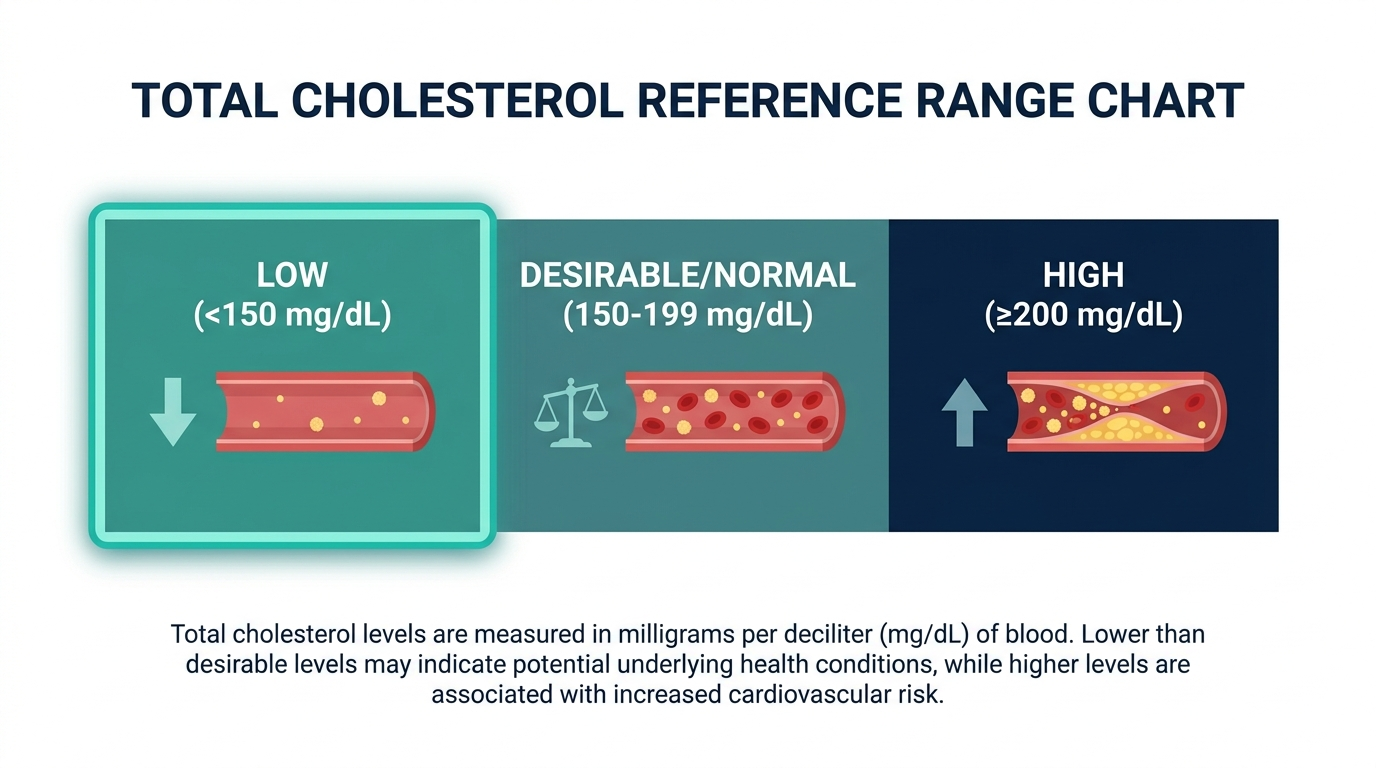
Low cholesterol, medically called hypocholesterolemia, generally means a total cholesterol below about 116 mg/dL, putting you lower than more than 9 out of 10 people (Cleveland Clinic). There is no single universal cutoff. Many clinicians and researchers define hypolipidemia as a total cholesterol under 120 mg/dL or an LDL (“bad” cholesterol) under 50 mg/dL, with LDL considered very low under 40 mg/dL (StatPearls).
It helps to know which number is low, because they mean different things:
- Total cholesterol: the sum of all cholesterol in your blood. A reading under about 120 mg/dL is generally called low.
- LDL cholesterol: the type that drives plaque buildup. Lower is usually better for the heart, which is why statins push it down on purpose.
- HDL cholesterol: the protective type. Here, low is a concern. An HDL under 40 mg/dL in men or under 50 mg/dL in women is a recognized cardiovascular risk factor (American Heart Association).
So a low LDL with normal HDL is often a healthy or treatment-driven picture, while a low HDL is the version of “low cholesterol” you actually want to raise.

What causes low cholesterol?
Most low cholesterol comes from a secondary cause, meaning another condition or medication is lowering it, and these are far more common than inherited causes (Merck Manual). The single most frequent reason in adults is intended treatment with statins or other lipid-lowering drugs (StatPearls).
Common drivers include:
- Statins and other lipid-lowering medicines: these are designed to lower LDL and are the leading reason for a low result.
- Overactive thyroid (hyperthyroidism): speeds metabolism and can pull cholesterol down (Cleveland Clinic).
- Liver disease: the liver makes most of your cholesterol, so significant liver damage lowers production.
- Malnutrition or malabsorption: conditions such as celiac disease, or simply not eating enough, reduce the raw materials.
- Serious acute illness: infection, inflammation, and some cancers such as leukemia can temporarily lower levels.
- Rare genetic conditions: abetalipoproteinemia and hypobetalipoproteinemia run in families and can cause very low lifelong levels (Cleveland Clinic).
What are the symptoms, or is it silent?
Low cholesterol itself is usually silent and produces no symptoms at all, which is why it is almost always discovered on a routine blood test rather than because a person feels unwell (Cleveland Clinic). When symptoms do appear, they typically come from the underlying cause, not from the low cholesterol number itself.
For example, an overactive thyroid may bring weight loss, a racing heart, and anxiety; malabsorption may cause diarrhea and weight loss; and rare inherited forms can cause fatty, foul-smelling stools, poor muscle control, and problems with growth in children (Cleveland Clinic; MedlinePlus). If you have a low result alongside any of these patterns, the symptoms are the clue worth chasing, not the cholesterol value on its own.

When is low cholesterol dangerous?
For most people, very low cholesterol does not cause harm, and it is often unclear whether low cholesterol causes a health problem or simply reflects one that is already present (Mayo Clinic). The danger usually lies in the underlying condition, such as liver disease or an undiagnosed illness, rather than in the number.
Some research has linked very low cholesterol to higher rates of certain conditions, including a possible association with hemorrhagic (bleeding) stroke and with depression and anxiety, but these links are associations and do not prove that low cholesterol is the cause (Mayo Clinic; Healthline). A separate and clearer concern is low HDL: an HDL under 40 mg/dL in men or 50 mg/dL in women predicts higher cardiovascular risk even when LDL is well controlled (American Heart Association). Pregnancy is one situation where unexplained very low cholesterol deserves prompt attention because of possible effects on the developing baby.
What should you do next and when should you see a doctor?
The first step is simple: talk to the clinician who ordered the test, because a single low value rarely tells the whole story and may just need rechecking (Cleveland Clinic). If you take a statin, a low LDL is usually expected and a sign the medicine is working, so do not stop it on your own.
See a doctor sooner rather than later if your low cholesterol is new and unexplained, if it is very low (for instance total cholesterol well under 100 mg/dL), or if it comes with weight loss, diarrhea, fatigue, or other symptoms. Your clinician may repeat the lipid panel after fasting, check thyroid and liver function, review your medications and diet, and screen for malabsorption. In the rare case of a suspected inherited disorder, especially in a child with poor growth, referral to a specialist is appropriate.

Insider nuance: low LDL is usually good news, low HDL is the real warning
The most useful thing to understand is that “low cholesterol” is not one finding. A low LDL with a healthy HDL is generally a favorable, heart-protective result and is exactly what cholesterol treatment aims for (StatPearls). What clinicians actually watch with concern is a low HDL, because protective HDL helps clear cholesterol from arteries, and an HDL of 60 mg/dL or above is considered protective against heart disease (American Heart Association).
So before assuming a low cholesterol result is a problem, look at which number is low. A patient proud of a total cholesterol of 150 mg/dL might actually have a worrying HDL of 35 mg/dL hidden inside that total. Reading the full lipid panel, not just the headline number, is what separates reassuring results from ones that need action.
Low cholesterol reference ranges at a glance
There is no single official threshold that flags cholesterol as “too low,” which is why the same result can be read two different ways by two different labs. Clinicians generally anchor on total cholesterol and LDL, but they interpret those numbers in the context of your age, sex, medications, and overall health. The table below summarizes the values commonly used to describe low, borderline, and desirable cholesterol in adults.
| Measure | Considered low | Typical desirable range | Notes |
|---|---|---|---|
| Total cholesterol | Under about 116 to 120 mg/dL | Under 200 mg/dL | A very low total is less than roughly 1 in 10 adults (Cleveland Clinic). |
| LDL (“bad”) cholesterol | Under 40 to 50 mg/dL | Under 100 mg/dL | Under 40 mg/dL is often called very low LDL (StatPearls). |
| HDL (“good”) cholesterol | Under 40 mg/dL (men) or 50 mg/dL (women) | 40 to 60 mg/dL or higher | Here low is unfavorable, not reassuring (American Heart Association). |
| Triglycerides | Under about 40 to 50 mg/dL | Under 150 mg/dL | Very low triglycerides are usually harmless. |
Notice that the word “low” carries opposite meanings depending on the line. A low LDL is generally what treatment aims for, while a low HDL is the version worth correcting. Reference ranges also vary slightly between laboratories because each lab validates its own instruments, so the flag on your report reflects that specific lab’s cutoffs rather than a universal law. Ranges can also shift with age and sex, since HDL tends to run higher in women and cholesterol values naturally change across the lifespan.

The biology: why your body needs cholesterol at all
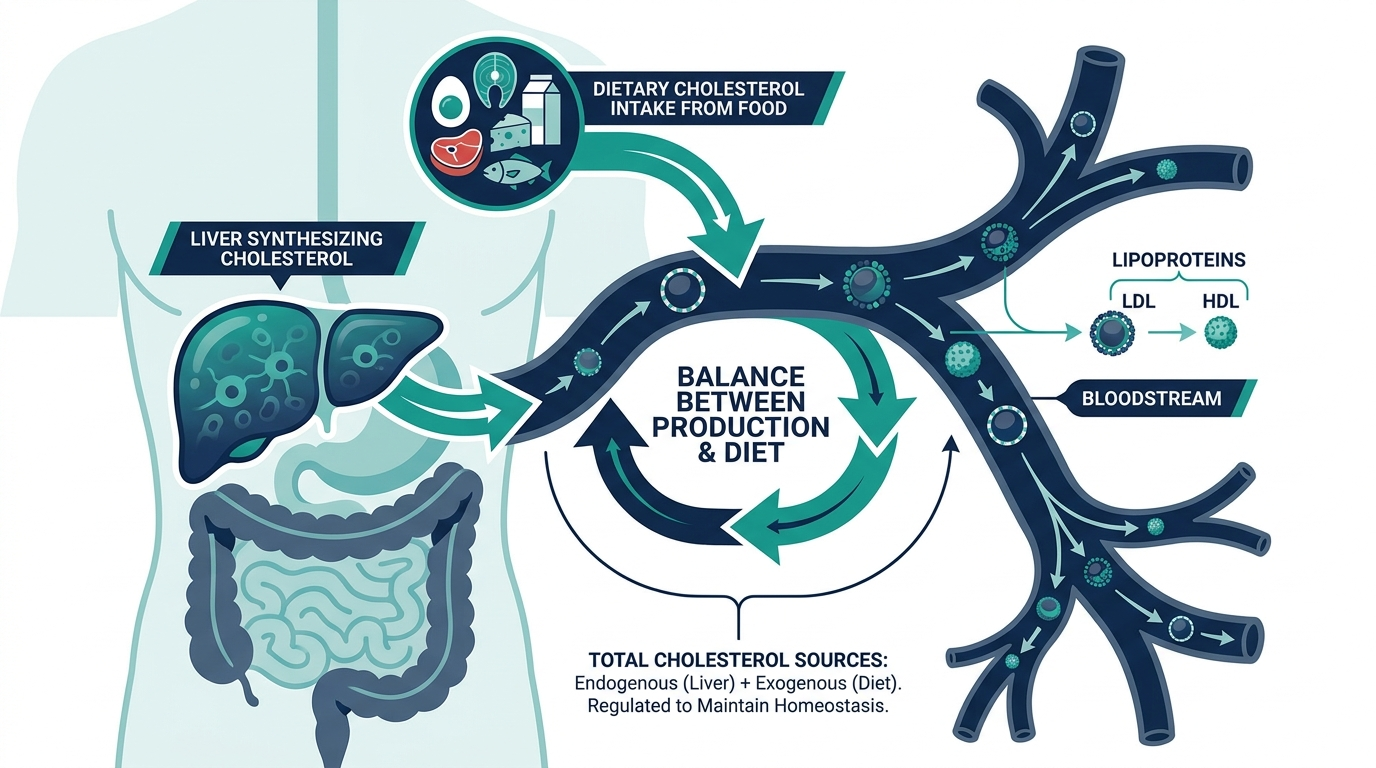
To understand why a low number can matter, it helps to know what cholesterol actually does. Cholesterol is a waxy, fat-like molecule found in every cell membrane in your body, and it is not simply a villain to be minimized. Your liver manufactures most of the cholesterol you carry, and the rest comes from food. From there, cholesterol becomes the raw material for several essential jobs.
- Cell membranes: cholesterol stiffens and stabilizes the outer wall of every cell, helping membranes stay fluid but intact.
- Hormones: your body uses cholesterol to build steroid hormones, including cortisol and the sex hormones estrogen and testosterone.
- Vitamin D: when sunlight hits your skin, a cholesterol-derived molecule is converted into vitamin D.
- Bile acids: the liver turns cholesterol into bile acids that help you digest and absorb dietary fat.
Because cholesterol does not dissolve in blood, it travels packaged inside particles called lipoproteins. LDL particles carry cholesterol out to the tissues, and when there is too much, they can deposit it in artery walls. HDL particles do the reverse, ferrying cholesterol back toward the liver for disposal. This is why LDL is nicknamed “bad” and HDL “good,” even though both are simply delivery vehicles. When cholesterol runs low, the question a clinician asks is whether your body is making less, absorbing less, or clearing more, because each points to a different cause.
What can skew a cholesterol result
Before treating a low reading as a fixed fact about your body, it is worth knowing that lipid panels are sensitive to timing and circumstances. A single number captures one moment, and several ordinary factors can push it around.
- Recent illness or infection: acute illness, surgery, and inflammation can temporarily lower cholesterol, so a result taken during or just after an illness may not reflect your baseline.
- Fasting status: many labs still prefer a 9 to 12 hour fast for triglycerides, though total and LDL cholesterol are less affected. A recent large meal can shift the numbers.
- Pregnancy: cholesterol normally changes across pregnancy, so values are interpreted differently in that context.
- Medications: statins, other lipid-lowering drugs, and thyroid medication all move cholesterol, and even some supplements can nudge it.
- Recent weight loss or crash dieting: rapid changes in eating can temporarily lower levels.
The practical takeaway is that one low value, especially if it is unexpected and you were recently unwell, often deserves a repeat test once you are back to baseline. A trend across two or three readings tells a far more reliable story than a single snapshot.
How low cholesterol fits into the full lipid panel
A cholesterol number never travels alone. It arrives as part of a lipid panel, and the surrounding values are what turn a bare number into a picture. Reading them together is exactly what a clinician does.
- Total cholesterol: the headline sum, useful for a quick overview but too blunt to interpret on its own.
- LDL cholesterol: the atherogenic fraction. A low LDL is generally protective and the target of therapy.
- HDL cholesterol: the protective fraction, where low is the concerning direction.
- Triglycerides: another fat that, when high, often accompanies metabolic problems.
- Non-HDL cholesterol: total minus HDL, a value many clinicians now watch closely.
Here is how they bring meaning to each other. If your total cholesterol is low mainly because LDL is low while HDL sits at a healthy 55 mg/dL, that is a reassuring, heart-friendly pattern. If instead the total is low because HDL has collapsed to 32 mg/dL, the low total is actually masking a risk factor. In other words, two people can share the same low total cholesterol and have opposite cardiovascular pictures. This is why doctors rarely act on the total alone and instead read the whole panel as a set of interlocking clues.
Sample interpretation scenarios
Numbers become far easier to grasp with concrete examples. The following scenarios show how the same low total cholesterol can mean very different things once you look at the surrounding values. These are illustrations of how clinicians reason, not personalized advice.
- Low total, low LDL, healthy HDL: a person on a statin has a total of 140 mg/dL, an LDL of 65 mg/dL, and an HDL of 58 mg/dL. This is a favorable, treatment-driven result and usually a sign the medication is doing its job.
- Low total, low HDL: a person has a total of 145 mg/dL but an HDL of only 33 mg/dL. Here the low total is misleading, because the protective HDL is the number that needs attention.
- New, unexplained low total with symptoms: someone not on any cholesterol medicine has a total that dropped from 195 to 120 mg/dL over a year, alongside unintended weight loss. This pattern is worth investigating for a thyroid, liver, or absorption problem.
- Stable lifelong low cholesterol: a person who has always had a low total, feels well, and has healthy relatives may simply carry a benign genetic tendency, though a clinician still confirms it.
The common thread is that the number by itself is neutral. Its meaning comes from the story around it: your medications, your symptoms, your trend over time, and the rest of the panel.
Common misconceptions about low cholesterol
Because most public health messaging focuses on lowering cholesterol, a low result often gets misread. A few misunderstandings are worth clearing up.
- “Lower is always better.” This is true for LDL in most cases but not for HDL, where low is a risk factor. It is also not automatically true when a low total reflects an underlying illness.
- “Low cholesterol means I can eat anything.” A low number does not license an unhealthy diet, because overall cardiovascular risk depends on many factors beyond a single value.
- “A low result on a statin means I should cut the dose.” A low LDL on a statin usually means the drug is working. Adjusting or stopping medication is a decision for your prescriber, not something to do based on the number alone.
- “Low cholesterol directly causes disease.” Research has found associations between very low cholesterol and certain conditions, but association is not causation, and in many cases the low number reflects an illness rather than causing one.
Keeping these distinctions straight is what turns a confusing lab flag into useful information. The single most valuable habit is to ask which cholesterol is low and why, rather than reacting to the word “low” on its own.
Questions people ask most about low cholesterol
The first question is usually whether low cholesterol is a good thing or a bad thing. The honest answer is that it depends entirely on which part of the panel is low. A low LDL, the so called bad cholesterol, is generally what treatment aims for and is often a sign that things are going well. A low HDL, the protective fraction, is the version that quietly raises cardiovascular risk. So low total cholesterol can be reassuring or concerning depending on whether the drop is coming from the LDL side or the HDL side, which is why the breakdown matters more than the single total.
People also ask whether they can raise low cholesterol by eating more of it. For most people the answer is that dietary cholesterol has a smaller effect than expected, because the liver makes the majority of the body’s cholesterol and adjusts its own output. When total cholesterol is unexpectedly low, the more useful question is usually why, since it can reflect an overactive thyroid, malabsorption, liver issues, or simply an inherited tendency, rather than something a change in diet alone will fix. Chasing the number with food misses the point when a treatable cause is behind it.
A third common question is whether a single low reading needs action. Often it does not on its own. Cholesterol can be nudged by a recent illness, a major weight change, or the conditions of the draw, so a lone low value with no symptoms is frequently rechecked rather than treated. What turns a low number into something worth investigating is either a symptom pattern that fits a specific cause, or a low HDL that persists across tests, or a very low value that appeared without explanation.
Low cholesterol across ages, sexes, and life stages
What counts as a meaningful low value shifts with who you are. Cholesterol naturally changes across the lifespan, and reference ranges vary by age and sex, so a value that looks low for a middle aged adult may be perfectly ordinary for a young, lean, active person. HDL in particular tends to run higher in women than in men, which is one reason the same total figure can carry a different meaning depending on sex. Reading your result against a range built for your age and sex, rather than a single universal cutoff, keeps you from worrying about a number that is normal for you.
Pregnancy is a stage that deserves its own note. Cholesterol normally rises through pregnancy because the growing baby needs it, so values are interpreted differently in that context. An unexpectedly very low cholesterol during pregnancy is one of the situations that warrants prompt attention rather than watchful waiting, because of possible effects on the developing baby. This is a case where the usual reassurance about low cholesterol does not simply carry over, and it is worth flagging to whoever is managing the pregnancy.
At the other end of life, older adults can see cholesterol drift downward for reasons that range from harmless to important. A gradual decline can accompany aging itself, but a new or unexplained drop in an older adult can sometimes reflect an underlying illness, poor nutrition, or a thyroid that has become overactive. The practical takeaway across all these groups is the same: a low cholesterol result is best read inside the frame of your age, sex, and life stage, with attention to whether it appeared suddenly or has simply always been where it is. That context often answers the question before any further testing is needed.
Curious where your cholesterol really sits?
Baseline cholesterol and 100+ biomarkers today and retest as life changes, all in one membership with physician review.
Frequently asked questions
Is low cholesterol good or bad?
It depends on which cholesterol is low. A low LDL is usually good and is the goal of statin therapy. A low HDL is unfavorable because HDL is protective. Very low total cholesterol without a clear reason should be checked by a doctor (Cleveland Clinic).
What number counts as low cholesterol?
Total cholesterol under about 116 to 120 mg/dL is generally considered low, and LDL under 40 to 50 mg/dL is low as well (Cleveland Clinic; StatPearls). There is no single universal cutoff, so your clinician interprets it alongside your health.
Can low cholesterol make you tired?
Low cholesterol itself rarely causes fatigue. Tiredness usually points to the underlying cause, such as an overactive thyroid, malnutrition, or liver disease, rather than to the low number on the test (Cleveland Clinic). Persistent fatigue with low cholesterol deserves evaluation.
Should I worry if my cholesterol is low on a statin?
Usually not. A low LDL on a statin is expected and means the medication is working as intended (StatPearls). Do not stop your statin on your own. If you feel unwell or the level seems very low, discuss it with your prescriber.
Can diet raise low cholesterol back to normal?
If low cholesterol comes from undereating or malabsorption, addressing nutrition can help. But when a treatable cause such as thyroid or liver disease is driving it, the priority is treating that condition (Merck Manual). Always confirm the cause with your clinician first.
Sources
- Cleveland Clinic, Hypocholesterolemia (Low Cholesterol): Causes and Treatment
- Cleveland Clinic, Cholesterol Numbers: What Do They Mean
- StatPearls (NCBI Bookshelf), Hypoalphalipoproteinemia and lipid thresholds
- Merck Manual Professional Edition, Hypolipidemia
- Mayo Clinic, Cholesterol level: Can it be too low?
- American Heart Association (Circulation), Measurement of Cholesterol
- Healthline, Hypocholesterolemia: Can Low Cholesterol Be Bad for You?
This article is for general educational purposes and is not medical advice. It cannot diagnose or treat you and does not replace your clinician. Always discuss your lab results and any health decisions with a qualified healthcare professional.
Related: compare the best at-home biomarker and blood tests.
Vital Signs Today may earn a commission if you buy through links on this page. It does not affect our editorial assessments.