
High cholesterol rarely causes symptoms, so most people only learn about it from a routine blood test. The good part is that this number is also one of the most responsive to change. Diet, movement, and, when needed, medication can move your LDL within weeks. This guide explains what the numbers mean and what actually works, with figures from the Cleveland Clinic and the American Heart Association.
- High cholesterol is generally defined as a total cholesterol of 200 mg/dL or higher, or an LDL (“bad” cholesterol) of 100 mg/dL or higher, according to the Cleveland Clinic.
- The most effective ways to lower LDL cholesterol are cutting saturated fat, eating 10 to 25 grams of soluble fiber daily, getting at least 150 minutes of weekly exercise, and taking a statin if your clinician prescribes one.
- Lifestyle changes can lower LDL cholesterol within 4 to 12 weeks, and a high-intensity statin can reduce LDL by 50% or more from baseline, per the 2018 AHA/ACC cholesterol guideline.
Part of our Lipid Panel guide.
High cholesterol rarely causes symptoms, so the only way to know yours is a real number, not a guess. One at-home Superpower draw checks 100+ biomarkers, physician-reviewed.
What counts as high cholesterol?
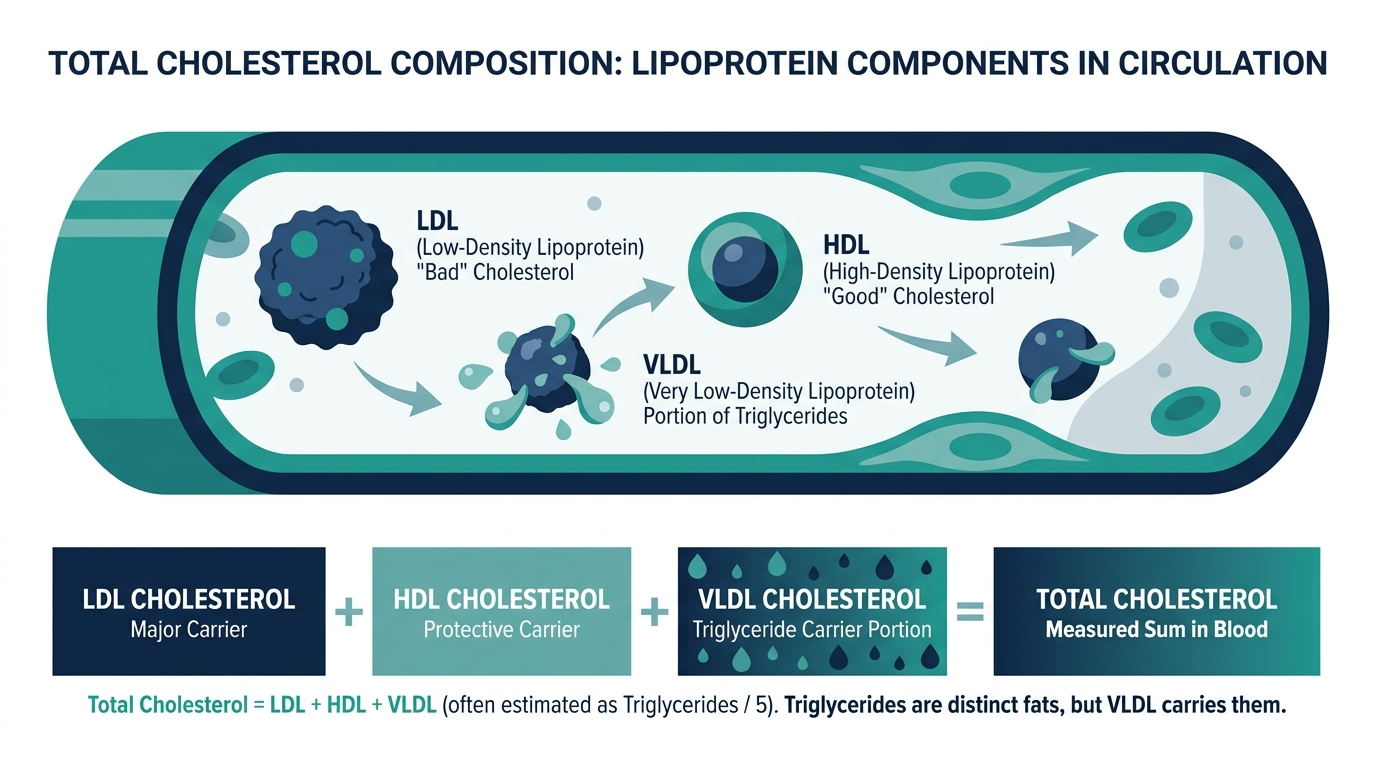
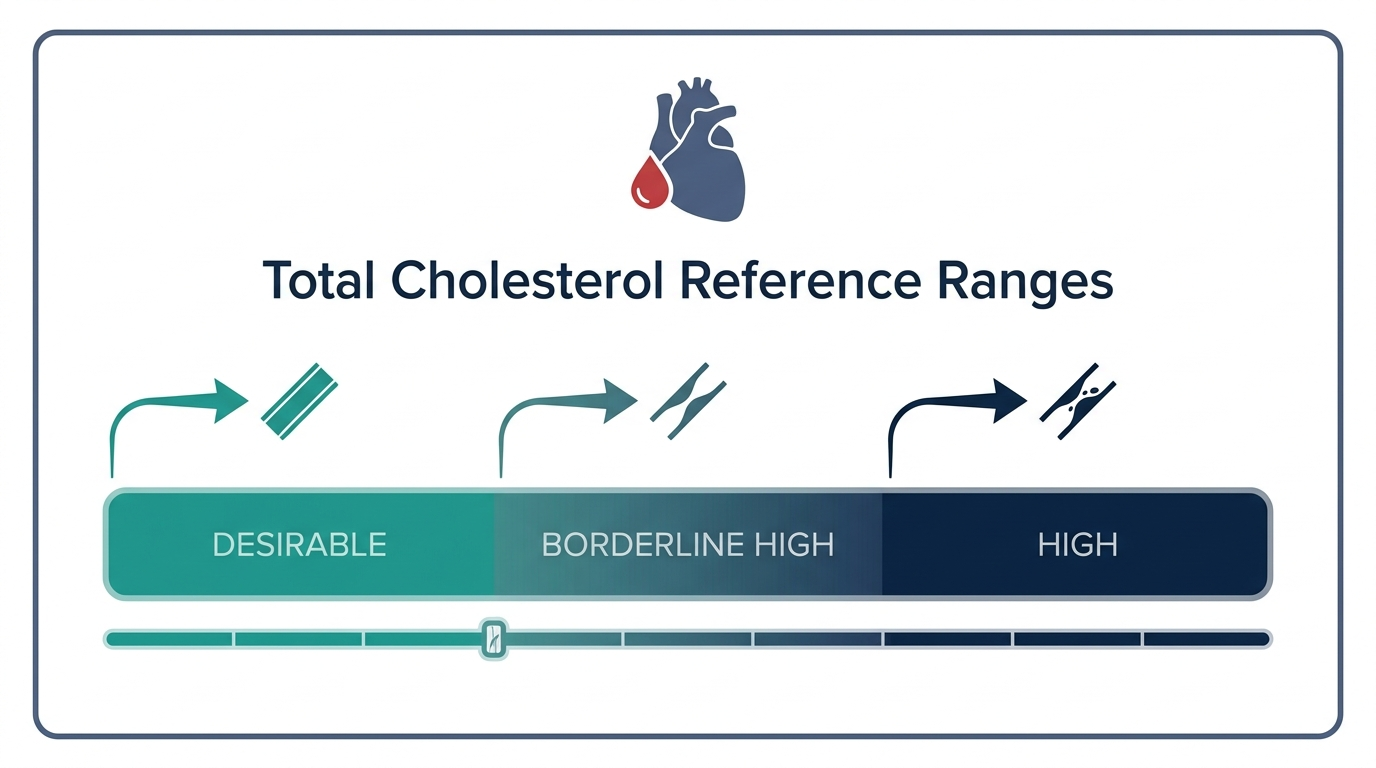
High cholesterol means a total cholesterol of 200 mg/dL or higher, or an LDL cholesterol of 100 mg/dL or higher, according to the Cleveland Clinic. LDL is the particle that builds plaque in your arteries, so it is the number clinicians watch most closely. A simple blood test called a lipid panel reports four values you should know.
- Total cholesterol: ideally below 200 mg/dL.
- LDL (“bad”) cholesterol: below 100 mg/dL is desirable; above 100 mg/dL raises cardiovascular risk.
- HDL (“good”) cholesterol: at least 60 mg/dL offers protection, and it should not fall below 40 mg/dL in men or 50 mg/dL in women.
- Triglycerides: a separate blood fat, best kept under 150 mg/dL.
HDL is the one value where higher is better, and it is also the only number with a sex-based difference. If your LDL or total cholesterol sits above these thresholds, the steps below are where to start.
What do the optimal numbers look like, not just the “normal” ones?
The simplest way to actually get this done
Superpower is a full-body lab membership that runs 100+ biomarkers, has each result reviewed by a doctor, and tracks your numbers year over year (about $199/year). It is what we point readers to when they would rather get one clean, complete draw than chase single tests one at a time. Here is superpower reviewed in full.
Standard lab reference ranges tell you whether you sit inside the population average, not whether you are in the range linked to the lowest cardiovascular risk. Those are not the same thing. A lab may leave your LDL unflagged at 115 mg/dL, yet most prevention cardiologists would still want it lower if you carry other risk factors. Here is how the everyday targets compare with the stricter ones used for higher-risk patients.
- LDL cholesterol: below 100 mg/dL is the general desirable line, but people with diabetes or existing heart disease are often pushed below 70 mg/dL, and the very highest-risk group below 55 mg/dL, per the AHA/ACC guideline.
- HDL cholesterol: 40 mg/dL or higher in men and 50 mg/dL or higher in women is the floor, with 60 mg/dL and above considered protective.
- Triglycerides: under 150 mg/dL is normal, but many clinicians treat under 100 mg/dL as ideal, especially alongside a large waistline or high blood sugar.
- Non-HDL cholesterol: your total cholesterol minus HDL, ideally under 130 mg/dL, and it captures every particle that can build plaque, not just LDL.
Reference ranges also vary from lab to lab, so a value near a cutoff can flip categories depending on where your blood was analyzed. That is one reason clinicians watch the trend across repeat panels rather than reacting to a single borderline reading.
Which numbers matter beyond the standard lipid panel?
A basic lipid panel is enough for most people, but two extra measurements explain why some patients with a normal LDL still have heart attacks. If your family history worries you, ask about these.
- ApoB: this counts the actual number of cholesterol-carrying particles in your blood. Two people can share the same LDL number while one has far more particles, and the higher particle count carries more risk. ApoB is increasingly used to settle those borderline cases.
- Lipoprotein(a), or Lp(a): a largely inherited particle that raises cardiovascular risk independently of LDL. It stays fairly stable across your life, so it usually only needs to be measured once. A high Lp(a) is a reason to be stricter with every other number you can control.
Neither marker sits on a routine panel by default, so you often have to request them. They matter most when heart disease runs in the family or when your LDL looks fine but your risk feels higher than the number suggests.
Why lower it?
Lowering LDL cholesterol directly lowers your risk of heart attack and stroke, and the relationship is close to one-for-one. As a rough guide, every 1% drop in LDL cholesterol produces roughly a 1% reduction in the risk of atherosclerotic cardiovascular disease, according to research summarizing the AHA/ACC cholesterol guideline. Over years, excess LDL drives the fatty plaque that narrows and stiffens arteries.
That is why high cholesterol is often called a “silent” condition. It usually produces no warning signs until a cardiac event occurs, so the lab number is your early signal. Guideline authors now emphasize starting healthy habits younger, because lifetime LDL exposure, not just your number today, shapes your risk. The encouraging part is that LDL responds quickly to change, which makes it one of the most controllable risk factors you have.
What causes high cholesterol in the first place?
Knowing the driver behind your number changes what you do about it. High LDL is rarely just one thing. For most people it is a mix of diet, body weight, activity, and genetics, and occasionally a treatable medical condition is hiding underneath.
- Diet high in saturated and trans fat: the most common and most fixable driver, since these fats push the liver to release more LDL.
- Excess weight and low activity: both tend to raise LDL and triglycerides while lowering protective HDL.
- Genetics: familial hypercholesterolemia is an inherited condition that keeps LDL very high from a young age regardless of diet, and it often needs medication early. A heart attack before age 55 in a father or brother, or 65 in a mother or sister, is a red flag.
- Underactive thyroid: low thyroid hormone slows how fast the body clears LDL, so an unexplained jump in cholesterol is a reason to check thyroid function.
- Other contributors: uncontrolled diabetes, kidney disease, certain medications, heavy alcohol use, and, for some women, menopause can all nudge the numbers up.
This is why a stubborn high reading in someone who already eats well deserves a closer look. If diet is clearly not the culprit, your clinician may check your thyroid and review your medications before assuming the problem is lifestyle alone.
Evidence-based ways to lower cholesterol: diet
Diet is the foundation, and two changes do most of the work: cutting saturated fat and adding soluble fiber. Eating 5 to 10 grams of soluble fiber per day lowers LDL cholesterol by about 5%, and guideline-based programs recommend 10 to 25 grams daily alongside keeping saturated fat under 7% of calories, per the National Lipid Association and the National Cholesterol Education Program.
Soluble fiber works by binding bile acids in the gut so your body pulls cholesterol from the blood to replace them. Practical sources and swaps include the following.
- Soluble fiber: oats and oat bran, beans and lentils, barley, apples, citrus, and psyllium supplements.
- Cut saturated fat: trade fatty red meat, butter, and full-fat dairy for poultry, fish, and plant oils such as olive or canola.
- Avoid trans fat: skip partially hydrogenated oils found in some fried and packaged foods.
- Add unsaturated fats: nuts, seeds, avocado, and fatty fish like salmon support a better lipid profile.
The more viscous (thick and gel-forming) the fiber, the stronger the LDL effect, which is why oats and psyllium rank near the top.
What a cholesterol-lowering day of eating actually looks like
The advice becomes easier to follow when it is concrete. A realistic day might start with oatmeal topped with berries and a spoon of ground flaxseed, move to a lunch built around beans or lentils with a large salad dressed in olive oil, and finish with baked salmon, vegetables, and a side of barley. Snacks are a handful of almonds or an apple. None of this is exotic, and it quietly stacks 15 to 25 grams of soluble fiber while keeping saturated fat low.
Two additions are worth knowing about. Foods fortified with plant sterols or stanols, found in some spreads and supplements, can lower LDL by an additional few percent by blocking cholesterol absorption in the gut. Red yeast rice is sometimes marketed as a natural statin, and it can lower LDL, but its active ingredient is chemically the same as a prescription statin, its dose is unregulated, and it carries the same muscle and liver cautions, so treat it as a drug and tell your doctor if you take it.
Evidence-based ways to lower cholesterol: lifestyle
Beyond food, the highest-yield lifestyle move is regular exercise. The American Heart Association recommends at least 150 minutes of moderate activity per week, which can raise protective HDL cholesterol and lower triglycerides, and most people see measurable changes within 3 to 6 months, according to the AHA scientific statement on physical activity. Even getting close to that target produces benefits.
Three other habits reinforce the result and appear in nearly every guideline.
- Lose excess weight: dropping even 5 to 10% of body weight can improve LDL, HDL, and triglycerides together.
- Stop smoking: quitting helps raise HDL and improves blood vessel function, lowering overall cardiovascular risk.
- Prioritize sleep and limit alcohol: the updated guideline now lists healthy sleep among the foundations of risk reduction.
These changes compound. Combining a fiber-rich, low-saturated-fat diet with regular movement typically lowers LDL more than any single habit on its own, and it sets the baseline a doctor builds on if medication is added.
Evidence-based ways to lower cholesterol: medical options
When lifestyle alone is not enough, statins are the first-line medication, and a high-intensity statin can lower LDL cholesterol by 50% or more from baseline, according to the 2018 AHA/ACC cholesterol guideline. Statins reduce how much cholesterol your liver makes and are the most studied option for preventing heart attack and stroke.
If a statin is not enough or not tolerated, clinicians can add other agents.
- Ezetimibe: blocks cholesterol absorption in the gut and is often paired with a statin.
- PCSK9 inhibitors: injectable drugs that produce large additional LDL drops for high-risk patients.
- Bempedoic acid: an oral option for people who cannot take statins.
For very high-risk patients, such as those with a coronary artery calcium score of 1,000 or higher, the guideline targets an LDL below 55 mg/dL. Medication does not replace diet and exercise; it works alongside them. Your clinician chooses based on your overall heart-disease risk, not the number in isolation.
How should you prepare for a cholesterol test?
Small things can shift your result, so a clean test gives you a number you can trust. Traditional lipid panels asked for a 9 to 12 hour fast, mainly to keep triglycerides accurate, though many clinicians now accept a non-fasting sample for routine screening. If your doctor wants triglycerides measured precisely, fast, and either way keep the conditions consistent from one test to the next so you are comparing like with like.
- Fasting: if asked to fast, take only water for 9 to 12 hours beforehand, and schedule the draw for the morning.
- Recent illness or injury: a cold, an infection, or surgery in the past few weeks can temporarily lower cholesterol, so a test then may read falsely reassuring. Wait until you have recovered.
- Alcohol and heavy meals: both can spike triglycerides, so avoid a large fatty dinner and drinking the night before.
- Timing after big changes: testing the morning after a single workout or one healthy week will not show your real baseline, and it may even mislead you.
Pregnancy also raises cholesterol naturally, so levels measured during or shortly after pregnancy are not a fair baseline. If a result surprises you, the right move is usually to repeat the test under standard conditions rather than to act on one outlier.
How fast can it change?
Cholesterol responds faster than most people expect. Guidelines advise rechecking your lipid panel 4 to 12 weeks after starting a statin or making a major change, then every 3 to 12 months, according to the AHA/ACC guideline. That window exists because LDL is already moving by then.
Diet and fiber changes can begin shifting LDL within a few weeks, while exercise-driven gains in HDL and triglycerides usually become measurable over 3 to 6 months. Statins act fastest, with much of their LDL reduction visible by the first recheck. Give any change a full 6 to 12 weeks before judging it, then test. One reading is a snapshot, so trends across repeat panels tell the real story and let you and your clinician adjust with evidence.
Consider a common example. Someone gets a wake-up-call LDL of 165 mg/dL, cuts saturated fat, starts a daily bowl of oats, and walks 30 minutes most days. At the 12 week recheck their LDL has fallen into the 130s, enough to show the plan is working but not yet at target. Their clinician adds a low-dose statin, and the next panel three months later brings LDL below 100. That staircase, lifestyle first and medication layered on if needed, is how most cases actually play out.
When do you need medication or a doctor?
See a doctor if your LDL is 100 mg/dL or higher, or sooner if you have additional risk factors such as diabetes, high blood pressure, smoking, or a family history of early heart disease, since the Cleveland Clinic notes high cholesterol usually has no symptoms. Whether you need medication depends on your full risk profile, not your LDL alone.
A few situations call for a clinician promptly.
- Very high LDL: an LDL of 190 mg/dL or higher often warrants a statin regardless of other factors.
- Known heart disease or diabetes: these typically move you into a treatment group under the guideline.
- Family history of early heart attacks: may signal an inherited cholesterol disorder needing earlier, more aggressive care.
Your doctor can calculate your 10-year cardiovascular risk, interpret your numbers in context, and decide whether lifestyle changes alone are enough or whether medication should be added. Bring your full lipid panel and your family history to that conversation.
Curious what your own levels look like?
Baseline 100+ biomarkers today and retest as life changes, all in one membership with physician review.
Frequently asked questions
Can you lower cholesterol without medication?
Often yes, especially for mildly elevated LDL. Eating 10 to 25 grams of soluble fiber daily, cutting saturated fat, exercising at least 150 minutes weekly, and losing excess weight can meaningfully lower LDL. People with very high LDL or existing heart disease usually still need medication.
What foods lower cholesterol the fastest?
Soluble-fiber foods act fastest because they pull cholesterol from your blood. Oats, beans, lentils, barley, apples, citrus, and psyllium are top choices. Replacing saturated fat from butter and fatty meat with olive oil, nuts, and fatty fish amplifies the effect within weeks.
How long does it take to lower cholesterol?
Diet and fiber changes can shift LDL within a few weeks. Statins show much of their effect by 4 to 12 weeks, which is when guidelines suggest rechecking. Exercise-driven HDL improvements usually become measurable over 3 to 6 months of consistency.
What is a dangerous cholesterol level?
An LDL of 190 mg/dL or higher is considered very high and often warrants medication on its own. Total cholesterol of 240 mg/dL or above is high. Risk also depends on HDL, triglycerides, and factors like diabetes, so context matters more than any single number.
Does exercise alone lower cholesterol?
Exercise mainly raises protective HDL and lowers triglycerides, with a smaller effect on LDL. The American Heart Association recommends at least 150 minutes weekly. Combining exercise with a fiber-rich, low-saturated-fat diet lowers cholesterol far more than exercise on its own.
Can cholesterol be too low?
For the vast majority of people, lower LDL means lower risk, and the levels reached with treatment are safe. Extremely low readings are usually only a concern in specific situations such as malnutrition, liver disease, or an overactive thyroid, which is why a very low number with no medication behind it is worth mentioning to your doctor.
Do eggs and dietary cholesterol raise your levels?
For most people the cholesterol you eat has a smaller effect than the saturated and trans fat you eat. Eggs are a modest source of dietary cholesterol, and current guidance focuses far more on cutting saturated fat than on avoiding eggs. People with diabetes or who are especially responsive to dietary cholesterol may still want to moderate them.
Does stress raise cholesterol?
Chronic stress can nudge cholesterol up, partly through the hormones it releases and partly through the behaviors it drives, such as poor eating, less exercise, and more drinking. Managing stress will not replace diet, exercise, or medication, but it removes a background pressure that quietly works against your numbers.
Sources
- Cleveland Clinic, Cholesterol Numbers: What Do They Mean
- Cleveland Clinic, Hyperlipidemia (High Cholesterol)
- AHA/ACC, 2018 Guideline on the Management of Blood Cholesterol
- American College of Cardiology, Updated Guideline for Managing Lipids and Cholesterol
- American Heart Association, Physical Activity as First-Line Treatment Scientific Statement
- National Lipid Association, Viscous Fiber and Your Cholesterol
This article is for general educational purposes and is not medical advice. It cannot diagnose or treat you and does not replace your clinician. Always discuss your lab results and any health decisions with a qualified healthcare professional.
Related: compare GLP-1 telehealth options.
Vital Signs Today may earn a commission if you buy through links on this page. It does not affect our editorial assessments.