- High FSH on a blood test usually means the ovaries or testes are not responding normally, so the pituitary gland pumps out more follicle stimulating hormone to compensate; in women, a result above 25.8 mIU/mL after menopause is expected, and a sustained level of 40 mIU/mL or higher signals menopause (Cleveland Clinic).
- In women who still menstruate, FSH above the typical 4.7 to 21.5 mIU/mL range can point to perimenopause, menopause, primary ovarian insufficiency, or low ovarian reserve, while in adult men a level above 12.4 mIU/mL can indicate primary testicular failure (Cleveland Clinic).
- High FSH is itself a signal rather than a disease, so the meaning depends on your age, sex, symptoms, and the day of your cycle, which is why a clinician interprets it alongside estradiol, LH, and a repeat test.
Part of our Hormone Panel guide.
What a high FSH result means and the cutoff
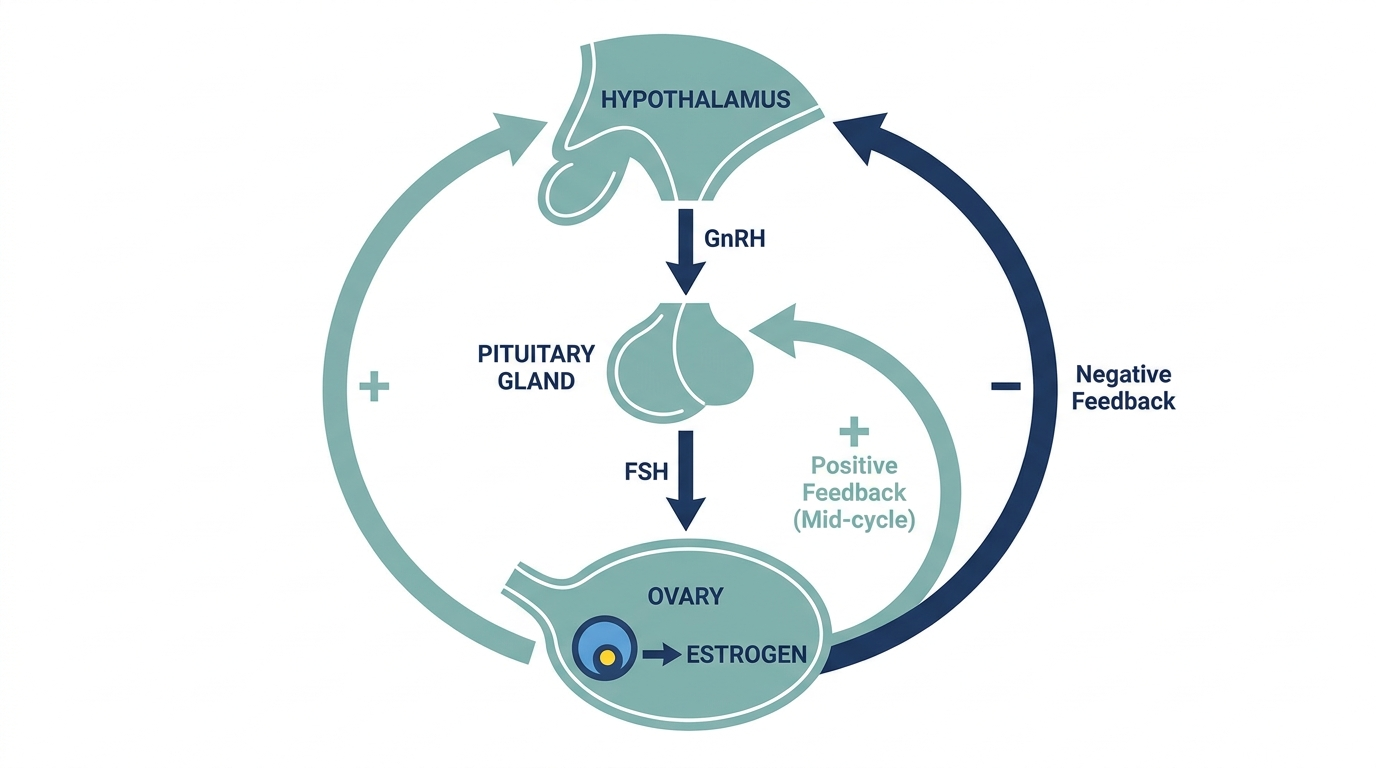
A high FSH result most often means your gonads (ovaries or testes) are producing less estrogen, testosterone, or inhibin, so the pituitary gland raises follicle stimulating hormone to push them harder. According to Cleveland Clinic, the typical range for women after puberty is 4.7 to 21.5 mIU/mL, while after menopause it climbs to 25.8 to 134.8 mIU/mL. For adult men the normal range is 1.5 to 12.4 mIU/mL.
Flagged for high FSH? See the fuller hormone picture a single number can’t tell you. One at-home Superpower draw checks 100+ biomarkers, physician-reviewed.
The most-cited menopause cutoff is an FSH of 40 mIU/mL or higher, especially when periods have stopped for 12 months. Because the menstrual cycle changes FSH hour to hour, the test is usually drawn on day 3 of the cycle in women who still menstruate. A single elevated value is rarely conclusive, so doctors often repeat it and pair it with estradiol.
Why the same FSH number means different things at different ages
FSH is the rare lab value whose entire meaning flips depending on who is being tested. In a woman still having regular periods, the follicular-phase range runs roughly 4.7 to 21.5 mIU/mL, and a value pushing above that is a signal the ovaries are starting to resist the pituitary. After menopause, the very same 40 mIU/mL that would alarm a 30-year-old is simply the expected new baseline, because the ovaries have retired and the pituitary keeps shouting into a room that no longer answers. That is why context, not the raw number, drives the interpretation.
The mechanism behind this is a feedback loop. Healthy ovaries and testes release estrogen, testosterone, and a hormone called inhibin, and those signals tell the pituitary to ease off on FSH. When the gonads age or fail, those brake signals fade, and FSH climbs to compensate. So a high FSH is really a readout of how well your gonads are answering the call, which is why a young person with a high FSH warrants a much closer look than an older one whose rise is a normal part of the life stage.
How is an FSH test done, and what changes the number?
The simplest way to actually get this done
Superpower is a full-body lab membership that runs 100+ biomarkers, has each result reviewed by a doctor, and tracks your numbers year over year (about $199/year). It is what we point readers to when they would rather get one clean, complete draw than chase single tests one at a time. Here is superpower reviewed in full.
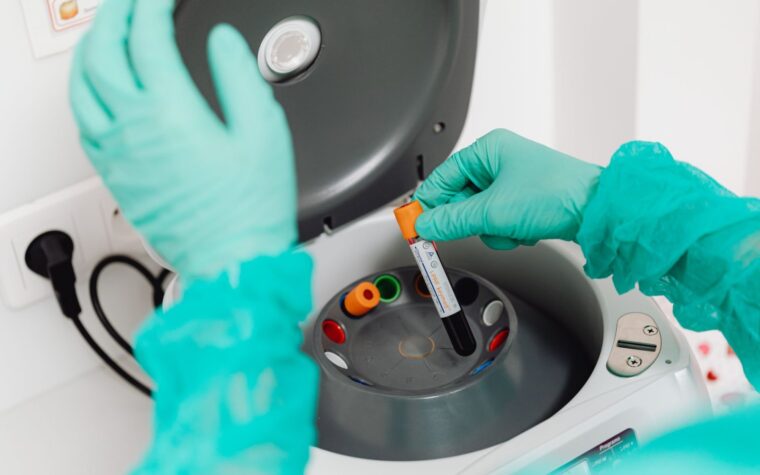
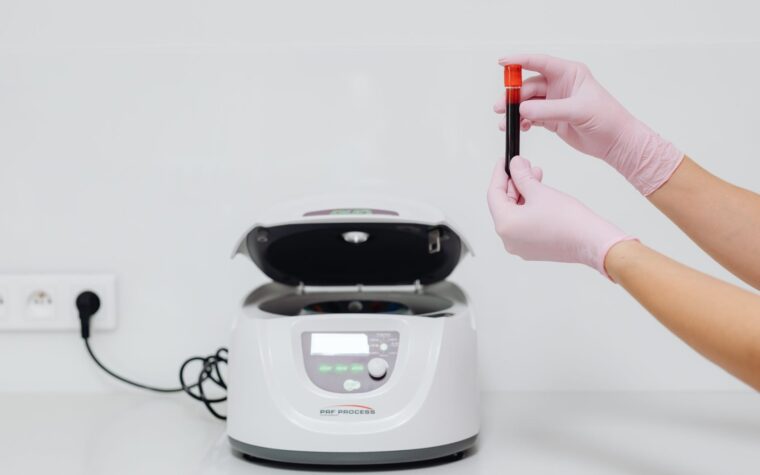
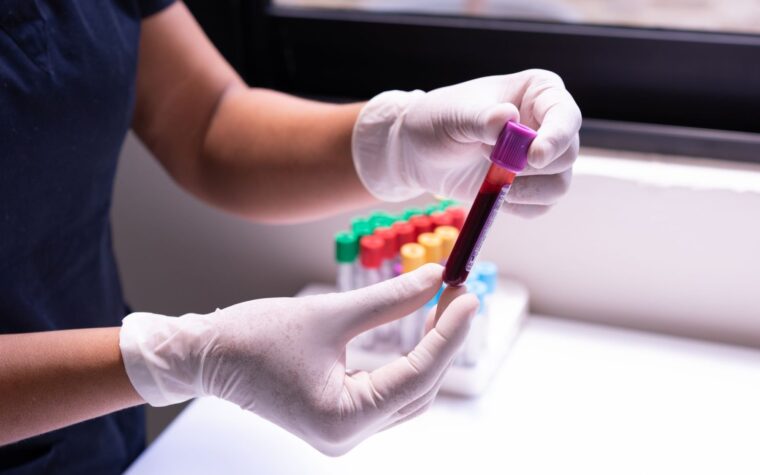
An FSH test is a standard blood draw, and it does not require fasting. The catch is timing. In women who still menstruate, FSH swings across the cycle, so it is usually drawn on day 3, counting the first day of full bleeding as day 1, to get a comparable follicular-phase reading. Drawn at a random point in the cycle, the same ovaries can produce a very different number, which is a common source of confusion when people compare results.
Several things can move the result without reflecting your true ovarian or testicular status:
- Hormonal birth control. The pill, patch, ring, and hormonal IUD suppress the pituitary, so FSH can read falsely low even in someone approaching menopause. A meaningful FSH usually needs to be measured off hormonal contraception.
- Biotin supplements. High-dose biotin from hair and nail products can interfere with some lab assays and skew hormone results, so pausing it before the draw is often advised.
- Estrogen or testosterone therapy. Taking sex hormones lowers FSH by restoring the brake signal, which is why the test is interpreted in light of what you take.
- Day-to-day variation. FSH naturally fluctuates, especially in perimenopause, so a single draw is a snapshot rather than a settled fact.
This is exactly why clinicians so often repeat the test and pair it with estradiol. A high FSH read against a low estradiol tells a very different story than a high FSH with normal estradiol.
What causes high FSH
High FSH is caused by anything that lowers the gonads’ output of sex hormones, which removes the brake on the pituitary. In women the most common cause is the natural transition into menopause, when FSH rises toward 40 mIU/mL or higher (Cleveland Clinic). Other causes are more specific to age and sex.
- In women: perimenopause and menopause, primary ovarian insufficiency (POI) before age 40, low ovarian reserve, Turner syndrome, autoimmune ovarian damage, and ovarian injury from radiation or chemotherapy (Cleveland Clinic).
- In men: primary testicular failure, Klinefelter syndrome, and testicular damage from radiation, chemotherapy, or a past mumps infection (Cleveland Clinic).
- Either sex: aging-related hormone decline, gonadal toxins, physical injury to reproductive tissue, and certain pituitary tumors that secrete FSH (MedlinePlus).
Some medications and supplements can also shift the result, so tell your clinician everything you take.
High FSH and fertility: what it predicts and what it does not
For anyone trying to conceive, this is usually the real question behind the result. A high day-3 FSH suggests the ovaries are working harder to recruit a follicle, which tends to track with lower ovarian reserve and can make conception take longer or need more help. But FSH is a relatively late and blunt marker of reserve. Two other tests often give a clearer, steadier picture: anti-Mullerian hormone (AMH), which reflects the pool of remaining follicles and barely moves across the cycle, and the antral follicle count measured by ultrasound. Fertility specialists read all three together rather than reacting to FSH alone.
The honest message is one of nuance, not doom. A single high FSH does not mean pregnancy is impossible, and many people with elevated FSH still conceive, sometimes naturally and sometimes with assistance. In men, a high FSH alongside a low sperm count points toward the testes themselves underproducing, and a semen analysis is the natural companion test. In both sexes, FSH narrows down where the problem sits, which is the first step toward doing something about it.
Symptoms of high FSH, or when it is silent
High FSH itself causes no symptoms; what you feel comes from the low estrogen or testosterone that triggered it. In women, that often shows up as irregular or absent periods, hot flashes, night sweats, vaginal dryness, and trouble conceiving, which mirror the menopause transition that pushes FSH toward 40 mIU/mL or higher (MedlinePlus, Cleveland Clinic).
In men, low testosterone alongside high FSH can bring low libido, fatigue, reduced muscle mass, and infertility from low sperm production. Many people with mildly elevated FSH feel completely normal, especially older adults whose levels drift up naturally with age. That is why FSH is often discovered incidentally on a fertility workup or a panel ordered for other reasons. The number on its own does not tell you how you will feel, and a silent result still matters when you are trying to conceive.
How high FSH is evaluated: the tests that go with it
Because FSH is a signal rather than a diagnosis, a high value rarely stands alone. The workup depends on your age, sex, and symptoms, but a few companion tests come up again and again.
- Estradiol. Pairing FSH with estradiol separates a failing ovary (high FSH, low estradiol) from other patterns, and it is the single most useful partner test in women.
- LH. Luteinizing hormone usually rises alongside FSH in gonadal failure, and the ratio between them can hint at conditions such as PCOS when read in context.
- AMH and antral follicle count. These give a more stable read on ovarian reserve when fertility is the concern.
- Prolactin and thyroid tests. Both are checked because thyroid and pituitary problems can disturb the reproductive axis and cloud the picture.
- Karyotype or genetic testing. In a young woman with primary ovarian insufficiency or a man with very high FSH and small testes, genetic causes such as Turner or Klinefelter syndrome are considered.
- Semen analysis. In men, this is the direct measure of what a high FSH is hinting at.
The point is that the follow-up is targeted, not a shotgun. A clinician uses the FSH to decide which of these actually matters for you, then reads the whole set together.
When high FSH is dangerous
An isolated high FSH value is a marker, not an emergency, but it can flag conditions that need attention. Primary ovarian insufficiency before age 40 is the clearest concern, because the early drop in estrogen raises long-term risks for bone loss and heart disease, not just fertility (Cleveland Clinic). FSH above the expected range in a young woman warrants prompt evaluation.
Other red flags are very high FSH with no clear cause, FSH elevation in a child (which can suggest precocious puberty), or high FSH paired with headaches and vision changes, which may point to a pituitary problem (MedlinePlus). In men, persistently high FSH with shrinking testicles deserves a workup. The danger is rarely the FSH itself and almost always the underlying cause, so the right move is interpretation, not panic.
What to do next and when to see a doctor
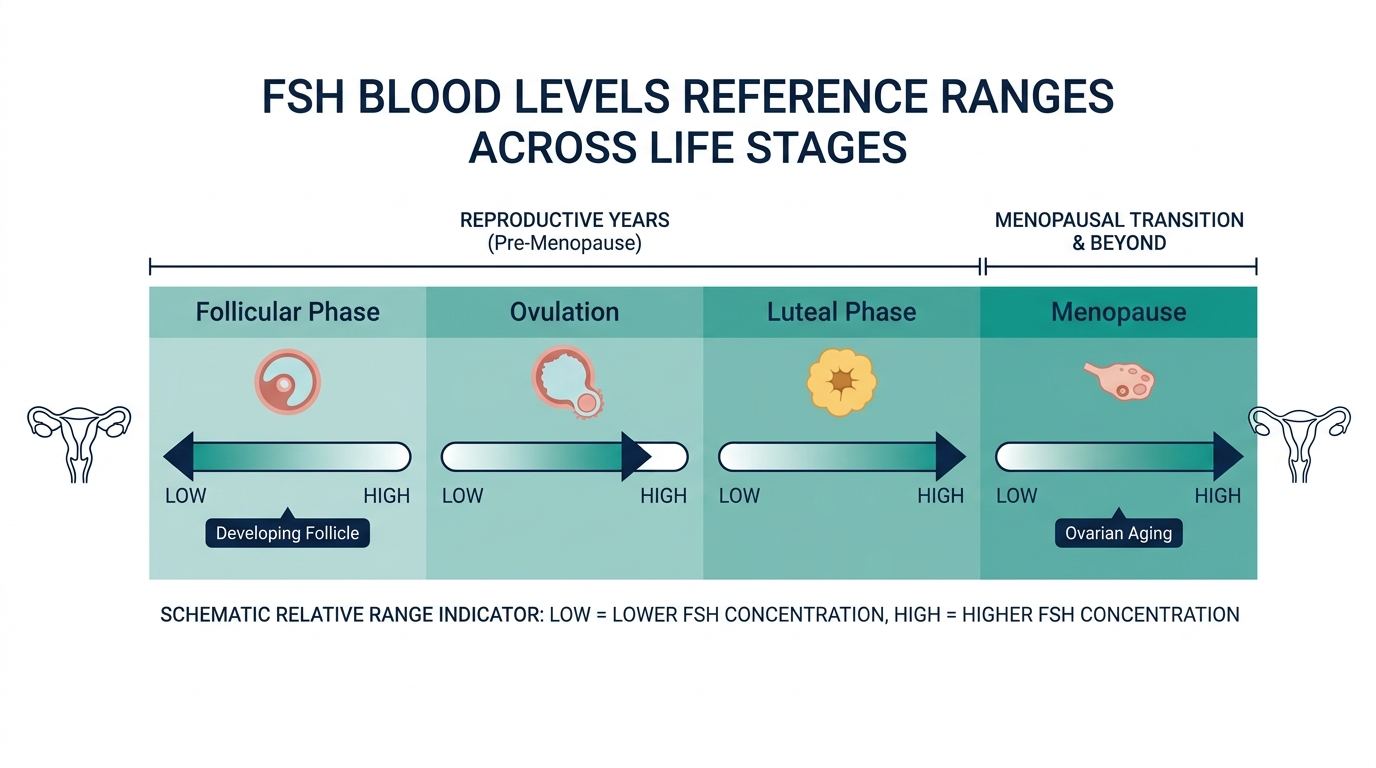
The first step is to confirm the result, because FSH naturally swings across the menstrual cycle and from day to day. Ask whether the test was drawn on day 3 of your cycle and whether it should be repeated with estradiol and LH for context (Cleveland Clinic). Reference ranges also differ by lab, so always read your own report’s range.
- See a doctor promptly if you are under 40 with irregular or missing periods and high FSH, as this can mean POI.
- Book a visit if you are trying to conceive, since elevated FSH affects fertility planning.
- Seek urgent care for new severe headaches or vision changes with abnormal hormone results.
Bring a list of medications, your cycle dates, and any symptoms so your clinician can interpret the number in full context.
Managing the causes behind a high FSH
You cannot lower FSH directly, and lowering it is not the goal. The goal is to address whatever caused it, and that path forks by situation.
When high FSH reflects menopause or perimenopause, the focus shifts to symptoms and long-term health. Hot flashes, sleep disruption, and vaginal dryness can be managed, and for many women hormone therapy is an option worth discussing, weighed against personal risk. When high FSH reflects primary ovarian insufficiency before age 40, the stakes are higher, because years of low estrogen raise the long-term risk of bone loss and heart disease. In that setting, hormone therapy is often recommended not just for symptoms but to protect the bones and heart until the usual age of menopause, and fertility options such as IVF or donor eggs are discussed separately.
In men, a persistently high FSH with low sperm production usually earns a referral to a urologist or endocrinologist, who looks for a treatable cause and counsels on fertility options. Across all of these, the recurring theme is the same: treat the cause, protect the downstream risks such as bone and heart health, and use repeat testing to track the trend rather than chasing the FSH number itself.
The insider nuance most reports miss
The detail that trips people up is that FSH is a moving target, so a single high reading can be misleading. In perimenopause, FSH can read above 25 mIU/mL one month and back in the normal 4.7 to 21.5 mIU/mL range the next, because the ovaries are sputtering rather than fully shut down (Cleveland Clinic). This is why no major guideline diagnoses menopause from one FSH alone in someone still having periods.
A second nuance: on hormonal birth control, FSH is suppressed and can look falsely low even near menopause, while certain assays and biotin supplements can skew results. Clinicians weigh FSH against estradiol, since high FSH with low estradiol tells a very different story than high FSH with normal estradiol. The number is a clue in a larger pattern, never the verdict by itself.
Two scenarios that show why context decides everything
Consider a 33-year-old woman whose periods have turned irregular and who is quietly worried about fertility. Her day-3 FSH comes back at 32 mIU/mL. Rather than call it early menopause and stop, her clinician repeats it, adds estradiol and AMH, and finds a pattern consistent with primary ovarian insufficiency. That diagnosis changes everything, from a conversation about egg freezing or donor options to starting hormone therapy to protect her bones and heart for the coming decades.
Now consider a 55-year-old woman with the identical FSH of 32 mIU/mL who has not had a period in over a year. Here the same number needs no alarm at all. It is the expected signature of menopause, and the conversation is about managing symptoms and long-term health, not investigating a disease. Same value, opposite meaning, decided entirely by age and context.
Don’t just read about high FSH, track it.
A single result is a snapshot. Superpower re-tests high FSH and 100+ markers over time so you can watch them move as you change sleep, food, and training.
Frequently asked questions
What FSH level confirms menopause?
An FSH of 40 mIU/mL or higher, especially after 12 months without a period, is the commonly used menopause marker (Cleveland Clinic). Because FSH fluctuates, doctors usually look at symptoms and may repeat the test rather than rely on one value.
Is high FSH always bad?
No. After menopause, high FSH (25.8 to 134.8 mIU/mL) is normal and expected (Cleveland Clinic). It is mainly a concern in younger people or those trying to conceive, where it can signal low ovarian reserve or testicular issues that need evaluation.
Can high FSH be lowered?
FSH reflects how your gonads respond, so it is not lowered directly. Treating the cause, such as estrogen therapy in some cases, can change the picture. Discuss options with your clinician, since lowering FSH is not a treatment goal on its own.
What is a normal FSH level for men?
For adult men, the normal range is 1.5 to 12.4 mIU/mL (Cleveland Clinic). Levels above this can suggest primary testicular failure, where the testes underperform and the pituitary raises FSH in response.
Does high FSH mean I cannot get pregnant?
Not automatically, but high FSH often signals reduced ovarian reserve, which can make conception harder. Many people with elevated FSH still conceive. A fertility specialist can interpret your FSH alongside estradiol, AMH, and antral follicle count for a fuller picture.
Do I need to fast for an FSH test?
No. FSH does not require fasting. What matters far more is timing within the menstrual cycle for women who still menstruate, since FSH is usually drawn on day 3 for a comparable reading. If FSH is bundled with a glucose or lipid panel, follow any fasting instructions on that order.
Does birth control affect FSH results?
Yes. Hormonal birth control suppresses the pituitary and lowers FSH, so a result taken while on the pill, patch, ring, or hormonal IUD can look falsely low, even near menopause. A meaningful FSH usually needs to be measured off hormonal contraception, which is something to discuss with your clinician before testing.
Sources
- Cleveland Clinic, Follicle-Stimulating Hormone (FSH): What It Is and Function
- MedlinePlus, Follicle-Stimulating Hormone (FSH) Levels Test
- MedlinePlus Medical Encyclopedia, Follicle-stimulating hormone (FSH) blood test
This article is for general educational purposes and is not medical advice. It cannot diagnose or treat you and does not replace your clinician. Always discuss your lab results and any health decisions with a qualified healthcare professional.
Related: compare the best at-home biomarker and blood tests.
Vital Signs Today may earn a commission if you buy through links on this page. It does not affect our editorial assessments.