You feel wiped out, your hair is shedding, you get winded climbing one flight of stairs, and someone finally says the words “get your iron checked.” So you do. Then the report comes back and instead of one clean “iron” number, you are staring at a wall of acronyms: serum iron, ferritin, TIBC, transferrin, saturation. Which one actually tells you whether you are low?
Here is the short version, and it is the thing most people get wrong. There is no single “iron test.” Iron is measured by a small panel, and the markers do not move in the same direction when you run low. Read them wrong and you can convince yourself you are fine when your tank is nearly empty.
Part of our Iron Studies guide.
What blood tests show low iron?
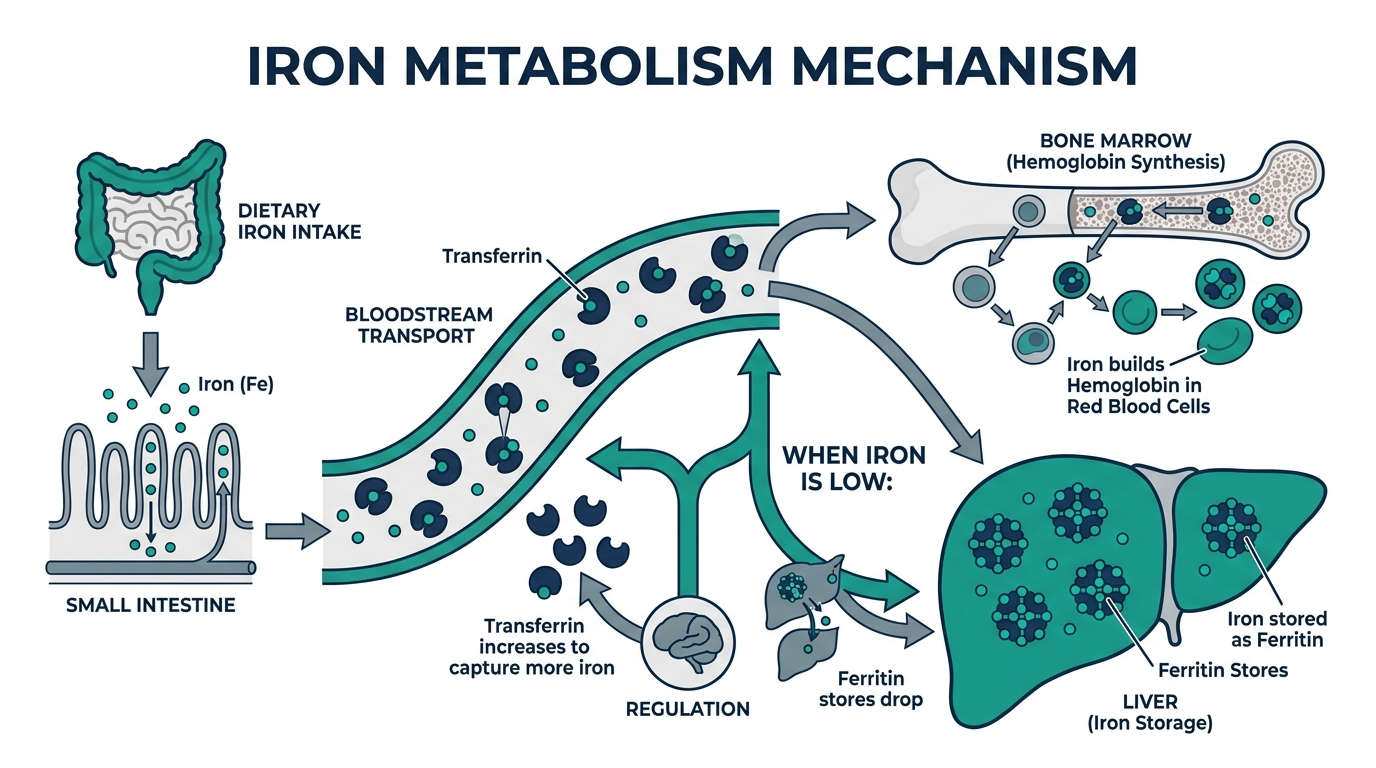
The blood tests that show low iron are an iron panel, usually made up of four markers read together: serum iron, ferritin, total iron-binding capacity (TIBC), and transferrin saturation. A complete blood count (CBC) often comes along for the ride because it shows whether low iron has tipped into anemia (MedlinePlus).
The single most useful marker for catching low iron early is ferritin, which measures how much iron you have stored away. Ferritin is the first number to fall when your reserves start draining, often long before serum iron drops or anemia ever appears (Cleveland Clinic).
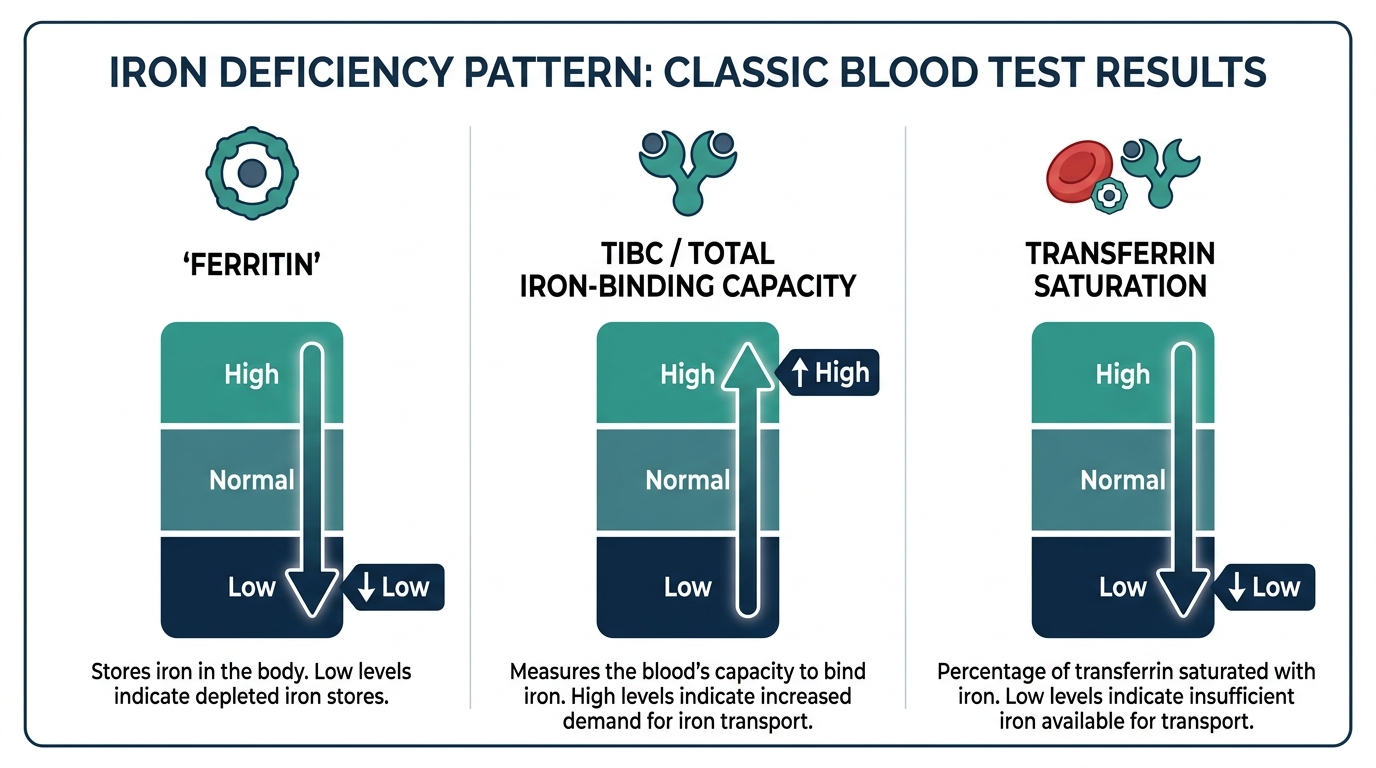
When iron is genuinely low, the panel makes a recognizable shape: ferritin down, serum iron down, transferrin saturation down, and TIBC up. That last one trips people up. Your body cranks out more transport protein to scavenge whatever iron it can find, so the binding capacity climbs even as the iron sitting in it falls (Cleveland Clinic).
What does a low iron result mean on a blood test?
A low iron result means your body either does not have enough iron coming in, is losing it faster than it can replace, or has burned through what it had stored. The cleanest signal is ferritin, because it reflects your reserves rather than the iron bouncing around your bloodstream at the moment of the draw.
Here are the numbers worth knowing. A typical ferritin range runs about 15 to 205 ng/mL for women and 30 to 566 ng/mL for men (Cleveland Clinic). On paper, anything inside that band looks “normal.” In practice, a ferritin under 30 ng/mL is fairly specific for iron deficiency, and guideline panels have been pushing the meaningful cutoff upward. A 2024 American Society of Hematology draft, for example, suggests a ferritin threshold of 30 ng/mL or below in pregnancy rather than the older, stricter 15 (American Society of Hematology).
The other markers fill in the picture. Transferrin saturation, which is the percent of your transport protein actually carrying iron, normally sits around 20 to 50 percent. A saturation under 20 percent is considered diagnostic of iron deficiency (PMC, iron deficiency without anaemia). Serum iron alone is the least reliable of the bunch, because it swings with what you ate and even the time of day.
Optimal versus “normal”: why the ranges disagree
Lab reference ranges are built to flag disease, not to define feeling good, and iron is the marker where that gap shows most. A ferritin of 18 ng/mL sits inside the printed “normal” band for many women, yet it is low enough that a fair number of people feel the fatigue, the hair shedding, and the breathlessness. This is why experienced clinicians treat the reference range as a floor rather than a target.
Two places this matters in real life. In restless legs syndrome, neurologists commonly aim to push ferritin well above the deficiency cutoff, often toward 75 to 100 ng/mL, because symptoms tend to ease as stores fill even when the starting number was technically “normal.” In diffuse hair shedding, dermatologists frequently look for ferritin comfortably above the 30 to 50 ng/mL mark rather than accepting a bare-minimum result. Neither of these is a universal guideline, and not every clinician agrees, so read them as context for a conversation, not a self-diagnosis.
The caveat that ties it together: every lab calibrates its own reference range, and cutoffs can differ from one report to the next. A ferritin of 25 flagged as normal at one lab may sit just under the flag at another. Compare your value to the range printed on your own report, and track trends within the same lab over time rather than jumping between providers.
What causes a low iron?
Low iron is almost never random. It comes down to three buckets: you are losing iron, not absorbing it, or not eating enough of it. In order of how often they actually explain a low result:
- Blood loss. This is the heavyweight cause in adults. In menstruating women, heavy or even moderately heavy periods are the most common reason. In men and postmenopausal women, slow bleeding from the gut, an ulcer, polyps, or something more serious, is the first thing a good clinician thinks about (Mayo Clinic).
- Poor absorption. Celiac disease, inflammatory bowel disease, prior gastric or bariatric surgery, and long-term acid-reducing medications all blunt how much iron you pull from food (Mayo Clinic).
- Not enough dietary iron. Diets low in red meat, vegetarian and vegan eating without careful planning, and restrictive eating can leave intake short of what your body burns (Cleveland Clinic).
- Increased demand. Pregnancy is the classic one. A growing baby and expanding blood volume can outrun your stores fast. Frequent blood donors and endurance athletes also run a higher tab (MedlinePlus).
The practical point: a low iron result is the start of a question, not the end of one. The real work is finding out why, because in an adult who is not menstruating heavily, low iron is treated as a clue to look upstream, not just a deficiency to top up.
What are the symptoms of a low iron?
This is the catch with iron: you can be deficient and feel almost nothing, especially early. Iron deficiency without anemia frequently flies under the radar, which is exactly why it gets missed (PMC, iron deficiency without anaemia). Your stores can be nearly empty while your hemoglobin still reads normal and your doctor says “your blood count is fine.”
When symptoms do show up, the usual lineup is:
- Persistent fatigue and weakness that sleep does not fix
- Shortness of breath and a fast or pounding heartbeat with light activity
- Pale skin, brittle nails, and unusual hair shedding
- Dizziness, lightheadedness, or trouble concentrating
- Restless legs, especially at night (MedlinePlus)
One oddball worth naming: pica, a craving for non-food items like ice, dirt, or starch. A compulsion to crunch ice all day is a genuine, well-described sign of iron deficiency, and it often resolves once iron is replaced (Mayo Clinic).
How does low iron connect to your other blood markers?
An iron panel rarely travels alone. The complete blood count sitting next to it often shows the deficiency before you would guess, and reading the two together is how clinicians separate iron deficiency from the other causes of anemia.
The markers that shift when iron runs low:
- Hemoglobin and hematocrit fall once the deficiency is advanced enough to limit red-cell production. This is the line between iron deficiency and iron deficiency anemia, and you can sit on the deficient side of it with a normal hemoglobin for months.
- MCV (mean corpuscular volume) drops as cells are built smaller with less hemoglobin inside them. Iron deficiency is the classic cause of a microcytic, small-cell picture, though MCV usually falls late.
- RDW (red cell distribution width) tends to rise early, because the marrow starts turning out cells of uneven size as iron gets scarce. A high RDW with a still-normal MCV is a quiet early clue.
- Reticulocyte count, the fraction of brand-new red cells, is often low or flat in iron deficiency because the marrow cannot build replacements fast enough without raw material.
Why this matters: a microcytic anemia is not automatically iron deficiency. Thalassemia trait produces small cells too, and it is a lifelong genetic difference, not a shortage you can supplement away. The iron panel is what tells the two apart, because thalassemia leaves ferritin and saturation normal or high while iron deficiency drags them down. Handing an iron supplement to someone with thalassemia does nothing for the anemia and, over years, can pile up iron they cannot clear.
When is a low iron dangerous or a medical emergency?
Low iron itself is rarely an emergency. The danger lives in two places: how far it has progressed, and what is causing it.
Untreated iron deficiency that slides into severe anemia is the part that turns serious. Because your heart has to pump harder to move enough oxygen with thinned-out blood, severe iron deficiency anemia can lead to a rapid or irregular heartbeat, and over time an enlarged heart or heart failure (Mayo Clinic). In pregnancy, severe deficiency is linked to premature birth and low birth weight, which is why it is screened for and treated aggressively.
Get urgent care, not a routine appointment, if low iron shows up alongside chest pain, fainting, severe shortness of breath at rest, a racing heart, or signs of active bleeding such as black or bloody stools or vomiting blood. Those are not “wait for the follow-up” symptoms. The iron number explains the why, but the bleeding or the cardiac strain is the thing that needs attention now.
How should you prepare for an iron blood test?
How and when you get drawn can move an iron panel enough to change what it says, so a little prep buys you a cleaner read.
- Draw in the morning, ideally fasting. Serum iron rises and dips through the day and climbs after meals, so a fasting morning sample is the standard for comparison. Ferritin is steadier, but pairing them from the same clean draw keeps the whole panel honest.
- Hold iron supplements first. An iron pill or a high-iron breakfast shortly before the draw can push serum iron and saturation up and mask a real deficiency. Many clinicians ask patients to skip iron supplements for 24 hours beforehand, but follow the specific instruction you are given.
- Flag any recent illness. Because ferritin climbs with infection and inflammation, a panel drawn during or just after a cold, a flare, or surgery can read falsely reassuring. If you have been sick, tell whoever interprets the result, or wait until you have recovered.
- Mind the timing around your period. For menstruating women, iron dips around and after heavier bleeding. Testing at a consistent point in the cycle makes month-to-month comparisons meaningful.
- Note a recent transfusion. A blood transfusion in the previous weeks can temporarily lift your iron numbers and hide an underlying shortage.
What should you do about a low iron?
First, do not start megadosing iron supplements off a single low ferritin and call it solved. The smarter sequence:
- Confirm with the full panel. If only one marker came back, ask for ferritin, serum iron, TIBC, and transferrin saturation together, plus a CBC to see whether anemia is present. The pattern matters more than any one value (MedlinePlus).
- Hunt for the cause. Especially in men and postmenopausal women, a clinician should be thinking about where the iron is going. That can mean asking about periods, diet, and medications, and sometimes looking at the gut.
- Treat the deficiency, usually with oral iron first. Replacement is typically iron tablets, taken as your clinician directs, often with vitamin C to help absorption and away from coffee, tea, and calcium. Recheck ferritin after a couple of months to confirm the stores are actually refilling.
- Fix the food side too. Iron-rich foods like red meat, poultry, beans, lentils, and fortified cereals support recovery, though diet alone rarely refills a deep deficit quickly.
Intravenous iron is reserved for people who cannot tolerate or absorb pills, or who need to recover fast. That is a conversation for your clinician, not a default.
Two patterns you will actually recognize
Consider a woman in her mid-thirties with heavy periods who feels exhausted and is shedding hair. Her hemoglobin comes back normal, so an earlier visit told her she was “not anemic.” The full panel tells a different story: ferritin 16 ng/mL, transferrin saturation 14 percent, TIBC high. She is iron deficient without anemia, the exact state a hemoglobin-only check misses. The fix is not just iron replacement, it is also addressing the monthly blood loss that keeps draining her.
Now consider a man in his fifties with the same low ferritin. Here the number itself is less interesting than the question it raises: where is the iron going? Men do not menstruate, so a careful clinician treats unexplained low iron as a reason to look at the gut, because slow bleeding from a polyp, an ulcer, or something that needs catching early can present first as a quietly falling ferritin. Same lab value, very different next step, which is the whole reason a low result is a beginning and not a conclusion.
When should you see a doctor?
See a clinician any time an iron marker comes back low, even if you feel fine, because the cause is the real story. Book a visit promptly if you have ongoing fatigue, breathlessness, an unusually fast heartbeat, pale skin, restless legs, or ice cravings. Mayo Clinic puts it bluntly: do not try to diagnose or treat iron deficiency on your own, because the supplement that “fixes” your numbers can also paper over a bleeding source that needed finding (Mayo Clinic).
The insider catch: normal ferritin does not always mean normal iron
Here is the nuance that even some clinicians skim past. Ferritin is an acute phase reactant, meaning it rises during inflammation, infection, recent surgery, liver disease, and chronic conditions, completely independent of your actual iron stores (MedlinePlus). So someone who is genuinely iron deficient and also has inflammation can show a “normal” ferritin that masks the deficiency entirely.
This is the single most common misread of an iron panel. If your ferritin looks reassuringly mid-range but your transferrin saturation is low and you have every symptom of deficiency, the saturation may be telling the truth and the ferritin may be lying to you. In inflammatory states, clinicians lean on transferrin saturation and sometimes specialized tests, and they interpret ferritin against a higher threshold rather than the textbook floor of 15 (PMC, iron deficiency without anaemia).
The flip side matters too. Serum iron taken right after an iron-rich meal or a supplement can read falsely high, which is why a fasting morning draw gives a cleaner picture. If one number does not fit your symptoms, that mismatch is information, not noise. It is the reason iron is read as a panel and never as a lone value.
Frequently asked questions
What blood test shows low iron levels?
An iron panel shows it: serum iron, ferritin, total iron-binding capacity (TIBC), and transferrin saturation, read together. Ferritin is the most useful single marker because it reflects stored iron and falls first, often before anemia appears (Cleveland Clinic).
Can a blood test show low iron before anemia?
Yes. Iron deficiency without anemia is common and is exactly why ferritin matters. Your stored iron can be nearly depleted while hemoglobin and the rest of your CBC still read normal (PMC, iron deficiency without anaemia).
What ferritin level counts as low iron?
Typical ranges start around 15 ng/mL for women and 30 ng/mL for men, but a ferritin under 30 ng/mL is fairly specific for deficiency, and some guideline panels use a 30 ng/mL threshold in higher-need groups like pregnancy (American Society of Hematology). Compare your result to your own lab’s reference range.
Why is my ferritin normal but my iron still feels low?
Ferritin rises with inflammation, infection, or recent surgery, so it can look normal even when iron stores are truly low. In that situation a low transferrin saturation can be the more honest marker, which is why clinicians read the whole panel together (MedlinePlus).
What does low transferrin saturation mean?
Transferrin saturation is the percent of your iron-transport protein actually carrying iron, normally about 20 to 50 percent. A value under 20 percent points toward iron deficiency, especially alongside low ferritin and a high TIBC (PMC, iron deficiency without anaemia).
How long does it take to raise low iron?
Symptoms often ease within a few weeks of consistent oral iron, but refilling depleted stores is slower. Ferritin usually takes a couple of months of steady replacement to climb meaningfully, which is why clinicians recheck it around eight to twelve weeks rather than days later. Stopping the moment you feel better tends to leave stores half full and the problem ready to return.
Does low iron cause hair loss?
It can contribute. Diffuse shedding is a recognized association with low iron, and dermatologists often check ferritin in people with unexplained hair loss. When iron is the driver, regrowth tends to follow the stores refilling rather than a single normal-looking result, which is part of why some clinicians aim for a ferritin comfortably above the bare deficiency cutoff.
Can you have low iron with a normal complete blood count?
Yes, and it is common. Iron deficiency without anemia means your ferritin and saturation are low while hemoglobin, hematocrit, and often MCV still read normal. A normal CBC does not rule out low iron, which is exactly why ferritin belongs on the order when symptoms point that way.
How often should you retest iron?
If you are correcting a deficiency, a recheck at roughly two to three months shows whether stores are actually refilling. Once you are stable, the interval follows the cause: someone with heavy periods or a diet low in iron may retest yearly, while a one-time deficiency with a clear, fixed reason may not need routine repeats. Your clinician sets the timing to the reason behind the low result.
This article is for general educational purposes and is not medical advice. It cannot diagnose or treat you and does not replace your clinician. Always discuss your lab results and any health decisions with a qualified healthcare professional.
Vital Signs Today may earn a commission if you buy through links on this page. It does not affect our editorial assessments.