
- To lower a high AST, treat the cause: losing 7 to 10 percent of body weight, stopping alcohol, and exercising regularly can drop liver enzymes by 30 to 50 percent over weeks to months, according to AASLD and Cleveland Clinic guidance.
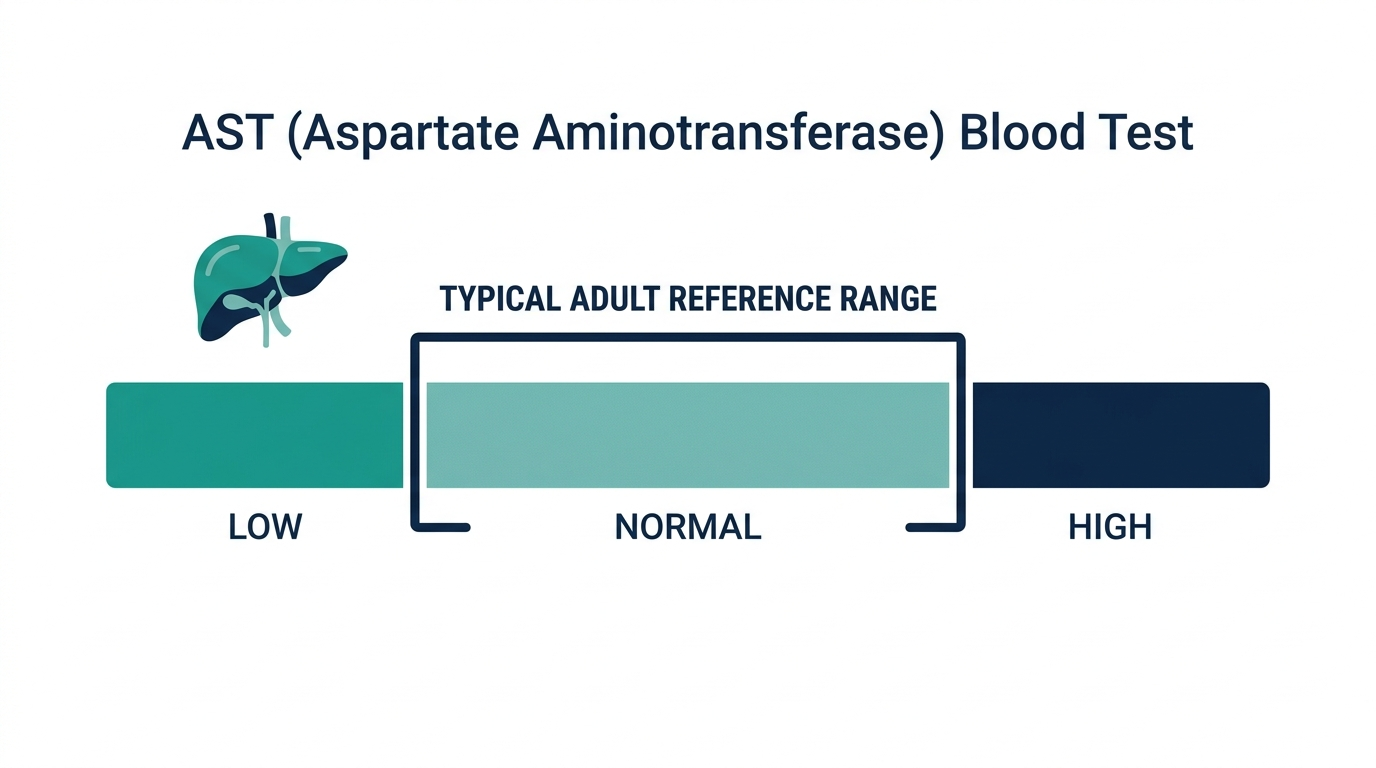
- A typical normal AST is roughly 8 to 33 U/L, but values change by lab; a single mildly high result is common, since about 1 in 20 healthy people fall outside the reference range (Cleveland Clinic).
- AST is not always a liver problem: skeletal muscle damage accounts for about 54 percent of markedly high AST cases, so intense exercise, statins, or muscle injury can raise it without any liver disease (NCBI/PMC).
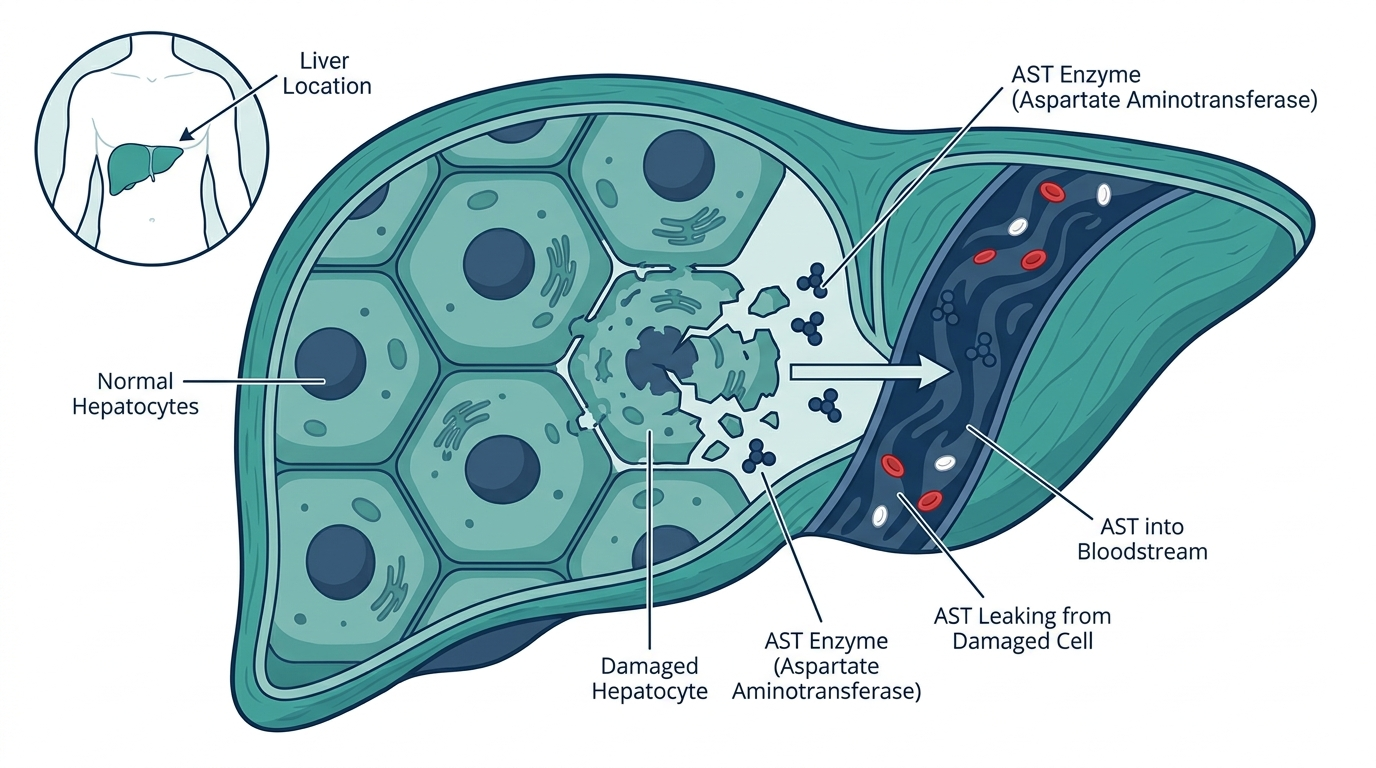
Aspartate aminotransferase (AST) is an enzyme found in your liver, heart, muscles, and red blood cells. When those cells are stressed or damaged, AST leaks into the blood and the number on your lab report climbs. Lowering it is rarely about the enzyme itself. It is about fixing what is irritating the cells that release it. This guide walks through what counts as high, why it matters, and the evidence-based steps that actually bring AST down.
Part of our Liver Function Tests guide.
Losing 7 to 10 percent body weight can cut AST significantly, but what’s your liver enzyme number right now? One at-home Superpower draw checks 100+ biomarkers, physician-reviewed.
What counts as high AST?
A common reference range for AST is 8 to 33 U/L, though every lab sets its own cutoff, so read your own report ([Cleveland Clinic](https://my.clevelandclinic.org/health/diagnostics/22147-aspartate-transferase-ast)). Many labs and clinicians use roughly 10 to 40 U/L as normal. A result slightly over the top number is common and not automatically alarming. Cleveland Clinic notes that about 1 in 20 healthy people will fall outside the reference range on any single test.
Context matters more than the raw number:
- Mildly high (up to about 2 to 3 times normal): often fatty liver, alcohol, medication effect, or recent intense exercise.
- Markedly high (more than 10 times normal): acute liver injury from viral hepatitis, drug toxicity such as acetaminophen overdose, or reduced blood flow to the liver.
- AST higher than ALT: the AST/ALT ratio (De Ritis ratio) of 2:1 or greater points toward alcohol-related liver disease, and it tends to normalize with abstinence ([Medscape](https://emedicine.medscape.com/article/2087224-overview)).
Optimal versus standard ranges, and what the ratio adds
The printed reference range is a statistical band drawn from a reference population, not a line where damage starts. About 1 in 20 healthy people land just outside it on any given day, which is why a single mildly high AST is so common and so often meaningless on its own. Clinicians who think in terms of prevention like to see AST sitting in the lower half of the range rather than pressed against the top, but with AST the absolute number matters less than two other things: how it compares to ALT, and whether the trend is stable or climbing.
That comparison is the De Ritis ratio, AST divided by ALT. In most metabolic and viral liver problems ALT runs higher than AST, giving a ratio below 1. When AST pulls ahead so that the ratio reaches 2 or more, alcohol becomes the leading suspect, and a ratio above 1 in someone with known liver disease can hint that scarring is advancing. This is why AST is almost never read alone. The pattern between the two enzymes carries more information than either number by itself.
Why lower it?
The simplest way to actually get this done
Superpower is a full-body lab membership that runs 100+ biomarkers, has each result reviewed by a doctor, and tracks your numbers year over year (about $199/year). It is what we point readers to when they would rather get one clean, complete draw than chase single tests one at a time. Here is superpower reviewed in full.
A persistently high AST is a warning light, not a disease on its own, but ignoring it can let silent damage progress. In metabolic dysfunction-associated steatotic liver disease (the condition formerly called NAFLD), ongoing enzyme elevation can track with fat buildup that, untreated, advances to inflammation, fibrosis, and eventually cirrhosis ([AASLD](https://www.aasld.org/practice-guidelines/clinical-assessment-and-management-metabolic-dysfunction-associated-steatotic)).
Bringing AST down usually means the underlying stress on your cells is easing. The bigger reason to act is what the number represents: lower enzymes generally signal less liver fat, less inflammation, and lower long-term risk of scarring. That said, if your high AST comes from muscle rather than liver, the goal shifts to identifying the muscle cause rather than chasing a liver fix.
What actually raises AST?
AST is the least liver-specific of the common liver enzymes, and that single fact explains most of the confusion around it. The enzyme lives in liver cells, but it is also packed into heart muscle, skeletal muscle, and red blood cells. When any of those tissues is stressed, AST spills into the blood. So the first real question with a high AST is not what to eat, it is which organ the enzyme came from.
Liver causes
When the source is the liver, the usual drivers are the same metabolic ones behind most abnormal panels: fat inside the liver from excess weight, insulin resistance, and high triglycerides, plus alcohol. Viral hepatitis, a reaction to a medication or supplement, and reduced blood flow to the liver can push AST much higher. In these cases ALT usually rises alongside AST, and the two move together as the liver recovers.
Muscle, heart, and blood causes
Here is where AST differs sharply from ALT. Because AST sits in skeletal muscle, a hard workout, a muscle injury, a seizure, or a statin that irritates muscle can lift it while ALT stays near normal. Damage to heart muscle raises it too. Red blood cells also contain AST, so a blood sample that is roughly handled and partly breaks down, called a hemolyzed sample, can report a falsely high AST that has nothing to do with your body at all. When AST is up but ALT is normal, an experienced clinician thinks muscle or sample artifact before liver, and often orders creatine kinase to check the muscle question directly.
Why AST is read next to ALT
Because ALT is concentrated almost entirely in the liver, it acts as the specificity check that AST lacks. If both are high, the liver is very likely involved. If AST is high and ALT is not, the trail usually leads away from the liver toward muscle, heart, or the sample itself. This is the core reason a lab reports the two side by side, and it is why lowering AST always starts with confirming where the enzyme is coming from rather than assuming a liver diet is the fix.
Evidence-based ways to lower AST
The single most effective move is to treat the root cause, and for most adults with mildly high AST that means losing weight, cutting alcohol, and moving more. Diet and lifestyle change is the cornerstone of management, and modest weight loss alone can improve liver enzymes measurably ([AASLD patient summary](https://pmc.ncbi.nlm.nih.gov/articles/PMC9248926/)).
Diet and weight
Losing body weight is the best-supported way to lower liver-driven AST. AASLD guidance indicates that about 3 percent weight loss begins reducing liver fat, while 7 to 10 percent can reduce inflammation (NASH) and improve fibrosis ([AASLD patient summary](https://pmc.ncbi.nlm.nih.gov/articles/PMC9248926/)). Practical steps:
- Cut calories: AASLD suggests a daily reduction of about 500 to 1000 kcal, or roughly 30 percent of usual intake.
- Eat Mediterranean-style: emphasize vegetables, legumes, fish, olive oil, and whole grains while cutting added sugar and refined carbohydrates.
- Keep coffee: regular coffee intake is associated with lower liver enzyme levels and reduced fibrosis risk in observational research.
- Go slow: aim for gradual loss, since very rapid weight loss can transiently worsen liver inflammation.
Lifestyle
Stopping alcohol and exercising regularly both move AST in the right direction. Abstaining from alcohol for as little as one month can meaningfully reduce GGT and other alcohol-sensitive enzymes, and regular exercise lowers enzymes by roughly 10 to 20 percent through fat loss and better insulin sensitivity ([Cleveland Clinic](https://my.clevelandclinic.org/health/diagnostics/22147-aspartate-transferase-ast)).
- Stop or cut alcohol: the highest-yield change if alcohol is a factor, especially when AST is more than double ALT.
- Move most days: aim for about 150 minutes per week of moderate activity plus some resistance training.
- Time your test: intense exercise can raise AST for 24 to 72 hours by releasing muscle enzymes, so avoid hard workouts in the days before a blood draw ([NCBI/PMC](https://www.ncbi.nlm.nih.gov/pmc/articles/PMC9821092/)).
- Review supplements: high-dose green tea extract, anabolic agents, and some herbal products can stress the liver.
Medical options
When lifestyle change is not enough, treating the specific diagnosis lowers AST. Medication choice depends entirely on the cause, so this requires a clinician. Skeletal muscle damage drives about 54 percent of markedly elevated AST cases, and cardiac muscle about 39 percent, which is why your doctor checks the source before treating ([NCBI/PMC](https://www.ncbi.nlm.nih.gov/pmc/articles/PMC9821092/)).
- Viral hepatitis: antiviral therapy for hepatitis B or C can normalize enzymes over time.
- Metabolic liver disease: managing diabetes, controlling cholesterol, and in some cases approved medications for metabolic steatohepatitis.
- Drug-induced rise: your clinician may adjust or stop a medication, including some statins, after weighing the benefit.
- Muscle or heart source: the workup pivots to those organs, often with creatine kinase or cardiac testing rather than liver treatment.
What a realistic plan looks like
Take two people with the same AST of 70 U/L. The first has an ALT of 85, a thick waistline, and drinks wine most nights. Their AST is a liver signal, and the plan is the metabolic one: cut the alcohol, lose 7 to 10 percent of body weight over a few months, move most days, and recheck at three months. The second is a lean marathon runner whose ALT is a normal 22 and who ran 12 miles two days before the draw. Their AST is almost certainly muscle, and the fix is simply to retest after several rest days, not to change their diet. Same number, completely different response. That is the AST lesson in a sentence.
How fast can it change?
AST can fall quickly once the trigger is removed, because the enzyme has a short blood half-life of roughly 17 hours ([Medscape](https://emedicine.medscape.com/article/2087224-overview)). An exercise-related spike often clears within 1 to 3 days. After a single drinking episode or a one-off medication effect, levels can settle within days to a couple of weeks.
Chronic causes take longer. With sustained weight loss and lifestyle change, liver enzymes in metabolic liver disease commonly improve over 3 to 6 months, tracking with fat loss. Do not expect overnight results from diet alone, and do not crash diet to force the number down faster, since rapid loss can backfire on the liver. Recheck timing should be guided by your clinician.
What can throw off an AST result
Several things can move AST on the day of the test in ways that have nothing to do with chronic disease. Intense exercise in the previous one to three days can raise it by releasing muscle enzymes, so skip hard training before a draw. A hemolyzed sample, where red cells break down during collection or transport, can report a falsely high value and is a common reason to simply repeat the test. Certain medications and a recent drinking episode can lift it too. Fasting is not usually required for AST alone, but it often travels on a panel that does require it, so follow your lab’s instructions. Because of all this, one isolated high reading is best confirmed with a clean repeat draw before anyone treats it.
When do you need medication or a doctor?
See a clinician for any AST that stays high on a repeat test, rises sharply, or comes with symptoms, and seek urgent care for AST more than 10 times normal. Markedly high levels can reflect acute liver injury from hepatitis or acetaminophen overdose, which needs prompt evaluation ([Cleveland Clinic](https://my.clevelandclinic.org/health/diagnostics/22147-aspartate-transferase-ast)).
Get medical attention promptly if elevated AST comes with any of the following:
- Yellowing of the skin or eyes (jaundice), dark urine, or pale stools.
- Severe or right-upper-abdomen pain, persistent nausea, or vomiting.
- Swelling in the legs or abdomen, easy bruising, or confusion.
- Chest pain or breathlessness, which can signal a heart cause rather than a liver one.
Only a clinician can decide whether you need medication. The first step is almost always finding the source, often by pairing AST with ALT, GGT, bilirubin, and sometimes creatine kinase, then targeting treatment to that cause.
Don’t just read about your health, track it.
A single result is a snapshot. Superpower re-tests 100+ markers over time so you can watch them move as you change sleep, food, and training.
Frequently asked questions
Can drinking water lower AST?
Staying hydrated supports overall liver function but does not directly lower AST. The enzyme falls when you remove the cause, such as alcohol, excess liver fat, or a problem medication. Water helps general health, not the enzyme number itself.
How long does it take for AST to return to normal?
It depends on the cause. AST has about a 17-hour half-life, so exercise or single-event spikes often clear in 1 to 3 days. Chronic causes like fatty liver usually take 3 to 6 months of weight loss and lifestyle change.
Does exercise raise or lower AST?
Both. Long-term, regular exercise lowers liver-driven AST by about 10 to 20 percent through fat loss. Short-term, intense exercise can raise AST for 24 to 72 hours by releasing muscle enzymes, so avoid hard workouts before a blood test.
What foods lower AST?
No single food lowers AST, but a Mediterranean-style pattern helps: vegetables, legumes, fish, olive oil, and whole grains, with less added sugar and refined carbs. Regular coffee is linked to lower liver enzymes. The bigger driver is overall weight loss.
Is a high AST always a liver problem?
No. AST also comes from muscle, heart, and red blood cells. In markedly high cases, skeletal muscle damage accounts for about 54 percent and cardiac muscle about 39 percent. That is why doctors check the source, often comparing AST with ALT and creatine kinase.
Does a high AST mean liver or muscle damage?
It can be either. AST comes from liver, heart, skeletal muscle, and red blood cells, so a high value does not name its own source. The quickest clue is ALT, which is far more liver-specific. If ALT is high too, think liver. If ALT is normal, think muscle, heart, or a hemolyzed sample, and expect your doctor to check creatine kinase.
Should I stop my statin if AST is high?
Not on your own. Statins can nudge liver enzymes and occasionally irritate muscle, but a mild rise is often harmless and the heart benefit can outweigh it. Your prescriber decides whether to continue, adjust, or pause the medication after looking at how high the enzyme is and whether ALT or creatine kinase are involved. Never stop a prescribed medicine without that conversation.
Should I fast before an AST test?
AST by itself does not require fasting, but it is usually drawn as part of a panel that may, such as one including glucose or lipids, so follow the instructions you are given. More important than fasting is avoiding hard exercise and alcohol in the days before the draw, since both can raise AST and muddy the result.
Sources
- Cleveland Clinic, Aspartate Transferase (AST) Blood Test
- Medscape, Aspartate Aminotransferase: Reference Range and Interpretation
- NCBI PMC, Markedly Elevated Aspartate Aminotransferase from Non-Hepatic Causes
- NCBI PMC, Patient-friendly summary of the 2018 AASLD NAFLD guidelines
- AASLD, Clinical Assessment and Management of Metabolic Dysfunction-Associated Steatotic Liver Disease
This article is for general educational purposes and is not medical advice. It cannot diagnose or treat you and does not replace your clinician. Always discuss your lab results and any health decisions with a qualified healthcare professional.
Related: compare GLP-1 telehealth options.
Vital Signs Today may earn a commission if you buy through links on this page. It does not affect our editorial assessments.