
Last updated June 2026. Educational content, not medical advice. Talk to a licensed clinician before starting any supplement protocol.
Short answer: Yes, with real conditions attached. A 6-week randomized controlled trial (80 women, 2.5 g/day) showed wrinkle volume down by 46% and skin moisturization up by 34% compared to placebo. Joint pain studies show statistically significant reductions at 5 g/day over 12 weeks. The mechanism is proven: collagen-derived peptides, specifically the Gly-Pro-Hyp tripeptide, reach the bloodstream intact and stimulate fibroblasts to produce new collagen. What does not work: high-collagen food (like bone broth) in amounts you can reasonably eat, any supplement without vitamin C on board, and expecting results in less than 6 weeks.
Collagen peptides showed real results in trials, but the only way to know if they’re working for you is your own bloodwork. One at-home Superpower draw checks 100+ biomarkers, physician-reviewed.
Does Collagen Just Get Destroyed in Your Stomach?
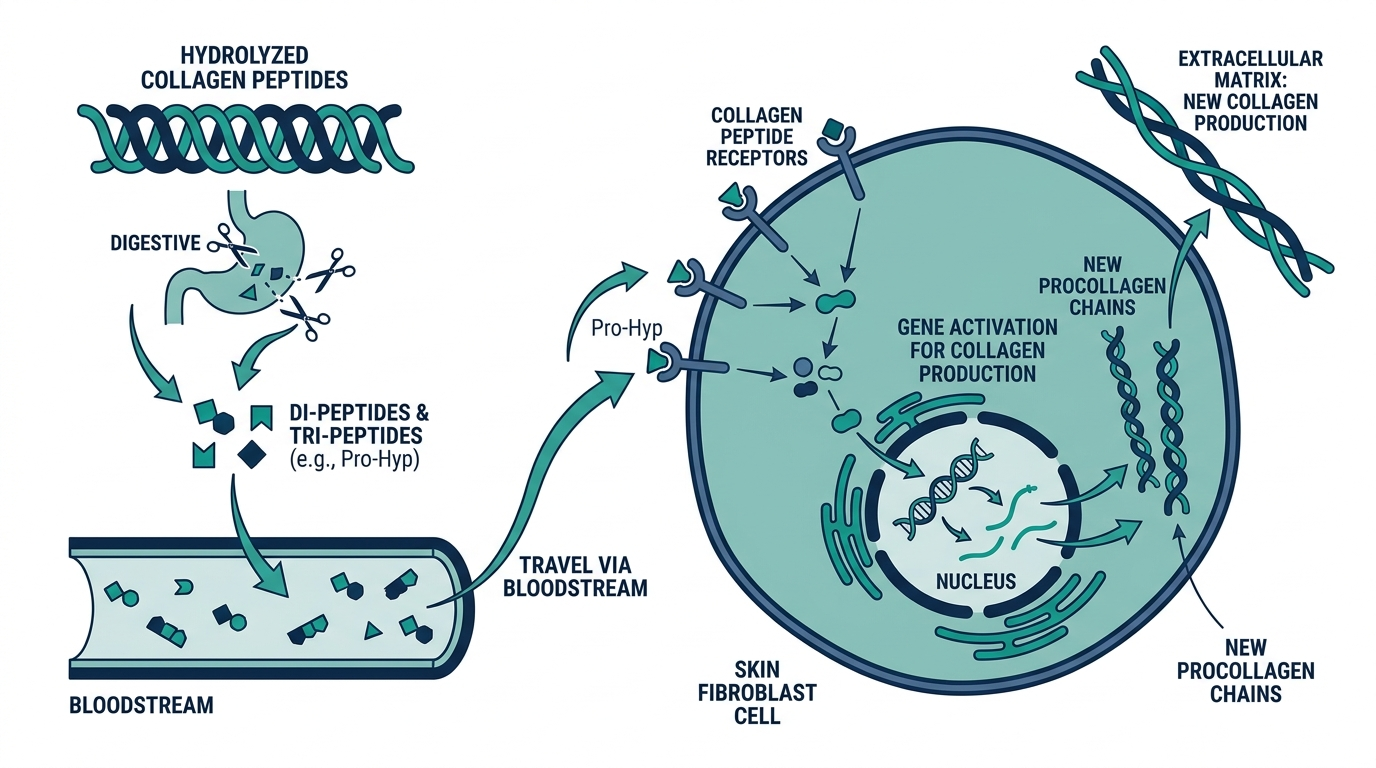
This is the most repeated objection, and it gets the biology half right. Yes, stomach acid denatures collagen protein. But denaturation is not destruction; it is the first step in digestion that makes absorption possible. Hydrolyzed collagen has already been enzymatically pre-broken into peptides with a molecular weight of around 2,000 to 5,000 Daltons, small enough to survive the gastrointestinal tract and cross the intestinal wall.
A 2024 randomized, double-blind crossover study measured blood concentrations of collagen-derived peptides at intervals after ingestion and confirmed that hydroxyproline-containing di- and tripeptides reach measurable concentrations in plasma, significantly higher than other food-derived peptides. The key tracer is the Gly-Pro-Hyp tripeptide, which Nature’s npj Science of Food identified as highly stable in human blood after collagen hydrolysate ingestion. Those peptides peak in the bloodstream 1 to 2 hours after consumption, travel to the dermis, and stimulate fibroblast migration and new collagen synthesis.
So the old skeptic argument that “it just becomes amino acids” applies to intact collagen protein, not to properly hydrolyzed collagen peptides. The form matters enormously.
This is the single most important distinction that most “collagen doesn’t work” articles fail to make. Hydrolyzed peptides behave differently than intact protein in the digestive tract.
What Does the Skin Evidence Actually Show?
The skin data is the strongest category, and it is more nuanced than either the brand marketing or the skeptics will tell you.
A 6-week RCT published in Cosmetics, 80 healthy women, 2.5 g/day of low-molecular-weight collagen peptides versus placebo, found wrinkle volume reduced by 46%, wrinkle area reduced by 44%, wrinkle depth reduced by 9%, and skin moisturization 34% higher than the placebo group. A 2025 meta-analysis in the American Journal of Medicine pooled 23 randomized controlled trials with 1,474 participants and found collagen supplements significantly improved skin hydration, elasticity, and wrinkle depth across the board.
Here is the part the supplement industry does not advertise: the same meta-analysis found that when you separate industry-funded trials from independently-funded trials, the effect size shrinks. Independent trials showed smaller improvements, though still positive. This is not a reason to dismiss collagen peptides, but it is a reason to look at the independent trials first and treat the branded studies as directionally useful, not definitive.
The 2026 Frontiers in Medicine systematic review analyzed 19 RCTs with 1,341 participants and concluded that oral collagen peptides significantly improved skin hydration and elasticity, with an effect that strengthens at 12 weeks compared to 6 weeks. Effect sizes were meaningful in both age groups studied (under 45 and 45+).
Full-body lab membership: 100+ biomarkers, doctor-reviewed, tracked over time.
Do Collagen Peptides Work for Joint Pain?
The joint data is the most clinically rigorous category, and the dose is higher than most people take.
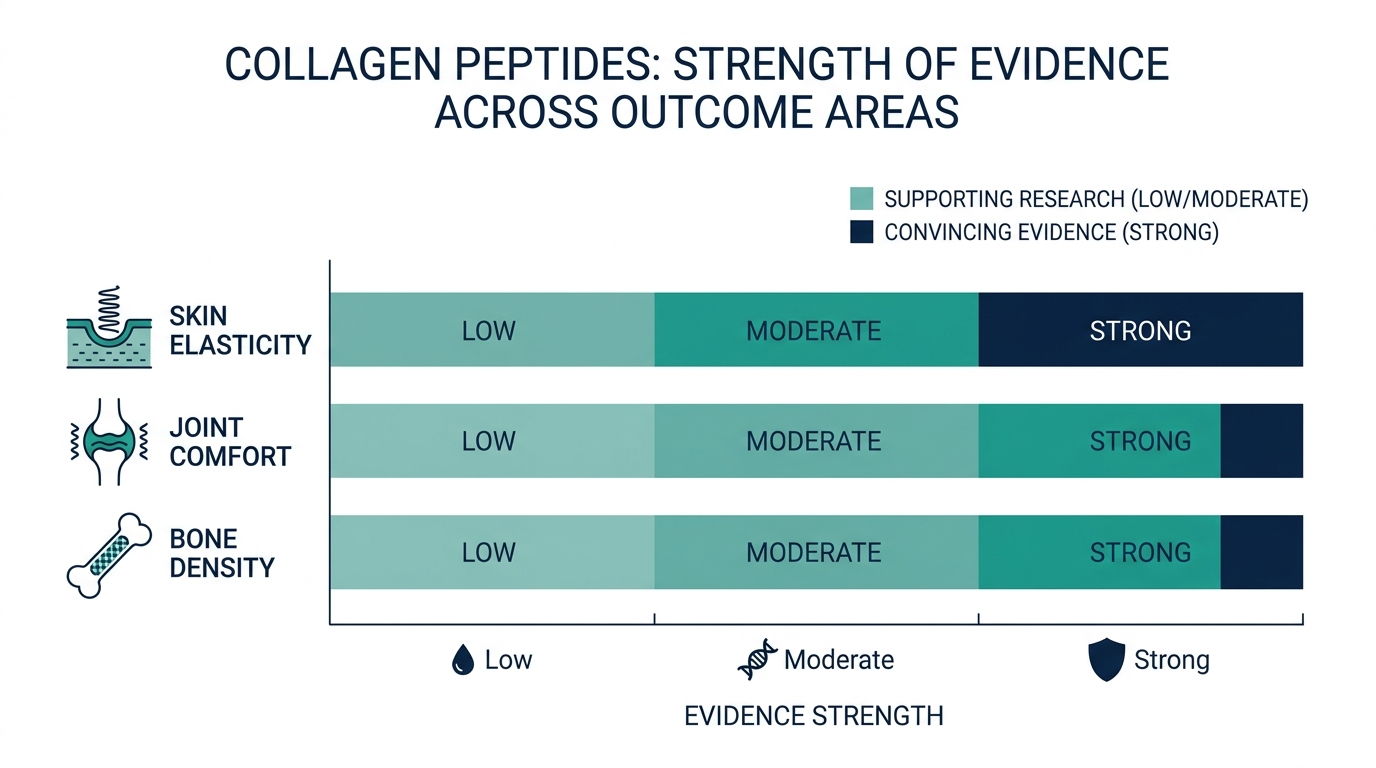
A 2024 RCT involving 182 participants, randomized to 5 g of specific collagen peptides or placebo for 12 weeks, found statistically significant reductions in pain at rest (p = 0.018), during walking (p = 0.032), when climbing stairs (p = 0.040), and when kneeling (p < 0.001) compared to placebo. A separate 2025 double-blind trial using 3 g/day of low-molecular-weight collagen peptides in 80 adults with knee osteoarthritis over 180 days showed meaningful improvements in pain scores and inflammatory markers including C-reactive protein.
The mechanism here is straightforward. Type II collagen is the primary structural protein in articular cartilage. Oral collagen peptides accumulate in cartilage tissue, where they stimulate chondrocytes (cartilage cells) to produce more extracellular matrix, including new collagen. A 2025 Frontiers in Nutrition meta-analysis confirmed that collagen peptide supplementation improves both bone and muscle outcomes, with the clearest signal in activity-related joint discomfort in people under 50 who are physically active.
Personally, I find the joint evidence more convincing than the skin evidence, because it is harder to fake in blinded trials and the mechanistic pathway has been independently verified in cartilage tissue studies.
Is There a Right Dose? (The Numbers Most People Get Wrong)
Most people take too little. The clinical literature maps out three distinct dose tiers based on outcome:
| Goal | Evidence-Based Dose | Duration | Key Studies |
|---|---|---|---|
| Skin hydration and wrinkle reduction | 2.5 to 5 g/day | 6 to 12 weeks | 6-week RCT (46% wrinkle volume reduction at 2.5 g); 12-week RCTs at 5 g |
| Activity-related joint pain | 5 to 10 g/day | 12 weeks minimum | 2024 RCT (182 participants, 5 g, significant pain reductions at all activity levels) |
| Muscle support / masters athletes | 15 g/day | 12+ weeks, with resistance training | Frontiers in Nutrition 2025 meta-analysis; resistance-trained men study (30 g/day acutely for collagen synthesis) |
The standard 1-scoop serving of Vital Proteins (20 g) or most powder brands runs about 18 to 20 g per scoop, which actually exceeds the clinical dose for skin and sits in the high range for joint work. The problem is not the amount in most premium products; it is that people skip days, stop at 4 weeks because they see nothing yet, or forget the vitamin C requirement.
Why Vitamin C Is Not Optional
This is the insider detail that separates people who get results from people who run a moderately expensive protein experiment. Collagen synthesis requires vitamin C as an enzymatic cofactor for two reactions: hydroxylation of proline and hydroxylation of lysine. Without those reactions, the procollagen chain cannot fold into the triple helix that makes collagen mechanically useful.
A 2017 study in the American Journal of Clinical Nutrition had subjects consume either placebo, 5 g, or 15 g of gelatin plus 48 mg of vitamin C one hour before brief exercise, repeated every 6 hours for three days. The 15 g group showed serum PINP (a marker of collagen synthesis) more than double the placebo. Timing was also key: amino acid concentrations peaked in blood about one hour after a 15 g dose, making the pre-exercise window the optimal time to consume it.
Practically: take your collagen peptides with a small glass of orange juice (roughly 60 mg vitamin C), or add a vitamin C supplement, 60 to 90 mg is enough. Megadosing vitamin C does not increase the benefit. And take it 30 to 60 minutes before a workout or physical activity for the best collagen synthesis signal.
Do not believe the “any time of day works equally” line that some brands use to remove the friction from their instructions. The exercise timing + vitamin C combination is the protocol with the clearest human evidence.
Marine vs. Bovine Collagen: Does the Source Matter?
It depends on what you are trying to accomplish, and the source genuinely changes the outcome.
Marine collagen (typically from fish scales or skin) is predominantly Type I, which is also the dominant type in human skin, tendons, and bone. Research shows marine collagen has approximately 1.5 times higher bioavailability than bovine collagen due to its smaller average peptide size post-hydrolysis. For skin goals, marine collagen has the edge on paper. It is also the better choice for anyone avoiding red meat for religious, ethical, or dietary reasons.
Bovine collagen (from cattle hide or bones) provides Types I and III together. Type III is the second-most-abundant structural collagen in the body, found in muscle, blood vessels, and the intestinal wall. For gut support, connective tissue repair, and broad structural coverage, bovine is the more versatile option. It is also cheaper per gram and more widely available.
Chicken-derived collagen is the primary source of Type II, the cartilage collagen. If your goal is specifically osteoarthritis or cartilage support, undenatured Type II collagen (UC-II) is a separate product category from hydrolyzed peptides, with its own evidence base and a much lower dose (40 mg versus 5 to 10 g).
Personally, I default to a bovine hydrolysate for everyday use and would switch to a marine product specifically if I were targeting skin metrics and budget was not a constraint.
A Comparison of Common Collagen Peptide Products
| Product | Source | Collagen per serving | Notable extras | Typical price/serving |
|---|---|---|---|---|
| Vital Proteins Collagen Peptides (20 oz) | Bovine (grass-fed) | 20 g | Hyaluronic acid + vitamin C in Advanced version | ~$1.30 |
| Vital Proteins Marine Collagen | Marine (wild-caught snapper) | 12 g | Unflavored, mixes cleanly | ~$1.60 |
| NeoCell Super Collagen | Bovine | 6 g | Lower dose per serving | ~$0.60 |
| Ancient Nutrition Multi Collagen | Bovine + marine + chicken | 9 g | Types I, II, III, V, X; covers all bases | ~$1.80 |
| Momentous Collagen Peptides | Bovine | 15 g | Formulated with vitamin C included | ~$2.00 |
Vital Proteins remains the de facto benchmark: third-party tested, dissolves without clumping in hot or cold liquid, and priced near the median. The Advanced version adds hyaluronic acid and vitamin C in one scoop, removing the cofactor-timing friction.
Hydrolyzed type I & III collagen peptides, third-party tested, unflavored.
What Does Not Work (The Myth-Buster Section)
Myth 1: “Eat more bone broth to get collagen.” Bone broth contains roughly 3 to 5 g of collagen precursors per cup, but most of it is intact gelatin, not hydrolyzed peptides. Your gut breaks gelatin into amino acids the same way it handles any protein. You would need to consume an unrealistic volume to match the plasma peptide concentrations you get from one scoop of hydrolysate.
Myth 2: “More is always better; 40 g a day is safer.” The evidence plateau is around 15 to 20 g for skin and joint goals. Going higher is not dangerous (collagen is a food), but it is not evidence-backed. You are paying more for marginal additional benefit after 20 g/day.
Myth 3: “Topical collagen creams work the same way.” Intact collagen molecules are too large (molecular weight roughly 300,000 Daltons) to penetrate the dermis through topical application. The creams provide surface moisturization, which has cosmetic value, but they are not stimulating fibroblasts the way oral hydrolyzed peptides do. GHK-Cu (copper peptide serums) operate through a completely different mechanism and are a separate, legitimately interesting topical category.
Myth 4: “You will see results in two weeks.” The skin studies that show wrinkle improvements start at 6 weeks and strengthen at 12 weeks. Joint studies need a minimum of 12 weeks to show meaningful pain reduction. If you stop at week 4 because you notice nothing, you stopped before the trial period even starts.
What About the Skeptics Who Say It Does Not Work?
The skeptic position is not irrational. The honest version of it is: many trials are industry-funded, the effect sizes in independent trials are smaller, and absolute wrinkle reductions measured on instruments (not visible in the mirror) can be statistically significant but practically modest.
These are legitimate caveats. They are not reasons to conclude collagen peptides are a scam.
A 2025 Frontiers systematic review covering 19 RCTs in 1,341 participants found significant improvements in skin hydration and elasticity even in independently funded subgroup analyses. The joint pain data is harder to dismiss: statistically significant reductions in pain during specific activities (p < 0.001 for kneeling in the 2024 RCT) are meaningful to the people walking up stairs.
The honest answer is: the effect is real, it is dose-dependent, it is time-dependent (minimum 8 to 12 weeks), and it is not dramatic in the way a pharmaceutical would be. For a food-derived supplement at $30 to $60 per month, a 30 to 46% improvement in a wrinkle measurement or a clinically significant reduction in knee pain during exercise is a reasonable return.
How Long Before You See Results?
Timeline expectations matter because most people quit before the clinical window opens:
- Weeks 1 to 2: No visible changes. Plasma amino acid levels are elevated. Fibroblast stimulation is beginning but has not accumulated into structural change.
- Weeks 4 to 6: Skin hydration may improve measurably (instruments detect it before a mirror does). Some people notice softer texture or less morning joint stiffness.
- Weeks 8 to 12: The range where the RCTs show statistically significant wrinkle and elasticity improvements. Joint pain studies require this full window for significant between-group differences.
- Months 4 to 6: Consistent supplementation continues to build dermal density and supports cartilage matrix maintenance. The literature does not cap benefits at 12 weeks; it just stops studying there.
The irony is that collagen peptides have the longest required commitment of any common supplement, and they are sold to people with the shortest patience for subtle change.
Turn what you just learned into action.
Superpower lets you test 100+ biomarkers from home, then re-check them over time so you can actually see progress, physician-reviewed at every step.
FAQ: Do Collagen Peptides Work?
Do collagen peptides actually work for skin?
Yes, with real conditions. Multiple RCTs show measurable improvements in hydration, elasticity, and wrinkle depth at doses of 2.5 to 5 g/day over 6 to 12 weeks. A 6-week trial showed wrinkle volume reduced by 46% and moisturization up by 34% versus placebo. Effect sizes are smaller in independently-funded trials than industry-funded ones, but the direction of evidence is consistent.
How long does it take for collagen peptides to work?
The earliest measurable improvements in skin hydration appear around weeks 4 to 6. Statistically significant wrinkle and elasticity improvements in the RCTs show up at 6 to 12 weeks. Joint pain relief requires at least 12 weeks at a 5 g/day dose. Stopping at 4 weeks is stopping before the protocol has a fair chance.
What is the best dose of collagen peptides?
2.5 to 5 g/day for skin; 5 to 10 g/day for joint pain; 15 g/day for muscle support in older adults doing resistance training. Most premium powder products serve 15 to 20 g per scoop, which exceeds the skin dose and sits in the joint range. Lower-dose capsule products (1 to 3 g) are at the low end of the evidence base.
Do you need vitamin C with collagen peptides?
Yes. Vitamin C is a required enzymatic cofactor for collagen cross-linking. Without it, the peptide substrates arrive but the final synthesis step is impaired. Take 60 to 90 mg of vitamin C with your collagen dose, 30 to 60 minutes before physical activity. You do not need a high-dose supplement; a small glass of orange juice is enough.
Is marine collagen better than bovine collagen?
For skin goals, marine collagen has slightly higher bioavailability (approximately 1.5 times) and is concentrated in Type I, the collagen type dominant in skin. For broader structural support including connective tissue and gut, bovine collagen’s Type I plus Type III combination is more versatile. Both work for joint support; undenatured Type II (chicken-derived) is a separate product for cartilage specifically.
Do collagen peptides work for hair and nails?
The clinical evidence for hair and nails is weaker than for skin and joints. Collagen is a structural component of the nail matrix and scalp dermis, so the theoretical rationale exists. A handful of small trials show improvements in nail growth rate and brittleness. For hair specifically, the evidence is thinner; dermatologists typically point to biotin, iron, and ferritin before collagen for hair concerns.
What collagen peptide should I actually buy?
For a reliable baseline: Vital Proteins Collagen Peptides (bovine, grass-fed, 20 g per scoop, third-party tested). The Advanced version adds hyaluronic acid and vitamin C in the same scoop. Marine versions from Vital Proteins or Momentous are worth the price premium if skin is your primary goal. Avoid capsule products under 5 g per serving if joint support is the goal.
Author: Vital Signs Today Editorial Team, [credential]”]. Educational content, not medical advice. Sources linked inline.
Hydrolyzed type I & III collagen peptides, third-party tested, unflavored.
Primary Sources
- Frontiers in Nutrition: Absorption of bioactive peptides following collagen hydrolysate intake (2024 RCT)
- npj Science of Food: Highly stable bioactive 3-hydroxyproline-containing tripeptide in human blood after collagen hydrolysate ingestion
- Cosmetics (MDPI): Anti-Aging Effects of Low-Molecular-Weight Collagen Peptide Supplementation on Facial Wrinkles (6-week RCT)
- American Journal of Medicine: Effects of Collagen Supplements on Skin Aging, Systematic Review and Meta-Analysis of 23 RCTs (2025)
- Frontiers in Medicine: Oral and topical peptides for skin aging, systematic review and meta-analysis of 19 RCTs (2026)
- International Journal of Environmental Research and Public Health: Impact of Specific Bioactive Collagen Peptides on Joint Discomforts (2024 RCT, 182 participants, 5 g/day)
- PMC: Efficacy and safety of low-molecular-weight collagen peptides in knee osteoarthritis (2025 RCT, 3 g/day, 180 days)
- Frontiers in Nutrition: Efficacy of collagen peptide supplementation on bone and muscle health, meta-analysis (2025)
- PMC: Vitamin C-enriched gelatin supplementation before intermittent activity augments collagen synthesis
- Springer Nature Food, Nutrition and Health: Effects and mechanisms of collagen peptides for alleviating skin ageing (2026)
- PMC: Collagen Hydrolysates for Skin Protection: Oral Administration and Topical Formulation
- Vital Proteins Collagen Peptides product page
Related reading
Vital Signs Today may earn a commission if you buy through links on this page. It does not affect our editorial assessments.