
Last updated 18 June 2026. Educational content, not medical advice. Collagen peptides are a food supplement, not a treatment for any condition. Some links on this page are affiliate links, which means we may earn a commission if you buy through them at no extra cost to you. That does not change which products clear the testing bar below.
Short answer: The best collagen peptides for most people are plain hydrolyzed Type I and III collagen (“hydrolyzed collagen” or “collagen peptides” on the label, not “gelatin”), taken at 10 to 20 grams a day for skin, hair, and nails, from a brand that publishes a third-party Certificate of Analysis and a heavy-metals test. The clinical sweet spot in the skin trials runs from roughly 2.5g of a specific bioactive peptide up to 10g of generic hydrolysate, taken for 8 to 12 weeks before you judge it. For joints, the molecule changes entirely: you want 40mg of undenatured Type II collagen (UC-II), which is a different product, not a bigger scoop. Vital Proteins is the safe default and the reference everyone benchmarks against, but on price per effective gram it sits in the middle of the pack, and at least two competitors deliver the same Type I&III peptides for 20 to 40% less. Buy the dose and the test report, not the Instagram tub.
What does “best collagen peptides” even mean?
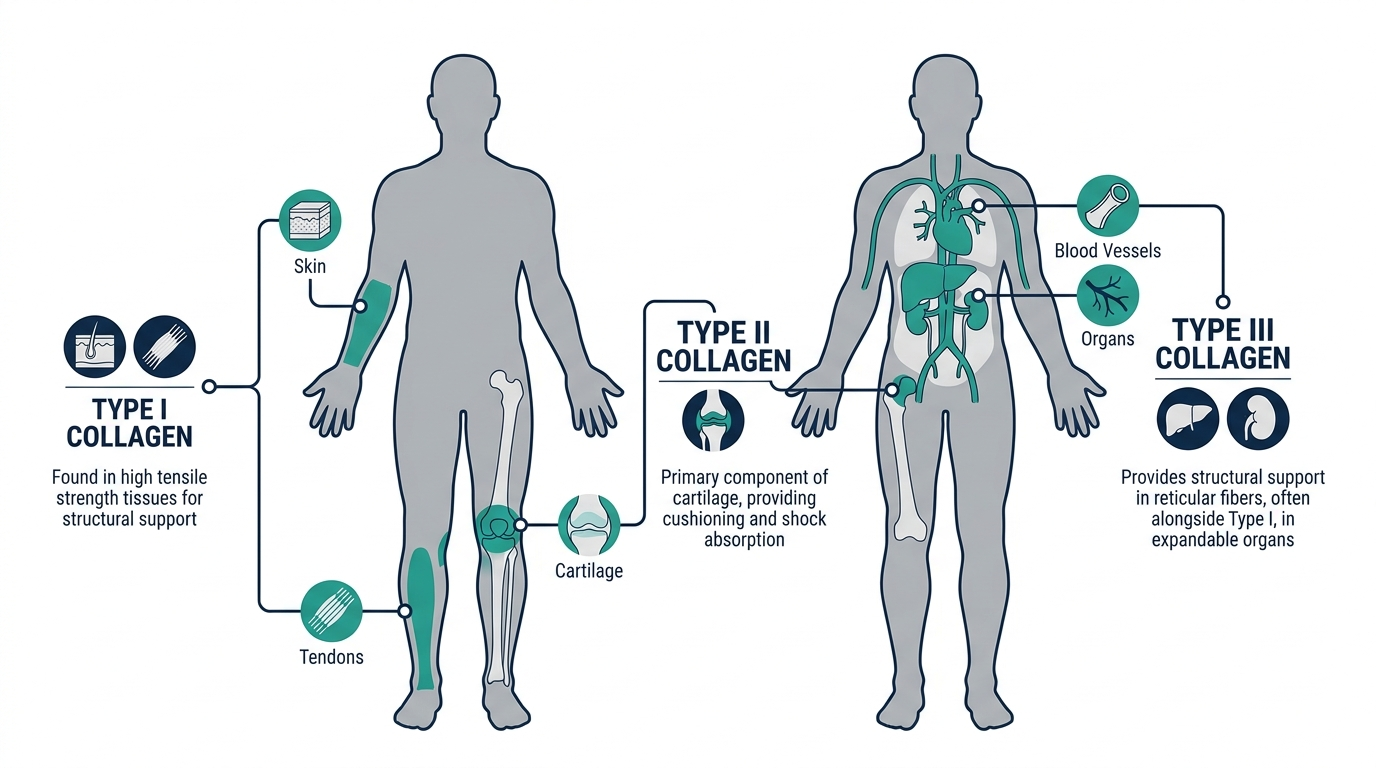
Here is the thing nobody selling you a $45 tub will say first: collagen is one of the few supplements in the wellness aisle that actually has a respectable pile of randomized, placebo-controlled human trials behind it. That is the good news. The bad news is that “collagen” on a label can mean five different things, sold at five wildly different prices, and the marketing deliberately blurs them.
So “best” is not one answer. It is four answers, depending on your goal:
- Skin, hair, nails: hydrolyzed Type I & III collagen peptides.
- Joints and cartilage: undenatured Type II collagen, a totally different molecule at a tiny dose.
- Budget: the same Type I&III peptides, in a plain bag, at half the brand-name price.
- Marine / pescatarian: fish-derived Type I, chemically the same once it is in you, despite the premium it commands.
Most “best collagen” listicles never make that distinction, because the affiliate payout is bigger when they funnel everyone toward one expensive tub. I am going to do the opposite and tell you where the warehouse bag is chemically identical to the premium one.
Full-body lab membership: 100+ biomarkers, doctor-reviewed, tracked over time.
Do collagen peptides actually work, or is it hype?
Both, honestly, and the line between them is the dose and the timeframe. This is the part where I separate what the trials show from what the ads imply.
For skin, the evidence is real but modest. A double-blind, randomized, placebo-controlled study of 112 women took 10g of hydrolyzed collagen peptide daily for 8 weeks and saw significant improvements in skin elasticity, hydration, and roughness versus placebo (CollaSel Pro study, PMC). The most-cited trial in the whole category used a specific bioactive peptide (Verisol, bovine-derived) at just 2.5g a day in 66 women aged 35 to 55: after 8 weeks, eye-area wrinkle volume dropped about 25%, forearm skin hydration rose around 26%, and elasticity improved around 9% versus placebo (Verisol trial, via Nutritional Outlook).
Notice what that means. The famous 25% wrinkle result came from a patented, specific peptide sequence at 2.5g, not from any random scoop of hydrolysate. Generic powders tend to need the bigger 5 to 10g dose to move hydration. A dose-comparison study in 214 women found hydration improved only in the 5g and 10g groups, not the 2.5g group, when using plain fish hydrolysate (low-molecular-weight collagen peptide RCT, PMC).
For joints, plain collagen peptides have weaker, mixed evidence, but a completely different molecule, undenatured Type II collagen (UC-II), has surprisingly strong data, which I will get to.
Here is my honest opinion after reading this literature: collagen is not snake oil, but it is also not the miracle the tub photography promises. It is a “real but small, and only if you actually take enough for long enough” supplement. Most people who say “it didn’t work for me” took 2.5g of generic powder for three weeks and quit. They underdosed and under-waited.
Myth to kill right now: “Collagen you eat goes straight to your face.” No. You digest it into amino acids and small di/tri-peptides like any other protein. The leading hypothesis is that certain collagen-derived peptides (like prolyl-hydroxyproline) act as signals that nudge your own fibroblasts to make more collagen, on top of supplying raw amino acids. It is closer to “sending a memo to the factory” than “shipping bricks to the wall.” That is why the specific peptide sequence in a product can matter more than the gram count, and why the cheapest powder and the priciest one are not always equal even at the same dose.
Type I & III vs Type II: which collagen for which goal?
This is the single most expensive mistake people make: buying a giant tub of Type I&III peptides for their knees, when the joint evidence sits with a tiny 40mg pill of something else.
Type I & III (skin, hair, nails, gut): This is what 95% of “collagen peptides” powder is. Type I is the dominant collagen in skin, tendon, and bone; Type III rides along in skin and blood vessels. You take it hydrolyzed, in grams, dissolved in coffee or water. This is your skin-and-nails product.
Type II (joints, cartilage): Cartilage is mostly Type II collagen, and here the winning form is undenatured (also called native, or UC-II), not hydrolyzed. The dose is microscopic by comparison: 40mg once a day. The mechanism is different too. It is thought to work through oral tolerance, training your immune system to stop attacking your own joint cartilage, rather than supplying building blocks.
The UC-II joint data is genuinely good. A randomized, double-blind, 90-day trial found 40mg of UC-II was more than twice as effective as the standard 1,500mg glucosamine + 1,200mg chondroitin combo for knee osteoarthritis: UC-II cut WOMAC scores by 33%, pain (VAS) by 40%, and Lequesne index by 20%, versus 14%, 15%, and 6% for glucosamine + chondroitin (Lugo et al., PMC). A 40mg capsule beating a 2,700mg combo is the kind of result that should reframe how you shop for joint support.
Insider takeaway: if your goal is knees, do not buy collagen powder at all. Buy a UC-II capsule (40mg) and ignore the scoop-size marketing entirely. The powder and the capsule are not competing versions of one product; they are two different supplements that happen to share the word “collagen.”
Marine vs bovine collagen: does the source actually matter?
Marine collagen costs more, gets marketed as “more bioavailable,” and is the darling of clean-beauty brands. Let me puncture that gently.
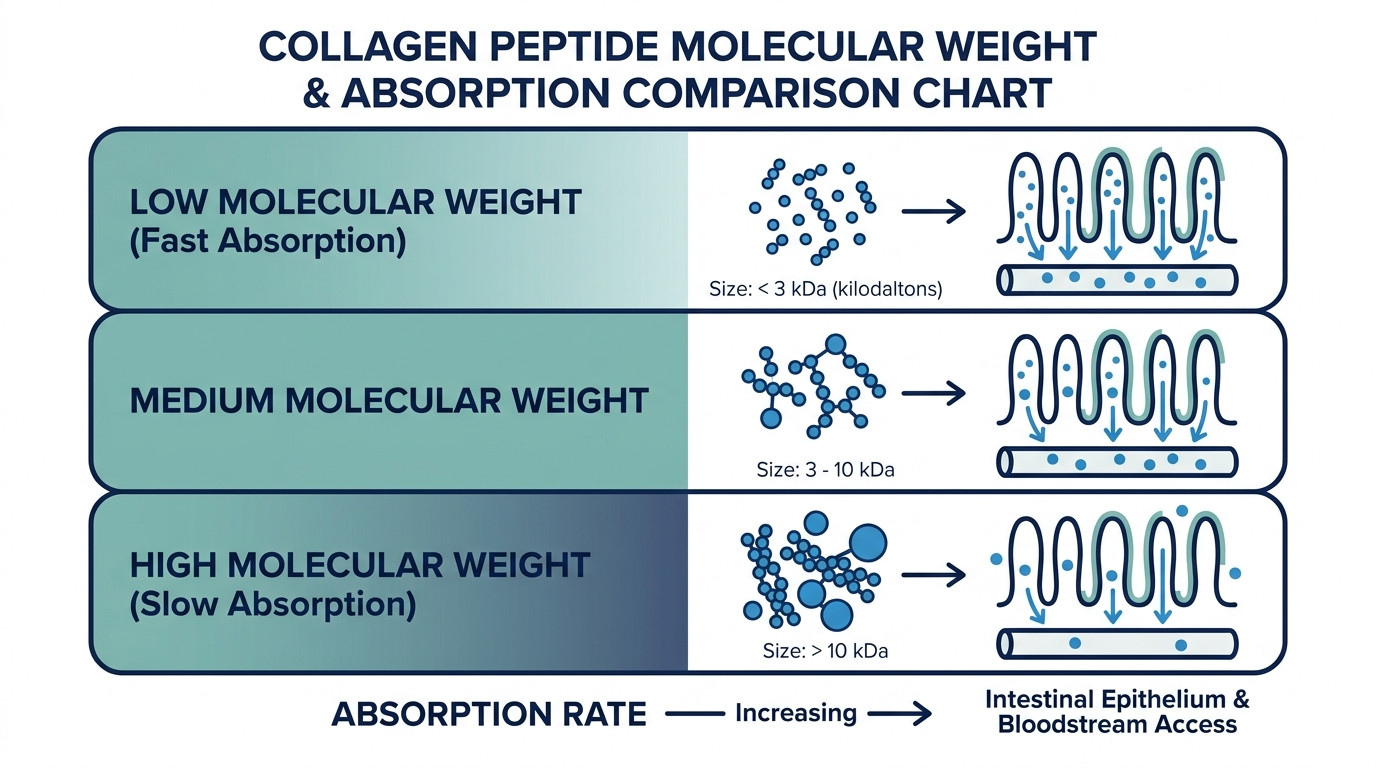
Marine (fish) collagen is Type I and tends to have a lower molecular weight (around 300 to 500 daltons) than bovine (around 1,000 to 1,500), and the absorption stat that floats around is “marine absorbs up to 1.5x faster” (marine vs bovine evidence review). Sounds decisive. Here is the catch the brands skip: once any collagen is hydrolyzed into low-molecular-weight peptides, the bioavailability gap mostly closes, and there is no head-to-head trial showing marine produces better skin outcomes than bovine at the same dose. In fact, the most famous wrinkle-reduction result in the entire category (the 25% Verisol study) was bovine.
So the honest scorecard:
- Pick marine if: you are pescatarian, you avoid beef and pork for religious or dietary reasons, or you simply prefer it. Those are real reasons.
- Do not pick marine because: you think it is meaningfully more effective for your skin. The evidence does not support paying the premium for that.
- One real downside of marine: it can carry a faint fishy taste in unflavored form, and it is a fish/shellfish allergen consideration.
My take: marine is a preference tier, not a performance tier. If a brand’s marine line costs 40% more than its bovine line and shows you the same kind of COA, you are paying for the word “marine,” not for better results.
What do the best collagen peptides actually look like on the label?
Three label terms decide whether you are buying something with trial support or something useless:
- “Hydrolyzed collagen” or “collagen peptides.” Hydrolyzed means the long collagen chains are already broken into small peptides your gut can absorb. This is what every trial used. Good.
- “Gelatin” or “collagen protein” (un-hydrolyzed). Gelatin is collagen that is only partly broken down; it gels in cold water and is not what the peptide trials studied. Fine for bone broth, not what you want for a daily skin dose.
- “Type I & III” stated explicitly, with a gram count per scoop that lets you hit 10g+ easily.
What does not belong on a good label: a giant “proprietary beauty blend” that hides how many grams of actual collagen you get, a pile of fillers, or “collagen” with no type, no hydrolysis claim, and no test report.
Aside, and this one annoys me: “grass-fed” and “pasture-raised” are slapped on collagen tubs as a premium signal, but grass-fed does not automatically mean lower heavy metals. Sourcing and testing do. A grass-fed tub with no heavy-metals COA is a worse buy than a conventional one that publishes a clean lead and arsenic test. The certification that matters is on the lab report, not the cow.
The heavy-metals problem nobody puts on the front of the tub
This is the part I most want you to take away, because it is genuinely underreported. Collagen is rendered from animal hides, bones, and skin, the exact tissues where environmental heavy metals accumulate over an animal’s life. That makes contamination a real, measured risk, not a fear-marketing talking point.
The Clean Label Project and Organic Consumers Association tested 28 top-selling collagen brands on Amazon and found measurable heavy metals in a large share: roughly 64% tested positive for arsenic, 37% for lead, 34% for trace mercury, and 17% for cadmium (Organic Consumers Association). One popular chocolate collagen product exceeded the testing limits for both lead and cadmium per serving.
And the regulatory backstop you are imagining does not exist: neither the FDA nor any state agency routinely tests supplements for heavy metals before they hit shelves (Clean Label Project white paper). The brand testing is the safety net. If a brand will not show you a recent heavy-metals result, you are trusting a hide-and-bone product with zero verification.
So the non-negotiable filter for “best collagen peptides” in 2026 is not flavor or brand or even price. It is: does this company publish a third-party Certificate of Analysis that includes heavy metals (lead, arsenic, cadmium, mercury), batch-matched and recent? The certifications that carry real weight are NSF Certified for Sport and Informed Sport / Informed Choice, because those programs test finished product for contaminants and banned substances, not just the raw ingredient.
The top collagen peptides in 2026, by goal
I am ranking by what matters: clinically relevant dosing, verified third-party testing, and price per effective 10g dose, not price per tub. A big tub at a low sticker price can still be expensive per dose if the scoop is small, and a small tub can be cheap per dose. Tub price is the number brands want you to compare; dose price is the number you should.
A note on prices: these move constantly, vary by package size and subscription, and were accurate at the ranges reported in early-to-mid 2026 reviews. Verify the live price and the current COA before you buy.
| Pick (goal) | Type / source | Testing | Approx. price per effective dose | Why it wins |
|---|---|---|---|---|
| Best overall (skin/hair/nails) Vital Proteins Collagen Peptides | Hydrolyzed Type I & III, bovine | NSF content tested, COA published | about $0.11/g, so about $1.10 per 10g | The reference product. Dissolves clean hot or cold, consistent, easy to find. You pay a brand premium. |
| Best value (same peptides, less money) Sports Research Collagen Peptides | Hydrolyzed Type I & III, bovine grass-fed | Informed Choice, third-party tested | about 20 to 30% under Vital Proteins per gram | Chemically the same Type I&III job, Informed-tested, undercuts the brand leader. My pick if you just want the dose. |
| Best budget Orgain Hydrolyzed Collagen | Hydrolyzed Type I & III, bovine | Third-party tested | about $0.08/g, so about $0.80 per 10g | One of the cheapest tested powders. If money is the constraint and the COA is clean, this is rational. |
| Best transparency Naked Collagen | Hydrolyzed Type I & III, bovine grass-fed | Heavy-metals tested, single ingredient | competitive per 10g | One ingredient, strong testing transparency, no flavor games. |
| Best for athletes Momentous Collagen | Hydrolyzed Type I & III | Informed Sport certified | slightly above category average | If you are drug-tested, Informed Sport is the certification that protects you. Worth the small premium for that reason only. |
| Best for joints (different molecule) any branded UC-II 40mg | Undenatured Type II | look for branded UC-II + COA | pennies per day | Not a powder. 40mg capsule beat glucosamine+chondroitin 2:1 in trials. Buy this, not a bigger scoop, for knees. |
| Best marine (preference) a tested fish Type I | Hydrolyzed Type I, marine | third-party + heavy-metals | premium tier | Only if you avoid bovine. Same skin job, higher price, faint fish note. |
The insider line buried in that table: Vital Proteins and a plain bag of grass-fed Type I&III hydrolysate are, at the molecular level, doing the same thing. The dossier, the flavor work, the dissolve quality, and the shelf presence are real and worth something to some people. But if you are optimizing for results-per-dollar, the warehouse-tier and the premium-tier collagen are far closer chemically than their price gap suggests. You are often buying packaging and trust, which is fine, as long as you know that is what you are buying.
Hydrolyzed type I & III collagen peptides, third-party tested, unflavored.
Flavored vs unflavored: which should you buy?
Unflavored, almost always. Here is the reasoning, not just the verdict.
Unflavored hydrolyzed collagen is close to tasteless and dissolves into coffee, smoothies, or water without changing them, which means you will actually take it every day. Adherence is the entire game with a supplement that needs 8 to 12 weeks to show anything. The flavored versions add sweeteners, sometimes sugar, sometimes a “proprietary blend” that quietly reduces how much actual collagen is in each scoop, and they cost more per effective gram.
The one honest exception: if a flavored version is the only way you will remember to take it daily, the flavored tub you actually finish beats the unflavored tub that sits in the cupboard. Adherence beats purism. But go in knowing you are usually paying more for less collagen and some sucralose.
How much, how long, and how should you take it?
Educational, not a prescription. A clinician or dietitian should tailor this to you.
- Dose: 10 to 20g a day of hydrolyzed Type I&III for skin, hair, and nails. If you are using a specific clinically-studied bioactive peptide (like Verisol), its studied dose can be as low as 2.5g, because the sequence is the active part. For joints, 40mg UC-II, which is a separate capsule.
- Timing: it largely does not matter. Collagen is not caffeine; there is no magic window. Some people pair it with vitamin C because vitamin C is a cofactor for your body’s own collagen synthesis. Reasonable, not essential.
- Duration before judging: give it 8 to 12 weeks minimum. The skin trials that showed results ran 8 weeks or longer. Quitting at three weeks because “nothing happened” is the most common reason people conclude collagen is useless. They never reached the finish line.
- Mixing: add it to liquid and stir; good hydrolyzed collagen dissolves without clumping. If it gels in cold water, that is a sign it is gelatin, not fully hydrolyzed peptides.
One myth to retire: more is not linearly better. The trials cluster around 2.5 to 15g; megadosing 40g of collagen does not double your results, it just makes an expensive, amino-acid-incomplete protein (collagen is low in tryptophan, so it is a poor standalone protein source). Hit the studied range and stop.
What I would actually buy
If I had to put my own money down today, here is the decision tree, no hedging:
- Skin, hair, nails, and I want the safe default: Vital Proteins. It is the reference, it is tested, I will not second-guess it.
- Skin, hair, nails, and I am cost-conscious: Sports Research or Orgain. Same Type I&III peptides, Informed or third-party tested, materially cheaper per effective gram. I lose nothing chemically.
- My knees, not my skin: a branded UC-II 40mg capsule. I would not buy collagen powder for joints at all, given that 40mg beat 2,700mg of glucosamine+chondroitin in trials.
- I am drug-tested as an athlete: Momentous, purely for the Informed Sport certification.
- I avoid beef: a tested marine Type I, accepting the premium and the faint fish note, knowing I am buying it for diet reasons, not better results.
- I want one all-in-one multi-source blend and do not want to think about it: Ancient Nutrition Multi Collagen Protein, a powder blending hydrolyzed bovine, chicken, fish, and eggshell-membrane collagen at about 20g per scoop, runs around $52.95 for a 16oz tub at most retailers (check the live price before buying, package sizes shift often).
- I want a capsule instead of a scoop, budget matters: Solaray sells Collagen Keratin (60 capsules, around $42.39) and Collagen Bone Complete (capsules, around $27.69), cheaper per bottle than most premium powders, though you get far less collagen per serving than a 10 to 20g scoop.
And the line I would tattoo on the inside of every collagen shopper’s eyelids: compare price per effective 10g dose, demand a heavy-metals COA, and give it 12 weeks. Do those three things and you have already beaten most of the market, which buys on tub aesthetics, underdoses, and quits early.
Hydrolyzed type I & III collagen peptides, third-party tested, unflavored.
Frequently asked questions
What are the best collagen peptides for skin?
Hydrolyzed Type I & III collagen at 10 to 20g a day, or a specific clinically-studied bioactive peptide (such as Verisol) at its lower studied dose of 2.5g. In trials, 8 to 12 weeks of consistent use improved skin elasticity, hydration, and wrinkle volume versus placebo. Choose a brand that publishes a recent third-party Certificate of Analysis including heavy metals.
Is Vital Proteins the best collagen peptide?
It is the safest default and the product most studies and clinicians benchmark against, because it is NSF content tested, dissolves cleanly, and is widely available. But on price per effective gram it sits in the middle of the pack. Competitors like Sports Research and Orgain deliver the same Type I&III peptides for 20 to 40% less, so “best” depends on whether you are optimizing for trust or for cost.
Marine or bovine collagen, which is better?
For skin results at the same dose, there is no convincing evidence that marine beats bovine; the most famous wrinkle-reduction trial used bovine collagen. Choose marine only if you avoid beef and pork for dietary or religious reasons, and accept the higher price and faint fishy taste. The molecular-weight advantage of marine largely disappears once both are hydrolyzed into peptides.
How much collagen should I take per day?
For skin, hair, and nails, 10 to 20g a day of hydrolyzed Type I&III, or 2.5g of a specific studied bioactive peptide. For joints, the evidence favors a different molecule entirely: 40mg a day of undenatured Type II collagen (UC-II), taken as a capsule, not a powder.
Do collagen peptides really work, or is it marketing?
They have genuine but modest randomized-trial support for skin (elasticity, hydration, wrinkle volume) and good evidence for joints in the UC-II form. Most “it didn’t work” reports come from underdosing (2.5g of generic powder) and quitting before 8 weeks. Take a clinically relevant dose for at least 8 to 12 weeks before deciding.
Are collagen supplements safe, or do they contain heavy metals?
Collagen is made from animal hides and bones, where heavy metals accumulate, and independent testing found measurable arsenic, lead, mercury, or cadmium in a majority of top-selling brands. Regulators do not routinely test before sale, so the brand’s own third-party heavy-metals COA is your safety net. Prefer products certified NSF for Sport or Informed Sport, which test finished product for contaminants.
Flavored or unflavored collagen?
Unflavored is the better value: near-tasteless, dissolves into anything, and no hidden sweeteners or “blends” that reduce the actual collagen per scoop. Choose flavored only if it is the difference between taking it daily and forgetting, because adherence matters more than purity over a 12-week run.
Author: Vital Signs Today Editorial Team, RD” hoặc “[name], MD”]. Educational content, not medical advice. Some links are affiliate links. Sources linked inline.
Primary sources (verify live before publish):
– CollaSel Pro hydrolyzed collagen 10g/8-week skin RCT (PMC): https://pmc.ncbi.nlm.nih.gov/articles/PMC11432272/
– Verisol 2.5g bioactive collagen peptide wrinkle/elasticity trial (via Nutritional Outlook): https://www.nutritionaloutlook.com/view/verisol-shows-skin-hydration-elasticity-improvement-and-wrinkle-reduction-in-recent-clinical-trial
– Low-molecular-weight collagen peptide skin RCT (PMC): https://pmc.ncbi.nlm.nih.gov/articles/PMC12438954/
– UC-II 40mg vs glucosamine+chondroitin knee OA RCT (Lugo et al., PMC): https://pmc.ncbi.nlm.nih.gov/articles/PMC4731911/
– Marine vs bovine collagen evidence review (Atika Wellness): https://www.atikawellness.com/blogs/atika-journal/marine-vs-bovine-collagen-what-the-science-actually-says
– Clean Label Project / Organic Consumers Association heavy-metals testing of collagen brands: https://organicconsumers.org/most-top-selling-collagen-peptide-health-food-products-test-positive-heavy-metals/
– Clean Label Project white paper (PDF): https://cleanlabelproject.org/wp-content/uploads/Organic-Consumers-Assoc-White-Paper_Updated.pdf
– Best collagen peptides 2026 product/price reviews (Treeline Review): https://www.treelinereview.com/gearreviews/best-collagen-powders