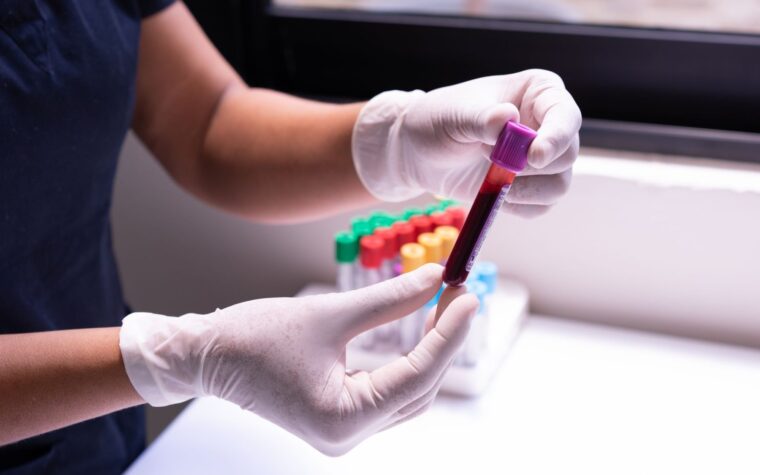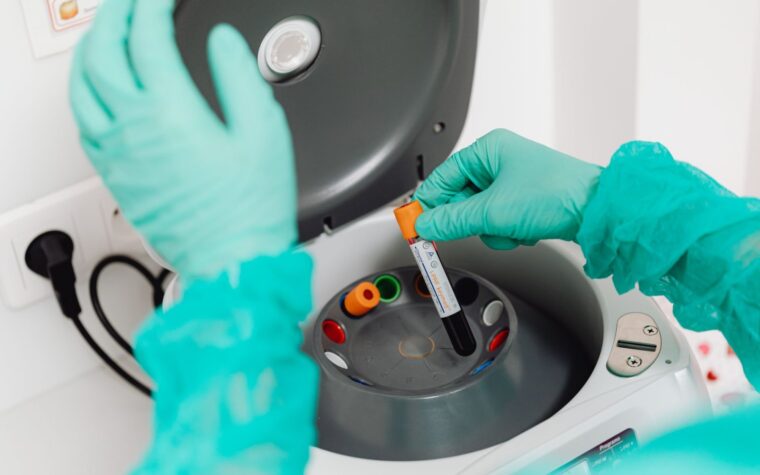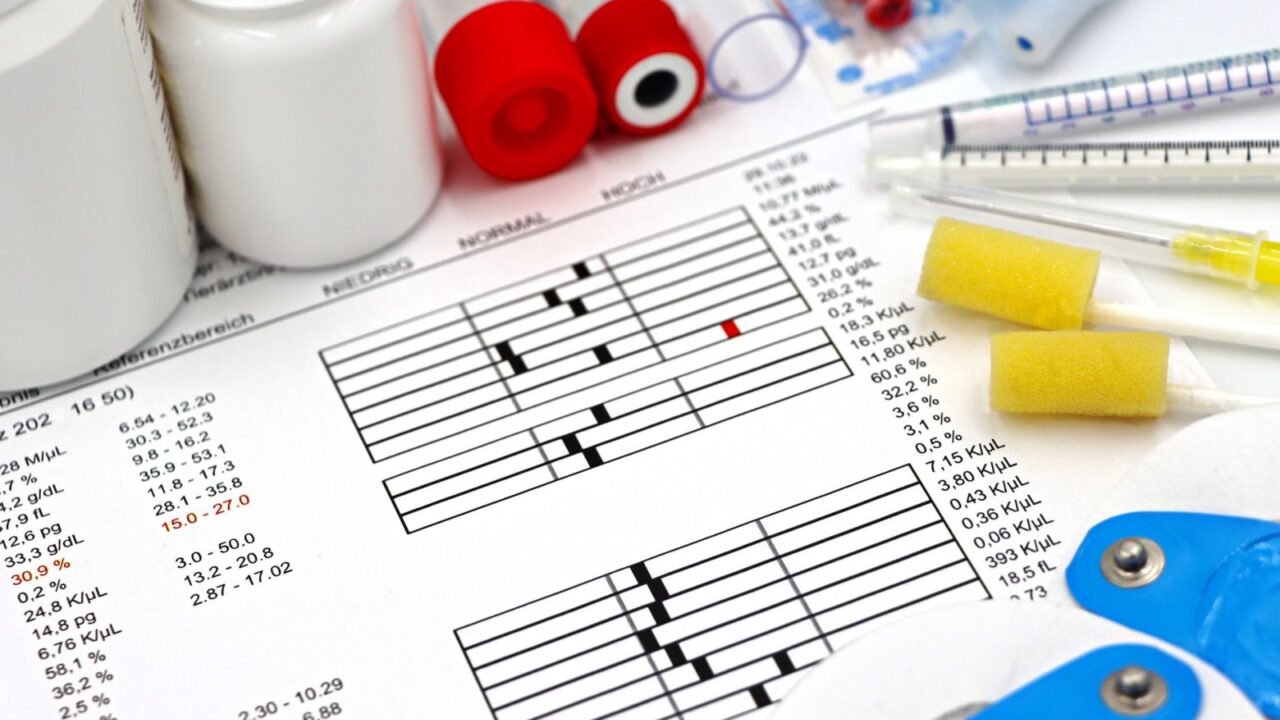
Quick answer: To know how to test for your overall health, you need four layers, not one number: basic vitals (blood pressure, resting heart rate, weight or waist), a core blood panel (complete blood count, metabolic panel, lipids, A1C, and a thyroid marker), a few targeted screens for your age and family history, and a baseline of inflammation and key vitamins. No single test or online quiz can tell you if you are healthy. The fastest way to do it is one fasting morning blood draw plus a blood pressure reading, then add age-appropriate screenings (colon, cervical, skin, dental) on their own schedule.
How to test for overall health: the four layers that matter
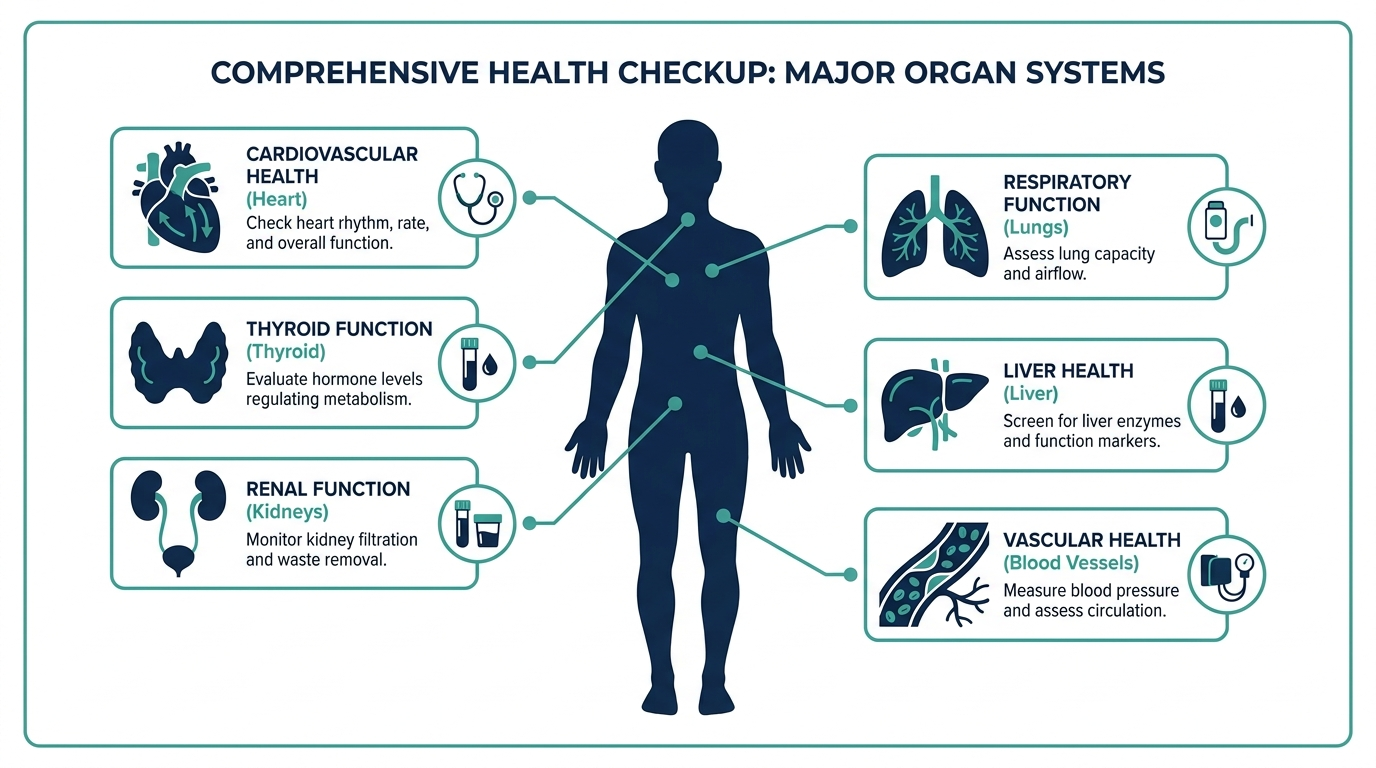
The mistake almost everyone makes is treating one result as a verdict. A normal cholesterol number does not mean you are healthy, and a single high reading does not mean you are sick. Real health testing stacks four layers so that a problem showing up faint in one layer gets caught by another. Doctors do not look at any one number in isolation, and neither should you.
A real health checkup needs four layers, including a full blood panel most people never get. Ready to see yours? One at-home Superpower draw checks 100+ biomarkers, physician-reviewed.
- Vitals. Blood pressure, resting heart rate, body weight, and waist circumference. These cost nothing and predict more than people expect. Blood pressure alone is the single most underrated test in America because high blood pressure has no symptoms until it does damage.
- Core blood work. This is where most of the silent stuff lives: blood sugar, kidney and liver function, red and white blood cells, cholesterol particles, and thyroid.
- Screenings. Tests that look for a specific disease before symptoms, scheduled by age and risk: colonoscopy or stool DNA, Pap and HPV, mammogram, skin check, and an eye and dental exam.
- Optional depth markers. Inflammation (hs-CRP), vitamin D, B12, ferritin, and for many adults a one-time look at Lp(a). These turn a basic checkup into a real baseline.
Run all four and you have an honest health picture. Skip three of them and you have a guess. The order matters too. Vitals and core blood work are the foundation because they catch the high-frequency, high-impact problems (high blood pressure, prediabetes, high cholesterol) that are common, silent, and cheap to treat early. Screenings sit on top because they catch the rarer but life-threatening conditions that blood cannot see. Depth markers are the polish that turns a yes-or-no checkup into a trend you can track.
What blood tests actually tell you if you are healthy
If you only do one thing this year, get a fasting morning blood draw with the core panel below. This is the heart of any answer to how to know if you are healthy, because most early disease (prediabetes, kidney decline, thyroid drift, high cholesterol) is completely silent and only shows up in numbers. By the time you feel symptoms, the condition is usually past the easy-to-reverse stage. That gap between when a lab can see a problem and when your body can feel it is the entire reason blood work exists.
Here is what a solid baseline includes and what each part is watching for. For a deeper walk through the standard everyday panel, see a complete blood panel.
| Test | What it checks | Why it matters |
|---|---|---|
| Complete blood count (CBC) | Red cells, white cells, platelets | Anemia, infection, clotting issues |
| Comprehensive metabolic panel (CMP) | Glucose, kidney, liver, electrolytes | Diabetes, kidney and liver function |
| Lipid panel | LDL, HDL, triglycerides | Heart and stroke risk |
| Hemoglobin A1C | Average blood sugar over 3 months | Catches prediabetes early |
| TSH | Thyroid signal | Fatigue, weight, mood, metabolism |
| hs-CRP | Inflammation | Hidden cardiovascular risk |
| Vitamin D, B12, ferritin | Nutrient and iron stores | Energy, immunity, common deficiencies |
One insider note that confuses people: you must fast roughly 9 to 12 hours for an accurate triglyceride and fasting glucose reading, but A1C does not care about fasting at all, because it reflects three months of average sugar. So a morning, before-breakfast draw covers everything in one visit. If a number comes back off, that is the moment to learn How to Read Your Blood Test Results (Plain-English Guide) rather than panic over a single flag. Want to know which numbers move the needle most? Start with the biomarkers worth tracking.
How to read your own baseline without spiraling
A lab report is mostly green checkmarks and a flag or two, and the flags are where people lose their composure. Read them in this order. First, look at whether a flagged value is barely out of range or dramatically off. A vitamin D of 28 when the floor is 30 is a nudge, not an emergency. A fasting glucose of 180 is a different conversation. Second, look at the direction of travel if you have a prior year to compare. A value drifting from 90 to 99 to 104 over three years tells you more than a single 104, because the trend is the disease forming in slow motion. Third, separate the markers that are tightly regulated from the ones that swing day to day. Sodium and calcium are kept in a narrow band, so a real abnormality there matters. Liver enzymes can spike after a hard workout or a few drinks the night before and mean nothing. When in doubt, a borderline result is usually a repeat-in-six-weeks situation, not a diagnosis.
Vitals and screenings: the tests blood work cannot do
Blood tells you a lot, but it cannot see a polyp, a suspicious mole, or rising eye pressure. These are the screens that catch the cancers and conditions blood work misses, and they run on their own clock. This is the layer people skip most, because it requires appointments instead of a single draw, and it is also the layer that prevents the diseases that actually kill Americans.
Vitals to check regularly
- Blood pressure: at least once a year, more if it has ever run high. A $30 home cuff is one of the best health buys there is. Take it sitting, arm at heart level, after five minutes of quiet, and average two readings.
- Resting heart rate: a rough fitness and stress signal. Most healthy adults sit between 60 and 100 beats per minute at rest, and a lower resting rate generally tracks with better cardiovascular fitness.
- Waist circumference: a better belly-fat and metabolic-risk marker than weight alone. Over 40 inches for men or 35 inches for women flags higher metabolic risk even at a normal weight.
- Body weight and BMI: useful as a trend, not a verdict. A steady five-pound climb every year is the kind of quiet drift worth catching.
Screenings by age
- Colon cancer: start at 45 for average risk, by colonoscopy or an at-home stool DNA test.
- Cervical cancer: Pap and HPV testing for women, typically every 3 to 5 years depending on the test.
- Breast cancer: mammograms generally starting in the 40s, earlier with family history.
- Skin: a dermatologist check, especially if you have many moles or a sunburn history.
- Eyes and teeth: a dilated eye exam and a dental cleaning catch glaucoma and gum disease that quietly affect whole-body health.
- Lung cancer: a low-dose CT scan is recommended for adults 50 to 80 with a heavy smoking history, current or recent.
Here is the billing trap nobody warns you about: a screening test is usually fully covered by insurance, but the second a doctor removes a polyp or follows up on a finding, the visit can be re-coded as diagnostic and you get a bill. Ask up front how a test will be coded before you assume free means free. The same trap catches the annual physical. The wellness visit is covered, but if you bring up a new symptom and the doctor works it up, that portion can become a billable problem visit on the same day.
What to test by age: a quick map
The honest answer to how to test for your health changes by decade. Younger adults need a baseline and a few habit checks. Older adults need the cancer and bone screenings that become worth doing as risk climbs. This table is a starting frame for average-risk adults, not a substitute for your own clinician’s read on family history and personal risk.
| Age band | Core blood work | Key screenings to add | Watch closely |
|---|---|---|---|
| 20s | Baseline CBC, CMP, lipids, A1C, TSH once; repeat every 2 to 3 years | Cervical (Pap) for women, STI testing if sexually active, skin if high risk | Blood pressure, mental health, vitamin D |
| 30s | Same core panel, every 1 to 2 years | Cervical continues, baseline skin check, dental and eye | Fasting glucose creeping up, waistline, family-history risks |
| 40s | Core panel yearly, add hs-CRP and a one-time Lp(a) | Mammogram (women), colon screening at 45, skin check | Blood pressure, cholesterol, prediabetes |
| 50s | Core panel yearly | Colon, mammogram, lung CT if smoking history, bone density discussion | Heart risk, A1C, kidney function (eGFR) |
| 60+ | Core panel yearly | Bone density (DEXA), continued cancer screens, hearing and vision | Falls, cognition, medication interactions, kidney trend |
Two notes on this map. Family history can pull every row earlier. If a parent had colon cancer at 45, your colon screening often starts at 35 or ten years before their diagnosis, whichever is sooner. And the core blood panel does not change much by age, which is exactly why it is the backbone. What changes is how often you run it and which screenings you stack on top.
What about online health quizzes?
People search am I healthy quiz and how healthy am i survey hoping for a quick verdict, and there is a place for them, just not the place most people want. A good lifestyle questionnaire is a useful mirror for habits: sleep, movement, alcohol, stress, diet. That is real signal, and answering honestly can surface a pattern you have been ignoring.
What a quiz cannot do is measure your blood sugar, see your kidney function, or find a tumor. So if you are wondering how to tell if you are healthy, use the survey to flag risk and motivate yourself, then confirm with actual labs and vitals. A quiz that tells you that you are healthy while you have undiagnosed prediabetes is worse than no quiz at all, because it buys false comfort. Treat any am I healthy quiz as a starting prompt, not an answer. The same goes for wearables. A smartwatch resting heart rate, sleep score, or step count is a genuinely useful trend line, but it is a fitness signal, not a diagnostic. It can nudge you toward testing. It cannot replace the draw.
Worked examples: what a real baseline looks like
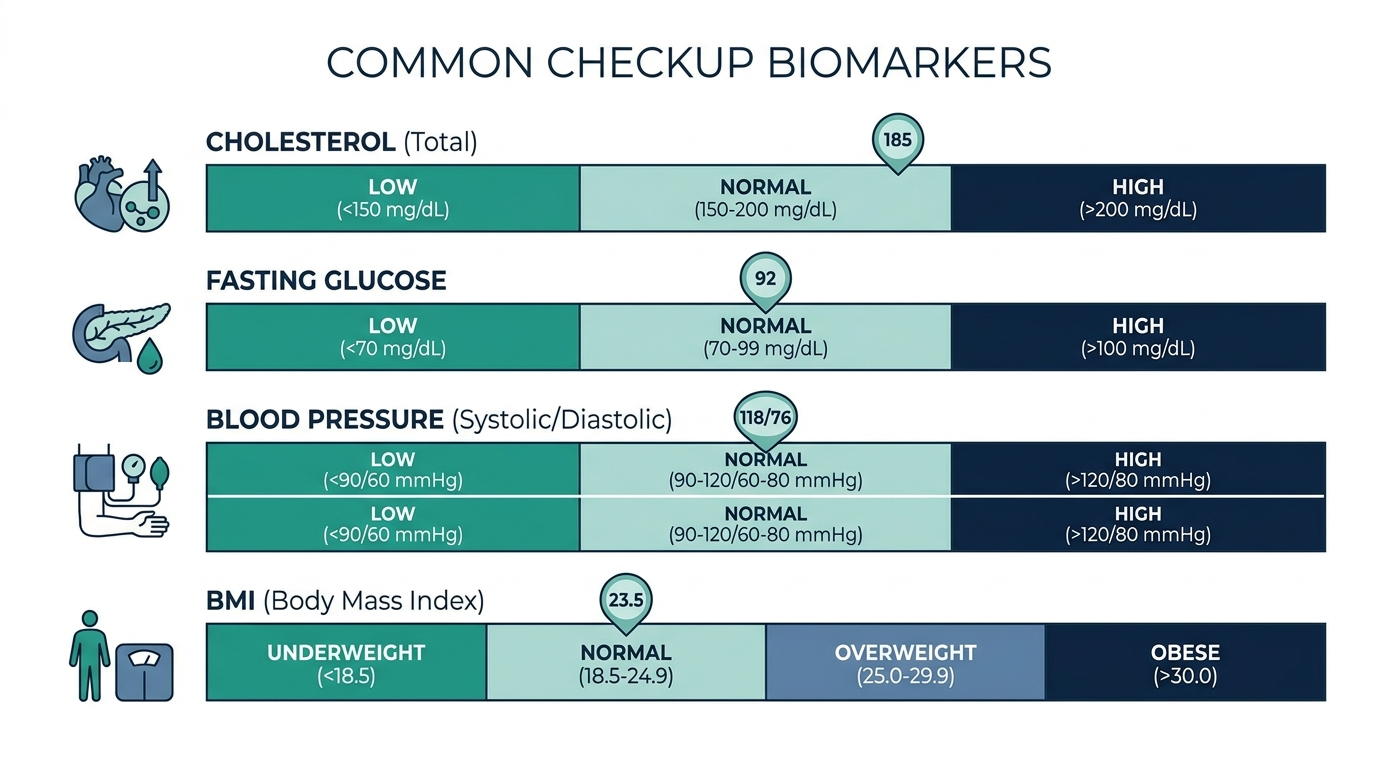
Abstract advice is easy to nod at and ignore. The clearest way to understand how to test for real health problems is to see the layers working together. Here are three plausible scenarios that show how the four layers catch what a single test would miss.
The healthy-feeling 38-year-old
No symptoms, exercises twice a week, thinks the checkup is a formality. Vitals are fine, but the fasting glucose comes back at 104 and A1C at 5.8, which lands squarely in prediabetes. He feels nothing. Caught here, it is reversible with diet and movement over a year. Caught in seven years, it is type 2 diabetes with medication. The blood work bought him the easy version of the problem.
The tired 45-year-old
Exhausted for months, blames work and a new baby. Core panel shows a TSH of 7.2 (high, signaling an underactive thyroid) and ferritin at 12 (low iron stores). Two cheap markers explained months of fatigue that no quiz would have caught. Both are simple to treat once named.
The fit 52-year-old who skips screenings
Marathon shape, perfect blood work, proud of it, and 52. He has been putting off the colonoscopy because he feels great. His blood work genuinely cannot see his colon. The stool DNA test he finally does comes back positive, the follow-up colonoscopy finds and removes a precancerous polyp. Feeling great and being screened are two different things, and his fitness almost talked him out of the test that mattered most.
The thread through all three: the layer that caught the problem was not the layer the person expected. That is the whole argument for testing all four instead of cherry-picking the one that feels relevant.
Common mistakes people make when testing their health
Most testing failures are not about access. They are about doing the right tests in the wrong way, or stopping one step short. These are the ones we see most.
- Treating the annual physical as the whole plan. A standard physical often does not include lipids, A1C, or a thyroid marker unless you ask. Walk in with a list.
- Chasing one number. A great cholesterol result tells you nothing about your kidneys, your thyroid, or a polyp. Health is not one metric.
- Not fasting when it matters. A non-fasting triglyceride reading can run high and scare you for no reason. Confirm the fasting requirement before you book the morning draw.
- Getting tested once and never again. A single result is a dot. Health is a trendline. The second data point is often where the story shows up.
- Letting a smartwatch stand in for labs. Wearables are great for trends and terrible for diagnosis. They cannot read your blood.
- Skipping screenings because blood work was clean. The scenarios above exist for a reason. Blood cannot see what it cannot reach.
- Assuming preventive means free. The diagnostic re-code is real. Ask how every test will be billed before the visit, not after.
How much does a full health check cost?
It depends heavily on whether you use insurance, cash labs, or a bundled panel. Rough 2026 ranges:
- Annual physical with primary care: often $0 with insurance as preventive care, or roughly $150 to $300 cash without.
- Individual cash blood tests: a lipid panel might run $29 to $60, an A1C $20 to $50, a thyroid panel $30 to $80, vitamin D $40 to $90. Buying them one at a time adds up fast and means multiple draws.
- Bundled full-body panels: typically $150 to $500 depending on how many biomarkers are included and whether a clinician reviews them.
The same test can swing wildly by where it is drawn. A comprehensive metabolic panel through a discount cash lab runs about $29. The identical panel billed through a hospital outpatient lab can hit $250 once facility fees are stacked on. The blood is the same. The bill is not. The table below shows how the math changes by setting.
| Setting | Typical cost for core blood work | Best for | Catch |
|---|---|---|---|
| Insurance preventive visit | $0 if coded preventive | Most insured adults | Easy to trip into a diagnostic bill |
| Discount cash lab (order online, draw at a chain) | $30 to $120 for a panel | Uninsured or high-deductible | You interpret results yourself |
| Hospital outpatient lab | $150 to $250+ with facility fees | When a doctor orders it on the spot | Most expensive route per test |
| Bundled full-body membership | $150 to $500 per year | One complete baseline, reviewed | Some markers you may not need |
The hidden cost is not money, it is fragmentation. Chasing tests one at a time means several visits, several needle sticks, and a stack of results nobody connects for you. An HSA or FSA card covers nearly all of this, which softens the cash routes for people on high-deductible plans.
The simplest way to actually get this done
Superpower is a full-body lab membership that runs 100+ biomarkers, has each result reviewed by a doctor, and tracks your numbers year over year (about $199/year). It is what we point readers to when they would rather get one clean, complete draw than chase single tests one at a time. Here is superpower reviewed in full.
If you want to compare price and scope before deciding, we break down how much Superpower costs and what Superpower tests for against a standard panel. The point is not the brand, it is the principle: one comprehensive baseline beats a scattered handful of tests.
Edge cases: uninsured, minors, employer-required, and Medicare
The standard blueprint assumes an insured adult choosing freely. Real situations are messier. Here is how the plan bends.
If you are uninsured
Skip the hospital lab entirely. Order core blood work through a direct-to-consumer cash lab, draw at a partner chain, and pay $30 to $120 for the panel. Community health centers and federally qualified health centers offer sliding-scale visits, and many pharmacies do free blood pressure checks. The uninsured route is actually cheaper per test than the insured-but-misbilled route, which surprises people.
If you are testing a minor
Kids and teens follow a pediatric schedule, not the adult panel. Routine well-child visits cover growth, development, vision, hearing, and vaccines. Blood work is targeted, not broad. Do not order an adult full-body panel for a healthy teenager. The reference ranges differ and most adult markers are not meaningful in a child.
If your employer requires it
Employer wellness screenings usually cover a narrow slice: blood pressure, glucose, cholesterol, sometimes BMI. Treat it as a free head start, not a complete checkup. It rarely includes thyroid, kidney detail, vitamins, or any screening. Use what it gives you and fill the gaps yourself.
If you are on Medicare
Medicare covers a one-time Welcome to Medicare visit and a yearly wellness visit, plus many cancer screenings and cardiovascular blood work at set intervals. The wellness visit is a planning conversation, not a hands-on physical, which catches people off guard. Bone density, colon screening, and lung CT for eligible smokers are covered, and the schedules are specific, so confirm timing with the plan.
Putting it together: your test-your-health blueprint
Here is the practical order for a real checkup, not a perfect one.
- This month: check your blood pressure and book a fasting morning blood draw with the core panel above.
- Add depth: include hs-CRP, vitamin D, B12, and ferritin, and ask about a one-time Lp(a).
- Schedule screens: line up colon, cervical, breast, skin, eye, and dental on their own age-based timelines.
- Track, do not collect: save your numbers and compare them next year. A rising trend inside the normal range is often the earliest warning you get.
If you are deciding between the scattered approach and one draw, the decision guidance is simple. Pick individual cash tests if you have one specific worry and want to spend $30 to check it. Pick the insured physical if you have good coverage and a primary-care doctor who will order the full core panel when you ask. Pick a bundled full-body baseline if you want every layer captured in one visit, reviewed by a clinician, and tracked year over year without you assembling the puzzle yourself. Whatever a result shows, talk to a clinician about your numbers before you make big changes. The goal of testing is not a clean bill of health on paper. It is catching the quiet drift early, while it is still cheap and easy to fix.
Curious what your own levels look like?
Baseline 100+ biomarkers today and retest as life changes, all in one membership with physician review.
FAQ
How do you test for being healthy in one visit?
One fasting morning blood draw with a core panel (CBC, CMP, lipids, A1C, TSH) plus a blood pressure reading covers most silent risks in a single trip. Add screenings like colon and skin checks separately on their own schedule, since blood work cannot see them.
How can I know if I am healthy without a doctor?
You can check vitals at home (blood pressure with a cuff, resting heart rate, waist size) and use direct-to-consumer cash labs for blood work, but interpreting abnormal results and ordering the right screenings still needs a clinician. Home testing tells you the numbers. It does not tell you what to do when one is off.
Is an am I healthy quiz accurate?
A quiz is a decent habit mirror but a poor health test. It cannot measure blood sugar, kidney function, or hidden disease, so use it to flag lifestyle risk, then confirm with real labs and vitals. A reassuring quiz score on top of undiagnosed prediabetes is the worst outcome, because it stops you from testing.
How often should I test my overall health?
Most healthy adults benefit from yearly vitals and core blood work, with screenings spaced by their own guidelines (every 3 to 5 years for cervical, every 10 years for colon if normal). Test more often if you have a chronic condition or a strong family history.
What is the single most important test if I can only do one?
For a quick verdict on hidden risk, the fasting core blood panel wins, because it catches prediabetes, kidney and liver problems, cholesterol, and thyroid drift at once. If you literally cannot get blood drawn, a blood pressure check is the highest-value free test, since hypertension is common, silent, and damaging.
How do you test for health problems before symptoms appear?
That is exactly what screening and core blood work are for. Markers like A1C, eGFR (kidney function), and LDL move years before you feel anything, and screenings like colonoscopy find precancerous changes before they turn into cancer. The presymptomatic window is where testing earns its keep.
Can a full-body scan tell me if I am healthy?
A full-body MRI or CT can find structural problems, but it misses the metabolic and blood-based issues that are far more common, and it produces incidental findings that lead to anxiety and extra tests. For most people, blood work plus targeted screenings is a smarter and cheaper starting point than a whole-body scan.
How do I tell if I am healthy when all my numbers are normal?
Normal across vitals, core blood work, and age-appropriate screenings is the strongest signal you can get that you are healthy right now. The catch is the phrase right now. Save the results, repeat them on schedule, and watch the trend, because the earliest warning is usually a normal number that is quietly moving the wrong way.
Related: see our ranking of the best at-home blood tests.
Vital Signs Today may earn a commission if you buy through links on this page. It does not affect our editorial assessments.