Quick answer: In most US states you can get lab tests without a doctor by using a direct-to-consumer (DTC) service like Quest’s questhealth.com, Labcorp OnDemand, Walk-In Lab, or a membership such as Superpower. A licensed physician on the service’s network signs off on the order for you, so no appointment with your own doctor is needed. You pick the test online, pay cash, get an electronic requisition, and walk into a Quest or Labcorp draw site (or use a mail-in kit). Only a few states restrict self-ordered labs, and even those usually have a workaround. Self-ordered lab tests run the same analyzers and produce the same result format as a physician-ordered test. The trade you accept is paying cash and reading the results yourself unless the service includes clinician review.
Can I get lab tests without a doctor at all?
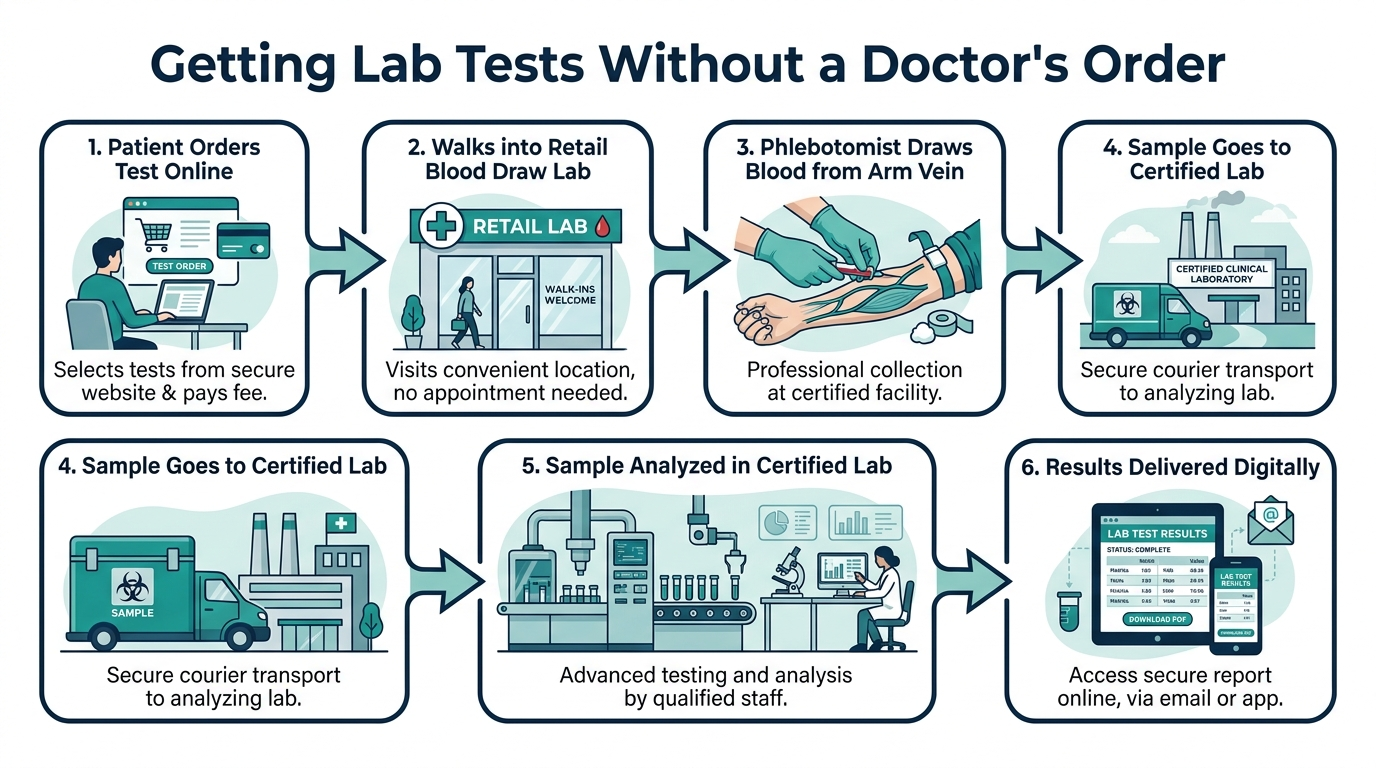
Yes, in nearly every state you can get lab tests without your own doctor seeing you first. The catch most people miss is that a physician still has to authorize the test, by law. Direct-to-consumer lab companies solve this by keeping a network of licensed doctors who review and sign your order behind the scenes. You never meet them, you never schedule with them, but their signature is what makes your requisition valid at the lab.
You can get lab tests without a doctor’s order through services like Superpower, so why not start with the full picture? One at-home Superpower draw checks 100+ biomarkers, physician-reviewed.
This is why a DTC order and a doctor’s order end up at the same Quest or Labcorp bench, run on the same analyzers, and produce the same result format with the same reference ranges. The only differences are who initiated the order and who pays. With self-ordered labs you pay cash up front and skip the office visit. The result is real, lab-grade data, not a screening-grade home gadget reading.
What you give up is the conversation. A doctor ordering labs is also deciding which tests fit your history, your medications, and your symptoms, then reading the results in context. When you self-order, that judgment is on you unless the service provides clinician review. Better DTC platforms now bundle that review in, which closes most of the gap. Throughout this guide, “lab tests without doctor” means without your own doctor, because a network physician is always quietly in the loop.
Why a physician has to sign at all
It comes down to a federal framework called CLIA (Clinical Laboratory Improvement Amendments) plus state law. Most diagnostic tests are categorized so that a lab can only run them on a provider’s order. A handful of states have passed laws that explicitly let consumers order their own tests directly, but the cleaner nationwide path that nearly every DTC company uses is simply to employ or contract physicians who place the order on your behalf. That is the legal machinery hidden behind every “order online” button.
How do I order my own blood tests step by step?
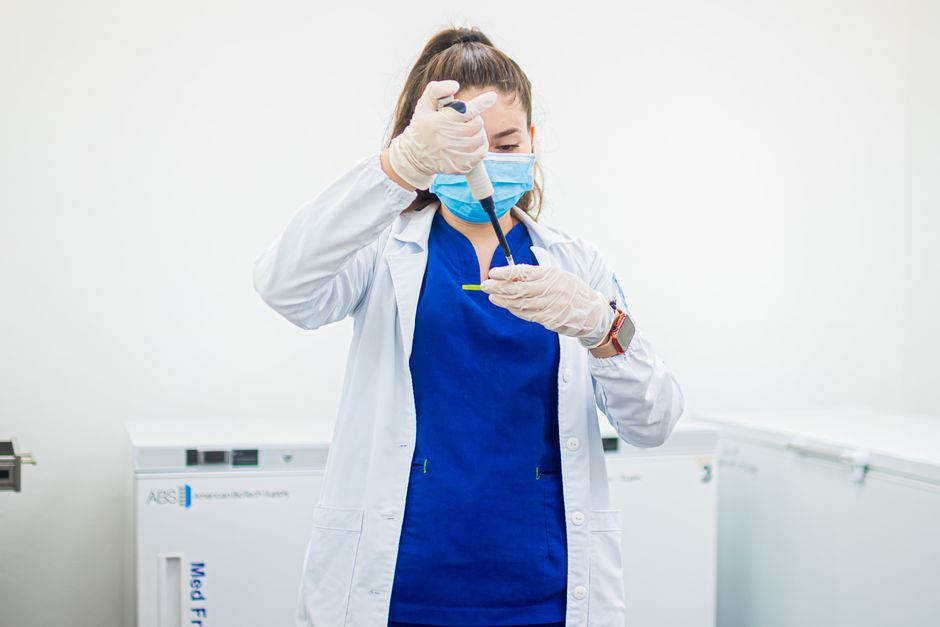
Ordering your own blood tests takes about five minutes online and one short trip to a lab. The flow is nearly identical across Quest, Labcorp, Walk-In Lab, and membership services, so once you have done it once you can do it anywhere.
- Pick the test or panel. Search the specific marker (TSH, vitamin D, a lipid panel, an antibody titer) or a bundle on a DTC site. If you are not sure which markers matter, start with a broad panel rather than guessing test by test.
- Enter your zip code. The site confirms the test is available in your state and shows nearby draw locations. Anything restricted in your state is flagged here, before you pay.
- Pay the cash price. You will see the full price up front. There is no insurance step and no surprise bill later.
- Receive the requisition. Within minutes you get an electronic requisition by email, pre-authorized by the service’s network physician. This is the document the lab needs.
- Get the draw. Walk into a Quest or Labcorp patient service center, often without an appointment, or collect your sample at home if you bought a mail-in kit. Bring a photo ID and the requisition (printed or on your phone).
- Read results in your portal. Routine results post to your online account in 1 to 3 business days, flagged against reference ranges.
The one preparation step people skip: check whether the test needs fasting. A lipid panel and fasting glucose want 9 to 12 hours without food. A1C, TSH, and most antibody titers do not require fasting at all. The requisition or checkout page will say. Showing up fed for a fasting test means a wasted trip and a second draw.
Which DTC services let you order labs without a doctor?
The market splits into four practical lanes, and the right one depends on how much hand-holding you want and how many markers you need. The big national lab portals are cheapest per single test. Mail-in kit brands are best for privacy and convenience. Memberships cost more up front but include interpretation and tracking. Here is how they line up.
| Service type | Examples | Best for | What is included |
|---|---|---|---|
| National lab portal | Quest (questhealth.com), Labcorp OnDemand | Single tests, cheapest per marker | Order plus draw at their own centers, raw results |
| Independent DTC marketplace | Walk-In Lab, Ulta Lab Tests, Personalabs | Wide test menu, frequent discounts | Network physician order, draw at partner Quest/Labcorp sites |
| At-home mail-in kit | Everlywell, LetsGetChecked, myLAB Box | Privacy, no clinic trip | Finger-prick or swab kit, CLIA lab, digital results |
| Full-body membership | Superpower, Function Health | Annual baseline, interpretation, tracking | 100+ markers, doctor review, year-over-year trends |
A quick word on the difference between the national portals and the independent marketplaces, because it confuses people. Quest and Labcorp run their own labs and their own draw sites. Independent marketplaces like Walk-In Lab do not own a lab; they place the order through a network physician and then send you to a Quest or Labcorp center for the actual draw. The blood ends up in the same place either way. The marketplaces often win on price and selection because they aggregate and discount, but the national portals can be simpler because ordering and drawing happen under one roof.
How can I order an antibody test on my own?
To order an antibody test yourself, choose the specific antibody panel on a DTC lab site, pay, and you will receive an electronic requisition within minutes. Antibody tests check whether your immune system has produced proteins against a pathogen or your own tissue, so the common self-ordered requests fall into three buckets: immunity titers (hepatitis B, measles/MMR, varicella), infection antibodies (COVID-19, Epstein-Barr), and autoimmune markers (ANA, thyroid antibodies like TPO).
The ordering flow is the same regardless of which antibody you want:
- Search the test on a service like questhealth.com, Labcorp OnDemand, or Walk-In Lab.
- Pay the cash price (antibody and titer tests typically run about $30 to $120 each).
- Get your requisition by email, pre-authorized by the service’s physician.
- Walk into a patient service center for the blood draw, often without an appointment.
- View results in your online portal, frequently in 1 to 3 business days.
One insider note on titers: people ordering them for a school, nursing program, or new job sometimes find the cheapest route is the individual antibody test rather than a bundled “immunization panel,” which stacks several titers and costs more. If you only need proof of MMR immunity, order the MMR titer alone. If you want the full picture in one sitting, see how this compares to a complete blood panel before you click buy.
Antibody titer vs antibody presence: do not buy the wrong one
This trips up nursing and healthcare students constantly. A qualitative antibody test answers yes or no: are antibodies present. A titer is quantitative: it measures how much, which is what schools and employers usually require to prove immunity. If your nursing program asks for a “titer” and you order a cheaper qualitative test, the result may not be accepted, and you pay twice. Read the requirement letter and match the word exactly. When in doubt, order the titer; it is the version that satisfies a documentation requirement.
What antibody tests cannot tell you
An antibody test shows exposure or immune response, not active infection in real time. A positive COVID-19 antibody result, for example, means your body responded to the virus or a vaccine at some point. It does not mean you are currently infectious, and it is not the test you use to diagnose an active case (that is a PCR or antigen test). Order antibodies to answer “have I been exposed or am I immune,” not “am I sick right now.”
Which states allow self-ordered labs (and which restrict them)?
The overwhelming majority of states let you order your own labs through a DTC service, because the service supplies the required physician authorization. The friction is rarely your state banning the test itself. It is whether a given company is licensed to operate there and whether your state law lets the lab release results straight to you.
A few states have historically been stickier. New York is the long-standing example, where state rules limited which DTC lab services could operate, so the menu of available tests has been narrower there. New Jersey and Rhode Island have at times added friction too. Rules in restrictive states shift, and most national services list any unavailable tests at checkout once you enter your zip. If you are searching for how to order blood labs to your home in Utah, or in any specific state, the fastest answer is to enter your address on two or three DTC sites and see what they will ship or draw. Utah, for the record, is permissive: self-ordered labs and home draws are widely available there.
| Route | Typical availability | How the order is authorized |
|---|---|---|
| National DTC (Quest, Labcorp OnDemand) | Nearly all states | Network physician signs the requisition |
| At-home mail-in kit | Most states, some kit-by-kit limits | Network physician, CLIA-certified lab |
| Membership panel (Superpower) | Most states | Physician order plus result review included |
| Restrictive states (e.g. New York) | Limited menu | Fewer licensed providers, check at checkout |
If you live in a restrictive state and the test you want is greyed out, you have two clean options. Some travelers simply get the draw while visiting a permissive state. Others use a mail-in kit brand that is licensed in their state even when the walk-in option is not. Do not try to game the requisition by entering an out-of-state address you do not use; the draw site checks ID, and a mismatch can void the order.
What does it cost to order your own lab tests?
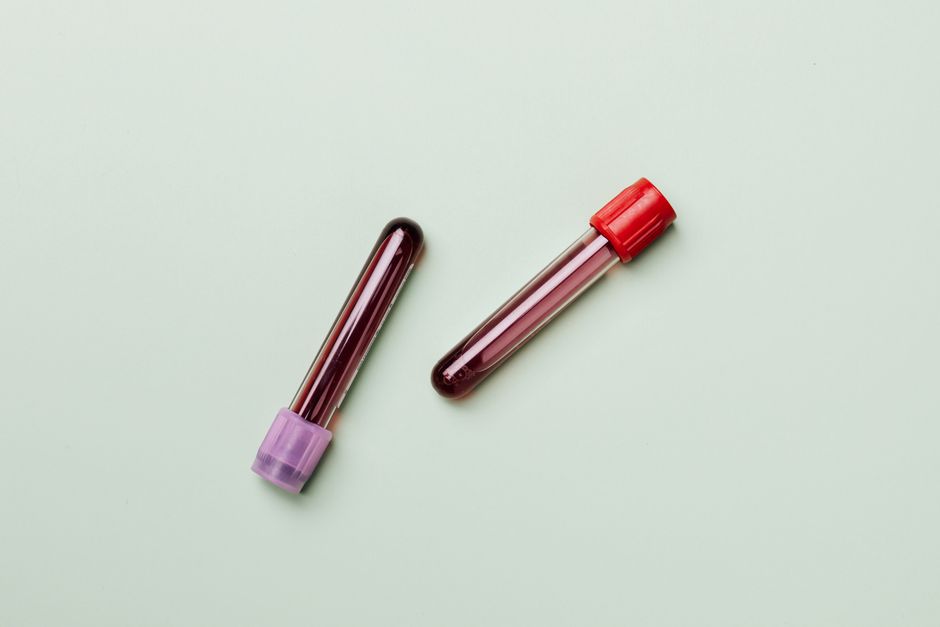
Cash prices for self-ordered labs are usually transparent and often cheaper than a surprise hospital bill. A single common test like a TSH, vitamin D, or one antibody titer tends to land around $29 to $99. A basic or comprehensive metabolic panel runs roughly $30 to $80 cash. The pattern to watch: once you start stacking five or ten individual tests, the math turns against you fast, and a bundled panel or membership becomes the smarter buy.
Here is a realistic worked example. Say you want a thyroid picture, a vitamin D level, a lipid panel, and an A1C. Bought as four separate orders on a DTC marketplace, you might pay roughly $35 + $39 + $30 + $35, plus a draw or service fee that can repeat per order. That is about $139 to $170 before you have looked at a single deeper marker like ApoB, ferritin, or inflammation. A bundled comprehensive panel that includes all four of those plus dozens more markers frequently lands in the same range or only modestly higher, which is why ordering test by test is usually the expensive way to do it.
| What you order | Typical cash price | Notes |
|---|---|---|
| Single test (TSH, vitamin D, one titer) | $29 to $99 | Cheapest if you truly need just one number |
| Basic metabolic panel (BMP) | $30 to $60 | Electrolytes, kidney, glucose |
| Comprehensive metabolic panel (CMP) | $30 to $80 | Adds liver markers and protein |
| Lipid panel | $25 to $50 | Fasting recommended for accuracy |
| Broad wellness panel (40+ markers) | $100 to $250 | Better value than stacking singles |
| Full-body membership (100+ markers) | About $199/year | Includes doctor review and tracking |
Two pricing traps worth naming. First, the same panel can carry wildly different prices depending on the route: a CMP through a discount marketplace runs about $30, while the identical panel billed through a hospital outpatient lab can hit $200 or more. Self-ordering exists largely to escape that markup. Second, watch for a separate draw fee. Some services bake the phlebotomy fee into the listed price; others add $0 to $10 at the patient service center. Read the line items before you assume the sticker price is final.
One more practical point: most DTC lab purchases are HSA and FSA eligible, since they are medical expenses. Keep the itemized receipt. Insurance generally will not reimburse a self-ordered cash test, which is the trade you accept for skipping the doctor visit. If you want to understand which numbers actually move the needle before you assemble a cart, read up on the biomarkers worth tracking.
The simplest way to actually get this done
Superpower is a full-body lab membership that runs 100+ biomarkers, has each result reviewed by a doctor, and tracks your numbers year over year (about $199/year). It is what we point readers to when they would rather get one clean, complete draw than chase single tests one at a time. Here is superpower reviewed in full.
How do results get reviewed if no doctor ordered them?
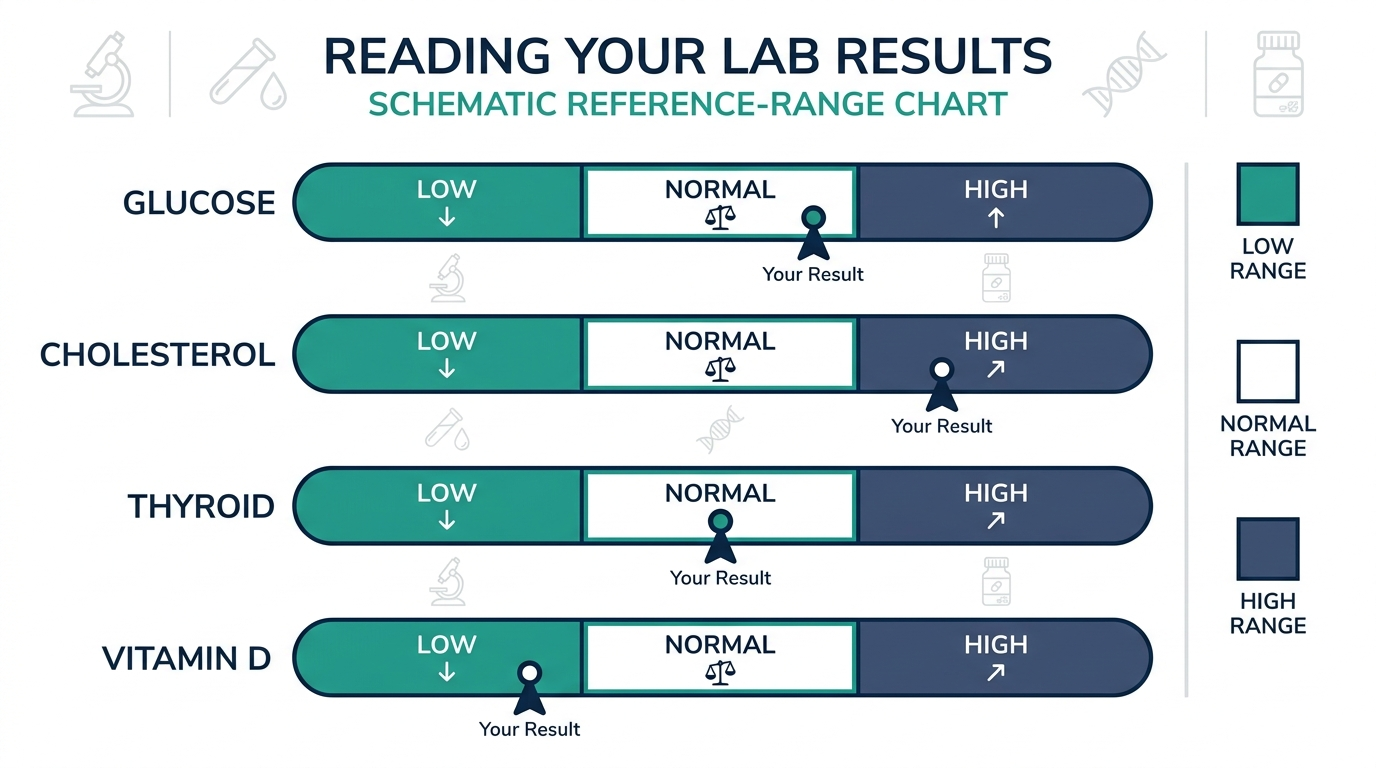
When you self-order, the lab releases your results to you directly, and how they get interpreted depends entirely on the service you used. Bare-bones DTC sites hand you a PDF with reference ranges and flag anything out of range, then leave the interpretation to you. That is fine for a routine check, less fine when a value comes back abnormal and you have no idea whether it matters or what to do next.
Better services build in clinician review. A doctor or nurse looks at flagged values, and some platforms will phone you for critical results that need urgent attention. Memberships go furthest here, pairing the order with a written summary of what each number means and a suggested next step. If you saw the Superpower blood test review or compared how much Superpower costs, this built-in review is the main thing you are paying for over a raw cash test.
Whatever route you pick, treat an abnormal self-ordered result as a prompt, not a diagnosis. Bring the printout to a clinician who can read it against your history and medications. Lab data is the starting point for a conversation, not the end of one. A single out-of-range value is common and frequently benign; the meaning lives in the pattern, the trend over time, and your symptoms, which is exactly the context a self-ordered PDF cannot supply on its own.
What “critical value” call-backs actually mean
Labs have defined critical thresholds, like a dangerously high potassium or glucose, where they are obligated to notify the ordering provider fast. With a self-ordered test, the network physician is the ordering provider, so a good service routes that call to you. If you order through a bare marketplace with no review layer and a critical value lands, you may only see it when you happen to open the portal. That gap is a real reason to prefer a service with active review for anything beyond a simple wellness check.
At-home kits vs walk-in draws: which should you choose?
Both are legitimate ways to get lab tests without a doctor, and the right pick comes down to what is being measured. At-home mail-in kits use a finger-prick or saliva sample you collect and ship to a CLIA-certified lab, which is convenient and private. Walk-in draws send you to a Quest or Labcorp patient service center for a standard venous draw, which is what you want for anything that needs a full tube of blood.
Finger-prick kits are excellent for many markers but are not ideal for every test, since the small sample volume and shipping time can affect certain analytes. For a broad metabolic, hormone, or comprehensive antibody picture, a venous draw is more reliable. To weigh every option side by side, including doctor-order, urgent care, and membership routes, see Where to Get Blood Work Done in 2026 (Every Option, Compared) and review exactly what Superpower tests for so you are not paying for markers you do not need.
| Factor | At-home mail-in kit | Walk-in venous draw |
|---|---|---|
| Sample type | Finger-prick or saliva | Full venous tube |
| Privacy | Highest, done at home | Lower, in-person at a center |
| Marker range | Good for common panels | Widest, including send-outs |
| Turnaround | Slower, add shipping time | Faster, 1 to 3 business days |
| Best for | Convenience, screening, STI panels | Comprehensive and hormone work |
Common mistakes people make ordering their own labs
Most regrets with self-ordered labs come from a handful of avoidable errors. Knowing them in advance saves you a wasted draw and wasted money.
- Ordering single tests instead of a panel. Three or four separate orders, each with its own service markup, routinely cost more than one bundled panel that includes them plus dozens of extra markers.
- Ignoring the fasting requirement. Showing up fed for a fasting lipid or glucose test means a do-over. Check the requirement before you book the draw.
- Buying a qualitative test when an employer needs a titer. The quantitative titer is what proves immunity for school and job paperwork. The cheaper yes/no version may be rejected.
- Expecting insurance to reimburse. Self-ordered cash labs are not billed to insurance and generally are not reimbursed. Plan to use HSA or FSA funds instead.
- Treating one abnormal number as a diagnosis. A single out-of-range value needs context. Panic over a borderline flag leads to unnecessary stress and sometimes unnecessary follow-up tests.
- Skipping ID at the draw site. The patient service center matches your ID to the requisition. A mismatch, including a nickname versus legal name, can delay or void the draw.
Edge cases: uninsured, minors, employers, and Medicare
The standard self-order flow covers most adults, but several situations have their own rules worth knowing before you pay.
Uninsured
Being uninsured is actually where self-ordered labs shine. You pay a transparent cash price with no claim, no deductible, and no balance bill weeks later. For many uninsured people a DTC panel is the cheapest legitimate way to get real lab data, and it is HSA/FSA eligible if you have those funds.
Minors
Ordering labs for a minor usually requires a parent or legal guardian to place and consent to the order, and some tests are restricted for those under 18 entirely. Policies vary by service and by state, especially for sensitive tests. Check the age policy at checkout rather than assuming the adult flow applies.
Employer or school required
If a job, nursing program, or school mandates specific tests (titers, a drug screen, a TB test), confirm two things: that the exact test named is offered for self-order, and that the institution accepts results from a DTC lab. Most accept Quest and Labcorp results because the analyzers are identical. A few require their own designated clinic, so read the requirement letter before ordering.
Medicare and Medicaid
Self-ordered DTC labs are a cash purchase and are not billed to Medicare or Medicaid. If you have Medicare and want a covered test, that route requires a provider order through the normal system. Self-ordering is the parallel cash lane, useful when you want a test Medicare will not cover or you simply want it faster without a visit.
Who should pick which route?
Match the route to your goal and you will not overpay or under-test.
- You need one specific number (a single titer, a TSH recheck): a national portal or marketplace single test is cheapest and fastest.
- You want privacy and no clinic trip (an STI panel, a basic wellness check): an at-home mail-in kit fits best.
- You want a real annual baseline across metabolic, hormone, heart, and inflammation markers, plus someone to tell you what it means: a full-body membership earns its price.
- You are uninsured and want broad data cheaply: a discounted comprehensive panel from a marketplace beats stacking singles.
- You have a worrying symptom: see a clinician first. Self-ordered labs are for screening, baselines, and proof of immunity, not for working up an acute problem on your own.
Curious what your own levels look like?
Baseline 100+ biomarkers today and retest as life changes, all in one membership with physician review.
FAQ
Can I order my own blood tests with insurance?
Usually no. Self-ordered DTC labs are a cash transaction, and insurance generally will not reimburse a test you ordered without a provider visit. You can typically pay with HSA or FSA funds, so keep the itemized receipt. If you specifically want insurance to cover a test, you need a provider order through the normal system instead.
Can I get blood work done without a doctor at all?
You can skip your own doctor, but not a doctor entirely. A network physician on the DTC service still authorizes the order by law, which is why your requisition is valid at the lab. You just never have to schedule, visit, or pay for that physician yourself.
Can you order your own antibody test for immunity proof?
Yes. Titer tests for MMR, hepatitis B, and varicella are commonly self-ordered for school or job requirements. Order the specific titer you need (the quantitative version, not a yes/no test), get the draw, and download the result to submit, which is often faster and cheaper than waiting on a clinic appointment.
How to order blood labs to my home in Utah or other states?
Utah is permissive, so home mail-in kits and walk-in self-ordered draws are widely available. The process is the same in most states: enter your zip on a DTC site, and it shows what is available and whether a home kit can ship to you. Only a few states like New York have a narrower menu, which the checkout will flag automatically.
How fast will I get my results?
Most routine self-ordered blood tests post to your online portal within 1 to 3 business days of the draw. At-home mail-in kits take longer because of shipping time. Specialized antibody or send-out tests can take a week or more, and the service notes the turnaround at checkout.
Are self-ordered lab results as accurate as doctor-ordered ones?
Yes. The sample is run on the same CLIA-certified analyzers at the same labs, so the numbers and reference ranges are identical. The difference is interpretation, not accuracy. A doctor-ordered test comes with a clinician reading it in context; a bare self-ordered test leaves that to you unless the service includes review.
Will my own doctor accept self-ordered lab results?
Most clinicians will look at lab-grade results from Quest or Labcorp, since the data is valid and the analyzers are the same ones they use. Bring the printout to your appointment. They may still repeat a test if timing matters or if they want it on their own order for their records, but your results give them a real starting point.
Do I need to fast before a self-ordered blood test?
It depends on the test. Lipid panels and fasting glucose want 9 to 12 hours without food for accuracy. A1C, TSH, and most antibody titers do not require fasting. The requisition or checkout page tells you, so check before you go to avoid a wasted trip.
Related: best at-home biomarker tests of 2026.
Vital Signs Today may earn a commission if you buy through links on this page. It does not affect our editorial assessments.