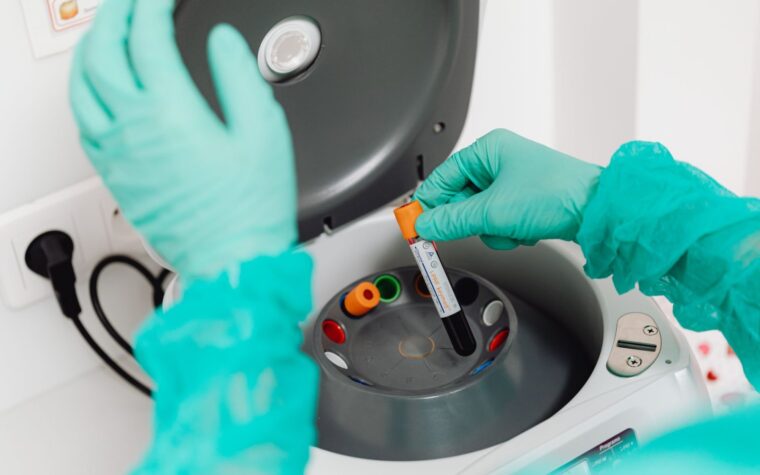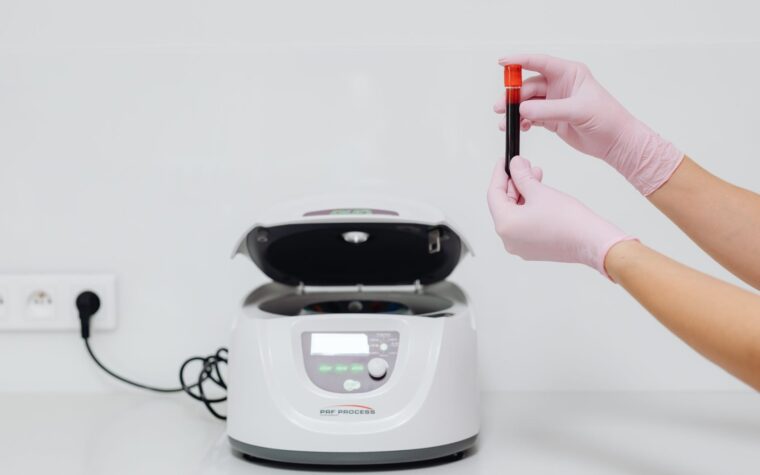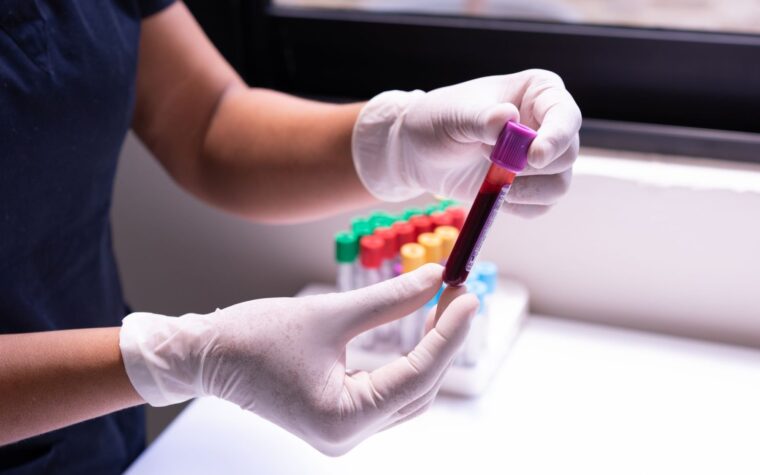
Quick answer: You can get blood work done at five main places: a hospital or outpatient lab using a doctor’s order (Quest or Labcorp), a walk-in lab that lets you order tests yourself without a referral, an urgent care clinic, an at-home kit you mail back, or a direct-to-consumer membership that draws a full panel at once. Where to get blood work done comes down to whether you have an order, how fast you need results, and whether you want a single test or a full baseline. With insurance and a doctor’s order, a basic panel often costs little out of pocket. Paying cash, expect roughly $29 to $150 for common panels.
Where to get blood work done: the five routes, compared
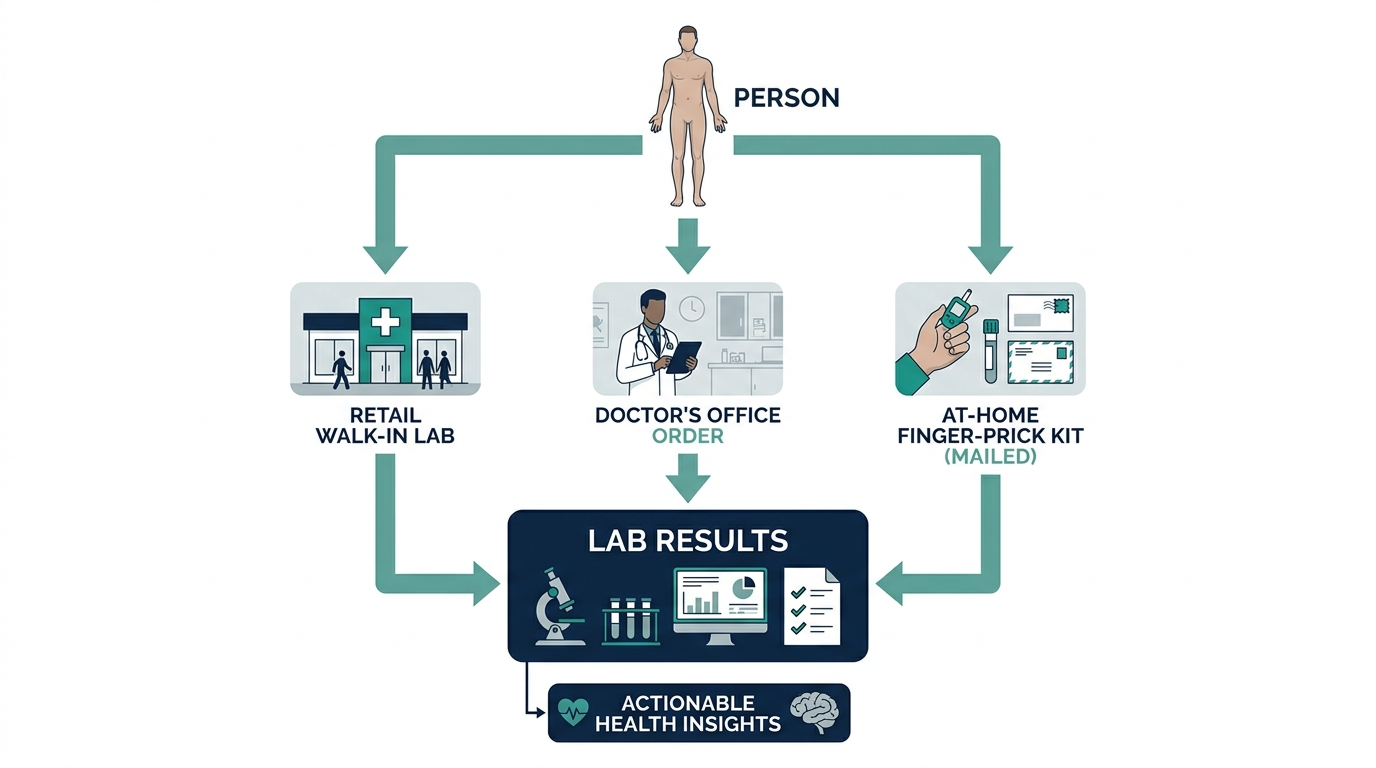
Where to get blood work done depends mostly on one thing: do you already have a doctor’s order, or are you ordering tests yourself? That single fork decides your cost, your speed, and whether insurance will help. Here is every realistic route in 2026, side by side.
Comparing where to get blood work done? See what a full at-home membership panel covers versus a single lab visit. One at-home Superpower draw checks 100+ biomarkers, physician-reviewed.
| Option | Need a doctor’s order? | Typical cash cost | Turnaround | Best for |
|---|---|---|---|---|
| Doctor order at Quest or Labcorp | Yes | $0 to $50 with insurance, $29 to $150 cash per panel | 1 to 3 days | Insured people whose physician requested specific tests |
| Lab walk-in (self-order) | No | $30 to $200 per panel | 1 to 3 days | People who know what they want and skip the appointment |
| Urgent care clinic | No | $75 to $250 visit plus lab fees | Same day to 2 days | Sick now, need a result today, no primary doctor |
| At-home mail-in kit | No | $45 to $250 per kit | 2 to 6 days after the lab receives it | People who hate needles done by themselves or live far from a draw site |
| DTC full-panel membership | No | $199 to $500 per year | 3 to 7 days | People who want 100-plus markers and yearly tracking |
Insider note most people miss: the same blood draw can be billed two completely different ways. Run through insurance with a doctor’s order coded as preventive, and a wellness panel may cost you nothing. Run the identical test cash at a walk-in lab, and you pay a flat retail price. Neither is “cheaper” in the abstract. It depends on your deductible and whether the visit gets coded preventive or diagnostic.
Read the rest of this guide as a decision tree. The question of where to get blood work done has five real answers, and each one is below. Each route below has a short “who it is for,” a step-by-step of exactly what happens, and the cost traps that catch people. By the end you will know not just where to get a blood test, but which door to walk through for your specific situation.
How to get blood work done with a doctor’s order (the insurance route)
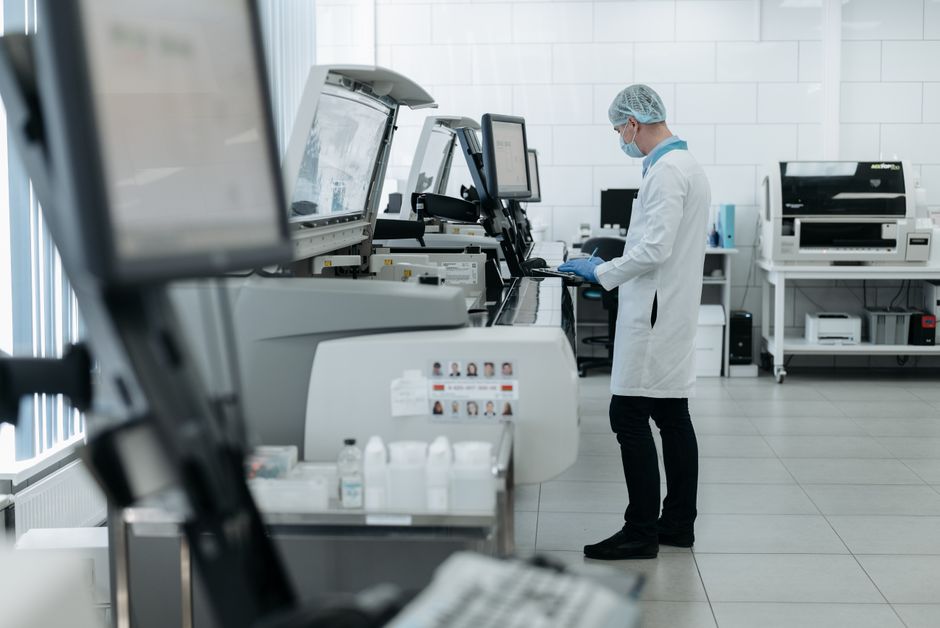
If you want insurance to cover it, start with a doctor’s order. Your physician sends an electronic requisition to Quest Diagnostics or Labcorp, the two national labs that handle the vast majority of US testing. You then walk into a patient service center, scan in, get drawn, and leave. Results post to your patient portal in one to three days.
This is usually the cheapest path if you are insured, because preventive screening is often covered at no cost under most plans. The catch is the order itself. You need an appointment or a telehealth visit first, which adds days and sometimes a copay. If your doctor orders a complete blood panel, confirm which markers are included, because “routine bloodwork” means different things to different clinicians.
Step by step, what actually happens
- You see a clinician. In person or telehealth. They decide which tests are medically appropriate and send the order electronically.
- You book or walk in. Quest and Labcorp both let you reserve a time online, which cuts the wait. Walk-ins are accepted at most centers but you may sit longer.
- You check in and scan. Bring ID and your insurance card. The front desk pulls your electronic order, verifies coverage, and may collect a copay.
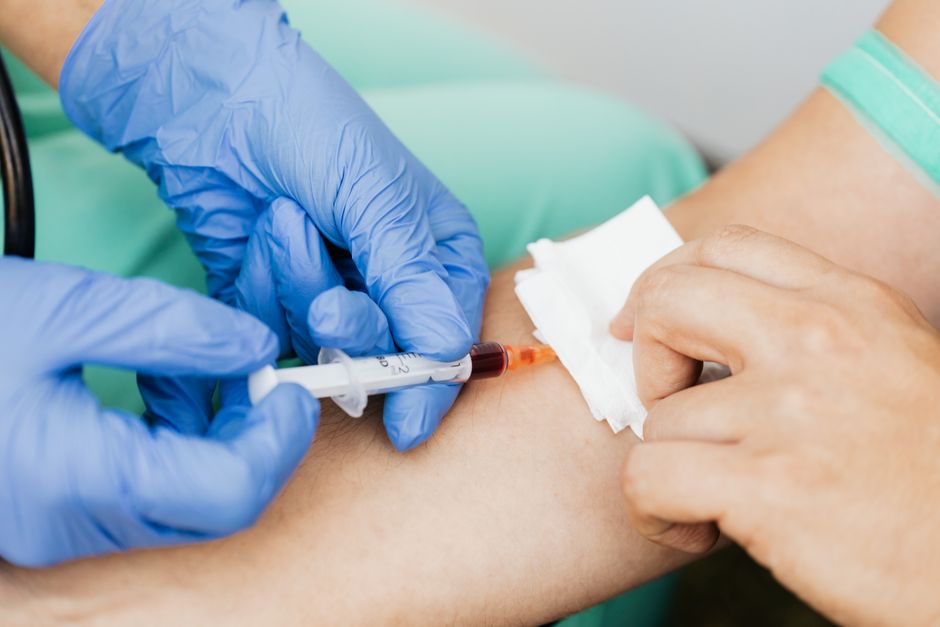
- The draw. A phlebotomist takes one to several small tubes from a vein in your arm. It takes a few minutes.
- Results post. Most show up in your portal in one to three days. Your clinician reviews them and follows up if anything is off.
What to bring
- Photo ID and your insurance card.
- The order or requisition number (Quest and Labcorp can usually pull it electronically).
- Fasting status: fast 9 to 12 hours if your panel includes triglycerides or a fasting glucose. Fasting barely affects A1C, so do not stress if that is your only marker.
Worked example: an insured 40-year-old gets a routine lipid panel and metabolic panel ordered at an annual physical. Because the visit is coded preventive, both panels come back at $0 out of pocket. The same two panels paid cash at a walk-in would run about $60 to $120 combined. Insurance wins here, but only because nothing came back abnormal and the coding stayed preventive.
Where can I get blood work done near me without a doctor?
You do not need a doctor at all anymore. Both Quest and Labcorp sell tests directly to consumers through their own online stores. You pick the panel, pay online, and pick a nearby patient service center to get drawn. This is the fastest way to answer “where can I get blood work done near me” when you have no primary physician and no time for a referral.
The self-order route trades insurance coverage for speed and privacy. You pay cash, usually $30 to $200 depending on the panel, and you skip the appointment entirely. Many independent walk-in labs and pharmacy-adjacent draw stations work the same way. Search the lab’s own locator rather than a generic map, because not every storefront does walk-in draws, and some are appointment-only on weekends.
How the self-order route works
- You pick the test online. Quest’s and Labcorp’s consumer stores list panels by name and price. You are acting as your own orderer, so read the panel description carefully.
- You pay upfront. No insurance is billed. The price you see is the price you pay, which is the whole appeal: no surprise statement weeks later.
- You choose a location and go. The order is attached to your name electronically. Walk in, scan, get drawn.
- You get results directly. They land in the lab’s own portal, addressed to you, not to a doctor. You own the interpretation, which is freedom and a burden at once.
If you are specifically chasing one number, a single self-ordered test is efficient. If you find yourself ordering three or four tests separately, the math usually favors one fuller draw, which is where the membership route comes in. A practical example: someone tracking iron orders a ferritin test for about $35 cash, sees the result in two days, and never sets foot in a doctor’s office. Clean and fast. But the moment that person also wants thyroid, vitamin D, and a metabolic panel, four separate orders start to cost more than one comprehensive draw.
Urgent care and retail clinics: same-day blood work
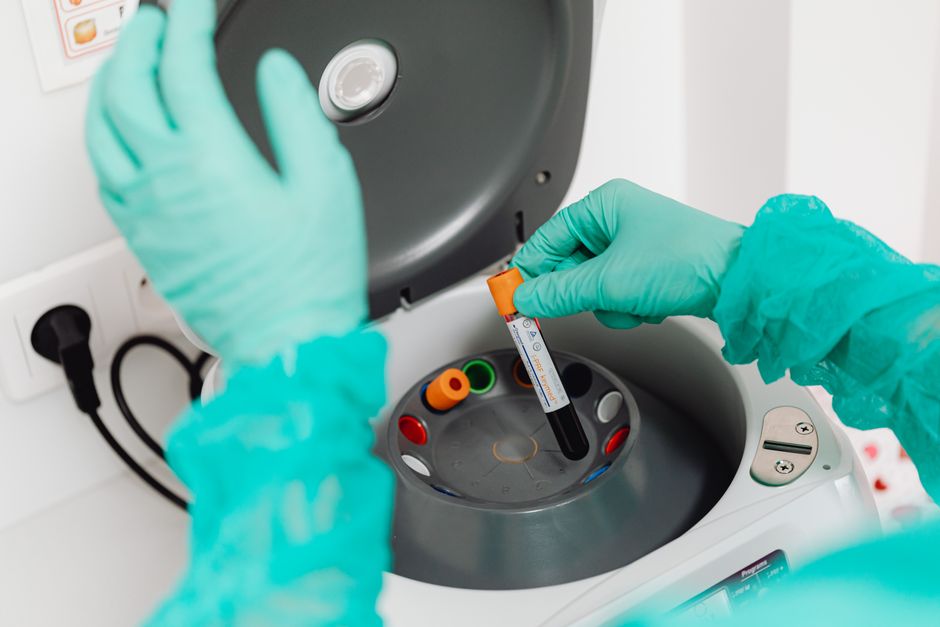
When you are sick now and cannot wait for a portal result, urgent care is the practical answer. Most urgent care centers and retail clinics like CVS MinuteClinic can draw blood on the spot and run basic tests, often the same day. You will pay a visit fee, roughly $75 to $250 cash, plus lab charges, but you walk out with a clinician’s read on what is wrong.
The tradeoff is scope. Urgent care is built for acute problems, a possible infection, dehydration, a mono check, not a 50-marker longevity panel. They run what is medically relevant to your complaint and refer you onward for anything deeper. Use urgent care for “is something wrong today,” not for a baseline health audit.
Retail clinic vs urgent care: not the same thing
People lump these together, but they differ. A retail clinic inside a pharmacy is staffed by a nurse practitioner or physician assistant and handles low-acuity issues: a sore throat, a UTI, a simple blood test. An urgent care center has broader capability, can handle injuries and run a wider lab menu, and usually has a physician on site. If your complaint is minor and you want a quick rapid test, the retail clinic is cheaper. If you might need imaging, stitches, or a same-day comprehensive metabolic panel, urgent care is the better stop.
One billing trap to watch: an urgent care visit fee and the lab fee are often separate charges. The desk quotes you the visit price, then the lab bills you weeks later for the actual tests. Always ask, “Does that price include the bloodwork, or is the lab billed separately?” before you sit down.
At-home kits and full-panel memberships
Two newer routes have changed where to get a blood test entirely. The first is the mail-in kit: a finger-prick or small collection device arrives at your door, you collect a sample, and you ship it to a lab. Kits run $45 to $250 and suit people who live far from any draw site or simply prefer privacy. The downside is sample quality. A finger-prick gives less blood than a venous draw, so some markers are unavailable or less reliable.
The second is the direct-to-consumer membership, which fixes the biggest weakness of the piecemeal approach. Instead of ordering one test at a time, you get a single phlebotomist-drawn panel covering 100 or more biomarkers, with results reviewed by a doctor and tracked year over year. If you are getting stuck with a needle anyway, capturing a full baseline in one draw is almost always smarter than chasing single tests across separate visits. It is worth knowing the biomarkers worth tracking before you pick a panel, so you are not paying for markers you will never act on.
Where the finger-prick kit falls short
The convenience of a mail-in kit is real, but be honest about its limits. A finger-prick collects capillary blood, a small volume that can be diluted by tissue fluid if you squeeze too hard. That is fine for some markers, like A1C or a basic cholesterol read, and unreliable for others that need a full venous tube. Shipping time matters too: if your sample sits in a hot mailbox over a weekend, certain markers degrade before the lab ever touches them. Use a kit for a tracked, stable marker you cannot easily get drawn for. Do not use one for a critical diagnostic decision.
What the membership route buys you
A full-panel membership is built around a real venous draw, so the sample-quality problem disappears. You get breadth (100-plus markers in one visit), a clinician review so the numbers come with context, and longitudinal tracking so next year’s draw compares against this year’s. The cost per marker is the lowest of any route once you are testing broadly. Where it does not make sense: if you genuinely only need one number checked, paying a yearly membership is overkill. Match the tool to the job.
The simplest way to actually get this done
Superpower is a full-body lab membership that runs 100+ biomarkers, has each result reviewed by a doctor, and tracks your numbers year over year (about $199/year). It is what we point readers to when they would rather get one clean, complete draw than chase single tests one at a time. Here is superpower reviewed in full.
How much does it cost, and what is actually worth it?
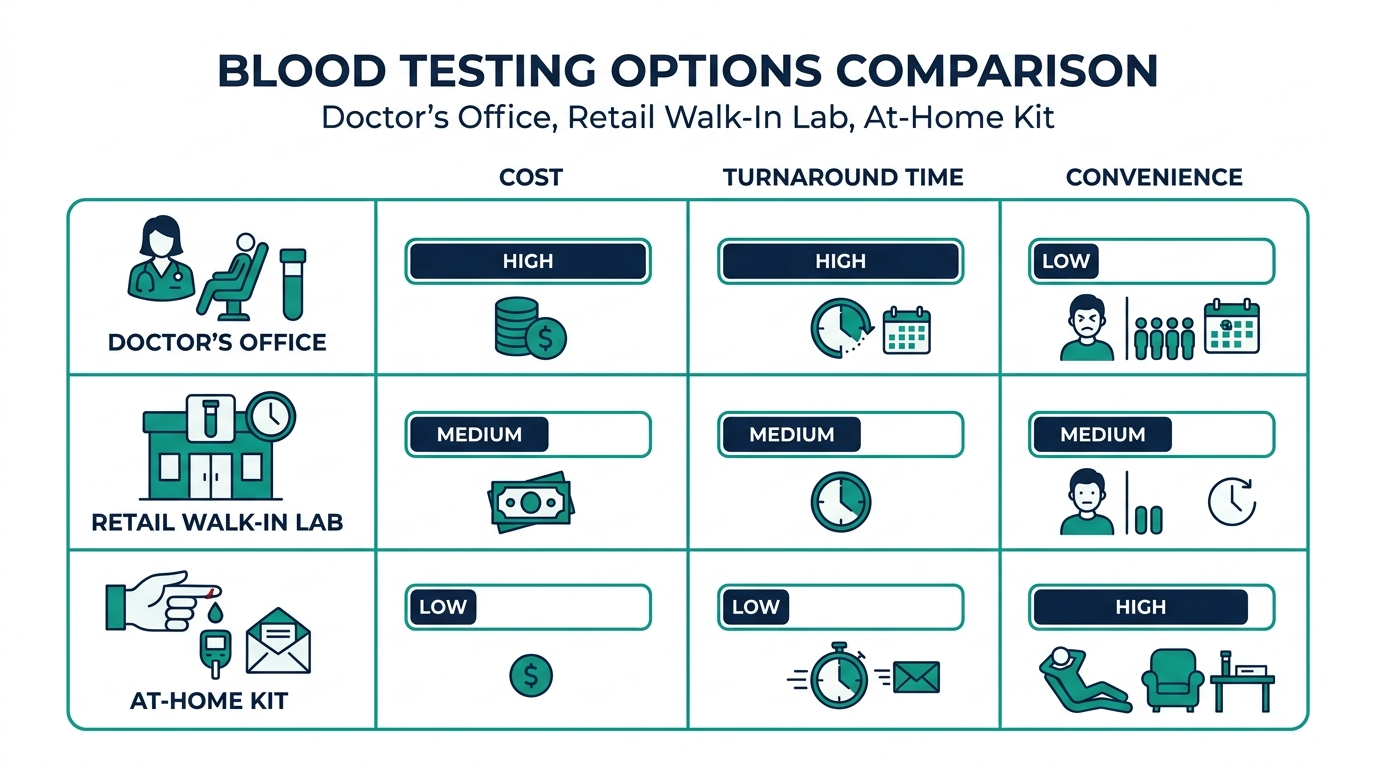
Cost is where most people get this decision wrong. They assume the doctor route is always cheapest because insurance is involved, then get a surprise bill when a “free” preventive screen gets coded diagnostic because a result came back abnormal. Here is the honest breakdown.
- Insured with a doctor’s order: often $0 to $50 for standard preventive panels. Cheapest if your plan covers screening and the visit stays coded preventive.
- Cash, self-ordered single test: $30 to $200. Best when you want one specific number fast and predictably.
- Urgent care: $75 to $250 plus labs. You pay for speed and a same-day clinician.
- At-home kit: $45 to $250. Convenience premium, with some sample-quality limits.
- Full-panel membership: $199 to $500 a year. Cheapest per marker if you want broad data and yearly tracking. For the full math, see how much Superpower costs and what Superpower tests for.
The same panel, four ways
To make the price spread concrete, take a single comprehensive metabolic panel (CMP), a common 14-marker test, and price it across settings.
| Where you get the CMP | Typical out-of-pocket | Why the price moves |
|---|---|---|
| Discount self-order lab (cash) | About $29 | Retail flat rate, no insurance, no clinician markup |
| Insured with preventive order | $0 to $30 | Covered as screening; small fee if a copay applies |
| Urgent care | $80 to $200 | Visit fee plus a separate lab charge |
| Hospital outpatient lab | Up to $250 | Facility fees inflate the same test dramatically |
That is the same 14 markers, the same blood, priced from $29 to $250 depending only on where you walked in. A CMP through a discount lab runs about $29. The identical panel billed through a hospital outpatient department can hit $250 because of facility fees layered on top. This is the single biggest reason to know your route before you go.
One practical rule: if you only need one or two markers and you are insured, the doctor route wins. If you want a real picture of your health and intend to track it, paying per test is false economy. Whatever route you pick, talk to a clinician about your results, because a number on a screen without context is just a number.
Common mistakes people make getting blood work done
After watching how this plays out, the same handful of errors come up again and again. Avoiding them saves money and a second trip.
- Assuming “preventive” means free no matter what. A wellness screen is covered as preventive only until a result comes back abnormal or the clinician adds a diagnostic code. One flagged number can flip the whole visit to diagnostic billing. Ask how the order is coded.
- Fasting for the wrong tests. People starve themselves for 12 hours before an A1C, which does not need fasting at all, or eat a full breakfast before a triglyceride panel, which does. Fasting matters for triglycerides and fasting glucose, not for A1C, CBC, or most thyroid tests.
- Going to a hospital outpatient lab by default. It is the most expensive door for routine bloodwork because of facility fees. A standalone Quest or Labcorp center or a discount lab runs the same test for a fraction of the price.
- Ordering tests one at a time. Three or four separate self-ordered tests often cost more than one comprehensive panel, and you get four separate needle sticks instead of one.
- Trusting a finger-prick kit for a critical decision. Capillary samples are fine for tracking a stable marker, shaky for a diagnosis that will change your treatment.
- Not confirming whether the lab fee is bundled. At urgent care especially, the quoted visit price often excludes the actual lab charge, which arrives weeks later.
- Skipping the result interpretation. A self-ordered result with no clinician context can scare you over a harmless variation or, worse, let a meaningful flag slide. Get eyes on anything outside the reference range.
Edge cases: uninsured, minors, Medicare, and employer-required tests
The five routes above cover most people, but a few situations have their own rules.
If you are uninsured
Self-ordering from Quest or Labcorp’s consumer store, using an independent discount lab, or buying an at-home kit are your cheapest paths. A basic panel cash runs $29 to $150. Many community health centers also offer sliding-scale bloodwork based on income, which is worth a call if cost is the deciding factor. Avoid hospital outpatient labs, where the uninsured rate can be the highest of all.
If the test is for a minor
A child generally needs a parent or guardian present and a pediatrician’s order for anything beyond the most basic screen. Self-order consumer stores usually set a minimum age (often 18) for ordering, so the doctor route is the realistic one for kids. Pediatric draws are also a skill: ask for a center that draws children regularly, because the phlebotomist’s experience matters more for a small vein.
If you are on Medicare
Medicare Part B covers many medically necessary lab tests at no cost when ordered by your doctor and run at a participating lab like Quest or Labcorp. The key words are “medically necessary” and “ordered by your doctor.” Screening tests Medicare does not deem necessary, or self-ordered wellness panels, are not covered, so you would pay cash for those.
If your employer or a program requires it
Pre-employment drug screens, DOT physicals, and similar required tests usually run through a specific lab the requester names, and the requester often pays. Do not self-order these; the result has to flow back to the right party in the right format. Use the exact site and order the program tells you to.
Who should pick which route: a quick decision guide
Boiling it all down, here is who each route actually fits best.
| Your situation | Best route |
|---|---|
| Insured, doctor already ordered specific tests | Quest or Labcorp on the order |
| No doctor, want one specific number fast | Self-order online, get drawn at a center |
| Sick today, need an answer now | Urgent care or retail clinic |
| Far from any lab, or strongly prefer privacy | At-home mail-in kit (stable markers only) |
| Want a full baseline and yearly tracking | DTC full-panel membership |
| Uninsured and cost-sensitive | Discount self-order lab or sliding-scale clinic |
If you take one thing from this guide: the route is not about prestige or convenience alone, where to get blood work done is about matching what you need to the door that delivers it cheapest and fastest. One number and you are insured, go through your doctor. A full picture you plan to track, go broad in a single draw. Sick right now, go urgent care. The mistake is treating all bloodwork as one decision when it is really five.
Don’t just read about your health, track it.
A single result is a snapshot. Superpower re-tests 100+ markers over time so you can watch them move as you change sleep, food, and training.
FAQ
Where can I get blood drawn near me on a weekend?
Many Quest and Labcorp patient service centers offer Saturday hours, and urgent care centers and retail clinics like CVS MinuteClinic draw seven days a week. Check the lab’s own locator for weekend slots, since hours vary by location and some require an appointment. Sunday coverage is thinner, so urgent care is often your best weekend option for same-day needs.
Where can I get lab work done near me without insurance?
Self-order directly from Quest or Labcorp’s online store, or use an independent walk-in lab. You pay cash, usually $30 to $200 per panel, and no insurance or referral is required. At-home mail-in kits are another no-insurance option, and some community health centers offer sliding-scale pricing based on income.
How long does blood work take to come back?
Most routine panels post to your portal in one to three days. Urgent care can return basic results the same day. At-home kits take two to six days after the lab receives your sample, and full-panel memberships usually land in three to seven days. Specialized tests, like certain hormone or genetic panels, can take a week or two regardless of route.
Do I need to fast before blood work?
Only for certain markers. Fast 9 to 12 hours for a lipid panel that measures triglycerides and for a fasting glucose. A1C, a CBC, and most thyroid tests do not require fasting. If your order does not say, ask the ordering clinician rather than guessing, because fasting unnecessarily just makes the visit harder.
Where do I get blood work done if I have no primary doctor?
Self-order online from Quest or Labcorp, walk into an urgent care, or join a direct-to-consumer membership. None of these require an existing primary care relationship, and all let you start the same week. If you also need your blood pressure read, see Where to Get Your Blood Pressure Checked (Free and Paid Options).
Can I order my own blood work without a doctor?
Yes. In most states you can order many common panels yourself through Quest’s or Labcorp’s consumer stores or an independent lab, with no physician involved. You act as your own orderer, pay cash, and the results come directly to you. A small number of tests still require a clinician’s order, and those stores will tell you when that applies.
Is it cheaper to pay cash or use insurance for blood work?
It depends on your deductible. If you are insured and the test is coded preventive, insurance is usually cheapest, sometimes $0. But if you have a high deductible you have not met, the insurance “negotiated” price can exceed a cash discount lab’s flat rate. For a routine panel, it is worth checking the cash price before assuming insurance is the better deal.
What is the difference between a CBC and a metabolic panel?
A CBC (complete blood count) measures your blood cells: red cells, white cells, and platelets, useful for spotting anemia or infection. A metabolic panel measures chemistry in your blood: glucose, kidney markers, electrolytes, and, on a comprehensive version, liver enzymes. They answer different questions, which is why a thorough checkup often orders both together.
Where can I get a full panel of blood work in one visit?
A direct-to-consumer membership is built for exactly this: one phlebotomist draw covering 100-plus biomarkers, reviewed by a doctor. You can also ask your physician to order a broad panel at Quest or Labcorp, though the breadth depends on what they deem necessary and what insurance will cover. The membership route gives the widest single-visit panel without needing an order.
Will my results be explained to me, or just handed over?
That varies by route. Doctor-ordered tests come with your clinician’s review and follow-up. Self-ordered cash tests land in a portal addressed to you, with reference ranges but no built-in interpretation, so you own the reading. Memberships include a clinician review of the panel. If you self-order and a number falls outside the range, get a professional to look at it before you act on it.
Vital Signs Today may earn a commission if you buy through links on this page. It does not affect our editorial assessments.