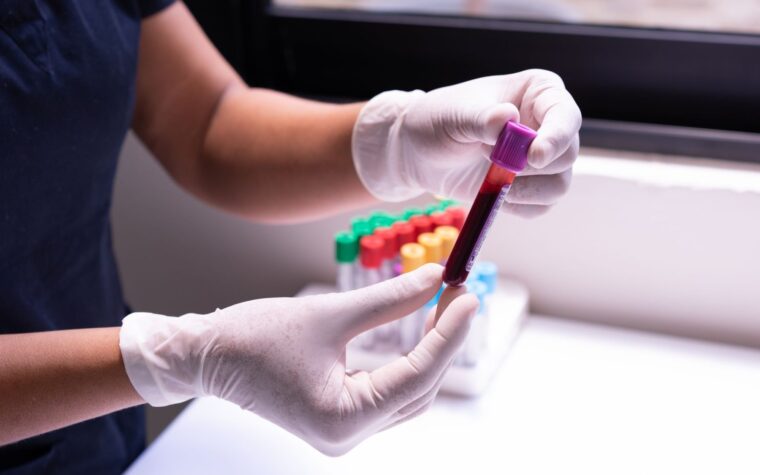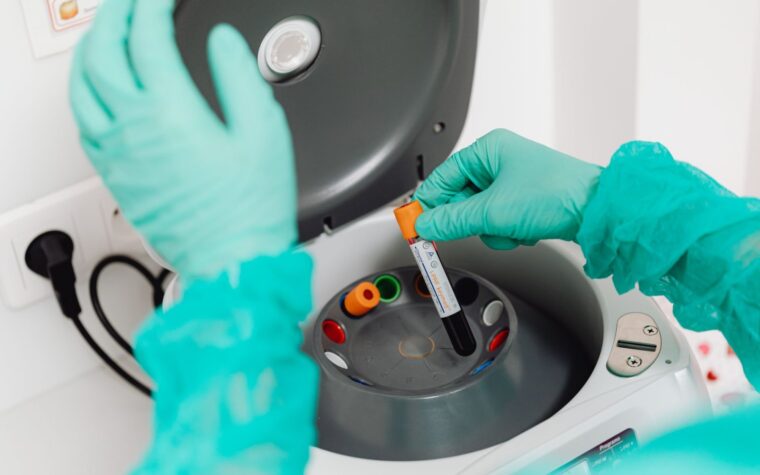
Quick answer: A defensible annual blood work panel covers a complete blood count (CBC), a comprehensive metabolic panel (CMP), a lipid panel, fasting glucose plus hemoglobin A1C, and a thyroid check (TSH). Beyond that standard set, the extra tests you should take at the doctor depend on your age and sex: add vitamin D, ferritin, and an hsCRP for almost everyone, a testosterone or estradiol panel where relevant, and a PSA for men over 45. Most adults benefit from a full draw once a year, sooner if a number is trending the wrong way. Expect to pay roughly $30 to $150 cash for the core panels, often less or nothing if your clinician codes them as preventive.
What extra tests should you take at the doctor beyond the standard physical?
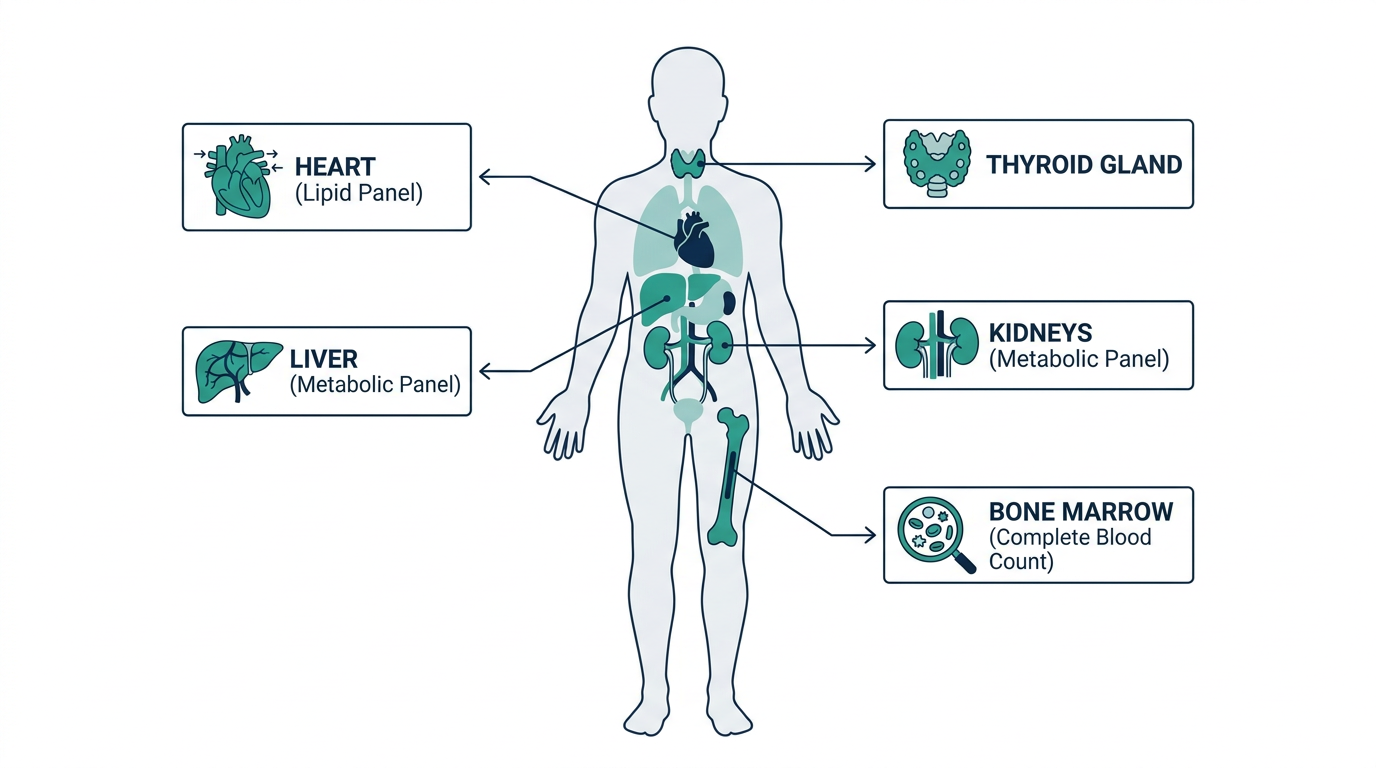
The extra tests you should take at the doctor are the ones that catch problems before symptoms do, and they are almost never on the default order set. A typical “annual physical” lab order is a CBC, a CMP, and a lipid panel. That is fine for billing, but it leaves out three of the most useful early-warning markers in medicine.
A defensible annual panel covers CBC, CMP, lipids, and A1C, but does your current checkup actually include all of it? One at-home Superpower draw checks 100+ biomarkers, physician-reviewed.
Here is the insider part most people never hear: your primary care doctor orders the cheapest cluster their system pre-builds, because anything extra has to be justified line by line against insurance medical-necessity rules. If you want vitamin D or a thyroid panel and you have no symptoms, it can get denied or billed to you. So you have to ask for them by name. The extras worth requesting:
- Hemoglobin A1C alongside fasting glucose. A1C reads your average blood sugar over about three months, so it catches creeping prediabetes that a single fasting number can miss.
- Vitamin D (25-hydroxy). Deficiency is extremely common and quietly drives fatigue, poor sleep, and bone loss.
- Ferritin, not just hemoglobin. Ferritin shows your iron stores and falls long before a CBC flags anemia.
- TSH for thyroid, especially for women and anyone with unexplained weight, mood, or energy changes.
- hsCRP, a sensitive inflammation marker that adds real signal to cardiovascular risk.
If you want the longer list of what is genuinely worth following, we keep a running guide to the biomarkers worth tracking.
One practical script that works: tell your clinician the symptom or the goal, not the test. “I have been exhausted and my hair is thinning, can we check thyroid and iron?” lands very differently with a billing system than “I want a TSH and a ferritin.” The first frames a clinical question that justifies the order. The second sounds like a shopping list, and shopping lists get denied. This is not about gaming insurance, it is about giving the order a medically coded reason to exist.
The full annual blood work checklist, panel by panel
Here is the complete annual blood work checklist in one place, split into the core panels almost everyone should run and the targeted add-ons you request based on age, sex, and history. Print this, take it to your appointment, and ask which line items your plan will cover.
| Tier | Test | What it tells you | Who needs it |
|---|---|---|---|
| Core | CBC | Anemia, infection, platelet and clotting issues | Everyone, yearly |
| Core | CMP | Kidney, liver, electrolytes, fasting glucose | Everyone, yearly |
| Core | Lipid panel | LDL, HDL, triglycerides, heart and stroke risk | Everyone, yearly |
| Core | Hemoglobin A1C | Three-month average blood sugar | Everyone, yearly |
| Core | TSH | Thyroid function, metabolism, energy | Everyone, especially women |
| Add-on | Vitamin D (25-OH) | Deficiency, fatigue, bone health | Most adults, indoor workers |
| Add-on | Ferritin | Iron stores, early anemia | Menstruating women, vegetarians, athletes |
| Add-on | hsCRP | Vascular inflammation, cardiac risk | Adults 40+, family heart history |
| Add-on | ApoB or Lp(a) | Sharper cardiovascular risk than LDL alone | Anyone with heart history or borderline lipids |
| Add-on | Testosterone (total and free) | Low energy, libido, recovery in men | Men 40+ with symptoms |
| Add-on | Estradiol and FSH | Perimenopause and menopause status | Women 40+ with symptoms |
| Add-on | PSA | Prostate cancer screening | Men 45+, earlier with family history |
| Add-on | Vitamin B12 and folate | Fatigue, nerve symptoms, mood | Vegans, adults 50+, metformin users |
Notice that the core list is short on purpose. Five panels cover blood, organ function, sugar, cholesterol, and thyroid, which is the backbone of a complete blood panel. The add-on column is where personalization happens. You do not run all twelve add-ons every year. You pick the two or three that match your decade and your risk, and you trend those.
How often should you get blood work done?
For most healthy adults, once a year is the right cadence for routine blood work. That answers the common question of how often should you get blood tests done: an annual draw is frequent enough to catch a trend, and not so frequent that you are reacting to normal day-to-day noise.
The cadence shifts with your situation:
- Healthy, no chronic conditions: once a year.
- Prediabetes, high cholesterol, or thyroid issues: every 3 to 6 months until the number stabilizes.
- On a new medication (a statin, thyroid replacement, a blood pressure drug): on the schedule your clinician sets, often 6 to 12 weeks after starting.
- Active symptoms: whenever something is off, do not wait for the calendar.
People also ask how often to get a blood test if they feel fine. Feeling fine is exactly when a baseline is most valuable, because it gives you a personal reference point. A “normal” lab range is a population average. Your own normal might sit at the edge of that range, and only repeat testing reveals when you drift away from it.
There is a flip side worth saying plainly: more is not better. Testing a stable healthy adult every three months mostly buys you false alarms. Lab assays have measurement variability, and biology fluctuates with sleep, hydration, stress, and what you ate yesterday. Run a panel often enough and one marker will eventually flag outside range by pure chance, sending you down a rabbit hole of repeat draws and worry over nothing. Annual is the sweet spot for the healthy because it filters out that short-term noise while still catching a genuine year-over-year slope.
What would show up in a routine blood test?
A routine blood test would show up your blood cells, your major organ function, your blood sugar, your cholesterol, and your thyroid status, which is why those panels are the backbone of routine annual blood work. Here is what each standard piece actually measures, and what is routine lab work versus an add-on.
| Panel | What it checks | Why it matters |
|---|---|---|
| CBC | Red cells, white cells, platelets, hemoglobin | Anemia, infection, clotting issues |
| CMP | Glucose, electrolytes, kidney and liver markers | Kidney and liver function, hydration, blood sugar |
| Lipid panel | Total, LDL, HDL cholesterol, triglycerides | Heart disease and stroke risk |
| A1C + glucose | Average and current blood sugar | Diabetes and prediabetes screening |
| TSH | Thyroid signal from the brain | Metabolism, energy, weight, mood |
One detail people get wrong: fasting matters for triglycerides and fasting glucose, but it does not change your A1C, because A1C reflects a three-month average. So if you forgot to fast, your A1C is still valid. Get the rest redrawn.
What the CMP quietly reveals
The CMP is the most underrated panel on the list because it carries fourteen separate measurements and people treat it as one box to check. Inside it sit your eGFR and creatinine (kidney filtration), your ALT and AST (liver), your sodium and potassium (electrolyte balance), and your fasting glucose. A creatinine creeping up year over year is one of the earliest signs of declining kidney function, and it shows up long before you feel anything. ALT drifting high is a classic early flag for fatty liver, which now affects a large share of US adults and is almost always silent until it is advanced.
Reading a lipid panel like a clinician
Most people glance at total cholesterol and stop. That is the least useful number on the panel. The signal is in the ratio and the components: a high HDL pulls your risk down, high triglycerides flag metabolic trouble, and your LDL is the number statins and lifestyle actually move. If your triglycerides are high and your HDL is low at the same time, that pattern is a louder warning for insulin resistance than your glucose alone, and it is the reason the next section pushes ApoB for anyone with a borderline read.
The annual checklist by age and sex
The core five panels above apply to nearly every adult. The add-ons change with the decade you are in and your sex, because risk does not stay flat. Here is a defensible build.
In your 20s and 30s
Establish your baseline. Core five plus vitamin D and ferritin. Women who menstruate should keep an eye on ferritin yearly, since iron loss is steady and easy to miss. If you are on hormonal birth control or trying to conceive, ask about a thyroid panel. This is also the decade to lock in the habit of saving results in one place, because the value of these numbers is almost entirely in comparison, and a baseline at 28 is worth far more when you are 38.
In your 40s
This is the decade metabolic and cardiac risk starts compounding. Add hsCRP and, for men, a baseline testosterone if energy, libido, or recovery have changed. Men should start the PSA conversation around 45, earlier with a family history of prostate cancer. Women approaching perimenopause benefit from an estradiol and FSH check when symptoms appear. If your lipid panel is borderline, this is the right time to add an ApoB, because standard LDL can underestimate risk in people with small dense particles.
In your 50s and beyond
Keep the core five tight and trend them every year. Add a yearly PSA for men, continued thyroid monitoring for women, and consider an ApoB or Lp(a) test for a sharper read on cardiovascular risk than standard LDL alone. Add vitamin B12, since absorption declines with age and deficiency masquerades as memory and balance problems. Talk to a clinician about which of these fit your personal and family history rather than ordering blindly.
A quick sex-based summary
- Women: ferritin earlier and more often (menstrual iron loss), thyroid as a standing priority, and the estradiol and FSH conversation as perimenopause approaches. Iron and thyroid are the two most commonly missed drivers of “I am just tired all the time” in women.
- Men: testosterone if symptoms warrant it from the 40s on, and the PSA conversation from 45. Men also tend to skip annual draws entirely for years, which is exactly how a slow metabolic slide goes unnoticed until it is a diagnosis.
The simplest way to actually get this done
Superpower is a full-body lab membership that runs 100+ biomarkers, has each result reviewed by a doctor, and tracks your numbers year over year (about $199/year). It is what we point readers to when they would rather get one clean, complete draw than chase single tests one at a time. Here is superpower reviewed in full.
What does annual blood work cost, and where should you get it?
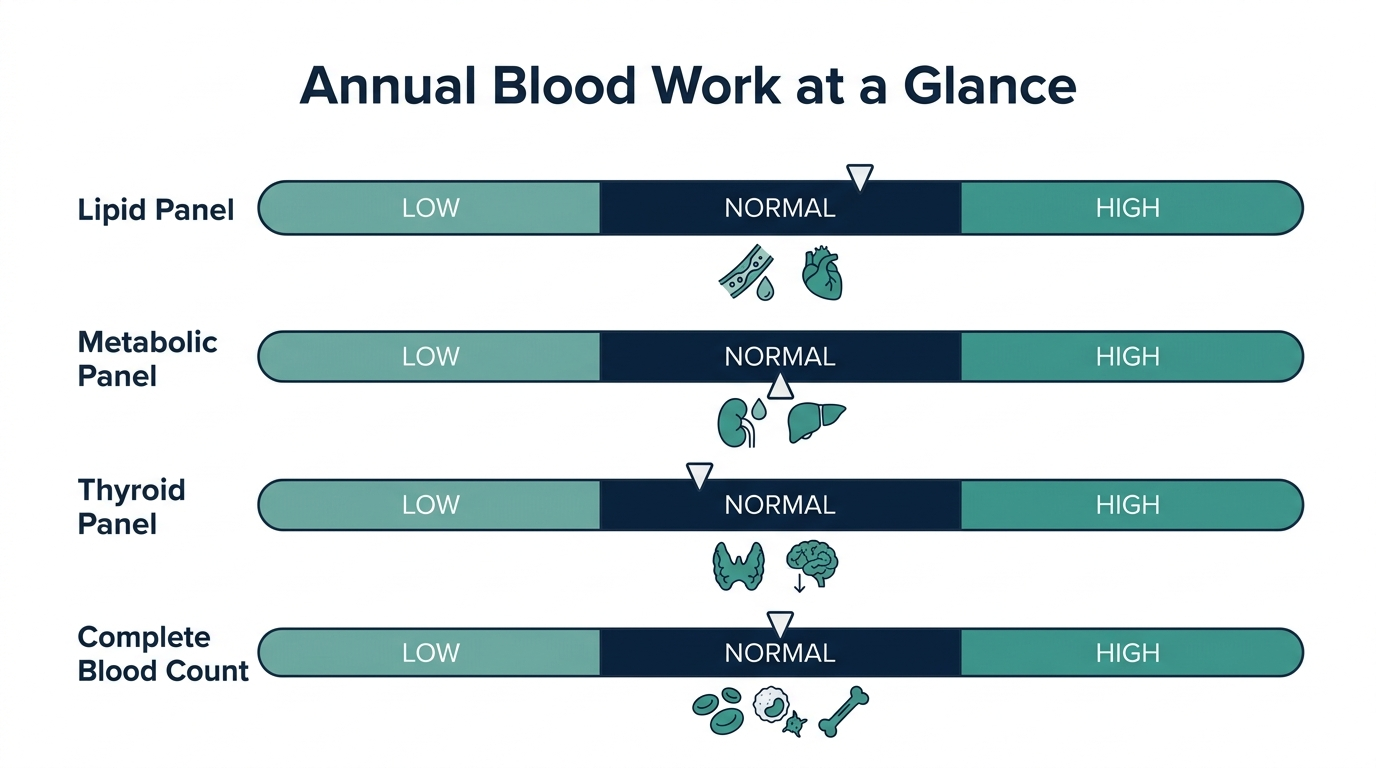
The core five panels run roughly $30 to $150 cash if you order them through a direct-to-consumer lab, and are often fully covered as preventive care once a year if your clinician orders them with the right diagnosis codes. The catch is that a “free” preventive draw can flip to a billed diagnostic test the moment a code suggests you are being investigated for a condition, so it pays to ask up front how an order will be billed.
Worked example, because the spread is wild: a CMP ordered through a discount direct-to-consumer lab runs about $29. The exact same panel billed through a hospital outpatient lab can hit $200 to $250 before insurance, and if it lands as out-of-network you can owe most of that. A full annual build (the core five plus vitamin D, ferritin, and hsCRP) is roughly $90 to $200 cash through a consumer lab, versus several hundred if each line is billed individually through a hospital. The blood is identical. The price is a billing artifact, not a quality difference.
Your main options:
- Through your doctor: best when you have symptoms or a condition, since insurance is more likely to cover it. Slower and more paperwork.
- Direct-to-consumer (Quest or Labcorp consumer sites): you pick the panel, pay cash, and skip the visit. Predictable pricing, often HSA/FSA eligible.
- Retail clinics (CVS MinuteClinic, urgent care): convenient for a single test, rarely the cheapest for a full panel.
- Membership labs: a flat yearly fee for a wide panel plus tracking, which works well if you want trends rather than one-off numbers.
| Where | Typical cost for core annual panel | Best for | Trade-off |
|---|---|---|---|
| Doctor + insurance | $0 to copay if coded preventive | Symptoms or chronic conditions | Can flip to diagnostic billing |
| Direct-to-consumer lab | $30 to $150 cash | No symptoms, want predictable pricing | Self-interpret unless you add review |
| Retail clinic / urgent care | $50 to $200+ | One urgent test, convenience | Pricey per test for a full panel |
| Membership lab | Flat yearly fee, wide panel | Trend tracking, full baseline | Pay even in a quiet year |
Prices move around by region and by panel, so before you book anything, check How Much Does Blood Work Cost? Real 2026 Prices With and Without Insurance. If you are weighing a membership, our breakdown of how much Superpower costs and what Superpower tests for shows exactly what lands in the panel.
Common mistakes people make with annual blood work
Most of the value in annual blood work is lost not because people skip it, but because they do it wrong. These are the errors that show up over and over on result printouts.
- Accepting the default order. The pre-built “physical” panel is the floor, not the ceiling. If you do not ask for A1C, vitamin D, ferritin, and thyroid by name, you usually will not get them.
- Chasing a single normal result. One number inside range on one day tells you almost nothing. Without prior years, you cannot tell a stable 95 glucose from one that has climbed ten points and is still “normal.”
- Fasting wrong or pointlessly. People fast 14 hours and arrive dehydrated, which can skew kidney markers, or they panic about a non-fasting A1C that does not need fasting at all. Aim for a clean 9 to 12 hour fast with water allowed.
- Getting drawn after a hard workout or a cold. Intense exercise the day before can transiently bump liver enzymes and CK, and an active infection inflates white cells and CRP. Schedule your draw on a normal, rested day.
- Letting results scatter across portals. Quest, Labcorp, and your clinic each have a separate login. Numbers split across three portals cannot be trended, which defeats the entire purpose.
- Treating a flag as a diagnosis. A single out-of-range value is a prompt to repeat or investigate, not a verdict. Labs flag against population ranges, and your personal normal may legitimately sit near an edge.
- Skipping the doctor review on a self-ordered panel. Direct-to-consumer testing is great for access, but a wall of numbers with no interpretation is where people either panic or miss something. Pair self-ordered panels with a clinician read.

Edge cases: uninsured, minors, Medicare, and employer-required tests
The standard annual playbook assumes an insured adult ordering for themselves. Several common situations break that assumption.
If you are uninsured
Direct-to-consumer labs are usually your cheapest route, not the hospital. A full core annual build through a discount consumer lab often costs less than a single hospital-billed CMP. Many labs run seasonal bundles, and HSA or FSA funds apply even without traditional insurance if you have a high-deductible plan.
For minors and teens
Routine annual blood work is not standard for healthy children. Pediatric testing is symptom-driven or targeted (a lipid screen once in childhood, iron if anemia is suspected, lead in young kids). Do not order a full adult panel on a healthy teen. A parent or guardian must consent, and most direct-to-consumer labs will not test minors without a clinician order.
On Medicare
Medicare covers many screening labs (lipids, diabetes screening, certain others) on defined schedules, but the rules are specific and frequency-limited. A cardiovascular blood screen is typically covered once every five years, not annually, and a test ordered more often than the covered interval can come back to you as a bill. Confirm the covered frequency before assuming an annual draw is free.
Employer-required and pre-employment panels
If a job requires a drug screen or a specific health panel, that is a separate workflow from your personal annual draw, often through an occupational health vendor, and the results may go to the employer, not just you. Do not assume an employer panel doubles as your preventive baseline. It rarely includes the markers you actually want to trend.
Who should pick what: decision guidance
Faced with all the options, here is the short decision path.
- You have symptoms or a known condition: go through your clinician. Insurance is most likely to cover it, and you want a professional ordering and reading the labs.
- You feel fine and just want a yearly baseline: a direct-to-consumer core panel is cheapest and fastest. Add a clinician review so the numbers mean something.
- You want trends without juggling logins, and one clean full draw a year: a membership lab that runs a wide panel and stores results year over year is the least friction. Worth it if you value the tracking and the doctor review more than saving the membership fee in a quiet year.
- You need one urgent test today: a retail clinic or urgent care is fine for speed, just not the value play for a full panel.
Why baselines and trends beat one-off normal results
A single normal result tells you one thing: you were inside the population range on one day. A trend tells you the story. Your fasting glucose can climb from 85 to 99 over four years and still read “normal” every single time, while quietly walking you toward prediabetes. Nobody catches that without prior numbers to compare against.
This is the real argument for an annual draw and for keeping your results in one place. The goal is not to chase a perfect snapshot. It is to watch the slope. When a number starts moving, you want at least two or three prior years to know whether it is noise or a real shift, and to act while the change is still small and reversible.
Concretely: an LDL of 130 means little in isolation, but an LDL that went 95, 110, 130 across three annual draws is a clear directional signal that diet, weight, or genetics is pushing the wrong way, and it is worth acting on now rather than at 160. The whole discipline of annual blood work is less about any one result and more about building a personal chart that turns slow, silent changes into something you can actually see and respond to.
Don’t just read about your health, track it.
A single result is a snapshot. Superpower re-tests 100+ markers over time so you can watch them move as you change sleep, food, and training.
FAQ
How often should you have blood tests done if you are healthy?
Once a year is the standard for healthy adults with no chronic conditions. It is frequent enough to spot a developing trend and infrequent enough to avoid reacting to normal fluctuation. Testing far more often mostly produces false alarms from natural day-to-day variation.
How often should I get blood work done with a chronic condition?
Every 3 to 6 months is typical until the condition is stable, then your clinician may extend the interval. Always follow the monitoring schedule tied to any medication you take.
How often should you do blood work after starting a new medication?
Usually 6 to 12 weeks after starting, so the lab reflects the drug’s full effect, then on whatever recheck schedule your prescriber sets. Statins, thyroid medication, and blood pressure drugs all have their own follow-up timing.
What is routine lab work, exactly?
Routine lab work refers to the standard screening panels ordered without a specific suspected diagnosis: typically a CBC, a CMP, and a lipid panel, often with fasting glucose. Anything beyond that, like vitamin D or thyroid testing, is usually an add-on you request by name.
How often get blood tests if you only want a baseline?
Get a full baseline draw once, then repeat it yearly. A baseline only becomes useful when you have a second and third year to compare it against, which is the whole point of tracking trends over time.
Do I need to fast for annual blood work?
Fast 9 to 12 hours for a fasting glucose and the most accurate triglycerides, with water allowed. You do not need to fast for A1C, CBC, TSH, or most hormone tests. If you forget to fast, your A1C and many other markers are still valid, so only the fasting-dependent values need a redraw.
Can I order my own annual blood work without a doctor?
Yes. Direct-to-consumer labs let you choose and pay for panels yourself, no visit required, and the draw happens at a standard Quest or Labcorp patient site. The gap is interpretation, so pair a self-ordered panel with a clinician review or a service that includes one.
What is the single most useful test people skip?
Hemoglobin A1C, closely followed by ferritin and vitamin D. A1C catches creeping prediabetes that a one-day fasting glucose can miss, ferritin flags low iron stores long before a CBC shows anemia, and vitamin D deficiency is both extremely common and easy to fix once you know about it.
Is annual blood work covered by insurance?
Often yes, as preventive care, when your clinician orders the core screening panels with preventive diagnosis codes. It can flip to a billed diagnostic test if a code suggests you are being investigated for a specific condition, so ask up front how the order will be billed before the draw.
How many vials of blood does a full annual panel take?
A typical core annual draw is two to four small vials, and even a broad full-body panel with many add-ons is usually a handful of tubes from a single arm stick. It is one short visit, not a major blood loss, so the volume is rarely a reason to skip the broader build.
Related: see our ranking of the best at-home blood tests.
Vital Signs Today may earn a commission if you buy through links on this page. It does not affect our editorial assessments.