
Last updated June 2026. Educational content, not medical advice. BPC-157 is not FDA-approved for human use. Consult a licensed clinician before starting any peptide protocol.
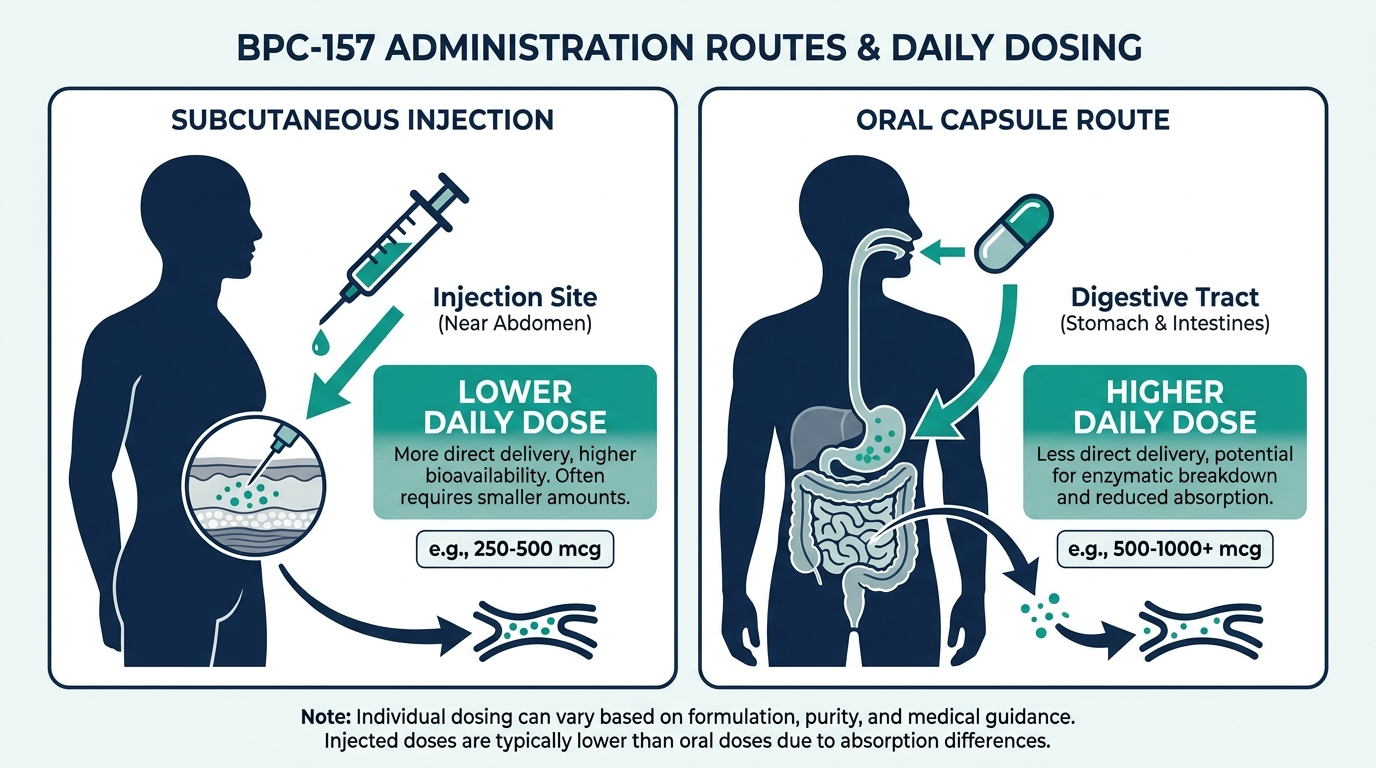
Short answer: The most-studied human-equivalent dose derived from animal research is 250 to 500 mcg per day via subcutaneous injection, split into two administrations roughly 12 hours apart. For oral use, 500 mcg once daily using the arginate salt form is the commonly cited protocol. Neither number comes from a large randomized controlled trial in humans. They are extrapolated from rodent studies, and every dose you see on a forum or clinic website is ultimately anchored to that same thin data set.
BPC-157 dosing research is animal-derived, so wouldn’t real human bloodwork tell you more about your own body? One at-home Superpower draw checks 100+ biomarkers, physician-reviewed.
That single paragraph is what most guides bury on page three. Everything below builds the honest context around it: why those numbers exist, what the research actually measured, how route changes the dose math, what the 2026 regulatory shift means for your access options, and what separates a real clinical program from a vial with a typed label.
Where do the BPC-157 dosing numbers even come from?
The honest answer is: rats. Nearly all published BPC-157 research uses rodent models, predominantly from the lab of Croatian researcher Predrag Sikiric, whose group has published more than 100 studies on the peptide across gastric ulcer, tendon, ligament, muscle, bone, and nerve models (PMC12446177).
The canonical rodent dose is 10 mcg per kilogram, administered intraperitoneally or orally in drinking water. A secondary dose of 10 ng per kilogram, three orders of magnitude lower, also shows activity in some models, which is a detail that surprises most people encountering BPC-157 research for the first time.
Converting 10 mcg/kg from rat to human using the FDA’s standard body surface area formula (multiply by 0.162) gives roughly 110 to 560 mcg per day depending on human body weight. That calculation is where the “250 to 500 mcg” range that circulates everywhere actually originates. It is not a clinical pharmacokinetics study. It is allometric scaling applied to a rodent dataset.
Worth sitting with that for a moment: the dosing protocols detailed on thousands of vendor pages, forum posts, and even some clinic intake forms all trace back to the same arithmetic, not to a Phase 2 dose-finding trial in humans.
As of June 2026, only three published human studies exist (PMC12446177):
- A 2021 retrospective study of 16 patients receiving knee injections, where 14 of 16 reported significant pain relief with no adverse events.
- A 2024 study of 12 patients with interstitial cystitis who received bladder injections, with 80 to 100 percent symptom resolution.
- A 2025 IV infusion pilot in two healthy adults testing doses up to 20 mg, which showed no adverse events and normal lab values throughout.
Twelve published study participants for systemic safety data. Three published studies, all from the same research cluster in Florida. That is the human evidence base for a peptide that has become one of the most-purchased compounds in the grey-market recovery space.
Full-body lab membership: 100+ biomarkers, doctor-reviewed, tracked over time.
What is the standard BPC-157 dose for subcutaneous injection?
For subcutaneous injection, the community-consensus protocol that most telehealth clinics and peptide practitioners converge on is:
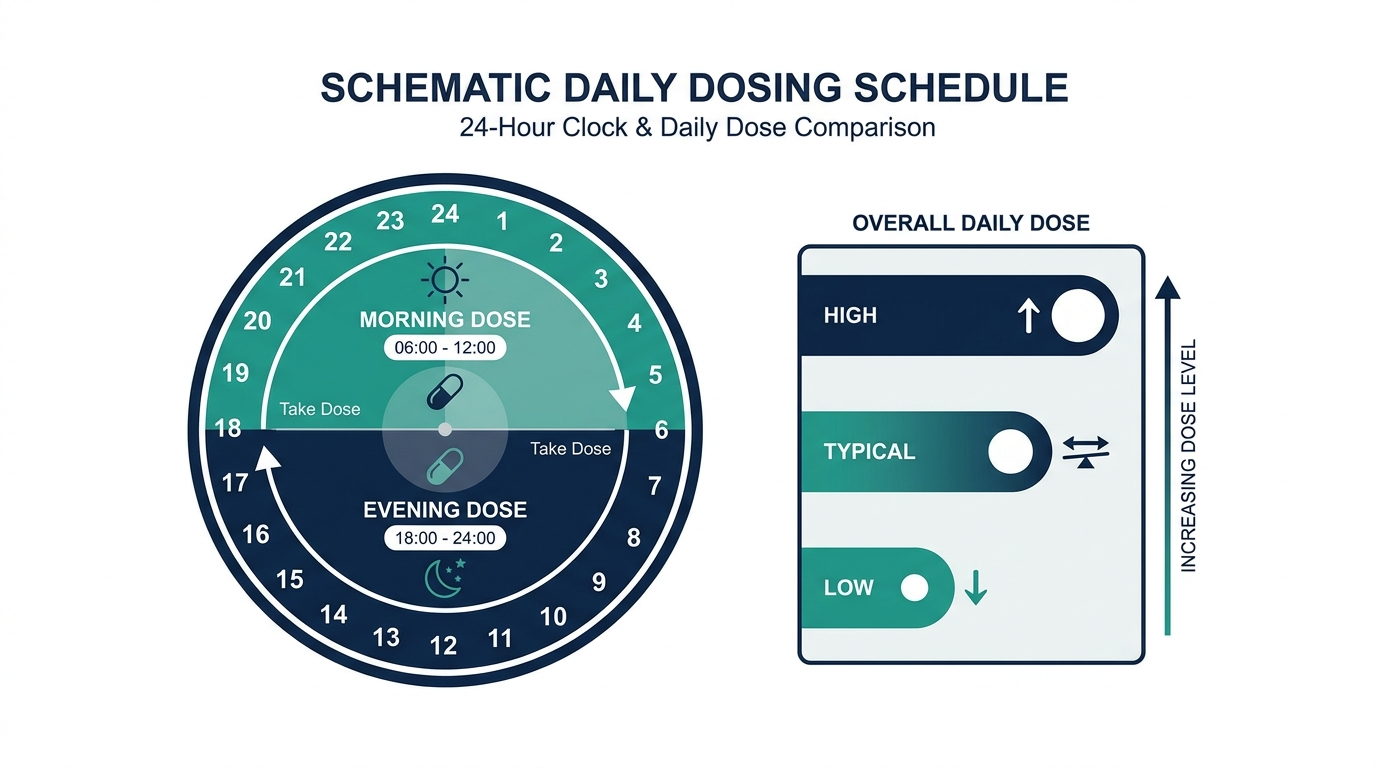
- Standard: 250 mcg twice daily, morning and evening approximately 12 hours apart
- High severity or acute injury: 500 mcg twice daily
- Maintenance or general wellness: 250 mcg once daily
The twice-daily split exists because BPC-157 has a short plasma half-life of approximately 30 minutes, meaning concentrations return to baseline within 24 hours despite therapeutic effects in animal models persisting weeks to months. This dissociation between pharmacokinetic half-life and biological effect duration is one of the genuinely unusual features of this peptide, and it is not well understood in humans.
Cycle length in practitioner protocols typically runs 4 to 8 weeks for standard musculoskeletal injuries, 8 to 12 weeks for severe tendon or ligament damage, and 4 weeks on, 4 weeks off for general wellness or preventive use.
One thing practitioners universally note: BPC-157 does not dose-scale with body weight the way most compounds do. A 140-pound person and a 220-pound person appear to run on similar effective doses in the available reports. Whether that reflects the peptide’s mechanism or simply reflects the thinness of the data is impossible to say cleanly.
How does the oral dose differ from the injectable dose?
Oral BPC-157 uses higher doses to compensate for lower gut absorption, and the specific form of the molecule matters more than most buyers realize.
BPC-157 acetate is the injectable form. Taken orally, gastric acid degrades a substantial portion before systemic absorption, with one estimate putting oral bioavailability of the acetate form below 5 percent, though no peer-reviewed paper has published a formal human bioavailability study.
BPC-157 arginate (arginine salt form) is the form sold for oral use. The arginine salt stabilizes the peptide against enzymatic breakdown in gastric acid. Vendor-cited bioavailability claims of 90 percent for the arginate form come from patent filings associated with the Diagen research group, not from a peer-reviewed comparative bioavailability paper. Treat that number with the appropriate skepticism.
Typical oral protocols:
- Gut healing or GI applications: 500 mcg once daily, arginate salt form, on an empty stomach
- Systemic or musculoskeletal use via oral route: 500 mcg to 1 mg per day, split into two doses
The practitioner consensus is that for systemic musculoskeletal applications, subcutaneous injection near the injury site outperforms oral delivery. For gut-specific conditions, oral delivery has a reasonable mechanistic rationale and is the better-studied route of administration in animal GI models. For someone who wants the systemic benefits without needles, oral arginate at higher doses is the workaround most commonly used, but it is a workaround on top of an extrapolation.
What conditions is BPC-157 typically used for, and does the dose change?
The target condition changes what practitioners emphasize in the protocol, even if the core dose range stays similar.
| Target application | Common dose | Route preference | Evidence level |
|---|---|---|---|
| Tendon / ligament injury | 250 mcg BID subcutaneous | Inject near injury site | Multiple rodent models, 1 small human study |
| Muscle tear recovery | 250 to 500 mcg BID subcutaneous | Systemic SC or near site | Rodent models (myogenesis, fibrosis reduction) |
| Gut healing / IBD-like conditions | 500 mcg once daily oral | Oral (arginate form preferred) | Multiple rodent gut studies, 1 human bladder study |
| Neurological recovery | 250 mcg BID subcutaneous | Systemic | Rodent spinal cord models; no human data |
| General anti-aging / wellness | 250 mcg QD subcutaneous | Systemic | No specific human evidence |
| Stacked with TB-500 (BPC+TB blend) | 250 mcg BPC + 500 mcg TB BID | Subcutaneous | Community convention, not a formal study |
The TB-500 stack is worth noting specifically: the BPC-157 plus TB-500 combination is the most-purchased format in the research peptide market, far ahead of either compound alone. The logic is that BPC-157 drives collagen synthesis and angiogenesis locally while TB-500 (Thymosin Beta-4 fragment) accelerates systemic tissue remodeling. There is no clinical trial testing this stack, and dosing is layered extrapolation on extrapolation.
What does the 2026 regulatory shift mean for how you access BPC-157?
This changed meaningfully in early 2026, and most of the articles written before April have it wrong.
Timeline of what actually happened:
- November 2023: The FDA placed BPC-157 on the 503A Category 2 list, citing “significant safety concerns” and insufficient human data. Category 2 effectively blocked licensed compounding pharmacies from preparing BPC-157 for patients.
- February 27, 2026: HHS Secretary Robert F. Kennedy Jr. announced that BPC-157 was among 14 peptides expected to move back to Category 1 status, which permits compounding pharmacies to prepare a substance with a valid prescription (AgeMD).
- April 22, 2026: The FDA formally removed BPC-157 (both acetate and free base forms) from Category 2 and scheduled a Pharmacy Compounding Advisory Committee (PCAC) meeting for July 23 to 24, 2026 (Loti Labs).
- July 23 to 24, 2026 (upcoming): The PCAC review meeting where the formal Category 1 determination is expected. If confirmed, compounding pharmacies will be able to prepare BPC-157 for patients with a valid prescription from a licensed physician.
The practical implication: the grey-market research-chemical route to BPC-157 that dominated from 2020 to early 2026 is now competing with a licensed compounding route that is coming back online. Telehealth clinics that operate with real physicians and real pharmacies (Defy Medical, Marek Health, and newer entrants like OneTwenty) were already prescribing BPC-157 before November 2023, had to pause or route around it, and are now positioned to add it back to their formulary once the July PCAC meeting confirms Category 1 status.
Telehealth GLP-1 program with provider visits and pharmacy coordination.
What does getting BPC-157 through a telehealth clinic actually cost?
Telehealth peptide clinics price BPC-157 differently from grey-market vendors, and the number is not directly comparable because the two options do not include the same things.
Research peptide vendor route:
– 5 mg vial: $30 to $120 depending on vendor
– Bacteriostatic water: $8 to $15
– Syringes and needles: $10 to $15
– Total for a 4-week course (250 mcg BID): roughly $60 to $150, compound only
Telehealth clinic route (per PeakedLabs):
– Initial consultation: $150 to $400
– Baseline labs: $100 to $250
– Monthly medication cost: $200 to $500 per month
– Monitoring check-ins: included in most programs
– Total for a 6-month program: $1,900 to $3,200 all-in
Marek Health prices BPC-157 at approximately $350 for a 15 mg vial with physician oversight and bloodwork included in the program structure. Defy Medical’s initial consultation runs $250, with follow-ups at $150 and monthly peptide costs ranging from $200 to $500 depending on the protocol.
The gap looks wide on a spreadsheet. What the spreadsheet does not show is that with the research vial, you are performing all the roles the clinic price bundles: the physician, the pharmacist, the QC lab, and the follow-up monitoring. When something goes wrong with reconstitution, dosing math, or an unexpected response, none of those roles has a license on the line except yours.
No insurance covers compounded peptide therapy for optimization or longevity purposes. Budget for that before the first invoice.
What are the real risks of getting the dose wrong?
The most common dosing error is not a dangerous overdose. It is a math error in reconstitution that causes someone to dose at ten times their intended amount, a scenario that happens regularly in first-time users because the syringe markings are not intuitive.
Here is the arithmetic that trips people up:
Add 2 mL of bacteriostatic water to a 5 mg BPC-157 vial, and you get a concentration of 2,500 mcg per mL. On a U-100 insulin syringe, 100 units equals 1 mL. So 10 units on that syringe equals 0.1 mL, which draws 250 mcg. That is a correct 250 mcg dose.
Now change one variable: add 1 mL to the same 5 mg vial instead. Concentration doubles to 5,000 mcg per mL. Now 10 units on the same syringe delivers 500 mcg, not 250 mcg. Draw the same volume you drew last week and you have doubled the dose without realizing it.
Personally, I think the reconstitution math is the strongest argument for having a licensed pharmacist involved at least for the first course. Not because 500 mcg is catastrophically dangerous based on available data, but because you simply cannot know what your vial actually contains from a research vendor, and concentrating an impure compound doubles any impurity dosage alongside the active peptide.
On the question of side effects: the human data shows a very clean acute safety profile. The most common reports from injectable use are mild injection site reactions, occasional nausea, and transient dizziness, none of which required treatment in the small human studies. The 2025 IV pilot tested doses of up to 20 mg with no adverse events in two subjects. Those numbers provide a floor of reassurance and almost nothing else. No trial has followed human subjects beyond 12 weeks for chronic safety signals.
The World Anti-Doping Agency (WADA) banned BPC-157 in January 2022 under its S0 (Non-Approved Substances) category, applicable to all athletes under its jurisdiction (USADA). It is not eligible for a Therapeutic Use Exemption. Competitive athletes subject to testing should treat any use as a violation risk regardless of the compound’s FDA status.
What is the myth about BPC-157 “loading doses” and why does it not hold up?
Do not believe the claim that BPC-157 requires a “loading phase” at double the standard dose for the first week. This advice circulates widely on forums and even appears on some vendor pages. It has no support in the animal literature, where a single dose was sufficient to demonstrate effects in some neural and gastric models, and no human pharmacokinetic study has ever tested loading versus flat dosing.
The loading-dose idea is borrowed from other pharmacological contexts, particularly antibiotics and some receptor-downregulation compounds, where accumulation to steady-state matters. BPC-157 clears plasma within 24 hours and appears to work through mechanisms (upregulating growth factor receptors, modulating NO pathways, promoting angiogenesis) where receptor saturation loading does not apply in any established way. The loading recommendation is a pattern-matching from unrelated drug categories, applied to a novel peptide that nobody has actually studied on a loading schedule in humans.
How should you cycle BPC-157? (And why cycling matters more than the daily dose)
The daily dose question is the one people ask. The cycle question is the one that matters more for outcomes and safety.
Animal studies used protocols ranging from a single dose to 90 consecutive days of administration. Practitioners who have run the most patients on BPC-157 converge on cycles of 4 to 12 weeks, followed by an off period of at least equal length, for a few converging reasons:
First, the absence of long-term human safety data means running indefinitely is running in the dark. Second, peptides that drive angiogenesis and fibroblast proliferation carry a theoretical concern about promoting growth in tissues you do not want growing, including pre-existing neoplasms. That concern is speculative and no study has demonstrated it with BPC-157 specifically, but it is the reason most cautious practitioners avoid indefinite open-ended use. Third, several practitioners report that cycling preserves responsiveness, though this is clinical observation rather than controlled data.
For acute injury applications, most protocols run a defined 8 to 12 week course and then stop, with a decision about a second course based on clinical assessment. Treating it like an antibiotic course, with a defined duration and a clear end point, is more defensible than treating it like a daily supplement.
Don’t just read about your health, track it.
A single result is a snapshot. Superpower re-tests 100+ markers over time so you can watch them move as you change sleep, food, and training.
Frequently asked questions
How many mcg of BPC-157 per day is standard?
The most commonly cited dose is 250 mcg twice daily via subcutaneous injection (500 mcg total per day). For oral protocols using the arginate salt form, 500 mcg to 1 mg per day is used to offset lower bioavailability. Both ranges are extrapolated from animal models, not established by human clinical trials.
Can I take BPC-157 once a day instead of twice?
Yes, once-daily dosing at 250 to 500 mcg is used in maintenance and general wellness protocols. Twice-daily splitting is the convention for acute injury applications because of the peptide’s short plasma half-life. For gut healing via oral route, once daily on an empty stomach is the standard approach.
How long should I run a BPC-157 cycle?
Most practitioners recommend 4 to 12 weeks depending on the application, followed by an off period of at least equal length. Acute tendon and ligament injuries typically use 8 to 12 weeks. General wellness protocols use 4 weeks on, 4 weeks off. Indefinite daily use is not supported by long-term human safety data.
Is BPC-157 legal to get by prescription in 2026?
As of April 2026, the FDA removed BPC-157 from its 503A Category 2 list, which had blocked compounding pharmacies from preparing it. A PCAC review meeting is scheduled for July 23 to 24, 2026, expected to confirm Category 1 status. Once confirmed, licensed physicians will be able to prescribe compounded BPC-157 from regulated pharmacies. It is not an FDA-approved drug and remains research-only as a finished product.
Does the dose change if I stack BPC-157 with TB-500?
Most practitioners keep BPC-157 at 250 mcg twice daily when stacking with TB-500, adding 500 mcg to 1 mg of TB-500 per day on the same schedule. There is no clinical trial data on this combination. The rationale is synergistic tissue repair through different mechanisms, but the combined protocol is community convention, not research protocol.
What happens if I accidentally take too much BPC-157?
The acute toxicity profile in animal studies is remarkably clean, and the 2025 IV pilot showed no adverse events at 20 mg in healthy adults. The most common over-dose scenario in practice is a reconstitution math error that doubles the intended dose. Effects reported at higher doses include nausea and dizziness. Contact a medical professional if you experience any unexpected symptoms.
Should athletes take BPC-157?
Not if they compete under WADA-sanctioned anti-doping rules. WADA banned BPC-157 in January 2022 under the S0 Non-Approved Substances category. It is prohibited at all times, including out-of-competition, and no Therapeutic Use Exemption is available. A positive test carries the same consequences as any other prohibited substance regardless of FDA compounding status.
Author: [CAN CONFIRM: name + credential of Vital Signs Today health reviewer, e.g., “Medically reviewed by [name], [credential]”]. Educational content, not medical advice. Sources linked inline.
Telehealth GLP-1 program with provider visits and pharmacy coordination.
Primary sources
- PMC12446177: Regeneration or Risk? Narrative Review of BPC-157 for Musculoskeletal Healing (2026)
- FDA bulk drug substances under 503A: Category 2 removal announcement, April 2026
- AgeMD: RFK BPC-157 FDA Peptide Reclassification 2026
- Loti Labs: BPC-157 Legal Status 2026, FDA Category 2 Removal
- USADA: BPC-157, Experimental Peptide Creates Risk for Athletes
- PeakedLabs: BPC-157 Cost Guide 2026
- PeptideDeck: BPC-157 Dosage Guide 2026
- ClinicalTrials.gov NCT07437547: BPC-157 for Acute Hamstring Muscle Strain (Phase 2, ongoing)
- McGill OSS: Body Protection Compound, No Proof Required (critical review)
- PubMed: Stable gastric pentadecapeptide BPC 157 in short bowel syndrome rat studies (Sikiric group)
Related reading
Vital Signs Today may earn a commission if you buy through links on this page. It does not affect our editorial assessments.