
Last updated June 2026. Educational content, not medical advice. BPC-157 is not FDA-approved for any human use. Consult a licensed clinician before starting any peptide protocol.
Short answer: A research-grade BPC-157 vial costs $35 to $120 for 5mg, enough for roughly four weeks at conservative dosing. A supervised program through a licensed telehealth clinic runs $200 to $600 per month all-in, which includes a physician, pharmacy-grade compound, and lab monitoring. Neither route is covered by insurance, and the two prices are not buying the same thing.
BPC-157 pricing runs $35 to $600 a month, so shouldn’t you know your baseline markers before spending on it? One at-home Superpower draw checks 100+ biomarkers, physician-reviewed.
The question sounds simple. It stops being simple the moment you realize that “BPC-157 cost” is actually three separate conversations happening at once: the grey-market research vial, the licensed telehealth program, and the incoming compounding pharmacy route that is working its way back through FDA rulemaking right now. Each one has its own price tag, its own risk profile, and its own definition of what you are actually purchasing. This guide separates all three and gives you the real numbers.
Full-body lab membership: 100+ biomarkers, doctor-reviewed, tracked over time.
What Is BPC-157 and Why Are People Buying It?
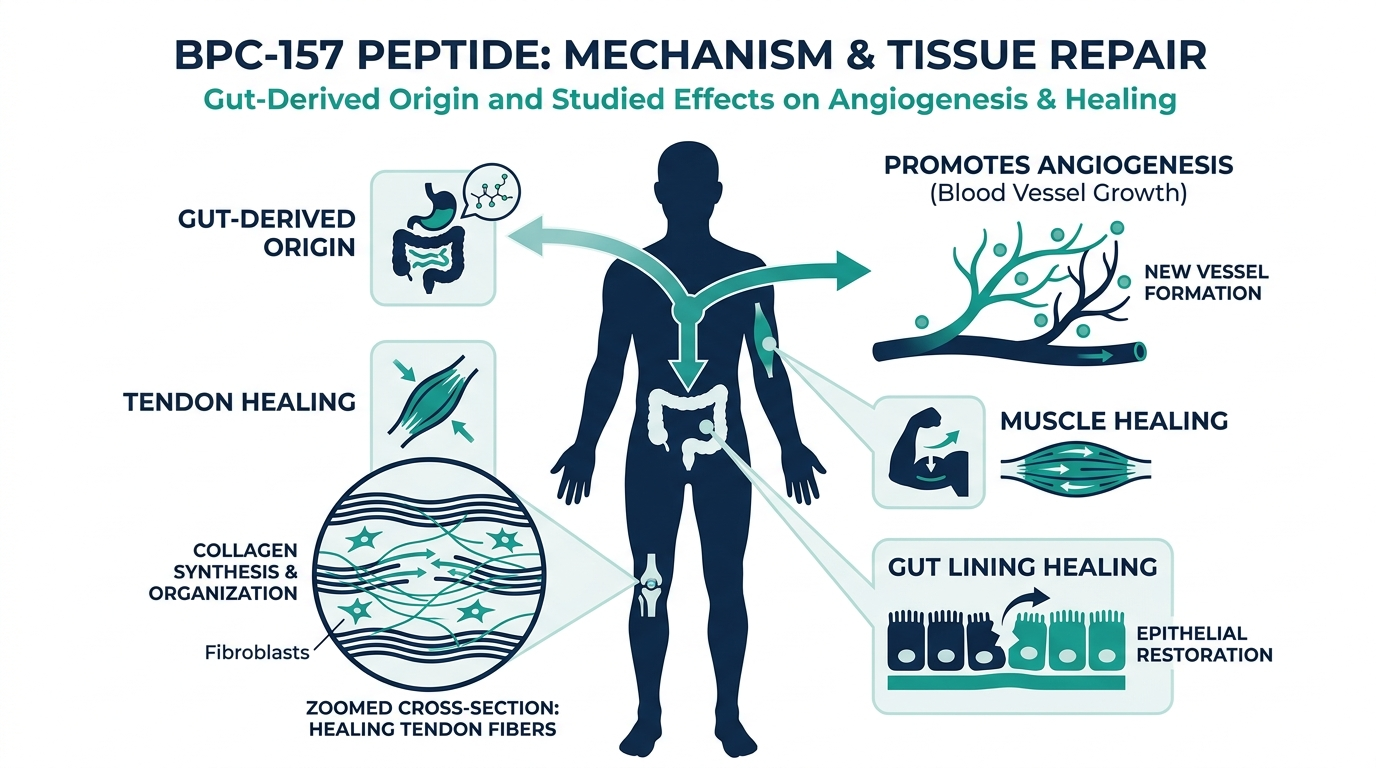
BPC-157 stands for Body Protection Compound-157, a synthetic pentadecapeptide (15 amino acids) derived from a protein found in human gastric juice. It does not occur naturally in this form; it was isolated in research by Professor Predrag Sikiric and his team at the University of Zagreb beginning in the 1990s, and nearly all subsequent studies reference or build on that original animal research.
The reason it attracts serious buyer interest in 2026 is the same reason it attracted interest in 2016: preclinical animal data on healing is unusually consistent. A 2026 review published in the International Journal of Molecular Sciences by Yuan, Demers, and colleagues (PMC13026520) documents effects on tendon healing, gastrointestinal mucosa repair, and pain modulation across multiple animal models. A separate 2025 narrative review in Current Reviews in Musculoskeletal Medicine by McGuire, Martinez, Lenz, Skinner, and Cushman (PMC12446177) analyzed the mechanistic pathways, noting that BPC-157 activates VEGFR2 and nitric oxide synthesis via the Akt-eNOS axis to promote angiogenesis and fibroblast activity, effects that persist for weeks to months in animals despite the peptide’s brief pharmacokinetic half-life.
What human data exists is thin. As of mid-2026, only three small pilot studies have examined BPC-157 in humans. One knee injection study reported 87.5% pain relief in 14 out of 16 patients; one bladder injection study showed 80-100% symptom resolution for interstitial cystitis; one intravenous infusion study in two adults showed no adverse events. That is the entire human evidence base. The McGuire et al. review concludes BPC-157 “should not be recommended for clinical use in musculoskeletal medicine” absent rigorous human trials.
In other words: compelling mechanism, solid animal data, essentially no human RCTs. That context matters when you are deciding which price tier to pay.
How Much Does BPC-157 Cost From a Research Vendor?
Research-grade BPC-157 (sold with “for laboratory use only” labeling) is the cheapest option and the one people usually discover first. As of mid-2026, pricing from vetted research vendors runs:
| Format | Size | Price Range | Per-mg Cost |
|---|---|---|---|
| Standard vial | 5 mg | $35 to $70 | $7 to $14/mg |
| Standard vial | 10 mg | $55 to $95 | $5.5 to $9.5/mg |
| Bulk vial | 20 mg | $80 to $120 | $4 to $6/mg |
| Oral capsules (research) | 30-day supply | $60 to $100 | varies |
Source: PeakedLabs BPC-157 cost guide 2026; Pure Peptide Clinic pricing guide
The per-mg cost drops meaningfully when you size up. A 20mg vial at $80 works out to $4/mg, roughly half the effective rate of a 5mg vial at $50. That arithmetic looks attractive, but there is a catch: once reconstituted, a vial has a 30-day shelf life. If you are not using 20mg in 30 days, you are wasting product and the per-mg math inverts.
Beyond the vial itself, a research-vendor purchase requires separate supplies that most price comparisons quietly exclude:
- Bacteriostatic water: $8 to $15 per bottle
- U-100 insulin syringes: $10 to $20 per box of 100
- Alcohol swabs: $5 per box
Total additional supplies: roughly $25 to $50 for a first course. That brings a typical four-week research-vendor course to $60 to $145 all-in.
The thing no vendor price list mentions: you are also purchasing the role of pharmacist, quality control lab, and clinician. The reconstitution math (a dose error of one decimal place changes your amount tenfold), the injection technique, the storage, the dose judgment, and the response monitoring are all your problem. Whether that is an acceptable trade-off depends entirely on what you are using it for and how much you trust the COA on the vial.
How Do You Know If a Research Vial Is What It Claims?
This is the question that separates informed buyers from the majority. A Certificate of Analysis (COA) is the only objective check on what is actually in a research vial, and most buyers look at one without really reading it.
A trustworthy COA clears four specific bars:
- HPLC purity of 96% minimum, 99% preferred. HPLC (high-performance liquid chromatography) measures what fraction of the vial is the target peptide versus impurities. Under 96% is a fail regardless of price.
- Mass Spectrometry identity confirmation. MS proves the molecule is BPC-157 and not a cheaper compound measuring as 99% pure because it is 99% the wrong thing. Purity without identity is meaningless.
- Batch-specific and dated. The batch number on the COA must match the vial you receive. A generic PDF reused across a whole catalog is not a COA.
- Independently verifiable from a third-party lab. The labs with genuine community credibility are Janoshik Analytical (reports carry a unique key you can verify on Janoshik’s own website), MZ Biolabs, and Colmaric Analyticals. A COA from the vendor’s “in-house lab” proves nothing, since there is no independent verification mechanism.
Personally, I would not buy a research peptide without a Janoshik key I could verify myself. The few minutes it takes to type that key into Janoshik’s site is the only moment in the entire research-vendor purchase where you have any objective ground to stand on.
The independent testing platform Finnrick, which has run more than 8,000 tests across 225 vendors, is the other cross-check worth bookmarking. Their vendor ratings are not paid placements, and their historical data shows exactly which vendors have shipped product with purity below the 96% threshold. The Finnrick data on Peptide Sciences, which failed retatrutide with an “E” rating across 37 batches before the company shut down in March 2026, is a precise illustration of why the COA step is not optional.
How Much Does BPC-157 Cost Through a Telehealth Clinic?
A telehealth clinic program is the legitimate supervised route, and the monthly number is higher, but you are buying a different bundle entirely.
Pricing from named US telehealth and specialty hormone clinics in 2026:
| Component | Budget (Telehealth) | Mid-Range | Specialist (e.g. Marek Health) |
|---|---|---|---|
| Initial consultation | $99 to $150 | $150 to $250 | $225 to $400 |
| Baseline labs | $0 to $100 | $100 to $200 | $180 to $350 |
| Monthly medication | $150 to $350 | $200 to $450 | $350 to $600 |
| Follow-up visits | $50 to $75 | $75 to $150 | Included |
| Month 1 total | $300 to $675 | $525 to $1,050 | $755 to $1,350 |
| Ongoing monthly | $200 to $425 | $275 to $600 | $350 to $600 |
Sources: Pure Peptide Clinic; MyPeptideMatch pricing breakdown; PeakedLabs full guide
Marek Health, one of the better-known hormone optimization clinics, prices BPC-157 at approximately $350 for a 15mg vial through its pharmacy network. Defy Medical runs somewhat lower overall, with monthly subscription costs of $99 to $150 for its core panel. Pure Peptide Clinic notes that telehealth consultations average 35% less than equivalent in-person visits for the same clinical oversight level.
The clinic price bundles things the research vendor price does not. You get a licensed physician, NP, or PA actually reviewing your labs and prescribing. You get compound sourced from a named, verifiable 503A or 503B compounding pharmacy with a documented chain of custody and pharmaceutical-grade quality controls. You get structured follow-up. And crucially, you get a dose that is calibrated to your labs and clinical picture, not estimated from a forum post.
Empower Pharmacy, Hallandale Pharmacy, and Tailor Made Compounding are among the compounding pharmacies that work with peptide-prescribing clinics. If a clinic cannot name its pharmacy, that is a meaningful gap in the accountability chain.
What Does a Full BPC-157 Course Actually Cost?
Most people run BPC-157 in defined cycles rather than indefinitely. The most common frameworks are four to six weeks for acute injury or gut issues, or 12 weeks for a longer tissue remodeling protocol.
Research vendor path (four-week cycle):
– 2 x 5mg vials: $70 to $140
– Supplies: $25 to $50 (amortized; lower for repeat cycles)
– Total: $95 to $190 per cycle
Research vendor path (12-week course):
– 5 to 6 x 5mg vials at conservative dosing: $175 to $420
– Ongoing supplies: $30 to $60
– Total: $205 to $480
Telehealth clinic path (12-week course):
– Consultation plus labs: $280 to $750 (first visit, one-time)
– Three months medication: $600 to $1,800
– Follow-up visits: $150 to $450
– Total first course: $1,030 to $3,000
Ongoing monthly maintenance (clinic path): $200 to $600 per month.
The six-month comparison is stark: $100 to $200 for the research route versus $1,900 to $3,200 for a specialist clinic program. That gap is real, and pretending it is not does not help anyone. What is also real is the accountability gap: the research route has no quality guarantee, no clinical guidance, and no safety net. The clinic route has all three, plus a prescriber who is legally responsible if something goes wrong.
Telehealth GLP-1 program with provider visits and pharmacy coordination.
Why Is BPC-157 More Expensive at a Clinic Than It Looks?
The number that surprises most people is not the monthly medication cost; it is the upfront cost of becoming a proper patient. Labs alone at a specialist clinic run $180 to $350 for a baseline panel. The initial consultation adds another $150 to $400. That means the first month of a clinic program can hit $755 to $1,350 before a single injection, compared to $60 for a research vial plus a box of syringes.
Do not believe anyone who tells you the clinic markup is just padding. The compounding pharmacy chain alone, from manufacturer to 503A pharmacy to clinician to patient, involves multiple licensed professionals, batch testing, sterility testing, and documented traceability that research vendors are not required to provide and frequently do not. A 503A compounding pharmacy must follow USP Chapter 797 sterile compounding standards. A research vial is subject to no equivalent regulatory scrutiny.
What drives the clinic cost up further is the lab work, which is not optional at a serious clinic because it is the entire point. Running BPC-157 without baseline inflammatory markers, gut-related biomarkers, or tissue healing indicators means you have no objective read on whether anything changed. You are paying for an experiment with no controls. The lab cost is the difference between a measurable protocol and an expensive placebo.
Is Compounded BPC-157 From a Pharmacy Coming Back?
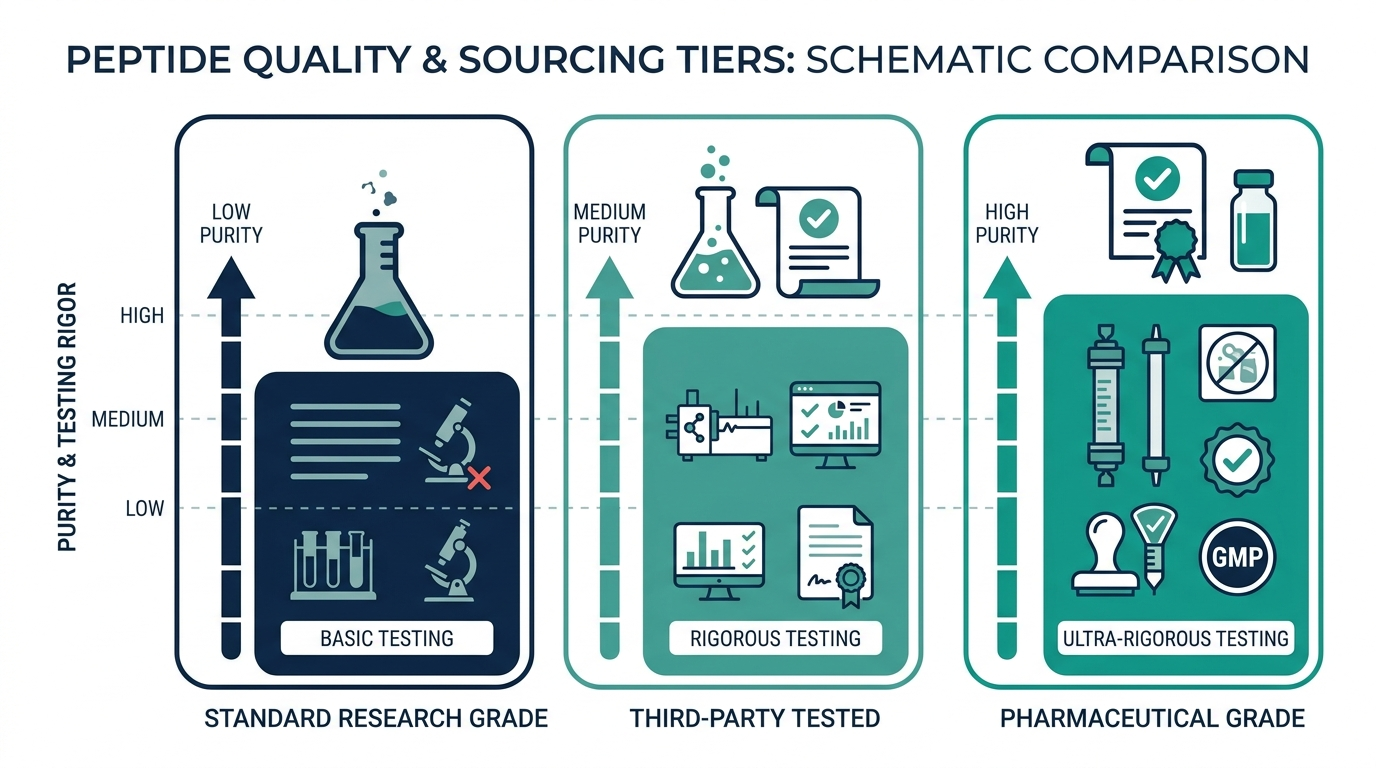
This is the most actively shifting part of the pricing landscape right now, and timing your decision around it is genuinely worth doing.
In November 2023, the FDA placed BPC-157 on the 503A Category 2 list, which effectively prohibited licensed compounding pharmacies from preparing it. That decision closed the lower-cost, clinically supervised route for most patients and pushed demand toward research vendors.
Then, on approximately April 22, 2026, the FDA removed BPC-157 from Category 2 (Loti Labs regulatory update). On February 27, 2026, HHS Secretary Robert F. Kennedy Jr. announced that 14 previously restricted peptides, including BPC-157, TB-500, CJC-1295, Epithalon, and Semax, would be reviewed under the “Make America Healthy Again” initiative (PeptideDeck regulatory guide). The Pharmacy Compounding Advisory Committee is scheduled to review BPC-157 on July 23 to 24, 2026 at FDA’s White Oak Campus in Silver Spring, Maryland.
The critical detail: removal from Category 2 is not approval. Before compounding pharmacies can legally prepare BPC-157, the FDA still must complete a Notice of Proposed Rulemaking, a 60-day public comment period, and publication of a final rule in the Federal Register. Legal observers tracking the timeline estimate formal compounding authorization is unlikely before late 2026 at the earliest.
What this means for pricing: once BPC-157 reaches Category 1 status and pharmacies can legally compound it again, the monthly cost for a clinically supervised compounded course is expected to drop to the $80 to $150 range, similar to where it sat before the 2023 prohibition. That is a significant price drop from current clinic program rates, and it arrives with the full accountability structure of a compounding pharmacy. The case for the research vendor route weakens further every month the regulatory door swings open.
Is BPC-157 Cost Covered by Insurance?
No. This is a hard line with no exceptions in 2026. BPC-157 is not FDA-approved for any indication, and insurance carriers, including Medicare and Medicaid, do not reimburse off-label peptide therapy regardless of the clinical rationale behind it. The same applies to compounded versions, which are classified as patient-specific preparations rather than covered drugs.
A few telehealth platforms accept HSA/FSA payments for the consultation and lab components, which can partially offset first-month costs. Cherry Medical Finance, used by several peptide clinics, spreads a cycle cost across up to 26 monthly installments if budget timing is the barrier. But the net cost remains out of pocket.
Budget for the total program before starting, not after the first invoice. A common pattern is underestimating month one (consultation, labs, first fill) by two to three times the ongoing monthly cost.
How to Actually Compare BPC-157 Prices Across Routes
Most price comparisons you read online compare a research vendor’s vial price against a clinic’s medication-only line item. That comparison is designed to make research vendors look better by stripping the clinical overhead out of the denominator. A fair comparison looks like this:
Research vendor total (12 weeks): $205 to $480, no clinical oversight, no lab confirmation, no pharmacy traceability, no prescribing physician.
Telehealth clinic total (12 weeks): $1,030 to $3,000, physician prescription, verified compounding pharmacy, baseline and follow-up labs, dose calibration.
Incoming compounded pharmacy route (post-late 2026, estimated): $600 to $900 for three months including prescriber and labs, once formal rulemaking completes.
The honest question is not “which is cheaper?” but “what outcome am I paying for and which route can actually deliver it?” That reframe changes how the numbers sit.
Curious what your own levels look like?
Baseline 100+ biomarkers today and retest as life changes, all in one membership with physician review.
Frequently Asked Questions
How much does a 5mg BPC-157 vial cost in 2026?
From a research vendor, $35 to $70 per 5mg vial is the typical range for vendors with verified third-party Certificates of Analysis. Cheaper vials exist, but pricing below $30 for 5mg is usually a signal to check whether the COA is independently verifiable or a vendor-generated document.
How much does BPC-157 cost per month through a telehealth clinic?
Ongoing monthly medication costs $150 to $600 per month depending on the clinic tier, dose, and what is bundled. Mid-range telehealth platforms cluster around $200 to $300 per month for the medication plus monitoring. Month one runs higher because of the initial consultation ($99 to $400) and baseline labs ($100 to $350).
Is BPC-157 covered by insurance or HSA?
Insurance does not cover it. Some clinic platforms accept HSA/FSA payments for consultation and lab portions. Financing through Cherry Medical is available at several peptide clinics.
What is the cheapest way to get BPC-157?
A research vendor with a verifiable Janoshik COA, buying a 10mg or 20mg vial to lower the per-mg cost, is the cheapest route at $55 to $120 plus $25 to $50 in supplies. The catch is that “cheapest” excludes physician oversight, pharmacy traceability, and any quality guarantee beyond the COA you had to verify yourself.
Will BPC-157 get cheaper once compounding pharmacies can make it again?
Yes, materially. Before the 2023 FDA Category 2 prohibition, compounded BPC-157 from 503A pharmacies ran $80 to $150 per month with a prescription, versus the current clinic program range of $200 to $600. If the July 2026 PCAC meeting and subsequent rulemaking go as expected, that lower price point returns, this time with full regulatory accountability.
Why is BPC-157 so expensive at a specialist clinic?
The medication itself is a fraction of the cost. You are paying for the physician, the compounding pharmacy’s sterility and quality infrastructure, baseline and follow-up lab panels, and structured clinical oversight. Marek Health, for example, bundles 65 to 100+ biomarker panels into its programs. That is the accountability you are purchasing when you choose a specialist clinic over a research vendor.
Is the telehealth clinic price worth it over a research vendor?
It depends on why you are using BPC-157 and how much clinical guidance matters for your situation. For a short four-week experiment at low dose, a research vendor with a verified COA and the discipline to read the reconstitution math correctly is a real option for informed adults. For a multi-month protocol targeting a specific injury or gut condition, or for anyone who wants objective before-and-after data, the clinical route justifies its cost because the lab work and prescriber oversight are the entire mechanism for knowing whether it worked.
Author: Vital Signs Today Editorial Team, [credential]”]. Educational content, not medical advice. Sources linked inline.
Telehealth GLP-1 program with provider visits and pharmacy coordination.
Primary Sources
- Yuan C, Demers A, et al. “From Regeneration to Analgesia: The Role of BPC-157 in Tissue Repair and Pain Management.” International Journal of Molecular Sciences, March 22, 2026. https://pmc.ncbi.nlm.nih.gov/articles/PMC13026520/
- McGuire FP, Martinez R, Lenz A, Skinner L, Cushman DM. “Regeneration or Risk? A Narrative Review of BPC-157 for Musculoskeletal Healing.” Current Reviews in Musculoskeletal Medicine, August 12, 2025. https://pmc.ncbi.nlm.nih.gov/articles/PMC12446177/
- Loti Labs. “BPC-157 Legal Status 2026: FDA Category 2 Removal, PCAC Review & RUO Access.” https://lotilabs.com/resources/bpc-157-legal-status-2026-fda-update/
- PeakedLabs. “BPC-157 Cost (2026): What Clinic Programs, Research Peptides, and a Full Course Actually Cost.” https://peakedlabs.com/blog/bpc-157-cost-guide-2026
- Pure Peptide Clinic. “BPC-157 Cost: What to Expect in 2026.” https://purepeptideclinic.com/guides/bpc-157-cost/
- MyPeptideMatch. “How Much Does BPC-157 Cost in 2026? Pricing Breakdown.” https://www.mypeptidematch.com/blog/bpc-157-cost
- PeptideDeck. “How to Get BPC-157 in 2026: Every Route Explained.” https://www.peptidedeck.com/peptides/how-to-get-bpc-157
- FDA Bulk Drug Substances Under Section 503A. https://www.fda.gov/drugs/human-drug-compounding/bulk-drug-substances-used-compounding-under-section-503a-fdc-act
- Finnrick Independent Peptide Testing Database. https://www.finnrick.com/vendors
- PeptidesExplorer. “Marek Health Reviews 2026: TRT, Peptides & Pricing.” https://peptidesexplorer.com/blog/marek-health-reviews
Related reading
Vital Signs Today may earn a commission if you buy through links on this page. It does not affect our editorial assessments.