Quick answer: A gut health test is one of three real things: a consumer microbiome kit (you mail in a stool sample and get a bacteria breakdown), a clinical stool test ordered by a doctor (which looks for infections, inflammation markers, and hidden blood), or routine blood work that catches the downstream effects of gut trouble like inflammation, anemia, and nutrient gaps. Consumer microbiome kits run roughly $99 to $300 and are fun to read, but no test sold today can diagnose a “gut type” or certify a single “healthy microbiome.” The most clinically useful gut tests measure specific, validated things (fecal calprotectin for inflammation, an H. pylori antigen, celiac antibodies) rather than cataloging every bacterial species in your stool.
What a gut health test actually is (and the three routes that exist)
A gut health test is not one product. It is a category, and the route you pick depends entirely on what you are trying to learn. There is no single “gut scan” that reads out a clean health score, so the honest framing is to match the test to the question. Spend two minutes on this and you will save yourself a few hundred dollars and a lot of confusion.
- Consumer microbiome kits. You collect a small stool sample at home, mail it back, and weeks later get a report on the bacteria living in your gut, usually with diversity scores, diet “grades,” and supplement nudges. These are educational and trend-tracking tools, not diagnostics. Think Viome, Tiny Health, Ombre, and the dozens of white-label kits that look identical under the hood.
- Clinical stool testing. Ordered through a clinician, these look for specific, actionable problems: ova and parasites, C. difficile toxin, an H. pylori antigen, fecal calprotectin (a marker of intestinal inflammation), and fecal occult blood. A lab tech runs a defined assay, and the result maps to a defined next step.
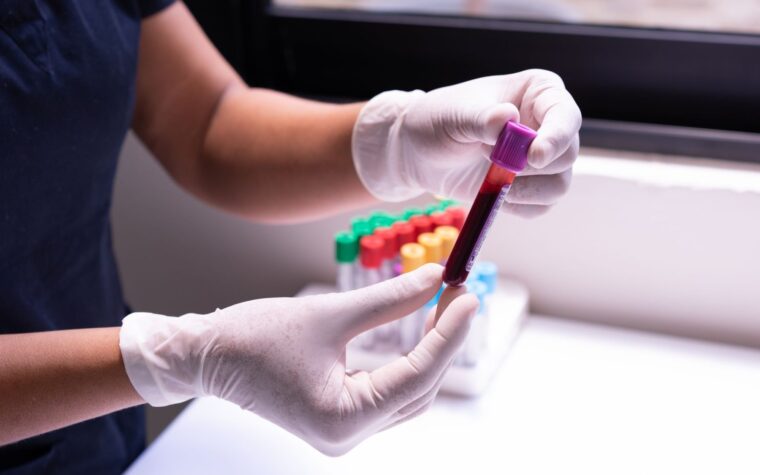
- Blood work. Blood does not show your bacteria. It shows the consequences of gut trouble: low vitamin B12 or folate, low ferritin, a high hs-CRP, abnormal liver enzymes, or celiac antibodies (tTG-IgA). For many people asking how to test gut health, this is the cheapest, fastest answer to the question they actually care about.
Here is the insider point most marketing skips. A microbiome report telling you that you are “12% Bacteroides” is not the same as a doctor confirming you have an H. pylori infection. The first is a snapshot of a moving target. The second changes treatment this week. When a gut health test promises both kinds of value in one box, the diagnostic part is usually the weakest part.
What microbiome and stool tests can and can’t tell you
The simplest way to actually get this done
Superpower is a full-body lab membership that runs 100+ biomarkers, has each result reviewed by a doctor, and tracks your numbers year over year (about $199/year). It is what we point readers to when they would rather get one clean, complete draw than chase single tests one at a time. Here is superpower reviewed in full.
A consumer microbiome kit can give you a real snapshot of which bacterial groups dominate your stool sample on the day you collected it, plus a rough measure of diversity. That is genuinely useful for tracking change over time, say, before and after three months of eating more fiber and fermented foods. If you collect a sample now and another in 90 days using the same kit and the same lab, the direction of the change is meaningful even if the absolute numbers are fuzzy.
What these kits cannot do is diagnose disease or assign you a fixed “gut type.” The science of linking specific bacterial ratios to health outcomes is young, and your microbiome shifts with every meal, antibiotic course, stomach bug, and trip you take. Two labs can test the same sample and report different percentages because they use different sequencing methods (16S rRNA versus shotgun metagenomic), different reference databases, and different bioinformatics pipelines. So when a quiz or kit promises to reveal “what gut type am I,” treat the label as entertainment, not medicine.
Clinical stool tests are the opposite kind of tool. They are narrow, validated, and answer yes-or-no questions a doctor can act on. If you have unexplained diarrhea, blood in your stool, weight loss, or persistent pain, those are the tests that matter, and you want a clinician interpreting them, not an app.
16S vs shotgun sequencing: why two kits disagree
Most cheaper kits use 16S rRNA sequencing, which reads one conserved bacterial gene and can usually only identify bacteria down to the genus level, not the species. Shotgun metagenomic sequencing reads all the DNA in the sample, gets closer to species and strain, and can flag some functional genes (for example, genes tied to fiber fermentation). Shotgun costs more and is why a $99 kit and a $250 kit can hand you different “diversity” verdicts on the very same stool. Neither method is “wrong.” They are answering at different resolutions, and neither is precise enough to diagnose you.
What’s my gut type? Why no test can answer that cleanly
There is no agreed-upon system that sorts people into a fixed gut type the way ABO blood typing works. Early research floated the idea of “enterotypes,” three dominant bacterial clusters, but follow-up studies showed those sit on a spectrum and drift over time rather than locking you into a category. If you want to know how to determine your gut type, the honest answer is that you can describe your current bacterial profile, but you cannot get a permanent label from it. Anyone selling a forever “gut type” is selling a story.
What each gut test type covers, side by side
The fastest way to choose is to compare what each route detects, how well validated it is, and what you can actually do with the result. The table below is the decision in one screen.
| Test type | What it measures | Validation level | What you can do with it |
|---|---|---|---|
| Consumer microbiome kit (16S or shotgun) | Relative abundance of bacterial groups, diversity score, diet scores | Low for diagnosis, moderate for tracking the same kit over time | Track your own trend, motivate diet change. Not a diagnosis. |
| At-home calprotectin / occult blood kit | Intestinal inflammation; hidden blood in stool | High for the specific marker (same assays clinics use) | Decide whether a symptom needs a doctor and a scope. |
| Clinical stool panel (doctor-ordered) | Parasites, C. difficile, H. pylori antigen, calprotectin, occult blood | High, clinically validated | Confirm or rule out infection and inflammation; start treatment. |
| Celiac antibody blood test (tTG-IgA) | Autoimmune reaction to gluten | High, first-line screen for celiac | Decide whether to pursue an endoscopy. Do not go gluten-free first. |
| Targeted blood panel (B12, folate, ferritin, hs-CRP, CBC, liver) | Malabsorption, anemia, systemic inflammation | High for each individual marker | Catch the downstream effects of gut problems cheaply. |
| Breath test (lactose, fructose, SIBO hydrogen/methane) | Carbohydrate malabsorption; small intestinal bacterial overgrowth | Moderate to high, but interpretation is debated for SIBO | Explain specific bloating/diarrhea patterns. Order through a clinician. |
Read that table top to bottom and a pattern jumps out. The tests with the strongest validation are the narrow ones. The broad “tell me everything about my gut” kit sits at the bottom of the validation column, which is the exact opposite of how it is usually marketed.
Microbiome vs stool vs SIBO vs food-sensitivity tests
People lump these together as “gut tests,” but they answer four different questions and three of them are routinely misread. Knowing the difference is the single most useful thing on this page.
Microbiome kits answer “who lives here,” not “am I sick”
A microbiome kit catalogs the bacterial community. That is a “who is present and in what proportion” question. It is interesting and trackable, but presence of a bacterium is not proof it is causing a symptom, and the supplement plan that comes attached is rarely tailored in any meaningful way. Use it as a journal, not a diagnosis.
Clinical stool tests answer “is something wrong right now”
A doctor-ordered stool panel is built to catch active problems: an infection you can treat with a course of antibiotics, parasites, hidden bleeding, or inflammation high enough to suggest inflammatory bowel disease. Fecal calprotectin is the standout here. It is a cheap, validated way to separate likely IBS (calprotectin usually normal) from likely IBD (calprotectin often high), and it can spare you an unnecessary colonoscopy or fast-track a needed one.
SIBO breath tests answer “is bacteria growing in the wrong place”
Small intestinal bacterial overgrowth is when gut bacteria multiply in the small intestine where they should be sparse. A hydrogen and methane breath test (you drink a sugar solution and breathe into tubes over a few hours) is the standard, non-invasive way to check. The catch: experts disagree on cutoffs and how often the test gives false positives, so a SIBO result needs a clinician who treats it regularly, not a self-diagnosis from a home kit.
Food-sensitivity (IgG) tests answer almost nothing
This is the one to be skeptical of. IgG food-sensitivity panels that promise to reveal “67 foods you react to” are not endorsed by major allergy and gastroenterology bodies for diagnosing food intolerance. A high IgG to a food often just means you eat that food. People cut out 20 foods based on these panels, feel worse, and develop a fear of eating. If you suspect a food problem, a supervised elimination diet plus a celiac blood test is the evidence-based path, not an IgG array.
Can a blood test detect gut health?
A blood test cannot map your gut bacteria, but it can reveal whether your gut is doing its job, and that is what most people are really asking. This is the part people miss when they spend $250 on a microbiome kit and skip basic labs that cost a third as much.
Your gut absorbs nutrients and acts as an immune barrier, so when it struggles, your blood often shows it first. Low vitamin B12 and folate can point to malabsorption. Low ferritin and iron can flag slow bleeding or poor uptake. A high hs-CRP suggests systemic inflammation that may be intestinal. Celiac disease shows up on a tTG-IgA antibody test long before anyone needs a scope. Liver enzymes (ALT, AST) and a complete blood count round out the picture and can catch problems the gut is driving silently. For a fuller read of what to draw, see the biomarkers worth tracking and how they fit into a complete blood panel.
None of these prove a microbiome problem on their own. But together they tell you whether your gut is functioning, which is often the real question behind “how to test for gut health.” If your B12, ferritin, hs-CRP, and celiac screen all come back clean, your gut is probably absorbing and not inflamed, and a $250 bacteria census is unlikely to change anything you do.
Gut test options and cost compared
Prices below are typical 2026 US cash ranges. Insurance usually covers clinical stool and blood tests when a doctor orders them for symptoms, and almost never covers consumer microbiome kits. HSA and FSA dollars can usually be used for the clinical tests and sometimes for at-home kits, so keep the receipt.
| Test | What it shows | Typical cost (cash) | Best for |
|---|---|---|---|
| Consumer microbiome kit | Bacterial makeup, diversity score, diet tips | $99 to $300 | Curiosity, tracking diet changes over time |
| At-home stool marker kit (calprotectin, occult blood) | Inflammation or hidden bleeding signals | $50 to $150 | Screening a specific concern at home |
| Clinical stool panel (doctor-ordered) | Infections, parasites, H. pylori, calprotectin | $0 to $200 with insurance, $150 to $400 cash | Real symptoms needing diagnosis |
| SIBO breath test | Small intestinal bacterial overgrowth | $150 to $250 | Persistent bloating and irregular stools |
| Targeted blood work | B12, folate, ferritin, hs-CRP, celiac antibodies | $30 to $150 per panel | Catching downstream effects of gut issues |
Here is a worked example that shows how wide the spread gets. A celiac tTG-IgA antibody test through a discount cash-pay lab runs about $35. The same antibody test billed through a hospital outpatient lab can hit $180 before insurance adjustments. A fecal calprotectin is roughly $80 to $150 cash through a direct-to-consumer lab, but $0 to $30 if your doctor orders it and your plan covers diagnostic stool testing for your symptoms. The test is identical. The price is a function of where you order it and how it gets billed, which is the same quiet billing trap that makes a “free” preventive lab show up as a diagnostic charge.
The trap specific to consumer kits is the upsell. Many bundle a recurring supplement subscription tied to your “results,” often $50 to $100 a month, and the recommendations rarely change much from person to person. Read the fine print and cancel the auto-ship before you forget it exists.
The simplest way to actually get this done
Everlywell is at-home test kits for specific markers (thyroid, hormones, metabolic, STI) shipped to your door with results online in days (per kit). It is what we point readers to when they want a single, well-defined marker checked at home rather than a vague microbiome catalog. Here is everlywell reviewed in full, and a breakdown of Everlywell pricing by kit.
How to test your gut health step by step
Start with your symptoms, not the flashiest kit. The right sequence saves money and stops you chasing data you cannot use.
- Write down what is wrong. Bloating, irregular bowel habits, fatigue, and food reactions point toward different tests than acute pain, blood, or weight loss. Note timing, triggers, and how long it has gone on. A two-week symptom log is worth more than any single kit.
- If you have red-flag symptoms, see a clinician first. Blood in stool, unintended weight loss, persistent severe pain, fever, or new symptoms after age 50 need a doctor-ordered workup, not a mail-in kit. Talk to a clinician about your results before acting on them.
- For functional complaints, run targeted tests. A celiac antibody test, basic blood work (B12, folate, ferritin, hs-CRP, CBC), and an at-home calprotectin or occult-blood check cover a lot of ground cheaply and tell you whether anything is actually inflamed or malabsorbed.
- Add a SIBO breath test only if the pattern fits. Stubborn bloating that worsens through the day, with diarrhea or constipation, is the classic prompt, and only when a clinician agrees it is worth ruling in or out.
- Use a microbiome kit only if you want a baseline to track. It is most valuable when you retest the same way months later to see whether diet changes moved the needle, not as a one-time verdict.
- Recheck rather than collect once. Gut health is a trend, not a single reading. One snapshot rarely tells the full story, and acting hard on a single data point is how people end up over-supplementing.
If you are getting blood drawn anyway, it is often smarter to capture a full baseline at once. Here is the Superpower blood test review if you want one clean panel that covers the gut-related blood markers above (B12, folate, ferritin, hs-CRP, liver, celiac screen) instead of buying them piecemeal.
Common mistakes people make with gut health testing
Most wasted money and false alarms come from a short list of predictable errors. Avoid these and you are ahead of most people who test their gut.
- Buying a microbiome kit to “diagnose” a symptom. It will not. A bacteria census cannot confirm IBS, IBD, an infection, or a food intolerance. If you have a real symptom, that money is better spent on a clinician visit and a validated test.
- Trusting IgG food-sensitivity panels. A long list of “reactive” foods usually just reflects what you eat. Cutting out dozens of foods on that basis can worsen nutrition and trigger disordered eating.
- Going gluten-free before the celiac test. This is the classic mistake. Celiac antibody and biopsy tests only work if you are still eating gluten. Cut it out first and you can get a false negative and never get a real answer. Test first, then change your diet.
- Comparing results across different kits or labs. Your “diversity score” from one brand is not comparable to another brand’s number. They use different methods and reference data. Only compare same-kit results over time.
- Acting on a single reading. Your microbiome shifts daily. One sample after a course of antibiotics or a week of travel can look alarming and mean nothing. Retest before you overhaul anything.
- Ignoring cheap blood work. People skip the $35 celiac screen and $30 ferritin to spend $250 on bacteria. The boring blood tests catch the things that actually need fixing.
- Forgetting the supplement auto-ship. A surprising number of “gut tests” are really subscription funnels. Check whether your purchase enrolled you in a recurring monthly charge.
Who should test, and which test to pick
Match yourself to the closest case below. This is the decision guidance the kits never give you because it often points away from the kit.
Curious and symptom-free
If you feel fine and just want a baseline, a consumer microbiome kit is harmless fun, as long as you treat it as a starting point to track, not a diagnosis, and you decline the supplement subscription. Honestly, the highest-value test for a symptom-free adult is routine blood work, not a microbiome kit.
Bloating, irregularity, or fatigue with no red flags
Start cheap and validated: celiac tTG-IgA, B12, folate, ferritin, hs-CRP, and a CBC, plus an at-home calprotectin if inflammation is on the table. This combination explains most functional gut complaints far better than a bacteria list, and it is the route to choose for the classic “how to test your gut health” question.
Red-flag symptoms
Blood in stool, weight loss, severe or worsening pain, fever, or anemia means a clinician orders the workup, period. Do not self-test these. A doctor-ordered stool panel, blood work, and possibly a scope are the right tools, and timing matters.
Suspected SIBO or food intolerance
Persistent bloating that builds through the day points toward a SIBO breath test, ordered and interpreted by a clinician. Suspected food intolerance points toward a supervised elimination diet and a celiac screen, never an IgG panel.
Edge cases: uninsured, kids, employers, and Medicare
The right move shifts depending on your situation, and these are the ones that trip people up.
Uninsured or high deductible
Skip the hospital lab and use a direct-to-consumer lab for the boring blood tests. A celiac screen, ferritin, B12, and hs-CRP can often be self-ordered for $30 to $120 total. Pay cash, keep the HSA or FSA receipt, and you have answered more than a $250 microbiome kit would.
Infants and children
A few microbiome kits market to parents of babies, and pediatric gut development is a real research area. But for an actual concern in a child (failure to thrive, chronic diarrhea, blood in stool), a pediatrician orders targeted testing. Do not let a consumer kit delay a real evaluation in a kid.
Employer or program required
Some wellness programs reimburse certain at-home tests. If a kit is required or covered, confirm exactly which markers it reports and whether a clinician reviews the result. A bacteria-only report rarely satisfies a medical need, so check before you assume it counts.
Medicare and older adults
Medicare generally covers diagnostic stool and blood tests when ordered for symptoms, and covers colorectal cancer screening on its own schedule. It does not cover consumer microbiome kits. After 50, new gut symptoms deserve a clinician and the appropriate screening, not a mail-in kit as the first step.
How to read your gut test results without overreacting
A result is a starting point, not a sentence. Microbiome reports love red and green color coding that makes a normal-range bacterium look like an emergency. Before you change anything, ask three questions: is this test validated to diagnose what I am worried about, is this a single reading or a trend, and does this result actually have a treatment attached. If the answer to any of those is no, the right next step is usually to wait, retest, or talk to a clinician, not to buy the recommended supplement stack. A high calprotectin or a positive celiac antibody is worth acting on. A “below average Akkermansia” score on a one-time kit is not.
FAQ
What is the best gut health test?
There is no single best one, because they answer different questions. For most people with mild symptoms, targeted blood work (celiac, B12, folate, ferritin, hs-CRP) plus an at-home calprotectin is the highest-value gut health test. For red-flag symptoms, a doctor-ordered stool panel is best. A consumer microbiome kit is the best choice only for curiosity and trend tracking, not diagnosis.
How do you test your gut health at home?
You can buy a consumer microbiome kit (mail in stool, get a bacteria report) or an at-home stool marker kit that checks for inflammation or hidden blood. For functional symptoms, an at-home blood kit measuring B12, ferritin, and celiac antibodies often tells you more than a bacteria census, and it costs less.
How do you determine your gut type?
You cannot get a fixed gut type the way you get a blood type. A microbiome test describes your current bacterial makeup, but that profile shifts with diet, travel, and antibiotics, so any “gut type” label is a loose snapshot, not a permanent category. If a product promises to find your forever gut type, it is overpromising.
How accurate is a “what is my gut type” quiz?
Online gut-type quizzes are not diagnostic. They sort answers about your diet and digestion into broad buckets, which can be a useful nudge toward better habits, but they do not measure anything in your body and should not replace testing or a clinician’s advice.
Can a microbiome kit diagnose IBS or a food intolerance?
No. Microbiome kits are not validated to diagnose IBS, food intolerances, or disease. Those diagnoses come from a clinician using symptom history, targeted blood and stool tests, and sometimes elimination diets or scopes. Treat kit results as background, not a verdict.
Can a blood test detect gut health problems?
A blood test cannot map your bacteria, but it catches the downstream effects of gut trouble: malabsorption (low B12, folate, ferritin), inflammation (high hs-CRP), and celiac disease (tTG-IgA antibodies). For many people, this answers the real question more cheaply than a microbiome kit. It does not replace a stool test when an infection or active bleeding is suspected.
Are IgG food-sensitivity tests worth it?
No. Major allergy and gastroenterology organizations do not recommend IgG food-sensitivity panels for diagnosing intolerance. A positive IgG usually just means you eat that food regularly. A supervised elimination diet plus a celiac screen is the evidence-based way to investigate food reactions.
Should I get a SIBO test for bloating?
Maybe, but through a clinician. A hydrogen and methane breath test is the standard for small intestinal bacterial overgrowth, and it fits a pattern of bloating that worsens through the day with irregular stools. Because cutoffs and false positives are debated, you want someone who treats SIBO regularly to order and interpret it, not a home kit.
How much does a gut health test cost?
It depends on the route. Consumer microbiome kits run $99 to $300, at-home stool marker kits $50 to $150, doctor-ordered stool panels $0 to $200 with insurance or $150 to $400 cash, SIBO breath tests $150 to $250, and targeted blood panels $30 to $150. Where you order and how it is billed can change the price several-fold for the identical test.
Do I need to fast or prep before a gut test?
It varies. Stool collection generally needs no fasting, but avoid certain medications (some antibiotics, antacids, and bismuth) before an H. pylori or stool test, per the kit instructions. SIBO breath tests require a low-fermentation prep diet the day before and an overnight fast. Most gut-related blood tests do not require fasting, though a metabolic panel drawn at the same time might.