- For most adults aged 20 and older, a healthy total cholesterol is below 200 mg/dL, LDL below 100 mg/dL, and HDL at or above 40 mg/dL for men and 50 mg/dL for women (MedlinePlus).
- Children and teens aged 19 and younger have lower targets: total cholesterol below 170 mg/dL, LDL below 110 mg/dL, and HDL above 45 mg/dL (MedlinePlus).
- Cholesterol tends to rise with age, and a woman’s risk climbs after menopause, so the same number can mean different things at 25 versus 60 and is read alongside your overall heart risk (MedlinePlus).
Part of our Lipid Panel guide.
What is a normal cholesterol level?
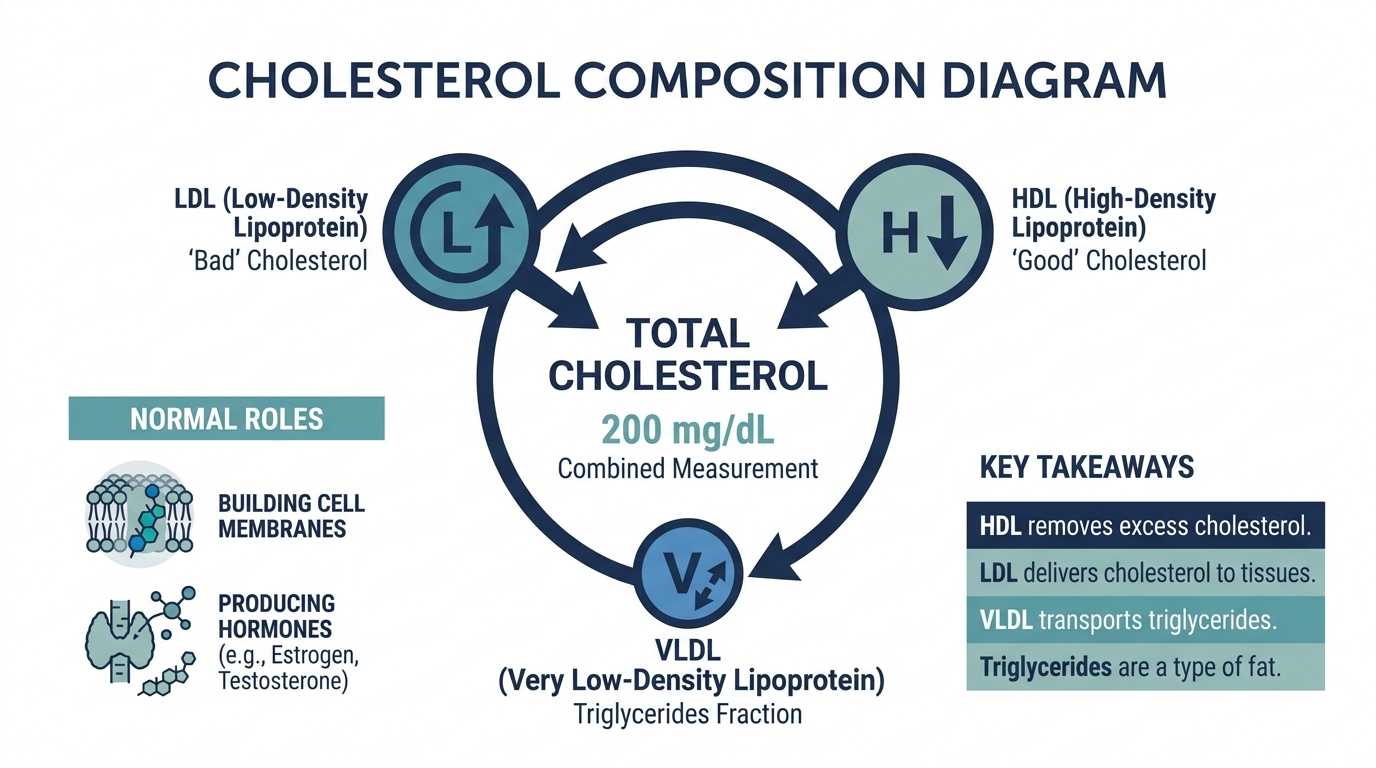
For an adult aged 20 or older, a normal total cholesterol is below 200 mg/dL, with LDL (“bad” cholesterol) below 100 mg/dL and triglycerides below 150 mg/dL (Cleveland Clinic). HDL (“good” cholesterol) works the opposite way: higher is better, with 60 mg/dL or above considered protective and below 40 mg/dL in men or below 50 mg/dL in women considered low (MedlinePlus).
These cholesterol ranges are general guidelines, so where do your total, LDL, and HDL actually land? One at-home Superpower draw checks 100+ biomarkers, physician-reviewed.
Cholesterol is a waxy, fat-like substance your body needs to build cells and make hormones. The problem is not cholesterol itself but having too much of the harmful kind. Doctors group results into bands so a single blood draw, called a lipid panel, can flag whether you are in a safe zone or trending toward heart and blood vessel risk.
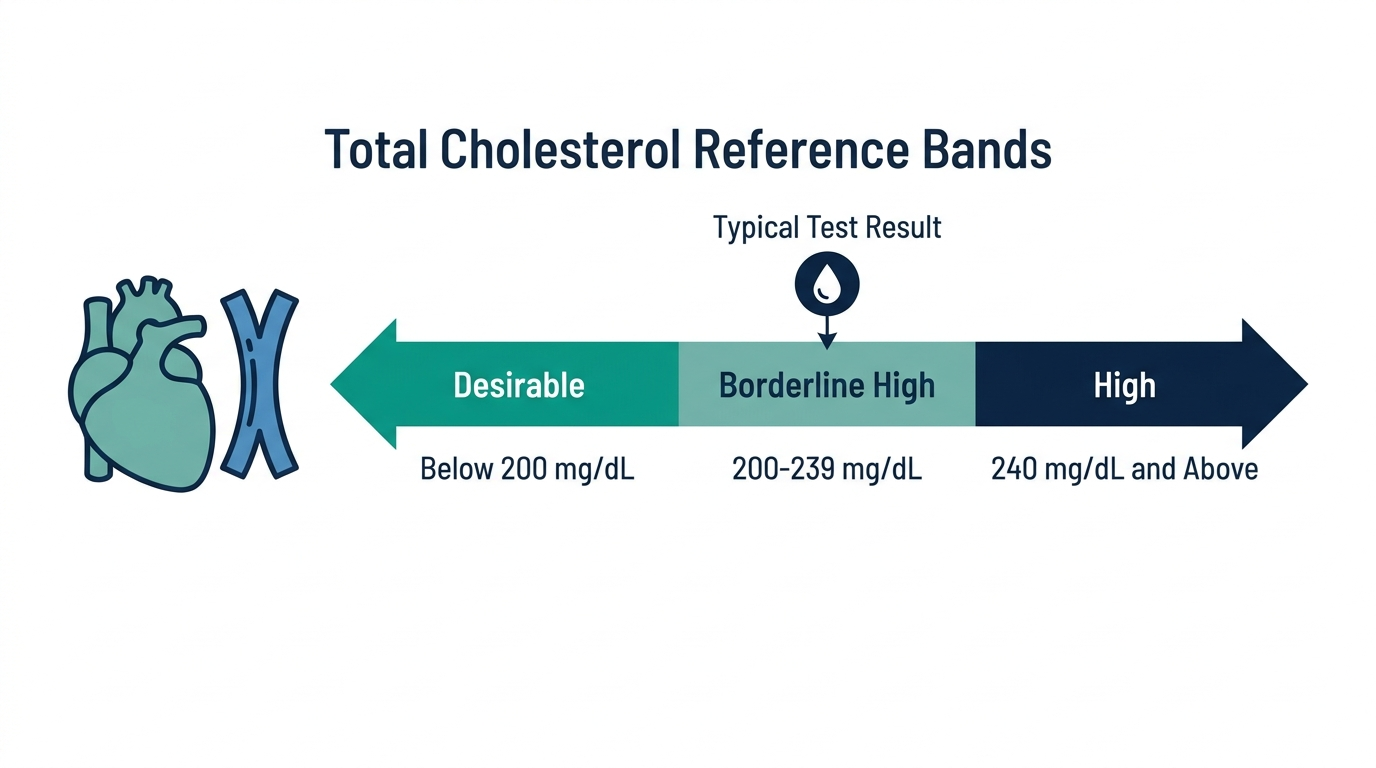
Total cholesterol: Below 200 mg/dL is normal, 200 to 239 mg/dL is borderline high, and 240 mg/dL or higher is high (Cleveland Clinic).
LDL cholesterol: Below 100 mg/dL is optimal, 130 to 159 mg/dL is borderline high, and 190 mg/dL or higher is very high (Cleveland Clinic).
Optimal versus standard: what your LDL number really means
The simplest way to actually get this done
Superpower is a full-body lab membership that runs 100+ biomarkers, has each result reviewed by a doctor, and tracks your numbers year over year (about $199/year). It is what we point readers to when they would rather get one clean, complete draw than chase single tests one at a time. Here is superpower reviewed in full.
The reference bands most labs print are screening thresholds, not personal targets. “Below 100 mg/dL is optimal” for LDL is a population cut-off, and it says nothing about whether below 70 mg/dL would serve you better. In practice, a cardiologist reads your LDL through the lens of your total risk. Someone who has already had a heart attack is often steered toward an LDL below 55 to 70 mg/dL, far under the “optimal” line a healthy 30-year-old is measured against (Cleveland Clinic).
Two numbers on the same panel often tell the story better than LDL alone:
- Non-HDL cholesterol is simply your total cholesterol minus your HDL. It captures every cholesterol-carrying particle that can lodge in an artery wall, not just LDL, which is why it stays reliable even when triglycerides are high or you did not fast. The general target is below 130 mg/dL, and clinicians often set it 30 mg/dL above whatever LDL goal they have chosen for you (MedlinePlus).
- ApoB (apolipoprotein B) counts the actual number of harmful particles rather than the cholesterol they carry. Two people can share an identical LDL yet carry very different particle counts, and the one with more particles carries more risk. ApoB is not on a standard lipid panel, so you usually have to ask for it, but many preventive clinicians now treat it as the most honest single measure of cardiovascular risk.
One more marker sits outside the routine panel and is worth measuring at least once: lipoprotein(a), or Lp(a). It is largely inherited, changes little with diet or exercise, and independently raises heart and stroke risk when elevated. Because it is genetic, a single lifetime test usually settles the question, and a high result is a strong reason to be aggressive with every other number you can move.
Cholesterol normal range by age
Healthy cholesterol ranges split into two main groups: people aged 19 and younger have lower targets than adults aged 20 and older, and within adults the HDL goal differs by sex (MedlinePlus). The single most useful number for most people is LDL, which should sit below 110 mg/dL in children and below 100 mg/dL in adults (MedlinePlus).
The table below uses reference values published by MedlinePlus (US National Library of Medicine). These are general targets for people without diagnosed heart disease. If you already have cardiovascular disease or diabetes, your clinician may set a stricter LDL goal, often below 70 mg/dL (Cleveland Clinic).
| Group | Total cholesterol | LDL (“bad”) | HDL (“good”) | Non-HDL |
|---|---|---|---|---|
| Children and teens, age 19 and younger | Below 170 mg/dL | Below 110 mg/dL | Above 45 mg/dL | Below 120 mg/dL |
| Men, age 20 and older | Below 200 mg/dL | Below 100 mg/dL | 40 mg/dL or higher (60+ best) | Below 130 mg/dL |
| Women, age 20 and older | Below 200 mg/dL | Below 100 mg/dL | 50 mg/dL or higher (60+ best) | Below 130 mg/dL |
Triglycerides share one target across all ages: below 150 mg/dL is normal, 150 to 199 mg/dL is borderline high, and 200 mg/dL or more is high (MedlinePlus). Notice that the official ranges stop at two age bands rather than giving a different number for every decade. That is deliberate, because the meaningful cutoffs change at sexual maturity and then hold steady, while your underlying risk, not the target itself, drifts with age.
How does sex change the range?
Sex changes only the HDL target in standard reference charts: men aim for 40 mg/dL or higher and women for 50 mg/dL or higher, because women naturally carry more protective HDL (MedlinePlus). Total cholesterol, LDL, and non-HDL goals are identical for adult men and women (MedlinePlus).
The bigger difference is timing. Between ages 20 and 39, men carry a greater risk of high total cholesterol than women (MedlinePlus). Estrogen helps keep a woman’s LDL lower and HDL higher during her reproductive years.
After menopause: a woman’s risk of high blood cholesterol rises because menopause lowers the female hormones that may protect against it (MedlinePlus). LDL and total cholesterol often climb in the years around menopause, sometimes pushing a woman who was always “normal” into the borderline band. This is why a 55-year-old woman’s result deserves a fresh look even if her numbers were fine at 40.
What are the symptoms of high cholesterol?
For almost everyone, high cholesterol has no symptoms at all. You cannot feel a plaque forming, which is exactly why a blood test is the only way to know your numbers. The first “symptom” of decades of high LDL is often the event it causes, a heart attack, a stroke, or leg pain from narrowed arteries. That silence is the whole argument for screening on a schedule rather than waiting to feel unwell.
There is one exception. People with familial hypercholesterolemia, an inherited condition that keeps LDL very high from birth, can develop visible cholesterol deposits. Look for xanthomas (firm, yellowish bumps over tendons such as the Achilles or the knuckles), xanthelasma (soft yellow patches on the eyelids), and corneal arcus (a pale grey ring around the edge of the iris appearing before age 45). Any of these, especially in a younger adult with a family history of early heart disease, is a reason to test the whole family, since the condition runs in first-degree relatives (Cleveland Clinic).
What makes cholesterol rise or fall with age?
Cholesterol generally rises with age because the liver clears LDL less efficiently and lifestyle and hormonal shifts add up over decades. This is why screening targets stay fixed while real-world averages creep upward, and why women often see a jump after menopause as protective estrogen falls (MedlinePlus).
Several forces push the numbers around:
- Diet: saturated and trans fats raise LDL, while soluble fiber and unsaturated fats can lower it.
- Weight and activity: excess body weight tends to raise LDL and triglycerides and lower HDL, while regular exercise nudges HDL up.
- Hormones: the menopause transition removes estrogen’s protective effect on a woman’s lipids (MedlinePlus).
- Genetics: familial hypercholesterolemia causes very high LDL from a young age regardless of lifestyle, which is one reason children get a first screen between ages 9 and 11 (Cleveland Clinic).
- Other conditions: diabetes, thyroid disease, and some medications can shift your panel.
Because lifestyle moves several of these levers, many people lower borderline LDL through diet and exercise before any medication is considered.
How to prepare for a cholesterol test (and what can skew it)
A lipid panel is easy to get but surprisingly easy to misread if the conditions are off. A few practical points before you sit for the draw:
- Fasting or not. Current guidance lets most people take a screening lipid panel without fasting, because total cholesterol and HDL barely move with food. If your clinician wants an accurate triglyceride reading or a precisely calculated LDL, fast for 9 to 12 hours with water only, since a recent meal can inflate triglycerides and throw off the LDL calculation.
- Alcohol and heavy meals. A large fatty meal or a night of drinking in the day or two before the test can push triglycerides up temporarily. Keep the days before a panel ordinary rather than feast-or-famine.
- Recent illness, surgery, or a heart attack. Cholesterol can drop for several weeks after an infection, a major operation, or a cardiac event, so a panel taken during that window can read falsely low. If you were recently unwell, tell whoever interprets the result.
- Pregnancy. Cholesterol rises naturally in pregnancy and returns to baseline months after delivery, so pregnancy is not the time to judge your usual numbers.
- Medications and posture. Some drugs shift lipids, and even lying down versus standing before the draw can nudge the values slightly. Consistency matters more than perfection: test under similar conditions each time so you are comparing like with like.
The single biggest source of confusion is comparing one lab’s result to another’s. Reference ranges and assay methods vary between labs, so a 5 mg/dL difference between two draws at two facilities is often noise, not a real change. Track your trend at the same lab where you can.
When is an out-of-range result a concern?
A single out-of-range result is a signal to look closer, not an automatic diagnosis. LDL of 160 to 189 mg/dL is high and 190 mg/dL or above is very high, while total cholesterol of 240 mg/dL or more is high (Cleveland Clinic). These bands warrant a conversation with your clinician about your overall heart risk.
Context matters more than any one number. Doctors weigh your LDL alongside age, blood pressure, smoking status, diabetes, family history, and HDL to estimate your risk of a heart attack or stroke over the next 10 years. A borderline LDL in an otherwise healthy 30-year-old is handled differently from the same value in a 60-year-old smoker with diabetes.
Take it seriously sooner if: you have known heart disease or diabetes, since your LDL target may be below 70 mg/dL (Cleveland Clinic); you have a strong family history of early heart disease; or your triglycerides reach 200 mg/dL or higher (MedlinePlus). Fasting status, recent illness, and lab variation can all shift results, so clinicians often repeat an abnormal panel before acting. Bring your full lipid panel to your appointment rather than focusing on one figure.
What to do if your cholesterol is high
A high result is a starting point, not a verdict. For most people with borderline or moderately high LDL and no established heart disease, the first move is lifestyle, and it can shift the numbers meaningfully within a few months:
- Cut saturated and trans fat. These raise LDL more than dietary cholesterol itself does. Swapping butter, fatty processed meat, and fried food for olive oil, nuts, fish, and beans is the core of both the Mediterranean and DASH patterns.
- Add soluble fiber. Oats, barley, beans, lentils, apples, and psyllium bind cholesterol in the gut. Aim to build these in daily rather than as an occasional gesture.
- Move most days. Around 150 minutes a week of brisk activity nudges HDL up and helps lower triglycerides.
- Lose excess weight and stop smoking. Both lower LDL and triglycerides and raise HDL, and quitting smoking improves HDL within weeks.
Medication, usually a statin, enters the conversation when LDL is very high (190 mg/dL or above), when you have diabetes, or when your estimated 10-year risk of a heart attack or stroke is high enough that lifestyle alone will not close the gap (Cleveland Clinic). That is a decision to make with your clinician using your whole risk picture, not a single figure.
When should you retest?
If you are changing diet, activity, or weight, most clinicians recheck in about three months, long enough for the numbers to respond. If you start a statin, expect a follow-up panel in roughly four to twelve weeks to confirm the drug is working and being tolerated. Once you are stable and at goal, rechecks every year or two are typical, sooner if you have risk factors (MedlinePlus).
A realistic example
Consider a 52-year-old woman whose total cholesterol was always around 185 mg/dL, then reads 232 mg/dL with an LDL of 150 mg/dL two years after menopause. Nothing about her lifestyle changed, but the loss of estrogen did. Rather than starting a drug on the spot, her clinician confirms the result on a repeat panel, checks her non-HDL and a one-time Lp(a), weighs her blood pressure and family history, and gives three months of focused diet and exercise before deciding on medication. The point is that the same “high” number triggers different action depending on who is holding it.
Curious what your own levels look like?
Baseline 100+ biomarkers today and retest as life changes, all in one membership with physician review.
Frequently asked questions
What is a normal cholesterol level by age?
For people aged 19 and younger, total cholesterol should be below 170 mg/dL and LDL below 110 mg/dL. For adults aged 20 and older, total cholesterol should be below 200 mg/dL and LDL below 100 mg/dL (MedlinePlus).
Is 200 cholesterol normal for my age?
A total cholesterol of exactly 200 mg/dL sits at the borderline-high threshold for adults, since normal is below 200 mg/dL and 200 to 239 mg/dL is borderline high (Cleveland Clinic). For anyone 19 and younger, 200 mg/dL is high because their target is below 170 mg/dL.
What is a good HDL cholesterol level?
An HDL of 60 mg/dL or higher is considered protective for adults. HDL is too low below 40 mg/dL in men and below 50 mg/dL in women (MedlinePlus). Unlike LDL, higher HDL is generally better for your heart.
Does cholesterol go up with age?
Yes. Cholesterol tends to rise with age as the liver clears LDL less efficiently. Women often see a notable increase after menopause, when protective estrogen falls and the risk of high blood cholesterol goes up (MedlinePlus).
How often should I get my cholesterol checked?
Children typically get a first cholesterol test between ages 9 and 11 (Cleveland Clinic). Most adults are rechecked every few years, and more often if results are abnormal or you have risk factors. Ask your clinician for a schedule based on your personal risk.
Does fasting matter for a cholesterol test?
For a routine screen, usually not. Total cholesterol and HDL change little with food, so many people can test without fasting. Fasting for 9 to 12 hours mainly sharpens the triglyceride reading and the calculated LDL, so follow your clinician’s instruction for the specific panel you are getting.
What is non-HDL cholesterol and why does it matter?
Non-HDL cholesterol is your total cholesterol minus your HDL. It captures every artery-clogging particle, not just LDL, and it stays reliable even when triglycerides are high or you did not fast. The general target is below 130 mg/dL (MedlinePlus), and many clinicians watch it as closely as LDL.
Can I lower my cholesterol without medication?
Often, yes, if it is borderline or mildly high and you have no established heart disease. Cutting saturated fat, adding soluble fiber, exercising most days, losing excess weight, and quitting smoking can move LDL and triglycerides within a few months. Very high LDL or high overall risk usually still needs a statin alongside those changes (Cleveland Clinic).
What cholesterol level is considered dangerous?
Total cholesterol of 240 mg/dL or higher is high, and an LDL of 190 mg/dL or above is very high and often points to a genetic cause (Cleveland Clinic). Triglycerides of 500 mg/dL or more carry their own risk to the pancreas. Any of these deserves prompt medical attention rather than watchful waiting.
Sources
- MedlinePlus, Cholesterol Levels: What You Need to Know
- Cleveland Clinic, Cholesterol Numbers: What Do They Mean
- MedlinePlus, Cholesterol Levels (Medical Test)
- American Heart Association, What Your Cholesterol Levels Mean
This article is for general educational purposes and is not medical advice. It cannot diagnose or treat you and does not replace your clinician. Always discuss your lab results and any health decisions with a qualified healthcare professional.
Vital Signs Today may earn a commission if you buy through links on this page. It does not affect our editorial assessments.