
- Ferritin is raised by treating the underlying iron deficiency, usually with oral iron salts plus an iron-rich diet, and serum ferritin below 30 ng/mL is the standard cutoff that confirms low iron stores in adults.
- Taking oral iron every other day, on an empty stomach, with about 100 mg of vitamin C absorbs roughly twice as much iron as the same total dose split across consecutive days, according to a randomized trial in iron-deficient women.
- Most people need 3 to 6 months of consistent iron therapy to refill stores and reach a target ferritin of about 40 to 100 ng/mL, so do not stop when hemoglobin alone looks normal.
Part of our Iron Studies guide.
What counts as low ferritin?
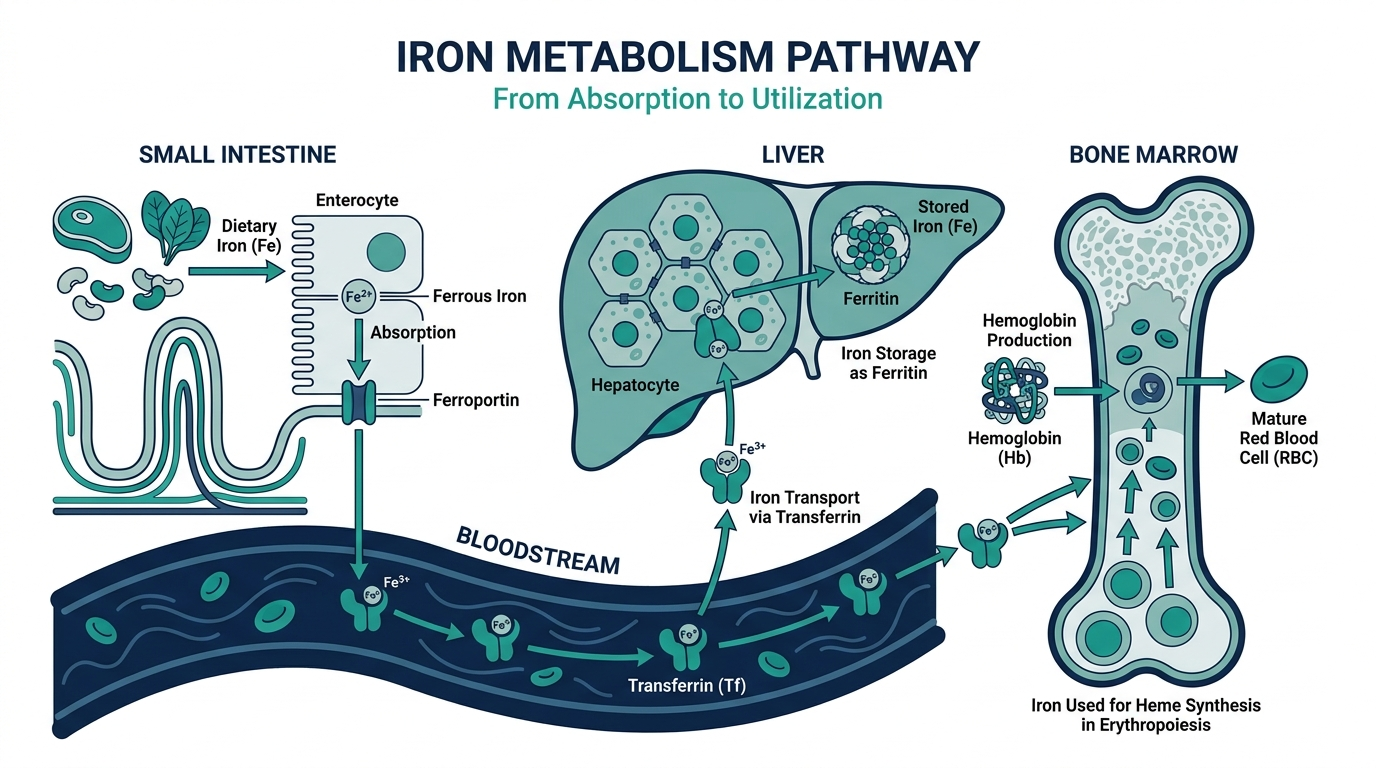
Low ferritin is generally a serum ferritin below 30 ng/mL, a level the Merck Manual describes as specific for iron deficiency. The Cleveland Clinic lists a typical normal range of roughly 30 to 300 ng/mL, with adult female reference values often cited around 12 to 150 ng/mL and adult male values around 12 to 300 ng/mL. Exact cutoffs vary by lab and method.
Refilling iron stores takes weeks, so wouldn’t it help to track your ferritin as you go? One at-home Superpower draw checks 100+ biomarkers, physician-reviewed.
Ferritin is your body’s iron storage protein, so a low value means the tank is running empty. One nuance matters: ferritin is an acute phase reactant, meaning it rises during infection or inflammation. In that setting, a ferritin up to 100 ng/mL can still be compatible with iron deficiency, per the Merck Manual. That is why clinicians often confirm low ferritin with additional tests such as transferrin saturation rather than relying on a single number.
Optimal versus standard ranges
Here is the part most patients miss. The reference range printed on your lab report is a statistical band built from the general population, not a target for how you should feel. A ferritin of 15 ng/mL will often print as normal on a report that flags only values under 12, yet many people at that level already have the fatigue, breathlessness, and hair shedding of early iron depletion. This is why some clinicians treat symptomatic patients whose ferritin sits in the low double digits, even before it crosses the strict deficiency line. The Merck Manual cutoff of 30 ng/mL is the level considered specific for iron deficiency, so treat anything under 30 as a genuine flag rather than a value to shrug off.
There is also a middle zone worth naming. Ferritin between 30 and 50 ng/mL is technically inside most reference ranges but is frequently too low to fully resolve symptoms, particularly restless legs and hair loss, both of which respond to ferritin pushed higher into the double digits or low hundreds. If your number lands here and you feel unwell, that is a conversation to have with your clinician rather than a reason to assume nothing is wrong.
How ferritin fits the rest of the iron panel
Ferritin is one number in a set, and reading it alongside the others prevents the two classic mistakes: missing a real deficiency and treating a false one. Transferrin saturation below about 20 percent points toward iron deficiency and helps confirm a borderline ferritin. A high total iron binding capacity, or TIBC, signals that the body is hungry for iron and has increased its carrying capacity to grab more. Mean corpuscular volume, or MCV, tends to fall as deficiency deepens, producing the small, pale red cells classic for long-standing iron shortage. When ferritin is low and these markers agree, the picture is straightforward. When ferritin looks normal but inflammation is present, the panel is what stops a real deficiency from hiding behind an inflated storage number.
What causes low ferritin?
The simplest way to actually get this done
Superpower is a full-body lab membership that runs 100+ biomarkers, has each result reviewed by a doctor, and tracks your numbers year over year (about $199/year). It is what we point readers to when they would rather get one clean, complete draw than chase single tests one at a time. Here is superpower reviewed in full.
Low ferritin is a symptom, not a diagnosis, and the single most important step is finding the cause rather than simply refilling the tank and walking away. Iron leaves the body in only small daily amounts, so a low store almost always means either blood is being lost, iron is not being absorbed, or demand has outpaced intake. The four buckets below cover the great majority of cases.
- Blood loss: the most common driver in adults. Heavy menstrual bleeding is the leading cause in premenopausal women, and slow bleeding from the gut, from ulcers, polyps, or other lesions, is a leading cause in men and postmenopausal women. Because blood is roughly two-thirds of the body’s iron, ongoing loss can outrun any supplement.
- Low intake or poor bioavailability: diets low in heme iron, including many vegetarian and vegan patterns, provide iron in a form that is absorbed less efficiently. This rarely causes deficiency on its own in a healthy adult but stacks with other factors.
- Malabsorption: celiac disease, inflammatory bowel disease, prior gastric or bariatric surgery, and long-term acid-suppressing medication all reduce how much iron the gut can pull from food and pills.
- Increased demand: pregnancy, rapid growth in children and teens, and endurance training all raise iron requirements and can tip stores into the red.
This is why self-treating with iron without asking why the level is low can be a mistake. Iron pills can quietly correct the number while a bleeding source in the gut goes undiagnosed. Testing for the cause comes first.
Why raise it?
Raising ferritin matters because depleted iron stores eventually progress to iron deficiency anemia, the most common nutritional deficiency worldwide. When ferritin falls and red blood cell counts drop together, that combination defines iron deficiency anemia, according to the Cleveland Clinic.
Symptoms can appear before anemia is even diagnosed. Common ones include the following.
- Fatigue: persistent tiredness that rest does not fix, the most reported symptom.
- Shortness of breath: feeling winded during ordinary activity.
- Pale skin and brittle nails: visible signs of low oxygen-carrying capacity.
- Restless legs and hair shedding: often linked to low iron stores.
Correcting the deficiency typically reverses these effects. The goal is not only a normal blood count but refilled stores, which protect against relapse.
Evidence-based ways to raise ferritin
The fastest, best-studied way to raise ferritin is oral iron supplementation paired with iron-rich foods, with intravenous iron reserved for people who cannot absorb or tolerate pills. A randomized trial published in PMC found that alternate day dosing roughly doubled fractional iron absorption compared with daily dosing.
Diet
Food alone rarely corrects an established deficiency quickly, but it supports repletion and helps maintain stores. Two types of dietary iron exist.
- Heme iron: from red meat, poultry, and seafood. It is absorbed more efficiently than plant iron.
- Non-heme iron: from beans, lentils, tofu, spinach, and fortified cereals. Pairing these with vitamin C rich foods such as citrus or bell peppers boosts absorption.
Tea, coffee, and calcium-rich dairy reduce non-heme iron absorption, so separate them from iron-rich meals by an hour or two.
A practical way to build meals is to anchor each one around an iron source and a vitamin C source together. Lentils with a squeeze of lemon and roasted peppers, beef with tomato, or fortified cereal with strawberries all pair the two on the same plate, which is exactly when the vitamin C does its work. Cooking acidic foods in a cast iron pan adds a small amount of iron as well. None of this replaces treatment for an established deficiency, but it changes how much of your iron therapy actually lands, and it is the habit that keeps stores topped up once you finish supplementing.
Vegetarians and vegans are not doomed to deficiency, but they do need to be deliberate. Because plant iron is absorbed less efficiently, the practical moves are to eat iron-rich plants at most meals, always with vitamin C, and to keep tea and coffee away from those meals. Soaking, sprouting, and fermenting legumes and grains reduces the phytates that bind iron, which is one reason sourdough and sprouted lentils deliver more usable iron than their unprocessed versions.
Supplements
Oral iron salts, most commonly ferrous sulfate, are first line. Practical guidance distilled from the research is straightforward.
- Timing: take it in the morning on an empty stomach. Afternoon dosing and taking it with food markedly reduce absorption.
- Vitamin C: add about 100 mg of vitamin C, or a glass of citrus juice, to enhance uptake.
- Frequency: alternate day dosing absorbed about twice as much iron from a single 200 mg dose as 100 mg given on consecutive days, and at six months the alternate day group had a lower deficiency rate, 3 percent versus 11 percent, in the PMC trial.
- Avoid: coffee, tea, milk, calcium, and antacids near the dose.
The label on a supplement bottle tells you the compound, but what matters for repletion is the elemental iron it delivers, which is only a fraction of the total tablet weight. Ferrous sulfate is roughly one fifth elemental iron by weight, ferrous fumarate carries a higher elemental fraction, and ferrous gluconate a lower one, so always read the elemental iron figure on the label rather than the compound size. This is the number your clinician is dosing to.
Tolerance is the other half of the story, because the most effective iron regimen is the one you can actually stay on. Nausea, cramping, constipation, and dark stools are common with oral iron, and they are dose-related. If a standard tablet upsets your stomach, the alternate day schedule usually helps on two fronts at once, since it both improves absorption and halves the number of doses your gut has to process. Gentler forms such as ferrous bisglycinate are often better tolerated, and taking the dose with a small amount of food is a reasonable compromise when empty-stomach dosing is intolerable, even though it trades away some absorption. Dark stools are harmless and expected. Black, tarry, or bloody stools are not, and warrant a call to your clinician, since they can signal bleeding rather than the supplement.
Certain supplements and medications compete with iron for absorption, so timing matters. Keep iron separate from calcium and zinc supplements, from thyroid medication, and from proton pump inhibitors and antacids, which raise stomach pH and blunt uptake. A gap of a few hours is usually enough.
A realistic scenario
Consider a common case: a 34-year-old woman with heavy periods, a ferritin of 11 ng/mL, and hemoglobin still just inside the normal range. She feels exhausted, her hair is thinning, and her legs are restless at night. Her clinician confirms iron deficiency, checks for a bleeding source beyond menstruation, and starts alternate day ferrous sulfate with vitamin C on an empty stomach. Within about three weeks her energy lifts as hemoglobin climbs, and this is exactly the moment many people stop, feeling better. She keeps going. A repeat panel at 10 to 12 weeks shows ferritin rising but not yet at target, so she continues to the 3 to 6 month mark, retests, and only then confirms her stores are refilled to around 50 ng/mL. In parallel, her clinician addresses the heavy bleeding, because without that, the tank would simply drain again.
Lifestyle
Lifestyle changes do not replace iron but remove barriers to it. Limit heavy tea or coffee with meals, since the tannins block non-heme iron. If menstrual blood loss is heavy, addressing it with your clinician is often the single biggest factor, because ongoing loss can outpace any supplement.
Medical treatment
When pills fail, intravenous iron works. It is used for malabsorption conditions, intolerance to oral iron, or when rapid repletion is needed. Per the Medscape treatment review, IV iron can replete stores in one or a few sessions and is standard for patients who cannot take or absorb oral iron. Your clinician selects the route based on cause, severity, and tolerance.
How long does it take?
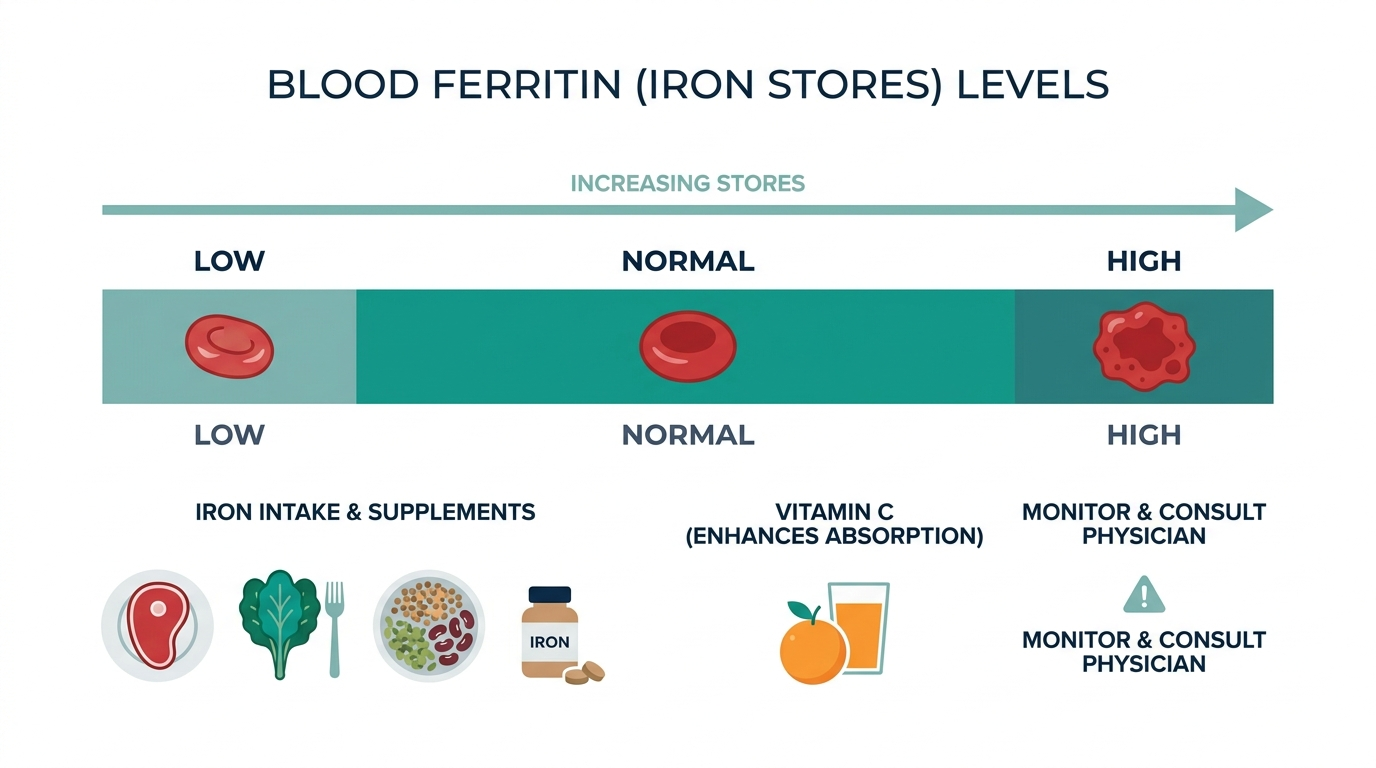
Most people need 3 to 6 months of consistent oral iron to refill stores, even though hemoglobin often improves within a few weeks. Practical guidance summarized from the research recommends continuing therapy to a target ferritin of about 40 to 100 ng/mL rather than stopping the moment a blood count normalizes.
The reason is sequencing. Iron first repairs the circulating red blood cells, then slowly tops up storage ferritin. Stopping early is the most common reason deficiency returns. A reasonable check-in is a repeat blood test after about 8 to 12 weeks, then again near the end of treatment, so your clinician can confirm stores are actually rebuilding and not just the surface-level numbers.
When to see a doctor
See a doctor before starting iron if you have unexplained fatigue, heavy periods, or symptoms of anemia, because low ferritin always has a cause that needs identifying. The Cleveland Clinic notes that a low ferritin result usually prompts additional testing to confirm iron deficiency and find its source.
Seek medical advice promptly in these situations.
- No improvement: symptoms persist after several weeks of correct supplementation.
- Possible blood loss: heavy menstrual bleeding, black or bloody stools, or unexplained weight loss, which may signal a source needing evaluation.
- Side effects: severe constipation, nausea, or stomach pain from iron pills.
- You are pregnant: iron needs rise and dosing should be supervised.
Self-treating without finding the cause can mask a serious underlying problem, so testing comes first.
Curious what your own levels look like?
Baseline 100+ biomarkers today and retest as life changes, all in one membership with physician review.
Frequently asked questions
What raises ferritin the fastest?
Intravenous iron raises ferritin fastest because it bypasses gut absorption and can replete stores in one or a few sessions. For most people, oral iron taken correctly, every other day on an empty stomach with vitamin C, is effective and far less invasive.
Can I raise ferritin with diet alone?
Diet alone rarely corrects an established deficiency quickly. Iron-rich foods like red meat, lentils, and spinach plus vitamin C help maintain and support stores, but most people with low ferritin need a supplement to actually refill the tank.
What is a good ferritin target?
Many clinicians treat to a ferritin of about 40 to 100 ng/mL, not just until hemoglobin normalizes. Reaching that range helps refill storage iron and reduces the chance the deficiency returns after you stop supplementing.
Why is alternate day iron better than daily?
Daily dosing raises a hormone called hepcidin that blocks absorption of the next dose. In a randomized trial, alternate day dosing absorbed roughly twice as much iron and caused fewer side effects, improving long-term results.
How long until I feel better on iron?
Many people notice more energy within a few weeks as hemoglobin rises, but refilling ferritin stores takes 3 to 6 months. Keep taking iron as directed until your clinician confirms your stores have recovered.
Can my ferritin look normal even though I am iron deficient?
Yes. Ferritin rises with infection, inflammation, and liver issues, so a value that looks reassuring can mask a real deficiency. This is why clinicians confirm borderline cases with transferrin saturation and, when needed, inflammatory markers. If your ferritin is normal but your symptoms and other iron markers suggest deficiency, do not let a single number close the case.
Do I need to fast before a ferritin test?
A ferritin test alone does not require fasting. If it is drawn as part of a full iron panel, some clinicians prefer a morning, fasting sample and ask you to hold iron supplements for a day or two beforehand, because a recent dose can transiently push serum iron up. Follow the specific prep instructions your lab gives you, and mention any iron supplements you take.
Can I take too much iron?
Yes, and this is why iron should be taken to correct a documented deficiency rather than as a routine just-in-case supplement. Excess iron accumulates and can damage the liver, heart, and other organs, and it is genuinely dangerous in overdose, especially for children. Do not push your ferritin arbitrarily high, and keep iron pills away from kids.
Sources
- Cleveland Clinic, Ferritin Test: Levels and Test Results
- Merck Manual Professional Edition, Iron Deficiency Anemia
- NCBI PMC, Alternate day versus daily oral iron for iron deficiency anemia: a randomized controlled trial
- Medscape, Iron Deficiency Anemia Treatment and Management
This article is for general educational purposes and is not medical advice. It cannot diagnose or treat you and does not replace your clinician. Always discuss your lab results and any health decisions with a qualified healthcare professional.
Related: which GLP-1 telehealth service fits you.
Vital Signs Today may earn a commission if you buy through links on this page. It does not affect our editorial assessments.