
- To raise hematocrit, treat the underlying cause first, then rebuild red blood cells through iron-rich foods, vitamins B12 and folate, adequate hydration, and any medication your clinician prescribes.
- Low hematocrit means anemia, defined as a hematocrit below roughly 41 percent in adult men and 36 percent in adult women, according to Cleveland Clinic.
- Iron deficiency anemia often improves within about 6 weeks of iron therapy, but fully restoring iron stores typically takes 3 to 6 months, per the National Heart, Lung, and Blood Institute.
Hematocrit is the percentage of your blood that is made up of red blood cells. When it drops too low, your tissues get less oxygen, and you feel it as fatigue, weakness, pale skin, or breathlessness. Raising hematocrit is rarely about one quick fix. It is about finding why the number fell and then giving your body what it needs to make more red blood cells. This guide walks through what counts as low, why it matters, and the evidence-based ways to bring it back up.
Part of our Complete Blood Count guide.
Rebuilding hematocrit takes time and the right cause, so do you know what’s actually driving yours down? One at-home Superpower draw checks 100+ biomarkers, physician-reviewed.
What counts as low hematocrit?
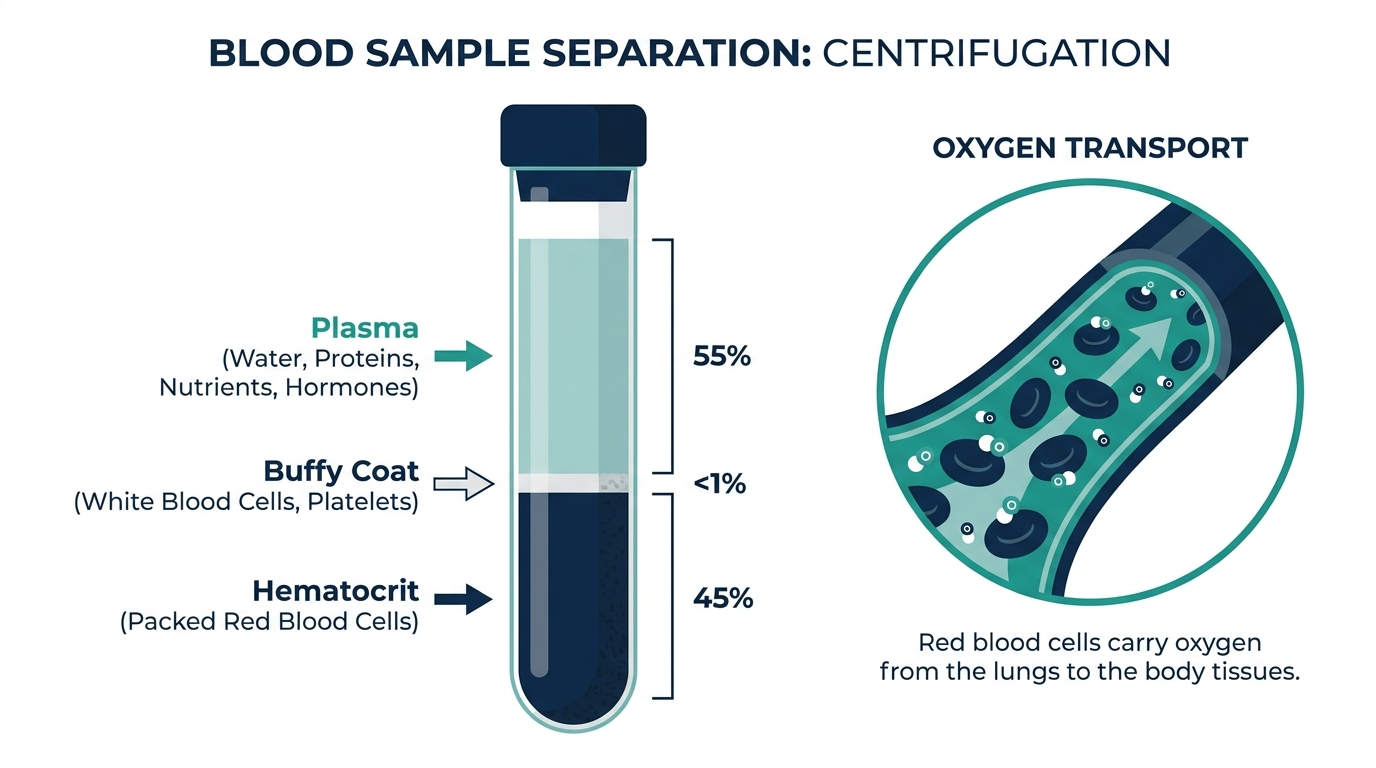
Low hematocrit means anemia. Cleveland Clinic lists the normal adult range as roughly 41 to 50 percent for men and 36 to 44 percent for women, so a value below that range signals too few red blood cells. The exact cutoff varies by lab, age, pregnancy, and even altitude, so always read your result against the reference range printed on your own report.
A low hematocrit is a finding, not a diagnosis. It tells you red cell mass is down, but not why. Common drivers include iron deficiency, blood loss (including heavy periods or gastrointestinal bleeding), vitamin B12 or folate deficiency, chronic disease, and kidney disease. Because the causes are so different, the right way to raise hematocrit depends entirely on which one applies to you.
- Men: below about 41 percent is generally considered low.
- Women: below about 36 percent is generally considered low.
- Context matters: dehydration can falsely raise hematocrit, while pregnancy naturally lowers it.
Hematocrit versus hemoglobin
People often mix these up, but they measure different things. Hematocrit is the percentage of blood volume taken up by red cells, essentially how packed the blood is. Hemoglobin measures the oxygen-carrying protein inside those cells. They move together in most anemias, and a useful bedside rule is that hematocrit runs roughly three times the hemoglobin value. When the two do not line up, it can point to something specific, such as very small red cells or a lab artifact, which is why clinicians read them side by side rather than trusting either alone.
What the red cell indices add
The same complete blood count that reports hematocrit also reports red cell indices, and these turn a low number into a working diagnosis. Mean corpuscular volume, or MCV, sorts anemia into three buckets that each point at different causes.
- Low MCV, microcytic: small red cells, classically from iron deficiency or thalassemia.
- Normal MCV, normocytic: normal-sized cells, seen with acute blood loss, anemia of chronic disease, and kidney disease.
- High MCV, macrocytic: large red cells, pointing toward vitamin B12 or folate deficiency.
A reticulocyte count adds one more layer by showing whether the marrow is responding. A high reticulocyte count means the marrow is churning out new red cells, which fits blood loss or cell destruction. A low reticulocyte count with anemia means the marrow is not keeping up, which fits a production problem like a nutrient deficiency or marrow disease. This is the difference between an assembly line running flat out and one that has stalled, and it changes the plan entirely.
What causes low hematocrit?
The simplest way to actually get this done
Superpower is a full-body lab membership that runs 100+ biomarkers, has each result reviewed by a doctor, and tracks your numbers year over year (about $199/year). It is what we point readers to when they would rather get one clean, complete draw than chase single tests one at a time. Here is superpower reviewed in full.
Every low hematocrit comes from one of three basic problems, and naming which one is what makes the treatment obvious. The red cell mass can be falling because you are making too few cells, losing them, or destroying them faster than you can replace them. A fourth situation is not true anemia at all but dilution.
- Reduced production: iron, B12, or folate deficiency, anemia of chronic disease, kidney disease with low erythropoietin, and marrow disorders all slow the manufacture of red cells.
- Blood loss: heavy menstrual bleeding, slow gastrointestinal bleeding from ulcers or polyps, or obvious acute bleeding drains red cells and the iron inside them.
- Increased destruction: hemolysis, where red cells are broken down early by autoimmune conditions, inherited disorders, or certain drugs, lowers the count even when production is normal.
- Dilution: pregnancy expands plasma volume so hematocrit falls even though red cell mass is fine, a normal and expected drop rather than a disease.
Because a production problem, a bleeding problem, and a destruction problem call for completely different care, the reticulocyte count and the rest of the panel are what steer you to the right one. This is exactly why self-treating a low hematocrit with iron can be the wrong move if iron was never the issue.
Why raise it?
You want to raise hematocrit because red blood cells carry oxygen, and too few of them leave your organs starved. The National Heart, Lung, and Blood Institute notes that anemia symptoms include tiredness, weakness, shortness of breath, dizziness, headaches, and a pale or yellowish skin tone. Left untreated, severe or prolonged anemia can strain the heart, which has to pump harder to move oxygen around the body.
Correcting a low hematocrit usually reverses these symptoms. People who restore healthy levels often report more energy, clearer thinking, and better exercise tolerance. The goal is not simply to chase a higher number on a lab printout. It is to restore the oxygen-carrying capacity that lets your body work normally and to remove the strain that chronic anemia places on the heart and other organs.
Evidence-based ways to raise hematocrit
The most reliable way to raise hematocrit is to fix the underlying cause and supply the building blocks for red blood cells: iron, vitamin B12, and folate. According to MedlinePlus, iron deficiency anemia is treated with iron-rich foods and iron supplements, most often ferrous sulfate. Below are the main approaches, from diet to medical care.
Diet
Food is the foundation. Iron comes in two forms: heme iron from animal sources, which absorbs well, and non-heme iron from plants, which absorbs less efficiently. Pairing plant iron with vitamin C improves absorption, while tea, coffee, and calcium taken at the same meal can blunt it.
- Heme iron: red meat, poultry, fish, and shellfish.
- Non-heme iron: beans, lentils, tofu, spinach, and iron-fortified cereals.
- B12 sources: meat, eggs, and dairy, since vitamin B12 occurs almost only in animal foods, per NHLBI.
- Folate sources: leafy greens, citrus, beans, and fortified grains.
- Absorption helper: add a vitamin C food such as bell peppers or oranges to iron-rich meals.
Supplements
When diet alone is not enough, supplements close the gap. MedlinePlus states that oral iron, commonly ferrous sulfate, is the standard first treatment for iron deficiency anemia and works by rebuilding the body’s iron stores. Take iron exactly as directed, since too much iron is harmful, and have your clinician confirm the deficiency with bloodwork first. If the cause is a B12 or folate shortfall rather than iron, then B12 or folic acid is the correct supplement, and taking iron will not help. This is why testing before supplementing matters so much.
Lifestyle
Lifestyle steps support the medical ones. Staying well hydrated keeps lab readings accurate, since dehydration can mask or distort hematocrit. If you smoke, quitting helps your blood deliver oxygen more effectively. Address sources of ongoing blood loss, such as heavy menstrual bleeding, with your clinician, because no amount of iron will keep up with steady losses. Regular moderate activity supports overall cardiovascular health while you recover, though exercise itself does not directly manufacture red blood cells.
Medical treatment
Some causes need prescription care. For people with kidney disease, the body makes too little erythropoietin, the hormone that signals red blood cell production, so MedlinePlus notes a doctor may prescribe erythropoietin or related agents. Severe deficiency or poor tolerance of oral iron may call for intravenous iron, and significant blood loss can require a transfusion. These decisions belong with your clinician, who matches the treatment to the specific cause shown by your tests.
How long does it take?
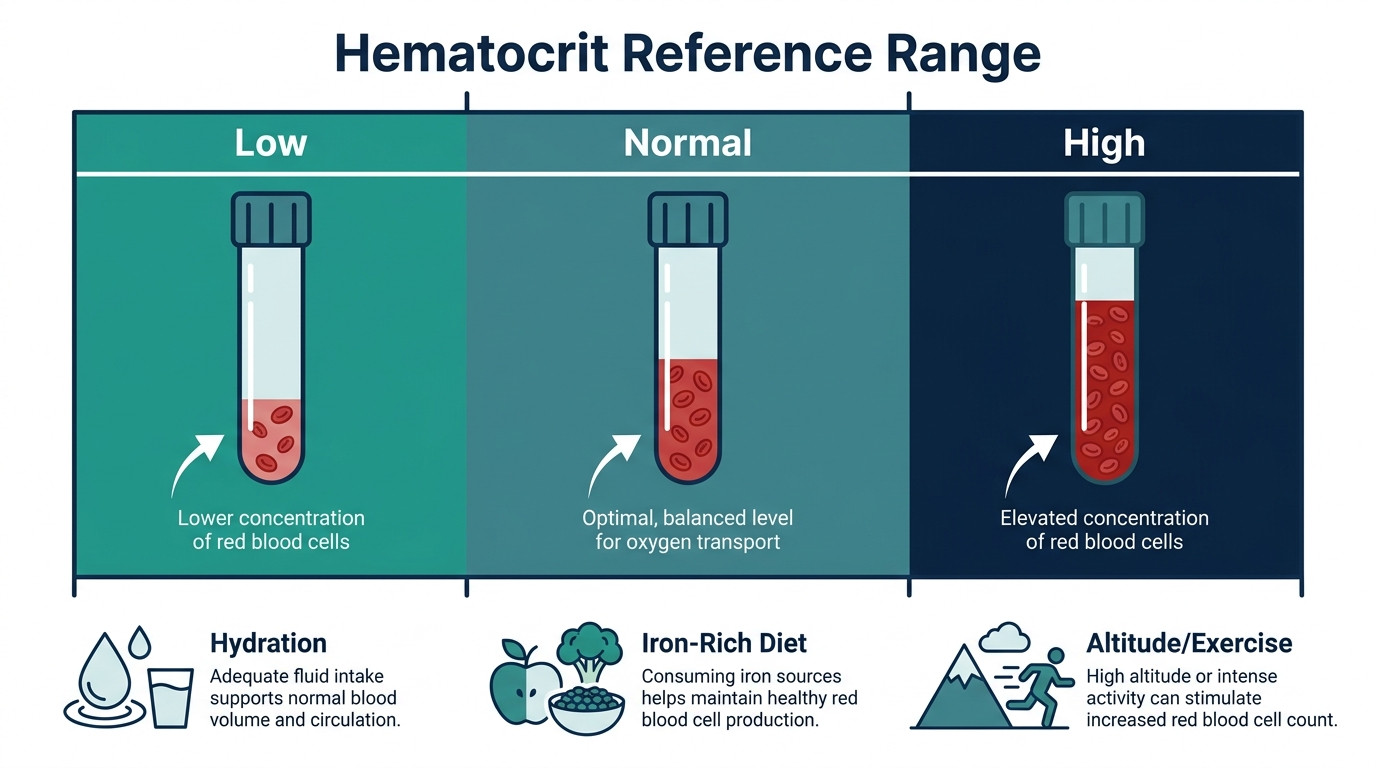
For iron deficiency anemia, the hematocrit usually starts improving within about 6 weeks of iron therapy, according to the National Heart, Lung, and Blood Institute. Fully restoring your iron stores, however, typically takes 3 to 6 months, and clinicians often continue iron for several more months to refill the reserves held in your bone marrow.
The timeline depends on the cause. B12 or folate deficiencies can respond within weeks once the missing vitamin is replaced, while anemia from chronic disease or kidney disease may improve more slowly and track alongside treatment of the root condition. Follow-up blood tests are how your clinician confirms the number is rising and decides when to stop or adjust therapy. Resist the urge to quit early once you feel better, because iron stores often lag behind symptom relief.
What can throw off the reading
Hematocrit is unusually sensitive to how concentrated your blood is at the moment of the draw, so a single value can mislead. Dehydration concentrates the blood and pushes hematocrit up, which can mask a true anemia, while overhydration or lying down for a while before the draw can nudge it down. Even body position matters, since standing shifts fluid and can change the reading slightly compared with sitting or lying. Endurance athletes often show a mildly low hematocrit that is not disease at all but a healthy expansion of plasma volume, sometimes called athlete’s pseudoanemia, where the blood is simply more dilute. Because of these swings, clinicians weigh the number against hydration, symptoms, and the rest of the panel rather than reacting to one isolated percentage.
A realistic scenario
Picture a 29-year-old runner with a hematocrit of 39 percent flagged as borderline low. She feels strong, trains daily, and has no symptoms. Her clinician notes normal red cell indices, a normal ferritin, and heavy training, and recognizes the dilutional pattern of an athlete rather than a deficiency, so no iron is prescribed. Now compare a 52-year-old man with a hematocrit of 33 percent, a low MCV, fatigue, and dark stools. Same low direction, very different meaning. His small red cells and possible gut bleeding trigger an iron panel and a referral to look for a bleeding source, because in his case the low hematocrit is the visible edge of a problem that needs finding, not a number to top up with supplements.
When to see a doctor
See a doctor before trying to raise hematocrit on your own, especially if you have symptoms such as ongoing fatigue, shortness of breath, dizziness, chest pain, or unusually pale skin. A low hematocrit can signal bleeding or a serious underlying condition, and Cleveland Clinic stresses that evaluating it requires looking at the whole clinical picture, not the number alone.
Seek prompt care for red flags like black or bloody stools, vomiting blood, very heavy periods, a racing heartbeat, or fainting. These can point to active blood loss that needs urgent attention. Self-treating with iron supplements without a diagnosis is risky, both because you may take iron you do not need and because you may delay finding the real cause. A simple blood test and a conversation with your clinician set you on the right path.
Turn what you just learned into action.
Superpower lets you test 100+ biomarkers from home, then re-check them over time so you can actually see progress, physician-reviewed at every step.
Frequently asked questions
What foods raise hematocrit the fastest?
Iron-rich animal foods like red meat, poultry, and fish provide heme iron, which absorbs best. Pair plant sources such as beans, lentils, and spinach with vitamin C foods to boost absorption. No food works overnight, since red cell rebuilding takes weeks.
Can drinking water raise hematocrit?
No. Water does not create red blood cells. Dehydration can make hematocrit read artificially high, so rehydrating may actually lower the number toward its true value. Staying hydrated keeps lab results accurate but does not treat true anemia.
How much can hematocrit rise in a week?
Changes within a single week are usually small. Iron deficiency anemia generally begins improving over about 6 weeks of therapy, per NHLBI, with full iron store recovery taking 3 to 6 months. Steady, gradual rises are normal and expected.
Does exercise increase hematocrit?
Not directly. Exercise supports cardiovascular health but does not manufacture red blood cells. Intense training can even temporarily lower hematocrit through plasma volume shifts. The real drivers are correcting the cause and supplying iron, B12, and folate.
Is low hematocrit always anemia?
A hematocrit below the normal range usually indicates anemia. Cleveland Clinic places the normal adult range near 41 to 50 percent for men and 36 to 44 percent for women. Pregnancy and overhydration can also lower the reading, so context matters.
What is the difference between hematocrit and hemoglobin?
Hematocrit is the percentage of your blood made up of red cells, while hemoglobin measures the oxygen-carrying protein inside them. They usually rise and fall together, and hematocrit tends to run about three times the hemoglobin value. Doctors read both together because a mismatch can flag unusually small cells or a testing artifact.
Can I raise hematocrit without iron?
Yes, if iron is not the cause. When the problem is a vitamin B12 or folate deficiency, replacing that vitamin is what raises the count, and iron will not help. When it is kidney disease, treatment may involve erythropoietin-stimulating agents instead. This is the whole reason to test before supplementing, so you treat the actual cause rather than guessing.
Why is my hematocrit low but my iron normal?
A low hematocrit with normal iron points away from iron deficiency and toward another cause, such as B12 or folate deficiency, anemia of chronic disease, kidney disease, or red cell destruction. The red cell indices and a reticulocyte count usually sort out which one, which is why a low hematocrit deserves a full panel rather than a reflex iron supplement.
Sources
- Cleveland Clinic, Hematocrit Test
- MedlinePlus, Iron deficiency anemia
- National Heart, Lung, and Blood Institute, Iron-Deficiency Anemia
- National Heart, Lung, and Blood Institute, Vitamin B12-Deficiency Anemia
- NCBI Bookshelf, Hemoglobin and Hematocrit (Clinical Methods)
This article is for general educational purposes and is not medical advice. It cannot diagnose or treat you and does not replace your clinician. Always discuss your lab results and any health decisions with a qualified healthcare professional.
Related: which GLP-1 telehealth service fits you.
Vital Signs Today may earn a commission if you buy through links on this page. It does not affect our editorial assessments.