
- The most reliable way to lower high ferritin from iron overload is therapeutic phlebotomy, since removing one 500 mL unit of blood drops serum ferritin by roughly 30 ng/mL and clears about 200 to 250 mg of iron (StatPearls).
- If your high ferritin comes from fatty liver, alcohol, or inflammation rather than true iron overload, treating that root cause lowers ferritin more than diet changes do, because ferritin is an acute phase reactant (Annals of Hepatology).
- Dietary steps such as drinking tea or coffee with meals, limiting red meat, and avoiding vitamin C supplements with food can modestly reduce iron absorption, but they work slowly and do not replace medical treatment for confirmed iron overload (StatPearls Dietary Iron).
Part of our Iron Studies guide.
What counts as high ferritin?
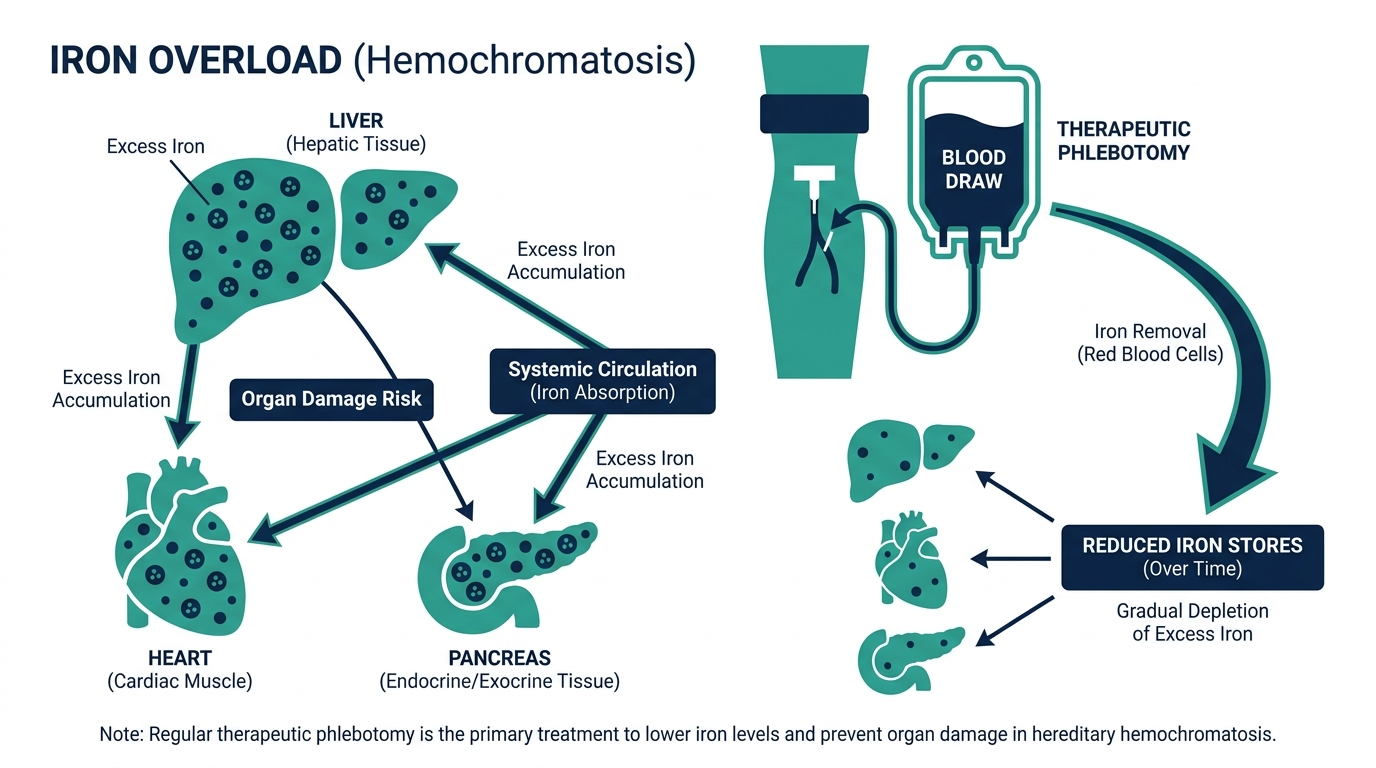
Ferritin is generally considered high above about 200 ng/mL in women and 300 ng/mL in men, the thresholds that should prompt further testing for iron overload (StatPearls). The Cleveland Clinic lists typical normal ranges of 15 to 205 ng/mL for women and 30 to 565 ng/mL for men, though reference ranges differ between labs. A single value over 1,000 ng/mL is a red flag that warrants prompt medical evaluation.
Lowering high ferritin often means treatment like phlebotomy, so do you know how high yours actually is? One at-home Superpower draw checks 100+ biomarkers, physician-reviewed.
One number rarely tells the whole story. Ferritin is a storage protein, so it reflects how much iron your body holds, but it also climbs during inflammation, infection, liver disease, and heavy alcohol use. That is why clinicians pair ferritin with transferrin saturation. A transferrin saturation above roughly 45 percent alongside high ferritin points toward genuine iron overload, while a normal saturation with high ferritin points toward liver injury or inflammation instead (Goodfellow Unit).
High stores, or just inflammation? The ferritin trap
Ferritin has a reputation for being confusing, and the reason is simple: it wears two hats. Most of the time it is a faithful gauge of how much iron you have banked, but it is also an acute phase reactant, meaning it climbs whenever the body is inflamed. A chest infection, a flare of arthritis, recent surgery, or a fatty liver can all push ferritin up without a single extra milligram of iron being stored. This is the single most common reason a high ferritin gets misread.
The way clinicians separate the two is with transferrin saturation, which measures how much of your iron transport capacity is actually filled. High ferritin with a transferrin saturation above roughly 45 percent leans toward real iron overload. High ferritin with a normal or low saturation leans toward inflammation or liver stress instead. A C-reactive protein, or CRP, drawn at the same time helps settle the question, because a raised CRP flags active inflammation that is inflating the ferritin. If you take one idea from this article, make it this: never act on a ferritin number until you know which hat it is wearing.
Why lower it?
The simplest way to actually get this done
Superpower is a full-body lab membership that runs 100+ biomarkers, has each result reviewed by a doctor, and tracks your numbers year over year (about $199/year). It is what we point readers to when they would rather get one clean, complete draw than chase single tests one at a time. Here is superpower reviewed in full.
Lowering ferritin matters because sustained iron overload deposits iron in organs and can damage them, with the liver, heart, pancreas, joints, and pituitary gland most at risk in hereditary hemochromatosis (StatPearls). Untreated overload can progress to cirrhosis, diabetes, heart rhythm problems, and arthritis.
The reassuring part is that early treatment is highly effective. When phlebotomy starts before organ damage sets in, life expectancy in hereditary hemochromatosis is essentially normal (American Society of Hematology, 2024). The harm comes from years of unchecked iron accumulation, not from a single elevated reading. That is also why context matters so much: if your ferritin is high because of fatty liver or inflammation rather than iron loading, draining blood will not fix the underlying problem and may not even be appropriate.
What is actually raising your ferritin?
Lowering ferritin sensibly starts with naming the cause, because the fix for inherited iron overload is nothing like the fix for a fatty liver. Broadly, high ferritin falls into a handful of buckets.
Inherited iron overload (hereditary hemochromatosis)
This is the classic true overload, usually from two copies of the HFE gene variant, where the gut absorbs more iron than the body can use and the surplus piles up over decades. It is the situation where phlebotomy is not just helpful but reverses the accumulation, and where family screening matters, since siblings share the genetic risk.
Metabolic and fatty liver (the most common cause today)
A large share of mildly high ferritin readings now trace back to metabolic dysfunction: excess weight, insulin resistance, and non-alcoholic fatty liver disease. Here ferritin is elevated partly by liver stress and low-grade inflammation rather than dangerous iron loading, and the transferrin saturation is usually normal. Weight loss, better blood sugar control, and treating the fatty liver do more than any bloodletting.
Alcohol
Regular heavy drinking raises ferritin two ways, by increasing iron absorption and by stressing the liver. Ferritin driven by alcohol can fall noticeably within weeks of cutting back, which makes it one of the more responsive causes.
Inflammation, infection, and other conditions
Because ferritin rises with inflammation, almost any acute illness, autoimmune condition, or recent injury can lift it temporarily. Very high levels, especially over 1,000 ng/mL, occasionally signal serious problems such as certain cancers, adult-onset Still disease, or the rare hyperinflammatory syndrome known as hemophagocytic lymphohistiocytosis, which is why a markedly high ferritin always earns a proper workup rather than a diet plan.
Repeated transfusions (secondary overload)
People who need frequent blood transfusions, for conditions like thalassemia or certain anemias, take on iron with every unit and cannot shed it. This secondary overload usually needs iron chelation drugs rather than phlebotomy, because these patients are already anemic and cannot spare the blood.
Evidence-based ways to lower ferritin
The single most effective way to lower ferritin from iron overload is therapeutic phlebotomy, which removes about 200 to 250 mg of iron per 500 mL unit of blood and drops ferritin by roughly 30 ng/mL per unit (StatPearls). Diet and lifestyle help at the margins, while medical options handle the heavy lifting. Here is how the tools stack up, from gentlest to strongest.
Diet
Diet can slow how much iron you absorb but cannot quickly drain stored iron. Polyphenols in tea and coffee taken with a meal can cut non heme iron absorption substantially, with coffee reducing absorption by up to 60 percent in some studies (Healthline, citing iron absorption research). Practical, evidence aligned steps:
- Tea or coffee with meals: the polyphenols bind non heme iron and lower its absorption (StatPearls Dietary Iron).
- Calcium with meals: calcium reduces absorption of both heme and non heme iron, so dairy at a meal blunts iron uptake (StatPearls Dietary Iron).
- Limit heme iron: red meat and organ meat carry highly absorbable heme iron that polyphenols cannot block, so trimming portions reduces intake (StatPearls Dietary Iron).
- Separate vitamin C from iron rich meals: vitamin C can boost non heme iron absorption by up to 80 percent, so avoid pairing high dose vitamin C supplements with iron heavy food if you are trying to lower stores.
- Avoid iron supplements and limit alcohol: alcohol increases iron absorption and independently raises ferritin through liver stress.
Lifestyle
Lifestyle changes matter most when high ferritin is driven by fatty liver, alcohol, or inflammation rather than inherited iron overload, since those are the most common causes of elevated serum ferritin (Annals of Hepatology). Reducing or stopping alcohol can lower ferritin within weeks because alcohol related liver stress raises serum ferritin directly. Losing excess weight and improving insulin resistance reduces the ferritin elevation tied to non alcoholic fatty liver disease. Regular blood donation is a recognized, lower intensity option for people with mild iron loading who are eligible, since each donation removes a unit of iron rich blood (American Society of Hematology, 2024).
Medical options
For confirmed iron overload, the cornerstone treatment is therapeutic phlebotomy, which is cheap, safe, and highly effective (StatPearls). Treatment runs in two phases:
- Induction phase: one unit of blood removed weekly until ferritin reaches the target. The removal is about 7 mL/kg per session, not exceeding 550 mL, and this stage can take months to years depending on the starting iron load (StatPearls).
- Target: the goal is a ferritin of 50 to 100 ng/mL without causing anemia (StatPearls).
- Maintenance phase: once at target, phlebotomy drops to roughly 3 to 4 times per year, or one unit every 2 to 3 months, to keep ferritin in range (StatPearls).
- Iron chelation: drugs such as deferasirox or deferoxamine are reserved for people who cannot tolerate phlebotomy, for example those with anemia or poor veins (StatPearls).
How does ferritin fit with the rest of your iron panel?
Ferritin is one line in a four-part iron story, and reading it next to its companions is what turns a raw number into a diagnosis. The full iron studies panel usually includes serum iron, total iron binding capacity (TIBC), transferrin saturation, and ferritin.
- Ferritin high, transferrin saturation high: the fingerprint of genuine iron overload, the pattern that most often leads to genetic testing and phlebotomy.
- Ferritin high, transferrin saturation normal or low: points away from overload and toward inflammation, fatty liver, or alcohol, where draining blood is the wrong move.
- Ferritin high, CRP high: a strong hint that inflammation is inflating the ferritin, so it is worth rechecking once the illness settles.
- Ferritin low: the opposite problem, iron deficiency, which is the more common abnormality and is treated by replacing iron, not removing it.
The practical lesson is that a lone high ferritin should trigger a transferrin saturation before anything else. That one extra number decides whether you are looking at a plumbing problem worth treating with phlebotomy or an inflammation signal that will fade on its own.
How fast can it change?
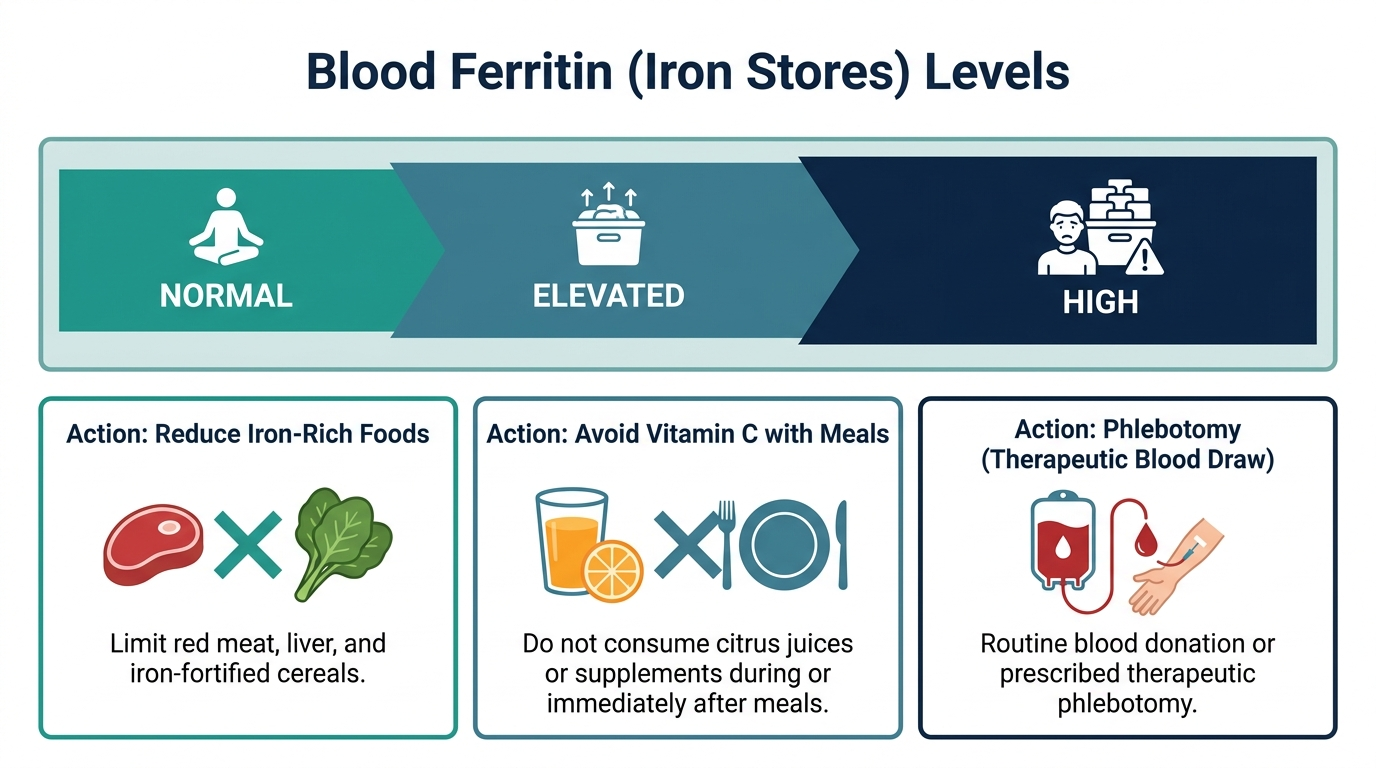
With weekly phlebotomy, ferritin falls by about 30 ng/mL per unit of blood removed, so the pace depends entirely on your starting level (StatPearls). Someone starting at 1,000 ng/mL might need around 30 weekly sessions to reach a 50 to 100 ng/mL target, which is why full normalization in hereditary hemochromatosis often takes several months to a couple of years.
Diet and lifestyle move the needle more slowly. Cutting alcohol or treating fatty liver can lower an inflammation driven ferritin over weeks to months, but dietary absorption tweaks alone rarely produce a dramatic drop because they only reduce new iron coming in, not iron already stored. If your ferritin is high from a temporary cause like infection, it can fall on its own once the trigger resolves.
A realistic example
Consider a 52-year-old man with a slightly high BMI and prediabetes whose routine panel shows a ferritin of 480 ng/mL. It looks alarming until the follow-up test comes back: transferrin saturation is 32 percent, well within normal, and his liver enzymes are mildly raised. This is not hemochromatosis. It is the fingerprint of metabolic fatty liver, and the answer is weight loss, blood sugar control, and cutting alcohol, not weekly bloodletting. Over several months of those changes, both his liver enzymes and his ferritin drift down together.
Now a different person: a 45-year-old woman whose ferritin is 620 ng/mL with a transferrin saturation of 58 percent and a brother already diagnosed with hemochromatosis. Here the high saturation plus the family history change everything. Genetic testing confirms the HFE variant, and she starts induction phlebotomy, one unit a week, watching her ferritin fall by roughly 30 ng/mL each time toward the 50 to 100 target. Two very similar ferritin numbers, two completely different treatment paths, decided almost entirely by the transferrin saturation sitting next to them.
When do you need medication or a doctor?
See a doctor any time ferritin is high, and seek prompt evaluation if it exceeds 1,000 ng/mL, because that level can signal significant iron overload or serious underlying disease (Cleveland Clinic). Do not start phlebotomy, donate blood as self treatment, or take iron chelators without a clinician confirming the cause first.
Your clinician will typically order transferrin saturation, liver enzymes, and sometimes genetic testing for the HFE gene before deciding on treatment, because the right plan depends on whether you have true iron overload or a secondary cause (American Society of Hematology, 2024). Iron chelation medication is specifically reserved for people who cannot undergo phlebotomy. Red flags that warrant urgent attention include unexplained fatigue, joint pain, abdominal pain, bronze or gray skin, or new diabetes alongside high ferritin.
Curious what your own levels look like?
Baseline 100+ biomarkers today and retest as life changes, all in one membership with physician review.
Frequently asked questions
Can I lower ferritin by diet alone?
Diet can slow iron absorption but rarely lowers stored iron quickly. Tea, coffee, and calcium with meals reduce non heme iron uptake, and limiting red meat and alcohol helps. For confirmed iron overload, phlebotomy is far more effective than diet alone (StatPearls).
Does donating blood lower ferritin?
Yes. Each whole blood donation removes about 200 to 250 mg of iron and can drop ferritin by roughly 30 ng/mL. Regular donation is a recognized option for eligible people with mild iron loading, but treatment for diagnosed overload should be supervised by a clinician (StatPearls).
How long does it take to lower high ferritin?
With weekly phlebotomy, ferritin falls about 30 ng/mL per unit. Reaching a 50 to 100 ng/mL target can take several months to a couple of years, depending on your starting level. Inflammation driven elevations may resolve faster once the cause is treated (StatPearls).
Can high ferritin be normal or temporary?
Yes. Ferritin is an acute phase reactant, so it rises with infection, inflammation, fatty liver, and alcohol use even without iron overload. A high reading with normal transferrin saturation often points to inflammation or liver stress, which may settle once the trigger resolves (Annals of Hepatology).
What ferritin level is dangerous?
A ferritin over 1,000 ng/mL warrants prompt medical evaluation, as it can indicate significant iron overload or serious disease. Levels above about 200 ng/mL in women and 300 ng/mL in men should prompt further testing for iron overload (Cleveland Clinic, StatPearls).
Is a high ferritin a sign of cancer?
Usually not. The vast majority of high ferritin readings come from metabolic fatty liver, alcohol, inflammation, or inherited iron overload, none of which is cancer. That said, a markedly high ferritin, particularly over 1,000 ng/mL without an obvious cause, is one of several things a clinician will investigate thoroughly, because rare serious conditions can raise it. The reassurance is in the workup, which is exactly why a very high value should be evaluated rather than self-treated.
Do I have to give up red meat?
Not entirely. Red meat and organ meat carry heme iron, the highly absorbable kind that tea and coffee cannot block, so trimming portion sizes is a reasonable step if you are trying to reduce iron intake. But for confirmed iron overload, diet is a supporting player, not the treatment, and phlebotomy does the real work. For inflammation-driven ferritin, cutting red meat has little effect because the problem is not dietary iron in the first place.
Can exercise or supplements lower ferritin?
Exercise does not directly drain iron stores, though the weight loss and improved insulin sensitivity that come with regular activity can lower a metabolically driven ferritin over time. Be cautious with supplements: many multivitamins and greens powders contain iron and vitamin C, both of which push iron absorption the wrong way when you are trying to lower stores. There is no supplement that safely removes iron the way prescription chelation drugs do, so check labels and skip added iron unless a clinician tells you otherwise.
Sources
- StatPearls (NCBI Bookshelf), Hemochromatosis
- StatPearls (NCBI Bookshelf), Dietary Iron
- American Society of Hematology, Diagnosis and management of hereditary hemochromatosis (2024)
- Annals of Hepatology, Elevated serum ferritin in non-alcoholic fatty liver disease
- Goodfellow Unit, Elevated serum ferritin: diagnosis and management
- Healthline, Do coffee and caffeine inhibit iron absorption?
This article is for general educational purposes and is not medical advice. It cannot diagnose or treat you and does not replace your clinician. Always discuss your lab results and any health decisions with a qualified healthcare professional.
Related: best GLP-1 telehealth providers for 2026.
Vital Signs Today may earn a commission if you buy through links on this page. It does not affect our editorial assessments.