Disclosure: Vital Signs Today may earn a commission if you buy through links on this page, at no extra cost to you. This does not influence our evidence-based assessments. We are not a medical provider; talk to a clinician before acting on test results.
Related: iron blood test: the full guide · What a low iron result means · How to bring iron back into range
Your blood test came back, and somewhere in the iron panel a number is sitting above the reference range with a little H next to it. Maybe it is your serum iron. Maybe it is the transferrin saturation, or the ferritin. The page does not explain itself, so you are left wondering whether you just dodged a deficiency or stumbled onto something that quietly damages organs for years before it announces itself.
Here is the part most explainers skip. Iron is one of the few markers where too much is arguably more dangerous than too little, because your body has no real way to get rid of the excess. It just keeps storing it. Let us decode what a high result actually means and what to do next.
Part of our Iron Studies guide.
What does high iron mean on a blood test?
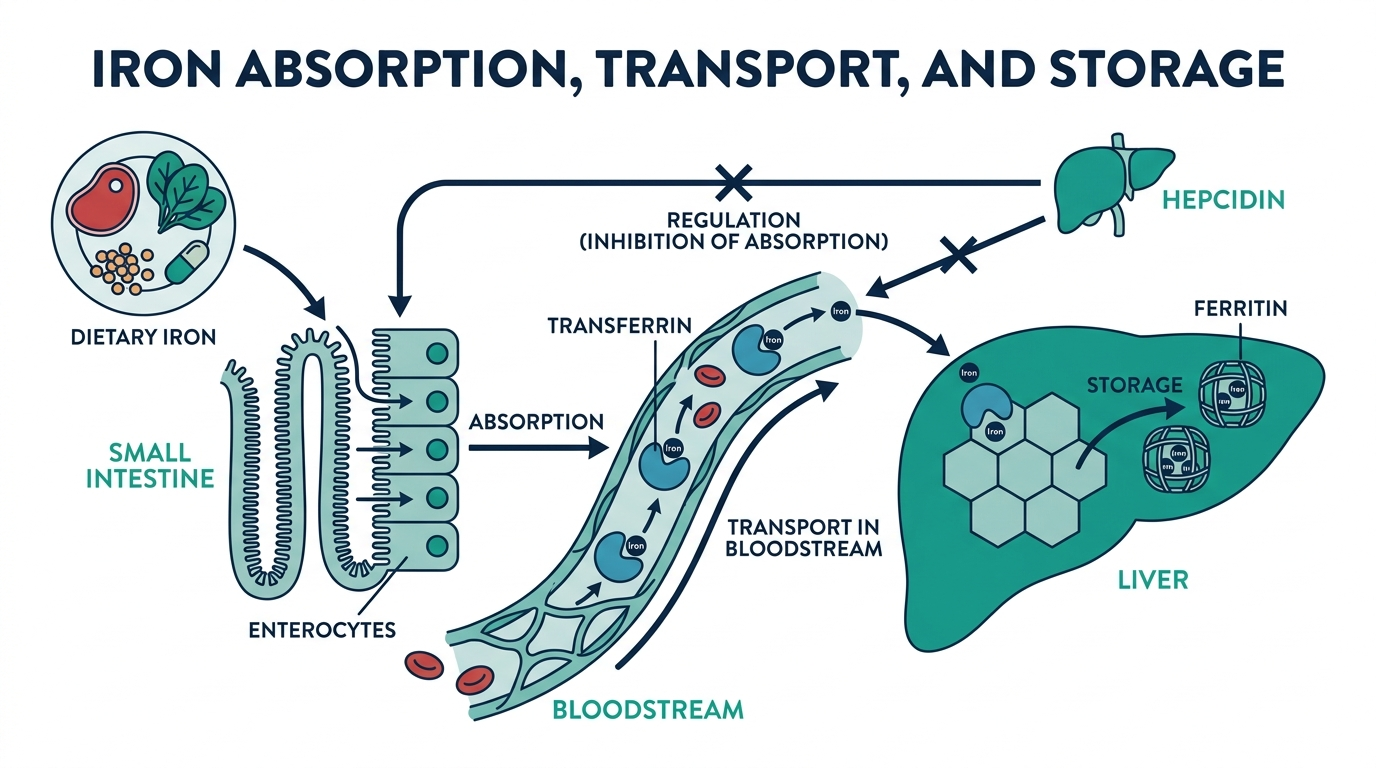
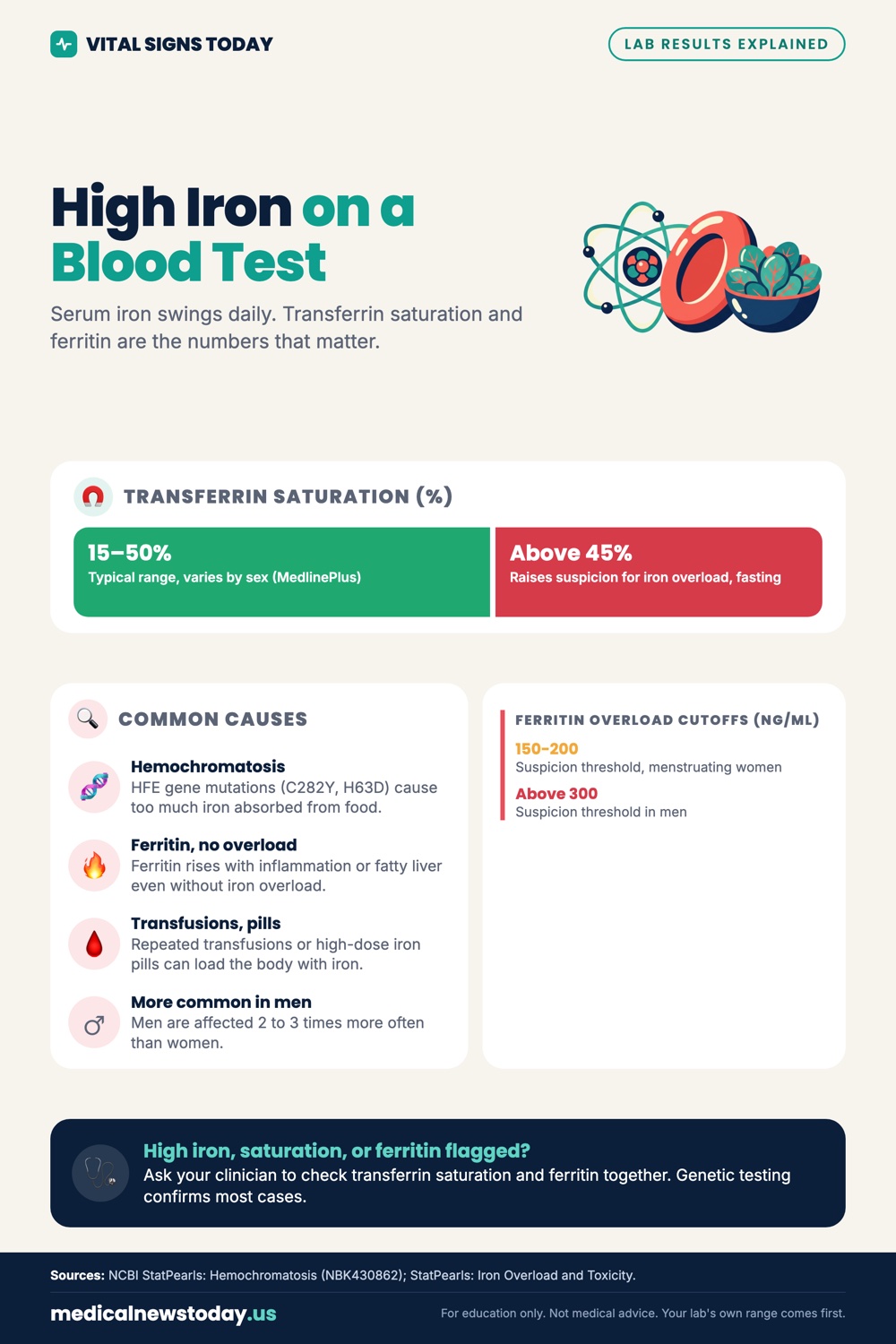
A high iron result means your body is carrying or storing more iron than it should, and the most important number is rarely the serum iron itself. The serum iron measures only the iron floating in your blood right now, and it swings wildly with what you ate that morning, the time of day, and any supplement you took. The numbers clinicians actually trust for iron overload are transferrin saturation and ferritin (StatPearls, Iron Overload and Toxicity).
Transferrin saturation is the percentage of your iron-carrying protein that is loaded with iron. A fasting transferrin saturation above 45 percent raises suspicion for iron overload, and the higher it climbs, the stronger the signal (StatPearls). Ferritin reflects how much iron you have in storage. Levels above roughly 300 ng/mL in men and 150 to 200 ng/mL in menstruating women are the point where doctors start asking why (StatPearls). A serum iron number on its own, with normal saturation and ferritin, often means very little.
So when you see a flagged iron value, the real question is not “is my iron high” but “is my body overloaded.” Those are different things, and the rest of this article is about telling them apart.
How the four iron numbers fit together
An iron panel is really four readings that only make sense as a set. Serum iron is the iron in transit in your blood at that moment. Total iron-binding capacity, or TIBC, measures how much room your transferrin has to carry iron, so it rises when you are iron-hungry and falls when you are iron-loaded. Transferrin saturation is simply serum iron divided by TIBC, expressed as a percentage, which is exactly why it is far steadier than serum iron on its own. Ferritin, finally, is the warehouse reading, an estimate of how much iron you have banked in storage. For typical adults, serum iron runs roughly 60 to 170 mcg/dL and transferrin saturation about 20 to 40 percent, though every lab prints its own range. Read together, a low TIBC with a high saturation and a high ferritin is the classic overload signature, while a high TIBC with a low saturation points the other way, toward deficiency.
What causes a high iron result?
High iron studies trace back to one of three buckets, and they are not equally common. Most often the cause falls into this short list, roughly in order of how frequently it shows up (StatPearls):
- Hereditary hemochromatosis. This is the classic cause of genuine iron overload. It is an inherited condition, most often from mutations in the HFE gene called C282Y and H63D, where the body absorbs too much iron from food even on a normal diet (Cleveland Clinic). It is most common in white people of Northern European descent, and symptoms usually surface in the 40s or 50s.
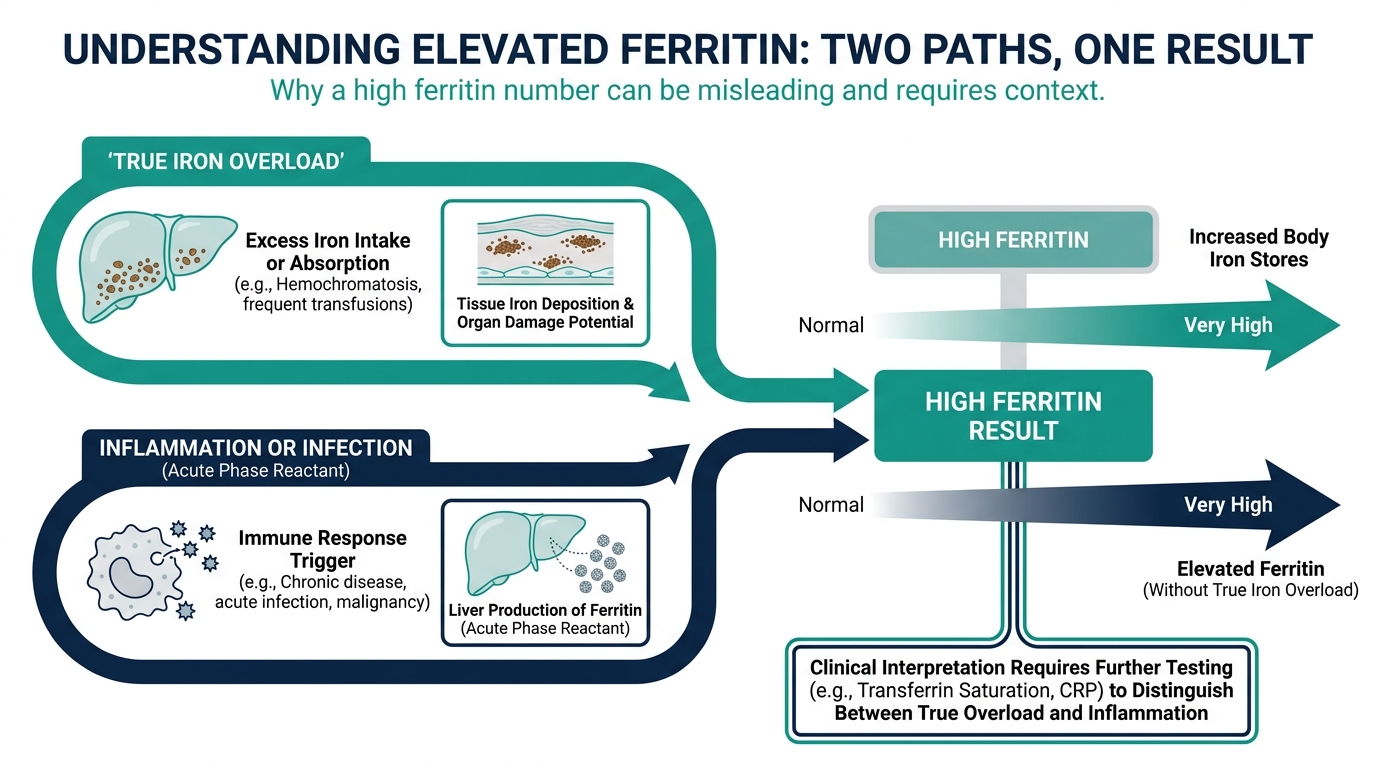
- Hyperferritinemia without true overload. This is the trap. Ferritin is an acute-phase reactant, meaning it rises with inflammation, infection, heavy alcohol use, fatty liver, metabolic syndrome, and some cancers, even when your actual iron stores are fine (StatPearls). A high ferritin with a normal transferrin saturation usually points here, not to hemochromatosis.
- Secondary iron overload. This comes from outside the genes: repeated blood transfusions for conditions like thalassemia, sickle cell disease, or myelodysplastic syndromes, chronic hemolysis, advanced liver disease, or excessive iron supplementation (StatPearls).
- Supplements and recent intake. A multivitamin or iron pill taken the morning of the draw can transiently spike serum iron and saturation without meaning anything long term.
The single most useful move is to look at the pattern, not one number. High saturation plus high ferritin together is the fingerprint of real iron overload. High ferritin alone, with normal saturation, is far more often inflammation or liver-related (StatPearls).
What are the symptoms of high iron?
For a long time, often years, high iron is silent. That is exactly what makes it dangerous. People accumulate iron quietly until it has already deposited in organs, and by the time symptoms appear, some damage may be done. In hereditary hemochromatosis, symptoms typically do not emerge until the 40s or 50s (Cleveland Clinic).
When symptoms do show up, they are frustratingly vague and easy to blame on aging or stress (MedlinePlus):
- Chronic fatigue and weakness
- Joint pain, classically in the knuckles of the first two fingers and the knees
- Abdominal pain
- Skin that takes on a bronze, gray, or metallic tint (Cleveland Clinic)
- Reduced libido and erectile dysfunction
- Heart palpitations or irregular heartbeat
- High blood sugar, sometimes presenting as new diabetes
The skin darkening combined with new diabetes earned hemochromatosis the old nickname “bronze diabetes.” If you have unexplained fatigue, achy hands, and a slightly tanned look you cannot account for, that cluster is worth mentioning to your doctor specifically in the context of an iron result.
When is high iron dangerous or a medical emergency?
There are two very different danger scenarios, and conflating them is a common mistake.
Chronic overload is the slow burn. Left untreated, excess iron drives serious organ damage: cirrhosis and liver cancer, cardiomyopathy and arrhythmias, diabetes, hypothyroidism, and hormone deficiencies (StatPearls). A ferritin above 1000 ng/mL is a particular red flag, because it is associated with a higher risk of cirrhosis and signals that the iron burden is substantial (StatPearls). This is not an emergency-room situation, but it is a do-not-ignore-this situation. The damage is preventable if caught, and largely irreversible if not.
Acute iron poisoning is the true emergency, and it is a different beast entirely. It happens from swallowing a toxic dose of iron tablets, most often in young children who get into adult supplements. Ingestions above 60 mg/kg of elemental iron can be severe and potentially fatal, and a serum iron above 500 mcg/dL signals severe systemic toxicity (StatPearls). The early stage is vomiting, diarrhea, and abdominal pain, sometimes with blood, followed by a deceptive calm before shock and liver failure. If anyone, especially a child, has swallowed iron pills and is vomiting, call Poison Control or go to the emergency room immediately. Do not wait for the calm phase to pass.
What should you do about high iron?
Do not panic over a single flagged number, and do not assume the worst from a high ferritin alone. The right next steps follow a logical order.
First, get the full iron panel together. If only serum iron came back high, the most useful follow-up is a fasting transferrin saturation and ferritin drawn together, ideally in the morning before any iron supplement (StatPearls). The combination tells the story; one number does not.
If saturation and ferritin are both high, genetic testing for the HFE mutations (C282Y and H63D) can confirm hereditary hemochromatosis (Cleveland Clinic). This is a meaningful diagnosis because it is treatable and it has implications for your blood relatives.
If overload is confirmed, the treatment is refreshingly low-tech. The mainstay is therapeutic phlebotomy, which is simply removing blood, sometimes as often as once a week to start, to draw down the iron stored in your iron-rich red blood cells (Cleveland Clinic). For people who cannot tolerate phlebotomy, iron chelation medication pulls iron out instead. Dietary changes play a supporting role: limiting high-iron foods, being cautious with vitamin C, which boosts iron absorption, and moderating alcohol (Cleveland Clinic).
If ferritin is high but saturation is normal, the conversation shifts away from iron entirely and toward inflammation, fatty liver, alcohol, or metabolic health (StatPearls). One critical note: do not start donating blood or taking matters into your own hands on a high ferritin alone. If it is inflammation rather than overload, draining blood does nothing for the cause.
Can you lower high iron through diet alone?
Diet matters, but it is a supporting player, not the main treatment. If you have confirmed iron overload from hemochromatosis, food changes cannot pull stored iron out of your organs the way phlebotomy can. What diet can do is slow how fast you reload.
- Heme versus non-heme iron. The iron in red meat and organ meats, called heme iron, is absorbed far more readily than the iron in plants, so trimming red and organ meat has more effect than cutting spinach or beans.
- Vitamin C timing. Vitamin C sharply increases non-heme iron absorption, so if you are trying to limit iron, avoid large vitamin C doses alongside iron-rich meals.
- Tea and coffee. The tannins and polyphenols in tea and coffee blunt iron absorption, which is why a cup with a meal can modestly reduce how much iron you take in.
- Calcium. Calcium competes with iron for absorption, so a dairy or calcium source with a meal lowers iron uptake a little.
- Alcohol. Alcohol both raises iron absorption and stresses the liver, so cutting back protects the organ most at risk from excess iron.
Skip iron pills and any multivitamin that contains iron unless a clinician has specifically told you to take them. And do not start donating blood as self-treatment before you know whether you truly have overload, because if a high ferritin is driven by inflammation rather than iron, removing blood does not fix the cause.
A realistic example: two people, two identical ferritins
Picture two results that look the same on paper, both with a ferritin of 500 ng/mL. The first is a 52-year-old man of Northern European descent with achy knuckles and a transferrin saturation of 62 percent. That pairing, high ferritin with high saturation, points straight at hereditary hemochromatosis, and HFE genetic testing plus a phlebotomy plan is the sensible path. The second is a 45-year-old with fatty liver and a recent flare of joint inflammation whose transferrin saturation is a normal 27 percent. Same ferritin, completely different story. Here the number is riding the inflammation, and the right move is to work on the liver and metabolic health, not to remove blood. Same headline number, opposite next steps, and the saturation is the reading that tells them apart.
When should you see a doctor?
Bring a flagged iron result to your doctor if any of these apply. Your transferrin saturation is above 45 percent, or your ferritin is meaningfully above the reference range, especially over 300 ng/mL for a man or 150 to 200 ng/mL for a menstruating woman (StatPearls). You have a parent or sibling with hemochromatosis, since it is inherited and your relatives’ diagnosis raises your own odds (Cleveland Clinic). You have the symptom cluster of fatigue, joint pain, bronze skin, or new diabetes alongside the abnormal iron.
And go to the emergency room without delay if someone has swallowed a large number of iron tablets, regardless of how they look in the moment.
The insider point: the high number that fools almost everyone
Here is the nuance that gets missed in clinic after clinic, including by people who should know better. A high ferritin is treated as proof of iron overload, when it is nothing of the sort on its own.
Ferritin is an acute-phase reactant. It climbs during infection, inflammation, liver inflammation, heavy drinking, obesity-related metabolic dysfunction, and certain cancers, all without your body actually storing excess iron (StatPearls). This means a patient with fatty liver and a bad week of inflammation can post a ferritin of 600 and walk out convinced they have hemochromatosis, when their transferrin saturation is a perfectly normal 28 percent.
The tell is the saturation. True iron overload pushes both ferritin and transferrin saturation up together, and in hemochromatosis the saturation is often the earliest abnormality, sometimes climbing past 60 percent in men or 50 percent in women before ferritin even moves. A high ferritin with a low or normal saturation is the signature of hyperferritinemia without overload, and it should redirect the workup toward the liver and inflammation, not toward phlebotomy (StatPearls). If your ferritin is up, ask one question before anything else: what is my transferrin saturation? That single number separates a liver story from an iron story.
Want to check your iron?
Three ways to get it measured. Pick whichever fits you.
Affiliate links: we may earn a commission at no extra cost to you. A lab test does not replace a visit with your clinician.
Frequently asked questions
What blood test shows high iron levels?
An iron panel does, and it includes several tests: serum iron, total iron-binding capacity (TIBC), transferrin saturation, and ferritin (MedlinePlus). For detecting iron overload, transferrin saturation and ferritin matter most, because serum iron alone fluctuates too much with diet and time of day to be reliable (StatPearls).
What is a high iron level on a blood test?
A fasting transferrin saturation above 45 percent raises suspicion of iron overload, and ferritin above roughly 300 ng/mL in men or 150 to 200 ng/mL in menstruating women is the point where clinicians investigate (StatPearls). Always compare against the reference range printed on your own report.
Why is my iron high on a blood test?
The most common real cause of iron overload is hereditary hemochromatosis, a genetic condition where the body absorbs too much iron (Cleveland Clinic). But a high ferritin alone is often inflammation, fatty liver, or heavy alcohol use rather than true overload, and recent iron supplements can transiently spike serum iron (StatPearls).
Is high iron dangerous?
Chronic iron overload can be, over time. Left untreated it can cause cirrhosis, liver cancer, heart problems, and diabetes, with ferritin above 1000 ng/mL signaling a higher cirrhosis risk (StatPearls). Separately, swallowing a toxic dose of iron tablets is an acute emergency requiring immediate care.
How is high iron treated?
Confirmed iron overload is usually treated with therapeutic phlebotomy, removing blood regularly to draw down iron stores, plus iron chelation medication or dietary changes when needed (Cleveland Clinic). A high ferritin caused by inflammation rather than overload is treated by addressing the underlying cause, not by removing blood.
How often should high iron be rechecked?
It depends on the cause and severity. During active treatment for iron overload, ferritin and transferrin saturation are often checked frequently, sometimes before each phlebotomy session early on, then spaced out to every few months as levels fall, and eventually a few times a year for maintenance. For a mildly high ferritin that turns out to be inflammation, your clinician will usually recheck after the underlying issue is addressed. Follow the specific schedule your doctor sets rather than a fixed rule.
Does donating blood lower iron?
Yes, in the sense that giving blood removes iron-rich red cells, which is the same principle behind therapeutic phlebotomy. But donating blood is not a do-it-yourself treatment for a high ferritin you have not had explained. If the elevation is from inflammation or fatty liver rather than true overload, repeatedly giving blood does nothing for the real problem and can eventually tip you toward deficiency. Get the saturation and a diagnosis first, then let your clinician decide whether regular blood removal is right for you.
This article is for general educational purposes and is not medical advice. It cannot diagnose or treat you and does not replace your clinician. Always discuss your lab results and any health decisions with a qualified healthcare professional.
Vital Signs Today may earn a commission if you buy through links on this page. It does not affect our editorial assessments.