- For most healthy adults, a normal white blood cell (WBC) count runs about 4,500 to 11,000 cells per microliter (4.5 to 11.0 × 10⁹/L), per MedlinePlus.
- WBC normal ranges shift sharply by age: newborns can normally reach 13,000 to 38,000 cells/µL, while a 10-year-old sits near 4,500 to 13,500 cells/µL, according to StatPearls.
- Sex matters mainly through pregnancy and baseline differences, and one out-of-range number is rarely diagnostic on its own, so results are read against age, sex, symptoms, and prior labs.
Part of our Complete Blood Count guide.
What is a normal WBC level?
For a healthy non-pregnant adult, a normal white blood cell count is roughly 4,500 to 11,000 cells per microliter, which labs also write as 4.5 to 11.0 × 10⁹/L (MedlinePlus). White blood cells, also called leukocytes, are the immune system’s frontline defenders against infection, and the total count is one line on a complete blood count (CBC).
WBC ranges shift sharply by age and sex. See where your count actually falls with a full panel. One at-home Superpower draw checks 100+ biomarkers, physician-reviewed.
Two cautions matter from the start. First, the exact cutoffs vary slightly between laboratories, so always read your result against the reference range printed on your own report (MedlinePlus). Second, “normal” is age dependent. A count of 30,000 cells/µL would be clearly abnormal in an adult but can be entirely normal in a newborn (StatPearls). The number alone means little without that context.
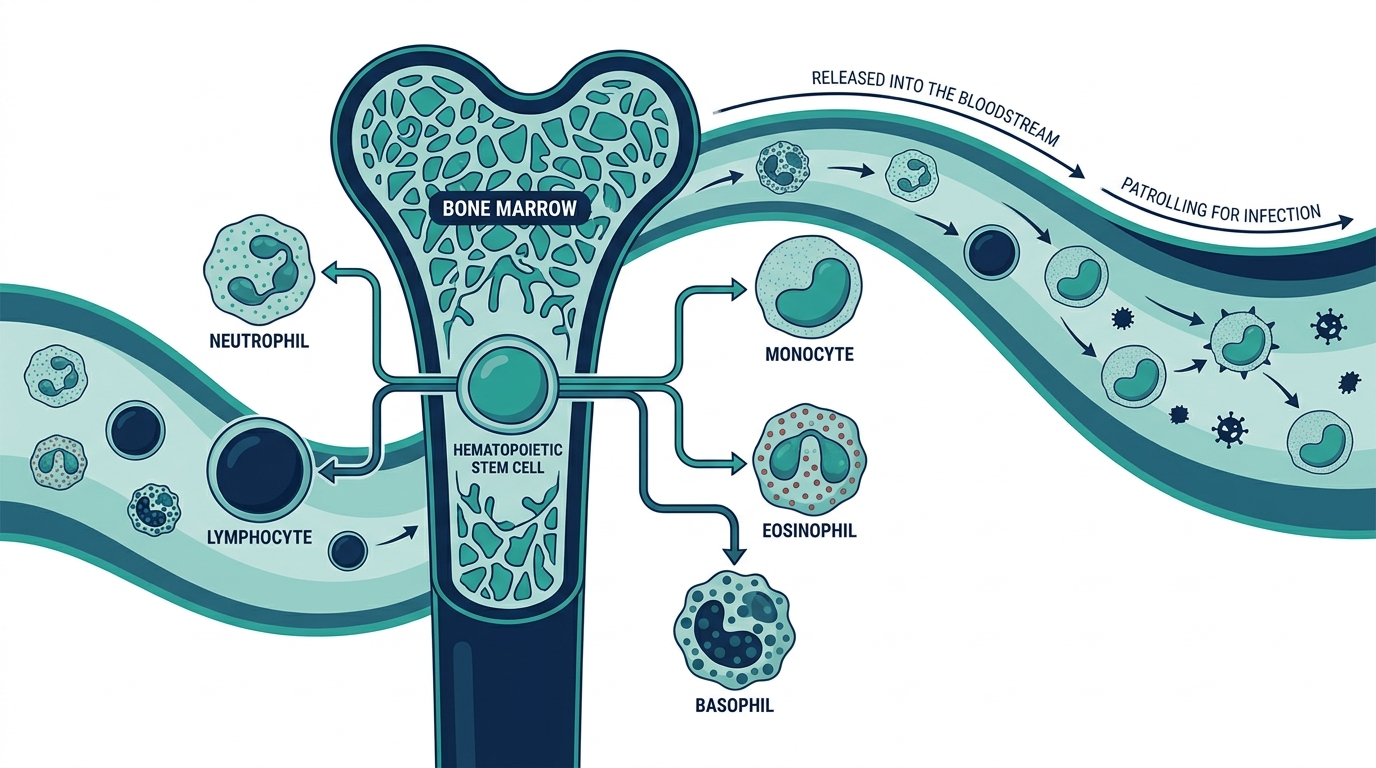
One more thing the total hides: the WBC count is really five different cell types added together, and the mix matters as much as the sum. A report that just says “WBC 9,000” tells you the size of the crowd, not who is in it. That is why most panels also run a differential, which splits the total into neutrophils, lymphocytes, monocytes, eosinophils, and basophils. Two people can share an identical total count while one is fighting a bacterial infection and the other an allergy, and only the differential shows the difference. Keep that in mind as you read the ranges below, because a normal-looking total can still hide an abnormal mix.
WBC normal range by age
The simplest way to actually get this done
Superpower is a full-body lab membership that runs 100+ biomarkers, has each result reviewed by a doctor, and tracks your numbers year over year (about $199/year). It is what we point readers to when they would rather get one clean, complete draw than chase single tests one at a time. Here is superpower reviewed in full.
WBC normal ranges are highest at birth and settle toward the adult range through childhood. Newborns can normally run 13,000 to 38,000 cells/µL, while adults sit at 4,500 to 11,000 cells/µL, according to StatPearls. The table below uses real reference values; treat them as typical guides, not strict pass-fail lines.
| Age group | Typical WBC range (cells/µL) | Same value (× 10⁹/L) |
|---|---|---|
| Newborn (first days) | 13,000 to 38,000 | 13.0 to 38.0 |
| Infant (birth to 2 weeks) | 5,000 to 20,000 | 5.0 to 20.0 |
| Child (around 1 year) | 6,000 to 17,500 | 6.0 to 17.5 |
| Child (around 10 years) | 4,500 to 13,500 | 4.5 to 13.5 |
| Adult (non-pregnant) | 4,500 to 11,000 | 4.5 to 11.0 |
| Pregnant (third trimester) | 5,800 to 13,200 | 5.8 to 13.2 |
Age values are drawn from StatPearls (Leukocytosis), and the standard adult range matches MedlinePlus. The pattern is consistent: high at birth, a steep early drop, then a gradual settle toward adult numbers. Your child’s pediatric lab may quote slightly different bands by exact age, which is expected.
How does sex change the range?
In adults, sex shifts the WBC range only modestly, and the biggest single driver linked to female biology is pregnancy. Cleveland Clinic notes the overall adult range spans about 4,000 to 11,000 cells/µL, with males and children often cited near 5,000 to 10,000 and females near 4,500 to 11,000 cells/µL (Cleveland Clinic). These differences are small compared with the swings caused by age, infection, or pregnancy.
Pregnancy clearly lifts the upper limit. By the third trimester, a normal count can reach 5,800 to 13,200 cells/µL (StatPearls), so a result that looks high may be normal physiology rather than infection. Ancestry can also matter: StatPearls notes that people of African, Middle Eastern, and West Indian descent may carry lower baseline counts, sometimes called benign ethnic neutropenia, without any disease.
What do the five white cell types tell you?
Because the differential usually explains an abnormal total, it helps to know the normal share of each type and what a shift in one tends to mean. The percentages below are typical adult values, and as always your lab’s printed range is the one that counts.
- Neutrophils (about 40 to 60 percent): the first responders to bacterial infection and tissue injury. A high neutrophil share is the classic signature of a bacterial infection, inflammation, or recent stress and steroids.
- Lymphocytes (about 20 to 40 percent): the B and T cells that handle viruses and long-term immunity. A high lymphocyte share more often points to a viral illness, and in young children lymphocytes normally outnumber neutrophils.
- Monocytes (about 2 to 8 percent): the cleanup crew that matures into tissue macrophages. Persistent elevation can accompany chronic infection or inflammation.
- Eosinophils (about 1 to 4 percent): tied to allergies, asthma, and parasitic infection. A high eosinophil count is a common allergy clue.
- Basophils (under about 1 to 2 percent): the rarest type, involved in allergic and inflammatory responses.
Clinicians usually care more about the absolute count of a cell type than its percentage, because a percentage can look alarming while the actual number is fine. The absolute neutrophil count, or ANC, is the most important of these. A normal ANC sits well above 1,500 cells/µL; below that is neutropenia, and an ANC under 500 is severe neutropenia that sharply raises infection risk (StatPearls). This is why someone on chemotherapy with a normal-looking total can still be dangerously vulnerable if their neutrophils have collapsed.
One term you may see on a report is a left shift, which means the marrow is releasing immature neutrophils called bands to meet demand. It is a common sign of an active bacterial infection and tells the clinician the immune system is working hard, not that something is broken.
What makes WBC rise or fall with age?
WBC counts fall from their newborn peak because the immune system matures and the cell mix changes. A useful detail clinicians know: in early childhood, lymphocytes tend to dominate the white cell population, while neutrophils become the predominant type in adulthood (StatPearls). That shift, plus the steep early-life drop from up to 38,000 cells/µL at birth, explains why the same number means different things at different ages.
Many everyday factors push the count up or down at any age. Causes of a higher count include bacterial infection, inflammation such as rheumatoid arthritis or allergies, tissue damage and burns, smoking, pregnancy, physical or emotional stress, and certain blood cancers like leukemia (MedlinePlus).
- Common reasons for a low count: some viral infections, autoimmune disease such as lupus, bone marrow problems, chemotherapy or radiation, and certain medications (MedlinePlus).
- Common reasons for a high count: bacterial infection, inflammation, recent stress or steroids, and smoking (MedlinePlus).
How is the WBC measured, and what can skew it?
Like the rest of the CBC, the white cell count comes from an automated analyzer, and several everyday things move it without any illness behind them. Knowing these prevents a lot of needless worry over a borderline flag.
- Time of day and recent meals: the WBC count has a mild daily rhythm and can tick up after eating, so the exact number varies a little through the day.
- Exercise and stress: a hard workout or an acute stress response can quickly raise the count by shifting neutrophils that were clinging to blood vessel walls back into the flowing blood, a process called demargination. The rise is real on paper but transient and harmless.
- Steroids: corticosteroids reliably raise the neutrophil count by that same demargination effect, so a patient on prednisone often shows a higher WBC that is expected, not infection.
- Smoking: chronic smoking keeps the baseline count elevated, an effect that can persist for a long time.
- Spurious counts: in newborns and some illnesses, nucleated red blood cells or clumped platelets can be miscounted as white cells and falsely raise the total, which a manual smear review corrects.
There is no fasting requirement for a WBC count. If a result is unexpectedly high or low, the standard response is to repeat it, ideally when you are rested and not acutely stressed, and to read the differential and a blood smear rather than react to the total alone.
When is an out-of-range result a concern?
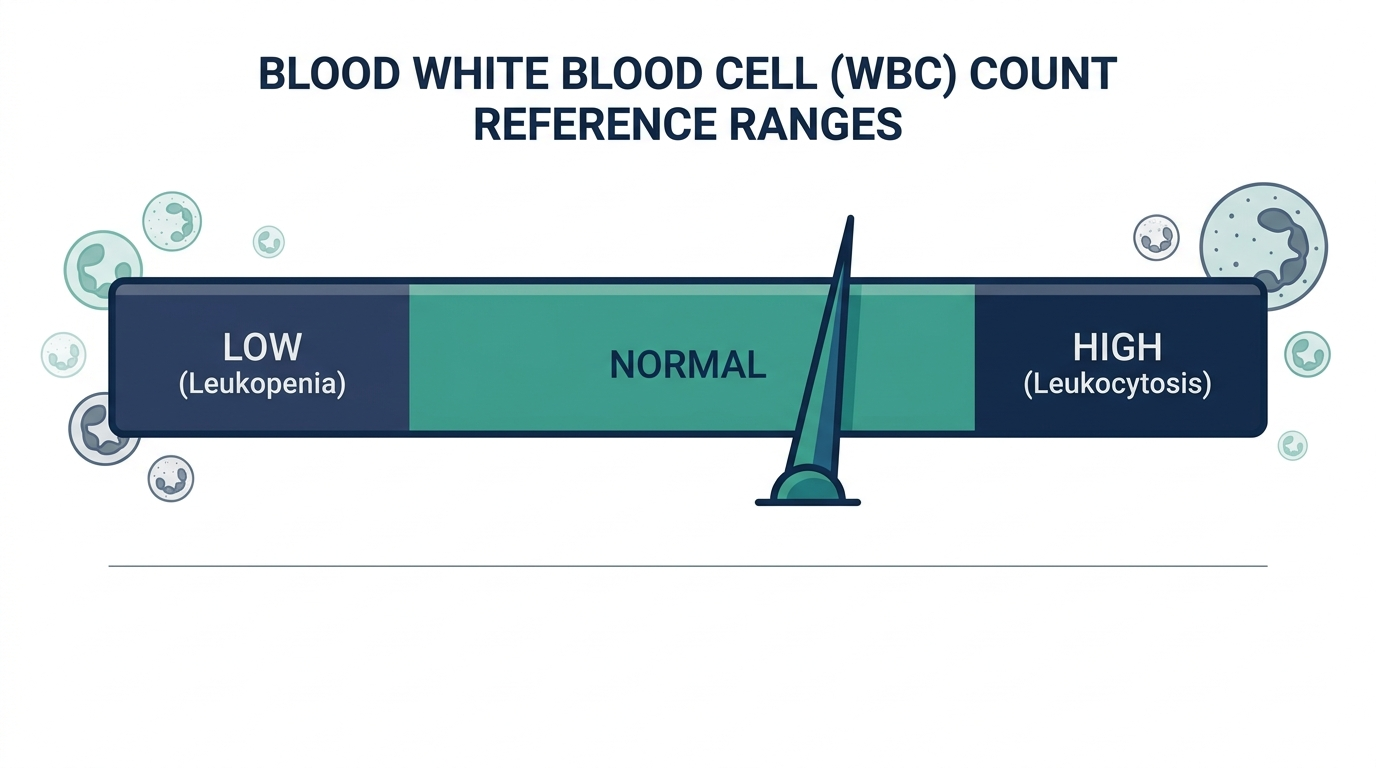
A single mildly off result is usually not an emergency, but counts that are far outside the age-specific range, or that come with symptoms, deserve prompt attention. In adults, a count above 11,000 cells/µL is generally labeled leukocytosis and below about 4,500 cells/µL is leukopenia (MedlinePlus). The trend across repeated tests often matters more than one isolated value.
Call a clinician promptly if an abnormal count comes with fever, chills, severe or persistent infection, unusual bruising or bleeding, drenching night sweats, or unexplained weight loss. A very low count raises infection risk, so new fever in someone known to be neutropenic is treated as urgent. Because the same number can mean physiologic newborn leukocytosis in a baby or possible disease in an adult (StatPearls), interpretation always belongs with your own clinician, who will weigh your age, sex, symptoms, medications, and prior results.
What to do next if your WBC is flagged
For a mildly abnormal total with no symptoms, the path is usually straightforward:
- Look at the differential first. Which cell type is driving the change often reveals the cause before any further testing: neutrophils point toward bacteria or stress, lymphocytes toward a virus, eosinophils toward allergy.
- Repeat it when you are settled. A count drawn right after a workout, a stressful morning, or an active illness is worth rechecking a few weeks later once things calm down.
- Bring context. Recent infections, new medications, steroids, pregnancy, and smoking all shift the number and are the first things a clinician will ask about.
- Watch the trend. A count sliding steadily in one direction over several tests matters more than a single value near the edge.
Two real reading scenarios
The same total count can carry very different meaning depending on the person, so here are two common situations.
Scenario one: the high that is just a hard morning. A healthy 40-year-old man rushes to a blood draw after a brisk cycle across town, stressed about being late. His WBC comes back 12,500, flagged high. He has no fever, no symptoms, and his differential is normal. This is almost certainly demargination from exercise and stress lifting his neutrophils temporarily. Rechecked calmly a couple of weeks later, his count sits at 7,800. Nothing was ever wrong.
Scenario two: the normal total hiding a problem. A 58-year-old woman on chemotherapy has a total WBC of 4,600, comfortably inside the adult range. But her differential shows her neutrophils have dropped, giving an ANC under 500. Despite a normal-looking total, she is severely neutropenic, and any new fever is a medical emergency. The total reassured; the differential told the real story. This is exactly why clinicians rarely stop at the top-line number.
Turn what you just learned into action.
Superpower lets you test 100+ biomarkers from home, then re-check them over time so you can actually see progress, physician-reviewed at every step.
Frequently asked questions
Is a WBC of 11,000 high?
In a non-pregnant adult, 11,000 cells/µL sits right at the top of the typical normal range of 4,500 to 11,000 (MedlinePlus). It is borderline rather than clearly high, and is often normal, especially with recent stress, illness, or pregnancy.
What is a normal WBC count for a child?
It depends on age. Around 1 year, a typical range is 6,000 to 17,500 cells/µL, and around 10 years it is about 4,500 to 13,500 cells/µL (StatPearls). Children normally run higher than adults.
Why is a newborn’s WBC count so high?
Newborns have a normal physiologic surge, with counts reaching 13,000 to 38,000 cells/µL in the first days of life (StatPearls). A value that would alarm in an adult can be completely normal in a baby.
Does WBC count change in older adults?
Healthy older adults generally stay within the standard adult range of 4,500 to 11,000 cells/µL (MedlinePlus). Persistent values well outside that band, rather than aging itself, are what prompt evaluation by a clinician.
Can stress raise white blood cell count?
Yes. Physical or emotional stress can temporarily raise the WBC count, alongside causes like infection, inflammation, smoking, and pregnancy (MedlinePlus). This is one reason a single high reading is often rechecked before any conclusion.
What is a normal absolute neutrophil count?
A normal absolute neutrophil count, or ANC, sits well above 1,500 cells/µL. Below that is neutropenia, and an ANC under 500 is severe neutropenia with a much higher infection risk (StatPearls). The ANC often matters more than the total WBC, especially for people on chemotherapy.
Does exercise affect the WBC count?
Yes. Vigorous exercise can quickly raise the count by shifting neutrophils off blood vessel walls back into circulation, a temporary effect called demargination. It is harmless and fades with rest, which is why a count drawn right after a workout is often rechecked when you are settled.
Do I need to fast before a WBC test?
No. A WBC count needs no fasting. If it is drawn as part of a panel that also checks glucose or cholesterol, you may be asked to fast for those tests, but the white cell count itself is not affected by a recent meal in any meaningful way.
What does a left shift mean on my results?
A left shift means the bone marrow is releasing immature neutrophils, called bands, into the blood to meet demand. It is a common sign of an active bacterial infection and shows the immune system is responding vigorously, not that something is wrong with the marrow.
Sources
- MedlinePlus, WBC count (Medical Encyclopedia)
- NCBI StatPearls, Leukocytosis
- Cleveland Clinic, White Blood Cells: Types, Function and Normal Ranges
- MedlinePlus, White Blood Count (WBC) Lab Test
This article is for general educational purposes and is not medical advice. It cannot diagnose or treat you and does not replace your clinician. Always discuss your lab results and any health decisions with a qualified healthcare professional.
Related: see our ranking of the best at-home blood tests.
Vital Signs Today may earn a commission if you buy through links on this page. It does not affect our editorial assessments.