
- To lower LDL cholesterol, cut saturated fat below 7 percent of daily calories, eat 5 to 10 grams of soluble fiber a day, exercise regularly, and lose excess weight, which together can drop LDL by 8 to 15 percent in 4 to 6 weeks (Cleveland Clinic, AHA).
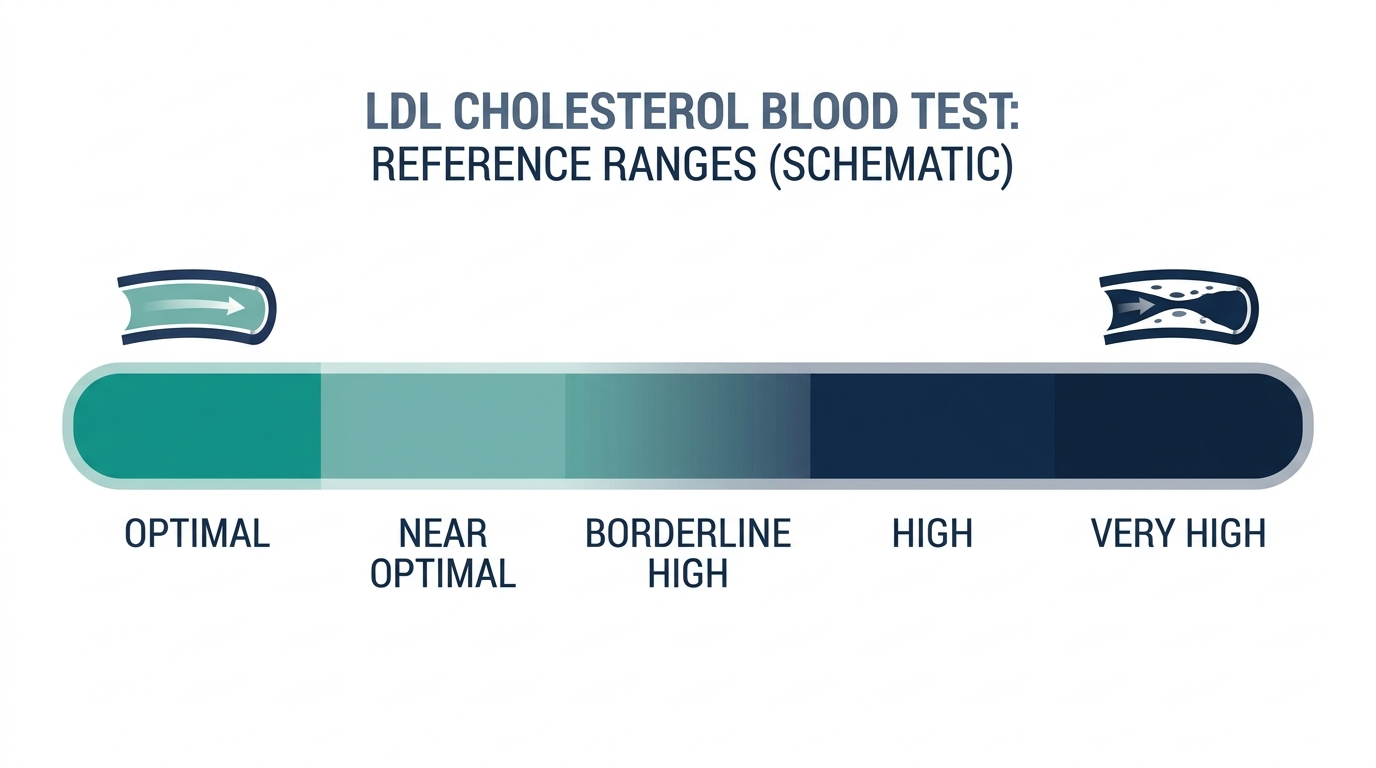
- An optimal LDL level is below 100 mg/dL, while 160 to 189 mg/dL is high and 190 mg/dL or above is very high, according to Cleveland Clinic and the National Institutes of Health.
- When diet and lifestyle are not enough, statins lower LDL by 30 to over 50 percent and are the first-line medication recommended by the 2018 ACC/AHA cholesterol guideline.
High LDL cholesterol is one of the most fixable causes of heart attack and stroke, and most people can move their number meaningfully without ever needing a prescription. This guide walks through what the number means, why it matters, and the specific, guideline-backed steps that actually lower it, from your plate to your pharmacy.
Part of our Lipid Panel guide.
Fiber and exercise can lower LDL significantly, but do you know your actual starting number? One at-home Superpower draw checks 100+ biomarkers, physician-reviewed.
What counts as high LDL?
LDL cholesterol is considered high at 160 to 189 mg/dL and very high at 190 mg/dL or above, while an optimal level is below 100 mg/dL, according to the National Institutes of Health and Cleveland Clinic. The range in between, 130 to 159 mg/dL, is labeled borderline high.
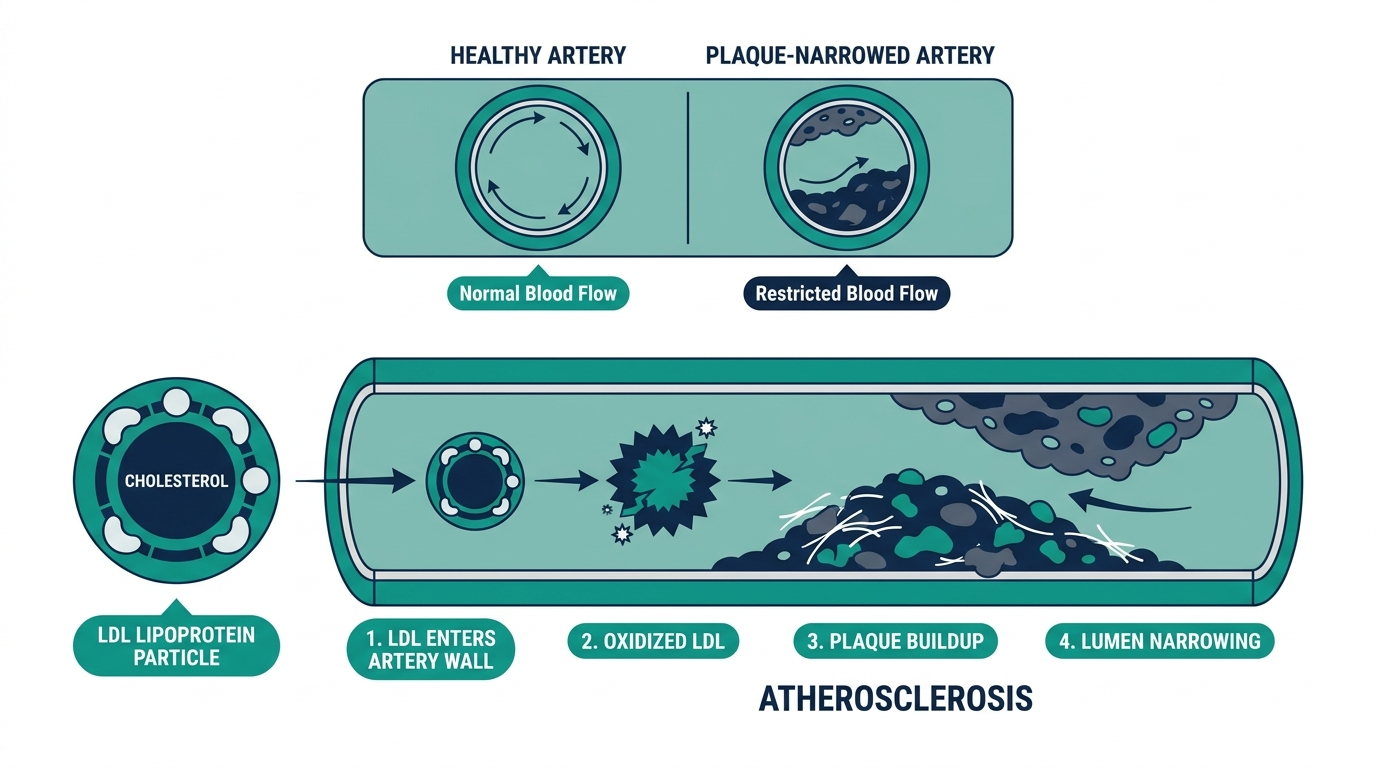
LDL is called the “bad” cholesterol because it carries cholesterol into artery walls, where it can build into plaque. Your personal target depends on your overall risk, not the number alone.
- Below 100 mg/dL: optimal for most adults.
- 100 to 129 mg/dL: near optimal.
- 130 to 159 mg/dL: borderline high.
- 160 to 189 mg/dL: high.
- 190 mg/dL or above: very high.
If you already have heart disease, diabetes, or several risk factors, your clinician may aim for an LDL below 70 mg/dL, and below 55 mg/dL for established cardiovascular disease (Cleveland Clinic).
Beyond LDL: non-HDL, ApoB, and Lp(a)
LDL is the headline number, but it is not the whole story of your risk. Non-HDL cholesterol, which is your total cholesterol minus HDL, captures every artery-clogging particle including VLDL remnants, and many clinicians now watch it alongside LDL, aiming for roughly 30 mg/dL above your LDL goal. ApoB goes one step further by counting the actual number of atherogenic particles, and it can reveal hidden risk in people whose LDL looks fine but who carry many small dense particles, common with high triglycerides or diabetes. Lipoprotein(a), or Lp(a), is a largely inherited particle that raises risk independently; it is worth measuring once in a lifetime, especially with a family history of early heart disease, because standard lifestyle changes do not move it much.
Calculated versus direct LDL, and why fasting matters
Most labs do not measure LDL directly; they calculate it using the Friedewald formula from total cholesterol, HDL, and triglycerides. That estimate becomes unreliable when triglycerides run high, roughly above 400 mg/dL, or when LDL is very low, so a very high triglyceride reading can make your calculated LDL look falsely low. In those cases a direct LDL or an ApoB gives a truer number. Reference ranges also vary slightly between labs, so track your trend on the same lab where you can, and remember a standard lipid panel is usually drawn fasting to keep the triglyceride-based calculation honest.
Why lower it?
The simplest way to actually get this done
Superpower is a full-body lab membership that runs 100+ biomarkers, has each result reviewed by a doctor, and tracks your numbers year over year (about $199/year). It is what we point readers to when they would rather get one clean, complete draw than chase single tests one at a time. Here is superpower reviewed in full.
Lowering LDL directly reduces the risk of heart attack and stroke, and the evidence is dose dependent, meaning the lower your LDL goes, the lower your risk. Pooled trial data show that each 39 mg/dL (1 mmol/L) drop in LDL cuts major cardiovascular events by roughly 22 percent (American Heart Association and ACC/AHA guideline analyses).
LDL particles deposit cholesterol in artery walls over years, forming plaque that narrows vessels and can rupture, triggering a clot. Because the damage is silent and cumulative, lowering LDL early and keeping it low pays off more than waiting. This is why guidelines treat LDL as a primary target rather than something to address only after symptoms appear.
High LDL has no symptoms
You cannot feel high cholesterol. There are no headaches, no fatigue, no warning sign until a plaque ruptures and causes a heart attack or stroke. The rare exceptions are people with very high inherited levels, who may develop cholesterol deposits in the tendons, yellowish patches around the eyes called xanthelasma, or a grayish ring around the cornea at a young age. For everyone else, a blood test is the only way to know, which is why screening on schedule matters even when you feel perfectly well.
Think in cholesterol-years
Risk is not just how high your LDL is today, it is how high it has been multiplied by how long. This is the idea of cumulative exposure, sometimes called cholesterol-years, similar to pack-years for smoking. Someone with an LDL of 160 mg/dL for two decades has weathered far more arterial damage than someone who hit that number last year. It is the reason cardiologists push to lower LDL early and keep it low, rather than waiting for a milestone birthday or a first symptom.
What raises LDL?
The biggest dietary driver is saturated fat, found in fatty red meat, butter, cheese, and many baked goods, followed by trans fat from partially hydrogenated oils. But diet is only part of it. Genetics set your baseline, and familial hypercholesterolemia, an inherited condition affecting roughly 1 in 250 people, can push LDL above 190 mg/dL from childhood no matter how clean the diet.
Several medical and life factors raise LDL too. An underactive thyroid, kidney disease, and poorly controlled diabetes all lift it. Excess weight and a sedentary routine worsen the whole lipid picture. LDL tends to climb with age, and it often rises in women after menopause as estrogen falls. Some medications, including certain diuretics, steroids, and retinoids, can nudge it up. This is why a genuinely high LDL that does not budge with a careful diet deserves a look for a hidden cause rather than just more willpower.
Evidence-based ways to lower LDL: diet
Diet is the foundation, and the single most effective change is replacing saturated fat with unsaturated fat. Substituting saturated fat with polyunsaturated fat at just 5 percent of energy intake can lower LDL by more than 10 percent (NCBI/PMC review). The 2018 ACC/AHA guideline and AHA advise keeping saturated fat below 7 percent of daily calories.
Soluble fiber is the second lever. The AHA ATP III panel recommends 5 to 10 grams of viscous (soluble) fiber daily, with 10 to 25 grams giving even more benefit, and every extra gram lowers LDL by about 2.2 mg/dL on average (PMC meta-analysis). Psyllium supplements have lowered LDL by up to 15 percent in some studies.
- Swap fats: trade butter, fatty red meat, and full-fat dairy for olive oil, nuts, avocado, and fatty fish.
- Load soluble fiber: oats, barley, beans, lentils, apples, citrus, and psyllium.
- Add plant sterols: roughly 2 grams a day can lower LDL by 6 to 10 percent.
- Cut trans fat: avoid partially hydrogenated oils entirely.
A combined “portfolio” approach stacking nuts, soluble fiber, plant sterols, and soy protein has lowered LDL by about 20 percent in plant-based diet studies (NCBI/PMC).
A common point of confusion is dietary cholesterol itself. For most people, the cholesterol in food, such as eggs or shellfish, raises blood LDL far less than saturated and trans fat do, so the priority is the type of fat on your plate, not obsessively counting cholesterol milligrams. Two practical anchors help: get soluble fiber to at least 5 to 10 grams a day from oats, beans, and psyllium, and make unsaturated fats such as olive oil, nuts, and fatty fish your default cooking and snacking fats. Soy protein and about 2 grams a day of plant sterols from fortified foods add a further, modest push.
Evidence-based ways to lower LDL: lifestyle
Beyond food, regular exercise and weight loss are the most reliable lifestyle levers, and losing excess weight alone can lower LDL while raising protective HDL. The AHA recommends at least 150 minutes of moderate aerobic activity per week, such as brisk walking, cycling, or swimming.
Other proven moves matter too. Quitting smoking improves your cholesterol profile and cuts cardiovascular risk within the first year (Mayo Clinic). Limiting alcohol and reducing refined carbohydrates also help, because excess sugar and refined starch can worsen the broader lipid picture, including triglycerides.
- Move most days: aim for 150 minutes of moderate activity weekly.
- Lose excess weight: even a 5 to 10 percent reduction in body weight improves lipids.
- Stop smoking: a direct, fast win for artery health.
- Sleep and stress: address both, since chronic stress and poor sleep can nudge cholesterol upward.
Set expectations honestly: for most people lifestyle change lowers LDL in the single digits to about 15 percent, occasionally more with a strict portfolio diet, while exercise does more for triglycerides and HDL than for LDL specifically. That does not make it optional, because the same habits shrink overall cardiovascular risk, steady blood pressure, and improve blood sugar. If your LDL is only modestly high and your overall risk is low, these changes may be all you need. If it is very high or your risk is high, they become the foundation that medication builds on rather than a replacement for it.
Evidence-based ways to lower LDL: medical options
When lifestyle is not enough, statins are the first-line medication and lower LDL by 30 to over 50 percent depending on intensity, per the 2018 ACC/AHA cholesterol guideline. Moderate-intensity statins cut LDL by 30 to 49 percent, and high-intensity statins by 50 percent or more.
If a statin alone does not reach goal, or is not tolerated, guidelines add other agents. The decision is individualized to your risk and how far your LDL still needs to fall.
- Statins: first-line, LDL down 30 to over 50 percent, plus proven event reduction.
- Ezetimibe: lowers LDL by about 15 to 25 percent, often added to a statin (PMC).
- PCSK9 inhibitors: injectable drugs that lower LDL by roughly 50 to 60 percent, used in high-risk or familial cases (PMC).
- Bempedoic acid and bile acid sequestrants: additional options for statin intolerance.
Medication does not replace diet and exercise. The two work together, and most people on a statin still follow heart-healthy habits to maximize the benefit.
Two modern points are worth knowing. Inclisiran is a twice-yearly injection that quiets the PCSK9 gene and lowers LDL by around half, offering a low-frequency option for people who struggle with daily pills. And when the decision to start a statin is borderline, a coronary artery calcium (CAC) scan can help: a score of zero suggests low short-term risk and may justify waiting, while a high score argues for treatment. On statin safety, the common fear of side effects outruns the reality for most people. True muscle symptoms are uncommon, serious liver or muscle injury is rare, and the small increase in blood sugar is far outweighed by the reduction in heart attacks and strokes for those who genuinely need the drug. Anyone with real intolerance has several alternatives, so “I cannot take statins” is rarely the end of the conversation.
How fast can it change?
LDL can fall 8 to 15 percent within 4 to 6 weeks of consistent diet changes, and up to 25 percent within three months, with the biggest drop happening in the first month before improvements plateau (clinical reviews summarizing dietary trials). Medication acts on a similar timeline.
Statins begin working within weeks, and most clinicians recheck a fasting lipid panel 4 to 12 weeks after starting or changing a dose to confirm at least a 30 to 50 percent LDL drop, then every 6 to 12 months once you are stable (American College of Cardiology). For diet-only changes, give yourself 8 to 12 weeks before retesting so the change has time to register. Consistency matters more than intensity: a sustainable plan you keep beats a strict one you abandon.
A concrete arc: a 50-year-old with an LDL of 165 mg/dL and otherwise low risk swaps butter for olive oil, eats oats and beans daily, walks most days, and loses seven pounds. At the 10-week recheck his LDL is 140 mg/dL, a solid diet-driven drop, and he and his clinician agree to keep going without medication. Compare that with a 58-year-old with diabetes and an LDL of 168 mg/dL: here the guideline points to a statin now, because his overall risk is high and the same diet changes, while valuable, will not get him low enough on their own. Same starting LDL, different plan, because risk and not the number alone drives the decision.
When do you need medication or a doctor?
You should see a clinician about medication if your LDL stays at 190 mg/dL or above, if you have diabetes plus elevated LDL, or if your overall 10-year cardiovascular risk is high, because the 2018 ACC/AHA guideline recommends statin therapy for these groups regardless of diet.
See a doctor sooner if you have a family history of early heart disease, very high LDL despite a clean diet (a sign of possible familial hypercholesterolemia), or any chest pain, shortness of breath, or symptoms of a heart event, which are emergencies. A clinician uses your full risk profile, not the LDL number alone, to decide whether and how to treat. Bring your lab results and ask what your personal LDL target should be.
Don’t just read about your health, track it.
A single result is a snapshot. Superpower re-tests 100+ markers over time so you can watch them move as you change sleep, food, and training.
Frequently asked questions
What is the fastest way to lower LDL cholesterol?
The fastest natural way is cutting saturated fat below 7 percent of calories while adding 5 to 10 grams of soluble fiber daily, which can lower LDL 8 to 15 percent in 4 to 6 weeks. For larger or faster drops, statins lower LDL by 30 to over 50 percent within weeks.
Can you lower LDL without medication?
Yes. Many people with borderline or moderately high LDL reach goal through diet, exercise, weight loss, and quitting smoking. A combined plant-based “portfolio” diet has lowered LDL by about 20 percent. Medication is added when lifestyle alone is insufficient or risk is high.
What foods lower LDL cholesterol the most?
Oats, barley, beans, lentils, apples, citrus, nuts, fatty fish, olive oil, and foods with added plant sterols. Soluble fiber from oats and psyllium, plus swapping saturated fat for unsaturated fat, deliver the largest LDL reductions in studies.
How long does it take to lower LDL with diet?
LDL can fall 8 to 15 percent in 4 to 6 weeks and up to 25 percent within three months of consistent diet changes. The biggest improvement comes in the first month. Wait 8 to 12 weeks before rechecking your levels.
What LDL level requires medication?
An LDL of 190 mg/dL or above generally warrants statin therapy regardless of other factors, per the 2018 ACC/AHA guideline. People with diabetes or high overall cardiovascular risk may need medication at lower LDL levels too. A clinician decides based on your full risk profile.
Do eggs and dietary cholesterol raise LDL?
For most people, less than you might think. Saturated and trans fat raise blood LDL far more than the cholesterol in foods like eggs or shellfish. Current guidance focuses on limiting saturated fat rather than strictly counting dietary cholesterol, though people with diabetes or existing heart disease may still be advised to moderate high-cholesterol foods.
Are statins safe to take long term?
For people who need them, yes. Serious side effects are rare, genuine muscle symptoms are uncommon, and the small rise in blood sugar is outweighed by fewer heart attacks and strokes. Report any persistent muscle aches to your clinician, who can adjust the dose or switch drugs, since several alternatives exist.
What is familial hypercholesterolemia?
It is an inherited condition, affecting roughly 1 in 250 people, that causes very high LDL from a young age regardless of diet. It often requires medication early to prevent premature heart disease. A personal or family history of LDL above 190 mg/dL, or heart attacks before age 55 in men or 65 in women, is a reason to be evaluated.
Should I ask for an ApoB or calcium scan?
ApoB can clarify your risk when LDL looks fine but triglycerides are high or you have diabetes, and a coronary artery calcium scan can help decide about a statin when the choice is borderline. Both are reasonable to discuss with your clinician, especially with a family history of early heart disease.
Sources
- Cleveland Clinic, Cholesterol Numbers: What Do They Mean?
- MedlinePlus (NIH), LDL: The Bad Cholesterol
- American Heart Association / Circulation, Adopting Healthful Lifestyle Habits to Lower LDL Cholesterol
- NCBI/PMC, Soluble Fiber Supplementation and Serum Lipid Profile: A Meta-Analysis
- NCBI/PMC, A Review of LDL-Lowering Diets
- NCBI/PMC, Pharmacological Strategies beyond Statins: Ezetimibe and PCSK9 Inhibitors
- American College of Cardiology, Dietary Approaches for Elevated LDL-C
- Mayo Clinic, Managing High Cholesterol with Lifestyle Changes
This article is for general educational purposes and is not medical advice. It cannot diagnose or treat you and does not replace your clinician. Always discuss your lab results and any health decisions with a qualified healthcare professional.
Related: compare GLP-1 telehealth options.
Vital Signs Today may earn a commission if you buy through links on this page. It does not affect our editorial assessments.