Disclosure: Vital Signs Today may earn a commission if you buy through links on this page, at no extra cost to you. This does not influence our evidence-based assessments. We are not a medical provider; talk to a clinician before acting on test results.
Related: ferritin blood test: the full guide · Ferritin normal range by age (full chart)
You got your blood work back, scanned for anything in bold, and there it was: ferritin, flagged low. Maybe nobody even called you, just a portal notification and a number sitting below the reference range. Here is what that one number is quietly telling you. Ferritin is your body’s iron savings account, and a low reading means the account is close to empty.
That matters more than most people realize, because ferritin usually drops long before a standard anemia test catches anything. By the time hemoglobin looks abnormal, your tank has often been running low for months. So a low ferritin is not a footnote. It is an early warning, and reading it correctly can save you a lot of unexplained fatigue.
Part of our Iron Studies guide.
What is low ferritin in a blood test?
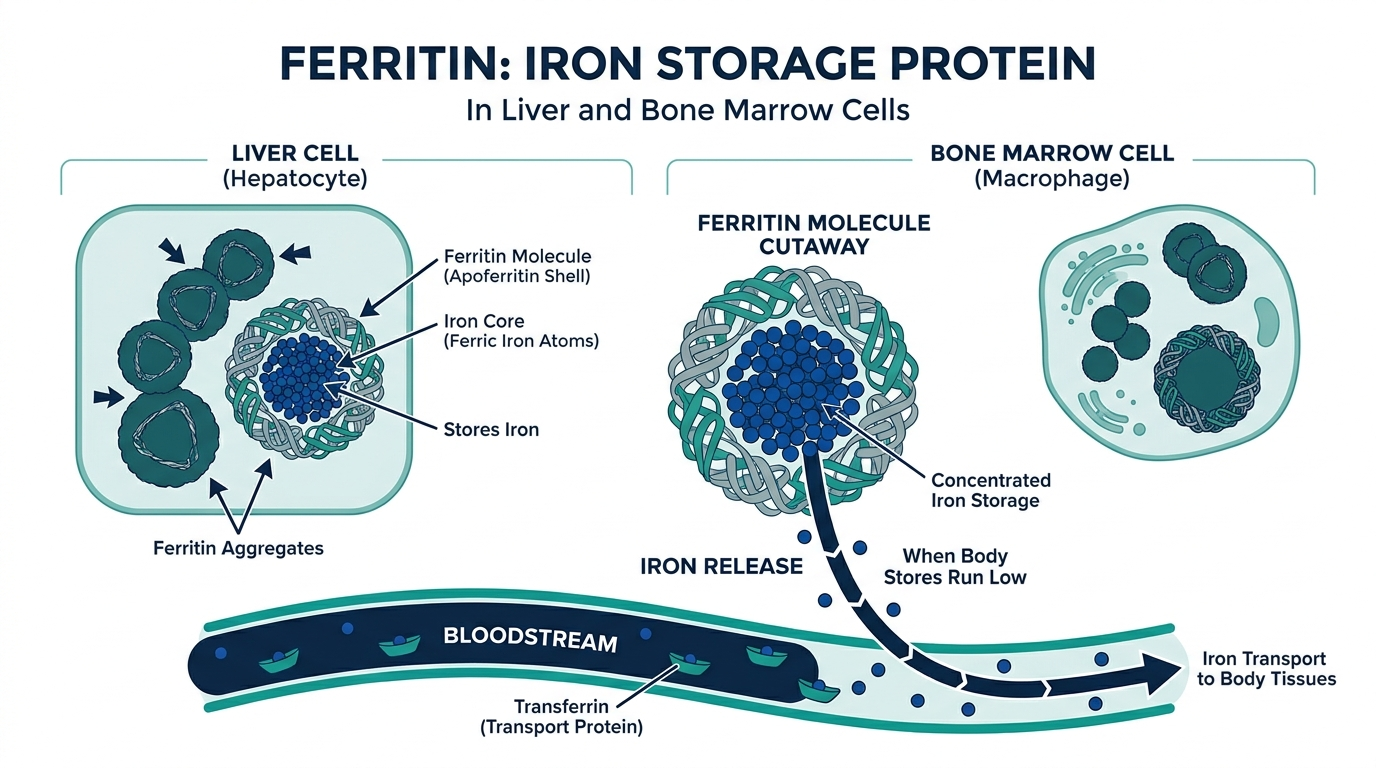
A low ferritin in a blood test means your stored iron is depleted. Ferritin is a protein that binds iron and holds it in reserve inside your cells, so the serum ferritin level is the single best snapshot of how much iron your body has banked (MedlinePlus). When that number falls, it almost always means one thing: your iron stores are running out.
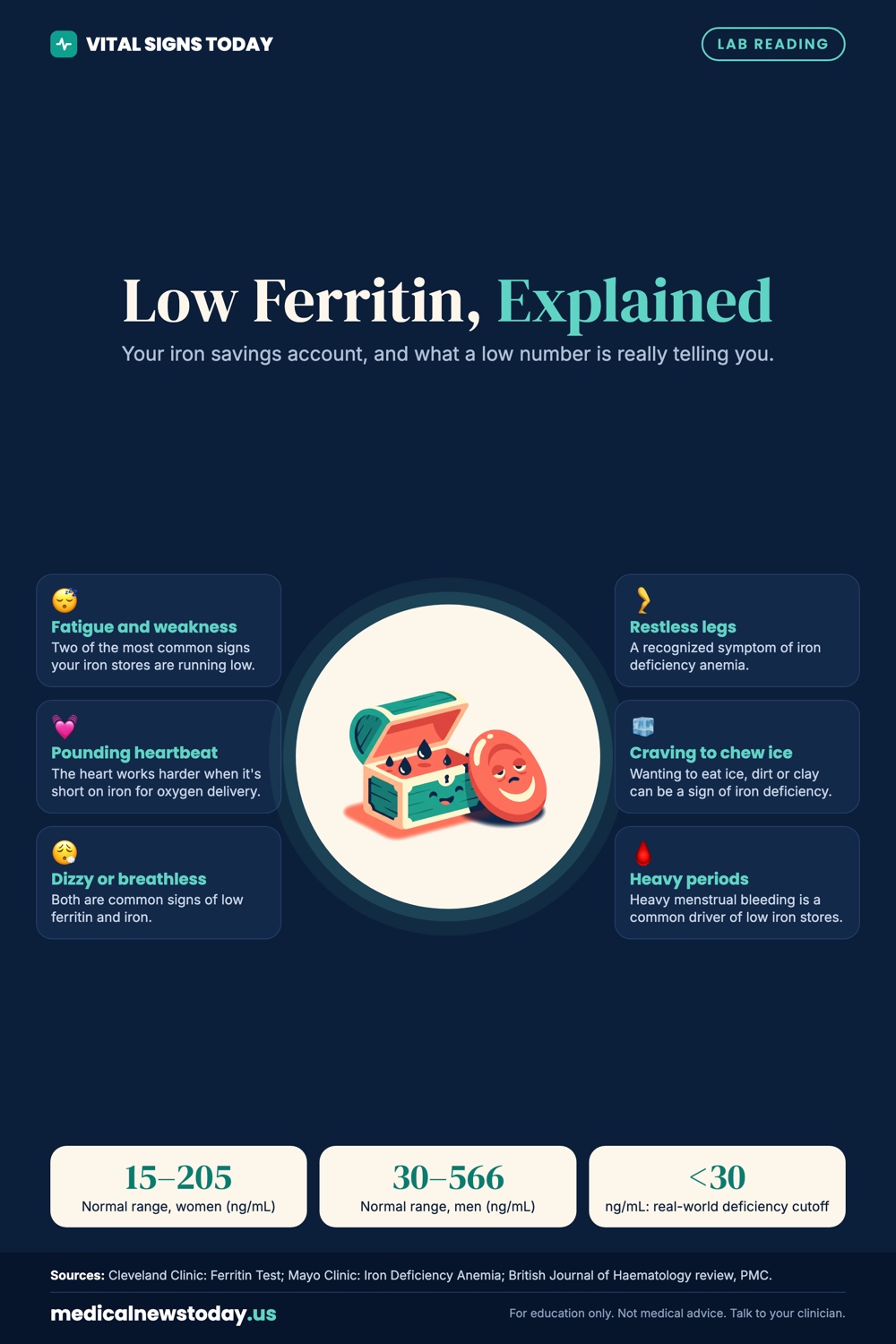
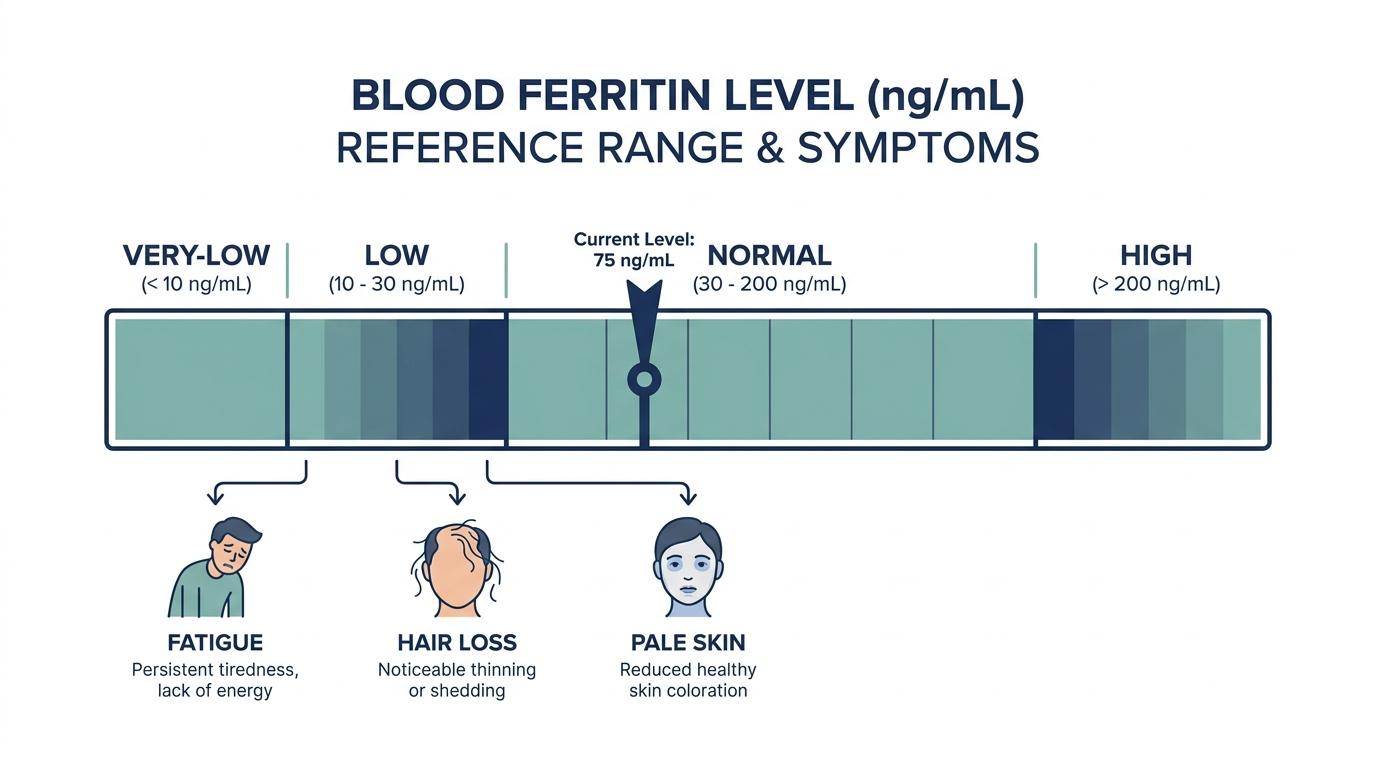
The reference range your lab prints is wide, and it differs by sex. Cleveland Clinic lists normal serum ferritin as roughly 15 to 205 ng/mL for women and 30 to 566 ng/mL for men, with children running lower (Cleveland Clinic). In plain terms, if your result sits under the bottom of your lab’s range, you are flagged low, and that is the point where your clinician starts asking why the savings account drained.
What does a low ferritin mean on a blood test?
Direct answer: a low ferritin means iron deficiency, full stop. There is no benign mystery here the way there can be with some lab values. Ferritin tracks iron stores so tightly that a genuinely low level is considered the most specific blood marker for an empty iron tank (MedlinePlus).
The threshold that counts as low is where it gets interesting. Your lab might cut off at 15 ng/mL, but the diagnostic cutoff clinicians actually use is higher. Research pooling decades of data found that a serum ferritin below 30 ng/mL identifies absolute iron deficiency with about 92 percent sensitivity and 98 percent specificity, which is why many specialists treat 30 ng/mL, not 15, as the real floor (PMC, misconceptions in iron deficiency). So you can land inside your lab’s printed range, see no flag at all, and still be iron deficient. A ferritin of 22 ng/mL is technically normal on paper and clinically low in real life.
The next distinction matters too. Low ferritin with a normal blood count is iron deficiency without anemia, the early stage where you feel terrible but your CBC still looks fine. Low ferritin together with low hemoglobin is iron deficiency anemia, the later stage (Cleveland Clinic). Both deserve attention. The first is just the version doctors miss more often.
What causes a low ferritin?
Iron stores fall for one of three reasons: you are losing iron, not absorbing it, or not taking enough in. In that order, here is the real differential (MedlinePlus).
- Blood loss. This is the most common cause in adults and the one that must be ruled out. In menstruating women, heavy or prolonged periods top the list. In men and postmenopausal women, the default assumption is slow bleeding somewhere in the gut, from an ulcer, polyp, or in some cases a colon cancer, until proven otherwise (Cleveland Clinic).
- Poor absorption. Even with iron in your diet, conditions like celiac disease, inflammatory bowel disease, or prior gastric surgery can block iron from crossing your gut wall (MedlinePlus).
- Increased demand or low intake. Pregnancy pulls iron toward the baby and raises requirements sharply. Frequent blood donation, rapid growth in children, and diets very low in iron-rich food round out the picture (MedlinePlus).
The order is not random. A low ferritin is never the end of the workup. It is a question, and the question is always the same: where is the iron going?
Who is most likely to have low ferritin?
Iron deficiency is not evenly spread. Some groups run low far more often, and knowing whether you are one of them changes how seriously to take a borderline result.
- Menstruating women: monthly blood loss is the single biggest driver, and heavy or long periods make it worse. This is why premenopausal women make up the majority of iron deficiency cases.
- Pregnant and recently postpartum women: pregnancy roughly doubles iron requirements as blood volume expands and the baby builds its own stores.
- Vegetarians and vegans: plant iron is absorbed less efficiently than the iron in meat, so a plant-based diet needs more attention to iron pairing and quantity.
- Endurance athletes: runners and other endurance athletes lose iron through sweat, foot-strike red cell breakdown, and gut losses, and low ferritin is a well-known cause of unexplained underperformance in this group.
- Frequent blood donors: each donation removes a meaningful amount of iron, and stores can lag behind if donations are close together.
- People with gut conditions: celiac disease, inflammatory bowel disease, and past weight-loss surgery all impair absorption.
If you sit in one of these groups and feel persistently tired, a ferritin at the low end of normal deserves more suspicion than the same number in someone with none of these risk factors.
What are the symptoms of a low ferritin?
Early on, often nothing. Mild iron depletion can be completely silent, which is exactly why it gets caught by a routine blood draw rather than because someone felt sick (MedlinePlus). As stores fall further, the classic cluster shows up: persistent fatigue, weakness, dizziness, shortness of breath, a fast or pounding heartbeat, headaches, and skin that looks paler than usual (Cleveland Clinic).
Two symptoms are worth knowing because they are oddly specific to iron and tend to get dismissed. The first is restless legs syndrome, that crawling, can-not-keep-them-still feeling in the evening, which iron deficiency can cause or worsen even when you are not anemic (Mayo Clinic). The second is pica, a craving to chew non-food items, most famously ice. Compulsively crunching ice, called pagophagia, is strongly linked to low iron and often resolves once iron is replaced (Mayo Clinic). If you have been demolishing trays of ice and felt embarrassed to mention it, mention it. It is a clue.
A typical case looks like this. A 29-year-old woman with heavy periods has been dragging for months, blames work and poor sleep, and her doctor initially finds a normal hemoglobin, so nothing is flagged. Only when ferritin is checked does it come back at 11 ng/mL. She had iron deficiency without anemia the whole time, which is exactly why the standard anemia test missed it. Iron replacement plus treating the heavy bleeding resolves the fatigue over the following months.
When is a low ferritin dangerous or a medical emergency?
A single low ferritin number is almost never an emergency by itself. The danger lives in two places: how low your blood count has fallen alongside it, and what is causing the loss.
Severe iron deficiency anemia can strain the heart, because a body short on oxygen-carrying capacity makes the heart pump harder to compensate, and over time that can lead to an enlarged heart or heart failure (Mayo Clinic). Red flags that mean call your clinician promptly, or seek urgent care, include chest pain, fainting, severe shortness of breath at rest, a racing heart, or signs of active bleeding such as black tarry stools, visible blood in the stool, or vomiting blood. In pregnancy, untreated iron deficiency raises the risk of premature birth and low birth weight, so it is treated more aggressively (Mayo Clinic).
The deeper danger is rarely the ferritin number. It is the reason behind it. A low ferritin that turns out to be a bleeding colon cancer is dangerous because of the cancer, not the lab value. That is why the cause always gets chased.
What should you do about a low ferritin?
First, do not start megadosing iron on your own. Confirm the picture and find the cause. When ferritin comes back low, clinicians typically add serum iron, total iron-binding capacity (TIBC), and transferrin saturation to map your iron status precisely (MedlinePlus). A transferrin saturation under 20 percent supports true iron deficiency (PMC, misconceptions in iron deficiency). Depending on your age and history, the search for a source may include checking for heavy periods, testing for celiac disease, or referral for endoscopy and colonoscopy to look for gut bleeding.
Treatment usually means replacing iron and fixing the leak. Oral iron supplements are first-line for most people, taken as directed, often with vitamin C to aid absorption and away from coffee, tea, and calcium, which blunt it. Iron-rich foods like red meat, lentils, beans, and dark leafy greens help maintain stores but rarely refill a depleted tank fast on their own. People who cannot absorb or tolerate oral iron may need intravenous iron. One caution worth repeating: do not take iron supplements unless a clinician has confirmed you need them, because excess iron can build up and damage the liver and other organs (Mayo Clinic).
How long does it take to rebuild low ferritin, and when should you retest?
This is where patience pays off. Your hemoglobin, if it dropped, usually starts to recover within a few weeks of effective iron treatment, but ferritin, the stored iron, is slow to refill. Rebuilding a depleted reserve commonly takes three to six months of consistent iron, and stopping as soon as you feel better is the classic reason deficiency returns.
A sensible monitoring rhythm looks like this. Recheck a blood count a few weeks in to confirm the treatment is working, then recheck ferritin at around three months to see whether stores are actually refilling, and continue iron until ferritin is comfortably back in range, not just at the bottom edge. Two habits speed the process and prevent relapse.
- Keep the leak closed: supplements cannot outrun ongoing blood loss, so treating heavy periods or a gut bleed is as important as the iron itself.
- Do not quit early: the goal is a restocked reserve, so plan on months of treatment and a confirming ferritin before stopping.
If ferritin refuses to climb despite good adherence, that is a signal in itself. It usually means iron is still being lost or not absorbed, which sends the workup back to the cause rather than to a higher dose.
When should you see a doctor?
See a clinician any time a blood test flags your ferritin low, even if you feel fine, because the value alone warrants finding the cause. Book a visit sooner if you have the telltale symptoms: ongoing fatigue, breathlessness, dizziness, restless legs, or ice cravings (Mayo Clinic). Do not self-diagnose or self-treat, and talk to a professional before taking iron (Mayo Clinic). Any sign of active bleeding, chest pain, or fainting deserves urgent attention.
The part most people never hear: ferritin can lie when you are inflamed
Here is the clinical trap that catches even some clinicians. Ferritin is not only an iron-storage protein, it is also an acute phase reactant, meaning infection, inflammation, liver disease, and chronic illness all push it up, independent of your actual iron stores (PMC, misconceptions in iron deficiency). The dangerous direction is the false reassurance. Someone with rheumatoid arthritis, kidney disease, an active infection, or obesity can be genuinely iron deficient while their ferritin reads in the normal range, because inflammation propped the number up.
This is why a normal ferritin does not always rule out iron deficiency, and the experts adjust for it. The World Health Organization notes that in the presence of infection or inflammation, a ferritin below about 70 ng/mL in adults may still indicate iron deficiency, far above the usual cutoff (WHO, ferritin guideline). In inflammatory bowel disease, guidelines treat ferritin between 30 and 100 ng/mL as consistent with deficiency when inflammation is present (PMC, misconceptions in iron deficiency). The practical move: if you have a chronic inflammatory condition and feel iron-deficient despite a normalish ferritin, ask about transferrin saturation and a CRP, which help separate true stores from inflammatory noise. A number near the bottom of normal in an inflamed body should be read as suspicious, not safe.
Want to check your ferritin?
Three ways to get it measured. Pick whichever fits you.
Affiliate links: we may earn a commission at no extra cost to you. A lab test does not replace a visit with your clinician.
Frequently asked questions
What ferritin level is considered low?
Labs often flag ferritin below 15 ng/mL in women or 30 ng/mL in men, but many clinicians use a serum ferritin under 30 ng/mL as the real cutoff for iron deficiency because that threshold is both highly sensitive and specific (PMC, misconceptions in iron deficiency). Always compare your result to your own lab’s range, but know that a low-normal number can still mean depleted iron.
Can ferritin be low without anemia?
Yes, and it is common. Iron stores fall first, so ferritin can be low while your hemoglobin and CBC still look normal. This early stage is called iron deficiency without anemia, and it can cause real symptoms like fatigue and restless legs before any anemia shows up (Cleveland Clinic).
What is the most common cause of low ferritin?
Blood loss. In menstruating women that usually means heavy periods, and in men or postmenopausal women it raises concern for slow bleeding in the gastrointestinal tract that needs to be investigated (Cleveland Clinic). Poor absorption and low dietary intake are other causes.
Can my ferritin look normal but I am still iron deficient?
Yes. Ferritin is an acute phase reactant, so inflammation, infection, or chronic illness can push it into the normal range even when your iron stores are empty (PMC, misconceptions in iron deficiency). In that setting, a transferrin saturation under 20 percent helps reveal hidden deficiency.
How is low ferritin treated?
Usually with oral iron supplements plus fixing whatever is causing the loss, and intravenous iron for people who cannot absorb or tolerate pills. Do not take iron supplements unless a clinician confirms you need them, since too much iron can damage the liver and other organs (Mayo Clinic).
What foods raise ferritin the fastest?
No food refills a truly depleted tank quickly, which is why supplements are first-line, but diet supports recovery and prevents relapse. Heme iron from red meat, poultry, and fish absorbs best, while plant sources such as lentils, beans, tofu, and dark leafy greens absorb better when paired with vitamin C. Keep coffee, tea, and calcium away from iron-rich meals, since they blunt absorption.
Can low ferritin cause hair loss?
It can contribute. Low iron stores are one recognized trigger of a diffuse shedding pattern called telogen effluvium, and many clinicians check ferritin when investigating unexplained hair loss. Correcting the deficiency does not guarantee regrowth on its own, but leaving iron low makes the problem harder to fix, so it is worth ruling out.
This article is for general educational purposes and is not medical advice. It cannot diagnose or treat you and does not replace your clinician. Always discuss your lab results and any health decisions with a qualified healthcare professional.
Vital Signs Today may earn a commission if you buy through links on this page. It does not affect our editorial assessments.