
Related: Cholesterol normal range by age (full chart)
You got your lab results back, scanned past the blood counts, and landed on a small cluster of numbers: total cholesterol, LDL, HDL, triglycerides. Maybe one of them had a flag next to it, maybe none did. Either way, most people glance at the total cholesterol number, decide it looks fine or scary, and move on. That is the wrong way to read this panel.
Here is the part that gets lost. Cholesterol on a blood test is not one number, it is a small profile, and the single total at the top is the least useful line on the page. The numbers underneath it are the ones that actually tell you about your heart.
Part of our Lipid Panel guide.
What is cholesterol in a blood test?
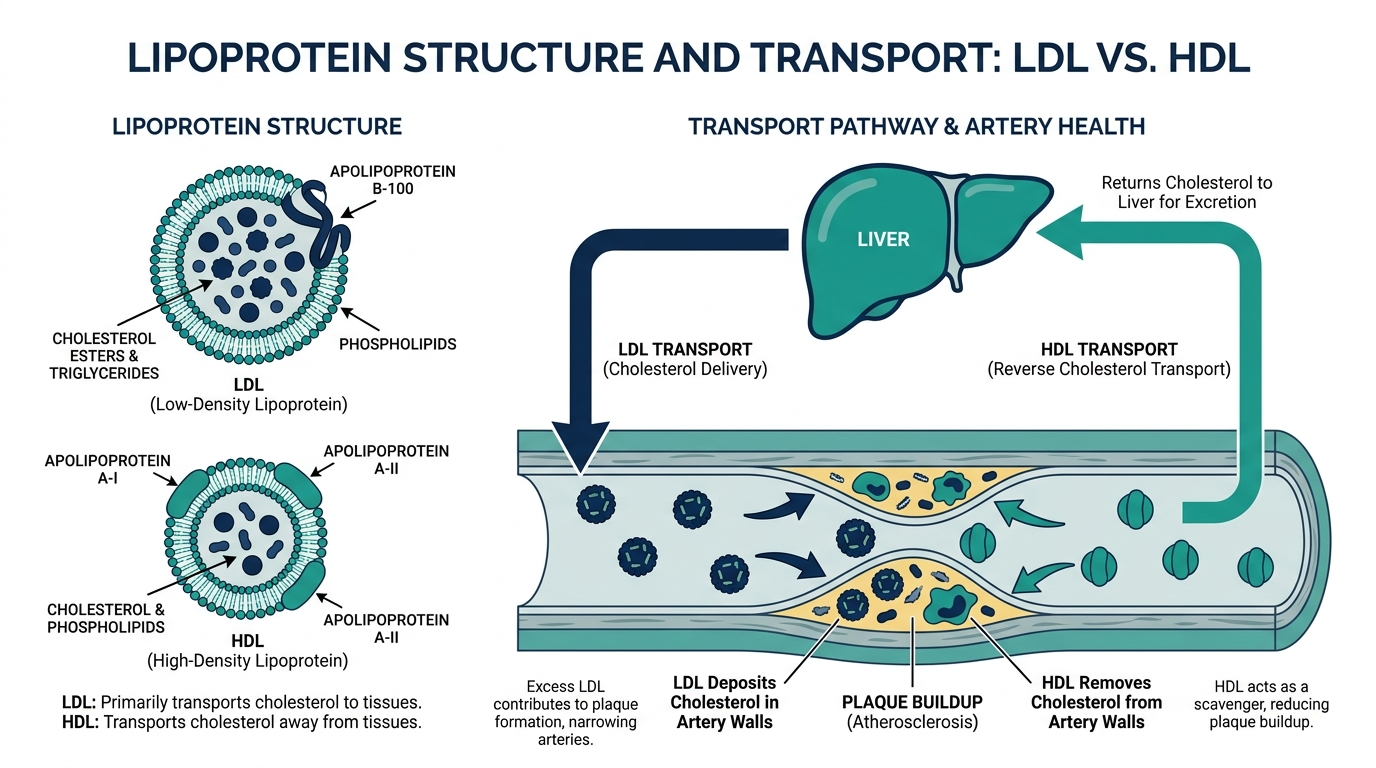
Cholesterol in a blood test is a measurement of the fatty substances (lipids) circulating in your blood, reported as a small panel rather than a single value. The test that produces it is called a lipid panel or lipid profile, and it measures the amount of cholesterol and triglycerides in your blood (Cleveland Clinic). So when people ask what blood test tests for cholesterol, the answer is the lipid panel, and what is cholesterol on a blood test really means is this group of related fat measurements read together.
Cholesterol itself is a waxy fat your body needs to build cell walls, make hormones, and produce vitamin D. The problem is not cholesterol existing. The problem is too much of the wrong kind sitting in your bloodstream, where it can build up inside artery walls. The panel exists to tell those kinds apart.

What blood test shows cholesterol levels, and what does it measure?
The blood test that shows cholesterol levels is the lipid panel, and it breaks your cholesterol into several distinct measurements instead of one lump sum. If you were wondering what blood test is for cholesterol or what blood test show cholesterol levels, this is it, and here is what each line means (MedlinePlus):
- Total cholesterol. The combined amount of all cholesterol in your blood. It is a rough headline, not a verdict.
- LDL cholesterol. Low-density lipoprotein, the so-called bad cholesterol. This is the one that builds up inside artery walls and drives heart attacks and strokes (Cleveland Clinic).
- HDL cholesterol. High-density lipoprotein, the good cholesterol. It helps carry LDL out of your bloodstream, so with this one, higher is better.
- Triglycerides. A separate type of blood fat. High levels add to cardiovascular risk and often travel with low HDL and metabolic problems.
- VLDL cholesterol. Very low-density lipoprotein, usually estimated from your triglycerides rather than measured directly, and it carries triglycerides through the blood (MedlinePlus).
That is the key idea. What blood tests for cholesterol actually deliver is a breakdown, and the breakdown is the whole point. A total cholesterol of 200 made mostly of protective HDL is a very different situation from a 200 stacked with LDL, even though the headline number is identical.
What is a normal cholesterol level on a blood test?
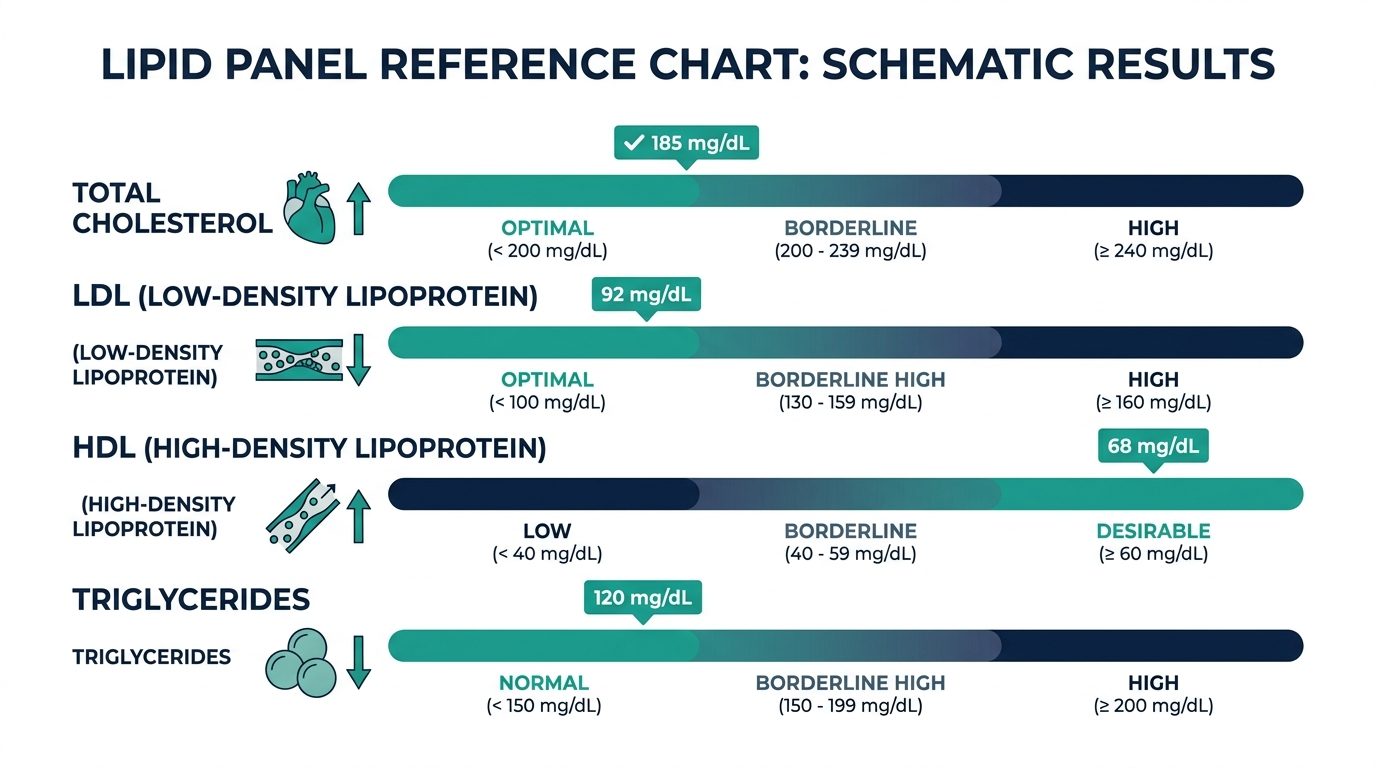
For most adults, the commonly cited targets are total cholesterol below 200 mg/dL, LDL below 100 mg/dL, HDL above 60 mg/dL, and triglycerides below 150 mg/dL (Cleveland Clinic). Total cholesterol is usually sorted into categories: under 200 mg/dL is desirable, 200 to 239 mg/dL is borderline high, and 240 mg/dL or above is high (MedlinePlus).
A few details change the picture. For people with diabetes, the LDL target is often tighter, below 70 mg/dL rather than below 100 (Cleveland Clinic). And the direction you want each number to move is not the same: with LDL, total cholesterol, and triglycerides, lower is generally better, but with HDL you want it higher. Always read your results against the reference range on your own report and against your personal risk, because targets are individualized.
What does high cholesterol on a blood test mean?
High cholesterol on a blood test usually means too much LDL, too many triglycerides, or both, and it signals that fatty deposits may be building up inside your arteries. A high total cholesterol level can lead to atherosclerosis, which raises your risk for heart attack and stroke (MedlinePlus). The condition of carrying too much fat in the blood is called hyperlipidemia, and it is common.
What makes high cholesterol genuinely dangerous is that it is almost completely silent. It causes no symptoms you can feel. There is no headache, no fatigue, no warning sensation that your LDL is climbing. The blood test is the only way most people will ever know, which is exactly why the lipid panel is a routine screening rather than something you order when you feel unwell. Common drivers include diet, inactivity, excess weight, diabetes, and conditions like hypothyroidism or liver disease (MedlinePlus).

What does low cholesterol on a blood test mean?
For LDL, lower is generally good news and reflects lower cardiovascular risk. The number you do not want to see low is HDL. An HDL under 40 mg/dL is considered low and is itself a risk factor for heart disease, because it means you have less of the lipoprotein that clears LDL out of circulation (MedlinePlus).
This is where the good and bad labels earn their keep. A low LDL is a win. A low HDL is a flag. If you only look at total cholesterol, you can miss a low HDL entirely, because a person with low HDL can still post a normal-looking total. Reading the components separately is the only way to catch it.
Why is LDL read together with HDL and triglycerides?
LDL rarely tells the full story alone, so clinicians read the whole panel together to judge the balance between cholesterol that harms your arteries and cholesterol that protects them. HDL helps remove LDL from your blood, which is why a strong HDL partially offsets a higher LDL, while a weak HDL makes the same LDL more worrying (MedlinePlus).
Triglycerides add a third dimension. High triglycerides often cluster with low HDL and elevated blood sugar, the metabolic pattern that quietly raises cardiovascular and pancreatic risk (Cleveland Clinic). Read together, the four numbers sketch a fuller portrait of your heart risk than any single value can. That is why a doctor cares less about your total cholesterol than about the mix underneath it.
The insider point: why your doctor may ignore your total cholesterol
Here is the detail that rarely makes it into the patient summary. Total cholesterol is the number patients fixate on and the number experienced clinicians weigh the least. The reason is simple arithmetic: total cholesterol is essentially LDL plus HDL plus a fraction of your triglycerides bundled together, so a high total can come from dangerous LDL or from protective HDL, and the headline cannot tell you which (Cleveland Clinic).
This produces two traps. The reassuring trap is a normal total cholesterol that hides a bad ratio, for example a person whose LDL is high but whose total looks acceptable because their HDL happens to be high too. The alarming trap is the opposite: someone with a high total cholesterol that is actually driven by an excellent, protective HDL, who gets scared by a number that is working in their favor.
What savvy clinicians look at instead is the breakdown and the ratios. Non-HDL cholesterol, which is total cholesterol minus HDL, captures all the cholesterol carried by the particles that clog arteries in one number, and many doctors consider it a better risk marker than total or even LDL alone. VLDL, estimated from triglycerides, fills in the rest (MedlinePlus). The practical lesson: when you read your own panel, do not stop at the top line. Scroll down to LDL, HDL, and triglycerides, because that is where the real signal lives.
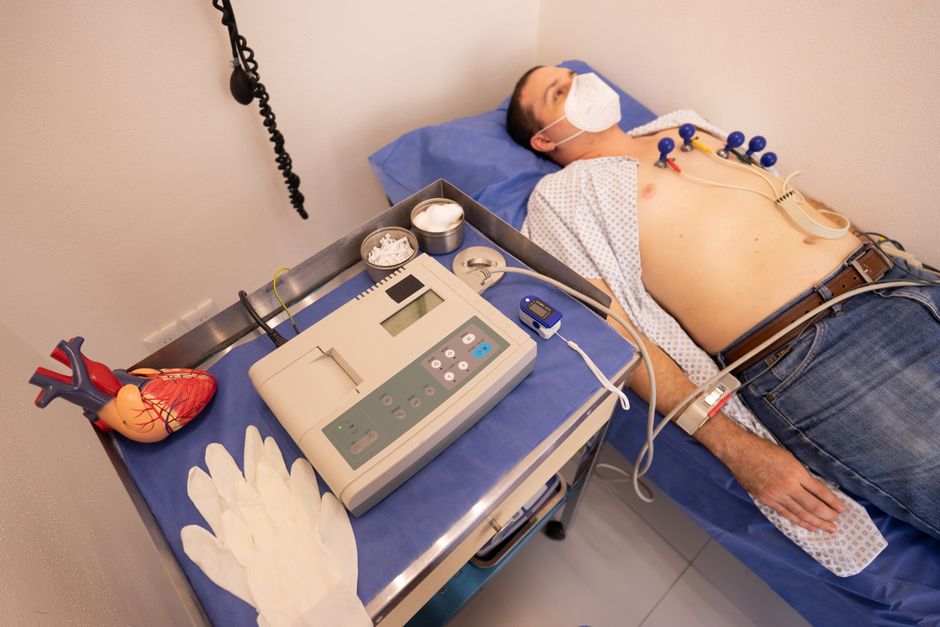
How should you prepare for a cholesterol blood test?
For the most accurate results, you may be asked to fast before the test. In most cases that means no food or drink except water for 9 to 12 hours beforehand, which is why cholesterol draws are often scheduled first thing in the morning (MedlinePlus). Cleveland Clinic notes a similar window of about 10 to 12 hours for a standard lipid panel, though some non-fasting versions exist (Cleveland Clinic).
Fasting matters most for triglycerides, which spike after a meal, so a recent meal can distort that number and the LDL estimate that depends on it. Follow the specific instructions your provider gives you, and tell them what medications you take, since some can affect lipid levels.
Beyond the standard panel: ApoB, Lp(a), and particle count
The classic lipid panel is a good start, but cardiology has moved toward measuring particles rather than just the cholesterol they carry. Two advanced markers, increasingly ordered when risk is unclear, sharpen the picture considerably.
ApoB (apolipoprotein B). Every atherogenic particle, the kind that lodges in artery walls, carries exactly one ApoB molecule on its surface. So measuring ApoB directly counts the number of harmful particles in your blood, rather than estimating the cholesterol packed inside them (Healthspan). This matters because two people can share the same LDL cholesterol while carrying very different numbers of particles. The one with more, smaller particles has more ApoB and more risk, even with an identical LDL number. Many specialists now regard ApoB as a better risk marker than LDL cholesterol alone.
Lp(a), or lipoprotein little a. This is a genetically determined particle that a standard panel does not report. It behaves like an unusually dangerous form of LDL. On a per-particle basis, Lp(a) has been estimated to be several times more atherogenic than ordinary LDL (JACC). Because its level is set largely by your genes and stays fairly stable through life, most guidance suggests measuring it at least once. A high Lp(a) can explain why someone with an otherwise reassuring lipid panel still has a strong family history of early heart disease.
The practical takeaway is that a normal standard panel does not always mean low cardiovascular risk. If you have a strong family history of early heart attacks or stroke, or your risk seems out of step with your ordinary numbers, ApoB and a one-time Lp(a) can reveal risk the basic four numbers miss.
Turning the numbers into action: lowering LDL and lifting HDL
Reading the panel is only half the value. The other half is knowing what actually moves each number. These are the levers with the strongest evidence, and they are worth discussing with your clinician before making changes.
- Cut saturated and trans fat. Saturated fat from fatty red meat, butter, and full-fat dairy raises LDL, and trans fat found in some processed foods raises LDL while lowering HDL. Swapping toward unsaturated fats from olive oil, nuts, and fish is one of the more reliable dietary moves for LDL.
- Add soluble fiber. Foods like oats, beans, lentils, apples, and psyllium bind cholesterol in the gut and modestly lower LDL over weeks.
- Move regularly. Aerobic activity most days of the week tends to raise HDL and lower triglycerides, and it improves the metabolic pattern behind many bad lipid profiles.
- Lose excess weight and limit added sugar and refined carbohydrate. This is the most effective route to lowering triglycerides and often nudges HDL upward as a bonus.
- Stop smoking and moderate alcohol. Smoking lowers HDL and damages arteries directly, so quitting helps the ratio and the vessels at once.
- Medication when warranted. For people at higher risk, statins and other lipid-lowering drugs can reduce LDL substantially. That is a decision to make with your clinician based on your overall risk, not the panel alone.
Triglycerides respond fastest, often within weeks of cutting sugar, alcohol, and refined carbohydrate. LDL responds more gradually to diet and much more sharply to medication. HDL is the stubbornest of the three and moves mainly with exercise, weight loss, and not smoking.

Worked examples: two identical totals, different risk
The whole reason to scroll past the top line is that identical totals can mean opposite things. These scenarios show how a clinician reasons through a panel.
Scenario one: total cholesterol 200, LDL 90, HDL 75, triglycerides 90. A genuinely good profile. The total is respectable and the components are all favorable, with a strong protective HDL. Little to worry about here.
Scenario two: total cholesterol 200, LDL 150, HDL 35, triglycerides 200. The same total, a very different story. High LDL, low HDL, and high triglycerides together form the classic higher-risk metabolic pattern. This person needs attention despite an unremarkable headline number.
Scenario three: total cholesterol 250 driven by an HDL of 90. A high total that is actually working in this person’s favor, because the excess is protective HDL. Fixating on the scary total would miss the point.
Scenario four: a reassuring panel but a strong family history of early heart attacks. This is the case for checking Lp(a) once, since a genetically high Lp(a) can carry risk the standard four numbers do not show.
Scenario five: LDL at target but a high ApoB. The particle count is higher than the cholesterol number suggests, meaning more small dense particles. The ApoB reveals risk the LDL alone underestimated.
Who should get a lipid panel, and how often
Because high cholesterol is silent, testing is the only way to find it, which is why it is a routine screening rather than a symptom-driven test. The right cadence depends on age and risk.
- Younger adults at low risk. Periodic screening every few years is a common approach, since a first check establishes a baseline even in your twenties or thirties.
- Middle-aged and older adults. More regular checks are typical, because cardiovascular risk climbs with age.
- Anyone with risk factors. Diabetes, high blood pressure, obesity, smoking, or a family history of early heart disease usually warrants more frequent testing, on a schedule your clinician sets.
- People on lipid-lowering treatment. Follow-up panels track whether the treatment is hitting its target, often within a few months of starting or changing a medication.
A one-time Lp(a) measurement is reasonable for most adults at some point, since it is largely genetic and stable, and it flags an inherited risk the rest of the panel cannot.
Common misconceptions about cholesterol
Few blood tests are as widely misunderstood as the lipid panel. Clearing up the frequent errors changes how you read your own report.
- “My total cholesterol is normal, so my heart is fine.” Not necessarily. A normal total can hide a high LDL offset by a high HDL, and it says nothing about Lp(a) or particle count. The components matter more than the sum.
- “All cholesterol is bad.” No. Your body needs cholesterol to build cells, make hormones, and produce vitamin D. HDL is protective, and you want it higher, not lower. The problem is excess LDL and triglycerides, not cholesterol existing.
- “High cholesterol comes only from eating cholesterol.” Dietary cholesterol has a smaller effect on blood LDL than saturated and trans fats do, and genetics, weight, activity, and conditions like hypothyroidism all play large roles.
- “I would feel it if my cholesterol were high.” You would not. High cholesterol is silent, which is exactly why the blood test exists as a screening tool.
- “One good panel means I never need to check again.” Lipids drift with age, weight, and lifestyle, so periodic rechecks matter, and treatment decisions rely on the trend, not a single snapshot.
How cholesterol shifts with age, sex, and menopause
Cholesterol is not a fixed trait, and reading your number without accounting for your stage of life can mislead you. In general, total and LDL cholesterol tend to rise gradually from young adulthood into middle age as metabolism slows and body composition changes. This is one reason a value that looked fine in your twenties can creep up by your forties even without an obvious change in diet. The trend is expected, but it is exactly why periodic testing matters, because a slow rise is easy to miss until it is well established.
Sex differences are pronounced and change over time. Before menopause, women typically have higher HDL and lower LDL than men of the same age, an advantage widely attributed to estrogen. That gap is part of why cardiovascular risk tends to show up later in women. Around and after menopause, the picture shifts: LDL and total cholesterol often rise, HDL may dip, and triglycerides can climb, so a woman’s lipid panel can change noticeably within a few years even with a stable lifestyle. A reading taken in your late forties may not represent your postmenopausal baseline, which is why rechecking through that transition is sensible.
The practical implication is to interpret your numbers as a moving story rather than a one time verdict. If you are a woman going through menopause, do not be alarmed by a modest rise in LDL, but do treat it as a prompt to look at the whole risk picture, including ApoB and blood pressure, rather than diet alone. If you are a man watching your LDL drift up through your thirties and forties, an earlier conversation about risk beats waiting for a single alarming result. In both cases, comparing this year’s panel to last year’s tells you far more than any isolated value, because direction and pace of change are what shape long term risk.
Frequently asked questions
What blood test tests for cholesterol?
The lipid panel, also called a lipid profile or cholesterol test. It measures total cholesterol, LDL, HDL, and triglycerides, and usually estimates VLDL, all from a single blood sample (Cleveland Clinic).
What is a normal cholesterol level on a blood test?
For most adults the usual targets are total cholesterol below 200 mg/dL, LDL below 100 mg/dL, HDL above 60 mg/dL, and triglycerides below 150 mg/dL, though personal targets vary by risk (Cleveland Clinic).
Do I need to fast for a cholesterol test?
Often yes. Many cholesterol tests ask you to fast for about 9 to 12 hours, taking only water, which is why they are usually done in the morning. Some non-fasting versions exist, so follow your provider’s instructions (MedlinePlus).
Is high cholesterol on a blood test dangerous?
It can be, because high total cholesterol or high LDL can lead to atherosclerosis and raise your risk of heart attack and stroke, and it causes no symptoms you can feel (MedlinePlus). The blood test is usually the only way to detect it.
Which cholesterol number matters most?
For risk, LDL, HDL, and triglycerides matter more than total cholesterol, which simply bundles them together. Non-HDL cholesterol, total minus HDL, is also a strong marker many clinicians prefer (MedlinePlus).
This article is for general educational purposes and is not medical advice. It cannot diagnose or treat you and does not replace your clinician. Always discuss your lab results and any health decisions with a qualified healthcare professional.
Vital Signs Today may earn a commission if you buy through links on this page. It does not affect our editorial assessments.