
- To raise hemoglobin, treat the underlying cause: most low hemoglobin is iron deficiency, and oral iron typically raises hemoglobin by about 2 g/dL within 4 to 8 weeks (American Society of Hematology).
- Eat more iron-rich foods such as lean meat, seafood, beans, and iron-fortified cereals, and pair plant (nonheme) iron with vitamin C foods to improve absorption (NIH Office of Dietary Supplements).
- See a doctor before taking iron supplements long term, because hemoglobin below 13.5 g/dL in men or 12.0 g/dL in women signals anemia that needs a diagnosis (Cleveland Clinic).
Low hemoglobin leaves you tired, short of breath, and pale because your blood carries less oxygen. The good news is that hemoglobin usually responds well once you find and fix the cause. Below is what counts as low, why it matters, and the evidence-based ways to bring it back up safely.
Part of our Complete Blood Count guide.
Most low hemoglobin comes from iron deficiency, so have you actually confirmed that’s your cause? One at-home Superpower draw checks 100+ biomarkers, physician-reviewed.
What counts as low hemoglobin?
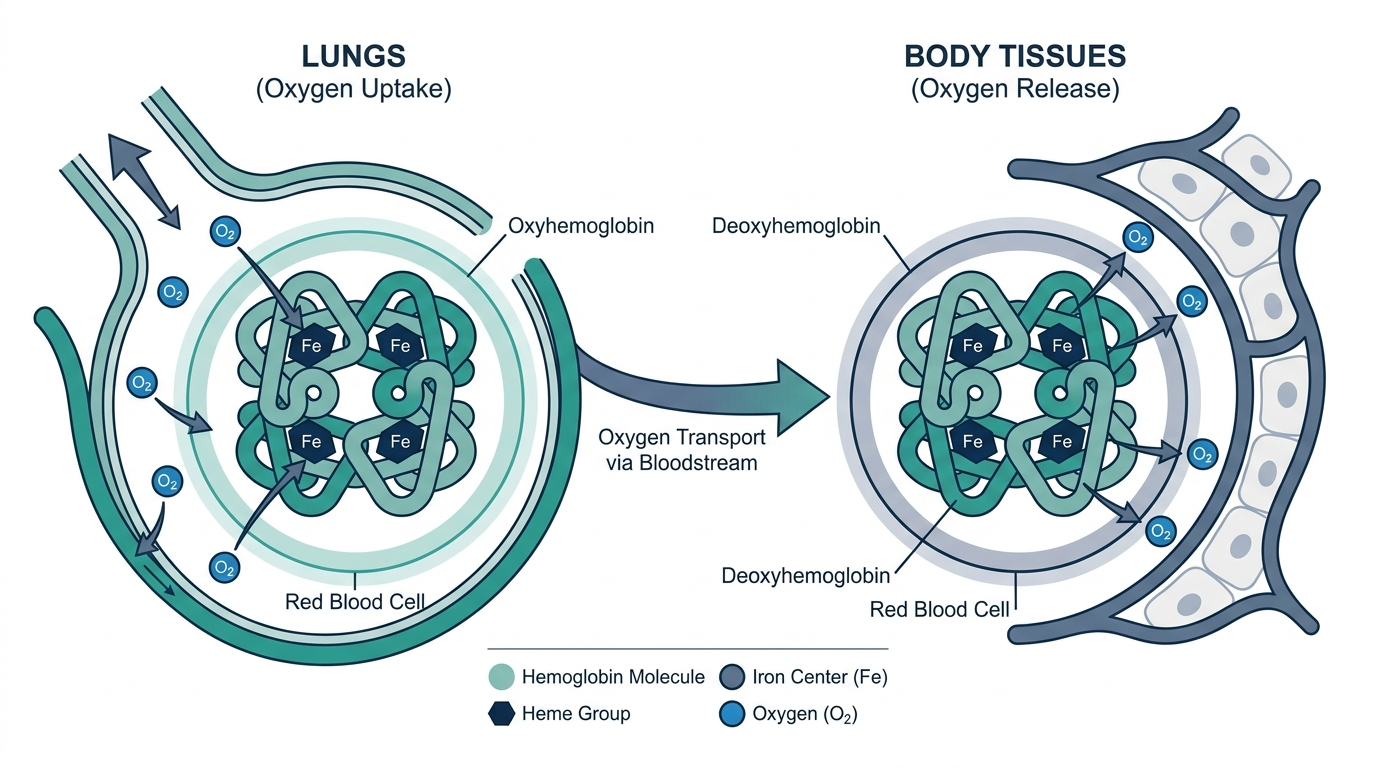
Hemoglobin is low when a blood test shows less than 13.5 g/dL in a man or less than 12.0 g/dL in a woman, the threshold the Cleveland Clinic uses to define anemia. Normal ranges run roughly 14.0 to 17.5 g/dL for men and 12.3 to 15.3 g/dL for women, so a result just under the cutoff is mild, while readings below 8 g/dL are considered severe.
A single low number is a starting point, not a diagnosis. Your clinician looks at hemoglobin alongside hematocrit, mean corpuscular volume (MCV), and ferritin (your iron store marker) to figure out the cause. Iron deficiency, the most common reason worldwide, usually produces small, pale red blood cells, while low vitamin B12 or folate tends to produce large ones. Pregnancy, heavy periods, gut bleeding, kidney disease, and chronic inflammation can all push hemoglobin down, and each needs a different fix.
How low, and how fast, changes what you feel
Two numbers can read the same on paper and feel completely different in the body, and the reason is speed. When hemoglobin falls slowly over weeks or months, the body adapts, and people sometimes function at surprisingly low levels with only vague fatigue. When it drops quickly, as with sudden blood loss, the same value can cause dizziness, a racing heart, and breathlessness because there was no time to adjust. This is why the treatment urgency depends not only on the number but on how fast it got there and how you feel. A hemoglobin of 9 g/dL that developed over months is handled very differently from a 9 g/dL after acute bleeding.
Sorting anemia by red cell size
The MCV on your report splits anemia into three families that each point at different causes, and this is often the fastest way to narrow the cause of a low hemoglobin.
- Microcytic, small cells: low MCV, typically iron deficiency or thalassemia. This is where a low ferritin confirms the iron story.
- Normocytic, normal-sized cells: normal MCV, seen with recent blood loss, anemia of chronic disease, and kidney disease.
- Macrocytic, large cells: high MCV, pointing toward vitamin B12 or folate deficiency, which is why iron alone will not fix it.
Reading hemoglobin next to MCV and ferritin is how a clinician avoids the common trap of handing out iron for an anemia that iron cannot touch. Hemoglobin tells you there is a problem, the indices tell you what kind.
What causes low hemoglobin?
The simplest way to actually get this done
Superpower is a full-body lab membership that runs 100+ biomarkers, has each result reviewed by a doctor, and tracks your numbers year over year (about $199/year). It is what we point readers to when they would rather get one clean, complete draw than chase single tests one at a time. Here is superpower reviewed in full.
Low hemoglobin comes down to the same three mechanisms behind most anemias: you are making too little, losing too much, or breaking cells down too fast. Naming the mechanism is what turns a vague low number into a clear plan.
- Reduced production: iron, B12, or folate deficiency starves the marrow of building blocks. Chronic inflammation, kidney disease with low erythropoietin, and marrow disorders also slow output.
- Blood loss: heavy menstrual bleeding and slow gastrointestinal bleeding from ulcers, polyps, or other lesions are leading causes, and they drain hemoglobin along with the iron locked inside it.
- Increased destruction: hemolysis breaks red cells down early, from autoimmune disease, inherited conditions like sickle cell disease, or certain drugs and infections.
- Dilution: pregnancy expands plasma volume and lowers hemoglobin without a true red cell shortage, a normal physiological drop rather than disease.
The reason this matters is practical. Iron helps a production problem caused by iron deficiency, does nothing for a B12 deficiency, and is beside the point if the real issue is a bleeding ulcer that needs to be found and treated.
Why raise it?
Raising hemoglobin matters because hemoglobin is the protein in red blood cells that carries oxygen from your lungs to every tissue. When levels drop, your body gets less oxygen, which is why anemia causes fatigue, weakness, dizziness, headaches, and a fast or pounding heartbeat (American Society of Hematology).
The effects go beyond feeling tired. Untreated anemia forces the heart to work harder to move oxygen, which over time can strain it. In pregnancy, low hemoglobin is linked to higher risks for both mother and baby. In older adults, anemia is associated with reduced strength and slower recovery from illness. Correcting hemoglobin restores energy and exercise capacity, but the deeper goal is to remove whatever is draining it. A man losing blood slowly from his gut will feel better on iron pills, yet the bleeding still needs to be found and stopped.
Evidence-based ways to raise hemoglobin
The proven path is to replace what your body is missing and stop ongoing losses, with oral iron as the first-line treatment for the most common cause, iron deficiency (Mayo Clinic). Below are four levers, ordered from everyday food to medical care.
Diet
Food supplies the raw materials for hemoglobin. There are two kinds of dietary iron: heme iron from meat and seafood, absorbed at roughly 15 to 35 percent, and nonheme iron from plants and fortified foods, absorbed at only about 2 to 20 percent (NIH Office of Dietary Supplements).
- Heme iron: lean red meat, poultry, fish, and shellfish such as oysters and clams.
- Nonheme iron: beans, lentils, chickpeas, tofu, spinach, and iron-fortified breakfast cereals and breads.
- Vitamin C pairing: citrus, bell peppers, tomatoes, and strawberries boost absorption of nonheme iron when eaten in the same meal.
- Folate and B12: leafy greens, legumes, eggs, dairy, and meat support red blood cell production alongside iron.
Avoid drinking tea or coffee with iron-rich meals, since their tannins block absorption.
Supplements
Oral iron supplements are the standard treatment for iron deficiency and typically raise hemoglobin by about 2 g/dL within 4 to 8 weeks (American Society of Hematology). Common forms are ferrous sulfate, ferrous gluconate, and ferrous fumarate, dosed in elemental iron.
Take iron on an empty stomach if you tolerate it, since food reduces absorption. Constipation, nausea, and dark stools are common, and some people do better taking iron every other day. Notably, a randomized trial found that iron taken with 200 mg of vitamin C raised hemoglobin no faster than iron taken alone, so an extra vitamin C pill is optional. For low vitamin B12 or folate, the supplement must match the deficiency, since iron will not fix those forms of anemia. Do not self-prescribe iron indefinitely, because too much iron is harmful.
Lifestyle
Lifestyle steps support recovery but do not replace treating the cause. The highest-impact habit is stopping hidden blood loss, for example managing heavy menstrual periods or treating ulcers, since the benchmark for successful iron treatment is a 2 g/dL hemoglobin rise in about three weeks (American Society of Hematology).
Beyond that, eat balanced meals that combine iron sources with vitamin C, space out calcium supplements and antacids from iron doses, and stay well hydrated so blood tests reflect your true level. Regular moderate exercise can gently stimulate red blood cell production over time, though it will not overcome an active deficiency. If you smoke or drink heavily, cutting back helps, since both can worsen nutrient absorption and overall blood health.
Medical treatment
When pills are not enough, clinicians use intravenous iron, treatment of the underlying disease, or in severe cases a blood transfusion (Mayo Clinic). IV iron is used when oral iron is not tolerated, not absorbed, or when hemoglobin must rise quickly, such as before surgery.
For anemia from chronic kidney disease, doctors may prescribe erythropoiesis-stimulating agents that signal the body to make more red cells (National Kidney Foundation). Vitamin B12 deficiency from poor absorption may require B12 injections rather than tablets. If bleeding is the driver, the source must be located and treated, which can mean an endoscopy or gynecologic care. These options are decided by a clinician based on your cause, severity, and how fast your hemoglobin needs to recover.
How long does it take?
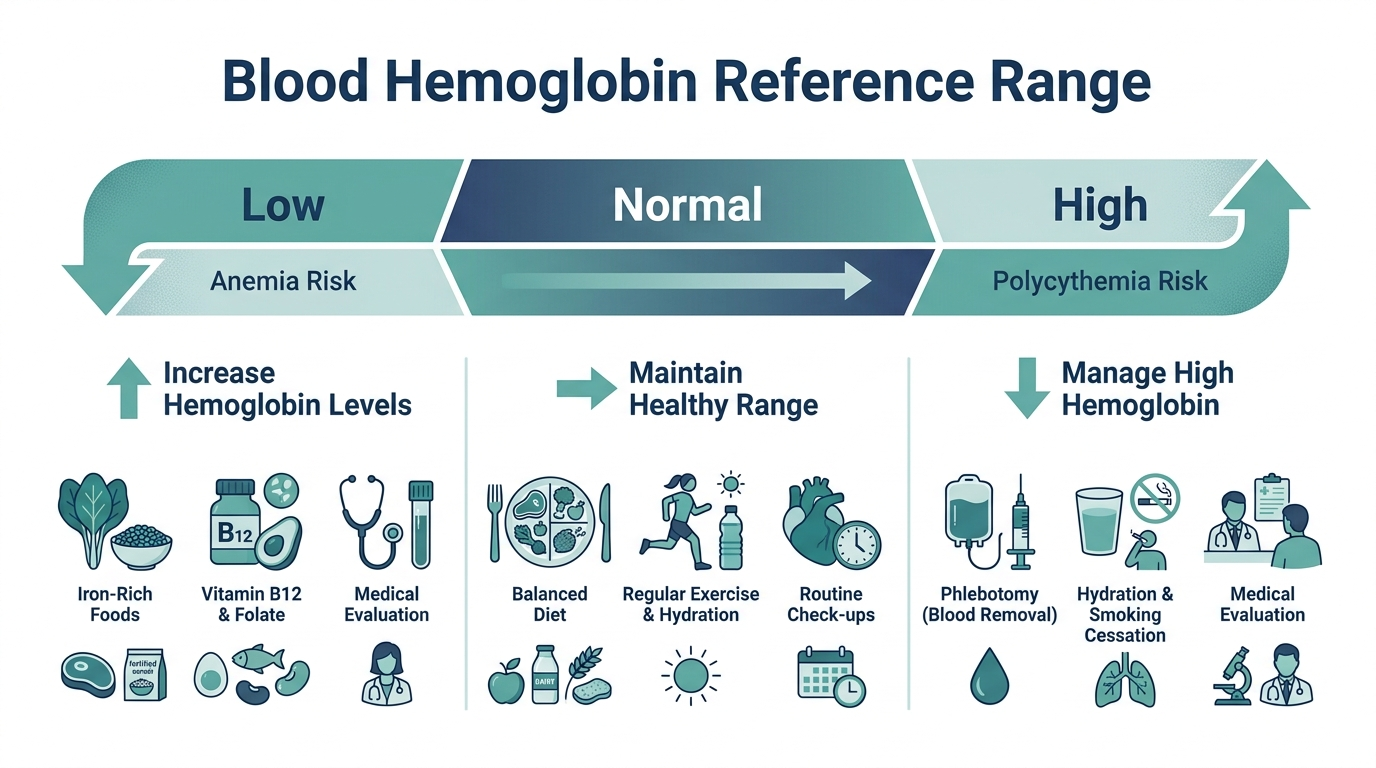
With oral iron for iron deficiency, hemoglobin usually rises by about 2 g/dL within 4 to 8 weeks, and levels are typically restored within about three months (American Society of Hematology). The first sign that treatment is working is a rise in young red blood cells (reticulocytes) within 3 to 7 days.
Replenishing your hemoglobin and rebuilding iron stores are two different timelines. Even after hemoglobin looks normal, your body needs to refill its ferritin reserves, which often takes another three to six months. That is why doctors usually advise continuing iron for several months after hemoglobin recovers. Speed also depends on the cause: a quick fix is possible with IV iron or transfusion, while anemia from ongoing bleeding or kidney disease improves only as that condition is controlled.
What can throw off the reading
Hemoglobin is measured as a concentration, so anything that changes your blood’s water content moves the number without changing the actual amount of hemoglobin you have. Dehydration concentrates the blood and can make hemoglobin look better than it is, while a large volume of intravenous fluids or overhydration can dilute it and read falsely low. Living at high altitude raises hemoglobin over time because thinner air drives the body to make more red cells, so a normal range at sea level is not the same as one in the mountains. Timing and posture cause smaller shifts. Because of all this, one borderline value is often rechecked, and clinicians read hemoglobin against your hydration, your symptoms, and the trend rather than a single snapshot.
A realistic scenario
Consider a 38-year-old woman with heavy periods, a hemoglobin of 10.5 g/dL, a low MCV, and a ferritin of 8 ng/mL. The small cells and empty iron stores make iron deficiency the clear cause. She starts oral iron, and her clinician looks at reticulocytes at about a week to confirm the marrow is responding, then rechecks hemoglobin at 4 to 8 weeks expecting a rise toward 2 g/dL. She keeps taking iron past the point where she feels better, because her ferritin still needs months to refill. In parallel, the heavy bleeding is managed, since without that the hemoglobin would only fall again. Contrast this with an older adult whose hemoglobin is low, whose MCV is high, and whose B12 is low: for him, B12 replacement, not iron, is the fix, and giving iron would waste months.
When to see a doctor
See a doctor any time a blood test shows hemoglobin below the anemia thresholds of 13.5 g/dL for men or 12.0 g/dL for women, or if you have symptoms like persistent fatigue, breathlessness, or a rapid heartbeat (Cleveland Clinic). Anemia is a sign, not a diagnosis, so the cause must be found.
Seek prompt care for chest pain, severe shortness of breath, fainting, or signs of bleeding such as black stools or very heavy periods, which can point to dangerous or rapid blood loss. Always check with a clinician before starting iron, because taking iron when you are not deficient can build up to toxic levels, and because the wrong supplement will not help anemia caused by B12 or folate deficiency. A simple blood panel guides the right treatment and confirms it is working.
Curious what your own levels look like?
Baseline 100+ biomarkers today and retest as life changes, all in one membership with physician review.
Frequently asked questions
What is the fastest way to raise hemoglobin?
The fastest medical options are intravenous iron or a blood transfusion, used for severe anemia or before surgery (Mayo Clinic). For everyday iron deficiency, oral iron plus an iron-rich diet is standard and raises hemoglobin by about 2 g/dL in 4 to 8 weeks.
Which foods raise hemoglobin the most?
Heme iron from lean red meat, poultry, fish, and shellfish is absorbed best, at roughly 15 to 35 percent (NIH Office of Dietary Supplements). Beans, lentils, spinach, and iron-fortified cereals add nonheme iron, especially when eaten with vitamin C foods.
Can I raise hemoglobin without supplements?
Mild cases sometimes improve with diet alone, but moderate to severe iron deficiency usually needs supplements because food rarely delivers enough iron fast enough. A clinician should confirm the cause first, since diet will not fix anemia from B12 or folate deficiency or active bleeding.
Does vitamin C help iron absorption?
Vitamin C improves absorption of nonheme (plant) iron when eaten in the same meal (NIH Office of Dietary Supplements). However, a randomized trial found adding a 200 mg vitamin C pill to iron supplements did not raise hemoglobin faster than iron alone.
How long should I take iron supplements?
Hemoglobin often recovers within about three months, but doctors usually advise continuing iron for several more months to rebuild iron stores, which can take three to six months total (American Society of Hematology). Follow your clinician’s plan and recheck your blood.
What is the difference between hemoglobin and hematocrit?
Hemoglobin measures the oxygen-carrying protein in your blood, while hematocrit measures the percentage of blood volume made of red cells. They usually move together, and hematocrit runs roughly three times the hemoglobin value. Clinicians read both because a mismatch can signal unusually small cells or a lab artifact.
Why is my hemoglobin low even though I eat iron-rich foods?
Diet can fall short for several reasons: ongoing blood loss such as heavy periods outpacing intake, poor absorption from conditions like celiac disease or acid-suppressing medication, or an anemia that iron cannot fix, such as a B12 or folate deficiency. If your diet is solid but hemoglobin stays low, that is a reason to test the cause rather than simply eat more iron.
Can low hemoglobin cause a fast heartbeat?
Yes. With less hemoglobin to carry oxygen, the heart compensates by beating faster and harder to move what oxygen there is, which is felt as a racing or pounding heartbeat, especially with exertion. This usually eases as hemoglobin recovers, but a new fast heartbeat with breathlessness or chest pain deserves prompt medical attention.
Sources
- Cleveland Clinic, Low Hemoglobin: Causes, Signs and Treatment
- American Society of Hematology, Anemia
- Blood (ASH), So you know how to treat iron deficiency anemia
- Mayo Clinic, Iron deficiency anemia: Diagnosis and treatment
- NIH Office of Dietary Supplements, Iron Fact Sheet for Health Professionals
- NHLBI (NIH), Iron-Deficiency Anemia
This article is for general educational purposes and is not medical advice. It cannot diagnose or treat you and does not replace your clinician. Always discuss your lab results and any health decisions with a qualified healthcare professional.
Related: best GLP-1 telehealth providers for 2026.
Vital Signs Today may earn a commission if you buy through links on this page. It does not affect our editorial assessments.