
- To lower high potassium, cut back on high-potassium foods (aim for roughly 2,000 to 3,000 mg of potassium per day), avoid salt substitutes, boil potatoes and root vegetables in plenty of water to leach out up to 73% of their potassium, and ask your clinician whether a medication is causing the rise.
- A blood potassium above 5.0 to 5.2 mEq/L is considered high (hyperkalemia), and the most reliable way to bring it down for good is to treat the underlying cause, such as kidney disease, medication effects, or dehydration, under medical supervision.
- Severe hyperkalemia (above 6.0 to 7.0 mEq/L) can trigger dangerous heart rhythm changes and is a medical emergency that needs same-day treatment, not diet changes, so any very high reading should be confirmed and acted on immediately.
High potassium, or hyperkalemia, is one of those lab results that rarely causes symptoms until it becomes dangerous. The good news is that for most people the level can be brought down with a combination of dietary changes, a review of current medications, and treating whatever is driving it up. The catch is that potassium control is not a do-it-yourself project when levels are high, because the same mineral that helps your muscles and heart work can also stop your heart if it climbs too far.
Part of our Comprehensive Metabolic Panel guide.
Cutting potassium-rich foods is a big diet change, so do you actually know your current potassium level? One at-home Superpower draw checks 100+ biomarkers, physician-reviewed.
What counts as high potassium?
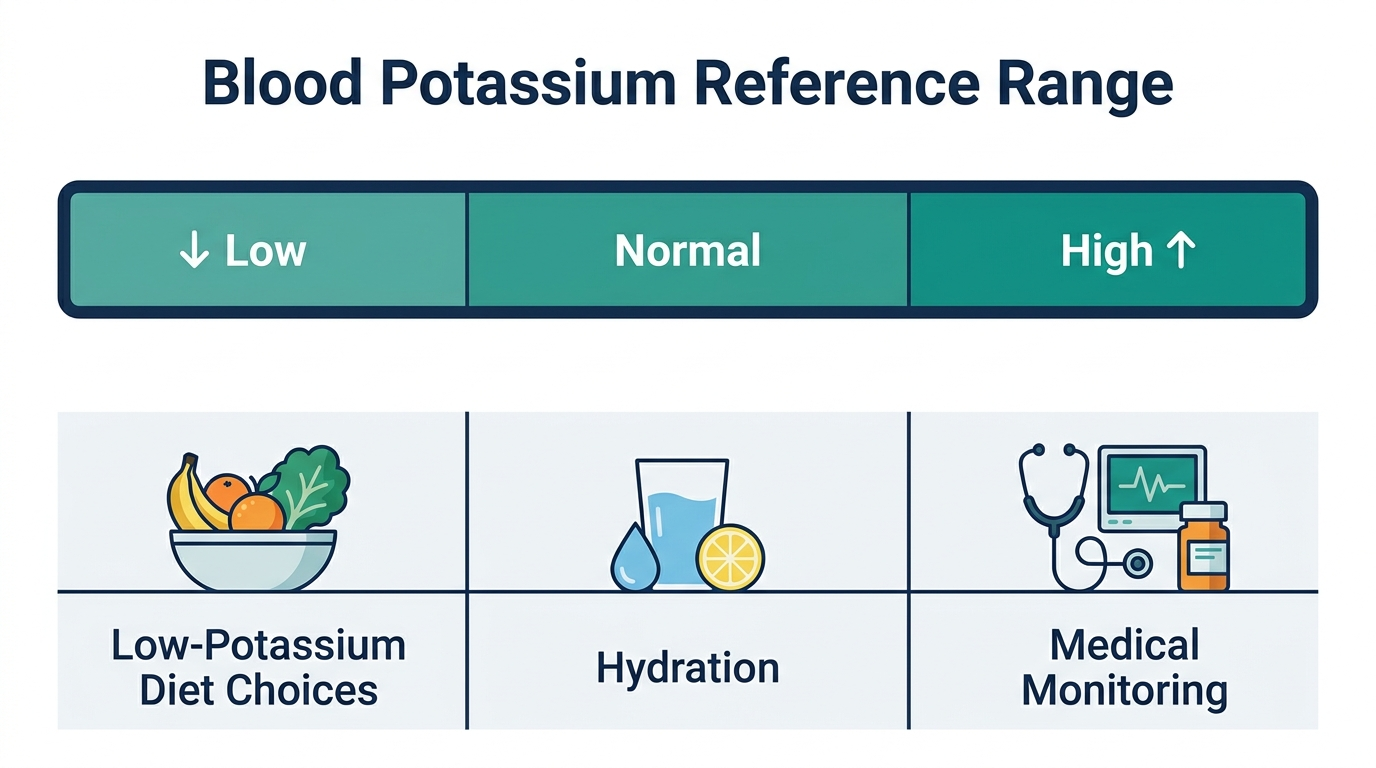
A blood potassium level above roughly 5.0 to 5.2 mEq/L is classified as hyperkalemia, since the normal adult range runs about 3.5 to 5.2 mEq/L (Cleveland Clinic). Clinicians grade it by severity: 5.1 to 6.0 mEq/L is mild, 6.1 to 7.0 mEq/L is moderate, and anything above 7.0 mEq/L is severe (NCBI StatPearls).
One important nuance: the rate of change often matters more than the exact number. People with chronic kidney disease may feel fine at higher readings because their bodies adapt slowly, while a fast, acute rise can cause serious symptoms at a lower level (NCBI StatPearls). A single high result can also be a false alarm called pseudohyperkalemia, caused by red blood cells breaking open in the test tube, so an unexpected high value is often rechecked before treatment begins.
A quick word on units and regulation. Most labs report potassium in mEq/L, and for potassium the value in mmol/L is the same number, so 5.4 mEq/L equals 5.4 mmol/L. There is no separate optimal band the way there is for glucose or cholesterol. The goal is simply to sit inside the normal range, roughly 3.5 to 5.0 mEq/L, because both ends of the scale are dangerous. Low potassium disturbs heart rhythm just as high potassium does.
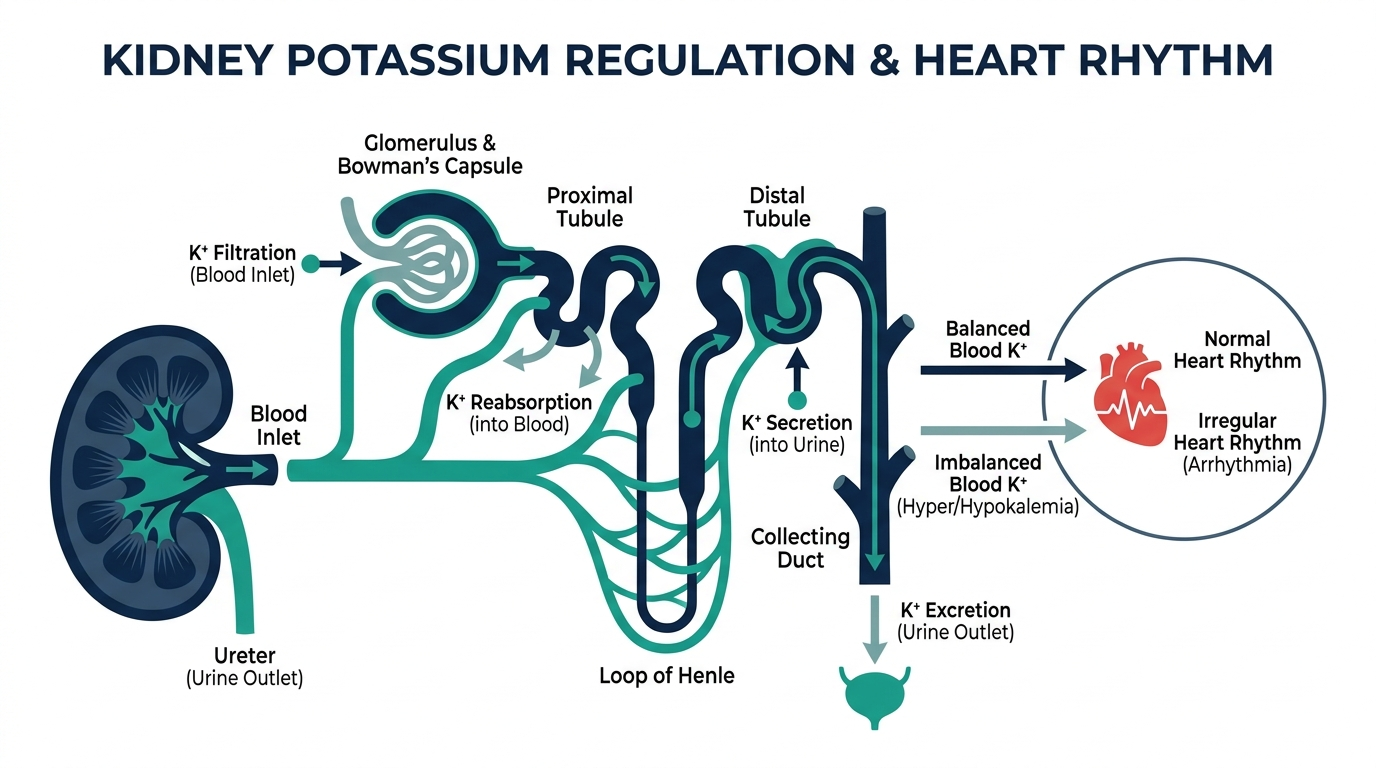
Your body guards that range tightly. The kidneys handle about 90% of potassium removal, and the hormone aldosterone tells them how much to excrete. Insulin and adrenaline also push potassium from the blood into cells for short-term control. When any part of that system falters, whether it is failing kidneys, a missing hormone, or a medication that blocks the signal, potassium can climb. Knowing which part is off is what turns a scary number into a fixable one.
Why lower it?
Potassium needs to stay in a narrow band because it controls the electrical signals that fire your heart and skeletal muscles. When it rises too high, those signals misfire, which is why severe hyperkalemia can produce muscle weakness, an irregular pulse, and in the worst case a cardiac arrest (Cleveland Clinic).
The danger is that symptoms are quiet until they are not. Many people have no warning signs at all, and noticeable symptoms typically appear only once levels reach about 6.5 to 7.0 mEq/L (NCBI StatPearls). Because the heart effects can escalate quickly and without obvious cues, treating high potassium is about preventing a rhythm emergency, not just normalizing a number on a report.
The simplest way to actually get this done
Superpower is a full-body lab membership that runs 100+ biomarkers, has each result reviewed by a doctor, and tracks your numbers year over year (about $199/year). It is what we point readers to when they would rather get one clean, complete draw than chase single tests one at a time. Here is superpower reviewed in full.
What causes high potassium?
Hyperkalemia is a signal, and the useful question is always what is driving it. The causes cluster into three groups: the kidneys are not clearing potassium, potassium is leaking out of cells into the blood, or intake is high in someone who cannot excrete the excess.
- Reduced kidney function: this is the most common driver. Chronic kidney disease and acute kidney injury both cut the body’s ability to excrete potassium, so it accumulates.
- Medications: ACE inhibitors, ARBs, potassium-sparing diuretics like spironolactone, and NSAIDs all reduce potassium excretion. They are a frequent hidden cause in people whose diet has not changed.
- Low aldosterone: conditions like Addison’s disease lower the hormone that tells the kidneys to dump potassium.
- Uncontrolled diabetes: without enough insulin, potassium shifts out of cells and into the blood, so a high potassium and a high glucose often appear together.
- Tissue breakdown: severe burns, crush injuries, and the muscle breakdown called rhabdomyolysis release large amounts of potassium from damaged cells.
- Acidosis: when blood becomes too acidic, potassium moves out of cells to make room for hydrogen ions, raising the blood level.
Diet alone rarely causes hyperkalemia in a person with healthy kidneys, because a working system simply excretes the extra. High intake becomes a problem mainly when one of the factors above is already limiting removal. That is why treating the cause, not just the plate, is the durable fix.
What can throw off a potassium reading?
Potassium is one of the most commonly falsely elevated results in the lab, a situation called pseudohyperkalemia. Before anyone treats a high number, it is worth checking whether the sample itself was the problem:
- Fist clenching during the draw: repeatedly pumping your fist while the needle is in releases potassium from forearm muscles and can raise the result.
- A tight or prolonged tourniquet: leaving it on too long has the same effect.
- Hemolysis: if red blood cells rupture in the tube, they spill potassium into the sample. This is the most common cause of a false high, and labs often flag a hemolyzed specimen.
- Delayed or cold processing: if the tube sits too long or gets chilled before testing, potassium leaks out of the blood cells.
- Very high platelet or white cell counts: these can release potassium as the sample clots, so a serum value reads higher than the true level.
This is why an unexpected high potassium in someone who feels well and has normal kidneys is usually rechecked with a fresh, carefully drawn sample before any treatment starts. If your reading was high but you had no symptoms, ask whether the draw could be repeated.
Evidence-based ways to lower potassium
The proven strategies fall into three buckets: adjust your diet, fix lifestyle and medication factors, and use medical treatments when those are not enough. A low-potassium eating plan generally targets about 2,000 to 3,000 mg of potassium per day, compared with the higher intake many people get from a typical diet (National Kidney Foundation).
Diet changes
Diet is the first lever for chronic, mild hyperkalemia. The National Kidney Foundation considers a food low in potassium if it has 200 mg or less per serving, and a structured plan limits high-potassium foods rather than banning all of them (National Kidney Foundation).
- Limit the biggest sources: potatoes, tomatoes, oranges and orange juice, bananas, avocados, dried fruit, beans, and dairy are common high-potassium foods to cut back on.
- Watch portion size: even a low-potassium food becomes a high-potassium meal in a large serving, so the plan controls amounts, not just choices.
- Leach your vegetables: boiling potatoes and root vegetables in a large amount of water pulls a substantial share of the potassium into the water, which you then discard. Boiling can remove up to about 73% of the potassium from a potato (ScienceDirect, leaching study).
- Avoid salt substitutes: “lite” or “no-salt” seasonings usually replace sodium with potassium chloride, which can spike your level fast (National Kidney Foundation).
The swaps matter as much as the cutbacks. A low-potassium plate is easier to sustain when you trade high-potassium foods for lower ones rather than just removing them: apples, berries, and grapes instead of bananas and oranges; white rice or pasta instead of potatoes; cauliflower or green beans instead of tomato sauce and spinach. That way meals stay satisfying and you are less likely to abandon the plan.
Watch the hidden sources too. Coconut water, sports drinks, and many low-sodium processed foods carry surprising amounts of potassium, and food labels increasingly list potassium chloride as an additive in deli meats and packaged meals. If you double-boil vegetables, cutting them small first and changing the water once during cooking, you leach out even more potassium than a single boil. Portion discipline is the quiet key: a small serving of a high-potassium food can be safer than a large serving of a moderate one.
Lifestyle and medication factors
Many cases of high potassium are driven not by food but by medications and fluid balance, so reviewing those often does more than diet alone. Several common drug classes raise potassium, including ACE inhibitors, ARBs, potassium-sparing diuretics like spironolactone, and NSAIDs (NCBI StatPearls).
Do not stop a prescribed medication on your own. Instead, bring your full list, including over-the-counter pain relievers and supplements, to your clinician so the dose can be adjusted safely. Staying adequately hydrated also helps, because dehydration concentrates potassium and reduces the kidneys’ ability to clear it. If you take a potassium supplement that was prescribed for a different reason, that is an obvious thing to flag.
Medical treatments
When diet and medication review are not enough, doctors use potassium binders that trap potassium in the gut so it leaves in stool. Two newer binders, patiromer and sodium zirconium cyclosilicate (Lokelma), are now preferred for chronic control, with sodium zirconium cyclosilicate able to lower potassium within about 48 hours (Tandfonline, evidence-based review).
The older binder sodium polystyrene sulfonate (Kayexalate) is now used less because of serious risks, including a rare but severe bowel injury called colonic necrosis (Tandfonline, evidence-based review). For a dangerous acute rise, emergency care moves faster, using intravenous calcium to protect the heart plus insulin with glucose to shift potassium into cells, and sometimes dialysis. These are hospital treatments, not home options.
How potassium connects to your other numbers
Potassium rarely tells its story alone, which is why it sits on the same basic and comprehensive metabolic panels as several related markers. The first place a clinician looks after a high potassium is your kidney numbers: creatinine, blood urea nitrogen, and estimated glomerular filtration rate. If those show reduced kidney function, you have likely found the reason potassium is not being cleared.
Two other companions matter. Bicarbonate, sometimes reported as CO2, reflects acid balance, and a low value points to the acidosis that drives potassium out of cells. Magnesium is the quiet partner: when magnesium is low, the body struggles to correct potassium no matter what you do, so clinicians often check and replace it alongside. Sodium and glucose fill in the metabolic picture, since uncontrolled diabetes and fluid shifts move potassium around. Reading these together is how a single flagged value becomes an actual diagnosis, and it is a strong argument for looking at a full panel rather than one isolated number.
How fast can it change?
It depends on the method. Emergency drugs that shift potassium into cells, such as insulin with glucose or inhaled albuterol, start working within minutes, while binders that remove potassium from the body act over hours to days, with sodium zirconium cyclosilicate lowering levels within about 48 hours (Tandfonline, evidence-based review).
Diet changes work the slowest and steadiest. Cutting high-potassium foods does not rescue a dangerously high level today, but it helps keep a chronically borderline level in range over weeks. That is the key distinction: shifting potassium into cells buys time, removing it solves the problem, and diet maintains the gain. A high level should always be rechecked by blood test rather than assumed to have dropped.
A realistic example helps. Imagine a routine panel shows potassium at 5.4 mEq/L with no symptoms. Your clinician first rechecks the draw to rule out a false high, then reviews your medication list and finds you are on an ACE inhibitor and an occasional NSAID. Stopping the NSAID, adjusting the dose, trimming the highest-potassium foods, and rechecking in one to two weeks often brings a mild elevation back into range without any dramatic intervention. A moderate or severe reading, by contrast, is handled the same day in a clinic or emergency department, not with a diet plan.
When do you need medication or a doctor?
You need medical attention any time potassium is high, and you need it urgently when the level is moderate to severe, above about 6.0 mEq/L, or when there are symptoms or ECG changes, because that range carries a real risk of life-threatening heart rhythms (NCBI StatPearls).
Call your clinician promptly for any high reading, and treat a very high result or symptoms like a pounding or irregular heartbeat, severe muscle weakness, numbness, or trouble breathing as an emergency. Diet is a maintenance tool for mild, chronic elevation; it is not a substitute for medical care when the number is high. People with kidney disease, diabetes, or heart failure, and anyone on the medications listed above, should have their potassium monitored on the schedule their clinician sets rather than waiting for symptoms.
Turn what you just learned into action.
Superpower lets you test 100+ biomarkers from home, then re-check them over time so you can actually see progress, physician-reviewed at every step.
Frequently asked questions
What is the fastest way to lower potassium at home?
There is no safe fast home fix for high potassium. At home you can only help over time by avoiding high-potassium foods and salt substitutes and staying hydrated. A high level that needs quick lowering requires medical treatment, so call your clinician rather than self-treating.
Does drinking water lower potassium?
Staying hydrated helps your kidneys clear potassium and prevents dehydration from concentrating it, but water alone will not correct a truly high level. It supports normal potassium handling rather than acting as a treatment for hyperkalemia.
What foods should I avoid with high potassium?
Common high-potassium foods to limit include potatoes, tomatoes, bananas, oranges and orange juice, avocados, dried fruit, beans, and dairy. Also avoid salt substitutes, which often contain potassium chloride and can raise your level quickly (National Kidney Foundation).
Can high potassium go back to normal on its own?
Mild hyperkalemia can resolve when the cause is fixed, such as adjusting a medication or correcting dehydration. It will not reliably normalize on its own if an ongoing issue like kidney disease is driving it, which is why follow-up testing matters.
Do bananas really cause high potassium?
Bananas are high in potassium, but for people with healthy kidneys they do not cause hyperkalemia because the kidneys excrete the excess. They become a concern mainly when kidney function is reduced or certain medications limit potassium removal.
Why is my potassium high if I feel fine?
That is common. High potassium usually causes no symptoms until it becomes severe, often around 6.5 to 7.0 mEq/L, so a mildly high reading on a routine panel can feel like nothing at all. Feeling well does not mean the number is safe to ignore, because the heart effects can appear suddenly, which is why any high result should be confirmed and reviewed.
What medications raise potassium?
The most common are ACE inhibitors and ARBs used for blood pressure, potassium-sparing diuretics like spironolactone, and NSAIDs such as ibuprofen. Potassium supplements and some salt substitutes add to the load. Never stop a prescribed medication on your own; instead, bring the full list to your clinician so the dose can be adjusted safely.
Can dehydration cause high potassium?
It can contribute. Dehydration reduces blood flow to the kidneys and concentrates the blood, both of which make it harder to clear potassium. Rehydrating helps the kidneys excrete the excess, though it is a supporting step rather than a treatment for a truly high level.
Sources
- Cleveland Clinic, Hyperkalemia (High Potassium)
- NCBI StatPearls, Hyperkalemia
- National Kidney Foundation, Potassium in Your CKD Diet
- ScienceDirect, Removal of Potassium From Tuberous Root Vegetables by Leaching
- Tandfonline, Clinical utility of patiromer, sodium zirconium cyclosilicate, and sodium polystyrene sulfonate for hyperkalemia
This article is for general educational purposes and is not medical advice. It cannot diagnose or treat you and does not replace your clinician. Always discuss your lab results and any health decisions with a qualified healthcare professional.
Related: best GLP-1 telehealth providers for 2026.
Vital Signs Today may earn a commission if you buy through links on this page. It does not affect our editorial assessments.