
Last updated 18 June 2026. Educational content, not medical advice. Most GH peptides sold online are labeled “for research use only” and are not approved for human use. Talk to a licensed clinician before starting any hormone-adjacent therapy.
Short answer: The FDA-approved ones, tesamorelin and sermorelin, have genuine clinical trial safety data. For the grey-market stack (CJC-1295 plus ipamorelin), the clinical picture is limited to small trials from 1999 and 2006, a real IGF-1 elevation risk, and a contamination problem so severe that a 2025 Finnrick analysis found 8% of research-grade peptide vials contained detectable endotoxin, with some batches exceeding the fever-inducing threshold of 400 EU per injection. The answer is not a binary yes or no. It is: which peptide, from which source, monitored how closely, in whose hands.
Growth hormone peptide safety depends heavily on monitoring, and that starts with knowing your own bloodwork. One at-home Superpower draw checks 100+ biomarkers, physician-reviewed.
What are growth hormone peptides, exactly?
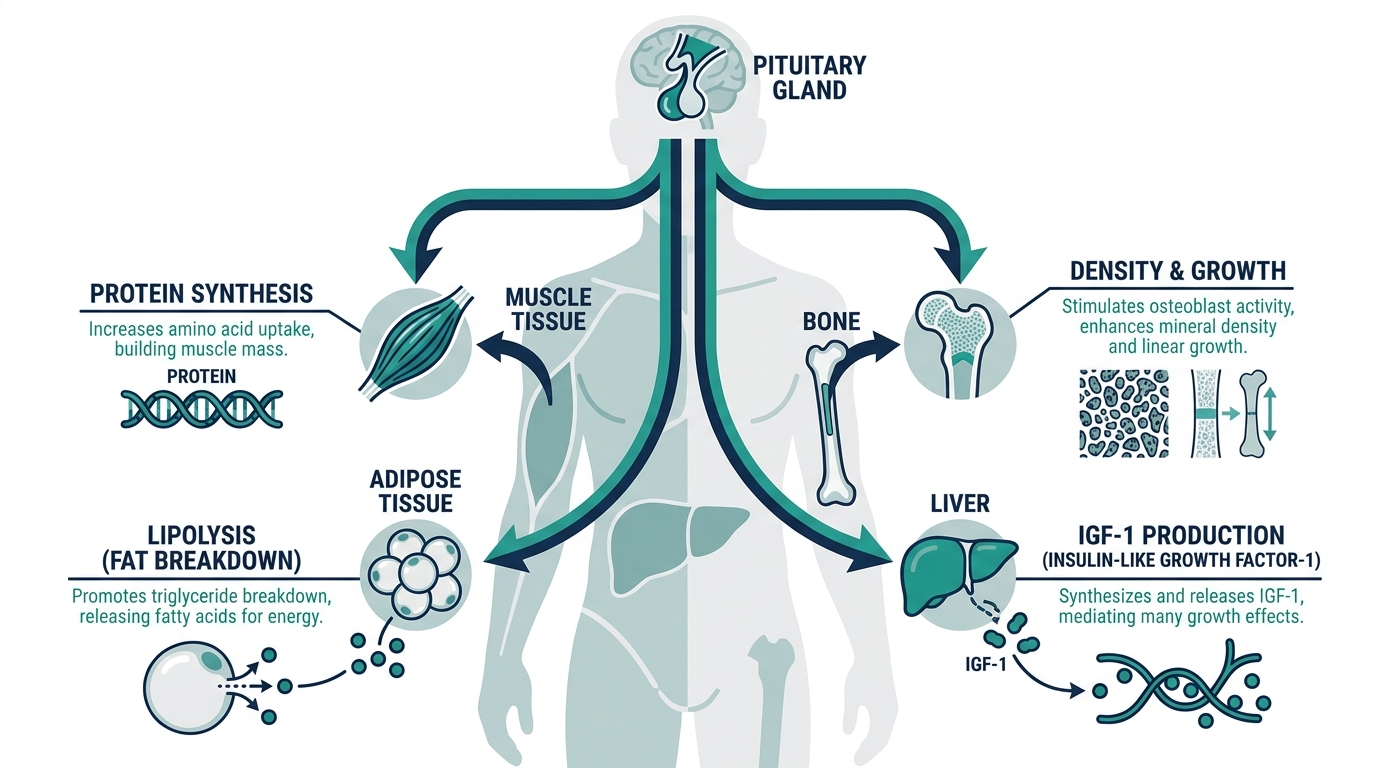
Before the safety question can be answered honestly, it helps to know what you are actually taking. “Growth hormone peptide” describes two distinct mechanism classes that people often blur together.
The first class is growth hormone-releasing hormones (GHRHs): sermorelin and CJC-1295 are synthetic versions of GHRH, the signal your hypothalamus naturally sends to tell your pituitary to release growth hormone. They work with your own physiology, nudging an existing pulse rather than flooding the system.
The second class is growth hormone-releasing peptides (GHRPs) or ghrelin mimetics: ipamorelin, GHRP-2, and GHRP-6 work through the ghrelin receptor, a different switch that also triggers GH release from the pituitary. They tend to produce a sharper, faster GH spike than GHRHs alone, which is why the two classes are frequently stacked together.
MK-677 (ibutamoren) is a third-category ghrelin mimetic taken orally rather than injected. It is not a peptide technically, but it lands in almost every GH peptide discussion because it targets the same receptor as the GHRPs.
The unifying effect: all of them elevate growth hormone and, downstream, IGF-1 (insulin-like growth factor 1). That downstream elevation is where most of the genuine safety concerns live.
Full-body lab membership: 100+ biomarkers, doctor-reviewed, tracked over time.
Why does the safety question matter more right now?
The regulatory ground shifted twice in 2026 in ways that change the risk calculus.
First, on February 27, 2026, HHS Secretary RFK Jr. announced that 14 peptides previously banned from compounding in 2023 were being moved back toward Category 1 (legal for compounding pharmacies), with a Pharmacy Compounding Advisory Committee (PCAC) review set for July 23 to 24, 2026. Among those 14 are CJC-1295, ipamorelin, GHRP-2, GHRP-6, and sermorelin (FDA bulk substances list).
That is genuinely significant. If the PCAC review goes as signaled, the legitimate clinical route for GH secretagogues, through a licensed telehealth physician and a named compounding pharmacy, becomes the same price as the grey-market vial route, and dramatically safer. The entire logic of self-sourcing a research-chem peptide and reconstituting it yourself weakens by the month.
Second, the crackdown that took down Peptide Sciences and Science.bio in early 2026 did not just remove those two companies. It removed the social proof infrastructure that made grey-market peptides feel safe. The community consensus that “vendor X is legit because 1,000 forum posts say so” turned out to be worthless the moment Finnrick’s batch-level testing revealed that even the most trusted vendor was shipping retatrutide with purity as low as 75% in the final months before shutdown.
The unsettling implication: if the best-reviewed vendor in the space was shipping at 75% purity, the average vendor’s quality floor is lower than the forum consensus ever acknowledged.
What does the real clinical safety data show?
The honest framing here is that the GH peptide class has a wide clinical evidence spectrum, and where a specific peptide lands on that spectrum matters enormously.
Tesamorelin: the only one with Phase III data
Tesamorelin (brand name Egrifta SV) is the only growth hormone secretagogue with FDA approval for a body composition endpoint. The pivotal LIPO-010 trial (Falutz et al., New England Journal of Medicine, 2007, n=412) demonstrated a 15.2% reduction in visceral adipose tissue versus a 5.0% increase in the placebo group over 26 weeks (p less than 0.001), with improvements in triglycerides and total cholesterol to HDL ratio (PubMed).
That approval means we have actual documented adverse event rates, not just forum anecdotes. Known side effects in the trials included injection site reactions, peripheral edema, arthralgia (joint pain), and modest IGF-1 elevation. The FDA label explicitly warns against use in patients with active malignancy, pregnancy, or pituitary tumor.
Tesamorelin is what “growth hormone peptide with clinical evidence” actually looks like. Everything else in this class is operating at a significantly lower rung of proof.
Sermorelin: approved history, real safety profile
Sermorelin (brand name Geref) was FDA-approved in 1997 for growth hormone deficiency in children, making it the second-longest-standing clinical record in this class. That approval was withdrawn in 2008, not for safety reasons, but because the manufacturer voluntarily discontinued the product when FDA-approved recombinant HGH captured the market.
The documented safety profile from the original approval and subsequent compounding experience is meaningful. Compared to direct synthetic HGH injection, sermorelin produces lower IGF-1 peaks, fewer episodes of significant water retention, and lower rates of carpal tunnel syndrome, because it works through the pituitary’s natural release mechanism rather than bypassing it entirely (Healthon).
The most common side effects reported in clinical use are injection site redness (around 10 to 17% of users), transient headache, flushing, and mild water retention during the first 4 to 8 weeks as the body adjusts. Carpal tunnel-type symptoms, caused by fluid retention compressing the median nerve, are rare at standard therapeutic doses but do appear at sustained high doses, typically reversing within 4 to 8 weeks of dose reduction.
CJC-1295 and ipamorelin: the popular stack, limited trial data
The CJC-1295 plus ipamorelin stack is the most-prescribed off-label GH secretagogue combination in telehealth clinics in 2026. The clinical evidence behind it, however, is thin by pharmaceutical standards.
The most-cited ipamorelin study was a 1999 trial on 40 volunteers that confirmed the peptide induces biologically effective GH secretion with peak concentration within one hour. The CJC-1295 data is largely from 2006 and 2013 trials showing GH secretion increases at weekly doses of 30 to 90 mcg. A 2024 prospective observational study in adults aged 40 to 65 reported 10 to 15% reductions in visceral fat and modest lean mass gains over 6 to 12 months, though it was not a randomized controlled trial (Innerbody).
That data gap has real consequences for safety confidence. The FDA has specifically flagged both peptides for immunogenicity risk, with the warning that immune responses to injected peptides “may result in life-threatening outcomes such as anaphylaxis.” CJC-1295 carries an additional cardiovascular flag for increased heart rate and systemic vasodilatory reaction, including flushing, warmth, and transient hypotension. Neither of these warnings is accompanied by a known incidence rate from large trials, because those trials do not exist.
GHRP-6 and GHRP-2: the side effects the stack avoids
Ipamorelin’s cleaner safety reputation comes directly from understanding what it was designed NOT to do. GHRP-6 and GHRP-2, the older ghrelin mimetics, both stimulate cortisol and prolactin release alongside GH. GHRP-6 causes intense hunger within 15 to 20 minutes of injection that does not diminish with continued use, elevated cortisol via ACTH stimulation that can impair fat loss and disrupt sleep quality, and prolactin elevation that can affect libido and body composition (Peptidenerds).
Ipamorelin, by contrast, is selective for the ghrelin receptor at any dose, producing GH elevation without measurable cortisol or prolactin changes in the published data. That selectivity is the single most clinically meaningful difference within the GHRP class.
Do not let the comparison lull you. “Better than GHRP-6” is a low bar when GHRP-6 has a troubling enough profile that most current telehealth protocols have moved away from it entirely.
MK-677 (ibutamoren): the oral route with the steepest risk profile
MK-677 receives heavy forum attention because it is taken orally rather than injected, which feels safer. The clinical data tells the opposite story. One MK-677 clinical trial was stopped early due to concerns about heart failure in older patients. Multiple studies document meaningful increases in fasting blood glucose, reduced insulin sensitivity, and elevated HbA1c with sustained use, essentially a drug-induced insulin resistance state (DEA Just Think Twice). The FDA classified MK-677 as an unapproved new drug; it is illegal in dietary supplements, and it is prohibited at all times under WADA’s 2025 Prohibited List. The risk-to-evidence ratio here is the worst in the class.
The six real risks of GH peptides
Most content on this topic lists side effects without ranking them by probability or severity. Here is a more useful breakdown of what actually matters, with honest confidence levels.
| Risk | Confidence level | Who it affects most | Reversible? |
|---|---|---|---|
| Water retention and puffiness | High, well-documented | Most users in first 4 to 8 weeks | Yes, dose-dependent |
| Joint pain (arthralgias) | Moderate, documented in trials | Users with pre-existing joint issues | Yes, resolves with dose adjustment |
| Insulin resistance and elevated fasting glucose | High for MK-677, moderate for injectable GHRPs | Pre-diabetic / metabolic syndrome individuals | Yes if caught early; potentially not if prolonged |
| IGF-1 elevation and theoretical cancer promotion | Low-to-moderate; epidemiological association, not proven causation | Active malignancy (contraindicated), cancer survivors | Reversible with cessation; latent promotion is the unknown |
| Carpal tunnel syndrome | Low at standard doses, moderate at sustained high doses | Users who do heavy manual work or repetitive strain | Yes, resolves within 4 to 8 weeks |
| Contamination and endotoxin from grey-market vials | HIGH if buying research-grade | Any self-sourcing user | Not always; anaphylaxis from endotoxin is acute |
The sixth row is the one that most safety articles bury. Finnrick’s testing database now spans more than 8,000 tests across 225 vendors (Finnrick). Their 2025 endotoxin analysis of 140 samples found that nearly 8% contained detectable endotoxin above the limit of quantification, with some exceeding Finnrick’s quality control threshold of 40 EU per vial (a 10-fold safety margin below the fever-inducing level of 400 EU per injection). For retatrutide specifically, a 2025 analysis found 78% of research-grade samples failing endotoxin screening with levels exceeding 100 EU/mg against a pharmaceutical safe limit of 0.1 EU/mg.
To be direct: endotoxin cannot be removed by standard sterilization. A vial can be sterile, meaning no living bacteria, and still contain enough lipopolysaccharide from dead gram-negative bacterial cell walls to cause fever, chills, or anaphylaxis. Checking HPLC purity on a COA tells you nothing about endotoxin levels. They are measured by a separate test, the LAL (Limulus Amebocyte Lysate) assay, that most research vendors do not run at all.
The insulin resistance risk deserves its own honest section
This is the risk that forum discussions consistently underweight, and it matters especially for anyone who is already metabolically borderline.
Growth hormone is inherently counter-regulatory to insulin. It decreases glucose uptake in peripheral tissues and increases hepatic glucose output. In normal physiology, GH pulses are brief and IGF-1 mediates the compensating insulin-sensitizing effect. When you use a secretagogue continuously, you extend the GH pulse duration and elevate IGF-1 chronically, and that sustained state can shift fasting glucose meaningfully.
In the MK-677 trials, fasting glucose increases and HbA1c elevation were consistent enough that the trials were stopped in populations with cardiac risk factors. For injectable GH secretagogues, the effect is more modest because the pulse pattern is closer to physiological, but it is not zero. Users with fasting glucose above 100 mg/dL, HbA1c above 5.7%, or any insulin resistance markers are running an experiment that can accelerate metabolic dysfunction if monitored poorly.
Personally, the most rational advice I can give anyone asking whether GH peptides are safe is: if you cannot get a fasting glucose, HbA1c, and IGF-1 test before you start and every 90 days after, you should not start. That is not excessive caution. It is the minimum standard any compounding pharmacy and telehealth clinic will apply.
Telehealth GLP-1 program with provider visits and pharmacy coordination.
The contamination problem: what a COA does not tell you
Any serious discussion of GH peptide safety in 2026 has to address the supply chain, because the safety of the molecule and the safety of the vial are two separate questions.
A Certificate of Analysis (COA) tells you purity and identity at the time of testing. It does not tell you endotoxin level, which requires a separate LAL assay. It does not tell you about residual solvents or heavy metals unless those were specifically tested. It does not tell you about storage stability: peptides degrade when improperly refrigerated during shipping, and a COA from manufacturing means nothing if the vial sat in a warm distribution warehouse for three weeks.
The labs the research community trusts for purity are Janoshik Analytical, MZ Biolabs, and Colmaric Analyticals. Janoshik reports carry a unique verification key you can type directly into Janoshik’s own website to confirm the report has not been altered. A COA from the vendor’s in-house lab, with no verifiable key and no third-party lab name, is theater.
The even deeper problem: roughly one-third of research-grade peptides in 2024 to 2025 independent testing failed to meet their label purity claims, with gaps ranging from “92% instead of 98%” to “unrecognized compound instead of the product ordered.” When Peptide Sciences, the most reviewed vendor in the market, was found shipping retatrutide at 75% purity in its final months, the logical conclusion is not that Peptide Sciences was unusually bad. It is that without batch-matched, third-party, LAL-inclusive testing, the purity on the label is a guess.
Do not believe any vendor who says their product is “pharmaceutical grade.” That phrase has no regulatory definition in the context of research chemicals. Pharmaceutical grade is a standard that applies to approved drugs manufactured under FDA-inspected GMP conditions. A research peptide vendor cannot be pharmaceutical grade by definition.
The telehealth route: safer by structure, not just by reputation
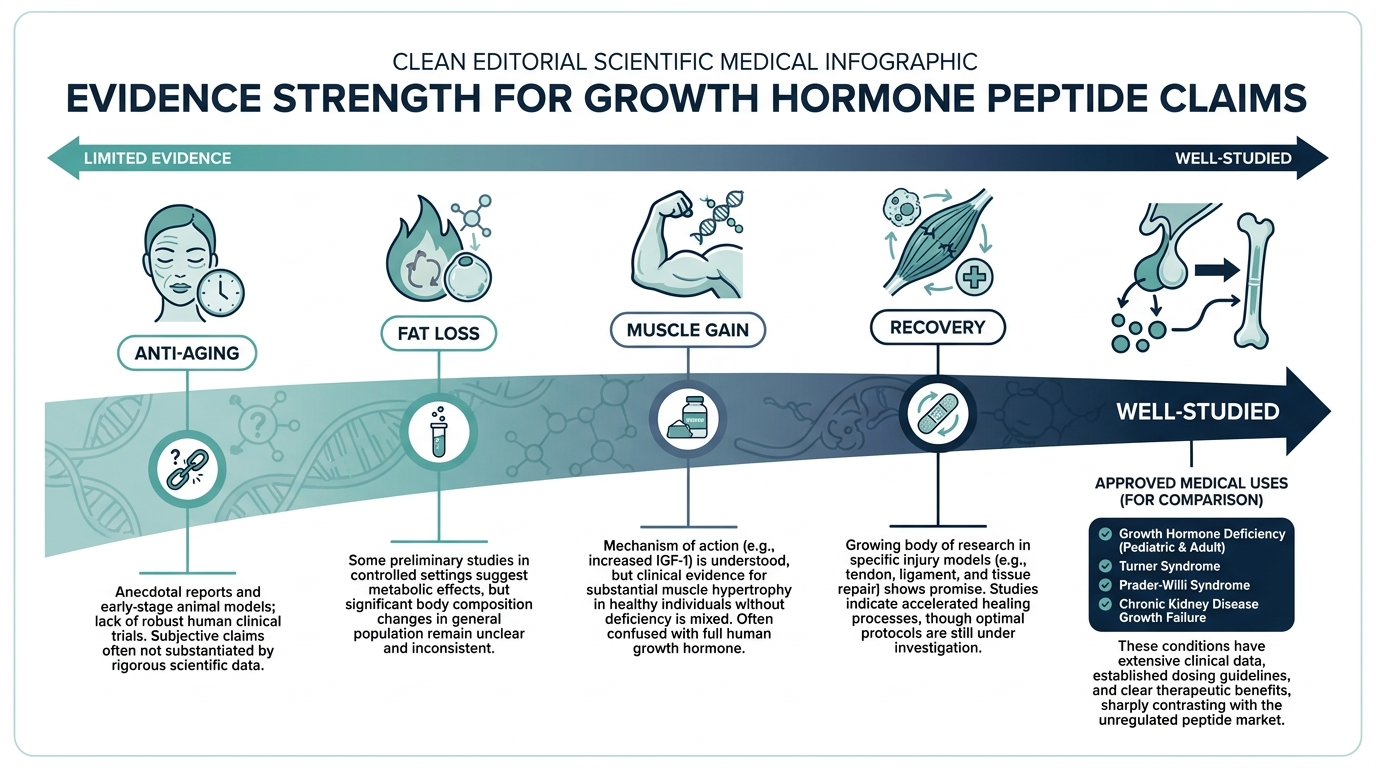
The clinical route for GH secretagogues, through a licensed physician, prescription, and named compounding pharmacy, is safer in ways that go beyond the marketing. Here is the structural reason.
A licensed 503A compounding pharmacy is required to test finished product for potency, sterility, and endotoxin. A 503B outsourcing facility has even stricter GMP requirements. When you receive a product from Defy Medical or Marek Health, the pharmacy behind the prescription is legally accountable for those tests in ways that no research vendor is.
The pricing gap has also narrowed more than most people realize. Sermorelin through telehealth costs $150 to $225 per month in 2026 (IvyRx). CJC-1295 plus ipamorelin therapy at a clinic runs $200 to $400 per month with labs and provider follow-up included (sermorelin.com). A research vial of CJC-1295 and ipamorelin might run $60 to $100, but add bacteriostatic water, syringes, a separate blood panel, and the cost of reconstituting it correctly (and the cost of doing it wrong), and the spread shrinks further.
The pending PCAC review on July 23 to 24, 2026 matters here. If CJC-1295 and ipamorelin formally return to Category 1 compounding status, prices through licensed pharmacies will drop further because compounding pharmacies will be able to prepare them without the legal uncertainty premium. The grey-market price advantage is on a countdown clock.
Who should not use GH peptides at all
There are populations for whom the risk calculus is clearly unfavorable regardless of source quality or clinical supervision.
Active malignancy or personal history of hormone-sensitive cancer: GH and IGF-1 are mitogenic. The FDA label for tesamorelin, the only approved product in this class, explicitly contraindicates active malignancy. Off-label use in cancer survivors is a clinical judgment call that requires oncology input, not a solo decision.
Uncontrolled type 2 diabetes or metabolic syndrome with fasting glucose above 126 mg/dL: the insulin-antagonistic effect of elevated GH can be destabilizing. This is not absolute contraindication in a supervised clinical setting, but it requires much more careful monitoring than the standard protocol assumes.
Pituitary adenoma or any pituitary pathology: GH secretagogues stimulate the pituitary directly. A pituitary tumor that might be hormonally quiescent can become stimulated. Baseline pituitary MRI is reasonable for anyone with symptoms of pituitary dysfunction before starting a secretagogue protocol.
Pregnancy or breastfeeding: no safety data exists, and the theoretical risks to fetal development from altered IGF-1 and GH signaling are sufficient reason to avoid entirely.
Comparing the GH peptides on safety
| Peptide | Clinical evidence quality | Key safety risks | Regulatory lane in 2026 |
|---|---|---|---|
| Tesamorelin | Phase III trials, FDA-approved (n=412 NEJM trial) | Injection site reactions, edema, arthralgia, IGF-1 elevation | Prescription, licensed pharmacy |
| Sermorelin | Phase II/III (children); long compounding history | Injection site reactions, mild water retention, transient flushing | Prescription, returning to Category 1 |
| CJC-1295 + Ipamorelin | Small trials (1999, 2006); observational 2024 study | Immunogenicity risk, cardiovascular flush, IGF-1 elevation | Off-label; pending Category 1 restoration |
| GHRP-6 | Animal and small human data | Cortisol elevation, intense hunger, prolactin increase | Research only; moving toward Category 1 |
| GHRP-2 | Limited human data | Cortisol and prolactin elevation at high doses | Research only; moving toward Category 1 |
| MK-677 (ibutamoren) | Multiple trials; one stopped early | Insulin resistance, hyperglycemia, cardiac concern in elderly | Not a peptide; illegal in supplements; WADA prohibited |
What the monitoring protocol should look like
This is the section most vendor pages do not include, because vendors do not do monitoring. Any legitimate GH secretagogue protocol should include these tests.
Before starting: fasting glucose, HbA1c, fasting insulin, IGF-1, lipid panel (for baseline cardiovascular risk), complete metabolic panel, and CBC. If there are any symptoms suggesting pituitary pathology, a pituitary MRI is warranted.
At 6 to 8 weeks: IGF-1 (primary efficacy marker), fasting glucose, and a clinical review of water retention, sleep quality, and joint symptoms.
Every 90 days on protocol: IGF-1 should be maintained within the upper-normal range for age, typically 200 to 310 ng/mL for adults on optimization protocols (Revolution Health). Fasting glucose and HbA1c should not deteriorate. Any increase in HbA1c greater than 0.3 points warrants protocol review.
IGF-1 is the single most important lab for GH peptide monitoring because, unlike growth hormone itself, which pulses throughout the day and cannot be reliably captured with a single draw, IGF-1 is stable and reflects average GH output over time. Draw it fasted, morning, at least 24 hours after the last peptide dose for a reliable baseline read.
Turn what you just learned into action.
Superpower lets you test 100+ biomarkers from home, then re-check them over time so you can actually see progress, physician-reviewed at every step.
Frequently asked questions
Are growth hormone peptides FDA-approved?
Only tesamorelin (Egrifta SV) is FDA-approved for a body composition endpoint. Sermorelin was FDA-approved for GH deficiency in children until voluntary market withdrawal in 2008. CJC-1295, ipamorelin, GHRP-2, and GHRP-6 have no FDA approval and are used entirely off-label through compounding pharmacies. MK-677 is classified as an unapproved new drug and is illegal in dietary supplements.
Can GH peptides cause cancer?
Elevated IGF-1 is epidemiologically associated with slightly increased cancer risk in multiple studies, and GH is mitogenic. The FDA contraindicates tesamorelin in active malignancy. There is no controlled trial in humans demonstrating that GH secretagogues at therapeutic doses cause de novo cancer in healthy adults, but the theoretical concern is sufficient that use in cancer survivors requires oncology guidance, and monitoring IGF-1 to avoid supraphysiological elevation is standard practice.
What is the difference between sermorelin and CJC-1295?
Both are GHRH analogs, but sermorelin has a short half-life (roughly 10 to 20 minutes) and produces a GH pulse that mirrors physiological patterns more closely. CJC-1295 with DAC (drug affinity complex) has a half-life of 6 to 8 days, producing sustained GH elevation. The clinical preference for CJC-1295 is the steady-state effect. The concern is that continuous rather than pulsatile GH elevation may be less physiologically natural and carries more persistent IGF-1 elevation.
How dangerous are grey-market peptide vials?
The danger is not primarily in the molecule but in the vial. Finnrick’s endotoxin testing found nearly 8% of research-grade samples with detectable endotoxin above the limit of quantification, and some samples far exceeding Finnrick’s 40 EU/vial quality control threshold. Endotoxin is not removed by standard sterilization, not measured by standard COA purity testing, and can cause fever or anaphylaxis at sufficient doses. This risk is entirely absent from licensed compounding pharmacy products, which are required to test for endotoxin.
Does sermorelin cause weight gain?
Sermorelin is not a weight loss drug and does not cause meaningful weight gain when used appropriately. Some users experience initial water retention of 1 to 3 pounds as IGF-1 rises in the first 4 to 8 weeks, which typically resolves. The longer-term metabolic effect is generally favorable: improved lean mass and mild visceral fat reduction.
Can you use GH peptides if you have diabetes?
With physician supervision and close monitoring, some diabetic patients do use GH secretagogues, but it requires frequent glucose monitoring and often dose adjustment. For uncontrolled type 2 diabetes, the insulin-antagonistic effect of elevated GH is likely to worsen glycemic control, and the risk-benefit ratio is unfavorable. This is a clinical conversation, not a self-management one.
What is the right IGF-1 target on a GH peptide protocol?
Most optimization-oriented clinicians target the upper-normal age-adjusted range, approximately 200 to 310 ng/mL for adults. The goal is to avoid both deficiency (below 100 ng/mL) and supraphysiological elevation (above 350 ng/mL in adults), where the theoretical cancer promotion risk and the metabolic side effects are most pronounced. IGF-1 should be drawn fasted, in the morning, at least 24 hours after the last peptide dose for accuracy.
Telehealth GLP-1 program with provider visits and pharmacy coordination.
Author: Vital Signs Today Editorial Team, [credential]”]. Educational content, not medical advice. Sources linked inline.
Primary sources:
– Falutz J et al., NEJM 2007 (tesamorelin LIPO-010 trial)
– FDA bulk drug substances under 503A
– Finnrick independent peptide testing database
– Finnrick: Why Endotoxin Testing Matters for Peptides
– DEA / Just Think Twice: MK-677 risks, July 2025
– Innerbody: CJC-1295 and Ipamorelin clinical guide 2026
– Revolution Health: IGF-1 testing and optimal levels
– IvyRx: Sermorelin cost 2026
– sermorelin.com: Affordable peptide and hormone therapy pricing
– Peptide Dossier: 14 peptides legal again in 2026
– Peptidenerds: GH secretagogue comparison
– BSCG: CJC-1295 use in sports and military rules explained
Related reading
Related: test your thyroid and hormones from home.
Vital Signs Today may earn a commission if you buy through links on this page. It does not affect our editorial assessments.