
Last updated June 2026. Educational content, not medical advice. Talk to a licensed clinician before starting any peptide protocol.
Short answer: HGH peptides prescribed through a licensed telehealth clinic, specifically sermorelin or the CJC-1295 plus ipamorelin stack, have a real safety record with manageable side effects when IGF-1 is monitored. Grey-market research vials labelled “for research use only” are a categorically different risk: third-party testing has found purity as low as 62% in random batches, no clinician is overseeing your dose, and you are reconstituting a powder yourself with no pharmacy QC behind it.
HGH peptides carry real risks depending on the route, so shouldn’t you know your IGF-1 and hormone baseline first? One at-home Superpower draw checks 100+ biomarkers, physician-reviewed.
The answer to “are HGH peptides safe” is not one sentence. It depends on which peptide, which source, and whether anyone with a medical license is watching your labs.
Why does the “HGH peptide” category confuse everyone?
The phrase bundles three genuinely different things under one roof. Understanding the distinction is the single most useful thing this page can give you.
First, there is synthetic human growth hormone (recombinant somatropin), a large 191-amino-acid protein. It is FDA-approved for specific diagnoses, injected directly, and bypasses the pituitary entirely. It is not a peptide in the sense this article is about, but it keeps getting lumped in.
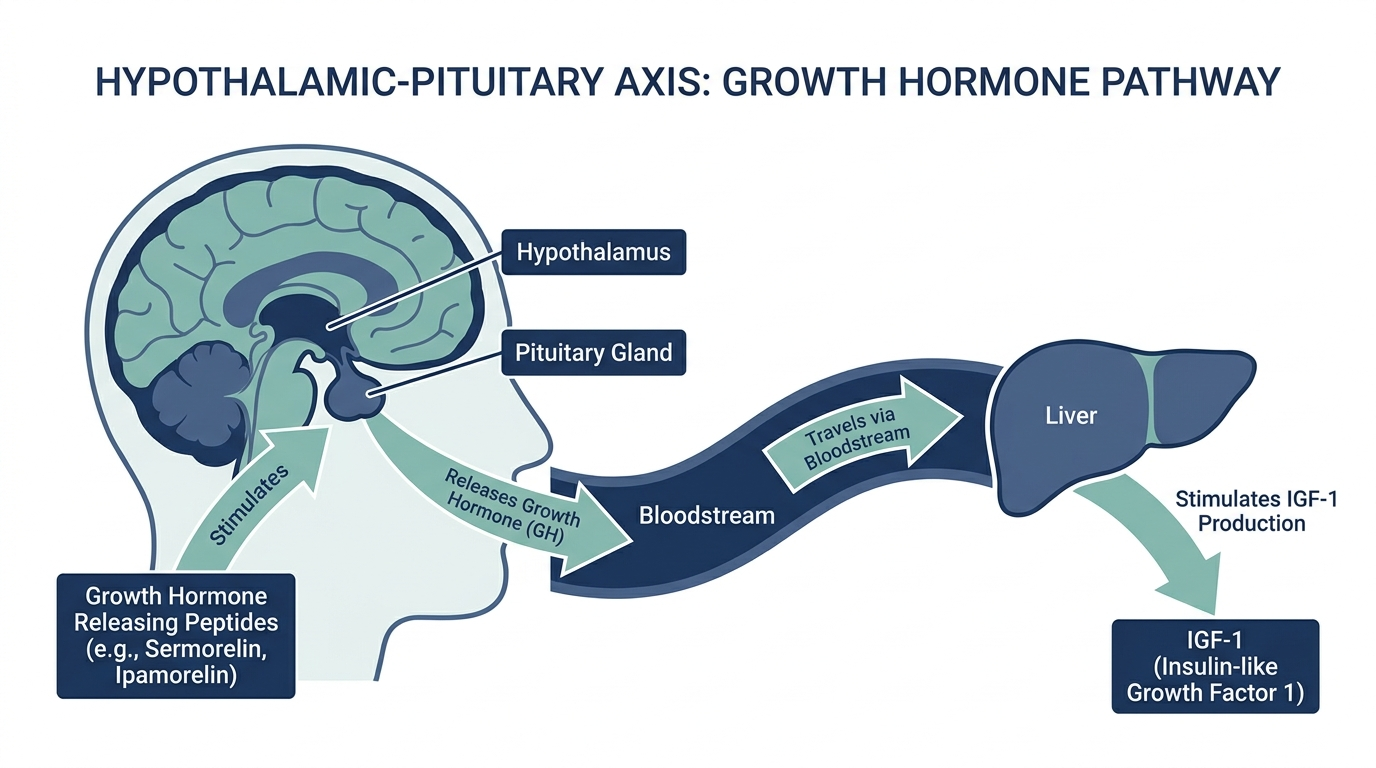
Second, there are growth hormone-releasing peptides and GHRH analogs, including sermorelin, tesamorelin, CJC-1295, ipamorelin, and GHRP-2/GHRP-6. These are the “HGH peptides” most people mean. They do not deliver synthetic GH. They signal your pituitary to release more of its own GH in its natural pulsatile rhythm.
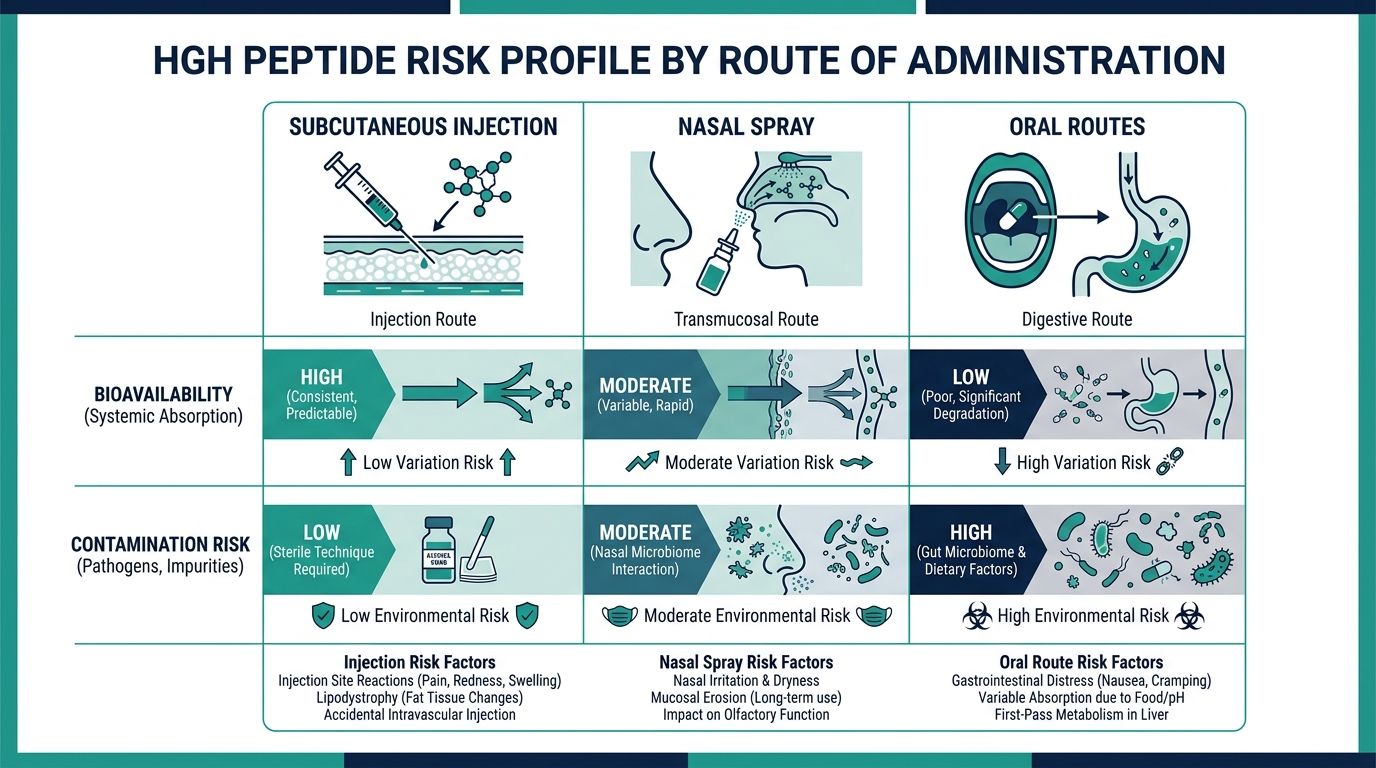
Third, there is the grey zone: research-use-only peptides sold in vials online, often the same molecules as above, but outside any clinical framework, without a prescription, and without the quality controls a compounding pharmacy applies.
The safety record for lane two, the prescription secretagogues, is meaningfully better than the record for lane three. Treating them as interchangeable is the single most common mistake in every forum thread on this topic.
Full-body lab membership: 100+ biomarkers, doctor-reviewed, tracked over time.
How do GH secretagogues actually work, and why does the mechanism matter for safety?
Sermorelin and CJC-1295 are GHRH analogs, meaning they mimic growth hormone-releasing hormone and bind to the GHRH receptor on pituitary cells. Ipamorelin is a ghrelin-receptor agonist (GHS-R1a) that triggers GH release through a parallel pathway. When combined, the two classes of receptor activation produce a synergistic GH pulse that is larger than either alone, which is why the CJC-1295 plus ipamorelin stack is the most prescribed protocol in telehealth longevity clinics as of mid-2026.
The safety relevance of this mechanism is not subtle. A 2017 review in Endocrine Reviews noted that unlike exogenous HGH, “GHSs promote pulsatile release of GH that is subject to negative feedback, and may prevent supratherapeutic levels of GH and their sequelae.” In plain English: the body’s own ceiling is still in place. When GH rises too high, somatostatin (the brake) fires and shuts it down. Inject exogenous HGH at a flat, pharmacological dose and you have no such brake. That is why acromegaly-level side effects, the joint thickening, enlarged organs, and pronounced insulin resistance seen with HGH abuse, are structurally harder to produce with secretagogues at clinical doses.
That said, harder is not impossible. Chronically supraphysiologic IGF-1 from unchecked secretagogue use can still push those markers in the wrong direction, which is exactly why monitoring is non-negotiable.
What does the clinical evidence actually say about these peptides?
The honest answer is: more for the approved ones, less for the stack that everyone uses.
Sermorelin is FDA-approved for pediatric growth hormone deficiency. In adults, use is off-label, but the long clinical history in children provides a safety floor the research-only peptides cannot match. Common adverse effects documented in that population include injection site reactions and occasional transient headache. No serious systemic adverse events were reported at therapeutic doses in controlled trials reviewed by the Mayo Clinic.
Tesamorelin (brand name Egrifta) is the most robustly studied GH-secretagogue available. It received FDA approval in 2010 specifically for HIV-associated lipodystrophy, based on Phase 3 trials showing an average 15 to 18 percent reduction in visceral adipose tissue over 26 weeks (NCBI clinical review). One finding from those trials that deserves to be quoted directly: 5 percent of tesamorelin-treated patients reached an HbA1c of 6.5 percent or greater (the diabetes threshold) versus 1 percent of placebo patients. The overall discontinuation rate due to adverse events was 6.8 percent on tesamorelin versus 3.2 percent on placebo. Tesamorelin works. It also carries a real glucose liability that needs lab monitoring.
Ipamorelin has a more selective safety profile than older GHRPs like GHRP-2 or GHRP-6. A key differentiator is that it does not meaningfully raise cortisol, prolactin, or ACTH at clinical doses, the hormones that gave the earlier GHRPs their side effect burden, based on preclinical and early clinical testing reviewed in Wiley’s JCSM Rapid Communications (2020). That selectivity is a genuine safety advantage over the older peptides, and it is the main reason ipamorelin replaced GHRP-2 and GHRP-6 as the default GHRP in clinical protocols.
CJC-1295 plus ipamorelin stack is the most widely prescribed GH-secretagogue combination at longevity clinics, but there are no large, long-term randomized controlled trials specifically for this combination in healthy adults. Most of the safety data comes from clinical experience at telehealth practices, which is real-world evidence but not the same as a 2,000-person Phase 3 trial. Anyone telling you the CJC plus ipamorelin stack has a “bulletproof safety record” is extrapolating from adjacent data, not citing a landmark study. That extrapolation is reasonable, but you should know it is what it is.
What are the actual side effects to expect?
Side effects split between what is common and manageable versus what requires stopping or adjusting.
Common, usually transient effects include injection site redness or swelling (topical preparation applies before injection can reduce this), mild water retention of 2 to 5 pounds in the first few weeks as GH promotes fluid balance, occasional headaches in the first week, and increased hunger (most noticeable with ipamorelin, which activates the ghrelin receptor, the same receptor that drives appetite). Water retention and hunger typically diminish within the first month.
Effects that reflect dose or monitoring problems include fluid accumulation severe enough to cause carpal tunnel-like symptoms, meaning tingling or numbness in the hands. Harvard Health notes that up to 30 percent of patients on growth hormone therapy experience this when doses are above physiological range. Joint aches follow a similar pattern: they tend to appear when GH or IGF-1 rises too fast, and they respond to dose reduction. In clinical practice, a provider who monitors IGF-1 at 8 to 12 weeks and catches it above 350 ng/mL can lower the dose before the joint symptoms start rather than waiting for the symptom and then troubleshooting backward.
The IGF-1 ceiling matters more than the peptide itself. Most clinical guidelines use IGF-1 values under 300 ng/mL as the comfortable target for optimization protocols, with 350 to 450 ng/mL as the upper caution band. IGF-1 above 500 ng/mL is associated with increased acromegaly risk and requires dose reduction, according to multiple clinical sources including ScienceInsights. The concern is not theoretical: the entire class of side effects that makes HGH abuse look so alarming, enlarged joints, coarsened facial features, heart enlargement, traces back to chronically supraphysiologic IGF-1 over years, not months. At monitored clinical doses, you are not approaching that territory.
HGH peptides vs. direct HGH: the safety comparison the clinics skip
When telehealth platforms discuss switching from HGH to peptides, they lead with cost: sermorelin at $175 to $225 a month versus pharmaceutical-grade HGH at $800 to $3,000 a month. That is accurate but incomplete. The safety difference is equally real and less often explained.
| Factor | Growth Hormone Secretagogues (sermorelin, CJC + ipa) | Direct Exogenous HGH (somatropin) |
|---|---|---|
| Mechanism | Stimulate pituitary to release natural GH | Bypass pituitary, deliver synthetic hormone |
| Pulsatile release | Preserved (pituitary still controls rhythm) | Absent (flat pharmacological dose) |
| Feedback ceiling | Intact (somatostatin brake still fires) | Bypassed (no feedback control) |
| Pituitary suppression | Minimal at clinical doses | High with prolonged use |
| Acromegaly risk at abuse doses | Lower (feedback slows runaway IGF-1) | Higher |
| Clinical trial backing | Moderate for sermorelin/tesamorelin; limited for CJC stack | Extensive (decades of pediatric and adult use) |
| Regulatory status | Sermorelin/tesamorelin: FDA-approved for specific indications; others: off-label or research-only | FDA-approved for diagnosed GH deficiency and other specified conditions |
| Monthly cost | $175 to $400 through legitimate telehealth | $800 to $3,000 for pharmaceutical-grade |
Personally, the feedback-loop preservation is the most underrated safety feature in the entire comparison. When your pituitary is still controlling the rhythm, the pharmacology cannot stack the way it does with exogenous dosing. Do not believe anyone who tells you the two approaches are equivalent in risk: they are not, and the mechanism explains why.
The cancer and IGF-1 question: what the data actually shows
This is the question that makes people quietly close browser tabs, so here is an honest accounting.
IGF-1 is a growth factor. That is its job: to tell cells to divide and repair. In cancer biology, IGF-1 receptor signaling is implicated in tumor proliferation and in resistance to apoptosis (cell death). The theoretical concern follows: if you raise IGF-1, does that feed tumors?
The human data is actually more reassuring than the mechanism would predict. A large 2024 Swedish cohort study in Frontiers in Endocrinology followed children treated with recombinant GH and found no increase in long-term neoplastic events. An MDPI review (2023) on GH deficiency treatment in cancer survivors found no excess de novo cancer risk in multiple cohort reports. The PMC review of GH secretagogue safety summarizes the position precisely: “evidence is strong in experimental models, weak in humans.”
The clinical consensus is: active cancer is an absolute contraindication for any GH-stimulating protocol, not because causation is proven but because promoting growth factor activity in the presence of known malignancy carries an unacceptable risk even without randomized data. Personal or family history of cancer is a reason for a direct conversation with your oncologist before starting, not a dealbreaker on its own. And in healthy adults with no malignancy history, keeping IGF-1 within the monitored range is the responsible hedge against the theoretical risk.
Do not believe the simplified version of this story in either direction: the “IGF-1 definitely causes cancer” scare (the evidence in healthy adults is genuinely weak) and the “these peptides are perfectly safe forever, no concerns” marketing copy (the long-term data simply does not exist yet to say that).
Telehealth GLP-1 program with provider visits and pharmacy coordination.
Who should not use HGH peptides? The real contraindications
This section is more important than any benefit list, and most vendor pages skip it entirely.
Hard stops (do not start without specialist clearance):
– Active cancer or cancer in remission less than 5 years (IGF-1 stimulation in this context is not appropriately studied and carries theoretical proliferative risk).
– Untreated or uncontrolled diabetes. GH peptides antagonize insulin signaling. In the tesamorelin Phase 3 trials, HbA1c crossed the diabetes threshold in 5 percent of treated patients. If your fasting glucose is already high, adding a GH secretagogue without managing insulin resistance first is layering risk on risk.
– Pituitary tumor or pituitary adenoma history. The pituitary is the organ these peptides act on; stimulating a gland with a history of abnormal growth requires specialist review, not a telehealth intake form.
– Pregnancy and breastfeeding. No safety data exists in this population.
– Untreated thyroid disorders. GH and thyroid hormones interact; hypothyroidism that reduces conversion of T4 to T3 can blunt the response to secretagogues and should be optimized first.
Proceed with elevated caution and more frequent monitoring:
– Pre-diabetes or metabolic syndrome (run a fasting glucose and HOMA-IR before starting; monitor at 8 weeks).
– Proliferative diabetic retinopathy (GH can accelerate retinal vascular changes).
– Significant kidney or liver disease (both affect clearance and IGF-1 production).
– Autoimmune conditions (some, particularly inflammatory arthritis, can flare with rapid GH changes).
If you look at that list and see yourself in it, that is not a reason to abandon the inquiry. It is a reason to have that specific conversation with a clinician who can review your full labs rather than a general-audience article.
What does a safe HGH peptide protocol actually look like in practice?
A legitimate protocol from a licensed telehealth clinic running in 2026 has a recognizable structure. If what you are looking at does not match this, that is the diagnostic.
Before the first dose: a baseline IGF-1, fasting glucose, HbA1c, a lipid panel, and ideally a comprehensive metabolic panel. Some clinics include a CBC and thyroid panel. Superpower’s $199 annual membership covers 100 or more biomarkers and will cover this baseline comprehensively; Function Health at $365 tests over 160 markers.
Starting dose: sermorelin alone is typically 200 to 500 mcg subcutaneously at bedtime (fasted, to align with the natural GH pulse). CJC-1295 plus ipamorelin stack in standard clinic protocols runs 100 to 300 mcg of each, also at bedtime. A responsible clinic starts at the lower end and titrates based on your IGF-1 response, not based on what the internet says is “the dose.”
Monitoring: follow-up labs at 8 to 12 weeks. IGF-1 in the 200 to 300 ng/mL range is the typical optimization target for adults over 30. If IGF-1 exceeds 350 to 400 ng/mL, a good provider reduces the dose before symptoms appear. Glucose and HbA1c re-check at 12 weeks if you had any metabolic concern at baseline.
Cycle structure: many clinical protocols cycle six weeks on, two weeks off, or three months on, one month off. The rationale is receptor desensitization (the ghrelin receptor in particular can downregulate with continuous exposure) and giving the pituitary a periodic rest. Whether cycling is necessary for safety specifically, rather than for efficacy, is debated in the clinical literature. Most practitioners use it empirically.
Five myths about HGH peptide safety, addressed directly
Myth 1: “Peptides are just amino acids; they’re basically supplements.”
No. Sermorelin and CJC-1295 are pharmacologically active molecules that meaningfully shift your hormone axis. Calling them supplements is the same category error as calling insulin a supplement because it is a peptide. They require the same respect, monitoring, and medical oversight as any hormone therapy.
Myth 2: “If the vendor sells it for research use only, it’s legal for me to use.”
The “research use only” label is the legal fiction that protects the seller. The moment you draw it into a syringe and inject it, you have left the protection of that label entirely. The risk is on you, and no pharmacist, doctor, or regulator has stood behind the product you received.
Myth 3: “High IGF-1 on labs is a sign the peptide is working well.”
High IGF-1 is a sign the dose is too high. IGF-1 above 500 ng/mL at clinical doses correlates with increased risk of the side effects you are trying to avoid. An IGF-1 of 280 ng/mL on a monitored protocol is a better outcome than an IGF-1 of 520 ng/mL.
Myth 4: “HGH peptides don’t suppress your natural GH production.”
Mostly true for short-term use, but not guaranteed for chronic supraphysiologic use. The feedback loop stays intact, which is the key advantage over exogenous HGH. But years of continuous stimulation that pushes IGF-1 above the feedback ceiling does carry some risk of pituitary adaptation. This is another reason for cycling and periodic lab re-checks.
Myth 5: “The safety data from synthetic HGH studies applies directly to GH secretagogues.”
It does not, in either direction. The extensive HGH literature on children with growth hormone deficiency is not directly transferable to healthy adults using secretagogues for optimization. And the alarming HGH-abuse literature from athletes using supraphysiologic doses of synthetic HGH is not directly transferable to secretagogues that work through a feedback-regulated pituitary mechanism. Both comparisons are used rhetorically; neither is precise.
Don’t just read about your health, track it.
A single result is a snapshot. Superpower re-tests 100+ markers over time so you can watch them move as you change sleep, food, and training.
Frequently asked questions
Are HGH peptides FDA-approved?
Two GH-related peptides are FDA-approved: sermorelin for pediatric growth hormone deficiency, and tesamorelin (Egrifta) for HIV-associated lipodystrophy. CJC-1295, ipamorelin, and GHRP-2/6 are not FDA-approved as finished drugs but were compounding-eligible under Section 503A rules. As of February 27, 2026, HHS signaled that approximately 14 peptides previously on the restricted Category 2 list, including ipamorelin, would return to Category 1 (compounding-eligible) status, pending a Pharmacy Compounding Advisory Committee meeting on July 23 to 24, 2026 (Amanecia Health).
What are the most common side effects of HGH peptides?
Mild injection site reactions, transient headaches, and increased hunger are the most frequently reported, particularly in the first few weeks. Water retention causing 2 to 5 pounds of fluid weight is common early in protocols. Carpal tunnel-like tingling and joint aches occur primarily when IGF-1 rises too high, and they respond to dose reduction. Elevated fasting glucose is a documented risk with tesamorelin and requires monitoring.
Can HGH peptides cause cancer?
There is no direct clinical evidence that GH secretagogues at therapeutic doses cause cancer in healthy adults. Active cancer is still an absolute contraindication because IGF-1 promotes cell proliferation and the risk in a malignant context is not adequately studied. In healthy adults, keeping IGF-1 within a monitored range is the standard precaution. A 2024 Swedish cohort study following childhood GH recipients found no excess long-term neoplastic events (Frontiers in Endocrinology).
Are grey-market research peptides as safe as prescription peptides?
No. Independent testing documented in platforms like Finnrick has found samples as low as 62 percent actual peptide content, with the remainder being unknown compounds and bacterial contaminants. A vial labeled “CJC-1295 99% purity” from an unverified online vendor has no pharmacy QC, no clinician setting the dose, and no accountability for what is actually inside. The molecule may be the same in theory; the product is not.
How long does it take to see if HGH peptide therapy is working?
Clinical experience at telehealth practices puts the first measurable changes, improved sleep depth, faster recovery from exercise, modest body composition shifts, in the 6 to 12 week range. Meaningful changes in body composition typically appear at 3 to 6 months. Labs at 8 to 12 weeks are the first real checkpoint to confirm the dose is hitting the IGF-1 target.
Is ipamorelin safer than CJC-1295?
They work through different receptors and the comparison is not a simple hierarchy. Ipamorelin has the advantage of not significantly raising cortisol or prolactin, which was the main safety concern with older GHRPs. CJC-1295 as a GHRH analog has a clean cortisol profile too. The combination is considered synergistic and is used precisely because each component amplifies the other’s effect at lower individual doses. In practice, the safety of the stack comes down to the total IGF-1 produced, not which component is “riskier.”
What labs should I check before starting HGH peptide therapy?
At minimum: IGF-1 (baseline), fasting glucose, HbA1c, a lipid panel, and a comprehensive metabolic panel. A good provider adds thyroid function (TSH, free T3, free T4), CBC, and ideally a cardiovascular risk marker like hs-CRP. Services like Superpower at $199 per year or Function Health at $365 cover these comprehensively and will generate a report you can bring to a telehealth consultation.
Telehealth GLP-1 program with provider visits and pharmacy coordination.
Author: Vital Signs Today Editorial Team, [credential]”]. Educational content, not medical advice. Sources linked inline.
Primary sources
- Amanecia Health: FDA Peptide Reclassification 2026
- Frontiers in Endocrinology: Long-term neoplastic risk after childhood GH treatment (2024)
- Harvard Health: Growth hormone, athletic performance, and aging
- JCSM Rapid Communications: Growth hormone secretagogues history and clinical development (2020)
- MDPI Journal of Clinical Medicine: Long-term safety of GH deficiency treatment in cancer survivors (2023)
- Mayo Clinic: Sermorelin injection route
- NCBI Bookshelf: Clinical review report for tesamorelin (Egrifta)
- PMC: The Safety and Efficacy of Growth Hormone Secretagogues (2017)
- PMC: Beyond the androgen receptor, role of GH secretagogues in hypogonadal males
- ScienceInsights: Is CJC-1295 Ipamorelin Safe?
- Superpower: Blood test for biomarkers
- Wiley: Growth hormone secretagogues history, mechanism, clinical development (2020)
Related reading
Vital Signs Today may earn a commission if you buy through links on this page. It does not affect our editorial assessments.