
Last updated 18 June 2026. Educational content, not medical advice. Collagen peptides are a dietary supplement, not an FDA-approved drug. Speak with a clinician before starting any supplement regimen.
Short answer: For most healthy adults, Vital Proteins Collagen Peptides are safe at the recommended 20 g daily serving. The unflavored powder carries an NSF Certified for Sport designation, earned an “A” grade in BarBend’s 2026 independent third-party lab testing (metals, pesticides, phthalates, bisphenols, label accuracy), and is sourced from grass-fed, pasture-raised bovine hide. The honest caveat: Vital Proteins does carry a California Prop 65 lead warning on 11 specific flavored products. The core unflavored SKU is not among them. Read on for the full picture before you buy.
Vital Proteins collagen earned an A safety grade, but safety for the product isn’t the same as knowing your own markers. One at-home Superpower draw checks 100+ biomarkers, physician-reviewed.
So what actually is in Vital Proteins Collagen Peptides?
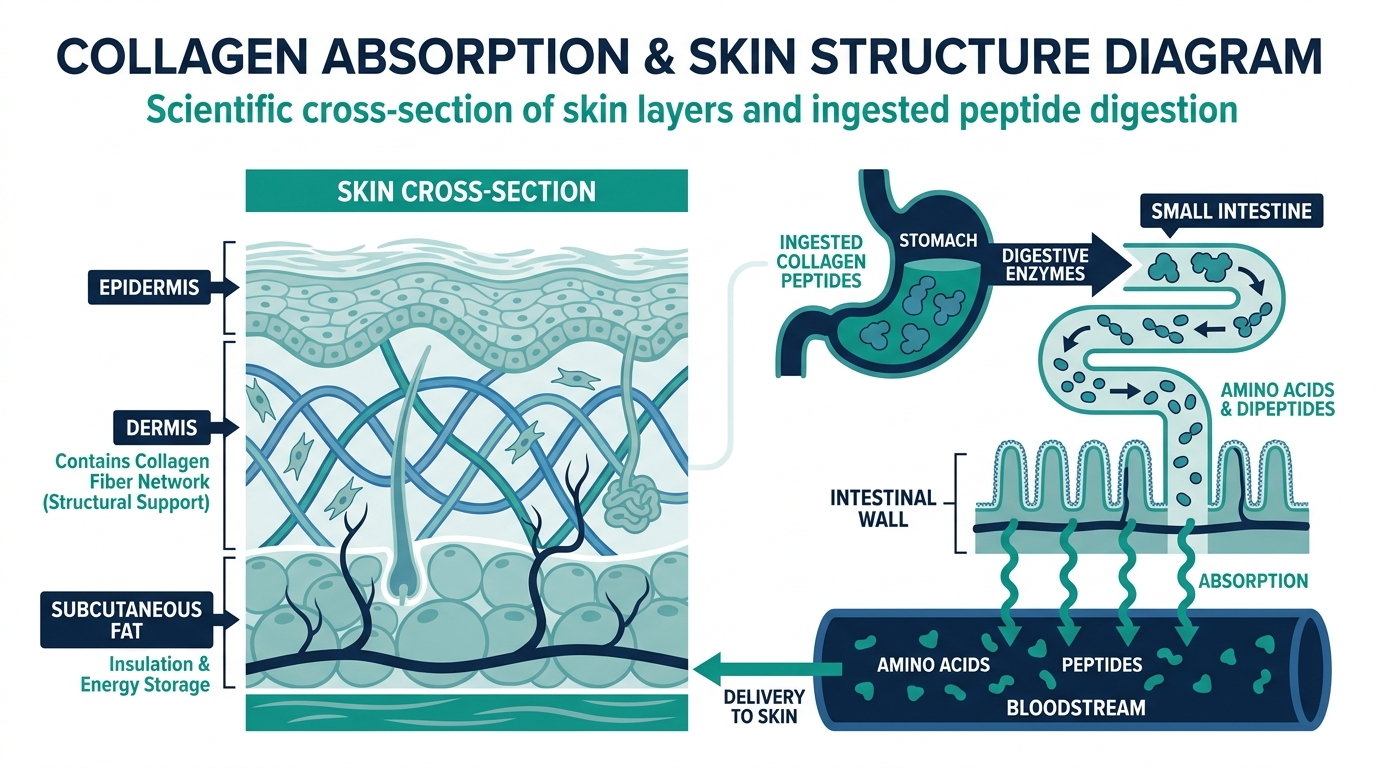
The flagship unflavored 20 oz canister has one primary ingredient: hydrolyzed bovine collagen peptides sourced from the hide of grass-fed, pasture-raised cattle. The advanced formula adds 120 mg of hyaluronic acid and 100% of the daily value of vitamin C per serving. Per 20 g serving: 70 calories, 18 g protein, 0 g fat, 1 g carbohydrate.
Vital Proteins is owned by Nestle Health Science, which completed its acquisition in February 2022. That corporate parent matters for one reason: it means production happens in NSF- and SQF-certified (Safe Quality Food) manufacturing facilities, both of which require third-party audits and Global Food Safety Initiative compliance. Most boutique collagen brands cannot say that.
The product line spans roughly 150 SKUs across 35,000 retail doors, including Target, Costco, Sam’s Club, and Walgreens. Pricing on the flagship 20 oz canister runs $49.99 one-time or $42.49 on subscription, which works out to roughly $1.64 per serving. That is mid-range for collagen, not cheap, not the priciest.
Full-body lab membership: 100+ biomarkers, doctor-reviewed, tracked over time.
What does “NSF Certified for Sport” actually mean for safety?
This is where Vital Proteins separates itself from most collagen brands on the shelf, and it is not a trivial distinction.
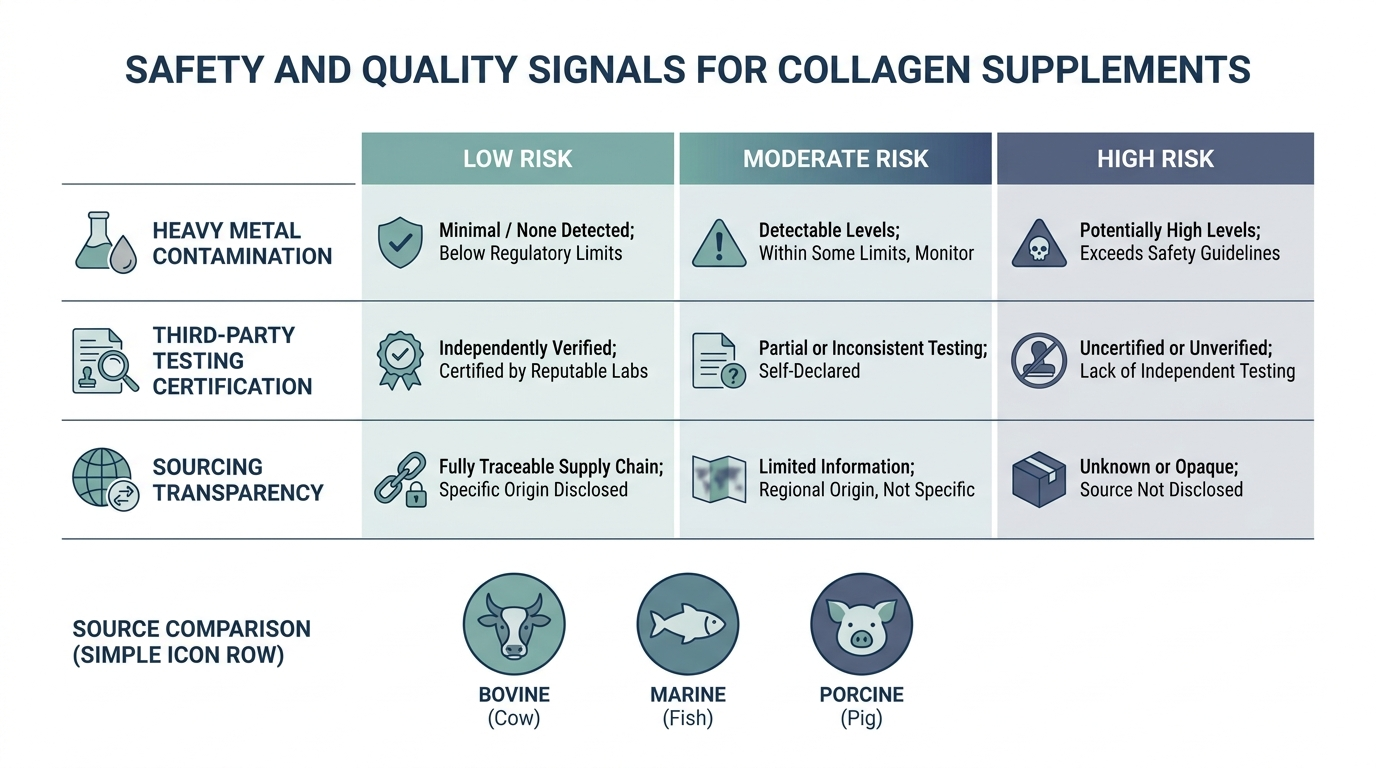
NSF Certified for Sport verifies three things the label alone cannot: that the product contains exactly what is printed (label accuracy), that it is free from any of the 290 substances banned by major athletic organizations (no undisclosed stimulants, hormones, or masking agents), and that ingredients have undergone a toxicological review. The testing is done by a third party with no financial relationship to the brand.
Personally, I consider NSF Certified for Sport to be the minimum bar I would set for any supplement taken daily, not because the certification is perfect, but because it introduces at least one independent check between the factory and your body. Most collagen products do not have it. The certification is listed on the unflavored Vital Proteins Collagen Peptides SKUs sold through Vitacost and the brand’s own site.
The NSF mark is batch-verified, which means the product is retested on an ongoing basis, not just approved once and forgotten.
In addition, BarBend’s 2026 independent lab testing placed Vital Proteins Collagen Peptides in the top 10% of products tested across all categories: heavy metals, pesticides, phthalates, bisphenols, and label accuracy combined, earning an overall “A” grade. For a mainstream supplement brand at scale, that result is genuinely good.
What is the Prop 65 lead warning about, and should it worry you?
This is the part of the Vital Proteins story that most review sites skip, probably because it takes more than a sentence to explain correctly.
Vital Proteins publicly discloses on its own website a Prop 65 warning for 11 specific products: “Consuming this product can expose you to chemicals including lead, which is known to the State of California to cause birth defects or other reproductive harm.” The affected products are all flavored or green-blend formulas, including Collagen Peptides + Chocolate (13.5 oz, 26.8 oz, 32.5 oz), Matcha Collagen in multiple sizes, Collagen Beauty Greens, Collagen Beauty Smoothie Tropical Greens, Collagen Beauty Smoothie Blackberry Cocoa, and Daily Greens Green Apple. The flagship unflavored Collagen Peptides is not on this list.
Here is the insider context: Prop 65 is a California disclosure law, not a recall or a safety ban. The threshold for requiring a warning is set at 0.5 micrograms of lead per day, a level so conservative it triggers warnings on many common foods, including spinach, sweet potatoes, and roasted coffee. The warning means detected levels exceed that threshold; it does not mean the product is acutely dangerous. The FDA’s provisional tolerable intake for lead is generally set at higher levels for adults, though any chronic lead exposure carries some risk.
The practical takeaway: if you live in California and are pregnant, nursing, or taking a collagen product daily for years, the flavored and greens-blend products deserve a second look. The unflavored bovine collagen, which is the core of the brand and the one with the NSF certification, is not in the Prop 65 disclosure list.
Do not believe any collagen brand that claims zero detectable heavy metals in a bovine-derived product without showing you the actual lab number. Bovine collagen is derived from cattle hide, and cattle absorb trace minerals including lead from soil and feed. Every responsible brand tests; the question is how much they find and whether they disclose it.
Does the science support what Vital Proteins promises?
The marketing targets skin, hair, nails, bone, and joint health. Here is what the clinical evidence actually says, because it is more nuanced than the label implies.
Skin. A 2025 randomized, double-blind, placebo-controlled trial published in the Journal of Cosmetic Dermatology found sustained improvements in skin hydration, elasticity, and density with bioactive collagen peptide supplementation. Separately, a trial of 70 healthy adults taking 1,650 mg per day of collagen peptides for 8 weeks showed significant improvements in wrinkle depth, height, and visual severity scores across multiple facial regions compared to placebo. The mechanism is reasonably well understood: orally ingested hydrolyzed collagen breaks down into di- and tripeptides, including proline-hydroxyproline, which are detected in circulating blood approximately 2 hours after ingestion. A 2010 study in the Journal of Dermatology showed that proline-hydroxyproline stimulates human dermal fibroblast proliferation 1.5-fold and hyaluronic acid synthesis 3.8-fold in cell culture.
Joints. A 2025 randomized, double-blind, placebo-controlled trial published in Frontiers in Nutrition found that 3,000 mg per day of low-molecular-weight collagen peptides for 180 days significantly improved joint pain and physical function in patients with Grade I or II knee osteoarthritis, with no adverse events reported. A separate 2025 trial involving 160 osteoarthritis patients found that 10 g per day of hydrolyzed Type I and III collagen peptides for 8 weeks improved WOMAC scores compared to placebo. Joint X-rays showed no significant changes in joint space width, which is expected: cartilage remodels over years, not weeks.
The gap between label and evidence. Vital Proteins markets benefits following “daily consumption for several months,” which is consistent with how the studies are actually designed. If you expect visible skin changes in two weeks, the science does not support that. Studies showing meaningful skin hydration improvements typically run 8 to 12 weeks at minimum. Joint benefit data runs 6 months and longer.
Is Vital Proteins collagen a complete protein?
No. It contains 19 amino acids but is missing tryptophan, one of the nine essential amino acids required to be classified as a complete protein. This is true of all collagen supplements, including every competitor on the shelf.
This matters less than it sounds like it should. Your body does not need every essential amino acid in every individual meal. It maintains an amino acid pool from digestion throughout the day. If you consume tryptophan-rich foods elsewhere (chicken, eggs, dairy, pumpkin seeds), your body has what it needs. The functional issue arises only if you are using collagen as your primary or sole protein source, which no credible nutritionist recommends.
The practical consequence: Vital Proteins Collagen Peptides should supplement your protein intake, not replace your whey, egg white, or plant protein. At 20 g of collagen protein per serving, it contributes meaningfully to your daily total. It just does not contribute tryptophan.
This is where flavored versions occasionally mislead buyers into thinking they are getting a full protein shake. They are not.
Who should not take Vital Proteins Collagen Peptides?
Here is the population for whom the answer is genuinely “talk to a doctor first” rather than just legal boilerplate.
Thyroid medication users. Collagen is a protein. Taking it within 30 to 60 minutes of levothyroxine or other thyroid hormones can slow hormone absorption, because protein competes with the medication’s uptake pathway. Space the two at least an hour apart. This is not a contraindication, it is a timing issue with a real mechanism behind it.
People with a history of kidney stones. Collagen peptides contain hydroxyproline, which the body converts partly into oxalate. For individuals prone to calcium oxalate stones, adding 20 g of collagen daily provides a meaningful oxalate precursor load. The risk is low for healthy adults but real for those with recurrent kidney stones.
Pregnant or nursing individuals. There is no specific evidence that collagen peptides are harmful during pregnancy, but clinical trials exclude pregnant women. The Prop 65 warning on the flavored products adds one more variable. Until prospective safety data exist, the default recommendation from OB/GYNs is to clear all supplements first.
Anyone with a beef or fish allergy. The bovine collagen in Vital Proteins is derived from cattle hide. Marine collagen alternatives exist, but the main Vital Proteins line is not appropriate for those with beef allergies.
People taking immunosuppressants. Glycine, one of the dominant amino acids in collagen, has mild immunomodulatory properties in animal studies. Clinical significance in humans at supplement doses is unestablished, but it is a reason to flag the supplement with a prescribing physician if you are post-transplant or on biologics.
How does Vital Proteins compare to cleaner or cheaper alternatives?
The honest answer: Vital Proteins’ NSF certification and BarBend “A” grade put it above most of the market on documented quality. Whether it is worth the price is a different question.
| Brand | Price per 10 g serving | Certifications | Prop 65 disclosure | Notes |
|---|---|---|---|---|
| Vital Proteins (unflavored) | ~$0.82 | NSF Certified for Sport, B Corp | No (unflavored SKU) | 20 g/serving, advanced formula adds HA + C |
| Great Lakes Collagen Peptides | ~$0.45 | Halal, non-GMO | Not disclosed | Single-ingredient, best per-serving value |
| Momentous Collagen | ~$1.49 | NSF Certified for Sport, FORTIGEL | Not disclosed | FORTIGEL is a trademarked hydrolysate |
| Garden of Life Collagen | Listed | Various Garden of Life certs | Not disclosed | Includes 120 mg hyaluronic acid |
| Orgain Collagen Peptides | ~$0.94 | Non-GMO | Not disclosed | Slightly grittier texture in cold liquids |
A few things stand out from that table. Great Lakes wins on cost at less than half the price per serving, but does not carry an NSF certification. Momentous carries NSF and a clinically-studied FORTIGEL hydrolysate, but at nearly $1.50 per 10 g it is roughly double Vital Proteins’ unflavored cost. For a daily collagen habit, the cost difference adds up: over a year at the 20 g Vital Proteins dose, Great Lakes saves you roughly $220 at current prices.
If budget is the primary constraint and NSF certification matters to you, look for the Vital Proteins NSF Certified for Sport variants sold through Vitacost and similar retailers. If budget is the constraint and you are comfortable with a non-certified brand, Great Lakes has no known controversies and a clean ingredient list.
Hydrolyzed type I & III collagen peptides, third-party tested, unflavored.
What is the evidence-based daily dose for Vital Proteins Collagen Peptides?
Vital Proteins provides 20 g of collagen protein per scoop, which sits at the high end of what clinical trials have tested. Here is what the research suggests by goal, because the answer is not “more is always better.”
Skin hydration and elasticity: Studies showing benefit typically use 2.5 to 10 g per day. A trial of 1,650 mg per day showed wrinkle improvements over 8 weeks. The improvement curve likely plateaus before 20 g, though no head-to-head trial has compared 5 g versus 20 g directly on skin outcomes.
Joint pain: The 2025 Frontiers in Nutrition trial used 3,000 mg (3 g) per day for 6 months for Grade I/II knee osteoarthritis. The CollaSel PRO trial used 10 g per day over 8 weeks. Both found benefit. The Cleveland Clinic notes that safe and effective dosing for joints generally falls between 2.5 g and 15 g per day.
The 20 g Vital Proteins serving. It is not dangerous, but the clinical evidence does not specifically support 20 g as the optimal dose. It may be marketing-driven as much as it is evidence-driven, since a higher dose empties the canister faster. If you want to stretch the value, 10 g once daily (half a scoop) is within the well-studied range for both skin and joint applications.
The maximum safe upper limit is not firmly established, but most clinical reviews cite 15 g as a reasonable conservative ceiling. No serious adverse effects have been documented at any dose in published human trials.
Does Vital Proteins dissolve well, and are there texture issues to know about?
This matters more than most reviews admit, because a supplement that sits in your cabinet untouched is worthless regardless of its safety profile.
The unflavored version dissolves cleanly in both hot and cold liquids with no reported clumping or residue in independent tests. BarBend and Athletic Insight both noted this in 2026 reviews. The flavored versions have more mixed reports: chocolate and matcha variants can leave a faint taste some users find unpleasant in plain water, though both perform well mixed into coffee or smoothies.
Mild digestive side effects, primarily bloating or loose stools in the first week, are reported by a small percentage of users, likely from the glycine content affecting gut motility. These typically self-resolve. Headaches are occasionally reported and are almost always attributable to insufficient water intake, since glycine draws water into connective tissue and increases hydration demand.
Curious what your own levels look like?
Baseline 100+ biomarkers today and retest as life changes, all in one membership with physician review.
Frequently asked questions
Is Vital Proteins collagen FDA-approved?
No. Vital Proteins Collagen Peptides is a dietary supplement, and the FDA does not approve or review dietary supplements before they go to market. The FDA can act against products that are adulterated or misbranded after the fact. NSF Certified for Sport and SQF-certified manufacturing are third-party checks that partially compensate for this gap, but they are not FDA approval.
Does Vital Proteins have a lead warning?
Yes, on 11 specific products: all flavored and greens-blend varieties. The warning is voluntary and posted on the Vital Proteins website. The core unflavored Collagen Peptides product is not included in the disclosure list. Prop 65’s threshold is 0.5 micrograms of lead per day, which is extremely conservative.
How long does it take for Vital Proteins collagen to work?
Based on clinical trial timelines, skin hydration improvements are detectable at 4 to 8 weeks of daily use. Skin elasticity and wrinkle reduction typically require 8 to 12 weeks minimum. Joint pain studies show meaningful benefit at 6 months. Single-canister results are unlikely to be definitive.
Can you take Vital Proteins every day?
Yes. Daily use at the recommended dose is consistent with how it is studied clinically and how the product is marketed. No published trial has documented harm from daily collagen peptide use in healthy adults.
Is Vital Proteins safe for men?
Yes. The evidence base for skin, joint, and recovery benefits includes male participants. A 2023 randomized, double-blind crossover trial found that dietary collagen peptides reduced exercise-induced muscle soreness in healthy middle-aged males. The glycine and proline content is not sex-specific in mechanism.
What is the difference between Vital Proteins Collagen Peptides and Marine Collagen?
The flagship product uses bovine (beef-derived) collagen, primarily Type I and Type III. Marine Collagen uses fish-derived collagen, also primarily Type I. Marine collagen has a smaller molecular weight and is sometimes marketed as more bioavailable, though direct head-to-head human absorption data comparing the two in peer-reviewed trials are limited. Marine collagen does not carry the Prop 65 disclosure that the flavored bovine products do.
Is Vital Proteins safe if I take thyroid medication?
Do not take it within 30 to 60 minutes of levothyroxine. Protein competes with thyroid hormone absorption. Separating the timing by at least one hour resolves the practical issue, but clear it with your prescribing physician if you have any concern.
Hydrolyzed type I & III collagen peptides, third-party tested, unflavored.
Author: Vital Signs Today Editorial Team, [credential]”]. Educational content, not medical advice. Sources linked inline.
Primary sources:
- Vital Proteins Prop 65 Product Disclosure
- Vital Proteins Collagen Peptides product page
- NSF Certified for Sport search: Vital Proteins
- BarBend Vital Proteins Collagen Peptides Review 2026
- Frontiers in Nutrition: Low-molecular-weight collagen peptides in knee osteoarthritis RCT, 2025
- CollaSel PRO osteoarthritis RCT, MDPI, 2025
- Sustained effects of bioactive collagen peptides on skin health, Journal of Cosmetic Dermatology, 2025
- Skin anti-aging and moisturizing effects of low-molecular-weight collagen peptide, 2025 RCT
- Proline-hydroxyproline fibroblast stimulation, Journal of Dermatology, 2010
- Effects of hydrolyzed collagen on fibroblast activation, systematic review, PMC 2024
- Dietary collagen peptides and exercise-induced muscle soreness in middle-aged males, RCT, PMC 2023
- Nestlé Health Science completes acquisition of Vital Proteins, PR Newswire, 2022
- Tamara Rubin comparative heavy metals chart for protein powders, 2026
- Cleveland Clinic via SingleCare: how much collagen per day
Related reading
Vital Signs Today may earn a commission if you buy through links on this page. It does not affect our editorial assessments.