
- The fastest evidence-based way to raise testosterone naturally is to lose excess body fat, sleep 7 to 9 hours, and lift weights, because sleeping under 5 hours for one week alone lowers testosterone by 10 to 15 percent (JAMA study).
- Most US clinicians diagnose low testosterone when total testosterone falls below 300 ng/dL on two morning blood tests combined with symptoms such as low libido or fatigue (Cleveland Clinic).
- Correcting a vitamin D, zinc, or magnesium deficiency can add roughly 100 to 150 ng/dL to total testosterone, but supplements do not help men who already have normal levels of those nutrients.
If your energy, sex drive, or muscle has quietly slipped, raising testosterone is rarely about one pill. The biggest levers are body fat, sleep, and consistent strength training, and they work because each one removes a brake on your own hormone production. Below is what actually moves the number, what the lab thresholds mean, and when the smart move is to see a doctor rather than self-treat.
Part of our Hormone Panel guide.
Trying to raise testosterone with sleep and weight training, but do you know your actual starting number? One at-home Superpower draw checks 100+ biomarkers, physician-reviewed.
What counts as low testosterone?
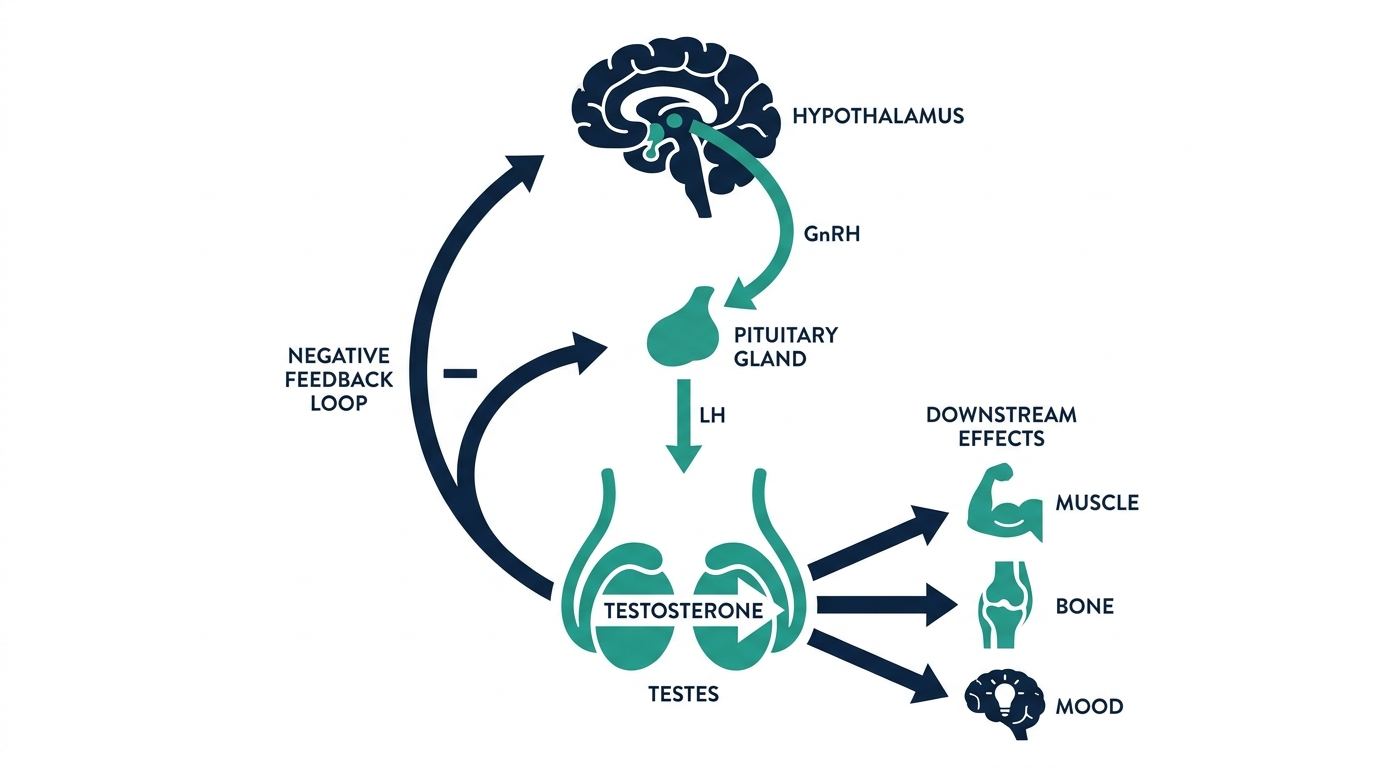
In the United States, most clinicians diagnose low testosterone when total testosterone is below 300 ng/dL on at least two early-morning blood tests, paired with symptoms (Cleveland Clinic). The 300 ng/dL cutoff comes from the average total testosterone reported in the best available literature, and the medical name for symptomatic low T is male hypogonadism.
Two details matter. First, timing: testosterone peaks in the morning, so a valid test is drawn before about 10 a.m. Second, symptoms must be present. A low number with no symptoms is not automatically treated. Common symptoms include low libido, erectile changes, fatigue, low mood, loss of muscle, and increased belly fat. Testosterone also declines roughly 1 percent per year after age 30 to 40, so a mildly lower reading at 55 is not the same as the same reading at 25.
Total versus free testosterone, and why SHBG matters
The number most people see is total testosterone, which counts every molecule in the blood. But a large share is bound tightly to a carrier protein called sex hormone binding globulin (SHBG) and is not available to your tissues. What your body actually uses is the free, or bioavailable, fraction. This distinction explains a frustrating scenario: a man with clear symptoms whose total testosterone reads normal. If his SHBG is high, his free testosterone can still be low even though the headline number looks fine. SHBG tends to rise with age and falls with obesity and insulin resistance, so it is not a fixed background. When symptoms and the total number disagree, asking for free testosterone and SHBG usually resolves the puzzle. This is one of the most common reasons a testosterone workup gets misread.
What can skew a single reading
One low result is not a diagnosis, and there are good reasons to confirm before acting. Testosterone follows a daily rhythm that peaks in the morning and drifts down through the day, so an afternoon draw can look falsely low. Acute illness, a poor night of sleep, heavy recent training, and even a bad week of stress can all temporarily depress the number, which is why guidelines call for at least two separate morning tests before diagnosing low T. Draw it early, on a fairly ordinary day, and do not anchor on a value taken while you were sick or sleep deprived.
Why raise it?
The simplest way to actually get this done
Superpower is a full-body lab membership that runs 100+ biomarkers, has each result reviewed by a doctor, and tracks your numbers year over year (about $199/year). It is what we point readers to when they would rather get one clean, complete draw than chase single tests one at a time. Here is superpower reviewed in full.
Raising low testosterone matters because the deficiency is tied to real outcomes, not just a number. Lower-than-normal testosterone increases abdominal (visceral) fat, which is linked to metabolic syndrome, type 2 diabetes, and cardiovascular disease (NCBI/PMC review).
The benefits people notice when levels return to a healthy range tend to cluster:
- Body composition: less fat mass and waist circumference, more lean muscle.
- Sexual health: improved libido and, for many men, erectile function.
- Energy and mood: less fatigue and a better sense of well-being.
- Metabolic markers: improved glycemic control in men who were deficient.
The important caveat is that these gains apply to men who are genuinely low. Pushing a normal level higher does not buy extra health, and chasing supraphysiologic numbers carries risk.
What actually causes low testosterone?
Doctors sort low testosterone into two broad types, and knowing which one you have changes both the workup and the fix. The dividing line is where the problem sits along the signaling chain from brain to testes.
- Primary hypogonadism means the testes themselves are not producing enough, even though the brain is sending a strong signal. Causes include prior injury, certain genetic conditions, past chemotherapy or radiation, and sometimes mumps in adulthood. On labs, the pituitary hormones LH and FSH run high because the brain is shouting at testes that cannot respond.
- Secondary hypogonadism means the signal from the brain is weak, so the testes never get the message. This is the more common and more reversible type in modern practice, and its drivers are strikingly ordinary: obesity, type 2 diabetes and insulin resistance, obstructive sleep apnea, chronic opioid use, long-term glucocorticoid use, and, less often, a pituitary problem such as a prolactin-secreting tumor. Here LH and FSH are low or inappropriately normal.
That second list is why so many cases of low testosterone are really a symptom of something else. An overweight man with untreated sleep apnea and prediabetes often has secondary low T, and the durable fix is treating those root causes, not reaching straight for a prescription. It is also why a thorough clinician looks beyond the single testosterone number before deciding what to do.
Evidence-based ways to raise testosterone
The strongest evidence-based ways to raise testosterone are losing excess weight, sleeping 7 to 9 hours, and resistance training, because each directly affects how much testosterone your body makes. One week of sleeping under 5 hours cut testosterone by 10 to 15 percent in healthy young men (JAMA / NCBI). Here is how the main levers stack up.
Diet and weight
Excess body fat, especially around the abdomen, converts testosterone into estrogen and suppresses the signal that tells the testes to produce it. Losing weight is the single most reliable lever for overweight men with low T, and weight-loss interventions consistently raise testosterone (NCBI/PMC). Build meals around protein, vegetables, whole grains, and healthy fats, and cut ultra-processed foods and excess alcohol. There is no single “testosterone food,” but a calorie balance that trims visceral fat does the heavy lifting.
Supplements
Supplements help only when they correct a real deficiency. For men low in vitamin D, magnesium, or zinc, fixing those gaps can raise total testosterone by about 100 to 150 ng/dL from baseline, because each nutrient is directly involved in testosterone synthesis (vitamin D acts on Leydig cells; zinc supports enzymes in the production pathway) (StatPearls, NCBI). If your bloodwork shows normal levels, adding more of these will not raise testosterone. Most over-the-counter “test booster” blends lack strong evidence and are best skipped.
Lifestyle
Sleep and training are non-negotiable. Aim for 7 to 9 hours nightly, since chronic short sleep alone drops testosterone 10 to 15 percent (JAMA, via ScienceDaily). Add resistance training (compound lifts like squats, deadlifts, presses) two to four times a week, which supports lean mass and hormonal health. Manage chronic stress, because sustained high cortisol opposes testosterone, and limit heavy alcohol intake. These habits are free, carry no side effects, and compound over months.
Medical treatment
Testosterone replacement therapy (TRT) is for men with confirmed, symptomatic deficiency, not for normal levels. When treatment is appropriate, the biochemical goal is the middle of the normal range, roughly 450 to 600 ng/dL (Cleveland Clinic Journal of Medicine). TRT comes as gels, injections, or pellets. Known risks include worsening sleep apnea, acne, prostate or breast enlargement, reduced sperm count, testicular shrinkage, and a possible rise in blood clot risk (Mayo Clinic). Many clinicians prefer to treat the underlying cause, such as obesity or diabetes, before prescribing testosterone.
One point worth understanding before starting TRT: it is not a casual supplement you can stop and restart freely. External testosterone tells the brain to stop signaling the testes, which shrinks them and suppresses natural sperm production, so fertility is a real consideration for younger men who may want children. Because of this, men who want to preserve fertility are sometimes managed with alternatives that stimulate the body’s own production rather than replacing it. This is a conversation to have with a clinician before the first dose, not after.
How testosterone connects to your other lab numbers
Testosterone is best read as part of a small panel, not in isolation. LH and FSH separate the two types of low T described above and point toward the cause. Estradiol matters because some testosterone naturally converts to estrogen, and both very high and very low estradiol cause problems, which is why chasing a sky-high testosterone number can backfire. On the safety side, anyone on TRT needs periodic monitoring of hematocrit, since testosterone thickens the blood and can push red cell counts too high, plus prostate-specific antigen (PSA) checks in older men. A prolactin level is sometimes added when the picture suggests a pituitary cause. The lesson is the same one that runs through this whole guide: the single testosterone value is a starting point, and the diagnosis and the safe treatment plan both live in the pattern across markers.
A realistic example
Consider a 42-year-old carrying extra weight who reports low drive, afternoon fatigue, and softer workouts. A morning draw shows total testosterone of 280 ng/dL, and a repeat a week later confirms it at 290 with low-normal LH, suggesting the secondary type. His clinician screens for and finds mild sleep apnea, and notes prediabetes. Rather than starting TRT immediately, the plan targets the roots: treat the sleep apnea, prioritize 7 to 9 hours of sleep, start resistance training three days a week, and cut a modest amount of weight over three months. On recheck, his testosterone has climbed back over 400 ng/dL and his energy is better, no prescription needed. If it had not moved and symptoms persisted, TRT would then be a reasonable, monitored next step. That order, root causes first, medication second, is how good practice usually runs.
How long does it take?
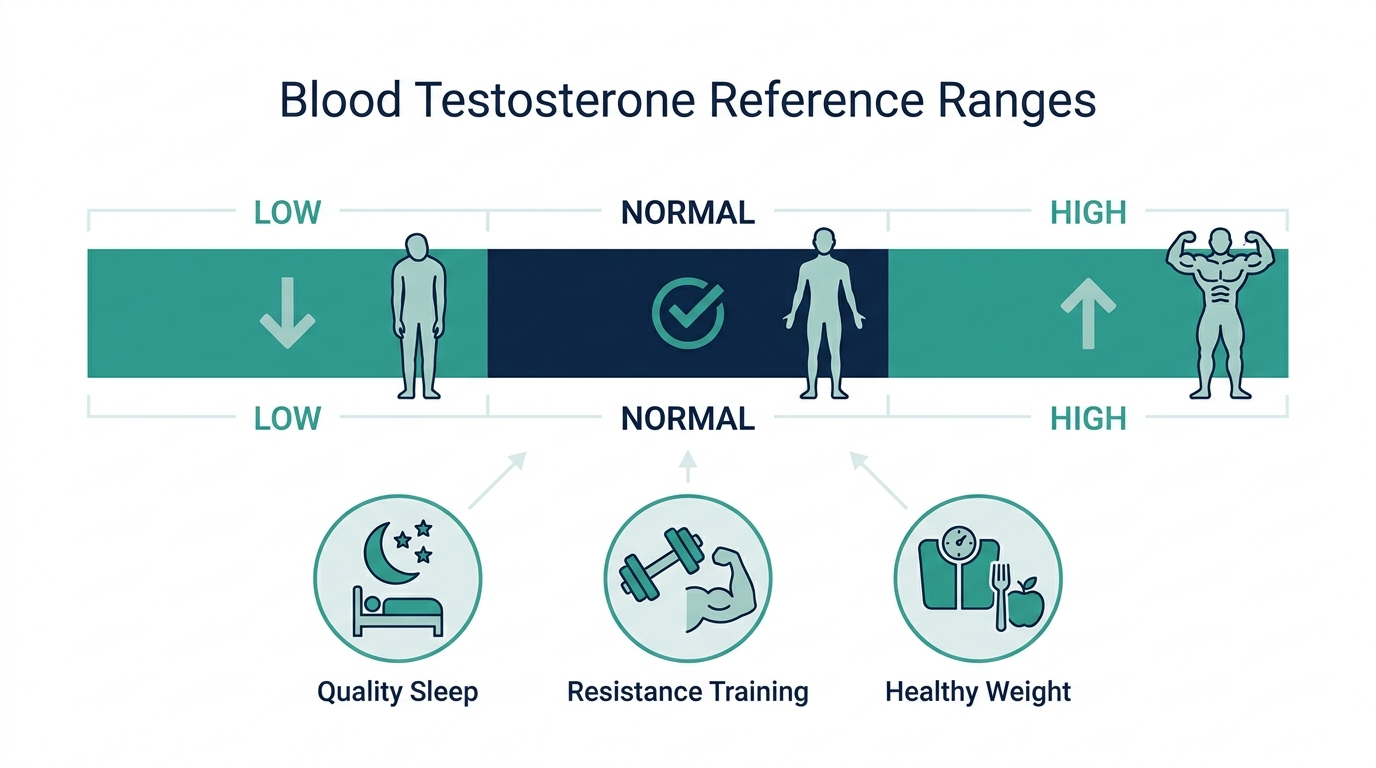
Natural changes take weeks to months, not days. Sleep effects appear within about a week, since one week of short sleep measurably lowered testosterone (NCBI), so fixing sleep can shift levels in a similar window. Weight loss and resistance training generally need 8 to 12 weeks or more before bloodwork reflects a meaningful change, because they work through fat loss and muscle adaptation rather than overnight.
With TRT, symptom timelines vary by outcome. Libido and mood often improve within 3 to 6 weeks, while changes in body composition and strength build over 3 to 6 months. Whatever the route, the practical rule is to retest after a defined period rather than judging by feel alone, because perceived energy can fluctuate for many reasons.
When to see a doctor
See a doctor if you have persistent symptoms of low testosterone, because diagnosis requires a morning blood test confirming a level under 300 ng/dL plus symptoms, and self-treatment can mask serious causes (Cleveland Clinic). Book a visit if you notice ongoing low libido, erectile difficulty, deep fatigue, loss of muscle, depressed mood, or unexplained belly fat gain.
Get prompt care for red flags such as sudden loss of body or facial hair, hot flashes, breast tenderness or enlargement, very small or shrinking testicles, or infertility, since these can point to a specific medical cause that needs investigation. A clinician can rule out conditions like pituitary problems, thyroid disorders, or medication side effects before any treatment. Never start testosterone bought online or without a prescription, because dosing errors and contaminated products carry real harm.
Turn what you just learned into action.
Superpower lets you test 100+ biomarkers from home, then re-check them over time so you can actually see progress, physician-reviewed at every step.
Frequently asked questions
What is the fastest way to increase testosterone naturally?
The fastest natural levers are restoring sleep and losing excess fat. One week of sleep under 5 hours lowers testosterone 10 to 15 percent, so fixing sleep can shift levels within weeks, while weight loss and strength training show effects over 8 to 12 weeks.
Do testosterone-boosting supplements actually work?
Only when correcting a deficiency. Fixing low vitamin D, zinc, or magnesium can add about 100 to 150 ng/dL. If your levels of those nutrients are already normal, supplements and over-the-counter “test boosters” do not raise testosterone.
What level is considered low testosterone?
Most US clinicians diagnose low testosterone when total testosterone is below 300 ng/dL on two early-morning blood tests, combined with symptoms such as low libido, fatigue, or low mood, per Cleveland Clinic. A low number with no symptoms is usually not treated.
Does losing weight raise testosterone?
Yes. Excess abdominal fat converts testosterone to estrogen and suppresses production, so weight loss is the most reliable lever for overweight men with low T. Studies consistently show weight-loss interventions raise testosterone and reduce waist circumference.
Is testosterone therapy safe?
TRT is reasonable for confirmed, symptomatic low testosterone under medical supervision, targeting roughly 450 to 600 ng/dL. Risks include worsening sleep apnea, acne, reduced sperm count, testicular shrinkage, and possible clot risk, per Mayo Clinic. It is not for men with normal levels.
My total testosterone is normal but I still feel low. What now?
This is common and usually comes down to the free versus total distinction. If your SHBG is high, a normal total can hide a low free testosterone, which is the fraction your body actually uses. Ask your clinician to check free testosterone and SHBG, and to confirm the draw was done in the morning. It is also worth ruling out other causes of the same symptoms, such as thyroid problems, depression, poor sleep, or medication side effects, since low drive and fatigue are not specific to testosterone.
Does TRT make you infertile?
It can, and this matters most for younger men. External testosterone suppresses the brain signals that drive sperm production, so it often lowers fertility while you are on it, and recovery is not guaranteed to be quick. If you may want children, raise this before starting, because clinicians can sometimes use approaches that stimulate your own production instead of replacing it. Treat TRT as a considered medical decision, not a quick fix.
Can stress or overtraining lower testosterone?
Yes, both can. Sustained stress keeps cortisol elevated, and cortisol works against testosterone, while very high training loads without enough recovery can suppress it too. The fix is not exotic: protect sleep, keep training hard but recoverable rather than relentless, and manage chronic stress. These are the same free levers that raise testosterone in the first place, which is why recovery is part of the program, not a break from it.
Sources
- Cleveland Clinic, Low Testosterone (Low T): Hypogonadism, Symptoms and Treatment
- Cleveland Clinic Journal of Medicine, Does my patient have testosterone deficiency?
- StatPearls (NCBI Bookshelf), Male Hypogonadism
- NCBI/PMC, Sleep restriction and testosterone concentrations in young healthy males
- ScienceDaily, Sleep loss lowers testosterone in healthy young men (JAMA)
- NCBI/PMC, Testosterone as Potential Therapy in Obesity with Testosterone Deficiency
- NCBI/PMC, Testosterone therapy in obese men with low testosterone (review protocol)
- Mayo Clinic News Network, Low testosterone and treatment risks
This article is for general educational purposes and is not medical advice. It cannot diagnose or treat you and does not replace your clinician. Always discuss your lab results and any health decisions with a qualified healthcare professional.
Related: test your thyroid and hormones from home.
Vital Signs Today may earn a commission if you buy through links on this page. It does not affect our editorial assessments.