
- To lower high blood calcium, the foundation is drinking plenty of water and stopping calcium or vitamin D supplements, while moderate to severe hypercalcemia (a calcium level above 12 mg/dL) is treated in a hospital with intravenous saline.
- The fastest way to lower calcium is intravenous (IV) saline plus calcitonin, which can drop calcium by about 1 to 2 mg/dL within 12 to 48 hours, followed by a bisphosphonate or denosumab for a longer-lasting effect.
- You cannot reliably lower calcium with diet alone if the cause is overactive parathyroid glands or cancer, so any calcium level above the normal 8.5 to 10.5 mg/dL range needs a doctor to find and treat the underlying cause.
Part of our Comprehensive Metabolic Panel guide.
What counts as high calcium?
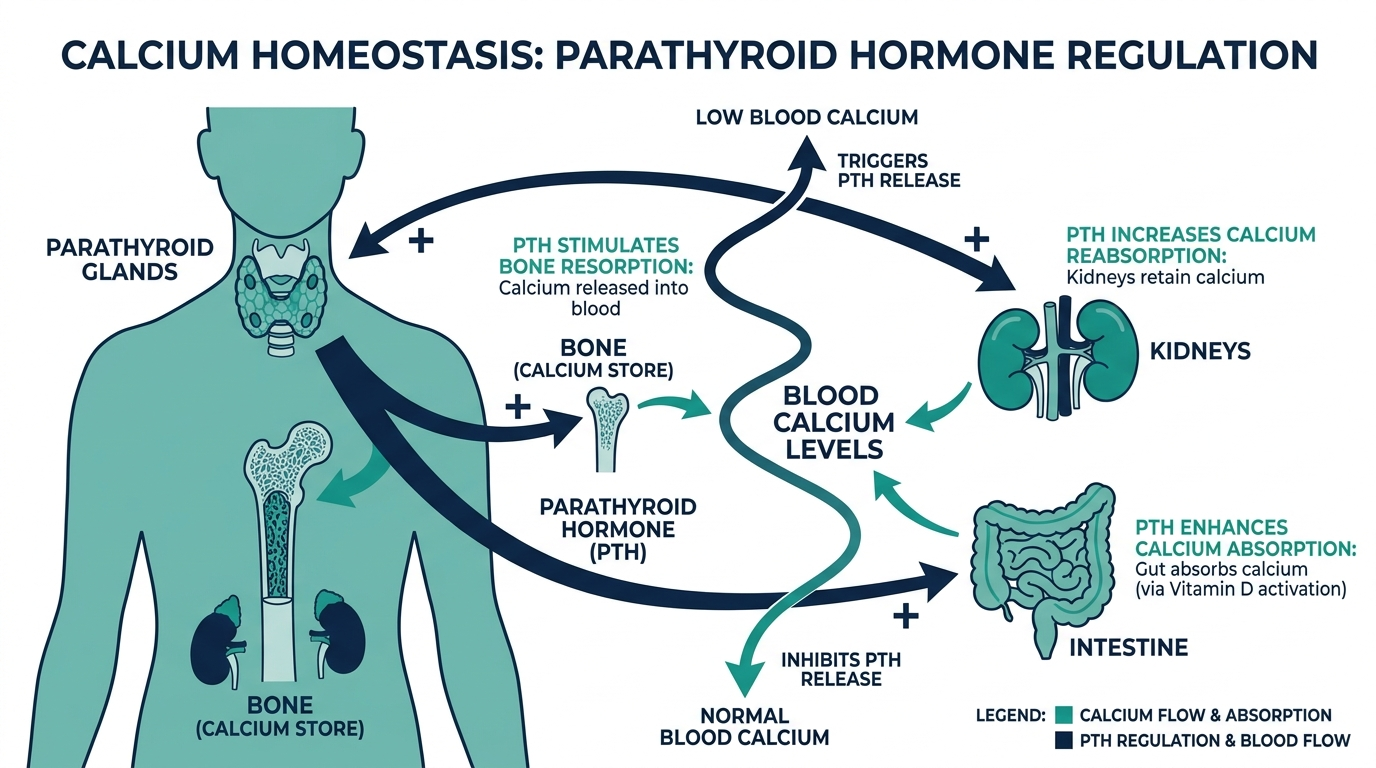
High blood calcium, called hypercalcemia, means your total serum calcium is above the normal range of roughly 8.5 to 10.5 mg/dL, according to the Cleveland Clinic. Doctors grade it by severity because the number guides how urgently it must be lowered.
High blood calcium can stem from several causes, so do you know what’s actually driving yours up? One at-home Superpower draw checks 100+ biomarkers, physician-reviewed.
The standard cutoffs are:
- Mild: 10.5 to 11.9 mg/dL. Often found by accident on a routine blood panel, and frequently has no symptoms.
- Moderate: 12.0 to 13.9 mg/dL. More likely to cause thirst, frequent urination, constipation, and fatigue.
- Severe (hypercalcemic crisis): above 14.0 mg/dL, a medical emergency that can cause confusion, abnormal heart rhythms, and kidney injury.
One nuance worth knowing: about half of your blood calcium is bound to a protein called albumin. If albumin is low, total calcium can read falsely low, so clinicians sometimes check a “corrected calcium” or an ionized calcium to confirm the true level before acting.
It helps to understand what “calcium” on your report actually measures. A standard panel reports total calcium, which includes the roughly half bound to albumin plus the free, active portion called ionized calcium. When albumin is low, a common situation in illness, the total reads low even though the active calcium is fine, so clinicians apply a correction that adds about 0.8 mg/dL for every 1 g/dL that albumin sits below 4.0. When the picture is unclear, an ionized calcium is drawn to measure the active fraction directly.
There is no separate optimal target for calcium the way there is for cholesterol. The body holds it in a very tight band because both the high and low ends interfere with nerves, muscle, and the heart. For reference, United States labs report calcium in mg/dL, while much of the world uses mmol/L, where 10 mg/dL is about 2.5 mmol/L. Read your value against the range printed on your own report, since lab methods vary slightly.
Why lower it?
You lower high calcium to protect your kidneys, heart, bones, and brain, because untreated hypercalcemia can cause kidney stones, kidney failure, irregular heartbeats, and confusion. The risk rises sharply once calcium climbs above 14.0 mg/dL, which the Cleveland Clinic classifies as a crisis.
Calcium is a signaling mineral. When too much circulates, it disrupts the electrical activity of nerves and the heart and pulls extra fluid out through the kidneys, which is why many people feel dehydrated, foggy, and constipated. Over months, persistently high calcium can thin your bones and deposit stones in your kidneys.
The cause matters as much as the number. Primary hyperparathyroidism and cancer together account for more than 90 percent of all cases, per a StatPearls review on NCBI. Lowering the calcium treats the symptom, but the underlying driver still has to be diagnosed and managed.
The simplest way to actually get this done
Superpower is a full-body lab membership that runs 100+ biomarkers, has each result reviewed by a doctor, and tracks your numbers year over year (about $199/year). It is what we point readers to when they would rather get one clean, complete draw than chase single tests one at a time. Here is superpower reviewed in full.
What causes high calcium?
Two conditions account for the vast majority of hypercalcemia, and telling them apart is the whole game. Primary hyperparathyroidism, where one or more parathyroid glands overproduce hormone, is by far the most common cause found on routine outpatient testing. Cancer is the most common cause in people who are hospitalized, whether through tumors that secrete a hormone-like protein called PTHrP, cancer that has spread to bone, or multiple myeloma.
Beyond those two, several other drivers show up regularly:
- Too much vitamin D: high-dose supplements can raise calcium absorption from the gut enough to push levels up.
- Calcium and antacid overuse: very large intakes of calcium plus absorbable antacids cause milk-alkali syndrome.
- Medications: thiazide diuretics and lithium both raise calcium and are worth reviewing.
- Prolonged immobilization: weeks off your feet release calcium from bone into the blood.
- Granulomatous diseases: sarcoidosis and tuberculosis can activate vitamin D and raise calcium.
- Overactive thyroid: hyperthyroidism speeds bone turnover and can nudge calcium up.
One inherited condition deserves special mention: familial hypocalciuric hypercalcemia, or FHH, causes lifelong mild hypercalcemia but needs no treatment, and mistaking it for hyperparathyroidism can lead to unnecessary surgery. This is why the workup, especially the parathyroid hormone level and a urine calcium measurement, matters so much before anyone operates.
What are the symptoms of high calcium?
Clinicians remember the symptoms with an old mnemonic: stones, bones, groans, and psychiatric moans. It maps neatly onto the organs that high calcium affects.
- Stones: excess calcium spilled into the urine forms kidney stones and, over time, can damage the kidneys.
- Bones: when calcium is being pulled from the skeleton, bone pain and thinning follow.
- Groans: the gut slows down, causing constipation, nausea, loss of appetite, and sometimes abdominal pain.
- Psychiatric moans: the brain feels it as fatigue, difficulty concentrating, low mood, and, at high levels, confusion.
Add to that the classic thirst and frequent urination, which happen because high calcium interferes with the kidney’s ability to concentrate urine. Mild hypercalcemia often produces none of this and is found by accident on a routine panel, which is exactly why the number is worth taking seriously even when you feel well.
Evidence-based ways to lower calcium
The proven ways to lower calcium are, in order of escalation: hydration and stopping supplements for mild cases, then IV saline, calcitonin, and bisphosphonates or denosumab for moderate to severe cases. For mild hypercalcemia, guidelines summarized in StatPearls advise encouraging adequate hydration and discouraging prolonged bed rest.
Diet and self-care steps
- Drink more water: Staying well hydrated helps your kidneys flush excess calcium. Dehydration concentrates calcium and makes hypercalcemia worse.
- Stop calcium and vitamin D supplements: Excess supplemental vitamin D and large calcium or antacid intake (the cause of milk-alkali syndrome) can drive levels up. Review every supplement and antacid with your clinician before changing prescription doses.
- Keep moving: Immobilization releases calcium from bone, so light, weight-bearing activity helps when you are able.
- Limit high-dose vitamin D foods only if advised: Ordinary dietary calcium is rarely the sole cause, so do not crash-cut dairy without medical guidance.
Lifestyle and monitoring
For people with mild, stable hypercalcemia from early primary hyperparathyroidism, doctors often choose active monitoring with periodic calcium, kidney function, and bone density checks rather than immediate treatment. Adequate hydration remains the constant baseline. Avoid thiazide diuretics and lithium where possible, since both can raise calcium.
Medical options (each with a named figure)
- IV saline (first line for moderate to severe): StatPearls notes that volume-depleted patients typically receive about 3 to 4 liters of 0.9 percent saline over 48 hours to restore fluid and promote calcium excretion through the urine.
- Calcitonin: Works quickly, lowering calcium by roughly 1 to 2 mg/dL within 12 to 48 hours, but its effect fades after a few days (tachyphylaxis), so it is a bridge, not a long-term fix.
- Bisphosphonates (IV, such as zoledronic acid): Slower to act but durable, these block bone breakdown and are a mainstay for hypercalcemia of malignancy, per StatPearls.
- Denosumab: The 2023 Endocrine Society guideline lists denosumab as a preferred agent for severe hypercalcemia, including cases resistant to bisphosphonates, based on its greater potency in blocking bone resorption.
- Loop diuretics and dialysis: A loop diuretic such as furosemide may be added only after rehydration, and dialysis is reserved for life-threatening levels or kidney failure.
- Surgery: For primary hyperparathyroidism, removing the overactive parathyroid gland (parathyroidectomy) is the only definitive cure.
How calcium connects to your other numbers
A single calcium value is a starting point, not an answer. The test that unlocks it is parathyroid hormone, or PTH. If calcium is high and PTH is also high or inappropriately normal, primary hyperparathyroidism is the likely diagnosis. If calcium is high but PTH is suppressed, the cause is usually something outside the parathyroid glands, such as cancer or vitamin D excess, and the workup shifts accordingly.
Several companions refine the picture. Phosphate often runs low in hyperparathyroidism because PTH makes the kidneys dump it. A 25-hydroxyvitamin D level checks for supplement-driven cases. Albumin is essential for interpreting the calcium itself, and kidney markers like creatinine reveal whether high calcium has started to harm the kidneys. In suspected cancer, clinicians may add PTHrP. Reading these together is how a flagged calcium becomes a real diagnosis, which is the argument for looking at a broad panel rather than one isolated value.
It is also worth knowing what will not fix the number. Cutting dietary calcium rarely helps when the driver is a parathyroid gland or a tumor, because the calcium is coming out of your own bones and gut regulation, not your plate. That is why chasing the diagnosis is the real work, and why the follow-up labs above matter more than any single food change.
How fast can it change?
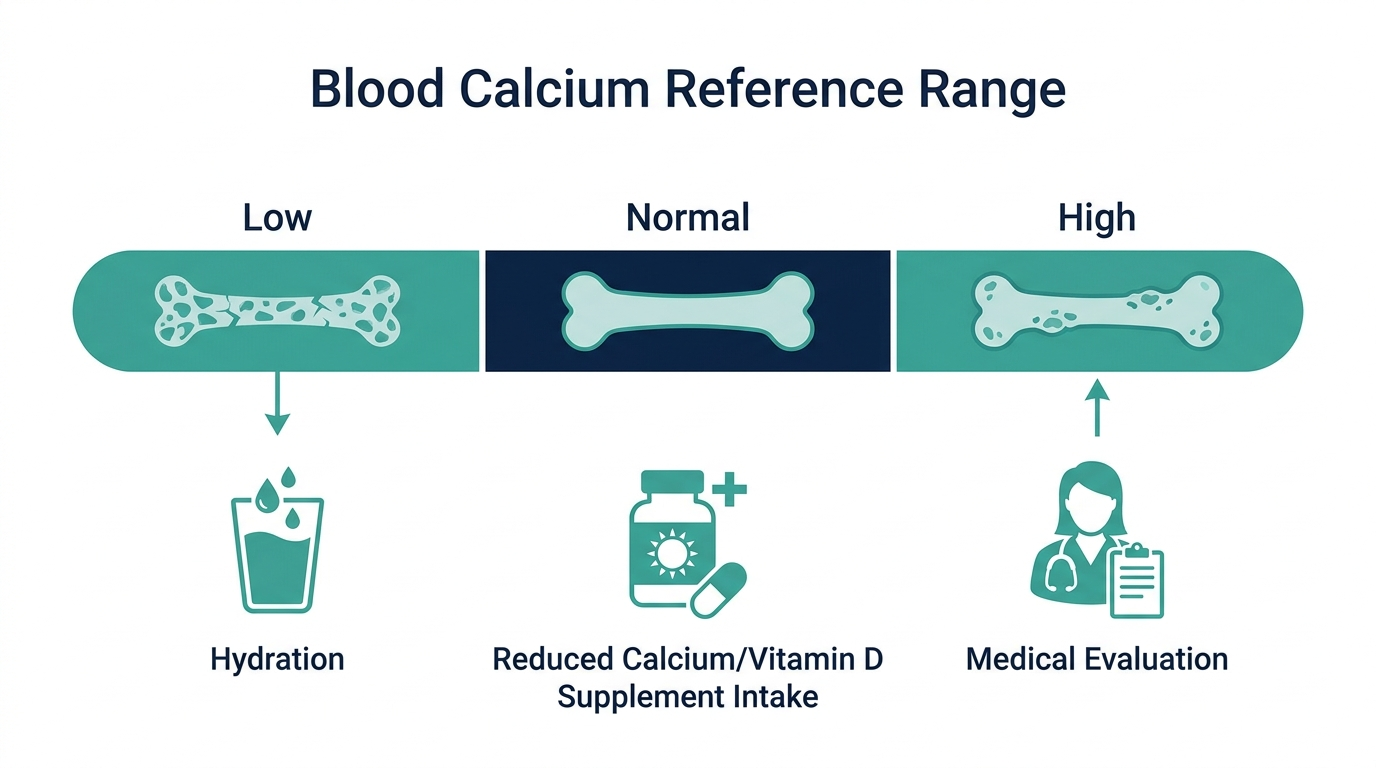
How fast calcium drops depends on the treatment. IV saline plus calcitonin can lower calcium by about 1 to 2 mg/dL within 12 to 48 hours, while IV bisphosphonates take 2 to 4 days to reach full effect but last for weeks, according to StatPearls.
This is why hospitals combine fast and slow agents. Calcitonin buys time during the first day or two while a bisphosphonate or denosumab takes over for sustained control. Mild hypercalcemia managed at home with hydration alone changes more gradually, often over days, and is monitored with repeat blood tests rather than a single dramatic drop.
Two practical points: rehydration usually shows benefit within the first 24 hours, and calcitonin loses its punch after roughly 48 hours, so do not expect any single drug to normalize a high level on its own. The goal is steady, monitored improvement, not a sudden crash.
Here is how this often plays out in practice. A routine panel shows calcium at 10.9 mg/dL in someone who feels well. The clinician repeats the test to confirm, checks albumin to make sure the value is not a correction artifact, and orders a PTH. If PTH is elevated, the diagnosis points to primary hyperparathyroidism, and management may be watchful monitoring or referral for parathyroid surgery depending on age, bone density, and kidney function. A mild, stable level like this is rarely an emergency, but it is also not something to leave unexamined for years.
If watchful monitoring is chosen, it is not a passive plan. It usually means rechecking calcium and kidney function every six to twelve months, measuring bone density periodically, and watching for new kidney stones or a rising trend. Surgery becomes the recommendation if calcium climbs, bone density drops, kidney function declines, or a stone appears. The number gets tracked over time, which is exactly the kind of longitudinal view a single one-off test cannot give you.
When do you need medication or a doctor?
You need a doctor for any confirmed calcium above the normal range, and you need urgent care if your level is above 14 mg/dL or you have confusion, a fast or irregular heartbeat, severe weakness, or vomiting. Severe hypercalcemia above 14.0 mg/dL is a crisis requiring hospital treatment, per the Cleveland Clinic.
Seek prompt medical evaluation if you notice:
- Neurologic signs: confusion, drowsiness, or unusual personality changes.
- Heart symptoms: palpitations or an irregular pulse.
- Kidney clues: intense thirst, frequent urination, flank pain from stones, or much less urine than usual.
- Persistent stomach issues: nausea, vomiting, or stubborn constipation.
Because primary hyperparathyroidism is the most common cause in the outpatient setting (per a PubMed review on NCBI) and cancer is the leading cause in hospitalized patients, every case of confirmed hypercalcemia needs a workup, usually a parathyroid hormone (PTH) test, to find the source. Lowering the number without diagnosing the cause is only half the job.
Curious what your own levels look like?
Baseline 100+ biomarkers today and retest as life changes, all in one membership with physician review.
Frequently asked questions
What is the fastest way to lower calcium?
The fastest hospital approach is intravenous saline plus calcitonin, which can lower calcium by about 1 to 2 mg/dL within 12 to 48 hours. A bisphosphonate or denosumab is added for longer-lasting control. At home, drinking plenty of water and stopping supplements helps mild cases.
Can drinking water lower high calcium?
Yes, staying well hydrated helps your kidneys flush excess calcium and is the baseline step for mild hypercalcemia. But water alone cannot fix moderate or severe high calcium, which needs IV fluids and medication in a hospital. Always confirm the cause with a doctor.
What foods should I avoid with high calcium?
Stop calcium and vitamin D supplements and high-dose antacids first, since these are common drivers. Ordinary dietary calcium from food is rarely the sole cause, so do not eliminate dairy without medical advice. Review every supplement with your clinician before changing anything.
What level of calcium is dangerous?
A calcium above 14.0 mg/dL is a medical emergency called hypercalcemic crisis, per the Cleveland Clinic. Levels of 12.0 to 13.9 mg/dL are moderate and often need treatment, while 10.5 to 11.9 mg/dL is mild. Normal is roughly 8.5 to 10.5 mg/dL.
Does high calcium go away on its own?
Mild hypercalcemia from supplements may resolve once you stop them and hydrate. But if the cause is overactive parathyroid glands or cancer, it will not go away on its own and needs treatment, sometimes surgery. Any confirmed high calcium should be evaluated by a doctor.
What is the most common cause of high calcium?
In people tested as outpatients, the most common cause is primary hyperparathyroidism, where a parathyroid gland overproduces hormone. In hospitalized patients, cancer is the leading cause. Together these two account for the large majority of cases, which is why a parathyroid hormone test is the standard next step.
Does high calcium always mean cancer?
No. While cancer is a leading cause in hospitalized patients, most high calcium found on routine outpatient testing is due to an overactive parathyroid gland, not cancer. A mildly high level in someone who feels well is more often hyperparathyroidism. The workup, starting with PTH, sorts out which it is.
What is corrected calcium?
Corrected calcium adjusts the total calcium result for a low albumin level, since about half of blood calcium is bound to albumin. When albumin is low, the total reads falsely low, so clinicians add roughly 0.8 mg/dL for every 1 g/dL that albumin sits below 4.0, or draw an ionized calcium to measure the active fraction directly.
Sources
- Cleveland Clinic, Hypercalcemia: Causes, Symptoms and Treatment
- StatPearls (NCBI), Hypercalcemia
- StatPearls (NCBI), Resistant Hypercalcemia
- StatPearls (NCBI), Primary Hyperparathyroidism
- PubMed (NCBI), Primary Hyperparathyroidism
- Merck Manual Professional Edition, Hypercalcemia
This article is for general educational purposes and is not medical advice. It cannot diagnose or treat you and does not replace your clinician. Always discuss your lab results and any health decisions with a qualified healthcare professional.
Related: which GLP-1 telehealth service fits you.
Vital Signs Today may earn a commission if you buy through links on this page. It does not affect our editorial assessments.