Disclosure: Vital Signs Today may earn a commission if you buy through links on this page, at no extra cost to you. This does not influence our evidence-based assessments. We are not a medical provider; talk to a clinician before acting on test results.
You scanned your complete blood count, the hemoglobin looked alright, and then your eyes snagged on a flagged value near the bottom: MCHC, with a little L beside it for low. No one circled it, no one called, but it is sitting there in red, and now you want to know whether it matters. Here is the short version before the long one: a low MCHC is rarely an emergency by itself, but it is a real clue, and in most people it points to one fixable thing.
Most explainers lump MCHC in with a wall of red cell indices and move on. That is a missed opportunity, because MCHC answers a very specific question about your blood, and once you understand the question, the L next to it stops being scary and starts being useful.
Part of our Complete Blood Count guide.
What is MCHC in a blood test when it is low?
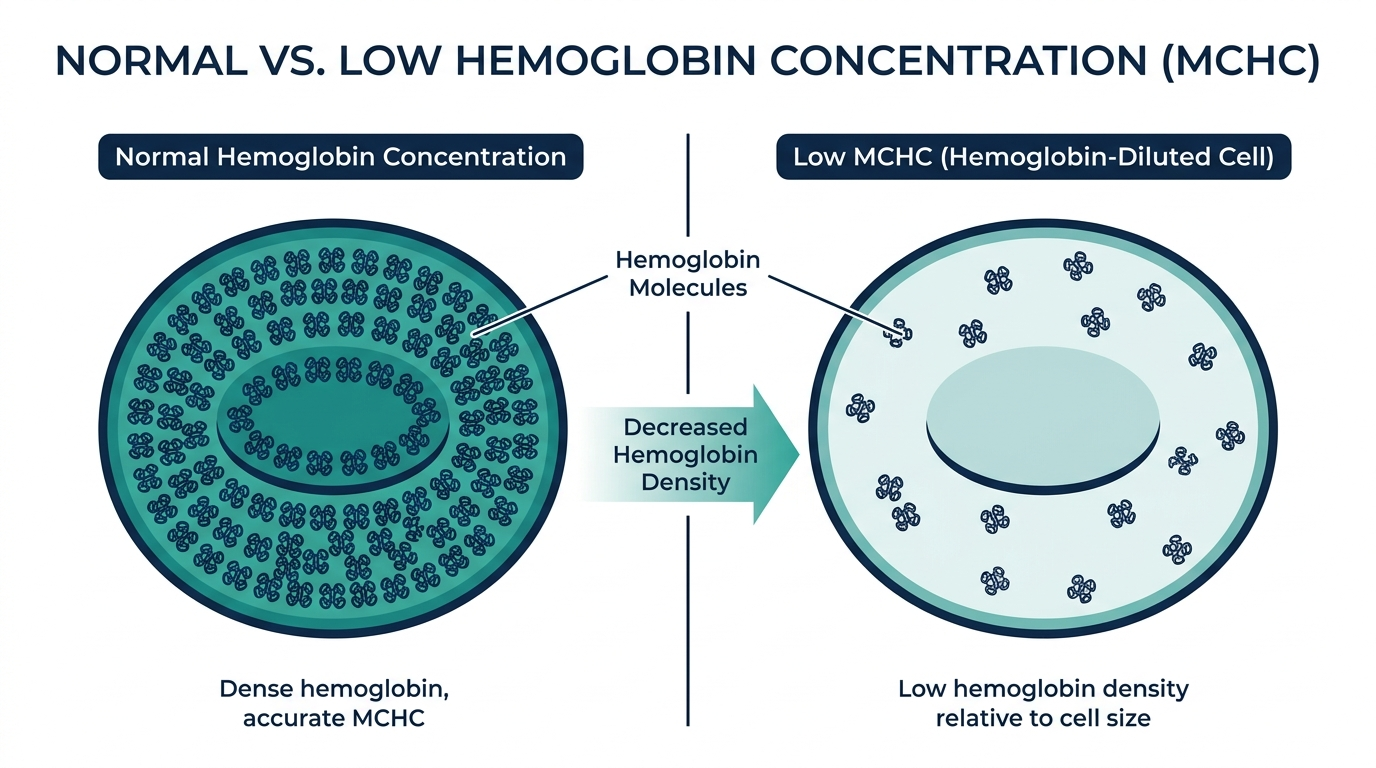
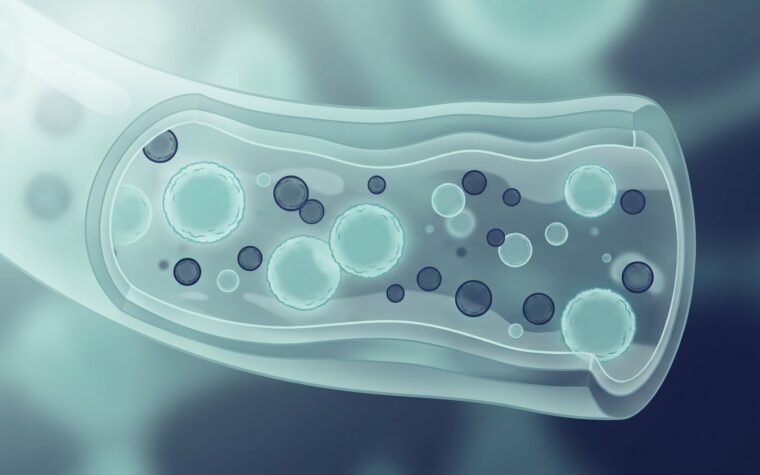
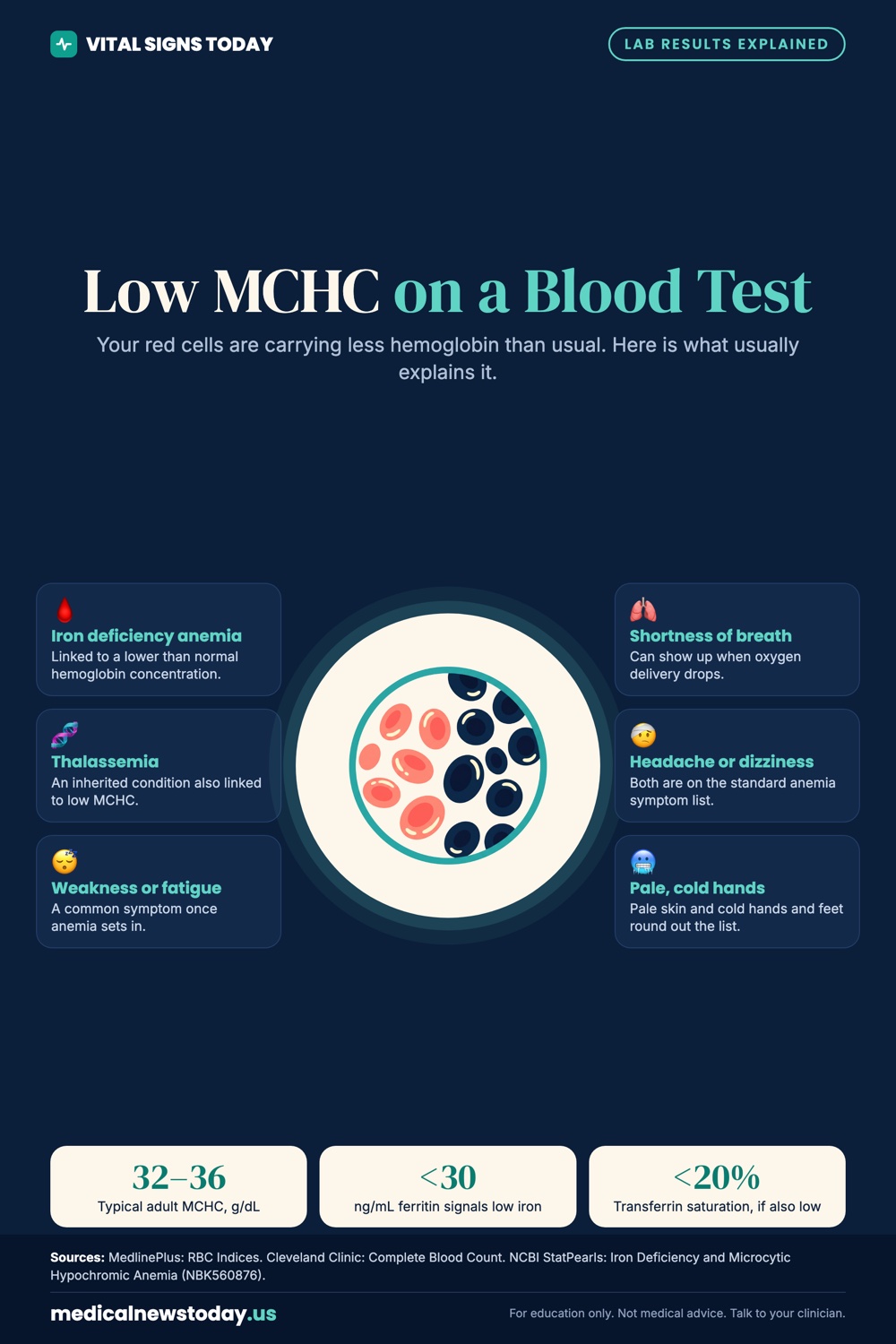
MCHC stands for mean corpuscular hemoglobin concentration. It measures how concentrated the hemoglobin is inside your red blood cells, on average, reported in grams per deciliter (Cleveland Clinic). When the question is what is MCHC in blood test low results, the plain answer is this: your red cells are carrying less hemoglobin per unit of volume than they should, so each cell is, in effect, a little watered down.
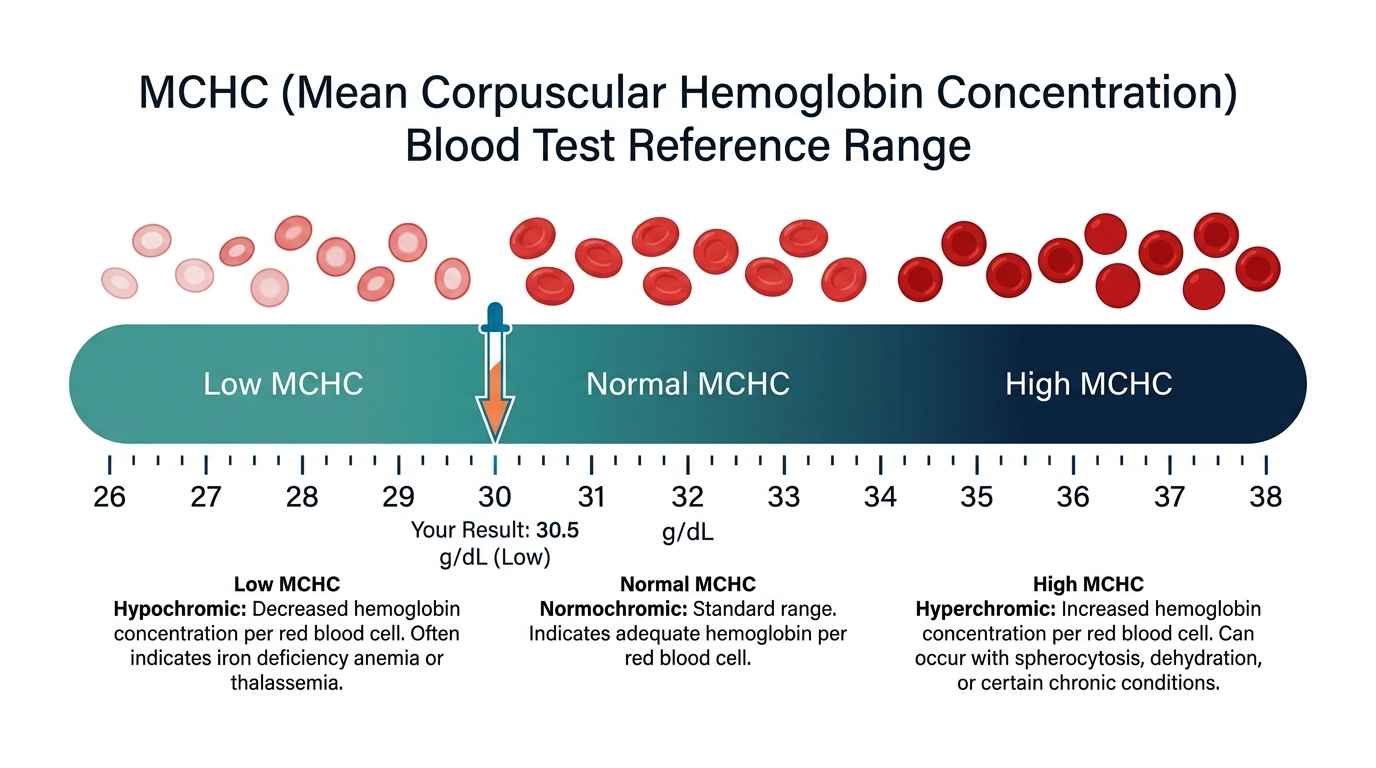
The medical word for that is hypochromia, which literally means under-colored. Pack less hemoglobin into a red cell and it looks paler under the microscope (Cleveland Clinic). A normal adult MCHC generally runs about 32 to 36 grams per deciliter (Cleveland Clinic). Think of MCHC as the richness of the paint inside each red cell. Low MCHC means the paint has been thinned out.
What does a low MCHC mean on a blood test?
A low MCHC means hypochromia: your red blood cells are diluted in hemoglobin, the iron-rich protein that ferries oxygen around your body (Cleveland Clinic). The cutoff is straightforward. Because the usual reference range is roughly 32 to 36 grams per deciliter, anything below about 32 is flagged as low, though the exact threshold varies slightly by lab and instrument, so read it against the reference range printed on your own report (Cleveland Clinic).
One number rarely tells the whole story, which is why clinicians read MCHC next to two siblings on the same panel: MCV (the average size of your red cells) and MCH (the average amount of hemoglobin per cell). When MCHC is low alongside a low MCV, you are looking at a microcytic, hypochromic picture, meaning red cells that are both small and pale (NCBI StatPearls). That combination is the fingerprint pattern that sends a doctor down a very specific diagnostic path, and it is the most common reason a low MCHC shows up at all.
What causes a low MCHC?
The differential is shorter than you would expect, and one cause dominates the list. Here it is, most common first.
- Iron deficiency. This is the big one. Without enough iron, your bone marrow cannot pack hemoglobin into red cells, so the cells come out small and pale and MCHC drops. Iron deficiency, most often driven by blood loss, is the leading cause of hypochromic anemia worldwide (NCBI StatPearls). In women, the usual culprits are heavy periods and pregnancy; in everyone else, the quiet one to rule out is slow gastrointestinal bleeding.
- Thalassemia and other hemoglobinopathies. Inherited conditions like thalassemia trait disrupt hemoglobin production from birth, producing small, pale cells that mimic iron deficiency on the surface (Cleveland Clinic).
- Anemia of chronic disease. Long-running inflammation from infection, kidney disease, liver disease, autoimmune conditions, or cancer can lower hemoglobin concentration and nudge MCHC down (Cleveland Clinic).
- Less common deficiencies and toxins. Copper deficiency, vitamin B6 (pyridoxine) deficiency, and lead poisoning can all impair hemoglobin synthesis and produce a low MCHC (NCBI StatPearls).
- Reticulocytosis. A flood of young red cells, called reticulocytes, can pull MCHC down because immature cells carry a lower hemoglobin concentration than mature ones (NCBI StatPearls).
If you take one thing from this list, take this: a low MCHC is far more often a nutritional or genetic story than a sign of something sinister. But the path from low MCHC to the actual cause runs through a few simple follow-up tests, which is exactly where most people get stuck.
What are the symptoms of a low MCHC?
Here is the part that confuses people: a low MCHC by itself does not cause any symptoms. MCHC is a calculated lab value, not a feeling. What you actually notice are the symptoms of the underlying anemia, if your hemoglobin has fallen far enough to matter.
When a low MCHC comes with genuine anemia, the symptoms are the classic ones of carrying less oxygen: fatigue that sleep does not fix, weakness, pale skin, shortness of breath on exertion, lightheadedness, and frequent headaches (Cleveland Clinic). Iron deficiency specifically can add a few odd ones that surprise people, including brittle or spoon-shaped nails, restless legs at night, and unusual cravings to chew ice or non-food items.
And often there are no symptoms at all. A mildly low MCHC with normal or near-normal hemoglobin is frequently picked up incidentally on routine bloodwork in someone who feels completely fine (MedlinePlus). Feeling normal does not mean you should ignore it, because iron stores can be running low long before you feel a thing, but it does mean you are not in danger from the number on the page.

When is a low MCHC dangerous or a medical emergency?
The MCHC value itself is never the emergency. What can be dangerous is severe underlying anemia, and that is read off your hemoglobin, not your MCHC. A low MCHC paired with a sharply low hemoglobin, especially if it dropped quickly, is the combination that warrants urgent attention.
The red flags that mean do not wait, call your doctor or seek care now: chest pain, a racing or pounding heart at rest, severe shortness of breath, fainting, or confusion. Those can signal that your oxygen-carrying capacity has fallen to a level your heart and brain are struggling with. Just as important is the cause behind the number. If the low MCHC is being driven by ongoing blood loss, for example black or tarry stools, blood in the stool, or vomiting blood, that bleeding is the emergency regardless of what the MCHC reads.
For the large majority of people, a mildly low MCHC found on routine testing is a non-urgent finding to investigate at a normal pace, not a 2 a.m. trip to the emergency room.
What should you do about a low MCHC?
The job now is not to treat the MCHC. It is to find out why it is low, and the workup is refreshingly concrete.
The single most useful next step is iron studies: serum ferritin, serum iron, total iron-binding capacity, and transferrin saturation (Cleveland Clinic). In iron deficiency, ferritin and transferrin saturation run low while total iron-binding capacity runs high, a pattern that nails the diagnosis (NCBI StatPearls). A ferritin below roughly 15 nanograms per milliliter, in the absence of infection or inflammation, is strong evidence of iron deficiency (NCBI StatPearls).
From there the path depends on what the iron studies show:
- If iron is low, the question becomes why, and in adults that means looking for a source of blood loss. Treatment usually involves dietary changes plus iron supplementation, but fixing the leak matters as much as refilling the tank.
- If iron is normal but the cells are still small and pale, your clinician may consider thalassemia trait and order hemoglobin electrophoresis to look at the types of hemoglobin you make (NCBI StatPearls).
- If inflammation or chronic disease is in the picture, the anemia tends to improve when the underlying condition is managed.
Do not start high-dose iron supplements on your own just because you saw a low MCHC. If the cause turns out to be thalassemia rather than iron deficiency, extra iron is unnecessary and can accumulate, so confirm the cause first.
When should you see a doctor?
If your MCHC is flagged low, bring the full report to your primary care clinician and ask them to read MCHC alongside your hemoglobin, MCV, and MCH. That conversation is worth booking even if you feel fine, because a low MCHC is often the first visible sign that iron stores are draining.
See a doctor promptly if the low MCHC comes with real anemia symptoms, such as persistent fatigue, breathlessness, paleness, or dizziness, and seek same-day or emergency care for the red flags above: chest pain, fainting, severe shortness of breath, or any sign of active bleeding. For a mild incidental low value with no symptoms, a routine appointment to order iron studies is the right speed.

The insider read: why a low MCHC is the index doctors trust least, and what gets missed
Here is the nuance that almost never reaches the patient version. Among the red cell indices, MCHC is the one experienced clinicians treat with the most caution, because it is unusually prone to lab artifacts. MCHC is calculated from hemoglobin and hematocrit, so anything that distorts those measurements distorts MCHC.
The most instructive trap runs in the opposite direction. A spuriously high MCHC, above the normal ceiling, is famous for being fake. Cold agglutinins (antibodies that clump red cells in a cooled sample), very high blood fats (lipemia), and breakdown of red cells in the tube (hemolysis) can all falsely push MCHC up, which is why a genuinely high MCHC is rare and a smart lab reflexively rechecks it (NCBI StatPearls). The exception worth knowing is hereditary spherocytosis, where MCHC is truly high because the cells are dense, and that single value can be the clue that cracks the diagnosis.
For low MCHC, the commonly missed move is failing to read it together with MCV and red cell count to separate iron deficiency from thalassemia trait. Both produce small, pale cells, but they call for opposite treatment, and a low MCHC alone cannot tell them apart. This is exactly where simple discriminant formulas like the Mentzer index, which divides MCV by red cell count, earn their keep: a value under 13 leans toward thalassemia, while a value over 13 leans toward iron deficiency (PMC). The cheap insight here is that a peripheral blood smear, a human looking at the actual cells, settles arguments that the numbers cannot, which is why doctors order one when the indices do not add up (NCBI StatPearls).
MCHC versus MCH: the difference that confuses almost everyone
These two indices sit next to each other on the report, share three of the same letters, and both describe hemoglobin, so people routinely mix them up. The distinction is worth getting right, because it changes how you read a low value.
- MCH (mean corpuscular hemoglobin) is the average total amount of hemoglobin in a single red cell, reported in picograms. It answers, how much hemoglobin is in the cell.
- MCHC (mean corpuscular hemoglobin concentration) is the average concentration of that hemoglobin relative to the cell’s volume, reported in grams per deciliter. It answers, how densely packed is the hemoglobin inside the cell.
An analogy makes it stick: picture two glasses of squash. MCH is the total amount of syrup in the glass. MCHC is how strong the drink tastes, the syrup relative to the water. A big glass and a small glass can hold the same amount of syrup (same MCH) but taste very different in strength (different MCHC). This is why MCHC can stay near normal in some anemias while MCH and MCV drop, and it is exactly the kind of nuance that gets lost when the two are treated as interchangeable.
How MCHC is calculated, and why that makes it sensitive to artifacts
MCHC is not measured directly. It is derived from two other values on the panel, hemoglobin and hematocrit, using the relationship of hemoglobin divided by hematocrit. Because it is a calculation built on two measurements, anything that distorts either input distorts the MCHC.
This is the mechanical reason MCHC is the index clinicians trust least in isolation, as covered above. For a low MCHC specifically, the practical implication is reassuring: a mildly low value is usually a genuine reflection of underfilled cells rather than an artifact, since the artifacts that plague MCHC tend to push it falsely high rather than falsely low. Still, if a low MCHC does not fit the rest of the panel or how you feel, a repeat test and a look at hemoglobin and hematocrit separately can confirm whether the number is real.
Want to check your MCHC?
Three ways to get it measured. Pick whichever fits you.
Affiliate links: we may earn a commission at no extra cost to you. A lab test does not replace a visit with your clinician.
Reading the full red cell panel together
MCHC earns its value as part of a set, not on its own. Here is how the neighboring numbers refine the meaning of a low MCHC.
- MCV (cell size). Low MCHC with low MCV is the classic microcytic hypochromic pattern that points strongly to iron deficiency or thalassemia trait. Low MCHC with normal MCV is a subtler picture that often means milder or earlier depletion.
- RDW (variation in cell size). A high RDW alongside a low MCHC tilts toward iron deficiency, where old and new cells of different sizes coexist. A normal RDW tilts toward thalassemia trait, where the cells are uniformly small.
- Red cell count. A high red cell count with small, pale cells is a hallmark of thalassemia trait, whereas iron deficiency usually runs with a lower count. This feeds directly into the Mentzer index discussed earlier.
- Hemoglobin and hematocrit. These tell you whether the low MCHC has produced actual anemia yet, or whether the cells are underfilled while your overall counts still hold.
The habit to build: when MCHC is flagged, scan MCV, RDW, red cell count, and hemoglobin on the same page before drawing any conclusion.
What to expect from treatment and rechecking
If iron deficiency turns out to be the cause, the recovery of your indices follows a predictable timeline that is worth understanding so you are not alarmed by a slow-moving MCHC.
- The reticulocyte response comes first. Within days to a couple of weeks of effective iron treatment, the marrow starts producing more young red cells.
- Hemoglobin rises next. Many people see a meaningful hemoglobin improvement over roughly the first few weeks, though it takes longer to fully normalize.
- Indices like MCV and MCHC lag. Because these reflect the average across your whole red cell population, they normalize more slowly as old underfilled cells are gradually replaced by new well-filled ones. Do not expect MCHC to jump back overnight.
- Refilling iron stores takes months. Even after hemoglobin normalizes, clinicians often continue iron for a period to rebuild ferritin, and they recheck a CBC and iron studies to confirm the trend (NCBI StatPearls).
Test preparation, factors that skew results, and who should check
A CBC that reports MCHC does not require fasting, so there is little special preparation. The value is most influenced not by what you ate but by the timeline of any treatment you have already started and by sample handling.
- Recent iron start. If you began iron only days ago, your MCHC will not have recovered yet, since it reflects the whole red cell population. Tell your clinician when you started.
- Sample temperature and handling. Cold-stored samples and certain interfering substances mainly cause falsely high MCHC, but any oddly discordant value is worth a repeat.
- Coexisting conditions. Inflammation, chronic disease, and mixed deficiencies can blunt or complicate the picture, which is why iron studies and context matter alongside the index.
As for who benefits most from checking, the highest-yield groups mirror those at risk of iron deficiency: menstruating people with heavy periods, pregnant people, frequent blood donors, people on plant-based diets, older adults, and anyone with a gastrointestinal condition or unexplained fatigue. For these groups, a low MCHC is often the earliest visible hint that iron stores are draining, and a simple ferritin test settles it.
Common misconceptions about a low MCHC
- “Low MCHC and low MCH are the same thing.” They are not. MCH is total hemoglobin per cell; MCHC is its concentration relative to cell volume. They can move independently.
- “A low MCHC means I should start iron immediately.” Only if iron deficiency is confirmed. Because thalassemia trait produces the same pale cells, taking iron you do not need is unhelpful and can accumulate. Confirm with ferritin first.
- “A low MCHC is dangerous by itself.” The number is a clue, not a disease. Danger, when it exists, comes from severe underlying anemia read off hemoglobin, or from an active bleeding source, not from the MCHC value.
- “If I feel fine, a low MCHC does not matter.” Feeling well does not rule out draining iron stores. A low MCHC can precede symptoms, which is why a routine ferritin check is still worthwhile.
Frequently asked questions
What does a low MCHC mean on a blood test?
A low MCHC means your red blood cells carry less hemoglobin per unit of volume than normal, a state called hypochromia, so the cells look paler than they should (Cleveland Clinic). It is most often a sign of iron deficiency and is interpreted alongside your hemoglobin, MCV, and MCH.
What is a normal MCHC level, and what counts as low?
A normal adult MCHC is generally about 32 to 36 grams per deciliter, so a value below roughly 32 is usually flagged as low (Cleveland Clinic). Exact cutoffs vary by lab, so compare your result to the reference range printed on your own report.
What is the most common cause of a low MCHC?
Iron deficiency, most often from blood loss, is by far the most common cause of a low MCHC and hypochromic anemia (NCBI StatPearls). Less common causes include thalassemia trait, anemia of chronic disease, and copper or vitamin B6 deficiency.
Should I worry if my MCHC is low but I feel fine?
A mildly low MCHC with no symptoms is often found incidentally and is not dangerous on its own (MedlinePlus). It is still worth a routine visit for iron studies, because a low MCHC can be an early sign that iron stores are running down before you feel anything.
How do doctors tell iron deficiency from thalassemia when MCHC is low?
Both make red cells small and pale, so a low MCHC alone cannot separate them. Doctors use iron studies plus MCV and red cell count, and indices like the Mentzer index, where a value under 13 leans toward thalassemia and over 13 toward iron deficiency (PMC).
This article is for general educational purposes and is not medical advice. It cannot diagnose or treat you and does not replace your clinician. Always discuss your lab results and any health decisions with a qualified healthcare professional.
Vital Signs Today may earn a commission if you buy through links on this page. It does not affect our editorial assessments.