Related: What a low basophils result means
Part of our Complete Blood Count guide.
You scanned your complete blood count, hit a row labeled “BASO” with a tiny number next to it, maybe a 0.5 or a 1, and moved on. Of all the cells on the differential, basophils are the easiest to ignore. They are the rarest white blood cell in your body, often barely registering on the page. Here is what almost no one tells you: that smallest number can be the loudest warning on the whole report.
Most explainers file basophils under “allergy cells” and stop there. They are far more interesting than that, and knowing why changes how you read your own results.
What is basophils in blood test?
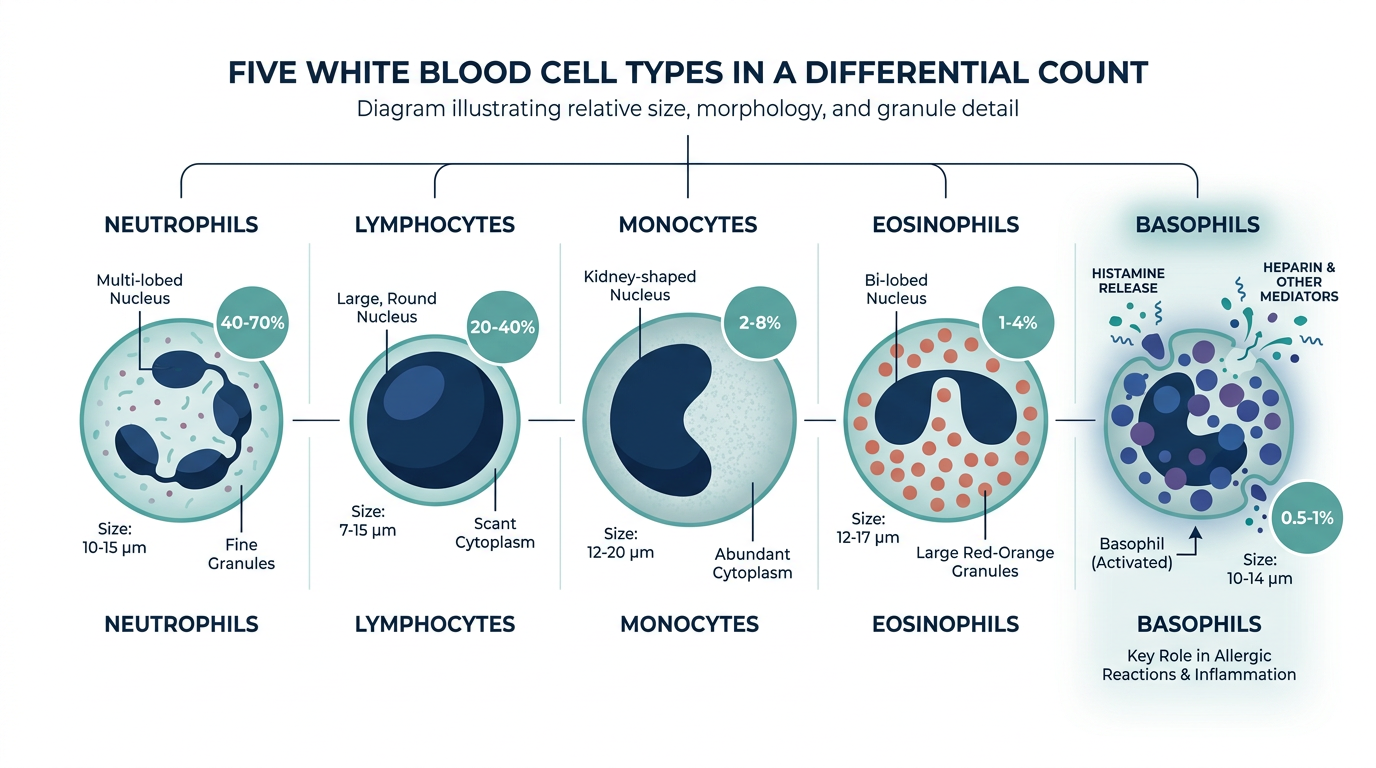
Basophils are a type of white blood cell that help your immune system respond to allergens, parasites, and infections, and they are counted automatically as part of a complete blood count (CBC) with differential (Cleveland Clinic). When people ask what is basophils in a blood test, the short answer is this: it is the count of your least common immune cell, the one that releases histamine during allergic reactions and heparin to keep blood flowing at the site of an injury. In plain terms, basophils are your body’s chemical first responders, and they are normally present in tiny amounts.
Your report shows basophils in two ways. The percentage (basophils as a share of all white blood cells) and the absolute basophil count, or ABC, which is the actual number of cells per microliter of blood. Both describe the same population of cells, just on different scales.
What do basophils actually do?
Basophils are granulocytes, meaning they are packed with granules full of signaling chemicals, and they are the fewest and largest of that group (Cleveland Clinic). When they detect an allergen or an invader, they degranulate, dumping their chemical cargo into the surrounding tissue.
Two of those chemicals matter most. Histamine drives the familiar allergy symptoms, the itching, the runny nose, the swelling, by widening blood vessels and increasing blood flow to the area. Heparin acts as a natural anticoagulant, preventing blood from clotting where an allergen or organism has caused damage (Cleveland Clinic). Basophils also help defend against parasites, bacteria, viruses, and fungi. They are a small crew with an outsized chemical punch.
How are basophils counted, and why can the number wobble?
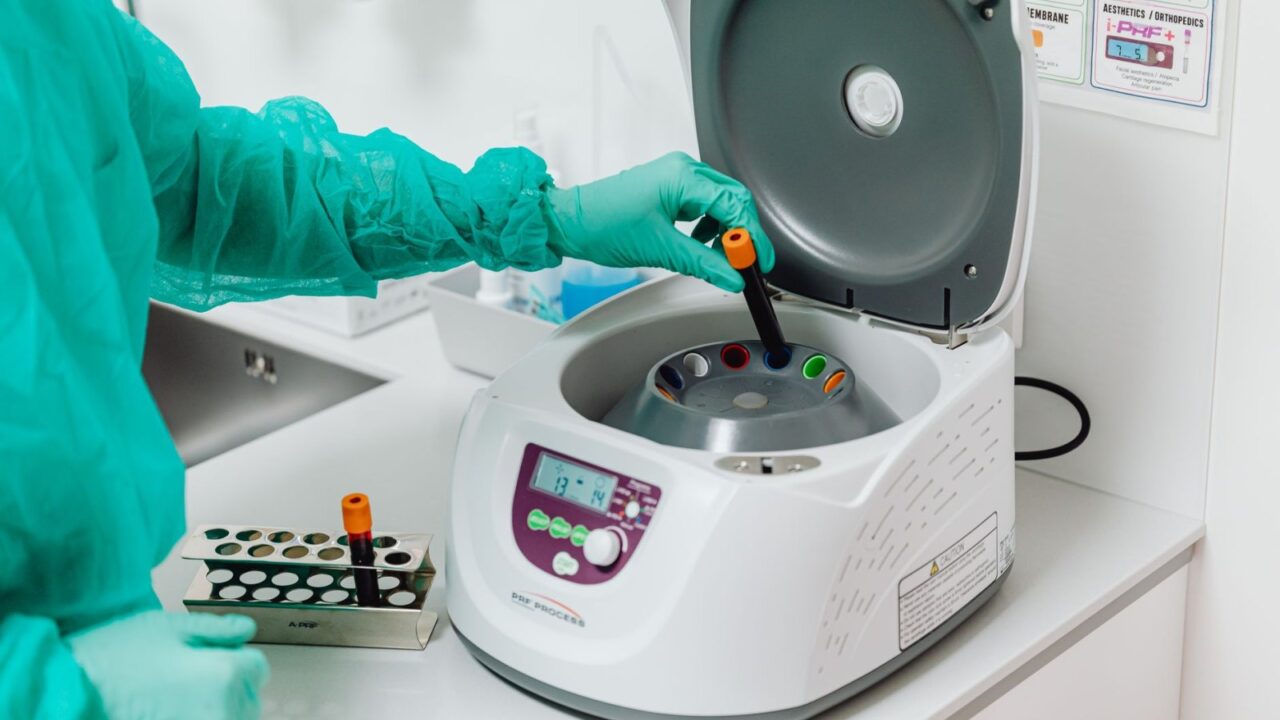
Basophils are counted automatically by the same hematology analyzer that runs the rest of your complete blood count, which sorts white cells by size and internal structure and reports basophils as both a percentage and an absolute number (Cleveland Clinic). The catch is that basophils are so scarce that counting them precisely is genuinely hard. When a cell type makes up around half a percent of the total, a difference of a few cells swings the percentage noticeably, so basophil counts carry more measurement noise than the common cells like neutrophils and lymphocytes.
This is why the absolute basophil count, the actual cells per microliter, is the number worth watching rather than the percentage alone. A percentage can look elevated simply because the other white cells dropped, not because basophils rose. If your basophil percentage looks high but your absolute count sits in range, the finding is usually less meaningful than it first appears.
When an automated count flags something odd, a technologist can review a stained blood smear under the microscope and count the cells by eye, which remains the reference method for confirming a real basophilia. So a single surprising basophil line does not always mean your body changed. Sometimes it means the machine met the edge of what it can measure, and a repeat draw or a manual review settles it. That is also why clinicians rarely react to one borderline basophil number without repeating the test.
What is a normal basophil level?
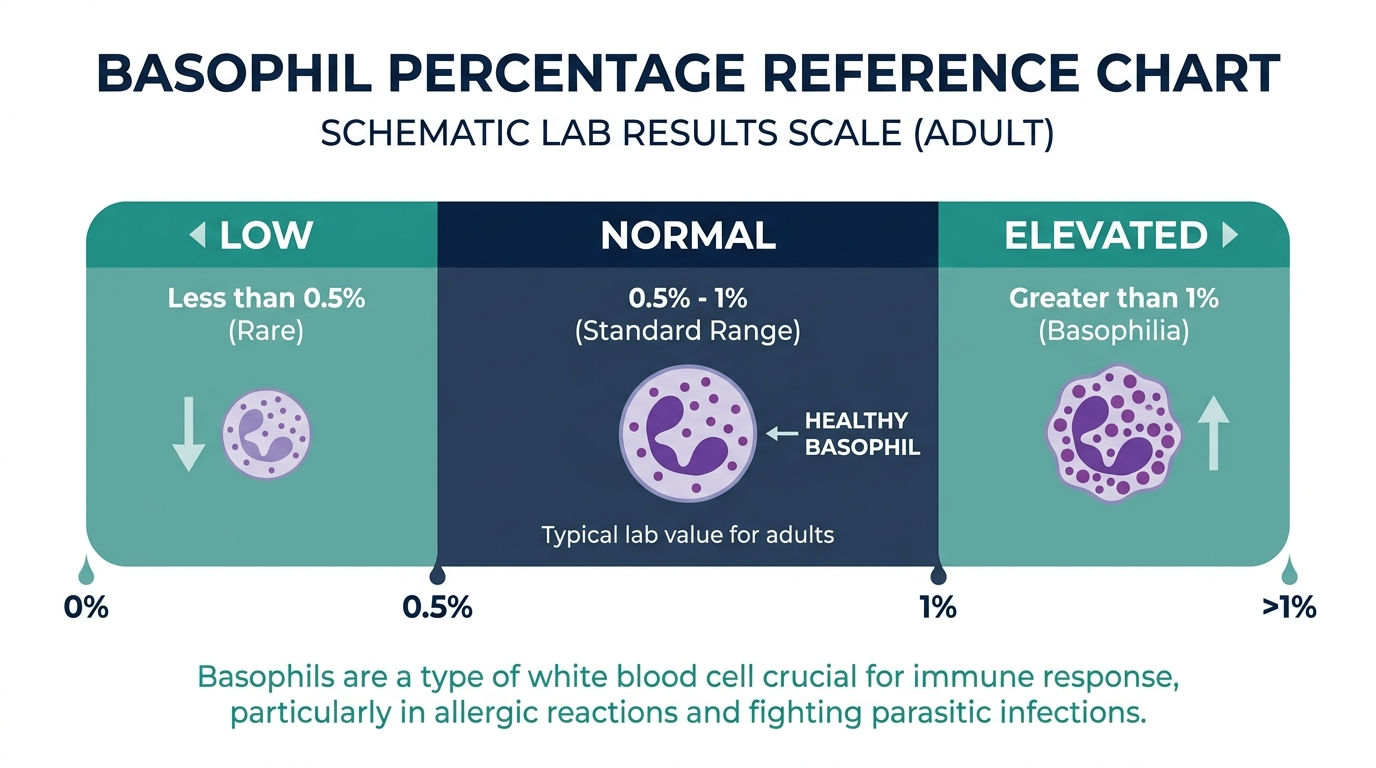
A normal basophil count is roughly 0 to 300 basophils per microliter of blood in healthy adults, which works out to about 0.5 to 1 percent of your total white blood cells (Cleveland Clinic). That low ceiling is not a mistake. Basophils are the least common of all five white blood cell types, the rarest cells on the entire differential (Cleveland Clinic).
Because the normal range starts at zero, a reading of 0 percent basophils is usually nothing to worry about on its own. The exact cutoffs vary slightly by laboratory and instrument, so always compare your result against the reference range printed on your own report. That is the range your lab actually calibrated.
What does a high basophil count mean?
A high basophil count, called basophilia, means your blood holds more basophils than expected, generally an absolute count above about 200 cells per microliter (StatPearls, NCBI). It is a clue, not a diagnosis, and it points to a fairly specific short list of causes (Cleveland Clinic):
- Allergic reactions, to food, medications, or environmental triggers.
- Infections, as the immune system ramps up its response.
- Hypothyroidism, an underactive thyroid gland.
- Chronic inflammation, including inflammatory bowel disease and autoimmune conditions like rheumatoid arthritis.
- Myeloproliferative neoplasms, bone marrow disorders such as polycythemia vera and myelofibrosis.
- Leukemia, particularly chronic myeloid leukemia (CML).
That last group is the reason basophilia gets taken seriously. Most causes are benign and temporary, but a persistently high basophil count is a recognized red flag for serious blood and bone marrow conditions, which is why clinicians rarely shrug it off.
The part most people never hear: why basophilia makes a hematologist sit up
Here is the insider point that almost never makes it into the patient version. A high basophil count is one of the classic early fingerprints of chronic myeloid leukemia, and hematologists treat unexplained basophilia as a trigger to test for it. When basophilia shows up alongside a left-shifted neutrophilia, meaning lots of immature neutrophils flooding the blood, that pattern is suspicious enough to order BCR-ABL1 testing to rule out CML (StatPearls, NCBI).
Why does the rarest cell carry that weight? Because basophils come from the same myeloid line in your bone marrow that goes haywire in these cancers. When that production line malfunctions, basophils are often among the first cells to overflow into circulation. So the tiny number you were tempted to ignore can be the bone marrow’s earliest distress signal. It will not diagnose anything by itself, and a single mildly elevated reading after a bad allergy week means very little. But a basophil count that stays high without an obvious allergic or infectious explanation is exactly the kind of quiet finding that deserves a closer look rather than a scroll past.
What should you actually do about a high basophil result?
A single mildly elevated basophil count is rarely an emergency, and the first move is context, not alarm. Ask what else was happening when the blood was drawn. A recent allergic flare, a lingering infection, a known underactive thyroid, or an inflammatory condition can all nudge basophils up, and in those settings the finding usually tracks with something you already know about.
The picture that deserves a closer look is a basophilia that persists across repeat tests with no allergic or infectious explanation, especially when it travels with other clues on the same report. Watch for a rising total white cell count, a left shift with many immature neutrophils, or a note about an enlarged spleen (StatPearls, NCBI). Symptoms worth mentioning to your clinician include unexplained fatigue, drenching night sweats, unintended weight loss, or itching after a warm shower, which can accompany the bone marrow disorders that raise basophils.
Practically, that means a persistent unexplained basophilia is a reason to repeat the CBC, let a clinician review the smear, and, if the pattern fits, test for the BCR-ABL1 gene that defines chronic myeloid leukemia. None of this is a leap to a diagnosis. It is a measured next step. The reassurance is that most high basophil counts have an ordinary cause and settle once that cause resolves, and the small minority that do not are exactly the ones you want caught early.
What does a low basophil count mean?
A low basophil count, called basopenia, means fewer basophils than expected. Because the normal range already starts at zero, a low or even undetectable count is frequently of little concern and is hard to interpret in isolation (Cleveland Clinic). There is no widely recognized disease defined purely by low basophils.
When basopenia does carry meaning, the usual suspects are an overactive thyroid gland (hyperthyroidism), acute allergic reactions, infections, or simply a side effect of medication such as corticosteroids (Cleveland Clinic). If your basophils are low and the rest of your CBC looks unremarkable, it is usually nothing to chase.
How do basophils relate to mast cells and eosinophils?
Basophils rarely act alone, and understanding their two cousins makes the allergy signal on your CBC easier to read. Basophils and mast cells are close relatives that both store histamine and both fire during allergic reactions, but they live in different places. Basophils circulate in the blood, which is why they show up on your CBC, while mast cells sit embedded in tissues like the skin, gut, and airways, where a routine blood test does not count them. When you have an allergic reaction, the two work in concert, mast cells in the tissue and basophils arriving from the bloodstream.
Eosinophils are the third member of the allergy and parasite crew, and they are far more common than basophils, so they usually carry the louder signal for allergies and parasitic infection on the differential. When a report shows both eosinophils and basophils elevated together, the pattern leans toward an allergic or parasitic process. When basophils climb largely on their own and stay up, that isolated rise is what tilts attention toward the marrow rather than the medicine cabinet.
This division of labor is the reason your clinician reads the five white cell types as a set. Basophils are one instrument in the section, and their note only makes sense against the others. A basophil count is a hint about which conversation your immune system is having, and the rest of the differential tells you who else is talking.
Why are basophils measured with the rest of the white cell differential?
Basophils rarely tell the full story alone, which is why they are always reported alongside the other four white blood cell types in a blood differential. Each cell type does a different job, so measuring them separately gives your clinician a far richer picture than the total white blood cell count can (MedlinePlus). The differential helps diagnose infections, autoimmune diseases, allergic reactions, and cancers like leukemia.
Think of the differential as a five-instrument readout. Neutrophils dominate the bacterial fight, lymphocytes handle viruses and longer-term immunity, monocytes clean up, eosinophils flag parasites and allergies, and basophils round out the allergy and inflammation signal. The pattern across all five is what makes any single number meaningful. A high basophil count next to a normal differential reads very differently than the same count next to a left-shifted neutrophilia, which is why context is everything.
Frequently asked questions
What does basophils mean in a blood test?
Basophils on a blood test are your rarest white blood cell, counted as part of a CBC with differential. They release histamine during allergic reactions and heparin to keep blood flowing at sites of injury, and normally make up only about 0.5 to 1 percent of your white blood cells (Cleveland Clinic).
What is a normal basophils level?
A normal basophil count is roughly 0 to 300 cells per microliter of blood, or about 0.5 to 1 percent of total white blood cells (Cleveland Clinic). Because the range starts at zero, a result of 0 is generally normal. Compare your number to the reference range on your own report.
Should I worry about a high basophil count?
Not from a single reading. High basophils, or basophilia, most often reflect allergies, infections, an underactive thyroid, or chronic inflammation. A count that stays high without an obvious cause can be an early sign of a bone marrow condition such as chronic myeloid leukemia, so persistent basophilia warrants follow-up (StatPearls, NCBI).
What does a low basophil count mean?
Low basophils, or basopenia, are often hard to interpret because the normal range already starts at zero. When meaningful, it can relate to hyperthyroidism, acute allergic reactions, infections, or medications like corticosteroids, and on its own it is usually not a sign of disease (Cleveland Clinic).
Why are basophils tested with other white blood cells?
Each white blood cell type does a different job, so a blood differential measures all five separately to give a fuller picture of your health. This helps diagnose infections, autoimmune diseases, allergic reactions, and cancers like leukemia, and it lets your clinician read your basophil count in context rather than alone (MedlinePlus).
Can allergies alone raise my basophils?
Yes. Allergic reactions to foods, medications, or environmental triggers are among the most common benign causes of a mildly high basophil count, often alongside a rise in eosinophils (Cleveland Clinic). In that setting the finding usually tracks your symptoms and settles as the flare resolves, which is why a single elevated basophil count in an allergy-prone person is rarely alarming on its own.
Do I need to fast before a basophil test?
No. Basophils are measured as part of a complete blood count, which does not require fasting, so you can have it drawn at any time of day. If your provider asked you to fast, that instruction is for other tests bundled on the same requisition, such as glucose or a lipid panel, not for the CBC itself.
Is a basophil count of zero a problem?
Usually not. Because the normal basophil range starts at zero, a reading of 0 basophils is generally considered normal and hard to interpret as disease on its own (Cleveland Clinic). Low basophils only draw attention when the rest of the CBC also looks off, and even then they are rarely the main story.
This article is for general educational purposes and is not medical advice. It cannot diagnose or treat you and does not replace your clinician. Always discuss your lab results and any health decisions with a qualified healthcare professional.
Vital Signs Today may earn a commission if you buy through links on this page. It does not affect our editorial assessments.